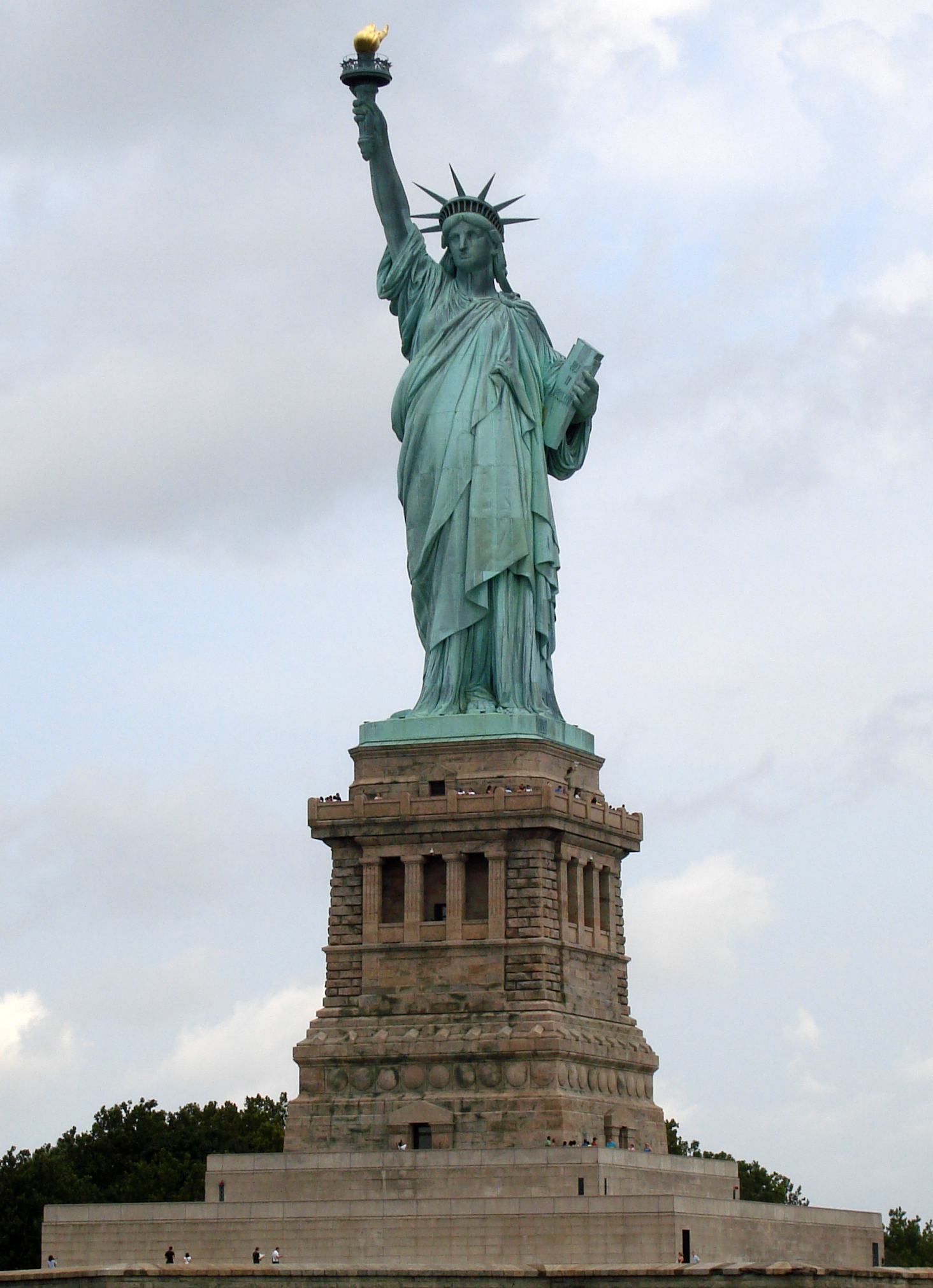
Tuesday, February 18, 2014

Wendy Doniger, Jeyamohan and Arundhati Roy : A Primer on Free Speech

Jeyamohan, when he is not falling at the feet of his guru Ilayaraja and Arundhati Roy, when she is not cavorting with Maoists and raining vitriol over America, will do a segue way into defending, half heartedly, free speech.

Ideas on free speech, secularism, human rights and individual liberty are all very recent ideas. The US constitution, written toward the end of the 18th century, was probably the first to prohibit its own legislature from ever writing a law that will 'abridge' freedom of speech. The first amendment remains America's most cherished right in the bill of rights. Even today Britain has censors. Denying holocaust is a punishable crime in Germany.

Wendy Doniger (Source Wikipedia).
Indian constitution framers, unlike Americans at Philadelphia, retained a lot of archaic British laws especially those that gave untrammeled powers to the state because now the pigs were ruling (its a metaphor from 'Animal Farm'. Please.). Even today in India the local police station has to certify that a stage drama can be performed. A colonial era rule. The rules against free speech or loopholes to harass free speech practically mirrors colonial rule.

Free speech is not about allowing decent or agreeable or intelligent speech. Free speech is about allowing 'speech' without riders or caveats. If at all any caveat is to be used it is hate-speech and for that the threshold has to be a high bar. Britain had allowed Mullah's who preached with inflammatory rhetoric to continue preaching. Otherwise speech need not be intelligent or even decent.

A land mark case for free speech in India was the case of vernacular magazine Nakkeeran vs Tamil Nadu state. Nakkeeran had started publishing the auto-biography of a very sensational murder convict, Auto Shankar. Shankar had run brothels patronized by high officials. The officials sought to muzzle the magazine. Nakkeeran editor Rajagopal went to India Supreme Court. The Supreme Court in a landmark judgment upheld Rajagopal's right to publish the names. The judgment cites, surprisingly, landmark US cases on privacy. The series, lets remember, was just salacious, no public good came of it. Indians assume that high officials have salacious affairs. It was not news.

Larry Flynt, publisher of porn magazine 'Hustler', caused another landmark judgment in US. Flynt published a fictional story about evangelist Jerry Falwell portraying him as having sex with his mother in a barn. Falwell went to court. Larry Flynt went to US supreme court and won acquittal on free speech grounds. Free speech is not about defending what everyone will love. The reason that Flynt and Rajagopal need to be defended is because any abridgment of free speech in the name of morality or decency is a slippery slope and such excuses are more often than not abused to muzzle what somebody does not like.

Jeyamohan voiced a thinly veiled conspiracy theory that Christian West, that Wendy Doniger was born into, uses the tool of free speech to ridicule Hinduism and India. He forgot that American director Martin Scorsese made Nikos Kazantzakis's 'Last Temptation' into a movie with scenes of Christ having sex.

A New York City museum had an exhibit of a crucifix in a jar of urine. Art, said the artist. NYC Mayor Rudy Guiliani threatened to cut off city taxpayer dollars to the museum unless the exhibit was removed. Then he had to backdown in the face of a loud criticism. Oh there was also the case of a portrait of Madonna (Mary) with cow dung on her breast. A movie referred to crucifix as a sexual object. In 'Jesus Christ Superstar' Christ sings and lusts. British author Philip Pullman wrote a searing parody and a laugh riot in 'Good man Jesus and scoundrel Christ' to ridicule the 'established' church. The back cover succinctly said 'this is a novel'.

James Joyce's 'Ulysses' was banned in US but publisher Random House, in what could happen only in USA, arranged for a shipment and invited a lawsuit. Random House went to court and overturned the ban. Later D.H. Lawrence's 'Lady Chatterley's lover', 'Tropic of Cancer' and 'Fanny Hill' would have to face the court and be freed.

India has a long history of banning books or inconveniencing authors deemed bad. Nirad C. Chaudhuri invited ire over his 'Authobiography of an unknown Indian". Stanley Wolpert's 'Nine hours to Rama' remains banned in India along with Scorsese's 'Last temptations of Christ'.

In India free speech will find defenders depending on who is offended. Arun Shourie, who later joined BJP, was strident in his defense of Rushdie's freedom to write 'Satanic Verses'. Self styled secularists like N.Ram and A.G.Noorani defended, gladly, M.F.Husain's freedom to depict Hindu goddesses in the nude. Then the same duo stridently criticized Dutch newspaper Jyllands Posten for publishing cartoons of Prophet Muhamed which they said would hurt the sentiments of Muslims. Arundhati Roy was conspicuously absent during the cartoon controversy when half the world boiled.

Both Arundhati Roy and Jeyamohan offer half-hearted ham handed defense of Wendy Doniger. Neither defend free speech in totality. Roy, conveniently forgetting draconian Indian laws, scolds Penguin for buckling so quickly instead of going to Supreme court with their 'resources'. Poor Roy misses the irony of capitalism's comforts.

Jeyamohan's first blog on Doniger was a shameful exercise in logic. Saying the West has two approaches to India, one, respectful and two, supercilious ridicule of a civilization they don't understand. So saying he rips Western authors who, in his opinion, ridicule Hinduism  due to misunderstanding often with ulterior motive to destabilize India. He scolds them for 5 paragraphs conveniently forgetting the many, many Western authors and even colonial officials who respected India highly. In fact I'd say that Westerners have a healthy curiosity and great deal respect for India unlike what Indians have of, say, America. S.Ra, Nanjil and Jeyamohan displayed ignorance and prejudices about America during their visits here.

Finally on a grudging note Jeyamohan concedes that bans are ineffective and may actually serve to publicize the book. This by a man who was practically lynched in the internet for ridiculing two most loved cinema heroes of Tamils. Novelist Sujatha could read Jeyamohan's Vishnupuram because Sujatha felt that Jeyamohan was being uncharitably obscene about Hinduism. Though Jeyamohan had  the words against banning books in 'bold' it was buried too late into the article and did not sound sincere given the tone of the rest of the article.

Many have quoted Wendy Doniger's, less than flattering, passage about Bhagvad Gita. Little do many Indians outside Tamil Nadu know of K.Veeramani's "The other side of Gita". Veeramani and his mentor E.V.Ramasamy reveled in ridiculing Hinduism in the name of half baked ideas they called 'rationalism' but other than a few feeble attempts they always shied away from ridiculing Islam or Christianity. This hypocrisy does exist in India. But I am pained to see Hindu friends cite these and argue for an intolerant attitude. That does not behoove a great and open religion like Hinduism. I'd have to congratulate the people of Tamil Nadu for ignoring with maturity the antics of EVR.

'Economist' asked Germany to repeal its ban on holocaust denial which is a punishable crime there. 'Economist' reasoned that bigotry should be met with scholarship not censorship. Limping out of one of humanity's greatest racist massacre the ban had a meaning in the initial days of de-nazification and has no place today.

A more critical issue of free speech is the privileges of legislators and the judiciary. Indian constitution has strict limits on what can be reported about the happenings in legislatures. I remember a full page article by Arun Shourie, who often butted heads with MP's, titled 'Their privileges and our rights'. Famously Tamil Nadu Assembly speaker P.H.Pandian claimed he had sky-high powers and sent to jail a cartoonist for depicting MLA's as pickpockets and thieves.

Indian judiciary is very thin skinned when it comes to criticism. When US Supreme Court awarded the Presidency to Bush a newspaper column called the justices 'robed pirates'. It is common to see strident and harsh criticism of not just judgment but of justices too in US.

Dreaming of a free India Tagore wrote "Where the mind is without fear and the head is held high, into that heaven of freedom, let my country awake". I'd conclude with that oft attributed quoted which best defines defense of free speech: "I disagree with everything you say but I shall defend, to my death, your right to say so".

References:

1. Arundhati Roy's letter to Penguin India http://timesofindia.indiatimes.com/india/Wendy-Donigers-book-You-must-tell-us-what-terrified-you-Arundhati-Roy-writes-to-Penguin-India/articleshow/30306451.cms
2. Jeyamohan's first blog on Wendy Doniger http://www.jeyamohan.in/?p=46489
3. Hustler Magazine Vs Jerry Falwell http://en.wikipedia.org/wiki/Hustler_Magazine_v._Falwell
4. James Joyce's Ulysses http://en.wikipedia.org/wiki/United_States_v._One_Book_Called_Ulysses
5. Nakkeeran Rajagopal Vs State of Tamil Nadu  - This is a compelling read. The entire judgment is here - http://www.indiankanoon.org/doc/501107/

Monday, February 17, 2014

Washington, Jefferson, Lincoln, Ike and Lessons in Leadership

The word 'revolution' would bring to most the memories of either the French revolution or the Bolshevik revolution. To a few others there would be nostalgia of the Cuban revolution or the many eddies of revolutions in South America led by Che Guevara or Simon Bolivar. To a very few the word revolution would include the 'Bolivarian revolution' of Hugo Chavez. Lenin, Mao, Che Guevara, Fidel Castro, Simon Bolivar are considered revolutionaries in popular opinion. Yet none of their revolutions, including the French one, yielded a liberal democracy with individual rights and none yielded a democracy much less a prosperous one. The Indian independence, besides the American revolution, stands a glorious exception to that hall of shame.

Why do we look at Lenin as revolutionary and not George Washington? Why is Napoleon etched in romantic ideas of revolution and not Washington or Jefferson? Speak of Jefferson's 'Declaration of independence' and I'd hear, in a moment, the words 'hypocrisy' and 'slavery' yet we glorify Lenin, Napoloeon and Che Guevara whose hypocrisies cost lives in the millions and continue to do so.

Jawaharlal Nehru writing to his daughter, from prison, brushes aside the American revolution without much thought and he even ridicules the hallowed words of the Declaration, "all men are created equal" for naivety since not all created equal and that there are differences in intelligence, bodily strength etc. Then Nehru spends chapter after chapter extolling the French Revolution and later the Bolshevik Revolution. That trend persists in India till today. Indians when they look beyond native leaders look to Moscow for inspiration.

Cincinnatus, it is said, was called to lead Rome against an invading army, while he was farming. He was made dictator of Rome. He is remembered today for relinquishing his powers after winning the war. Unheard of in that era. America later commemorated him by naming a city, Cincinnati.

George Washington won the revolutionary war, laid down his arms, relinquished control and went to his home atop Mt.Vernon. Called back to preside over the constitutional convention he presides over it with saintly detachment as the framers wrangle endlessly over a simple question: "how do we ensure, constitutionally, that the President will never have so much power as to become a monarch". The framers, simple men, then devised a genius solution of 'checks and balances'. Any man in Washington's place would've tried to influence the powers allocated to the office they know that might, eventually, come to them. Having become President Washington tried to be a one term president and then remained in office, just one more term, to nurture a nascent republic. Washington's 'farewell address', remains 200 years later, a document to study by anyone who not only leaves office but is going to take one. To see another man unsullied by power or willing to relinquish it I'd have to travel 150 years to see Gandhi.

Mount Rushmore: Washington, Jefferson, Roosevelt and Lincoln (from L to R. Source Wikipedia)
Washington begins his 'farewell address' with the words 'friends and  fellow citizens'. Leaders and rulers in 1792, even today, don't speak like that. Less than a decade later Napoleon, the son of revolution, declared himself Emperor. The transition of power to John Adams and then Thomas Jefferson proceeded peacefully, a miracle in the early 19th century.

Lincoln at Gettysburg coined the immortal words, "a government of the people, for the people, by the people". Fully aware that the Republic could still be torn apart and well aware that he could still lose the war Lincoln reaches out in deep and sincere humility. "The world will little note, nor long remember, what we say here but it can never forget what they did here". Lincoln with his land grants lay the seed for one aspect of American supremacy that'll remain unchallenged for another two centuries: American Universities. China may surpass US GDP but never its per-capita or have a Harvard in Beijing. There will never be an MIT or Stanford in Shanghai or Delhi.

Thomas Jefferson was 32 when he wrote the words that would define America for centuries to come. 'Pursuit of happiness'. He would agonize over religious freedom, individual liberty and education. His  constitution for Virginia would later inspire the US constitution's bill of rights. Writing what his epitaph would say Jefferson would refer to himself as 'author of declaration of independence','statute of Virginia for religious freedom' and finally 'father of the University of Virginia'. No mention of the fact that he was President of US or Ambassador or Vice President or Secretary of state.

I came to US in 1998 and as much as I loved this country I looked their admiration of some US Presidents as just jingoism. When Time Magazine in a centennial issue included Teddy Roosevelt I chuckled "what did he do beside lending his name to a toy bear". By ending the Russo-Japanese war Teddy Roosevelt earned a Nobel peace prize thus becoming the first US President to do so. He created the Panama Canal, laid the groundwork for America's famous national parks amongst many others. There is a reason America honored him by including him along side Washington, Jefferson and Lincoln by carving his visage on Mount Rushmore.

The made-for-TV movie 'Ike:Countdown to D-Day' has a pivotal opening scene with Eisenhower pressing Churchill to declare him 'Supreme Commander of the Allied Expeditionary force". Churchill demurs and says "you are asking for power that not even Caesar and Alexander had". Exactly. And Ike wields that power carefully later relinquishing it voluntarily. No general in history ever commanded such a vast and successful army only to relinquish his power answering to Harry Truman, born to a farmer and livestock trader. Ike had earlier benched legendary general Patton for the offense of slapping a soldier. The Red Army would've rewarded Patton. Patton was asked to apologize to not just the soldier but to the entire platoon. Ike would again rap Patton for claiming that when the war was over the Anglo-Saxons would rule. When a top ranking General rats out, intemperately, about the upcoming D-Day landing at Normandy Ike demotes and sends him back home. The general pleads "am I not in the inner circle". Ike expresses disgust and reminds him of the thousands that are about to die. Ike would agonize over the expected casualties.

On this day when America celebrates "Presidents Day" in memory of Washington and Lincoln I invite all to learn about these leaders who created the freest country and most prosperous. Thank you Sirs. And so may we add a 'Thank you Madam'. 

Thursday, February 6, 2014

Does Satya Nadella Owe Thanks, if Any, to India (or US)?

'Let the brains drain out of India lest they go down the drain'. So said I in a debate on brain drain in 1993 at a college in Coimbatore. I proceeded to point out how scientists fleeing Nazi Germany provided a turning point in US scientific supremacy. The torch of scientific supremacy decisively passed over from Europe to US only after 1945.

Indian-Americans now head two iconic American corporations, Pepsi and Microsoft, amongst a few others. Do these expatriates owe thanks to the motherland they emigrated from? Do they owe thanks to the alma maters of their homeland? And, finally, do they have any debt of gratitude to America, the land where their dreams took flight and ambitions were realized despite being immigrants from a third world country?

In a nutshell no individual owes it to any country, India or US, for where he/she is today. If anything they may owe to it to their families after themselves. They can, if they wish to, tip a hat to a country that, unlike India, gave wings to their dreams and provided an atmosphere where they flourished and in returned enriched the country that allowed them in.

Indira Nooyi studied in Madras Christian College and, I hear, has donated to the institution. An ex-professor asserted that Nooyi owes it to MCC and based his assumption on the courteous statements that Nooyi has made of MCC. I don't confuse politeness for factual evidence. Fact is Nooyi will never  go back to India, not even in her dreams would she consider sending her children or grand children to MCC to study. The number of CEO's from the portals of MCC can be counted on one hand. The only other illustrious alumnus from MCC was Sarvepalli Radhakrishnan. Established in 1837 MCC is famous for having the trees in its luscious gardens labeled with botanical names. Beyond that the few illustrious alumni, listed in wikipedia, mostly belong to a bygone era and not many in the recent past when MCC shared an intellectual decline along with most other such institutions that date from the Colonial era. MCC is not Harvard or Yale where identifying, nourishing and producing leaders is a tradition.

Satya Nadella (from Wikipedia)
When CBS 60 minutes ran a program on IITs calling them more selective than Harvard every Indian-American, barring a few like me, irrespective of whether they went to IIT or not, patted themselves and proudly proclaimed that they are from the country of IITs. Till today IIT graduates, expatriate and those who remain in India, don't count a single Nobel laureate amongst them in any discipline. We can count on one hand, possibly two, the number of revolutionary ideas in technology that have come from IIT graduates. Incidentally graduates from Osmania University hold more patents in US than expatriate graduates of all IITs (refer article in The Hindu http://www.thehindu.com/news/cities/Hyderabad/move-over-iitians-ou-grads-make-it-bigger-in-us/article5056307.ece ). The fabled selectivity of IIT is just a function of demand vs supply and has no bearing on the quality of the graduates produced. Most IIT'ians are nothing more than diligent rote learners in 12th grade and they turn out as mediocre graduates.

Being a nation of a hoary and very rich civilization, including treatises in grammar and mathematics, that predates recorded history Indians have an unfathomable inferiority complex given the near total lack of international achievement in present day. Hence at any semblance of achievement Indians rush to envelop that in the tricolor flag forgetful of the fact that Nooyi, a woman from middle class, and Nadella born to middle class parents would not have achieved what they did in US. A more pertinent question to ask would be if a middle class Afro-American choosing to study and work in India would ever become the head of any Indian company like Microsoft? I said 'like Microsoft' only as hyperbole. There is no Indian company like Microsoft or Apple. Not yet. I chose 'Afro-American' to rub in the racial barriers.

Yes, some Indian universities and colleges are more than decent compared to some community colleges in America or universities in other third world countries. That said let's not forget that at best Indian institutions can only be pipelines for the most brilliant to reach world class higher education centers mostly in US. Nadella may very well compliment his college or school but nobody need be fooled for when it comes time to recruit managers he will head to Chicago Booth or Harvard or Yale or that unpolished gem that lies buried in the crusty corridors of some Indian university.

One thing that America, more than any other country, does well is to ferret out talent, worry about identifying talent, then nourishing it, then seeing it achieve the best that that human being can be. Indian universities have no idea of what it is to identify talent. Indian universities sit back, wait for applications to pour in, select the top most scorers and rest on their palms watching the top scorers go out and ace examinations or get ahead in life. Today, more than ever, American university admissions officers worry about racial, gender and economic diversity. Ivy league universities reach out to schools in poor neighborhoods to impress upon their students that lack of money should not inhibit them from applying. The top US universities can very well, like their Indian counterparts, sit on their hands and wait for applications. But they don't. And thats the cultural difference.

The MacArthur grants, popularly called 'genius awards', showcases America's culture of excellence like nothing else can. Many of the MacArthur fellows go on to win other prestigious prizes like the Pulitzer or accomplish something of note. See my earlier blog titled "America's Geniuses:John Dabiri and a culture of nourishing excellence". Raj Chetty, economist, L. Mahadevan, mathematician, Vijay Iyer, musician have all been awarded the Mac Arthur genius awards in the recent past.

Before anyone can say "if only Indian universities had money like Harvard and Princeton" I'd add "fat chance. even with all the money in the world IIT and IISc will not produce two Nobel laureates". It is never about money. Money is secondary or even tertiary. Its the Indian culture that has a problem.

After Macaulay the only person who worried about educating Indians was Jawaharlal Nehru. Nehru was the last Indian politician who wanted his citizens to have an education like he did. Homi Bhabha was tasked with forming world class educational institutes, autonomy was enshrined by a parliamentary bill, when foreign investment was an anathema IITs were a joint venture, when foreign exchange was doled out miserly international science journals were imported tax free and yet nothing great came out.

Nobel laureate S.Chandrasekhar was groomed in Cambridge and later achieved greatness in America as an American citizen but he would show a typical Indian hypocrisy by prescribing to others, without batting an eyelid, what he had no intention of ever doing in his life. Chandra would narrate how faction ridden the scientific and educational community in India was in the 1930's when giants like Homi Bhabha, Meghnad Saha and S.N.Bose lived. Chandra, while sympathetic of Bhabha, would narrate with disgust how Bhabha enjoyed showing power. Homi Bhabha would derive joy in making people wait, including a person like S.N. Bose. Einstein impressed by Bose's paper translated it into German and had it published. And Bosons came into being.

Quoting Nehru Chandra would say that though Indians chased away the British they retained the sense of hierarchy and entitlement attitude that colonial era officers showed. His comments to his biographer, Kameshwar C Wali, show nothing but contempt for the then Indian scientific environment. He even jeers at the notion of being expected to remain in India taking a lowly position as head of an observatory after a stint at Cambridge. Yet, the same Chandra asserts, rather shamelessly, that there is nothing "wrong if a developing country like India attempts to stop this 'brain drain'. China, for instance, has been able to develop its internal resources to a point. Human beings are also internal resources". His hagiographer Wali thankfully adds, referring to US, "it is silly to talk about free right to emigrate when this (USA) country is so selective about who it wants to take. There are no open borders. The poor starving Haitian refugees, it is so inhuman to send them off". Fascist nonsense. No wonder Chandra and his wife campaigned for Adlai Stevenson, twice.

Arrant nonsense. Hypocrisy with a blindness that's appalling in a man who swore by science and could not even look at how illogical he was. Chandra justifies preventing emigration because many emigrate just for money and take even lowly positions. So what? His mother seeded him with an ambition and a dictum to keep away from C.V.Raman's 'orbit'. Each man to his own needs. Who a country chooses to allow is its own prerogative that does not mean that other countries should ban emigration. Both USSR and China banned any emigration yet they lag technologically and economically far behind US. Until 2001 China was far behind US. USSR had talent but chose to prevent free travel and emigration only to send its brilliant scientists to Gulags. When USSR collapsed its scientists were reduced to surviving on a bag of potatoes. Thanks to a closed system their scientists often re-invented the wheel not knowing somebody else had done it already.

Ever since India opened up its economy many of those who emigrated have invested back in India as entrepreneurs. The traffic of emigrants is a cash cow for India. Foreign remittances are a key source of revenue for India. The US, of course, wins hands down with its open door policy for talent. Actually the policy is less than open door and needs to become one.

It is a measure of US' openness that first generation immigrants have risen the fabled American corporate ladder to the very top. This is unique to USA. No other country does it as well as America. No other country attracts talent and the mediocre alike as much as the US does. More than 50% of Phd's in US are foreign born. The annual Nobel laureate list features many immigrants. A culture of openness, respect for talent, lack of rigid hierarchies, a culture of innovation, risk taking, rewarding risk and other key ingredients make US the place to be for immigrants, skilled and unskilled, legal and illegal, alike.

Bill Gates, the world's richest man, the founder of the iconic company that changed the world, has stepped down as Chairman and will continue to be an 'advisor' to Nadella. I cannot imagine this happening in any other part of the world. Scion of Henry Ford, another quintessential American icon, stepped aside and brought in external talent, Alan Mulally, to turn around Ford. Can we imagine any Indian business founder doing that? These are not exceptions but rather routine in US and thats the key defining feature.

All that said would I say Nadella owes a debt of gratitude to USA? No. That's cheap. If Nadella turns around Microsoft from a lumbering behemoth to a nimble competitor and in the process unleashes great revolutionary technology or products it is America that will have to thank the immigrant. The proper function of any society that desires progress, economically and otherwise, is to be an enabler for any individual to realize his/her potential to the fullest extent. When an individual succeeds if society thinks it is 'entitled' to his scalp then in the long run the society will decay. Exhibit A: USSR. Did Einstein owe his life to US? No. US owes Einstein a big thanks. If US had said no to Einstein he may have perished somewhere but the loss would have been more to US than to Einstein.

Andy Grove came to US as a penniless refugee fleeing Nazism and then communism. America and the world need to thank Andy Grove for Intel. While Americans can justifiably feel proud about being, as Reagan said, a 'city on the hill' we cannot lose sight that it was Andy Grove the individual who made himself what he became out of the millions who emigrate to US. Its always the individual that counts. The day a society becomes greedy and titular thinking that the individual is at its service that day the death knell will sound for that society.

Liberals Barack Obama and Elizabeth Warren made it fashionable to speak of the duty of an individual to society. 'Giving back', they call it. I say, 'bollocks'. The only duty of an individual is to be a law abiding citizen and work towards one's own dream. The rest is corollary and incidental. So many thousands of students attended the same school before and after Bill Gates or Steve Jobs or Alan Mulally or Indra Nooyi or Satya Nadella yet only they became what they did. So many attend Harvard and Yale yet not everyone becomes Mark Zuckerberg or, as for that matter, Obama.

American universities recognize that while they are incubators or catalysts of talent they do not fancy themselves as entitled to the achievements of their alumni. Thats why universities, recognizing the value of alumni, go to great lengths to nourish that relationship as symbiotic equals. Pushing oneself to deliver the best within himself is the greatest tribute any individual can pay a society.Without Bill Gates the capitalist Bill Gates the philanthropist would not exist. The latter is a bonus. The former is his tribute to himself and then to America.

Let me be to Indians what John Galt was to Hank Rearden. Chandra won accolades of high order in UK and USA before India gave him a paltry Padma Vibhushan. NASA has named an observatory after Chandra. Kalpana Chawla was richly remembered by a grateful America when her space mission ended in tragedy. A Congressional space medal of honor was bestowed on her, Texas university named a hall after her and an asteroid was named for her. All that for an immigrant who perished in the skies. C.K.Prahlad won an American award before India even recognized him. Indian-Americans head two of America's most prestigious schools of business, Harvard Business School and Chicago Booth School of Business. I hope Indians now don't think that they run America.

A Delhi girl was spurned admission at Delhi colleges thanks to ludicrous cutoffs at 100%.  The middle class girl, New York Times article said, was accepted at Dartmouth with scholarships (New York Times Article 'Squeezed out in India, students turn to United States' http://www.nytimes.com/2011/10/14/world/asia/squeezed-out-in-india-students-turn-to-united-states.html?_r=0 ). The key sentence of that article was that US universities are making efforts to reach out to Indian students. Its the 'reaching out' that differentiates Dartmouth from Delhi colleges. Brown University intended to open an office in Delhi to recruit Indian students. Brown had 86 Indian students in 2008. In 2011 it was 300. Indian higher education is in shambles.

Atul Gawande, born to Maharashtrian immigrants, straddles the worlds of politics, public policy making, surgery, journalism and administration. A total impossibility in the suffocating strait jacketed Indian system. Then there is Siddhartha Mukherjee who won a Pulitzer and a National Book Award for his debut book 'Emperor of Maladies'. I can bet most Indian doctors cannot read more than 10 pages of that book let alone be capable of writing one sentence in that. Another impossibility in creativity stifling Indian system. Mukherjee won a Rhodes Scholarship, a Cancer leadership award (shared with a US governor and senator), Pulitzer, Time magazine notice and then finally in 2014 a Padma Shri.

At a retreat for Governors Thomas Friedman told them to lobby for reforming the immigration mess in America. Friedman and a University President pleaded for green cards to be stapled to the graduate degrees awarded to foreign students. A Republican governor cheerfully agreed. Thats how much America recognizes and yearns to retain talent.

I'd tell every Indian to emigrate to US if opportunity presents itself. Come to America and prosper. As you prosper you will enrich this country, not just economically. I invite every Physics, Biology, Chemistry, Math, Engineering and Medical student to set his sights on MIT or Harvard Medical school or Princeton and settle down in this great country. India does not deserve you. At least not yet.

Friday, January 10, 2014

Can Immigrants Criticize A Country?

It is my penchant to tell my fellow Indian-Americans, who curse or excessively criticize US, that they are at liberty to leave from the nearest airport with a one-way ticket. Sometimes I'd offer to sponsor the ticket too. Invariably the reaction would be, understandably, disgust and righteous indignation. The reactions would include questions like "isn't criticizing an American thing to do?", "you are a nascent convert to American citizenship hence you act more loyal than the native born","even Americans criticize their country mercilessly so why shouldn't we?"

Great questions all. Barely 3 months after 9/11 I was at a New Year Party in December 2001 when a Sikh businessman, multi millionaire, nonchalantly said "the US is worst terrorist country in the world. 9/11 is payback". I was beyond stumped to hear a Sikh say that. Thousands of Sikhs were murdered in a genocidal manner in the streets of Delhi in 1984 and the then Prime Minister, equally nonchalantly, said "when a huge tree falls the earth is bound to shake". By 2001 it was nearly 20 years since that genocide and not a single perpetrator had gone to jail. And here is a Sikh guy who has enjoyed all the opportunities of a liberal law abiding society to say that the country was a terrorist.


We immigrants choose to leave India. We leave behind everything we knew in our life until then. We leave, primarily, for economic reasons. Amongst the many countries that Indians emigrate it is only in the West that we tend to settle down, raise a family, see our children go to school and college, then live to see our grand children. We enjoy the benefits of a plural secular society. Though Indians emigrate to the Middle East too, in large numbers, very few settle down as compared to the West, particularly the US.

Having come to US we then choose to become permanent residents and then, again, choose to become citizens. After all these volitional choices if we choose to bad mouth, not criticize, it begs the question "why bother". Why would that in turn bother me? Because, in a way, it negates the pain of emigration and the continued pain, I'd not call it sacrifice, we immigrants pay for uprooting. This is especially accentuated by the thought of aging parents back home. When somebody curses US, or any host country, they in a way tell their fellow immigrants that they underwent pain for nothing. In a way it insults the millions who are trying to make it to the US.

Though this blog could broadly apply to many countries there are few things that put the US on a, dare I say, pedestal. US is probably one of very few countries that gives citizenship by virtue of birth and this is a benefit that many Indians have reaped.

Normal life puts us in many situations were we tend to compromise or turn a blind eye to contradictions. However, somewhere we need some basic honesty. After enjoying the fruits of an open and accepting society, the fruits of an economic system that we eagerly sought if we were to turn back and say "there is no difference between US and India" nothing is more disgustingly hypocritical than that.

I've nothing but contempt for those who think that the prosperity of US has nothing to do with its culture, that amorphous catch-all word. I've greater contempt for immigrants who, at the first whiff of conflict with the motherland they left, seek to see US through the prism of 'foreign country'. If somebody wants to only look at US as foreign country they are welcome to do so but they should not forget that country does not treat them as a foreigner. As Indian passport holders everyone enjoys the protection of law, access to a justice system, an equitable society and every economic opportunity. We owe the country at least a thanks.

Patriotism, Johnson is supposed to have said, is the last refuge of a scoundrel. I do not subscribe to Patrick Henry's 'my country, right or wrong'. That said by choosing to become residents and by the fact that we choose to raise our families here we attest to the fact that it is a country where we think not only we, but our future generations, would flourish.

Today in many pockets Indian immigrants completely dominate the demography and enjoy the benefits that come with such domination. Schools in Edison have started to declare Diwali a holiday. Many multi-million dollar temples have been erected. Michelle Obama does a Bollywood jig on Diwali. It is not uncommon in IT sector to see 100% Indian teams.

A popular Tamil blogger, while working for a wall street bank, wrote a highly critical blog on Wall Street and giving full throated support to 'Occupy Wall Street' protest movement. In his blog he disarmingly said "well I work for a bank but thats the everyday compromise we make in life". I told him "its sheer hypocrisy. You chose to work in Wall Street because you love the pay. If you think this is an industry of crooks and thugs you must quit the industry and seek employment elsewhere". He protested  "my skill set in programming matches only this industry". I persisted "nonsense. You can still tweak your skill or learn a different programming language. When you think your colleagues are crooks you owe it to them and yourself to quit".

We do not choose the country of birth. I was lucky to have been an engineering grad and come to US at a time when Green Cards still came in a decent time. I've used the word 'choose' umpteen times in this blog to underscore the fact that nobody compels an immigrant to come or stay or settle. And that fact puts us in a different category.

As an immigrant Ayn Rand declared America to be intellectually bankrupt. Criticism is an American sport. So welcome to play that. Ayn Rand was clear about her criticisms. Just like me she thought this was the greatest country and wanted it to get even better. Her criticisms were from that stand point. At a meeting she was asked by an American "are you not an immigrant". Rand replied "I chose to be American. You were born here what else have you done". Criticize all you want. During the recent Iraq war I heard many Indians talk disparagingly of US and with half baked knowledge. Thats ok too. But when it degenerates into crass denigrations of calling US names, I puke. We all lived as Indians without cursing or calling India names for its foreign policy. How many Indians call India names for what it does in Kashmir let alone in neighboring countries? How many Tamils even remember the simple fact that India actively encouraged, funded and armed a civil war in Sri Lanka? When Indian immigrants criticize US, irrespective of visa status or citizenship, many tend to immediately become the outsider looking at US as 'foreign country'. That gets my goat unfailingly.

I completely disagree celebrating August 15th in USA. Its a sham too. I believe in one nation one flag. And having left a country by choice I'd even say we don't deserve to hold up the Indian flag. It smacks of hypocrisy. What is worse the India Independence day parades have degenerated into grotesque factionalism and Bollywood glamor. Most have no idea of India's glorious struggle. If pressed to name a freedom fighter beyond Gandhi, Nehru, Patel and Bose most would stutter to remember Lajpat Rai or G.B.Pant or Tej Bahadur Sapru or Naoroji.

Criticize US all you want but do so as an American or as one who enjoys this great country else the airports are open. There are thousands standing in queues in front of the US consulates all over the globes to take the place of every one who wants to leave. Your call.

Tuesday, January 7, 2014

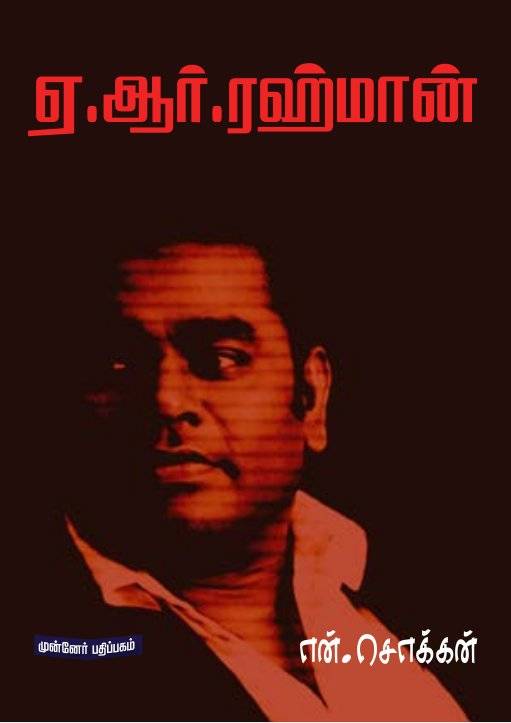
Chokkan's Rahman and Battling Mediocrity in Tamil (India)

After my recent blogs on Devyani Khobragade and Charu I heard the same sickening litany of "you are bashing India", "you are being excessively dismissive", "you don't give credit", "you blindly adore the West", "does not mediocrity exist in America" and much more.

On my last day at work in Chennai my much respected Managing Director (MD) had a chat with me. He opened by saying "you will see enough mediocrity in USA too". He was and is true. Hopefully for the last time let me say I am well aware of Western mediocrities and Western hypocrisies. But If that is all there is in USA I, and the millions who feign love for India that they willingly and gladly chose to leave, would have left sometime back. Or maybe I'd not have come at all.

I am accused of stereotyping and being dismissive with a prejudiced mind. I wish I was proven wrong time and again. But I am proven right many times, if not every time. N.Chokkan's biography of A.R.Rahman is another time I am proven right, sadly. It is an exercise in sheer incompetence in not just subject matter but in even the basic issue of 'writing a book'. Littered with mis-translations, fictional moments, grotesque errors in Tamil and mostly stringing together of internet based 'research' and gossips from film magazines.

Before I go further I am really perplexed as to whether I am over-reacting to such things instead of ignoring or are others so blind out of whatever reason? The only reason I write blogs like this, instead of really interesting one on why Gandhi's travel in third class compartment is a path breaking moment or how Obama's politics of envy needs an Ayn Rand to counter , is because nothing irritates me more than mediocrity being passed as 'good'. I don't mind mediocrity existing. When mediocrity is held up as "good job" an irrepressible emotion to scream "enough" wells up within me. Maybe its because I am human.


In my current obsession with research in literature today a Facebook discussion tempted me into browsing this book. I cannot read it in full lest it harm my sanity. The discussion centered around Chokkan's use of imagination to 'dramatize' events especially in variance to what factually happened. Of course I chimed in saying that there is no place for 'fictional dramatization' in a biography. A person posted a wikipedia link about 'creative non-fiction' and said it is "quite common in cover stories of New Yorker". I am not much of a New Yorker reader owing to its strident left wing liberalism. But I can say that no other magazine of repute does 'creative non-fiction' in cover stories. Interestingly the wikipedia article states in the very first line that creative non-fiction is a genre of writing that uses literary 'styles and techniques to create factually accurate narratives'. In cover stories even anonymous quotes are corroborated with a third source for veracity and when such verification is not possible the reader is explicitly told so. There is no room for literary license. There is no such thing. 

Chokkan had dramatized, without any proof, that Rahman was serene before the Oscar awards were chosen. He claims it is 'dramatization'. It has no place in a biography. Actually Rahman was fluttered because he also had to perform two songs during the Oscar awards function. All other nominees were only musicians and only watched or conducted the song they were nominated for. Rahman was a singer too. One of the awards was announced right after his second song ended. Rahman ascended the stage breathlessly muttering 'this is crazy'. If my memory is wrong my apologies. But anyway Rahman's serenity was cooked up.

Bang the first sentence in the first page gets it wrong as "And the oscar goes to.... அறிவிப்பாளர்".... ஐயா எழுத்தாளரே there is a difference between "announcer" versus "presenter". Oscar Awards are 'presented' by stars not 'announced' by 'announcers'. I am sure everyone will pounce at me as nitpicking. This is my standard for anything that seeks to be called "book" or somebody who is referred to as "author". 


Then comes how Satyajit Ray was "waiting for this award lifelong". Oscar speech of Satyajit Ray is available on youtube. He only expresses happiness getting the best award and a magnificent award. The remark is presented within quotes which, in a non-fiction book, means "verbatim" exact quote. Not 'as understood' by the language challenged author. Even A.R.Rahman speaks in pedestrian normal Indian English the quote gets garbled in translation setting a new standard for 'lost in translation'. Many would say I am nitpicking the very mild shade of difference in translation. Again No. Remember he is NOT translating a Virgil phrase or Hamlet soliloquy but just Rahman's simple English.


When Rahman's name is announced Hollywood responds with affectionate loud applause that the author, to heighten drama about an Indian, changes to "applauded politely". ஐயா ஹாலீவுட் என்ன கோடம்பாக்கமா குத்தாட்டம் போட. Watch the Youtube video.

நானா தமிழ் வெறுப்பாளன்? புற்றுநோயை கேன்ஸர் (that too not கான்செர். He has to use the Grantha 'sa'. Note:I've nothing against Grantha letters where they are required) என்று எழுதும் தமிழ் எழுத்தாளரல்லவா தமிழ் விரோதி

A slight anachronism. Ray got his award in April 1992. Roja was released only in August 1992. So ARR was not in filmdom. The slight possibility is Mani Ratnam had signed him up in April. I doubt that.

For a person writing on a musician the following passage grates my senses "ஆங்கிலத்தில் Music Conductor  அல்லது  Music Arranger  என்று சொல்லுவார்கள். ஒரு பாடலை ஒழுங்கு படுத்தி பிறகு அதை குடலாப்பிரேஷன் செய்து...". இதை விட இசையைப்பற்றி மொன்னையாக யாராவது எழுத முடியுமா?

He alleges that until monk like Ilayaraja came music directors were drunkards. First of all Ilayaraja in the 70's was not a monk. It was a later garb. Does he mean to say K.V.Mahadevan and M.S.Viswanathan were drunkards? Not even Raja and Rahman would say that. 

Talking about Rahman's father Sekar dying young Chokkan writes "எதிரிகள் சூனியம் வைத்து விட்டதாக சொல்லுகிறவர்களும் உண்டு. இதெல்லாம் நிஜமோ பொய்யோ தெரியாது". A Facebook friend (not real life friend) who quibbled about Chokkan using fictional narratives warmly said, after all that, "you have sweated to do research". Is this what passes for research? If I start listing good English books on Beatles, Elvis Presley, Johnny Cash etc I'd be called 'names dropper'. 

This is why I lament our people should get comfortable in reading English books. Then they would read good books and possibly could write something in Tamil that is remotely good. Rahman used composing music for ads as a ''நெட் ப்ராக்டீஸ்". Charu worries about biologists speaking in English. I worry about Tamil writers killing. So this is not ignorance or a 'slip'. This is arrogance. "I can dish muck and the Tamil reader will lap it up uncomplainingly". A friend in North Carolina once recounted a shocking incident about an Indian grocery store owner. The store was very dirty and my friend asked the owner why not clean it. The owner replied "who cares. People will still buy here". From dirty Indian restaurants to grocery stores to Tamil books this is the attitude. 

Speaking of how Rahman adopted different style in Telugu Chokkan says "ஆந்திரா குத்து வேறு அங்கே திடும் திடும் ஸ்டெப்புலுகளுக்கு மவுசு ஜாஸ்தி". And people call ME 'stereotyping'. That kind of racist language in a book that is being hawked as biography and not a single person to call him out.

The narrative is uneven. He probably calls it non-linear. In second chapter Sekar, Rahman's dad, enchants Kerala and worries about dying leaving behind his family. The first paragraph of 3rd chapter then starts with Sekar getting married and enchanting Kerala, again. Rahman was born a Hindu and then converted to Islam taking the new name Rahman. There is no clarity on referring to Rahman as Dileep.

Chokkan exults in Time magazine listing Rahman's 'Roja' songs one of the top 10 soundtracks. He enthuses that never before an Indian music director was honored thus. True. But a biographer has to rise above regurgitating a factual nugget. If my not giving credit for that 'research' is being cynical then so be it. In the era of google I'll not give much 'credit' for research. It took me 2 minutes to get that exact link from Time magazine (http://entertainment.time.com/2005/02/12/all-time-100-movies/slide/roja/). A biographer would and should put a fact in perspective for the reader. While Rahman's international accolades are justifiable lets not forget that many other worthy or worthier people were passed over because India had not yet arrived on the global scene. Rahman's global acclaim and fame is also the result of a globalized era. The Oscars, in typical American fashion, was the last to recognize the worthy in India. Thats why Satyajit Ray, feted in Europe, was given an Oscar on his deathbed. Literally.

By the way nowhere in the book does Chokkan grasp the genius of what Rahman achieved in 'Roja' like Richard Corliss does in that very short Time magazine blurb. Don't give me nonsense about "oh Tamil reader will not understand such language". அது போன்ற மொண்ணை சால்ஜாப்பு சொல்கிறவர்கள் தான் தமிழ் வாசகனை செருப்பால் அடிக்கிறார்கள். நான் இல்லை. இன்னும் சொல்லப்போனால் என்னைவிட தமிழ் வாசகனுக்கு சிறந்தவொரு நண்பன் இல்லை. 

A biography is not just a summary of dates, events, list of awards and gossip etc. I love and admire Rahman much more than Raja. But it is my strong opinion that Rahman's song in Kaadhalan "Pettai Rap" is an insult, a full frontal assault, on the 'idea' of music. It is unapologetic and unabashedly lumpen. I don't expect an author to echo my ideas (or prejudices) but I did not see much by way of criticism. But then that needs knowledge of the subject and a finer incisive intellect.

I may have hundreds of differences with Jeyamohan but I respect him as an intellectual adversary worth engaging. I respect Jeyamohan for what he is trying to do with Mahabharatham (though I'd still carp about some aspects). Ever since Jeyamohan started that series he says his web traffic has increased multi-fold. I've seen many friends post that they will resolve to read as he posts each episode. Many in fact said they would make an 'effort' to understand. On the other hand we have Chokkan whose only aim is to pollute cyber space with a free e-book. எளிமை படுத்துவது என்பது வேறு மலினப்படுத்துவதென்பது வேறு. இந்த புத்தகம் மலினப்படுத்துவதென்பதையும் தாண்டி கீழ்மையான ஒன்று. 

Oh and please don't give me the "we don't have money like American authors". There are many Hollywood movies that can easily be produced in India today but they will not even be made. In a country that has a god for education and a day to celebrate teachers India will never produce a movie like "To Sir with love". William Shirer was down and out in life when he started researching and writing 'The rise and fall of the Third Reich". J.K.Rowling wrote 'Harry Potter' sitting in coffee shops. 

I don't know what is going on in the Tamil publishing world. Apart from a few books by Jeyamohan, Nanjil, S.Ra, Charu and few others all the rest that was published in the past 10 years will not probably see even one more edition. I wonder amongst the tens of books published in the past 10 years how many will survive the next decade let alone a half century. I hope my good friend Rajesh Garga's book on Tamil grammar survives. Despite my misgivings on some stylistic aspect, including the cover picture, it is a boon to the Tamil reader. I've lamented the absence of a Wren and Martin style grammar book in Tamil. Garga's book is a step in that direction. He could have written a very Wren and Martin style book but he hesitated. The merits of the book far outweigh its deficiencies. Reading his book made me respect Tamil grammar much more than ever before.

I've no personal enmity with N.Chokkan. I only know his name from twitter verse. None of the above is a personal comment. I am sure many have colorful opinions of me based on what I write. Its just professional hazard since I choose to write in public. I am sure many will take exception to the 'tone' of this blog. My apologies. The intention is not to hurt but to be blunt. 

Sunday, January 5, 2014

Charu Nivedita, English Speaking Biologists and Some Hypocrisies

I watched Bala's 'Paradesi' with my cousin and slept in the middle of the movie. My cousin asked me "if this movie had been about Holocaust by an American director would you fall asleep like this?" I told him "watch out for Charu's review he will ridicule this movie comparing it to Pianist and Schindler's List". Next day morning my cousin came down and said "you are great. Charu just now published a blog and he did exactly what you said he would do". Then there is Charu's critique of Ilayaraja. Whether it is Jeyamohan or Nanjil or S.Ra or Charu I've learned something from all. All that said I've deep differences over some books, ideas and blogs.

I've been watching with some amusement and some distaste about Charu's efforts to promote his student (as Charu calls him) Araathu's books. The books were published mostly as Facebook posts over the last year. The teasers filmed and broadcast were scarier. Araathu interviews some people and almost all confess cheerfully that they have no reading habit and some even talk of necessity of authors writing books that can sell. Full credit to Charu the book release function was a grand success. Question is did Tamil literature succeed? Charu delivered a much applauded speech. The speech delivered by one who is spoken of as a literary figure needs to be analyzed not just to expose contradictions or hypocrisies but to highlight the perilous path ahead for Tamil literature if this is what passes for a 'great speech' at a book release function.

Charu Nivedita scolded Jeyamohan and Nanjil for idolizing film personalities like Bala and Ilayaraja. Today's book release was 'star studded' to use a trite cinematic phrase. Gowtham Menon and Vasanth were the highlighted speakers. Then there was a cartoonist and historian (!!) of dubious quality, Madan. Gowtham Menon invited Arathu and Charu to write for movies. Is writing for movies the life's mission for literary writers? Would Spielberg invite Philip Roth to be a dialogue writer? Would Mario Vargas Llosa, a write Charu and I love, even allow Scorsese anywhere near his book release function? The standard reply I'd get is "if we don't do this then books would not sell in Tamil Nadu". I strongly disagree. This is insulting the Tamil reader. If film personalities are those who help sell books then why not invite Shakeela? Unfortunately Silk Smitha is dead. Books will not sell a single copy more just because Gowtham Menon is invited. Actually by inviting them Charu is sacrificing the due credit for publicity that should go to himself.

Charu would often pick on his bete-noire Jeyamohan on account of compromising his integrity to curry favors with film directors. How does Charu explain his fulsome praise of Gowtham Menon's plagiarized movie. "சினிமா என்றால், வசந்தின் கேளடி கண்மணியோ, கௌதமின் பச்சைக்கிளி முத்துச்சரமோ சொல்லவில்லை.. மோசமான சினிமாக்கள்.." Balu Mahendra's latest movie was warmly received only because many were courteous towards an aging film maker and polite not to say the truth, let alone harsh truth. Incidentally, plagiarizing Hollywood movies is standard practice for Balu Mahendra. 

The possible extinction of Tamil worries him says Charu. He narrates a day he spent with a group of biologists who were trying to save a rare tortoise (or turtle). All of them spoke exclusively in English throughout the day. Charu gets agonized that these biologists whose native language is Tamil speak in an alien language. I sympathize with the biologists. I can list 20 excellent books, not textbooks, on biology in English. I cannot think of even one good Tamil book that I can cite which is even remotely close to any of the English books. 

It is DMK style chauvinism to speak of Sangam literature poet writing about 99 flowers. The achievement of Carolus Linnaeus, Swedish biologist (and almost the inventor of the discipline of Taxonomy), in classifying plants and animals is a staggering intellectual feat that goes beyond the ability to name 99 flowers. Whether it is a Swede like Carl Linnaeus or an Englishman like Isaac Newton scientific treatises and anything that aspired to be intellectual was written in Latin in those days. Shakespeare was mocked as knowing 'little Latin and less Greek'. The language in which Einstein and Heisenberg wrote their Nobel Prize winning papers is no longer the dominant language of science. The economic and scientific dominance of US ensures that English is the lingua franca. When what they read in their professional life, which is most of their daily life, is in English can we expect them to speak in Tamil? I can also bet that their reading outside profession, if they read, would also mostly be in English. Finally they need to write in English too to be relevant in their field. If they need to write a a technical paper for a peer reviewed journal they need to be able to think in English and bring it out on paper. Charu, simply put, picked the wrong sampling of people to voice his worry. By the way why does Charu mostly cite French or Latin American authors?

During a visit to Paris in 1999 I saw an ad on the side of a bus which said "want Wall Street jobs learn English". When Churchill went to school since he was a less than mediocre student he was condemned to learn only English unlike his other brilliant classmates who learned Latin and Greek. Its a different debate but the remarks underscore how limited Charu's knowledge is of the world. By the way Aramaic, from which comes Hebrew, has a half million speakers says wikipedia, not a mere 1000. 

Sujatha, a wrier that Charu admires and one who many make the mistake of including along with Carl Sagan and Isaac Asimov, has not written a single good book on science. Tamil is yet to see its Richard Dawkins or Sagan or John Gribbin. The reasons are deeper and beyond the scope of this blog. I can only say that most physics teachers in Tamil Nadu schools (or India) cannot even grasp why John Gribbin's 'In search of Schrodinger's cat' sells by millions. Most cannot even understand how Gribbin tells the story of quantum physics with the verve of a Sherlock Holmes thriller. Sujatha never understood it because he never outgrew his 'agrahaaram' mentality of seeing religion in quantum physics.

Sangam literature has a rich and hoary heritage. I've but dipped just my fingertips in those poems. Every time I read Kapilar's poems I used to think ruefully "if only western style authors sprung up in Tamil Nadu there would at least ten scholarly books just on Kapilar's poems alone". Charu who expresses great admiration for those poems and worries about extinction of Tamil has not written a book like Harold Bloom or T.S. Eliot on the Sangam poems. Rather it is Jeyamohan who has written a book on Sangam poems and delivered lectures on that topic. I've not read that book and hence I've no comment on its quality. How many of Charu's blog have even anything worthwhile to read let alone educate readers on the nuances of Sangam literature?

It is rich hypocrisy for Charu Nivedita to ridicule Facebook and social media. Charu's last book was nothing but a hodgepodge of Facebook chats, blog posts and what not dressed up with a nice label as 'auto-fiction'. 'Auto-fiction' sounds more like the runaway Chennai auto-rickshaw. Leonid Brezhnev (or was it Kruschev) once ridiculed modern art as something drawn by a paint brush tied to the tail of a donkey running helter-skelter. Just because 'Exile' is like that but it does not make Charu a Picasso or a Jackson Pollack. Araathu himself is creation of Facebook. 

Another writer (not Charu or Arathu) known for plagiarizing gathered his tweets and published them as a book. In the name of innovation FB posts and tweets are now getting the status of a book. A good writer could use FB to post parts of a progressing novel or book. I've nothing against it. As a capitalist I love self-promotion. But when somebody aspiring for the label 'writer' seeks suggestions from Facebook friends on the title, cover art, posts etc it completely voids the spirit behind the words 'creator's integrity'. Literature is not potpourri of ideas from all and sundry. Charu idolizes Latin American writers. Can he show one of them adopting techniques like this?

This blog is the result of an adulatory Facebook post by a 'fan', not a reader, of Charu who attended the function. I am not averse to a rambunctious literary function and nor do I suggest that book releases should be stuffy formal affairs dominated by prude victorian grey heads. 

When readers exult in euphoria over a very mediocre 10 minute speech they descend into becoming fans akin to Rajini fans. Charu fans please don't chuckle and gloat "for us Charu is Rajini". I actually prefer Rajini fans to Charu or Jemo fans. Rajini's fans have no delusion about their own or Rajini's intellectual status. In fact Rajini fans celebrate Rajini for his common-man mediocrity unlike the supposedly cerebral Kamal who was mocked, for what else but, being cerebral. I've a distaste for Charu's readers club or Jemo's Vishnupuram readers club. Once a reader goes into such an orbit they become a 'fan' and they lose their intellectual compass if they ever had one in the first place. A Jeyamohan reader wrote recently "இணைய தளங்களில் ஜெயமோகனை யாராவது வசைபாடுகிறார்களென்றால் அங்கே களமாடப் போவது நானும் அரங்கனும்தான். ஜெயனை ஓர் இழிசொல் சொன்னார்களெனில் நான் அவர்களுடனான உறவைத் துண்டித்துக் கொள்வதுடன் சம்பந்தப்பட்டவர் மானசீகமான என் எதிரியாக மனதிற்குள் உருவெடுத்து விடுவார்" (http://www.jeyamohan.in/?p=43509)Those who get angry for calling 'readers clubs' as 'fan clubs' need to re-read that. These are echo chambers for the intellectually insecure.

Charu's defense of Tarun Tejpal is the most shameful one ( தருணுக்கு நடந்ததை நினைத்துப் பாருங்கள்.  ஷேக்ஸ்பியர் அளவுக்கு ஆங்கிலத்தை வளப்படுத்திய, அதி அற்புதமான மூன்று நாவல்களை எழுதியும் மண்ணில் குழி தோண்டிப் புதைத்து விட்டார்கள்.   http://charuonline.com/blog/?p=924). He recently wrote that Tejpal who contributed to English like Shakespeare is being hounded. I wonder if Charu has indeed read Shakespeare much less understood why the Bard is venerated all over the world across languages and cultures. I've visited Stratford upon Avon. Tourists come by the thousands, every day, from all corners of the world, to visit Shakespeare's home. Even if I concede, in a hallucinatory mood, that Tejpal is a Shakespeare does that condone his shameful act. An act that Tejpal himself confessed to. Jeyamohan is often tarred as 'Hindutva' but Charu who supports Modi, full throated, escapes any censure for that. Irony. (Note: This paragraph was added as an after thought)

If one takes the worst of the Jefferson lectures and compares it to the best speech of a Tamil writer the wide yawning chasm is evident to all but the intellectually deficient. I am yet to read or listen to any lecture that approaches the brilliance and encyclopedic range of Czeslaw Milosz or Igor Stravinsky delivering the Charles Eliot Norton lectures on poetics (not poetry) in Harvard.

I am aware that many would frown at some parts of this blog as snobbery or my usual India bashing. I am only irritated and angered by the celebration of mediocrity. And as long as that keeps happening in India I'll keep bashing. I am not ignorant to the fact that enough mediocrities enjoy fame and fortune in the West but somewhere they are put in their place. Check out the list of invitees to Jeffferson lectures or Charles Eliot Norton lectures or the Pulitzer prize awardees it will be difficult to call anyone a mediocrity. 

Every time I read a good book like Stephen Greenblatt's "Swerve" I wince at the thought that no such writings are done in Tamil. Greenblatt takes a poem by Lucretius and makes out the case that it is the corner stone of modern civilization. The amount of original research, almost like a detective on a hard to solve homicide case, is staggering. Greenblatt was rewarded with a rare win of both a Pulitzer and a National Book Award. Greenblatt writes about book hunters of ancient Italy. He painfully details how they scoured monasteries for books, how books were copied, discovered or destroyed. In Tamil Nadu U.Ve.Swamitha Iyer is passingly mentioned as "oh he saved ancient Tamil texts". 

I am well aware of the brickbats that would come my way. Charu may very well write an expletive laden Charu style rebuttal. Then the usual questions "how many Tamil stories have you read", "who have you read", "have you read that or this book by so and so". My answer is "none of that matters. Have I said anything untrue in what I wrote above". 

The worst part of the FB post by Charu's fan was "வழங்கப் பட வேண்டிய விதத்தில் வழங்கப் பட்டால் இங்கு நல்ல சரக்கு விற்றே தீரும் ". Excuse me. If somebody else had said this Charu's response would be "what am I? A circus monkey to dance to the tune of all and sundry" or "what is this? A book release or TASMAC bar?"

I await the day to write exultantly of a Tamil speech or book. Toward that end the first duty is to slay the dragon of mediocrity or should I say kill the cancerous disease of idolizing mediocrity that has eaten into the soul and innards of Indian society. I'll continue to speak and write that which none shall speak or write.

Tamam Shud. Amen. 

Saturday, January 4, 2014

Research in Western Fiction Writing

A recent Tamil novel that was inspired, not based, upon a historical event raised some discussion on the veracity of some events described and if there had been sufficient research into the historical backdrop. I shall reserve my comments on that novel for now and write, instead, of how fiction, historical and otherwise, is written in the West.

The first English novel I read was probably Jeffrey Archer's 'Kane and Abel'. Then followed Irving Wallace's 'Seventh Secret'. It was a fantasy tale spun around the popular conspiracy theory that Hitler lived after 1945. Then in quick succession followed 'The Prize', ' The Man' and 'Seven minutes'. Irving Wallace was notorious for steamy writing especially in the salacious 'Celestial bed'. Yet, all his novels were equally famous for spinning a good yarn based on well researched facts. Particularly his 'Seventh Secret' and 'Prize' were a treasure trove of nuggets. Wallace researched, on and off, for 14 years before he wrote a novel based on the secrets he had learned of the Nobel Prize. Yeats lobbied heavily for Tagore. Anti-semtism raged in the Nobel committee before deciding to award Einstein the prize, not for Relativity, but for his papers on photoelectric effect and Brownian motion. 'Seventh Secret' takes us to the heart of the last days of Third Reich. In the West, even in a fiction, the author has to pay attention to the street names he uses, the titles of the army generals, the events depicted and more.

Then followed a season of Ken Follet. Follet's recent books on the medieval era are deeply historical and based on extensive research. New York Times book reviewer writes that Follet recreates the 'everyday minutae of an impoverished village'. Follet even asserted, the review says, that "he never attributes inaccurate or unconfirmed characteristics to his real life characters, or puts them where they could never be". And that the reviewer finds is a reason why the characters were 'more than caricatures but less than real people'. That's a perpetual conundrum in writing a historical novel. Wikipedia lists 'historical inaccuracies' in Follet's 'Pillars of earth'. Most of those if applied to the aforesaid Tamil novel the writer's fans would holler 'nitpicking'.

Even a writer of pot boilers like Tom Clancy would be a diligent researcher.

From Irving Wallace to Ken Follet to Dan Brown it is common practice to weave fact and fiction in a racy yarn. The unwritten rules are that not too much literary license is taken with how the events or persona are portrayed. Fiction seeps into the crevices where facts are fissured. Hitler's suicide remained a conspiracy for long because the invading Red Army took away all forensic proof and was loathe to share them with Western researchers. Kazantzakis used literary license to muse on Christ's relationship with Mary Magdalene and Dan Brown followed. While 'Da Vinci Code' is a pot boiler fantasy novel none can accuse Brown of playing loose and fast with facts or depictions of real life characters.

When one moves from pot boilers to literary quality historical fiction the standards are even more stringent. New York Times obituary of Barry Unsworth, author of rigorously researched 'Sacred Hunger' that depicts slave trading, says he was chided by critics for 'occasionally falling victim to his own exhaustive research'. "Most critics however praised Unsworth's  stylish prose, rigorous fealty to detail and ability to evoke entire complex societies". "Rigorous fealty to detail".

I detest Gore Vidal's politics but I respect his fiction, especially the 'empire series'. Vidal was respected, again, for prodigious research. Vidal's "1876", the centenary year of America's founding, literally transports us to the era. His descriptions of New York City hotels, elevators, streets are vivid and authentic to a fault. In a final note to his 'Empire' Vidal specifies that but for altering one minor event and imagining a dialogue all his real life characters are depicted faithfully. Vidals 'Burr', '1876', 'Empire' and 'Lincoln' skate close to documentary standards of faithfulness to history. The genius of fiction writer is to create a compelling tale while tight rope walking on facts. That needs research and great reservoirs of creativity. After all if one were to spin a fantasy with no heed to history one might as well disavow any historical nature and ask his/her readers to treat the novel as they would treat any work of pure fiction.

Marguerite Yourcenar's 'Memoirs of Hadrian' is the gold standard for any book that seeks to be called 'historical fiction' as its genre. Yourcenar's discovery of her notes for a novel about Roman emperor Hadrian is the stuff of legend. Later she pored over innumerable books in Yale library to reconstruct the finest details of the era. The book is an education of a pivotal moment in the Roman empire complete with pictures of sculptures from Roman ruins with detailed notes. Yourcenar practically reconstructed the library of Hadrian. She takes us, using the inventiveness of fiction, into the mind of Hadrian. The research is so unimpeachable that even after 50 years not a single fictional moment has been challenged as 'could not have happened' or 'Hadrian would not have thought that'.

                                                              Marguerite Yourcenar (from Wikipedia)

In recent years Hilary Mantel is admired for her research into Tudor history for her trilogy. She received an unprecedented back to back Booker Prize for the two novels she has published so far in the trilogy. Hilary Mantel wrote 'Bring up the bodies' in 5 months. A newspaper article cautions us that it was possible only because Mantel had researched and mulled over the subject obsessively. She had 'done a long professorial research into her subject...read everything-all the books, all the books about books and all the original sources'. In an interview Mantel asserts "I try to make up as little as possible".

And there is fiction, pure fiction, that though populated with fictional characters depicts an era faithfully. Can one ignore Boris Pasternak's 'Dr Zhivago' and understand the upheaval of the Soviet revolution? Can one ignore 'How the steel was tempered' and understand Stalinist era or the roots of dreamy idealism that was communism? 'Les Miserables', 'Uncle Tom's Cabin', 'Gone With the Wind' are immortal classics because they paint, faithfully, for the reader a bygone era. One can argue with Mitchell's portrayal of a genteel south and her glossing over the brutalities of slavery but can one discredit her book as fantasy? The same can be said for Pasternak too.

Even science fiction has to adhere to some level of plausibility within established laws of physics else it would be childish fantasy and for that reason alone lose its significance.

History is complex and literature, as art form, has to reflect that else it would degenerate into propaganda. That a book is a fiction is no license to either twist truth or to present it sans the multi-layered complexity. The reason Gunter Grass was hailed a genius was because he took an epoch of singular evil to write a novel that went beyond black and white.

The power of the novel is vast but its loses all virility when insincere shoddy research, cardboard characters and propaganda are strewn across. Such books even disrespect the reader. Its a sort of arrogance to write a badly researched novel.

So how does Jeyamohan's 'Vellai Yaanai' measure up? Stay tuned.

References:

1. Interview with Marguerite Yourcenar http://www.theparisreview.org/interviews/2538/the-art-of-fiction-no-103-marguerite-yourcenar

2. New Yorker profile of Yourcenar including how she researched and wrote 'Memoirs of Hadrian' - "Becoming the emperor: How Yourcenar reinvented the past" http://www.newyorker.com/archive/2005/02/14/050214crbo_books

3. How Hilary Mantel researched - 'The unquiet mind of Hilary Mantel' - http://www.newstatesman.com/culture/culture/2012/10/unquiet-mind-hilary-mantel

4. Hilary Mantel's interview in 'The Telegraph' - "I try to make up as little as possible" - http://www.telegraph.co.uk/culture/hay-festival/9243796/Booker-Prize-winner-Hilary-Mantel-on-Bring-up-the-Bodies-the-quicksilver-queen.html

5. New York Times obituary of Barry Unsworth http://www.nytimes.com/2012/06/08/books/barry-unsworth-historical-novelist-dies-at-81.html

6. Gore Vidal on writing 'Burr' - " In fact, Vidal did meticulous research of hundreds of documents to come up with his alternative reading of history. In an afterword, the author maintains that in all but a few instances, the characters' actions and many of their words are based on actual historical records." http://en.wikipedia.org/wiki/Burr_(novel)

7. NYT Book Review of Ken Follet's 'Fall of giants' http://www.nytimes.com/2010/10/03/books/review/Boylan-t.html