"He (Jawaharlal) has all the makings of a dictator in him- vast popularity, a strong will directed to a well defined purpose, energy, pride, organizational capacity, ability, hardness, and, with all his love of the crowd, an intolerance of others and a certain contempt for the weak and the inefficient......in this revolutionary epoch Caesarism is always at the door, and is it not possible that Jawaharlal might fancy himself as a Caesar? Therein lies danger for Jawharlal and for India. For it not through Caesarism that India will attain freedom, and through she may prosper a little under a benevolent and efficient despotism, she will remain stunted and the day of the emancipation of her people will be delayed".
The article 'The Rashtrapathi' signed by 'Chankaya' appeared in The Modern Review of Calcutta in November 1937 (actually it was published anonymously). The article caused ripples in the then Congress as Nehru was then President of the party. Only later it became known that the author was none other than Jawharlal Nehru. Other than Gandhi, amongst the pantheon of Indian leaders, no one comes close to Nehru's sense of dread about the ability of power to corrupt one's soul.
Nehru continues mercilessly in that article to assail himself, "men like Jawaharlal, with all their capacity for great and good work, are unsafe in democracy. A little twist and Jawaharlal might turn a dictator sweeping aside the paraphernalia of a slow-moving democracy. He might still use the language and slogans of democracy and socialism, but we all know how fascism has fattened on this language and cast it away as useless lumber". Sadly, not he, but his daughter would prove every word prophetic.
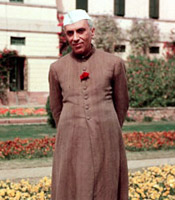
Speaking to the Indian parliament on the issue of reorganization of states along linguistic lines Nehru would obsessively return to the question of what would happen to linguistic minorities, especially those who may live along the borders and cannot be easily lumped into either this or that state. The voluminous correspondences of not just Nehru but also that of Sardar Patel and Rajendra Prasad show that Nehru was a stickler to democratic principles in matters of state and party. Nehru's letters to the Chief Ministers, occupying a bulk of the Selected Works, shows a leader who corresponded with all constitutional functionaries, irrespective of intellectual disparities, with great regard for the office they hold. His letters, completely devoid of any imperiousness of the office he held or the popularity that he enjoyed, were suffused with respect for democracy. Nehru practically tutored all leaders in the traditions of democracy. He'd honor the parliament's Question hour by making an effort to not just be present without fail but also to answer questions. One can safely pick any page from the 50 volume Selected Works and be assured that there would not be a single word that would smack of the fascism that he so feared would lurk ever in the shadows of a leader like him.
The very learned Meghnad Saha smugly declared "ninety percent of the people cannot learn another language". Nehru, very respectfully and politely, dismantles Saha's argument and shows his deep understanding of people and democracy. "You and I may have some difficulty in picking up another language because we proceed by grammar and all that. But you take persons-pick them out out from Delhi bazaar and put them in an environment of another language. you will find in three months they will talk that language which you will not know". He further rubs it in by pointing out that in India's embassies while the secretaries and others, supposedly learned, struggle to learn the native language it is the "lower staff who have to work there pick up a language of that country".
Nehru bore no malice towards his detractors or ideological opponents. Nehru included a stinging letter by Rajendra Prasad and Sardar Patel in his book 'A bunch of old letters'. Prasad and Patel had offered to resign from their party posts when Nehru, as president, sought to push his ideas on socialism. Nehru's reply was gracious and magnanimous enough that they stayed on. A man who includes a letter critical of him in his own anthology is rare indeed.
The man who wrote a sweeping history of the world sitting behind bars would, with all humility, refuse to call himself a historian when he addressed academic historians. The author of several highly regarded books and an avid student of literature would refer to his position as head of Sahitya Akademi as an honor that exceeded his qualification in a public address. Nehru never missed attending the science congresses and never, for once, cast himself as anything beyond a layman of science.
Nehru, ably assisted by Maulana Abul Kalal Azad, unleashed a revolution in establishing India's educational policy. Research institutes and world class academic institutes of higher learning were established at a rapid clip and would serve as islands of hope in the following decades amidst a sea of mediocrity and hopelessness. Indians who heap abuse on Nehru, today, as a dreamer little realize how much they owe to the man who was unafraid of dreaming of an MIT like institute, an atomic research institute and more in the 1950s when India was mired in poverty and still nursing the wounds of a searing partition. 4 IITs, modeled on Ivy League universities of US, were opened between 1951-59. The next set of IITs were opened only in 2008. Till today India's educational policy flounders when it comes to allowing foreign capital and foreign collaboration and yet the IITs were established by a nascent independent country that has just thrown off the yoke of foreign domination with foreign collaboration. In an era when the government controlled most aspects of industry and education the IITs, by a special act of the Parliament, was given unprecedented, by Indian standards, autonomy. A premier medical institute like AIIMS was established by a special act of the parliament in 1956. The next AIIMS was mandated only as recently as 2012.
In all of Sardar Patel's or Rajendra Prasad's or Ram Manohar Lohia's collections of writings can we see the ambitious vision of establishing a nuclear research institute like BARC in 1954, by an impoverished nation barely 7 years after independence. It can scarcely be appreciated today without a leap of imagination what it is to even envisage such a research institute in the India of 1954. When ISRO launched a Mars probe in 2014 it did so standing on the shoulders of Jawaharlal Nehru who had setup Indian National Committee for Space Research in 1962. Nehru-baiters would rush to point out the contributions of Indian scientific giants like Vikram Sarabhai, Meghnad Saha, Homi Bhabha, C.V. Raman and others and ask "is Nehru being credited liberally?" I'd say just go and read the correspondences between Homi Bhabha and Nehru to realize how intricately Nehru was involved at policy level with each of them to create such institutions. The exchanges also underscore the point that nobody but Nehru could've earned the respect of such giants much less been eager to realize in concrete terms their ideas.
That Nehru charted an independent course in economics between the extremities of Lohia's communism and Rajaji's free market theology is in itself a creditable achievement. Contrary to popular myth the Nehru years were actually friendly to foreign capital. Economists Aravind Panagariya and Jagdish Bhagwati, both currently supporting Modi, have pointed out in their books on Indian economic policy how the Nehru years were actually welcoming to foreign investment. It was partly necessity too for a capital starved country. Those who rant about Nehru's socialism are willfully ignorant or blind to the realities of those perilous years within the country and the world at large. The world was digging itself out of the rubble of a war that saw countries destroyed, borders redrawn, power equations altered for the next 50 years, tens of millions killed, millions more displaced, a retreating colonial power, newly emergent world super powers and amidst all this chaos a sub continent stumbling into independence accompanied by the world's largest migration of people. To even formulate a coherent economic policy for those years is an achievement by itself. In their eagerness to ridicule Nehru the baiters forget stellar personalities like Shanmukam Chetty and C.D. Deshmukh.
America learned at great cost as recently as 2008 that the government is the lender of last resort when an economy teeters on the brink. The immediate post wars were the high tide of liberalism and welfare state fueled by Keynesian economics which was at its apogee then. FDR, Truman and even Nixon instituted economic policies that could easily be called Nehruvian. The free market of Rajaji and his Swatantra Party reads more like the manifesto of today's Republican party and was ill suited for India. The so called libertarian streak of Swatantra party was thinly disguised upper caste elitism that had little sympathy for the vast dispossessed millions who were eking out a living on pathetically paltry incomes. I was amused to read how Ram Manohar Lohia pours scorn over Nehru's notion of private enterprise existing along side government owned enterprises. The West finally shook off the shackles of Keynes only in the 80s underscoring how Nehruvian economic policies were very much in line with almost the entire world at that time.
Yasmin Khan in her masterly book 'Great Indian migration' mentions how the Central government was compelled to institute welfare and rehabilitation policies for the millions of refugees who trekked into India. State governments bowing to local pressure did not want to host the refugees lest it upset local economy and the Central government, under Nehru, had to step in with unprecedented economic measures to help the refugees and to stabilize a very volcanic situation.
Little do we appreciate today how much government funding was essential to the economy at that point in India. Establishing educational institutes, research institutes, health care facilities, badly needed industries, transport to every corner of India and more needed the urgent role of government.
Almost all failures of Nehru, some real and mostly imaginary, cited by his naysayers will invariably all culminate in the final accusation that he pandered Muslims. Nothing about Nehru animates his enemies more than his steadfast commitment to secularism. If there was one aspect where Nehru was better than Gandhi it was on the score of secularism. Nehru was a true agnostic and eyed all religions with skepticism while respecting their rich contributions to humanity. Barring Gandhi and Nehru almost all of the Congress leadership either looked at secularism as strategic good or at worst a necessary evil to keep the country united.
To argue that secularism was an intrinsic feature of Hinduism, as is done by Hindutva bigots, is complete bunkum. Sunil Khilnani in his contentious book 'Idea of India' argues that until the advent of the British the Indian princely states were not the classic nation-states as modern political science would define a state. The distinction that Khilnani specifies is how the state uses its power to organize society by sometimes changing long entrenched customs. Hindu reformers petitioned British viceroys to reform Hinduism's pernicious customs like child marriage and Sati, the custom of burning widows. Fueled by the progressivism of the independence movement there was a demand to reform the laws governing Hindus to change some backward customs particularly relating to the status of women.
Ambedkar and Nehru formed an unexpected duo in pushing for what later came to be known as the Hindu Code bill. Rajendra Prasad and fellow orthodox Hindus in Congress stymied Nehru's attempt for such a bill during the provisional government arguing that the provisional government lacks the mandate to do such a sweeping legislation. Ambedkar quit the ministry in a huff. Nehru then went to the electorate and campaigned on it. Strengthened by the political capital he earned Nehru shepherded the Hindu bill piecemeal but ultimately changing the contours of an ancient religion that stretched back into several millennia. One could call Nehru a Manu for the 20th century. Much later LBJ would earn the praise of historians for a similar attempt to pass the Civil Rights bill in US. Nehru's achievement ranks above that of LBJ.
The Kashmir tangle is another favorite stick to beat Nehru with. The unification of India, the accession of the princely states, were all without precedence in all of human history. Dominique Lapierre and Larry Collins quote Nehru as telling Mountbatten "just as Calais was written upon the heart of your queen so is Kashmit written upon mine". The internationalization of the imbroglio is an oft cited example of Nehru's romanticism albeit muddle thinking where, his detractors like to conjecture, the earthy pragmatism of Sardar Patel might've brought about a cleaner solution. All of that, as the Americans says, is Monday morning quarter backing. The Kashmir imbroglio has more myths to it than reality. The so called plebiscite pledge by Nehru is more nuanced than is commonly acknowledged. The pledge clearly states that a plebiscite will be conducted in Kashmir only when Pakistan stops meddling in Kashmir.
The China war is a true blot on Nehru's regime. The viciousness with which Nehru is savaged on account of Kashmir and China, of course the real reason is as I cited above his strident secular outlook, is appalling. Americans have learned to appreciate FDR for what he did and not trash him for Pearl Harbor. In fact FDR is rarely blamed for Pearl Harbor. It is fantasy to assume that a country like India could've spent on defense without sacrificing more urgent and far more pressing concerns like education, health care, welfare and rehabilitation.
Was Nehru without vices or shortfalls? Of course not. The man who argued in that anonymous article that he should not be allowed a third term as Congress president could have followed the example of George Washington and resigned after his second term. But then Washington had John Adams and Thomas Jefferson waiting to take over unlike the unsparing second line of leadership in Nehru's days. While Nehru never became the fascist that he feared he could become he was not above playing politics in easing out those he disliked, mostly justified. The Kamaraj plan, put in motion to remove potential challengers, unfortunately removed much needed leaders like Kamaraj himself from offices they then held thus paving way for second rate leadership. Nehru's fascination about communism, despite his aristocratic aversion to its vulgarity and violence, made him less sympathetic to US while being drawn towards USSR. Then there is the weakness for having colleagues like V.K. Krishna Menon and acquiescing to his daughter's nagging and dismissing the world's first elected Communist government in the state of Kerala.
The vices and shortfalls of Nehru were not unique to him but his virtues and visions were almost singularly unique to him and for that India is deeply indebted to its finest son. Browse randomly through any page in the many anthologies of Nehru's writings and speeches the one unfailing character a reader can readily discern is that Nehru had only one motivation that his filled his days and nights, to make India a better country for the poorest and weakest citizen. There was poetry even in his death. The night before his death he ad written out on a piece of paper the lines of a poem by Robert Frost that best summed up the life he had lived.
"The woods are lovely, dark and deep,
But I have promises to keep,
And miles to go before I sleep,
And miles to go before I sleep".
As was his wish his ashes were strewn all over India forever mingled with its soil and water. It is highly indecent to accuse a man who wanted his ashes to be sprinkled in the Ganges as disrespectful to India, Indian traditions and Hinduism. On this 125th anniversary of Nehru's birth let us remember that Modi's India is being built on the foundations laid by Jawaharlal Nehru.
The article 'The Rashtrapathi' signed by 'Chankaya' appeared in The Modern Review of Calcutta in November 1937 (actually it was published anonymously). The article caused ripples in the then Congress as Nehru was then President of the party. Only later it became known that the author was none other than Jawharlal Nehru. Other than Gandhi, amongst the pantheon of Indian leaders, no one comes close to Nehru's sense of dread about the ability of power to corrupt one's soul.
Nehru continues mercilessly in that article to assail himself, "men like Jawaharlal, with all their capacity for great and good work, are unsafe in democracy. A little twist and Jawaharlal might turn a dictator sweeping aside the paraphernalia of a slow-moving democracy. He might still use the language and slogans of democracy and socialism, but we all know how fascism has fattened on this language and cast it away as useless lumber". Sadly, not he, but his daughter would prove every word prophetic.
Speaking to the Indian parliament on the issue of reorganization of states along linguistic lines Nehru would obsessively return to the question of what would happen to linguistic minorities, especially those who may live along the borders and cannot be easily lumped into either this or that state. The voluminous correspondences of not just Nehru but also that of Sardar Patel and Rajendra Prasad show that Nehru was a stickler to democratic principles in matters of state and party. Nehru's letters to the Chief Ministers, occupying a bulk of the Selected Works, shows a leader who corresponded with all constitutional functionaries, irrespective of intellectual disparities, with great regard for the office they hold. His letters, completely devoid of any imperiousness of the office he held or the popularity that he enjoyed, were suffused with respect for democracy. Nehru practically tutored all leaders in the traditions of democracy. He'd honor the parliament's Question hour by making an effort to not just be present without fail but also to answer questions. One can safely pick any page from the 50 volume Selected Works and be assured that there would not be a single word that would smack of the fascism that he so feared would lurk ever in the shadows of a leader like him.
The very learned Meghnad Saha smugly declared "ninety percent of the people cannot learn another language". Nehru, very respectfully and politely, dismantles Saha's argument and shows his deep understanding of people and democracy. "You and I may have some difficulty in picking up another language because we proceed by grammar and all that. But you take persons-pick them out out from Delhi bazaar and put them in an environment of another language. you will find in three months they will talk that language which you will not know". He further rubs it in by pointing out that in India's embassies while the secretaries and others, supposedly learned, struggle to learn the native language it is the "lower staff who have to work there pick up a language of that country".
Nehru bore no malice towards his detractors or ideological opponents. Nehru included a stinging letter by Rajendra Prasad and Sardar Patel in his book 'A bunch of old letters'. Prasad and Patel had offered to resign from their party posts when Nehru, as president, sought to push his ideas on socialism. Nehru's reply was gracious and magnanimous enough that they stayed on. A man who includes a letter critical of him in his own anthology is rare indeed.
The man who wrote a sweeping history of the world sitting behind bars would, with all humility, refuse to call himself a historian when he addressed academic historians. The author of several highly regarded books and an avid student of literature would refer to his position as head of Sahitya Akademi as an honor that exceeded his qualification in a public address. Nehru never missed attending the science congresses and never, for once, cast himself as anything beyond a layman of science.
Nehru, ably assisted by Maulana Abul Kalal Azad, unleashed a revolution in establishing India's educational policy. Research institutes and world class academic institutes of higher learning were established at a rapid clip and would serve as islands of hope in the following decades amidst a sea of mediocrity and hopelessness. Indians who heap abuse on Nehru, today, as a dreamer little realize how much they owe to the man who was unafraid of dreaming of an MIT like institute, an atomic research institute and more in the 1950s when India was mired in poverty and still nursing the wounds of a searing partition. 4 IITs, modeled on Ivy League universities of US, were opened between 1951-59. The next set of IITs were opened only in 2008. Till today India's educational policy flounders when it comes to allowing foreign capital and foreign collaboration and yet the IITs were established by a nascent independent country that has just thrown off the yoke of foreign domination with foreign collaboration. In an era when the government controlled most aspects of industry and education the IITs, by a special act of the Parliament, was given unprecedented, by Indian standards, autonomy. A premier medical institute like AIIMS was established by a special act of the parliament in 1956. The next AIIMS was mandated only as recently as 2012.
In all of Sardar Patel's or Rajendra Prasad's or Ram Manohar Lohia's collections of writings can we see the ambitious vision of establishing a nuclear research institute like BARC in 1954, by an impoverished nation barely 7 years after independence. It can scarcely be appreciated today without a leap of imagination what it is to even envisage such a research institute in the India of 1954. When ISRO launched a Mars probe in 2014 it did so standing on the shoulders of Jawaharlal Nehru who had setup Indian National Committee for Space Research in 1962. Nehru-baiters would rush to point out the contributions of Indian scientific giants like Vikram Sarabhai, Meghnad Saha, Homi Bhabha, C.V. Raman and others and ask "is Nehru being credited liberally?" I'd say just go and read the correspondences between Homi Bhabha and Nehru to realize how intricately Nehru was involved at policy level with each of them to create such institutions. The exchanges also underscore the point that nobody but Nehru could've earned the respect of such giants much less been eager to realize in concrete terms their ideas.
That Nehru charted an independent course in economics between the extremities of Lohia's communism and Rajaji's free market theology is in itself a creditable achievement. Contrary to popular myth the Nehru years were actually friendly to foreign capital. Economists Aravind Panagariya and Jagdish Bhagwati, both currently supporting Modi, have pointed out in their books on Indian economic policy how the Nehru years were actually welcoming to foreign investment. It was partly necessity too for a capital starved country. Those who rant about Nehru's socialism are willfully ignorant or blind to the realities of those perilous years within the country and the world at large. The world was digging itself out of the rubble of a war that saw countries destroyed, borders redrawn, power equations altered for the next 50 years, tens of millions killed, millions more displaced, a retreating colonial power, newly emergent world super powers and amidst all this chaos a sub continent stumbling into independence accompanied by the world's largest migration of people. To even formulate a coherent economic policy for those years is an achievement by itself. In their eagerness to ridicule Nehru the baiters forget stellar personalities like Shanmukam Chetty and C.D. Deshmukh.
America learned at great cost as recently as 2008 that the government is the lender of last resort when an economy teeters on the brink. The immediate post wars were the high tide of liberalism and welfare state fueled by Keynesian economics which was at its apogee then. FDR, Truman and even Nixon instituted economic policies that could easily be called Nehruvian. The free market of Rajaji and his Swatantra Party reads more like the manifesto of today's Republican party and was ill suited for India. The so called libertarian streak of Swatantra party was thinly disguised upper caste elitism that had little sympathy for the vast dispossessed millions who were eking out a living on pathetically paltry incomes. I was amused to read how Ram Manohar Lohia pours scorn over Nehru's notion of private enterprise existing along side government owned enterprises. The West finally shook off the shackles of Keynes only in the 80s underscoring how Nehruvian economic policies were very much in line with almost the entire world at that time.
Yasmin Khan in her masterly book 'Great Indian migration' mentions how the Central government was compelled to institute welfare and rehabilitation policies for the millions of refugees who trekked into India. State governments bowing to local pressure did not want to host the refugees lest it upset local economy and the Central government, under Nehru, had to step in with unprecedented economic measures to help the refugees and to stabilize a very volcanic situation.
Little do we appreciate today how much government funding was essential to the economy at that point in India. Establishing educational institutes, research institutes, health care facilities, badly needed industries, transport to every corner of India and more needed the urgent role of government.
Almost all failures of Nehru, some real and mostly imaginary, cited by his naysayers will invariably all culminate in the final accusation that he pandered Muslims. Nothing about Nehru animates his enemies more than his steadfast commitment to secularism. If there was one aspect where Nehru was better than Gandhi it was on the score of secularism. Nehru was a true agnostic and eyed all religions with skepticism while respecting their rich contributions to humanity. Barring Gandhi and Nehru almost all of the Congress leadership either looked at secularism as strategic good or at worst a necessary evil to keep the country united.
To argue that secularism was an intrinsic feature of Hinduism, as is done by Hindutva bigots, is complete bunkum. Sunil Khilnani in his contentious book 'Idea of India' argues that until the advent of the British the Indian princely states were not the classic nation-states as modern political science would define a state. The distinction that Khilnani specifies is how the state uses its power to organize society by sometimes changing long entrenched customs. Hindu reformers petitioned British viceroys to reform Hinduism's pernicious customs like child marriage and Sati, the custom of burning widows. Fueled by the progressivism of the independence movement there was a demand to reform the laws governing Hindus to change some backward customs particularly relating to the status of women.
Ambedkar and Nehru formed an unexpected duo in pushing for what later came to be known as the Hindu Code bill. Rajendra Prasad and fellow orthodox Hindus in Congress stymied Nehru's attempt for such a bill during the provisional government arguing that the provisional government lacks the mandate to do such a sweeping legislation. Ambedkar quit the ministry in a huff. Nehru then went to the electorate and campaigned on it. Strengthened by the political capital he earned Nehru shepherded the Hindu bill piecemeal but ultimately changing the contours of an ancient religion that stretched back into several millennia. One could call Nehru a Manu for the 20th century. Much later LBJ would earn the praise of historians for a similar attempt to pass the Civil Rights bill in US. Nehru's achievement ranks above that of LBJ.
The Kashmir tangle is another favorite stick to beat Nehru with. The unification of India, the accession of the princely states, were all without precedence in all of human history. Dominique Lapierre and Larry Collins quote Nehru as telling Mountbatten "just as Calais was written upon the heart of your queen so is Kashmit written upon mine". The internationalization of the imbroglio is an oft cited example of Nehru's romanticism albeit muddle thinking where, his detractors like to conjecture, the earthy pragmatism of Sardar Patel might've brought about a cleaner solution. All of that, as the Americans says, is Monday morning quarter backing. The Kashmir imbroglio has more myths to it than reality. The so called plebiscite pledge by Nehru is more nuanced than is commonly acknowledged. The pledge clearly states that a plebiscite will be conducted in Kashmir only when Pakistan stops meddling in Kashmir.
The China war is a true blot on Nehru's regime. The viciousness with which Nehru is savaged on account of Kashmir and China, of course the real reason is as I cited above his strident secular outlook, is appalling. Americans have learned to appreciate FDR for what he did and not trash him for Pearl Harbor. In fact FDR is rarely blamed for Pearl Harbor. It is fantasy to assume that a country like India could've spent on defense without sacrificing more urgent and far more pressing concerns like education, health care, welfare and rehabilitation.
Was Nehru without vices or shortfalls? Of course not. The man who argued in that anonymous article that he should not be allowed a third term as Congress president could have followed the example of George Washington and resigned after his second term. But then Washington had John Adams and Thomas Jefferson waiting to take over unlike the unsparing second line of leadership in Nehru's days. While Nehru never became the fascist that he feared he could become he was not above playing politics in easing out those he disliked, mostly justified. The Kamaraj plan, put in motion to remove potential challengers, unfortunately removed much needed leaders like Kamaraj himself from offices they then held thus paving way for second rate leadership. Nehru's fascination about communism, despite his aristocratic aversion to its vulgarity and violence, made him less sympathetic to US while being drawn towards USSR. Then there is the weakness for having colleagues like V.K. Krishna Menon and acquiescing to his daughter's nagging and dismissing the world's first elected Communist government in the state of Kerala.
The vices and shortfalls of Nehru were not unique to him but his virtues and visions were almost singularly unique to him and for that India is deeply indebted to its finest son. Browse randomly through any page in the many anthologies of Nehru's writings and speeches the one unfailing character a reader can readily discern is that Nehru had only one motivation that his filled his days and nights, to make India a better country for the poorest and weakest citizen. There was poetry even in his death. The night before his death he ad written out on a piece of paper the lines of a poem by Robert Frost that best summed up the life he had lived.
"The woods are lovely, dark and deep,
But I have promises to keep,
And miles to go before I sleep,
And miles to go before I sleep".
As was his wish his ashes were strewn all over India forever mingled with its soil and water. It is highly indecent to accuse a man who wanted his ashes to be sprinkled in the Ganges as disrespectful to India, Indian traditions and Hinduism. On this 125th anniversary of Nehru's birth let us remember that Modi's India is being built on the foundations laid by Jawaharlal Nehru.

