Showing posts with label Art. Show all posts

Sunday, December 27, 2015

Simbu+ Anirudh Song and Thuglaq's Idiocy (துக்ளக்கின் கலாசாரத் தலிபானியமும் வக்கிரமும்)

துக்ளக்கின் கலாசாரத் தலிபானியமும் வக்கிரமும்:

சிம்பு+ அனிருத்தைக் கண்டிக்கிறேன் பேர்வழி என்று வரும் பதிவுகளும் சரி அவர்களை ஆதரிப்போரும் செய்யும் முதல் காரியம் தமிழில் இது காறும் வந்த அனைத்துச்  சிலேடை மற்றும் நேரடி வக்கிரமான பாடல்களை வரி வரியாக நினைவூட்டுவதையே முதல் கடமையாகச் செய்கின்றனர். அதாவது இது தமிழ் சினிமா மரபு அல்லது தமிழ் சினிமா ரசிகனின் வக்கிரம் என்று நிறுவுகிறார்களாம். இதற்குத் துணையாக மழைப் பாடல்களைப் பற்றி யுவ கிருஷ்ணாத் தனமான விவரிப்பு வேறு.

From L-R Silambarasan & Anirudh. Image Courtesy http://www.filmibeat.com/img/2015/12/beepsong-14-1450074701.jpg
முதலாவதாக இந்திய தணிக்கைச் சட்டங்களுக்குள் ஓர் எல்லையைத் தாண்ட முடியாமையே இவற்றுக்கெல்லாம் விதை. அதே சமயம் என்னமோ தமிழன் மட்டும் இதையெல்லாம் ரசிக்கிறான் என்று கட்டமைப்பது பைத்தியக்காரத்தனம்.

ஹாலிவுட்டை கிண்டலடித்துச் சுஜாதா எழுதியது நினைவுக்கு வருகிறது. துப்பறியும் படங்களில் சர்வ நிச்சயமாய் இடம் பெரும் கிளப் நடனங்கள் பற்றி நக்கலடித்திருப்பார். சிசில் பி டிமெல்லியின் பைபிள் கதைகளை மையமாகக் கொண்ட படங்களிலேயே கூட அக்கால அமெரிக்கத் தணிக்கை விதிகளுட்பட்டு கவர்ச்சி இடம் பெரும். ரோமாபுரி பற்றிய வரலாற்றுப் படங்களென்றால் அக்கால ரோமாபுரியின் உண்மையான வக்கிரங்களை மிதமிஞ்சும் காட்சியமைப்பு இருக்கும். இப்படிப் படங்களின் நிர்வாணக் காட்சிகளைத் தொகுத்து அளிக்கவென்றே இணையத் தளங்களுமுண்டு.

துக்ளக் பத்திரிக்கை அதற்கேயுரிய வக்கிரத்தோடு ஒருப் பதிவை வெளியிட்டிருக்கிறது ( http://idlyvadai.blogspot.com/2015/12/blog-post.html ). சிம்பு+ அனிருத்தை தமிழ் சினிமா மரபின் நீட்சி என்பது போலப் பாவ மன்னிப்பு வழங்கிவிட்டு அவர்களின் உண்மையான 'டார்கெட்' மீது பாய்ந்தார்கள். தமிழ் சிற்றிலக்கியப் பத்திரிக்கைகளில் பெண் கவிஞர்கள் பெண்ணுறுப்புகளை விவரித்தும் காமத்தை முன்வைத்தும் எழுதும் பாட்டினைச் சாடுகிறார்கள். இதை எழுதியவர் ஓர் இலக்கிய மொண்ணை என்பது நிதர்சனம்.

சிலேடையாக 'இலந்தப் பழம்' என்று எழுதியதையும் நேரடியாக எழுதப் பட்ட நரகலையும் ஒன்றென வாதிடுவதே தவறு.

நான் அடிக்கடிச் சொல்வேன் தி.க/தி.மு.க வினருக்கும் வலது சாரி இந்துத்துவ அமைப்புகளுக்கும் வித்தியாசங்கள் கிடையாதென்று. இருவரும் ஒரு நாணயத்தின் இரு பக்கங்கள். இருவருக்கும் வெறுப்பு வியாபாரம் முக்கியம். ஒரே வித்தியாசம் யார் அல்லது எது வெறுக்கப் படுகிறதென்பதில் தான். இதைப் பற்றி விரிவாக வேறொரு தருணத்தில் எழுதுகிறேன்.

அண்ணாத்துரை கம்ப ராமாயணத்தில் சீதையின் அங்க லாவண்யங்களின் வர்ணனைகளைத் தொகுத்து 'கம்ப ரஸம்' என்று வெளியிட்டுத் தன் அரிப்பையும் தன் உடன்பிறப்புகளின் அரிப்பையும் தீர்த்து வைத்தார். கம்பனை ஒரு சரோஜா தேவி லெவெலுக்கு இறக்கியதில் அண்ணாத்துரை வெற்றியடைந்தார் என்று இன்று ஒப்புக் கொள்கிறேன். ஏனென்றால் செக்குக்கும் சிவலிங்கத்துக்கும் வித்தியாசம் தெரியாத துக்ளக்கின் பத்தி ஆசிரியர் செய்திருப்பதும் அதுவே தான். இலக்கியத்தில் பெண் கவிஞர் பெண்ணுறுப்பு பற்றி எழுதுவதும் வக்கிரத்தையே குறி வைத்து எழுதப் பட்ட ஒரு சினிமாப் பாடலுக்கும் வித்தியாசம்  தெரியாத தற்குறித் தனம் தான் அந்தப் பதிவில் இருந்தது.

ஒரு பகுத்தறிவுவாதிப் புளித்துப் போன இன்னொரு வாதத்தை முன் வைத்தார். "அப்படியென்றால் அபிராமி அந்தாதிப் போன்றவைகளை என்ன செய்வது". அவருக்கும் அந்தத் துக்ளக் துக்கிரித்தனத்திற்கும் வித்தியாசமேயில்லை.

இன்னொரு முகம் சுளிக்க வைத்த பதிவு ஒரு பெண்ணியவாதியால் எழுதப் பட்டது. பாடல் சம்பந்தப் பட்ட இருவரில் பிராமணரான அனிருத்தை மட்டும் குறி வைத்து எழுதித் தன் பகுத்தறிவுப் பதாகையைப் பட்டொளி வீசிப் பறக்க விட்ட அறிவிலி அவர். நம் தந்தைகள் எல்லோரும் அக்கா, தங்கை, அம்மாவோடு பிறந்தவர்கள் தான் இருந்தும் நாம் பிறந்தோம். அதற்கு மேல் அதை விளக்கினால் எனக்கும் இந்த அறிவிலித்தனத்திற்கும் வித்தியாசமிருக்காது. இந்த அறிவுக் கெட்ட 'நீ அக்கா தங்கையோடு பிறக்கவில்லையா, உன் அம்மா' என்றெல்லாம் கேட்பது காமம் சார்ந்த ஓர் அறிவிலித் தன்மையையே காட்டுகிறது.அதுவும் வள்ர்ந்து சுயமாகத் தனித்தியங்கும் ஓர் ஆணின் செய்கைக்கு அவரின் தாய் மற்றும் சகோதரிகளைப் பெண்ணியம் என்ற போர்வையில் கேள்விக் கேட்கும் அறிவிலித் தனத்தை என்னவென்று இகழ்வது.

நான் பொதுவாக ஹிப்-ஹாப் வகைப் பாடல்களை விரும்புவதில்லை அவற்றிலுள்ள ஆபாசங்களுக்காக ஆனால் இந்த வருடம் முதன் முறையாக ஒரு ஹிப்-ஹாப் ஆல்பத்தை வாங்கினேன். Kendrick Lamar-இன் "Pimp a butterfly" எனும் ஆல்பம் தான் அது. நியு யார்க் டைம்ஸில் மூன்று இசை விமர்சகர்களின் பட்டியலில் இந்த வருடத்தின் சிறந்த ஆல்பம் லிஸ்டில் அது இருந்தது மட்டுமல்லாமல் அவர்கள் அப்பாடல்களில் பேசப்படும் சமக் காலத்திய பிரச்சினைகள் இசை எனும் கலை வடிவத்தின் மூலமாக விவாதிக்கப்பட்டதை வலியுறுத்தியிருந்தனர். அந்தப் பாடல்களிள் ஆபாச வார்த்தைகள் சரமாரியாக வந்து விழும். அதனாலேயே அந்த CD முழுவதும் "Explicit" எனும் ரேட்டிங் கொடுக்கப் பட்டிருந்தது. அப்படி அடையாளப்படுத்தப்படுவதால் அந்த ஆல்பத்தை 18-வயதுகுட்பட்டவர்கல் கடைகளில் வாங்க இயலாது. அது மட்டுமல்ல ஆப்பிளின் ஐ-டியூன்ஸில் அதே ஆல்பத்திற்கு "Clean" என்று இன்னொரு பிரதியும் விற்கும். இந்த "Clean" பிரதியில் கெட்ட வார்த்தைகள் தொழில் நுட்பத்தின் உதவியோடு நீக்கப்பட்டு வேறு சாதாரண வார்த்தைகள் இடம் பெற்றிருக்கும். அமெரிக்காவில் வீடியோ கேம்ஸ் மற்றும் பாடல்களில் ஆபாசங்கள் மலிந்து அவை சிறார்களைச் சென்றடைகின்றன என்று விவாதிக்கப்பட்டு இன்று அவையும், தொலைக் காட்சி நிகழ்ச்சிகளும் ஒரு தரப்படுத்தலுக்குட்படுத்தப் படுகின்றன (Ratings). அது மட்டுமல்ல சூப்பர் பெளல் போன்ற நிகழ்ச்சிகளில் ஆபாசம் வந்து விடக் கூடாதென்பதற்காக 'ஒளிப்பரப்புத் தாமதப்படுத்தல்' (delayed broadcasting) முறைக் கடைப் பிடிக்கப் படுகிறது.

மேற்சொன்ன எதுவும் நம் தமிழ் கூறும் நல்லுலகில் வழக்கத்திலில்லை. சினிமாவில் இயக்குனரின் சொற்படியும் வணிக நிர்பந்தங்களுக்குட்பட்டும் எழுதப்படும் பாடல்களும் இசையும் கலை வடிவம் ஆகாது. பாடலாசிரியன் என்பவன் கவிஞனில்லை. திரை இசை என்பது இசை எனும் கலை வடிவம் இல்லை என்பன போன்ற அடிப்படைப் புரிதல்கள் இல்லாத சமூகத்தில் தான் ஒரு நாலாந்தர இசைக் கோர்ப்பை ஒரு சமூகமே தாரைத் தப்பட்டையோடு கொண்டாடும். கென்ட்ரிக் லமாருக்கும் ப்ளேபாய்க்கும் வித்தியாசமுண்டு என்பதை அறிந்தச் சமூகம் முன்னேறியச் சமூகம். அது லமாரின் புகழ் பெற்ற ஆல்பமாகவே இருந்தாலும் குழந்தைகளுக்கானது அல்ல என்று தெளிவும் குழந்தைகளை அப்பாடல்களில் இருந்து பாதுகாக்கும் உணர்வும் கொண்ட சமூகமே வாழத் தக்கது. நான்கு, ஐந்து வயது குழந்தைகளை 'தீப் பிடிக்க தீப் படிக்க' என்றுப் பாட வைத்தோ அப்பாடலுக்கு நடனமாட வைத்தோ அதை வலையேற்றம் செய்யும் மன நோய்க் கொண்ட பெற்றொரும் தன் பெண் பிள்ளைகள் தொலைக் காட்சிப் போட்டி நிகழ்ச்சிகளில் வயதுக்கு மீறீயப் பாடல்களுக்கு நடனமாடுவதை ஊக்குவ்விக்கும் சீக்குப் பிடித்த சமூகத்தில் கவனம் அதிகம் தேவை. சமீபத்தில் சூர்யா ஒரு பேட்டியில் கூறியது போல் "பிள்ளைகள் கெட்ட வார்த்தைப் பேசுவதில்லை, கேட்ட வார்த்தையைத் தான் பேசுகிறார்கள்". தொலைக் காட்சி நிகழ்ச்சிகள், தனிப் பாடல் ஆல்பம் ஆகியவற்றுக்கு அவசரமாக தணிக்கைச் சட்டம் தேவை. அது வரை இந்த ஆபாசப் பாடல் தடை செய்யப் பட வேண்டும்.

ஒரு கீழ்த்தரமானப் பாடல் பற்றிய விவாதத்தில் தமிழகத்தில் வேறூன்றியிருக்கும் இனத் துவேஷம்; காமம், இலக்கியம், இசைப் பற்றிய கந்திரக் கோளமான புரிதல்கள் வீதிக்கு வந்தது தான் மிச்சம்.


Wednesday, May 29, 2013

Nina Simone, Bob Dylan And Protest Songs: Music, Civil Rights Struggle And Politics.

India is a land of music, song and dance. It has a very ancient tradition in fine arts and a uniquely continuous civilization over the centuries. India's dance forms and music heritage is a widely admired one. Yet it is in the same India that such art forms are mostly relegated to the ivory tower with no relation to the ups and downs of a great country. What is worse is that for almost 99% of the country the finer forms of the arts and India's true heritage in music has no meaning. What most Indians consume by way of music is a bastardized version of the country's richest music with haphazard borrowing of western music (classical and otherwise) served up as what is called 'cinema music'. India's greatest achievement was its most unique freedom struggle. Yet the struggle did not produce any outpouring of music. Musicians did not compose music, on any notable scale barring random efforts of setting some poems by revolutionary poets to music, to provide an artistic expression of the greatest emancipation in human history. Indian musicians did not think of using their music as an art form to protest against the colonizer. On that count cinema musicians at least attempted something when they provided music for some movies that depicted the struggle.

Jeyakanthan in his novel 'Paarisukku Po' sets up an argument between two characters, an orthodox father who is a Carnatic musician and the son, a western classical musician and a recluse from Paris. Father and son battle through intermediaries on what each of their music means to them and to the world in general. One of the chief complaints of the son is that Carnatic music is mostly other worldly and lacks the varieties found in Western classical which has both secular and religious music. I spoke of how Shostakovich and Beethoven were political in their compositions. Music as an art form and art as a function of protest reaches greater heights, to my knowledge, in America.

Jazz music is inseparably braided with the Civil Rights struggle in America. One cannot write the history of civil rights struggle without mention the Jazz musicians or Afro-American gospel song tradition. Songs and music are a wonderful part of the Afro-American tradition. Jazz, the blues, R&B and soul music form a wonderful repertoire of art that blacks used to give voice to their oppression.

Jazz musician Nina Simone is a good example. Simone, in an interview, defiantly states "I choose to reflect the times and situations in which I find myself. That, to me, is my duty...we will shape and mould this country. I will not shaped and moulded at all anymore....How can you be an artist and not reflect the times"

Peruse the words carefully. She uses words like "I choose", an assertive "that is my duty", a defiant "I will shape and mould this country". Ilayaraja once retorted that politics is a sewer and he will have nothing to do with it. Just recently Tamil Nadu saw an outbreak of protests by college students demanding that the genocidal state of Sri Lanka be punished by the world community. Where was their Nina Simone? Did the students have a 9th symphony to blast from loudspeakers? Where was their Bob Dylan? Who was their poet? Did they an Allen Ginsberg? No. In a state and country addicted to entertainment that is by definition mindless (else its not considered 'entertainment') any such hopes are meaningless. Asking such questions, as I do, or seeking to live by such a code is often considered 'abnormal' and 'at war with world'.

I first came across Nina Simone in a book review in NYT. Then I sought out her songs and then I learned more about her. Mississippi in the 50's and 60's was considered a hotbed of violent racism in America. When a black church in Alabama was bombed and 4 little girls died Simone exploded into "Mississippi Goddam" in a live concert. The lyric, written by her, and her singing bristled with defiance. She went on to compile her 'protest songs' that included 'four women' which talked about the stereotypes of black women, 'strangefruit' talked about lynching and so on.

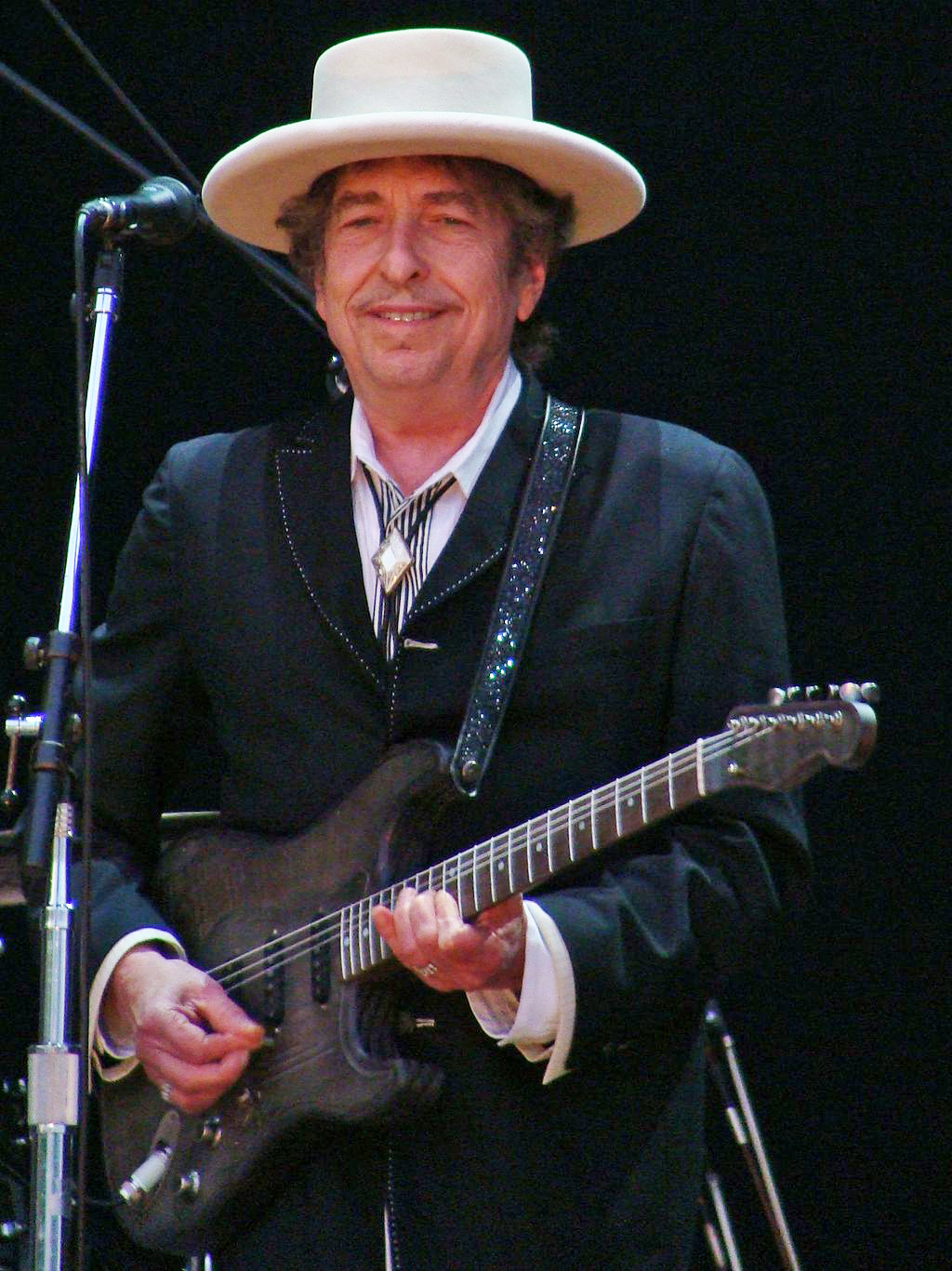
From the other end of the spectrum, racially speaking that is, comes Bob Dylan. When black teenager, 14 year old, Emmett Till was gruesomely murdered in 1955 Dylan burst forth in 'The ballad of Emmett Till". Emmet Till murder was a crystallizing moment that launched the civil rights struggle in the south. Dylan later performed in the historic 'March on Washington' where MLK Jr spoke of his dream. Dylan went on to compose his protest songs "The times, they are a changing" etc. He became the voice of protest for a long time.


Sometimes musicians like Ray Charles and Louis Armstron used their prestige as musicians to fight for civil rights. Ray Charles who was initially lukewarm towards fighting segregated performances at a pivotal moment refuses to play at a Georgia performance because the audience was segregated. Louis Armstrong was trotted out by the American government to tour the world and be an exhibit for American freedom all the while racism raged back home. Armstrong attracted flak for that. Armstrong lambasted Eisenhower  over what he perceived as Ike's waffle over school integration in Arkansas. Two days after Armstrong's outburst Ike sent Federal troops to Arkansas to ensure that black girls can enter the school.

Ravi Shankar brought Indian music to the west. Shankar has played to packed audiences of westerners across the globe and specifically in America. Ravi Shankar, famously, played along with the Beatles at Woodstock. I've not read of any incident where Ravi Shankar composed any protest music or used his prestige as world renowned musician to fight for any justice. The same can be said of almost every musician, film and non-film alike. When Lalgudi passed away there were obituary writers fell over each other to write glowing tributes. I cannot remember any Carnatic musician lifting a single finger to bring diversity into caste ridden Music Academy. If anything Carnatic music is zealously guarded from ensuring there is no diversity.

Since this series is occasioned by my comments on Ilayaraja I'll come to him. Ilayaraja, my friends keep reminding me, comes from a very oppressed community. Has Raja done anything to highlight their plight with his art form? If a Dalit writer or painter or politician or singer is expected to use his art form to speak of his or her people then should we excuse Raja for his intentional and singular failure to do so? A.R.Rahman runs a conservatory where he is trying to educate children from slums. Raja was only keen on making money through movies and had absolutely no social consciousness.

Nina Simone, Bob Dylan, Armstrong are all just a sliver in a glorious tradition of musicians using their music for 'shaping and moulding this country'. I respect and adore them. Never can I insult their memory by even mentioning Raja as an 'artist'.

Tuesday, May 21, 2013

Bach, Beethoven And Berlin Wall

Tamil film music icon Ilayaraaja performed to packed houses in Canada and US in February of this year. Auditoriums that seated thousands filled up with tickets priced at $75-$500+. I did not even notice that he was coming until my cousin told me. Many of my friends who attended the events posted running commentaries on Facebook and twitter. Arguments ensued. Questions about what is music, when does music become art and even why not consider Ilayaraja on par with Mozart (yes, please trust me) and more were asked. Confession, just yesterday I bought 10 of Raja's songs on iTunes to add to my existing collection of several hundreds that I listen often while I drive or read. I love music, in my own way. So why did I choose not to go and enjoy Raja? Do I not love music enough to seek an evening of film songs that I grew upon in the 80's and 90's? Can somebody love Beethoven and Ravi Shankar and ignore a Raja event? Would that be proof of 'feigning' interest in music for a snobbery value? I've gathered ideas for several blogs which I shall write in the days to come. 

A further confession. Though I learned to play violin for nearly 5 years (carnatic) I'd not call myself a musician. I cannot and will not speak of music in technical terms like raaga or notes or scales. There are many ways to talk of music. 

Defining what can be called 'classical music' is a contentious task by itself. Julian Johnson, author of 'Who needs classical music, offers some ideas. A music is not called 'classical' owing to its antiquity. When music transcends the immediate across ages and is capable of transmuting itself to various meanings it acquires an eternal relevance earning the label 'classical'. This is easier for instrumental music since there are no words to tie it down to a context. Does that mean a symphony has no meaning? Does music have a meaning?

Legendary conductor and composer Leonard Bernstein posed that questions to kids of New York City in his 'Young People's Concerts' that he conducted to familiarize a generation of children, that he felt, did not take a fascination for classical music, the cornerstone of Western civilization. Bernstein would play a piece and ask the children to imagine what theme would fit that music. He offers 'Superman' flying to address a crisis as a suitable theme. The music was originally written to portray Don Quixote. Did Bach compose his immortal cello suites imagining that one day his music will be played when history's worst symbol of oppression, the Berlin wall, would fall? Did Beethoven envisage that his 9th symphony will be played to commemorate the first anniversary of Berlin wall being brought down? 

Bach was not a very political person. When I visited his home in Leipzig I saw the contract that he had to comply with at his employer's place, a church. He was contracted to write music almost every week for the students. In essence one could say he was no different from any film musician who produces music for money. Yet for over 300 years his music has attained an eternity for the genius that was poured forth in them. The fugues were composed in response to a challenge by Frederick the Great and we will come to them later. Bach's cello suites were actually lost and discovered accidentally by legendary cellist Pablo Casals. The cello suites were an architectural beauty with six movements per cello. It is here we must pause and teach Tamils who don't know Western classical what that feat means.

Unlike Carnatic music Western classical is written for specific instruments. Carnatic, written without notes, is purely vocal in its original form. The instrumental accompaniments we hear in Carnatic are all improvisations, a technique that is the soul of Carnatic music. A six movement suite is where a composer strains his compositional talent to write music that would tease out every musical capability of an instrument over 15-30 minutes for each suite. Bach was a genius in writing music for an instrument to showcase the instrument's musical capabilities. The Well Tempered Clavier Book 1 & 2 is almost two hours of music written exclusively the plumb the depths and scale the heights on one instrument, the keyboard in 24 major and minor keys. This is compositional genius of a different scale from composing music for a Tamil film song for 5 minutes of which the overture/prelude for less than a minute is really musical setting the stage for a 'melody' that the stanzas adhere to. Then come equally short interludes and postludes. 

Mstislav Rostropovich was a Russian cellist exiled from Soviet Russia for his support of Alexander Solzhenitsyn. Rostropovich was highly respected for the genius virtuoso that he was. One day while he was in Paris Rostropovich heard that the most notorious symbol of Soviet tyranny, the Berlin Wall, was being demolished. Rostropovich rushed to Berlin, pulled up a chair and started playing Bach's cello suite No.2 (watch here http://youtu.be/FiwXUJJjL6g


Crowds milled around Rostropovich. If Rostropovich had been a film musician or if what he played was from music score the moment would have been silly. Rostropovich's personal stature as a genius, his exile, his fight for liberty all compounded with Bach's stately cello suite to create a moment that speaks volumes about a society which respects such an artist and such art. Two years later while Gorbachev was under house arrest and the Soviet empire was poised to strike back at Yeltsin Rostropovich smuggled himself into Moscow. Rostropovich's arrival into Moscow to support Yeltsin and a nascent democratic movement electrified Russians unlike anything else could have done. Can one imagine Michael Jackson or even the Beatles at such a moment? Again the man and the kind of the music are an inseparable whole. Bach's music that speaks to the most sublime within every human being and a society that loved Tolstoy, Tchaikovsky, the ballet and more revered art so highly that Russian tanks paused. It is not exaggeration to say Rostropovich saved Russia that day.

Celebrating the fall of Berlin Wall an internal orchestra with musicians drawn from Russia, France, Germany, America etc was commissioned to perform under the baton of conductor Leonard Bernstein. Bernstein, educated at Harvard, would imbibe a multi-disciplinary approach to music. His lectures were a tour-de-force across disciplines. Bernstein chose to play Beethoven's 9th symphony, considered possibly the greatest composition in all of western classical music.

Beethoven, unlike Bach, was a deeply political person. He starting writing his 3rd symphony dedicated to Napoleon. When he heard that Napoleon had declared himself 'emperor' Beethoven tore the dedication away and composed a pessimistic symphony that he called 'Eroica'. Beethoven broke traditions when he composed the 9th. The 9th is also referred to as 'choral symphony' because it is the only symphony by a major composer to have a choral piece.
 
The 9th was grand architecture in 4 movements with the 4th movement being a mini symphony itself with smaller 4 movements and the electrifying choral section all amounting to nearly an hour (74 minutes) of music that would engulf and elevate a soul. The symphony was scored for 2 flutes, 2 oboes,   2 bassoons, 4 horns, 2 trumpets, 3 trombones, cymbals, soprano, alto, baritone and more. 

Carnatic music is 'melodic' in structure. The notes succeed one and another successively. The word 'symphony' means a harmonious sound when more than one instrument is played 'together'. The latter taxes compositional talent because one has to imagine how 2 instruments would sound together. Now extrapolate that to all those listed instruments played alone and together in places. Add the complexity of a song like Schiller's 'Ode to joy'. Finally consider composing such music for an uninterrupted hour. 

Bernstein, in a typical gesture, altered the choral piece replacing the word 'joy' with 'freedom' to signal liberty. The complete performance has been uploaded here. We have to appreciate that this is an orchestra drawn from across the globe and the conductor is a 70 year old who would die 10 months after the performance. Bernstein's 1979 performance of the 9th, which I am watching as I type, shows a conductor who pours forth phenomenal physicality into the act of conducting and at places he appears rapturous close to tears. The Berlin performance was 20 years later.

Beethoven never dreamt that his symphony would be played to celebrate the demise of an evil empire. Even before that Berlin performance and even before the fall of the wall Chinese students protesting in Tianenmen square in July 1989 played the 9th from loudspeakers to drown out government propaganda and to lift their spirits. Women taking out a rally in Chile protesting the murderous Pinochet regime would alter the 9th and play it. That's why the 9th is considered classical music. In an immortal music Beethoven had provided channels to express human aspirations from China to Berlin to Chile across centuries. 

I remember an article that I read nearly 30 years ago in Readers Digest. The author was asked to list historical events that he wished he had witnessed alive. Alongside a desire to see how Moses led his people from Egypt, the Exodus, the author had listed the first performance of Beethoven's 9th symphony.

Dmitri Shostakovich's violin concerto No.1 Op99 is another tale to be told when music becomes the vehicle for a tortured soul that suffers under totalitarianism. Art is not for the ivory tower. It speaks to and embodies everyday travails and triumphs. About that later.

Wednesday, March 27, 2013

Paradesi: Bala's exercise in sado-masochism

"Our sweetest songs are those that tell our saddest thoughts" warbled Shelley in his 'Ode to a skylark'. The genius of Shakespeare reaches its apogee in his tragedies. Music can haunt us with a sad strain. Movies like 'Life is Beautiful' and 'Bicycle Thieves' leaves us with a pang in our heart. Portraying tragedy in a play or music or a movie calls upon the deepest reservoirs of creativity in any artist because  the portrayal can easily slide into a maudlin meaningless assault on the senses. Life abounds in tragedy. War zones with children starving and maimed continues till today. Promising lives cut short by disease and poverty is an all too common truth. So many children die of cancer after an unspeakably horrifying ordeal. How does any art form deal with all that? When does a tragic story become epic? When does a portrayal of tragedy become art and not a documentary? If one can answer with an example of showcasing a work to say this is how it should NOT be then Tamil director Bala's 'Paradesi' is a good example.

Bala gained quite a reputation for gritty movies that revolve around those that languish in the margins of life. His 'Naan Kadavul' with its cast of deformed individuals eking out a life under a slave holder made stomachs churn. Such moviemaking has earned Bala a halo of making 'unflinching' movies that are difficult to watch and for that reason alone praised. Yet his movies are only difficult to watch as much as one cannot stand next to a gutter infested with pigs. Neither has any profundity. If one wanted to make art by showing on screen what we would turn our eyes away from then all that we have to do is give a camcorder to a child and let it loose in some slums and conflict zones in the world, say in Ethiopia.

Seeing me disinterested in the movie my cousin, who loved the movie and who knows my deep love for  studying Holocaust, asked "if this movie was about Holocaust would you not be watching it enraptured". I told him "Exactly. Go watch 'Schindler's List' or 'Pianist' to understand how tragedy is portrayed'. I also added "watch out for Charu's review he would mention those movies". Next day morning my cousin told me "you are great. Charu just now posted a review and he cited 'Schindler's List' and 'Pianist'".


Millions perished in the ovens of Auschwitz and other concentration camps. How does one portray it in a movie and not come across as documentary? Why would 'Pianist' be a work of art but the documentary 'Auschwitz', however expensively and detailed its production might be, remain just a documentary?

Roman Polanski and Spielberg did not show people just being marched to death. There is a reason they both picked stories that had a redemptive element, a sense of hope amidst unspeakable horror, a faith in the triumphant spirit of humanity. A Nazi officer being moved by listening to Chopin, a Nazi war profiteer weeping about the lives he could have saved had he been more frugal in his expenses, give hope in humanity. It is that sense of hope that saves those movies from being dreary. Is that naive? No. That is the proper function of art.

Take 'Sophie's Choice'. Another movie centered on Holocaust and one that ends in heartbreaking tragedy. The heroine had to choose between her babies as to which she will give up to die in Auschwitz. But that is not the choice that the movie pivots on. That choice haunts the heroine and propels her to make one final choice, between her lover and husband. The tragic ending is poignant and one that the story inexorably churns towards. Its like how Macbeth, Hamlet and Lear churn towards their climactic tragic conclusion. And in their conclusion the reader or viewer strangely feels a liberation. Its a liberation in having peered at a profound layered truth that often glides by us unnoticed in the rush of life.

Wladyslaw Szpilman's memoir 'Pianist' is a mediocre book and certainly not to be ranked alongside Elie Wiesel's 'Night' or Viktor Frankl's 'Man's search for meaning' or Primo Levy's 'Survival in Auschwitz'. Yet Polanski turns a mediocre memoir into art with creative re-telling that includes even some fictional moments, one of which, when Szpilman plays an imaginary piano, is very poignant.

Bala is no sensitive artist or a keen student of literature and this shows. He took a book, 'Red Tea', about the travails of bonded laborers in British era tea estates and turns it into a documentary that pretends to be a movie.

The movie has dialogues scripted by Nanjil Nadan, a Sahitya Akademi awardee. Nanjil has a repugnant anal fetish. I've seen his stories abound with remarks about farting or piles. I guess in his mind nativity means speaking of the rear end and its functions. Even with a much respected author by his side Bala slips on characterizations. The movie garnered rave reviews particularly for Nanjil Nadan's dialogues. The dialogues were not exceptional and could have been written by anon with a sharp pen. I'd hazard a guess that Nanjil was not integral to movie making but wrote dialogues for scenes narrated by the director and I'd even guess that Nanjil's dialogues were edited mercilessly by the director.

Many have fondly recalled Nanjil's short story 'Idalaakudi Rasa' being used in the early portrayal of the hero. But that story, particularly the characterization of Rasa, had no context in this movie. Only in Tamil Nadu would reviewers wax eloquent about a misplaced short story out of affection for the author. Nanjil did not enhance his literary credentials a bit by taking part in this movie. Why do Tamil authors crave for cinema fame and attention?

The hero who appears like a retarded bumpkin in the opening scenes later emulates higher cognitive emotions of deep sympathy and even a sense of righteousness. A panoply of characters come and go with cardboard like qualities. A character is either villainous or innocent. A pyramid of exploitation crushes the gullible villagers with the middleman, a hack and few others up the totem pole all under the British estate owner.

The cinematographer was a much spoken about Chezhian. Other than employing a sepia toned lens I am not sure what he accomplished. As the villagers, by the tens, drink water from a pond like animals the camera sweeps across them and a scene with potential for poignancy just glides by. Long shots, sweeping panorama, sepia tone etc do not make up for cinematography. Cinematography is more than just handling a camera and knowing technology. It is not a mean feat that Schindler's List, filmed in black and white, won an Oscar for cinematography.

Music was sheer torture in a movie where music should have been one of the pillars. Again, G.V.Prakash probably knows how to play instruments and bang a few notes but that does not make him a musician. Incidentally the result would be no different even if Ilayaraaja, a has been, had scored the music.

The worst part of the movie was the Christian doctor. The characters was a pathetic caricature of evangelical christians who proselytize tribals. Yes proselytization remains a stigma for many missionaries. But equally undeniable is the role of CHristian missionaries in bringing education and health services to many remote corners. Ironically the book that the movie was based upon was written by a Christian doctor, P.H.Daniel, who toiled amongst the laborers. The doctor in the movie even dances a ridiculous dance with his White wife to celebrate Christmas. As they dance they assume the position that depicts the crucifix and they cavort while throwing bread to the laborers. A clear allusion to the Gospel miracle of feeding 5000. Thankfully Bala, in his perversion, did not pick on Muslims.

The story itself just plods and in fact the central theme of the movie happens only at half point (interval). Until then it is filled with inane jokes of the heroine teasing the bumpkin hero and a very thin portrayal of village life. Bala had used villagers as actors. He hit a bumper prize with the hero's grandmother. Everyone else has no idea of what acting it. There is a reason why professional actors should be used in a movie.

Upon reaching the plantation the movie drops any pretense of being a movie and is sheer documentary of the repressiveness and exploitation. The scene where the Britishers party and talk of Gandhi showcases the cardboard nature of characters and the pathetic quality of the actors. The movie, with a fetish for tragedy, the careens from one contrived tragedy to another. The ordeal finally ends with the hero's wife and newly born child entering the gates of hell. This was supposed to leave the viewer dazed and angry at a world of hopelessness. Yet, most viewers heave a sigh of relief and dart towards getting into their cars to drive back home. There is no lingering sadness just a vicarious pleasure of having slithered out of a gutter.

Vittoria De Sica's much lauded 'Bicycle thieves' too ends on a sad note. A father and son walk away with no hope about tomorrow in war ravaged Italy. What is worse the father had been humiliated as a thief before the eyes of his son. There is poignance in that simple story of a father desperately trying to get a cycle so he could go to his just secured job.

Satyajit Ray's 'Ashani Sanket' is a sensitive portrayal of the Bengal famine, in which millions perished. Ray takes us on a journey to understand the ravages of a famine that wrecked a once prosperous state. He narrates sensitively the breakdown of traditional relations. The famine is both central theme and a backdrop to a changing world.

All that Paradesi indulges in is a kind of sadism in tormenting the viewers and it is masochistic in as much as Bala wallows in making such movies.

Bala released a 'making of Paradesi' trailer prior to movie release. He would painstakingly instruct each and every actor on what postures to assume, how not to stare at a camera, how to engage in conversations and look natural etc. Bala, I am sure, has a great future as an assistant director. 

Wednesday, March 14, 2012

Amsterdam: Jewish Historical Museum

Before I knew Amsterdam's most famous Jew, Anne Frank, I had studied about it's second most famous Jew, Baruch Spinoza in Will Durant's "The story of philosophy". Spinoza ranks alongside Immanuel Kant as possibly the greatest modern philosopher. In two pages, that only Will Durant can write, Durant traces the arc of Jewish diaspora from its expulsion by the Romans unto the day Jews settled in Amsterdam and the birth of Spinoza. Spinoza was excommunicated by the Jewish community for his philosophy fearing that it angered their Christian hosts in the city.

Failing to find a home or museum of Spinoza I visited the "Jewish Historical Museum". Durant writes that Jews persecuted in Spain by Ferdinand , during Spanish Inquisition, fled in search of safety. "A large number of them embarked in the frail vessels of that day and sailed up the Atlantic, between hostile England and hostile France, to find at last some measure of welcome in little big souled Holland. Among these was a family of Portuguese Jews named Espinoza. Thereafter Spain decayed, and Holland prospered. The Jews built their first synagogue in 1598; and when, seventy five years later, they built another, the most magnificent in Europe, their Christian neighbors helped them to finance the enterprise. The Jews were happy now, if we may judge from the stout content of the merchants and rabbis whom Rembrandt had given immortality". Only Will Durant could write a passage that compresses so many meanings within a few lines. I had missed seeing Rembrandt's home in Amsterdam due to lack of time.

The Jewish museum had a permanent exhibition detailing the history of the first synagogue, Jewish rituals, artifacts that gave a vivid picture of one of the world's most ancient culture. One plaque mentioned the loyalty of Jews in Amsterdam to the Dutch royalty for the relative peace with which Jews could live in Holland unlike the rest of Europe. When Spinoza, like Uriel a Costa before him, had expounded beliefs that angered their Christian hosts the Jewish community excommunicated him as a price for their peaceful existence.

In what could happen only in Western museums typical of Western attitudes the Jewish museum had an exhibition titled "My name is Cohen". Cohen is the priestly name referring to Aaron, brother of Moses, who is considered the first priest for Israel. The exhibition is about people whose last name is 'cohen' (http://www.mynameiscohen.com/) and what it means for them to have the most famous Jewish surname. One Cohen, not a resident of Israel, said that he bears a burden that people who come to know his surname ask him about each and everything Israel did. A Jew, anywhere in the world, is considered a representative of Israel and has to bear the brunt of that association said he. Another Cohen bristled that just because he is a Jew he does not have to support all that Israel does (sadly no Palestinian would say that of Al-Fatah or Hamas, at least not publicly). One Cohen recounted sadly how a customer ate at his restaurant and left saying "I will not pay a Jew". To one Cohen it is a badge of pride, to another it is a "losing brand value", another is sheepish about her Jewish identity.

The exhibition brings to the fore that this race has suffered uniquely amongst all races in history. Centuries of persecution, in every single corner of the world, reaching its climax, if one call it so, in the Holocaust has left its imprint on every member young and old. Durant waxes eloquent in his introduction to Spinoza, "what drama could rival the grandeur of these sufferings, the variety of of these scenes, and the glory and the justice of this fulfillment?" (the fulfillment Durant refers is the creation of Israel)


As I exited the museum, as always, I browsed the gift shop. I was very surprised to see books by Spinoza. The community that excommunicated him in different situation 400 years ago has now embraced its greatest genius amongst the so many geniuses produced by that race.

All was not well for Jews of Amsterdam. That no host country is ever safe for Jews was illustrated in Holland. Nazi Germany invaded Holland in 1940. The Dutch initially protested deportation of Jews by organizing a strike. Virtually unheard of in any other state under Nazi occupation but it later morphed into tragic and cruel co-operation. Between 1940-1944 in just 4 years nearly 75% of Holland's Jews were exterminated with the active co-operation of many Dutch citizens. The Holocaust's most famous victim Anne Frank is a searing tragedy for another day. 

Tuesday, March 13, 2012

Amsterdam: An Afternoon With Van Gogh

I spent 2 days in Amsterdam and a week on a road trip in UK from March 2nd-10th. Travels always widen our understanding of the world and provide a perspective too. I spent an afternoon in Amsterdam visiting the Van Gogh museum.

Coming from a provincial town in South India I've only a nominal familiarity with painting as an art form. The only paintings that an Indian gets to see mostly are fetishistic expression of male fantasies of courtesans and kings. Study of human anatomy to depict human form, portraying common men and women, expressing philosophical points etc are almost non-existent on the Indian tradition. Learning to appreciate Salvador Dali's surrealism or appreciating why a Monet picture could start the impressionist movement or why is Michelangelo's David revered is all a conscious learning process. Here is Monet's famous painting that launched an era.


I visited the Museum of Modern Art in NYC and could not understand a single thing. Even for a layman like me the Van Gogh museum is an easily accessible one, intellectually. Van Gogh is considered to belong to post-impressionism. I'd not be pretending to understand the nuances of those terms. In another sign of technology wiping out jobs now museums offer audio-guides. No need of a person to standby and explain.

Van Gogh, barely 37 when he died in 1890, lives an eventful itinerant life that makes his biography a compelling read, not to mention his eventual suicide. Van Gogh as was common to geniuses of that era travels between France, Holland and England. France, the capital of arts, influences Van Gogh with its art and literature. the museum painstakingly has arranged all his paintings chronologically across 4 vast floors also divided according to where he lived in that particular period. Each painting has an explanatory note and most have a head phone symbol with a number to be used on the audio-guide. Press the number and voila you get a succinct summary of the painting. The summary while succinct is not trivial or flaky.

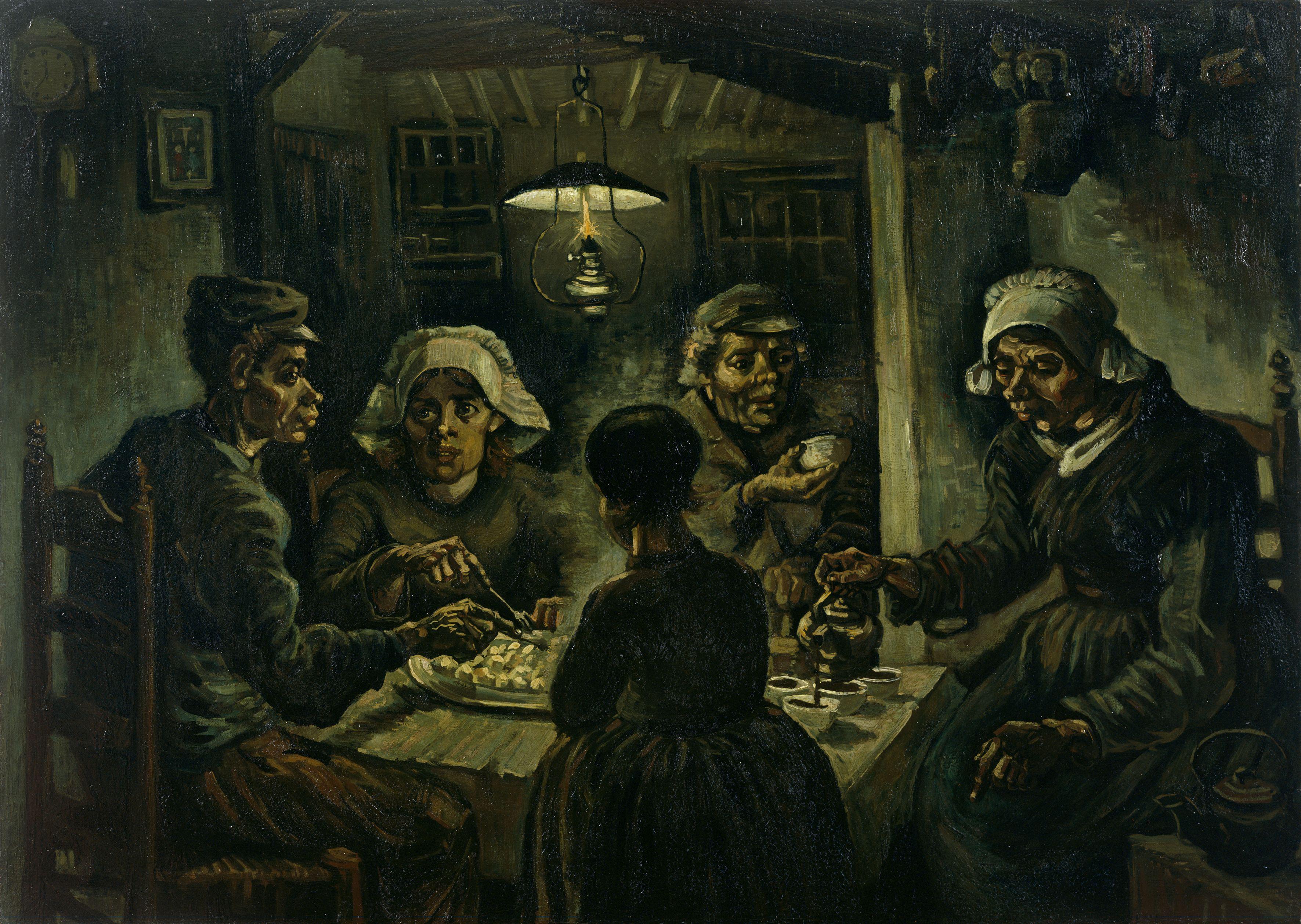
Van Gogh gained fame with his portrayal of a group of peasants eating potatoes around a table, the painting titled "potato eaters" had a note that, in typical Western fashion, unflinchingly said, this masterpiece had flaws and proceeds to specify what the flaw is. This is a museum to celebrate a great genius and in the picture that supposedly gave him fame the museum curator is brutishly honest to note its shortcomings. This is what happens when you celebrate true genius. You can be comfortable in pointing out the flaws.


Spend a few minutes looking at the picture above (or this link for a full resolution "potato eaters"). Its a common scene, the people are unremarkable, the setting is pedestrian, the act is as routine as you can imagine BUT its the painting of the shadows, the light, the portrayal of anatomy that speaks, the details of the room etc.

When I visited the Louvre in 2009 seeing the many Christian themed paintings I thought that without having some familiarity of the Bible one cannot appreciate much of Western civilization. Van Gogh's "Still life with open Bible" reiterated that thought.


At first sight the picture does not tell much. The audio-guide filled in the details that an untrained eye like mine would not see at first sight. The big open book is the Bible, a faint title indicates that the page is open at "Isaiah", an even fainter scribbling tells it is Isaiah 53 which is called the 'Psalm of the suffering servant'. The smaller book next to it is French author Emile Zola's "La Joie de vivre" (Joy of life). The commentary said this was Van Gogh, one time candidate for priesthood, rebelling against his pious father.

Van Gogh was influenced by Emile Zola and Victor Hugo. To know what influences a genius especially beyond his particular area in a cross-disciplinary manner is interesting. Knowing that his painting took clues from another painter is one thing, knowing how Van Gogh drew upon Zola's characterization to inspire a painting is another. This also helps us understand the nature of a man who makes himself a student of all forms of art and imbibes inspiration from other forms to better construct his primary artistic expression.

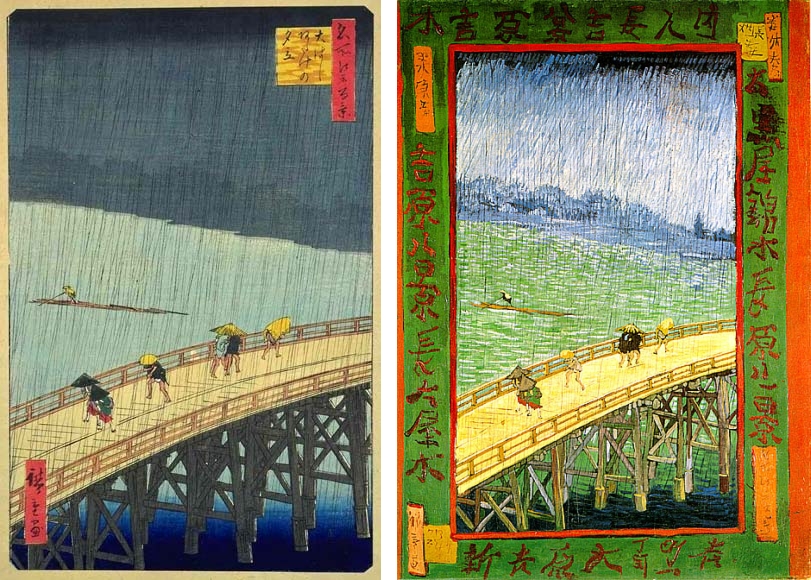
An even more stunning influence was that of Japanese art on Van Gogh. Japanese art of woodcut blocks with bright colored paintings found its way to Paris. Japan, until 1854 Kanagawa Treaty used to trade almost exclusively with the Dutch. After the treaty Japan opened trade with Europe and USA. Japonaiserie, wikipedia teaches, or Japanese art influenced the French impressionist and then Van Gogh too who produced very brightly colored pictures. Famous amongst his Japanese art are his portraits of bridges


Like any typical Western genius of art Van Gogh travels hither and thither, schools himself, lets himself be open to influences, creates his own oeuvre, enjoys cross disciplinary influences and leads a very eventful life that includes affliction of Gonorrhea. Van Gogh formed a deep friendship with famous painter Paul Gauguin . Gauguin was Somerset Maugham's inspiration for his protagonist in "The moon and six pence". Van Gogh after a fight with Gauguin famously cut off his ear and gave the severed part to a prostitute telling her to 'keep it carefully'. Van Gogh is supposed to have suffered from hypochondria too. Finally, of course, like any museum in this part of the world they have a nice gift shop.

Every now and then I thought wistfully of the Naicker and Maratha paintings in a 1000 year temple in Tanjore, the many other treasures that wilt away without attention. I read that even today reaching the Ajantha caves,  Khajuraho etc is a chore let alone audio-guides and knowledgeable commentary. To celebrate Maratha influence in a state that has been intellectually castrated with empty jingoism and ideological charades is too much to hope for.

Time and again what impresses me most in the West is the celebration of cross-cultural influences. Voltaire admires the English. The English are suckers for anything French as I'd see from my visit to Blenheim Palace near Oxford, UK 2 days later. Bruges in Northern corner of Europe buys a statue by Michelangelo. Trade and commerce coupled with the university system of Europe creates a veritable whirlpool of intellectual atmosphere.