Saturday, July 27, 2013

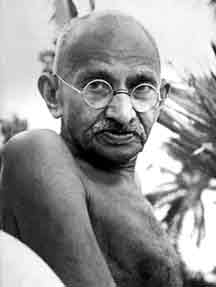
Attenborough's and S.Ramakrishnan's Gandhi: An Exercise In Mediocrity And Deification

In my last blog I had referred to Attenborough's movie 'Gandhi' as 'third rated'. A friend asked me why I said so about a movie that's considered an epic and one which the Oscars, in 1983, rewarded with 8 awards including Best Actor, Best Director and Best Picture.

Attenborough's Gandhi took India and the world by storm. In a then rare move the Indian government waived entertainment tax thus making the tickets more affordable. Indians watched it by the millions, schools arranged movie trips. I too watched it as 10 year old. I don't remember much of what I felt or understood as a 10 year old. My only memories were that any Indian who watched it was awestruck by the grand scale and by the fact that a British actor, albeit of Indian heritage, essayed the role of a most loved Indian with such aplomb and justice.

Nearly 15 years later I happened to read Salman Rushdie's collection of essays titled 'Imaginary Homelands'. The passage that remains stuck in my mind was:

"Deification is an Indian disease....I was asked more than once in India recently, 'why should an Englishman want to deify Gandhi?' And why, one might add, should the American Academy wish to help him, by presenting, like votive offerings in a temple eight glittering statuettes to a film that is inadequate as biography, appalling as history, and often laughably crude as a film?"

Then I watched 'Gandhi' again. By now my sensibilities and ideas on aesthetics had evolved from a 10 year old (hopefully). I've watched the movie many times after reading Rushdie and I am firmly convinced that it remains a mediocre movie that presents a cardboard version of the most complex leader in modern times.

Mulling over wanting to write a reply for my friend I binge watched Attenborough's 'Gandhi', Shyam Benegal's 'The Making of the Mahatma' and a movie about Hitler's last days in his bunker 'Downfall'. I was driving to the local library to get a copy of Rushdie's book to refresh my memory and a thought struck me "the movie centers around Gandhi obsessively with Nehru, Patel and Jinnah as just very peripheral characters. No mention of Bose or Ambedkar who famously crossed swords with Gandhi ideologically. No mention of Tagore. No mention of Gandhi as a reformer". With that thought I re-read Rushdie's essay 'Attenborough's Gandhi'. There it was. Maybe I remembered those points unconsciously.

Rushdie specifically takes issue with the portrayal of Nehru as some starry eyed blind 'acolyte'. Referring to Nehru's well publicized ideological differences with him Gandhi, memorably, said "you will speak my language when I am gone". Nehru, never spoke Gandhi's language, particularly, on economic ideas for development. Nehru even records his displeasure of how Gandhi engineers his election as President of Congress in 1930.

Attenborough presents, not just, a simplified version of Gandhi's protests but grotesquely dumbs down pivotal events to compressed scenes. The worst offense was in portraying the Dandi March. There is no sensitive portrayal of how Gandhi arrived at that decision, his periods of torment while searching for his 'inner voice', the letter to Irwin announcing before hand the details of the protest as is required of a Satyagrahi in his opinion, the planning and the drama of the march itself. Rather we just see two scenes of Gandhi marching and lifting a handful of salt.

The movie keeps a relentless focus on just events connected with Independence struggle completely ignoring Gandhi's role as a reformer of Hinduism. Gandhi's fast unto death protesting the Communal Award and the Poona Pact with Ambedkar sounded the death knell for a centuries old ignominy of Hinduism, untouchability.

The viewer never gets a glimpse of the many levels on which Gandhi tried to make a difference. Disgusted with prevalent unhygienic aspects of Indian life Gandhi would teach villagers how to construct a clean toilet with simple steps. He would write incessantly on those topics.

The Gandhi-Bose feud brought out the best and worst of Gandhi. Gandhi won the ideological war and for that we can thank his sagacity. Yet, when Bose defeated, Gandhi's nominee for Congress President, Pattabhi Sitaramayya, Gandhi was petulant. He said "Pattabhi's defeat is my defeat" and proceeded to make life difficult for Bose in Congress. Bose later left and forged his own ill-advised path to securing India's independence with Hitler's help. Tagore, who gave Gandhi the title of 'Mahatma', often sparred with Gandhi's strident nationalism. Adding in the Bose and Tagore characters would have given color to the many hues in India's Independence struggle.

Attenborough is no Martin Scorsese and therefore one cannot expect scenes of Gandhi carrying out his Brahmacharya experiments. Given his funding problems over decades and the fact that the movie was part funded by Indian government one can easily guess that Attenborough, even if he wanted, could not have portrayed those like Martin Scorsese does in his screen adaptation of Kazantzakis's 'The Last Temptation of Christ'.

One of the laughable parts of the movie is where Gandhi per-functionarily adds, in a speech, "Hindus and Muslims must stay united. We must weed out untouchability". That's it. No scenes to flesh out those key battles of what he thought was more important than even overthrow of the Colonial master.

A controversy that erupted about the movie was the fact that a British actor was chosen to play the greatest Indian. I've read elsewhere that Attenborough took Indian actor Naseeruddin Shah around and finally dumped him much to the latter's chagrin. I've watched Naseeruddin Shah perform a sensitive portrayal of Gandhi in a stage play, 'Gandhi vs Mahatma', about Gandhi's troubled relationship with his eldest son Harilal. Rushdie consider's Ben Kingsley's Oscar as the only one that was deserving.

Shyam Benegal who was assistant director to Attenborough later produced a more focused biopic 'The Making of the Mahatma' centered around Gandhi's 21 years in South Africa between 1893-1914. Benegal gives a relatively nuanced version of Gandhi. Here we see Gandhi's son accusing, justifiably, that Gandhi was a bad parent. We see Kasturba fighting over Gandhi's newfound fads like living in poverty inspired by John Ruskin's 'Unto the last'. This movie only shines by contrast. Even here we see Gandhi being portrayed in a muscular and as a very powerful speaker who uses strong gestures. Here too we do not Gandhi himself groping towards Civil Disobedience. Gandhi was an avid reader and communicator. It is pathetic that his intellectual development, not shown in the movie, but is known only on the surface, by people, about how he borrows ideas from Thoreau and Tolstoy.

Compared to these movies the movie on Hitler was far more nuanced. We see Hitler descending into manic depressiveness as the end nears. We see him delusional and still retaining his evil side asking Albert Speer to destroy all of Germany in a scorched earth policy so that the invaders get nothing. Never mind the human cost. It is probably easy to portray sheer unalloyed evil with no iota of any redeeming feature than portraying a man like Gandhi who, to borrow Shakespeare's words, had the 'elements of nature mixed' in him.

Life, as the cliche goes, is stranger than fiction. Gandhi's life is a treasure house of contradictions, humanism, dictatorial, obsessive, drama, etc for a sensitive and cerebral fiction writer. Yet, this is where S.Ramakrishnan, noted contemporary writer and screen play writer, disappointed me most. His recent story about Gandhi narrates how women see Gandhi through the character of a woman, in an orthodox family, running off to meet Gandhi and being punished by her husband for that. The story is littered with another deified version of Gandhi with a cardboard like characterization. (http://www.sramakrishnan.com/?p=3437).


Gandhi's relationship with women is the most complex one, even beyond the by now oft mentioned experiments. In the morning as he walks for exercise when he comes across fellow women ashramites he would ask "sisters, did you have good bowel movements". Women would compete with each other to be seen as his confidant and being called to be his 'walking sticks'. Gandhi thought of himself as half woman. He once dreamt of himself being a mother to the world with breasts overflowing with milk. His relationship with Madeleine Slade, named Mirabehn by him, needs no embellishment for drama. He advised newly Jayaprakash Narayan to be celibate until India achieves freedom. He maintained that for those who conquer lust truly even the sexual organs will look different. Gandhi was also not averse to being naked in the ashram in the course of getting a mudpack treatment or just plainly having a bath.

With all that material what we get from S.Ra is a very benign saintly Gandhi. A cliche served up as literature. I don't remember who wrote the play 'Mahatma versus Gandhi'. It is a good attempt to portray a complex individual.

Gandhi has been ill served by the likes of Attenborough and S.Ramakrishnan. I admire Gandhi not because he was a re-incarnation or a saint. Far from it. Gandhi remains an admirable person to be studied because he was a human being who tried, everyday, to be a better human being than anybody else. 

Monday, July 22, 2013

Gandhi And The Failure Of Indian Education

Hating, misrepresenting, misunderstanding and mostly not understanding Gandhi is the latest fad in India. It is fashionable to say that the British left India because they were exhausted by War and could no longer control India from afar and India's independence had nothing to do with Gandhi. It is easy to ridicule 'Satyagraha' as an inefficient and impractical instrument of protest against powers unlike British and like Hitler or Rajapakse. From the political left and the right the man who comes in for equal hate and ridicule is Gandhi. Ferreting quotes without context for a man who lived to 79 and wrote or spoke voluminously over 50 of those years is easy. Ascribing conspiratorial motives for Gandhi 'selecting' Nehru over the more popular and duly elected 'Patel' is a national pastime. To cap it all is Gandhi's own shameful brahmacharya experiments are taken and made out to look like the man did nothing in his life other than sleep with women. Then there is the contentious Poona pact with Ambedkar that can be mined for selective re-telling to portray, of all people, Gandhi as a reactionary Hindu who was disinterested in the upliftment of the Untouchables, the Dalits, or 'Harijans' as he called them.

Yet, Gandhi is revered in the West. Louis Fischer, William Shirer, George Orwell, Stanley Wolpert, MLK Jr, Richard Attenborough, Time Magazine editorial committee and legions of other intellectuals across a political spectrum. Harvard psychologist Howard Gardner included Gandhi alongside music composer Igor Stravinsky amongst a list of people he chose to study 'creativity'. Joseph Lelyveld in his biography marvels at the untouchability tour by Gandhi when he collected a princely sum to be devoted to projects for Dalits. Lelyveld wonders why no one speaks of it in India today.

The chief culprit is Indian education. Our school textbooks have deified Gandhi without humanizing him. As much as American textbooks may not speak of Jefferson fathering a child with his slave I do not expect Indian textbooks to speak of the Brahmacharya experiments. But every fault of Indian education is brought out clearly in how little or how wrongly Indians have understood Gandhi. That applies both to his detractors and to many admirers.

In response to the draconian Rowlatt act of 1919 Gandhi called upon Indians to observe a 'day of prayer' and remain in their homes. It was called 'hartal' (in Hindi). Tamil Nadu's insipid 'Equitable Education' textbook for 10th grade deals with this in 3 sentences: "In order to face the revolutionary movement in a successful manner, the British government passed the Rowlatt Act in 1919. It empowered the British Government to arrest any one without warrant and imprisoned without trial. The Indians under the leadership of Gandhiki opposed it. There was country wide hartal on April 6th 1919".

Classic Indian textbook. In order to encourage higher pass percentage a pivotal event is reduced to 3 badly written sentences. There is no detail on whether the protest succeeded, why such a protest was novel, no sense of wonderment or appreciation for what a one time tongue tied lawyer achieved in a country that spoke 30 languages and hundreds of dialects with so many religions and castes.

I understood the greatness of that 'hartal' from Larry Collin's and Dominique Lapierre's 'Freedom at Midnight' and from the third rate movie 'Gandhi' by Richard Attenborough. Gandhi and his people face an oppressor that was an Empire across continents. An impoverished people who last rebellion was a sham and a total failure had to find a way to tell their oppressor that they did not like a law. Gandhi, with no government propaganda machinery, asked Indians to do a simple act. 'Remain indoors'. It was a genius of creativity because only Gandhi thought of way for Indians to express their displeasure without hurting their rulers physically and opening the possibility of being hurt in return. The movie will show the Viceroy receiving reports of India, one fifth of humanity, coming to stand still. Napoleon and Alexander did not wield such power.

The same textbook then deals with Dandi march in a shameful manner. In 3 very short paragraphs, the most pivotal event of the most glorious freedom movement in all of human history is dismissed off. Within those 3 short paragraphs of just two-three lines each the student learns the dates and the distance covered. I am sure that students would hunch over and try to learn by rote memorizing the dates and the distance.

Overlooking the Great Depression Time Magazine exulted in declaring Gandhi as 'Person of the Year' in January 1931 for the Salt March. Collins and Lapierre reconstructed how a frail 61 year old man with a bamboo staff in his hand 'shook the pillars of the Empire' and 'dominated the world press'. Nehru, the Harrow-Candridge educated aristocrat, when he hears of the Salt March at first demurs. Later seeing its success he feels humbled before a man who had searched for his 'inner voice' to identify a suitable struggle to protest. Most western commentators have marveled at Gandhi's genius for choosing to protest the salt tax as it touched a commodity used by all Indians in as basic a function as cooking food. Even today it is ranked as one of the most successful protests in the quest for justice by a people in all history.

Irwin thought Gandhi will walk to Dandi in a little noticed event and what he got was newsreels of a half-naked fakir challenging an Empire where the sun never set. Gandhi included Dalits in his march much to the chagrin of upper caste Congress members. In every town that he crossed he insisted on staying in the poorest hut. Every penny of funds collected was accounted for no expense was too little to be scrutinized for impropriety. Only children and vainglorious adults will be thrilled reading about Alexander crossing into India or Ceasar crossing the Rubicon. No march by any army in history has left humanity a better place like Dandi March.

New York Times's report Webb Miller filed his immortal report of the Dharasana Salt March that told the world what it was to be Satyagrahi. At Dharasana, in one of the beautifully filmed scenes in the movie 'Gandhi', we see stoic satyagrahis walking up to receive mortally wounding blows without raising a single finger to strike back. Miller wrote "not one of the marchers even raised an arm to fend of the blows. They went down like ten-pins'. C.E.M. Joad, writing for an anthology in honor of Gandhi's 75th birthday, said 'Gandhi's greatest success was in inspiring men and women to allow themselves to be beaten to pulp without raising a single finger in defense". In an age when suicide bombers are spoken of admiringly I think of those brave satyagrahis. A suicide bomber needs courage for just a minute and does not live with the consequences. Those satyagrahis were mostly poor and could not even afford hospitalization costs for the injuries suffered. Most injuries were life altering too. Gandhi, unlike Prabakaran and Arafat, led by example.

When Gandhi visited Liverpool factories the workers, mostly women, mobbed him affectionately. Here is the man who, by his boycott of their products, was causing them misery and unemployment. Yet, those workers understood Gandhi better than any modern Indian citizen. They knew and understood who Gandhi was fighting against. Many Indians would look at the photograph and glide by without pausing to wonder if any rebel in all history has ever been so affectionately received by those who were affected by a rebellion.

The 10th grade textbook remains shamefully silent on the horrendous riots during partition. It was the greatest migration undertaken by a people, again, to use an overused word phrase now, in all of human history. India was torn asunder and a civil war situation prevailed. Collins and Lapierre detail harrowing events like a train arriving from Pakistan with all its occupants killed and on the walls of the train was scrawled 'gift to Nehru and Patel'. Yasmin Khan's book 'The great partition' is a compelling read and is without the sensationalism of Collins and Lapierre.

West Bengal that had seen thousands of Hindu's killed on Jinnah's 'Direct action day' was ready to reap vengeance. With millions of muslim lives at stake and no police or military force to spare Mountbatten and Nehru appeal to the only man who can achieve what no military could have done. Gandhi undertook his fast unto death. He remained the only force between hordes of murderous thugs and quivering Muslims afraid for their lives. No man as leader has ever used his personal charisma to such a use saving thousands of lives. It is this act that Ambedkar, with personal animus, called 'blackmail with body as political tool'. If Bengal's riots had gone on unchecked India would have splintered in no time. Yet Indians write that an exhausted oppressor just ceased to oppress and India was born. Ever since Christ was crucified by his own people never was a man who led his people to freedom so disrespected.

Meena Kandasamy, a so called 'activist', raised shackles in a college event by quoting Gandhi's letter to South African authorities protesting against clubbing Indians together with 'kafirs', as he referred to blacks. The letters are actually in the 'Collected Works of Mahatma Gandhi'. Little do we realize that Gandhi, just like Lincoln, was not born a liberator. Its a life's journey that he undertook. Also we do not even notice the fact that Gandhi arrives in South Africa in 1893, aged just 24. Just, 24 years old. He leaves South Africa in 1914 aged, just 44 years. In an age and time when worldly knowledge and experiences were limited he was maturing into a leader. Let us not forget that Thomas Jefferson, aged just 33 in 1776, declared 'all men are created equal' while holding slaves. Lincoln never believed that blacks were 'equals' to whites. In a nation where learning history is so shoddy Meena Kandasamys proliferate and prosper.

While Indian speaker Thamizhachi sought to discredit Gandhi slanderously American professor Howard Gardner exults that Gandhi was probably the greatest leader in a 1000 years. Watch "http://youtu.be/RgH5ep6iEfU" .

Is Gardner naive? Would Gardner not know about Gandhi's warts? Why did William Shirer, a man who understood Hitler before most did, think Gandhi towered above his warts like being dictatorial at times or titular even? Did Lelyveld not know about his Brahmacharya experiments? Nothing has been a better stick to beat Gandhi with than his patently shameful Brahmacharya experiments with women associates. Sudhir Kakar wrote that several women were mentally affected. It was Nirmal Bose's 'My days with Gandhi' that laid bare the details of those experiments for the first time. Collins and Lapierre too dwell on it for some length. What no one has accused Gandhi was of molesting or abuse. Nirmal Bose's book paints a more complex picture. I reject attempts to whitewash this part of Gandhi but I equally reject attempts  to portray him like a Casanova. The experiments were consensual amongst adults who freely consented. This part of Gandhi's life is the most taxing on any person who admires him. Yet, it is this part that clearly calls for a perspective rooted in a historical appreciation of the man's life as a whole.

In a way we can extend the failure of Indians to understand historical personalities due to shoddy education to Nehru too. Nehru is easily ridiculed for Kashmir, being soft on Pakistan, of course his affairs with Edwina and others, focusing on heavy industries and more. Nehru was Washington and Jefferson combined. No man since Nehru has worried about educating Indians as he did. In an age when politicians send their children to English convents while asking others to study in mother-toungue  we should worship a Cambridge alumnus for trying to create the equivalent of Harvard and MIT in India.

Nehru nurtured the nascent institutions of government with a democratic zeal that was almost herculean in proportions. As Prime Minister he was insistent on attending the question hour in the parliament. He wrote incessantly to state CM's educating them on every matter conceivable as relevant to shaping a country. His writings run to 50 volumes and is still incomplete. The steady leadership of Nehru in the turbulent early 17 years was instrumental in cementing India as a country. Even his economic policy, which I disagree with, was actually in tune with the times. Harry Truman and FDR were to the left of Nehru on economics.

Indians, thanks to such shoddy education, lack the intellectual discipline to understand a life as complex and varied as that of Gandhi's. We don't even know how to mentally reconstruct events and understand their historical nature. In an education that focuses on dates and data without context a race to score marks ensures that the mind is incapable of contemplation and understanding complexity.

A recent discussion on Facebook summarizes this blog.
The photo on the right (of Gandhi) is fake

Here is Subhash Bose walking past a guard of honor by the army he raised. On the side is Gandhi in a dancing pose with a white lady, a fake photo. The question was "who did more for Indian freedom?" Bose, in his hatred for British, thought Hitler and the Japanese were nothing worse if not better. One shudders to think a what if about Hitler winning the war. Such is the level of historical perspectives amongst Indians.

An American school textbook I read had a chapter on Gandhi. At the end a question was posed as a debate exercise "would India have won freedom earlier if Gandhi had adopted violent means of protest". I'd point them to Gandhi's own writings of Satyagraha as a strategy and Orwell's essay on Gandhi where Orwell is skeptical if Gandhian methods would work against Hitler. Gandhi did advice Churchill to hand over the British Isles to Hitler and convert him by 'soul force'. Thankfully Churchill did not listen. At the same time lets not forget how MLK Jr adored Gandhi and found in Gandhi a mentor for the Civil Rights struggle. Indians cheekily ask "can Gandhi's method work against tyrants". They dont have the knowledge of world history to ask "could Kurdish people have adopted MLK Jr's methods against Saddam".

Gandhi and Nehru should be rescued from Indian education and re-introduced to Indians through Western presentation. Irony.


Suggested Reading:

1. Gandhi: A Biography -- Louis Fischer
2. Freedom at Midnight - Larry Collins and Dominique Lapierre.
3. Gandhi: 75th Birthday Anthology by S.Radhakrishnan
4.Gandhi - 8 volumes by D.G. Tendulkar
5. Gandhi: A memoir - William Shirer
6. The great Partition - Yasmeen Khan
8. Creativity - Howard Gardner
9. Gandhi - Stanley Wolpert
10. 'Great Soul' - Joseph Lelyveld.
11. My earlier blog "Thamizhachi Thangapandiyan's Slander on Gandhi"
  http://contrarianworld.blogspot.com/2012/07/thamizhachi-thangapandiyans-slander-on.html

Sunday, June 16, 2013

Ilayaraja's 'How To Name It':Perils Of Music Sans Philosophy

As school children we all learn Newton's laws of motion. Towards the end of the schooling we learn the higher concepts of quantum physics including the famous Heisenberg's 'uncertainty principle. Little do we, both American and Indian school children, realize that what we think of as just math and science is much more than that. Biographer James Gleick in 'Isaac Newton' explains how Newton was inspired his reading of Aristotle. Newton had hundreds of volumes in personal including Francis Bacon's 'Novum Organum' and Aristotle's 'Nichomachean Ethics'. Germany was the cradle of modern physics and the shadow of Immanuel Kant was long and deep. Einstein had read Kant as a school boy. Paul Dirac read John Stuart Mill in school. We learn the mathematical principles of the probability theories and little do we realize that Laplace was a philosopher of the first rate. Leibniz was more a philosopher than a mathematician. Likewise Henri Poincare.

It is a mistaken notion, particularly amongst Indians, that philosophy is some abstruse time wasting avocation with no relation to the immediate. That is largely true of Indian philosophy which was more concerned about ethics and could not help being more a theology than philosophy. When quantum physics upended the Newtonian deterministic model of universe chaos ruled the roost. While I learned the physics of those theories my curriculum did not prepare me for pondering on the significance of those theories. When quantum physics said that the observer impacts what is observed it opened a can of philosophical worms. If the observer impacts what is observed then the observations are 'tainted' and that means its not 'objective'. If objectivity dies then so does a lot. If truth becomes subjective then everything becomes relative. And all that is just scraping the surface. The point being there is nothing in our lives without philosophy.

Indians enjoy music in 3 levels. One, and this is the large majority, as film music. Two, as an esoteric activity where losing one's self in a kind of trance. Three, as a background noise to our daily chores like driving. The last is common to other people. Indians are not accustomed to the idea that books can foment revolutions and create wars. "So you are the woman who started the war" said Lincoln when he met Harriet Beecher Stowe, the author of 'Uncle Tom's cabin'. Thomas Kuhn's 'Structure of scientific revolutions' caused a stir in America. European history is replete with authors instigating movements and revolutions. As much as literature was seen as ivory tower activity so also music is seen as only an activity to lull the senses or to tickle it momentarily. That music, as an art form, can be political and philosophical is something many Indians fail to realize or appreciate.

Why do I expect a Tamil film musician or a Carnatic musician to study literature and philosophy? Is it unfair? Is it some sort of snobbery. No and No. 

Lets take a contemporary example from Tamil Nadu. One can talk about Jeyamohan's collection of stories 'Aram' (அறம்) like one speaks of a sequence of events with no deeper pondering. One can narrate the story of a boy dependent on his relatives for food (சோற்றுக் கணக்கு) as "a boy went to live with his relatives...". 'Justice' has become a central theme, a philosophical prism, for Jeyamohan in his thoughts and writings. If a teacher or reviewer talks of those stories drawing on Indian philosophy, psychology, Ayn Rand, Aristotle and Plato the discussion is elevated. Can we reduce 'Anna Karenina' to an extra-marital affair? We expect and relish philosophy in fiction. Can we reduce 'Pather Panchali' to just a sorry tale of poverty? We explore with joy the multi layered meanings. Yet, when it comes to music we are glad to stop with talk of technology, the notes, the raga, the gamakam (inflection), harmony and other details.

Pianist Rafal Blechacz, replying to a question on what is his personal process of learning a new piece, said "it’s also very important for me to study other things and subjects. It can’t always be just music. A few years ago, I began studying philosophy, especially that of aesthetics. I very much concentrate on the books about interpretation, about freedom in the arts, etc. For example, there’s a very interesting Polish philosopher, Roman Ingarden, a student of the famous German philosopher, Edmund Husserl. Ingarden wrote a small book about the identity of a musical work, which includes many thoughts on interpretation, etc. I’m currently writing a small book on logic and the metaphysics of music, and I use many examples from Bach, and a lot of Chopin, of course".

Legendary Venezuelan musician and conductor Gustavo Dudamel was asked by a reporter on books he is currently reading. Dudamel said he was reading "short stories by the Argentine writer Julio Cortazar". At Dudamel's office, the reporter spots books by Aristotle, Nietzche, books on history and more. Why does Dudamel have to read history? Time magazine declared Dudamel as one of the world's 100 most influential people and wrote that while performing Shostakovich's symphony No.10 he tries to make the violins sound more biting and caustic because the symphony portrays the dark days of Stalinist terror. Dudamel had read the history of the purges and Shostakovich's own dread of being hauled of to a gulag. Note, Dudamel is a Venezuelan reading up on Russian history in order to perform a symphony. He also reads Greek and German philosophers in addition to an Argentine short story book.

America's most famous school for music and dance, Juilliard, lays a heavy stress of liberal arts for a student of any discipline. A dance student has to take 18 credits in liberal arts. The liberal arts curriculum includes a study of civil rights struggle in America, European history, elective language courses in foreign languages, ethics, history of Renaissance and more. If one peruses the library catalogue of Madras Music Academy its not surprising to see that almost all books that talk about music beyond raaga, gamakam etc is by westerners.

The American education system, like its European counterpart, lays a heavy stress on liberal arts curriculum, called 'core curriculum', for all disciplines. Whether one chooses to be a doctor or a civil engineer or a sociologist the college curriculum includes studying classics and history. One is not thought of as a graduate unless one has had a peek into the classics. This has been proven to widen a student's ability to think outside the box. It stimulates a fresh approach to a beaten down problem, it helps create new paradigms and new perspectives. When a musician, composer or virtuoso, reflects on Aristotle's poetics it is impossible not to gain a new vision towards what he creates.

If a Polish pianist can learn from Greek philospohy why not T.M.Krishna? It is the inability to learn from beyond the borders and beyond the realm of music that keeps carnatic musicians in a parochial paradigm. The little that T.M.Krishna speaks about ideas on archiving etc are mere nibbling at the edges. Its pathetic that these middling ideas are presented to an audience under the title 'leadership'. 

Ilayaraja rode to fame on a wave of new Tamil cinema that was spearheaded by K.Balachander, Bharathiraja, Balu Mahendra, Mahendran and others. Those directors presented Raja with interesting 'situations' to compose music for. Bharathiraja took Tamil movies from the stifling sets to the dusty roads of villages. Scoring music for a movie set in a village similar to where he spent his childhood Raja, himself new on the scene, provided refreshing scores. In less than ten years Raja became titular, arrogant and insufferable. Almost all the top directors left him. Only directors like his own brother and Raj Kiran were left. Raja's music became jaded. While at the top Raja released his first, and an industry first probably, non-filmi music album that was purely about music. The album titled 'How to name it' to signify the fusion of east and west was a roaring success. I've listened to it and lost myself in my teens when I did not know better. Today I consider it a work of singular mediocrity.

Raja, who took the Trinity college music exams, was schooled in Western Classical unlike his predecessors. Raja's acumen as a student is unassailable. For a boy, from an impoverished family in a remote village in India, to learn and apply Bach's fugue techniques is just brilliant. The titles track 'how to name it', 'I met Bach in my house' show touches of brilliance in technique and flashes of imagination.  The track 'Chamber welcomes Thiagaraja' is passable. 'Study for violin' has a piano and violin in a counterpoint or fugue like question-answer structure for a mere minute and half. The rest is pure drivel with the tracks 'Don't compare' and 'Do Anything' taking the prize for mediocrity. Those tracks show a man who remains imprisoned within Tamil film music format and unable to reach beyond.

The album exposes the shallowness of Raja's music. This is not a man who can dream of a grand theme. He had not educated himself for that. Even the idea of a fusion music is not original. Ravi Shankar was the grand daddy of fusion music. Raja's fame rests on how he brought freshness to Tamil film music by the skillful, some would say 'genius', melding of Western Classical with Carnatic. Most of those songs however have wonderful music for just the prelude and interlude with the tabla holding up the melody for the most part when verses are sung.


Raja has no intellectual ability to conceptualize what is art. Before his worshippers bare their fangs at me, note that I am not deriding his ability to create music. When a good director gives him a challenging situation like Balachander asking for a music without descending notes (avarohanam) Raja rises to the occasion. Left on his own he flounders for ideas. Without a conceptual unifying theme that progress to present an idea the music falls flat as a composition. 'How to name it' reflects the confusion of the artist. Art can portray confusion. A music or poetry or painting can reflect the chaos in the world. That is an artist's conception of how he sees the world. But the art form itself cannot be a jumble of ideas. Even if one conceded that what is Raja confused about? Is it some existential dilemma of 'to be or not to be'? No.

Sir Neville Mariner was approached by Milos Forman to compose music for his grandiose fictional story of Mozart based on Peter Shaeffer's play 'Amadeus'. Sir Mariner insisted that the film's music be only from Mozart and Salieri and that the music will not be mutilated. He insisted that the film be scripted around the music. Only Ilayaraja, consumed with his own arrogance and egotism, could make Tamil Nadu's greatest modern poet Bharathi sing the lyrics of a third rate film lyricist in the biopic 'Bharathi'. Raja, no Mariner himself, did not have any idea of art or music as art that can be used to tell the story of one of India's greatest poet. It should be noted that Raja's fans often credit him with shoring up a sloppy movie with his music and that he often gave better music than what the directors were even capable of imagining. Raja's fans gush that he often instructs directors on the placement of songs etc. With that in mind I'd not hesitate to say that only a person like Raja can malign Bharathi because he had no philosophy in him. Devotion to exotic nihilist sadhus like Ramana Maharishi is not philosophy. In a way I'd say that worshipping Ramana Maharishi affected Raja's worldview in addition to the otherworldly nature of Carnatic music.

Just as broader Indian education system needs to be reformed so should music education in India be reformed. We should stop asking "why should a Carnatic musician read Shakespeare or Aristotle". Nothing but good can come from reading those. I'd add that India, the land of Upanishads and Dhammapada, lost its vigor for philosophy and that is one of the reasons for the rootless and rudderless nature of its intellectual trends. As we produce technicians in Engineering colleges so also we are producing technicians in music.

References:

Juilliard's liberal arts curriculum : http://catalog.juilliard.edu/preview_entity.php?catoid=17&ent_oid=1850'

'The Great American University' by Jonathan Cole (Former Provost of Columbia University).


Sunday, June 9, 2013

America's Broken Political System

I read Jeffrey Archer's novel 'First among equals' as a schoolboy. I was fascinated by the two party system, the debates, the shadow ministry etc. After 14 years in USA I still would say that fascination is almost intact albeit a bit jaded.

The world's richest and ancient democratic country has a broken political system. At more than 250 years old USA is an ancient democracy that is still functioning based on rules drawn up in the 18th century. That does lot of credit to the prescience of the founding fathers. And the system is now broken. The last presidential election saw both candidates raise and spend a billion dollars each. If we include congressional races the figure reaches an astronomical 6 Billion dollars. That does not bode well for a democracy.

The Bush V Gore election was America's most shameful moment in modern political history. That the worlds most mature and richest democracy was deciding its President in the Supreme Court remains a shame. The world came to know of America's convoluted electoral college system for presidential elections.

The electoral college was devised for a different era with different fears in mind. The founders, as much as they were democratic in outlook, feared mobocracy more. The electoral college was devised to be a cooling chamber. Members of the electoral college can actually vote any way they want and not according to how their state voted. Strangely that has not happened to the extent that the ayaram-gaya-ram culture of India.

Democratic presidential candidates today have a great advantage because two of the largest states, NY and CA, are decidedly democratic thus contributing a large chunk of electoral college votes. Then add MA, NJ, IL etc. The votes for the republican candidate in a state like NY and CA are totally wasted. Likewise democratic votes in Texas. It is time to scrap the electoral college and go for a direct election where every voter feels his vote counts for something.

The two party system is a blessing and a curse. Coming from India where coalitions are stitched in naked bartering I do like the two party system. The two party system however stifles diversity of ideological shades within the party. It is common for primary candidates to not just hew to party lines but make a fetish of how far they can swing to the right (as in the case of GOP) or to the left (as in the case of Democrats). Centrist candidates are labeled 'weasels' pushed out.

Joe Lieberman (D), senator from CT, was defeated in the 2004 primaries because he was seen as too hawkish by an increasingly left wing Democratic primary voters. Lieberman ran as independent and snubbed the Democratic primary voters by winning. When Sarah Palin, a dilettante posing as revolutionary, stirred trouble for GOP candidate Lisa Murkowski the latter ran as independent. And according to Alaska rules her name could not be on the ballot rather for an independent the name haS to be written down on the ballot by voters. Imagine voters writing a name like "Murkowski'. She then included the spelling of her name as a chant in her election rallies. She won. But look at the mess that a democracy like the US is when it comes to elections.

The electoral rules governing primaries and how a voter can take part is not uniform. In fact primaries are held according to a myriad rules resulting in wildly varying forms. We have open primaries where a republican can take part in a democratic primary and vice versa, then there are closed primaries where only respective party voters can voters, there are 'beauty contests' where the primary does not count, then there is the famous Texas two-step which is a primary and a caucus combined together and finally the hopelessly outdated caucuses themselves.

In 2008 Barack Obama stormed to a historic victory in Iowa caucuses where Hillary finished a humiliating third. Hillary went on to lose almost all the caucusing sates. She later grumbled that the structure of a caucus is inherently unfavorable to her voters. Caucuses with its speeches and confabulations are long drawn out where Hillary's voters, mostly seniors, could not compete with the youth driven energetic voter base of Obama.  Obama in turn lost many large states by decisive margins to Hillary. Obama lost CA, MA, PA, NY. In the notorious Texas 2 step Obama won the caucus and Hillary won the primary.

The Democrats awarded delegates by representative percentage in each primary. Hence Hillary did not have any big advantage after winning NY and CA on super tuesday. Obama has to thank Jesse Jackson for that. Due that method it was a long drawn bitter fight to accumulate the required delegates to clinch the nomination. In 2012 GOP made that mistake and Romney lost precious time.

Now add to the woes USA's outdated election machinery. Even India has gone completely electronic. America hung its head in shame during the Florida recount fiasco. The word 'hanging chad' became a joke.

The primary system for non-presidential elections is equally muddled and its not dynamic. A primary is meant for a party to choose whom they think is best suited to represent their philosophy. I agree that independents should not be allowed to vote in a party primary. However an independent voter must be afforded some mechanism to ensure who he/she thinks is best to be contesting. An independent voter is now relegated to be able to influence outcome only during the general election where he has to choose between two options that were selected by others.

The debates are a sham. Presidential debates are governed by agreements that two parties agree to. The agreement is based on what powerful lawyers argue on behalf of each candidate. The debate formats are so scripted that there is no spontaneity. The time is so restrictive that one hears only recycled talking points. The debates during primary season are a joke. In Presidential primary debates there are 10 or even more candidates in the initial stage. Its a pickle for TV companies to be restrictive. If they are too restrictive and exclude candidates who perform poor in opinion polls then it would be a disservice to a candidate like John Huntsman. If the TV companies are lenient then we get Dennis Kucinich, Al Sharpton, Michelle Bachmann.

Money and American elections are a vexing topic. Until the Supreme court ruled in the much maligned Citizens United Vs FEC corporate spending was highly regulated. We should note that only corporate spending was regulated. Unions had a free hand in not just raising cash but also in the more important contribution of foot soldiers. Unions favor democrats by a whopping margin. In 2008 unions outspent all the cash spent all corporations put together. Thanks to US Supreme court ruling the playing field was opened for all to spend.

Both Rick Santorum and Newt Gingrich remained in contention against Romney only because they each had a billionaire backing them up. Though Romney was winning primaries Santorum and Gingrich, with no broad based fund raising success, remained an irritant because their patrons had deep pockets.

I am all for regulating campaign spending but it should be done without favor to unions. Incidentally we should note that in 2008 facing a vastly underfunded opponent Barack Obama broke his promise to accept state funding, and thereby the restrictions that come with it. Obama is the first candidate to refuse state funding since the rules were put in place in the aftermath of Watergate.

If elections are a mess then governing is even worse. Gridlock in Washington DC is a topic that gives many the headache. When the US was formed the small states feared being steam rolled by the large states in the Congress because the number of representatives is proportional to population. A compromise was stuck. The senate, the upper body in the bicameral legislature, would have just 2 senators from each state irrespective of size. Hence Delaware and California have 2 senators each. Senators have sweeping powers to hold up bills, deny presidential appointees confirmations etc. Many house bills die in the senate. That is good and bad.

Congressional districts are highly gerrymandered. Today the number of congressional seats that can be called swing seats is far dwindling. Thats bad for democracy.

Do I despair for American democracy? Not yet. An erstwhile friend, a member of Tamil Sangams, incensed by my many criticisms of Tamil society and India asked me "what about a senate candidate in US who made despicable comments on rape". Her question was "why don't you condemn those as eagerly as you condemn failings in India". I told her that this blog was already work in progress. But to answer her question that candidate (actually two, Rick Atkins and Richard Mourdock, both GOP) lost their leading positions and were trumped in the hustings thanks to their barbaric remark. What more can I ask of a democracy?

As a student of philosophy and history I am not a big enthusiast of philosopher kings. Ordinary men make mistakes but if the system weeds them out and continuously reforms itself I am ok with it. This is the system which converted Robert Byrd, a KKK member, into a great senator.

As much as Washington DC is gridlocked the local governments are vibrant and that is the hope for America's resiliency. As the Economist magazine pointed out, America is being re-invented at the local level.

The 24 hour news cycle is also contributing to the vitiated political climate. Richard Mourdock, GOP senate candidate, said on CNN "compromise is when they (Dems) agree with us". Sarah Palin crowed, mindful that it will be replayed in TV a lot, "we are not the party of no. We are the party of hell no". Obama for his part loved to scold everyone he thinks is his opponent on national live TV.

Urgent reforms are needed to make America a more vibrant democracy. Reform the presidential election, campaign finance, lobbying, gerrymandering, filibuster rules and transparency in legislations.


Wednesday, June 5, 2013

Stravinsky At Harvard, T.M.Krishna At CII And 'Semmangudi Mama'.

An angry reader, a self styled writer/translator, commented on my last blog that I had not explored the 'why' of how music developed differently in two continents, Europe and India (Asia). I had, indeed, mentioned how classical music in India, by virtue of being exclusively religious, was otherworldly and therefore with no interest in the contemporary issues. Taking the reader's comment seriously I shall explain with greater detail on the 'why'. A disclaimer, this blog is not a criticism of the musical or singing abilities of any musician or singer. In fact singers like T.M.Krishna and Sanjay Subramanian are highly talented singers whose talent and craft passes my understanding and ability to appreciate.

The reasons behind the divergence of what is considered philosophy in India vs the West is relevant to understanding the divergence of why the musical cultures of the two traditions differ. Much of Indian philosophy, not all, is justifiably looked at by westerners as more of 'theology' than 'philosophy' in the classical sense of the word 'philosophy'. This is not a trivial 'lost in translation' difference. Indian philosophy and music is more concerned with the unknowable beyond. In fact both philosophy and music were seen as paths to rise above the daily tumult of earthly life in India.

Prodigy and legendary violin virtuoso Yehudi Menuhin writes in 'Music of man', "For the Indian, the individual note, with all its inflections and colors, equates with the idea of personal salvation, of resignation and acceptance. India once entertained the idea of counterpoint, but while they could have developed it, their philosophy was alien to it".

The Renaissance and Reformation movements completely remade the intellectual life of Europe giving birth to the most important contribution to mankind, the modern university. The Carnatic music trinity are contemporaries to each other and to Mozart and Beethoven. I don't know what Thyagaraja, Dikshithar and Syama Shastry read. There are no records. Their lyrics are purely religious showing religious instruction and nothing beyond. To be fair, education in then India was nothing like what the universities of Germany, the cradle of Western classical music.

Bach had a 6 volume edition of Luther's writings. Mozart was well read in classics. Beethoven had a thirst for classics and we have detailed, albeit partial, records of what he read (see link below). "He had complete editions of Cicero, Euripedes, Goethe, Homer, Schiller and Shakespeare". "Travel books, Italian and Latin dictionaries, French grammar book" too were among his vast collection of books on music theory, compositions of Mozart, Haydn and more. A German composer had acquired by books of his contemporaries, Greek and Roman authors, an English playwright, dictionaries of an alien language and more. The collection also shows his wide interest in drama, poetry, theory of music and traveling. This is the modern European.

Mozart uses material from Shakespeare and Ovid to write his ribald opera 'Cosi fan tutte'. Beethoven uses Schiller to write the immortal finale in the 9th. When we come to a composer like Wagner the connection between philosophy, music and intellectual wandering takes on a different dimension.

Wagner was deeply influenced by the German philosopher Arthur Schopenhauer and who in turn was influenced through Kant by Buddhist philosophy (and through Persian translation of Upanishad by Dhara Shikoh, the Mughal Prince, which found its way to Germany). When Liszt proposes to write Dante's 'Divine Comedy' as opera Wagner writes to him. Wagner rejects Judeo-Christian theology in favor of Buddhism and asks Liszt to consider that when he writes his music. Here are two German composers talking about writing an opera based on an Italian writer's work and discussing Eastern philosophy. Paul Schofiield, Wagner afficionado, lectured about the influence of Buddhism on Wagner in Boston recently. Completing the ring was Wagner's influence on Nietzsche. We should note that Bach's son and famous composer C.P.E. Bach, Goethe, Wagner, Nietzche all went to the university of Leipzig.

Europe which laid the precursor of modern university education laid stress on graduates learning philosophy. If one lived in Germany in that era one breathed philosophy. Indians take great pride in crossing oceans and conquering distant (by then standards) countries but little is known of what kind of literatures they brought home from abroad. This gap in our knowledge of Indian history, now given more to taking pride in what Indians taught the world than what they learned, is a serious impediment.

Whether it is a musician like Wagner or a mathematician like Leibniz or a literary giant like Goethe or a sculptor like Michaelangelo or Da Vinci a deep knowledge of philosophy is a common feature and the philosophical predilections of the creator is manifest in their respective forms of creations. America's educational system, a child of the Renaissance and Reformation, continues to lay stress on knowledge of classics and liberal arts for any graduate.

A westerner seeks the best from every corner of the world and tries to alloy them to his or her craft. Thats why we have John Coltrane and Leonard Bernstein drawing inspiration from Indian music. That why Herman Hesse and Schopenhauer and Goethe study Indian literature. Indians are smug about Goethe's admiration of Kalidasa or other such influences. Rarely have Indians asked "what can we learn from the west".

Russian composer Igor Stravinsky revolutionized western classical music with his 'Rites of the spring'. Opera houses in Paris witnessed bedlam when it was performed. Harvard University invited Stravinsky to deliver the 'Charles Norton lectures on Poetics'. Its a high honor for anyone. Stravinsky starts his first lecture on 'poetics' (not poetry) by drawing on Aristotle's definition of poetics. An American university had invited a Russian music composer to talk on 'poetics' and he in turn opens the speech with a definition from a Greek philosopher. Stravinsky delivers 6 lectures of such intellectual class about music. He does not talk about notes, modes, scales. He delves into the higher 'philosophy' of music. It is a trite cliche to say that a bird cooing is music. Stravinsky says no and outlines why only human beings can make music. Thats just the icing.

A journalist interviews Leonard Bernstein over dinner for nearly 7 hours and publishes 'Dinner with Lenny'. Bernstein races over Freud, Hindustani, Blake, Mahler and much more and gives a veritable feast to show that a great musician draws on every art form to instruct his craft. Thats why I consider T.M.Krishna, Ravi Shankar, Sanjay Subramaniam etc as 'performers'. Amongst them somebody like Ravi Shankar is a genius in that frame of analyses.

T.M. Krishna addressing CII leadership meeting tries to be a different carnatic musician from what we are accustomed to seeing or hearing. He is very articulate, charismatic and has enthusiasm. He also has some worthy ideas like the archiving effort he is doing (which is very contrary to the 'oral' tradition of Indian culture). The West excels in record keeping. Mozart's birth record, Shakespeare's marriage record, Beethoven's book list, details of when and where Wordsworth wrote a poetry are all meticulously researched and maintained. Whereas we have only sketchy details of even a recent person like Bharathi. Where Krishna fails miserably is in his attempt to be an intellectual defining what is culture and what is classical music. His lack of reading is evident. His complete lack of any philosophical background is obvious. The worst part of the lecture was his brazen statement "I practice the most sophisticated art (i.e. carnatic music), we are all geniuses". Thats it. No explanation or divination on that. There is no semblance of anything intellectual in the speech. He is a typical carnatic musician. I can bet that even today if one walks into the home of most carnatic musicians, so called doyens, one would not find half the books that Beethoven read 200 years ago.

Even if I were to take Krishna's assertion at face value I'd have liked to see him educate the audience with a historical background of how the musical trinity come to be contemporaries in a sleepy souther town. He could have fleshed out a narrative of the historical setting, how they changed music forever, state of music before and after, what did they build on, whose shoulders they stood on etc. But he is no Bernstein. This is not something that is missing in just Krishna alone. Its the typical smug Indian attitude of "I've nothing to learn from the world and the greatness of my culture is axiomatic".

Contrast this with what Yehudi Menuhin writes: "I think sometimes that we should establish such exotic interludes in our own concerts. It would encourage people to become aware of what is in not their own while strenghtening their sense of what is theirs". I do not believe that Carnatic music cannot be improved upon. Nothing in this world is like that. Carnatic music has indeed changed and adapted. Particularly in the use of instruments. Specifically the violin. But the music itself is still fossilized.

Compare and contrast the curriculums of music colleges in Tamil Nadu with that of Juilliard, New York. In USA one cannot become a music graduate without adequate grounding in liberal arts and classical literature. In the west too we have musicians who are not philosophical. Michael Jackson comes to mind. Yes he redefined a genre but he had no intellectual ability to philosophize like Beethoven. And thats why in 200 years Jackson will live in the archives of some university library for students to research a period but Beethoven's 9th will still echo in Lincoln center in NYC.

Dialogues between Western classical musicians do not dwell just on techniques. They talk of proximate issues. Sometimes the dialogues are heavy philosophical discourses. Daniel Barenboim, musician and conductor, meets the orientalist and philosopher Edward Said. The discourses become an intellectually delightful book "Parallels and Paradoxes" thats a tour-de-force.

Sanjay Subramnian spends a day with Semmangudi 'mama' on the occasion of going to receive an award in Mumbai. Sanjay is thrilled at Semmangudi's power of observation because, as the flight entered Dharavi, he recognized the place and asked if it was the same. After the function Semmangudi calls Sanjay to ask if the award Sanjay had recieved was in the form of a cheque or a demand draft (Semmangudi too got the award. He was just cross checking what the other guy got) and it is a draft then 'we have to lose bank charges'. These two, Sanjay says, were significant things in that trip. God save Carnatic music.

Sanjay alludes indirectly to some unflattering rumors of Semmangudi. Writer Jeyamohan narrated an incident in his blog recently. Another Carnatic musician, GNB, had prostrated at hte feet of Hindustani singer Bade Ghulam Ali Khan. Semmangudi had asked GNB "அந்த   துலுக்கன் காலில் ஏன் விழுந்த". T.M.Krishna embarrassingly glides over the topic of casteism in carnatic music.

Balamurali Krishna is considered a genius in the theory of Indian classical music and a genius as a singer. My quarrel is with the valuation of his knowledge of music. I am unqualified to speak or pick faults with his knowledge of raga etc, the techniques, of Indian music. But check his interview in Sruti here. The same irritating smugness of "I've nothing to learn from the world". His idea of what makes a music 'classical' is pathetic. He is hoist on his own ideological petard when he complains that his experimentations in music, introducing a hindustani snippet in a carnatic song, is frowned upon by purists. 

Let us even agree that Carnatic music as such may not need any infusion from any other musical tradition. How about the performances itself? In a western classical performance when a soloist performs the rest of the orchestra will be still, their instruments placed in order (not plonked on the floor), the conductor will stand with his hands folded and still. Others will not be fidgeting or picking nose or drinking coffee. When the performance ends the conductor takes an encore and then introduces the key players for individual encores. New York Times reviewed a performance of Chitraveena Ravi Kiran. Kiran was fidgeting in a distracting manner when the soloist was playing. Forget about introducing members of his troupe for individual encores.

At some level I've found Ilayaraja's fans to be more open minded than carnatic music fans. Try asking a carnatic music lover if something can be changed. You will get a sanctimonious lecture "why should we? Who are the westerners and why is it what they do the better? Why should we change to somebody else's tradition of performance? we enjoy our music being performed this way and in fact all of that is what makes carnatic music our own".

The term genius is very loosely used by all. In daily usage we can be lax. But as a matter of judgment we should be careful. I'd say any day that Ravi Shankar and Yehudi Menuhin are virtuosos on the instrument. Impressed by Lalgudi Jayaraman's playing of violin Yehudi Menuhin gifted a violin. Jayaraman used that violin till he died. But do I expect Jayaraman or Shankar to write a book like 'Music of man' like Menuhin (actually it was a TV series made into a book)? 

If this is what T.M.Krishna, Sanjay Subramanian, Ravi Shankar etc are then what can we say of a film musician like Ilayaraja or A.R.Rahman. Ilayaraja has a talent to speak foolishly without any thought. He embarrassed himself when he said, trying to praise fellow film musician MSV, 'what we are today is  courtesy of what he spat out. Even his spit is pure". Ilayaraja is a power house of talent in the technique of music. But what is his 'idea' of music? In that same speech Ilayaraja would deride a beutiful lyric written by Kannadasan. Raja made it a fetish to make lyricists write lyrics to his tunes. Not even Mozart did that. Mozart in fact uses the best libretto writer to give heft to his operas. Thats because Mozart knows and understands music at a level far beyond what Ilayaraja even grasps.


That angry commenter had also said that Ilayaraja had a 'revolutionary impact' on the common Tamil. A lack of philosophy incapacitates the commenter too. Yes Tamil Nadu adored Ilayaraja as much as it adored his predecessor and his successor. Tamils love film music and Raja provided fodder for 10 years. When Rahman came Raja was promptly dethroned. Nothing changed in the way Tamils understood music or appreciated music because of Raja. If anything modern technology like concerts on youtube and wikipedia based info has made Tamils appreciate Raja today better than they did 20 years ago. Raja played no role in educating Tamils to appreciate music. Again, that is something that Leonard Bernstein did with his 'Young People's concerts' 40 years ago. A good comparison for readers would be to see Bernstein's lecture at Harvard and Balamurali's remarks at 'Swanubhava' (an attempt by TMK to be Bernstein). See link in references.


References and Links:

Poetics of music in six lessons -- Igor Stravinsky
The philosophy of Schopenhauer - Bryan Magee
Dinner with Lenny - Jonathan Coot

San Diego Opera Talk with Nick Reveles: Cosi Fan Tutte http://www.uctv.tv/search-details.aspx?showID=4009

Library of Beethoven http://www.beethoven-haus-bonn.de/sixcms/detail.php?id=59120&template=&_mid=59114

Paul Schofield's lecture "Wagner and Buddhism" - http://www.the-wagnerian.com/2012/10/video-lecture-wagner-and-buddhism.html

T.M.Krishna at CII meet. http://www.youtube.com/watch?v=K3p2TL8V1Uw

T.N.Seshagopalan interview with Mano http://www.youtube.com/watch?v=yhd0toOtr9M

John Coltrane and Indian music http://depthome.brooklyn.cuny.edu/isam/Newslet%20F07/Clements%20F07.htm

Leonard Bernstein at Harvard - The unanswered question "The 20th century crisis" http://www.youtube.com/watch?v=q0UU9sYp7uA

Balamurali's remarks at Swanubhava http://www.youtube.com/watch?v=7_Cr3Te3wDU

Wednesday, May 29, 2013

Nina Simone, Bob Dylan And Protest Songs: Music, Civil Rights Struggle And Politics.

India is a land of music, song and dance. It has a very ancient tradition in fine arts and a uniquely continuous civilization over the centuries. India's dance forms and music heritage is a widely admired one. Yet it is in the same India that such art forms are mostly relegated to the ivory tower with no relation to the ups and downs of a great country. What is worse is that for almost 99% of the country the finer forms of the arts and India's true heritage in music has no meaning. What most Indians consume by way of music is a bastardized version of the country's richest music with haphazard borrowing of western music (classical and otherwise) served up as what is called 'cinema music'. India's greatest achievement was its most unique freedom struggle. Yet the struggle did not produce any outpouring of music. Musicians did not compose music, on any notable scale barring random efforts of setting some poems by revolutionary poets to music, to provide an artistic expression of the greatest emancipation in human history. Indian musicians did not think of using their music as an art form to protest against the colonizer. On that count cinema musicians at least attempted something when they provided music for some movies that depicted the struggle.

Jeyakanthan in his novel 'Paarisukku Po' sets up an argument between two characters, an orthodox father who is a Carnatic musician and the son, a western classical musician and a recluse from Paris. Father and son battle through intermediaries on what each of their music means to them and to the world in general. One of the chief complaints of the son is that Carnatic music is mostly other worldly and lacks the varieties found in Western classical which has both secular and religious music. I spoke of how Shostakovich and Beethoven were political in their compositions. Music as an art form and art as a function of protest reaches greater heights, to my knowledge, in America.

Jazz music is inseparably braided with the Civil Rights struggle in America. One cannot write the history of civil rights struggle without mention the Jazz musicians or Afro-American gospel song tradition. Songs and music are a wonderful part of the Afro-American tradition. Jazz, the blues, R&B and soul music form a wonderful repertoire of art that blacks used to give voice to their oppression.

Jazz musician Nina Simone is a good example. Simone, in an interview, defiantly states "I choose to reflect the times and situations in which I find myself. That, to me, is my duty...we will shape and mould this country. I will not shaped and moulded at all anymore....How can you be an artist and not reflect the times"

Peruse the words carefully. She uses words like "I choose", an assertive "that is my duty", a defiant "I will shape and mould this country". Ilayaraja once retorted that politics is a sewer and he will have nothing to do with it. Just recently Tamil Nadu saw an outbreak of protests by college students demanding that the genocidal state of Sri Lanka be punished by the world community. Where was their Nina Simone? Did the students have a 9th symphony to blast from loudspeakers? Where was their Bob Dylan? Who was their poet? Did they an Allen Ginsberg? No. In a state and country addicted to entertainment that is by definition mindless (else its not considered 'entertainment') any such hopes are meaningless. Asking such questions, as I do, or seeking to live by such a code is often considered 'abnormal' and 'at war with world'.

I first came across Nina Simone in a book review in NYT. Then I sought out her songs and then I learned more about her. Mississippi in the 50's and 60's was considered a hotbed of violent racism in America. When a black church in Alabama was bombed and 4 little girls died Simone exploded into "Mississippi Goddam" in a live concert. The lyric, written by her, and her singing bristled with defiance. She went on to compile her 'protest songs' that included 'four women' which talked about the stereotypes of black women, 'strangefruit' talked about lynching and so on.

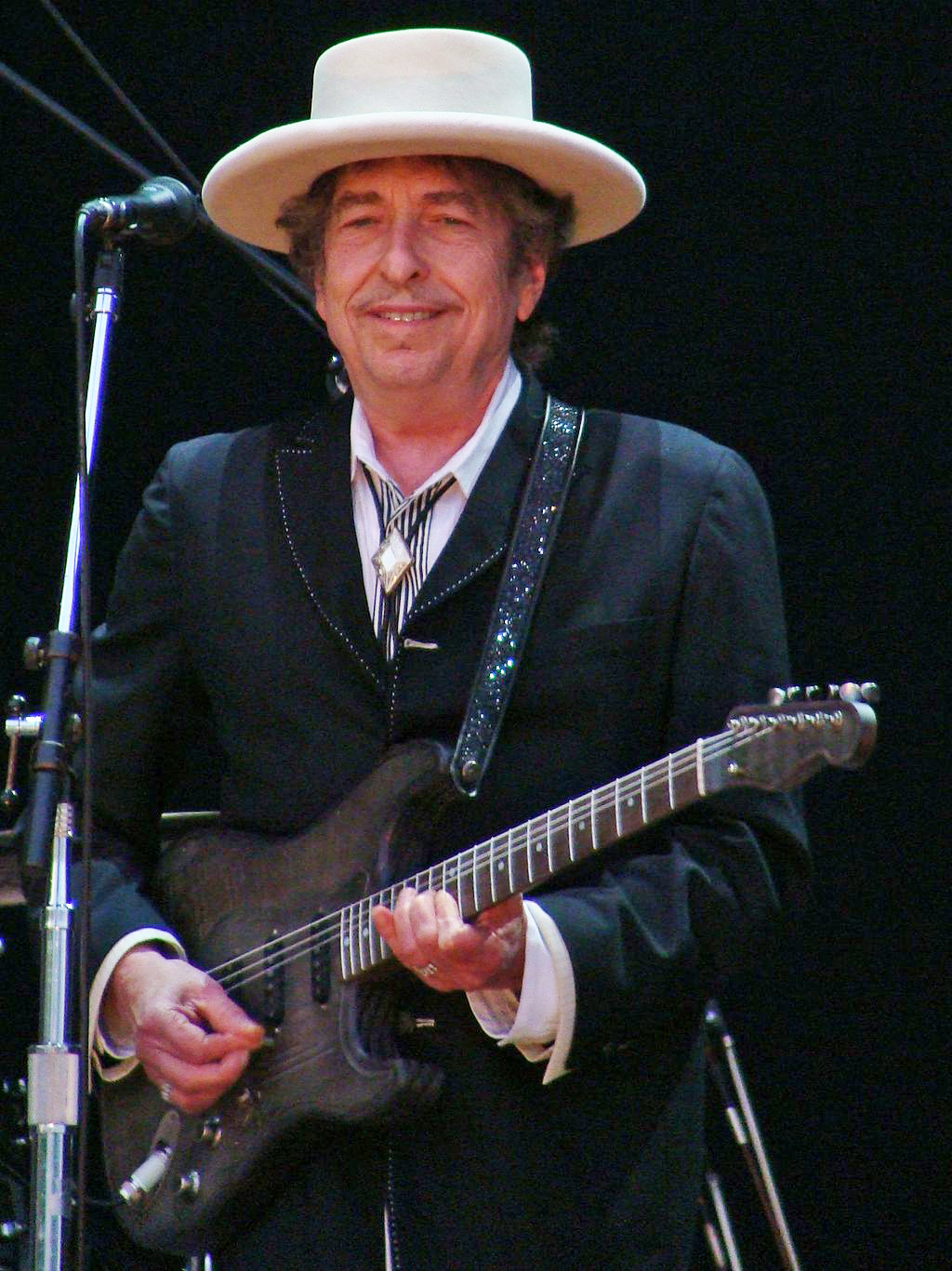
From the other end of the spectrum, racially speaking that is, comes Bob Dylan. When black teenager, 14 year old, Emmett Till was gruesomely murdered in 1955 Dylan burst forth in 'The ballad of Emmett Till". Emmet Till murder was a crystallizing moment that launched the civil rights struggle in the south. Dylan later performed in the historic 'March on Washington' where MLK Jr spoke of his dream. Dylan went on to compose his protest songs "The times, they are a changing" etc. He became the voice of protest for a long time.


Sometimes musicians like Ray Charles and Louis Armstron used their prestige as musicians to fight for civil rights. Ray Charles who was initially lukewarm towards fighting segregated performances at a pivotal moment refuses to play at a Georgia performance because the audience was segregated. Louis Armstrong was trotted out by the American government to tour the world and be an exhibit for American freedom all the while racism raged back home. Armstrong attracted flak for that. Armstrong lambasted Eisenhower  over what he perceived as Ike's waffle over school integration in Arkansas. Two days after Armstrong's outburst Ike sent Federal troops to Arkansas to ensure that black girls can enter the school.

Ravi Shankar brought Indian music to the west. Shankar has played to packed audiences of westerners across the globe and specifically in America. Ravi Shankar, famously, played along with the Beatles at Woodstock. I've not read of any incident where Ravi Shankar composed any protest music or used his prestige as world renowned musician to fight for any justice. The same can be said of almost every musician, film and non-film alike. When Lalgudi passed away there were obituary writers fell over each other to write glowing tributes. I cannot remember any Carnatic musician lifting a single finger to bring diversity into caste ridden Music Academy. If anything Carnatic music is zealously guarded from ensuring there is no diversity.

Since this series is occasioned by my comments on Ilayaraja I'll come to him. Ilayaraja, my friends keep reminding me, comes from a very oppressed community. Has Raja done anything to highlight their plight with his art form? If a Dalit writer or painter or politician or singer is expected to use his art form to speak of his or her people then should we excuse Raja for his intentional and singular failure to do so? A.R.Rahman runs a conservatory where he is trying to educate children from slums. Raja was only keen on making money through movies and had absolutely no social consciousness.

Nina Simone, Bob Dylan, Armstrong are all just a sliver in a glorious tradition of musicians using their music for 'shaping and moulding this country'. I respect and adore them. Never can I insult their memory by even mentioning Raja as an 'artist'.

Tuesday, May 21, 2013

Bach, Beethoven And Berlin Wall

Tamil film music icon Ilayaraaja performed to packed houses in Canada and US in February of this year. Auditoriums that seated thousands filled up with tickets priced at $75-$500+. I did not even notice that he was coming until my cousin told me. Many of my friends who attended the events posted running commentaries on Facebook and twitter. Arguments ensued. Questions about what is music, when does music become art and even why not consider Ilayaraja on par with Mozart (yes, please trust me) and more were asked. Confession, just yesterday I bought 10 of Raja's songs on iTunes to add to my existing collection of several hundreds that I listen often while I drive or read. I love music, in my own way. So why did I choose not to go and enjoy Raja? Do I not love music enough to seek an evening of film songs that I grew upon in the 80's and 90's? Can somebody love Beethoven and Ravi Shankar and ignore a Raja event? Would that be proof of 'feigning' interest in music for a snobbery value? I've gathered ideas for several blogs which I shall write in the days to come. 

A further confession. Though I learned to play violin for nearly 5 years (carnatic) I'd not call myself a musician. I cannot and will not speak of music in technical terms like raaga or notes or scales. There are many ways to talk of music. 

Defining what can be called 'classical music' is a contentious task by itself. Julian Johnson, author of 'Who needs classical music, offers some ideas. A music is not called 'classical' owing to its antiquity. When music transcends the immediate across ages and is capable of transmuting itself to various meanings it acquires an eternal relevance earning the label 'classical'. This is easier for instrumental music since there are no words to tie it down to a context. Does that mean a symphony has no meaning? Does music have a meaning?

Legendary conductor and composer Leonard Bernstein posed that questions to kids of New York City in his 'Young People's Concerts' that he conducted to familiarize a generation of children, that he felt, did not take a fascination for classical music, the cornerstone of Western civilization. Bernstein would play a piece and ask the children to imagine what theme would fit that music. He offers 'Superman' flying to address a crisis as a suitable theme. The music was originally written to portray Don Quixote. Did Bach compose his immortal cello suites imagining that one day his music will be played when history's worst symbol of oppression, the Berlin wall, would fall? Did Beethoven envisage that his 9th symphony will be played to commemorate the first anniversary of Berlin wall being brought down? 

Bach was not a very political person. When I visited his home in Leipzig I saw the contract that he had to comply with at his employer's place, a church. He was contracted to write music almost every week for the students. In essence one could say he was no different from any film musician who produces music for money. Yet for over 300 years his music has attained an eternity for the genius that was poured forth in them. The fugues were composed in response to a challenge by Frederick the Great and we will come to them later. Bach's cello suites were actually lost and discovered accidentally by legendary cellist Pablo Casals. The cello suites were an architectural beauty with six movements per cello. It is here we must pause and teach Tamils who don't know Western classical what that feat means.

Unlike Carnatic music Western classical is written for specific instruments. Carnatic, written without notes, is purely vocal in its original form. The instrumental accompaniments we hear in Carnatic are all improvisations, a technique that is the soul of Carnatic music. A six movement suite is where a composer strains his compositional talent to write music that would tease out every musical capability of an instrument over 15-30 minutes for each suite. Bach was a genius in writing music for an instrument to showcase the instrument's musical capabilities. The Well Tempered Clavier Book 1 & 2 is almost two hours of music written exclusively the plumb the depths and scale the heights on one instrument, the keyboard in 24 major and minor keys. This is compositional genius of a different scale from composing music for a Tamil film song for 5 minutes of which the overture/prelude for less than a minute is really musical setting the stage for a 'melody' that the stanzas adhere to. Then come equally short interludes and postludes. 

Mstislav Rostropovich was a Russian cellist exiled from Soviet Russia for his support of Alexander Solzhenitsyn. Rostropovich was highly respected for the genius virtuoso that he was. One day while he was in Paris Rostropovich heard that the most notorious symbol of Soviet tyranny, the Berlin Wall, was being demolished. Rostropovich rushed to Berlin, pulled up a chair and started playing Bach's cello suite No.2 (watch here http://youtu.be/FiwXUJJjL6g


Crowds milled around Rostropovich. If Rostropovich had been a film musician or if what he played was from music score the moment would have been silly. Rostropovich's personal stature as a genius, his exile, his fight for liberty all compounded with Bach's stately cello suite to create a moment that speaks volumes about a society which respects such an artist and such art. Two years later while Gorbachev was under house arrest and the Soviet empire was poised to strike back at Yeltsin Rostropovich smuggled himself into Moscow. Rostropovich's arrival into Moscow to support Yeltsin and a nascent democratic movement electrified Russians unlike anything else could have done. Can one imagine Michael Jackson or even the Beatles at such a moment? Again the man and the kind of the music are an inseparable whole. Bach's music that speaks to the most sublime within every human being and a society that loved Tolstoy, Tchaikovsky, the ballet and more revered art so highly that Russian tanks paused. It is not exaggeration to say Rostropovich saved Russia that day.

Celebrating the fall of Berlin Wall an internal orchestra with musicians drawn from Russia, France, Germany, America etc was commissioned to perform under the baton of conductor Leonard Bernstein. Bernstein, educated at Harvard, would imbibe a multi-disciplinary approach to music. His lectures were a tour-de-force across disciplines. Bernstein chose to play Beethoven's 9th symphony, considered possibly the greatest composition in all of western classical music.

Beethoven, unlike Bach, was a deeply political person. He starting writing his 3rd symphony dedicated to Napoleon. When he heard that Napoleon had declared himself 'emperor' Beethoven tore the dedication away and composed a pessimistic symphony that he called 'Eroica'. Beethoven broke traditions when he composed the 9th. The 9th is also referred to as 'choral symphony' because it is the only symphony by a major composer to have a choral piece.
 
The 9th was grand architecture in 4 movements with the 4th movement being a mini symphony itself with smaller 4 movements and the electrifying choral section all amounting to nearly an hour (74 minutes) of music that would engulf and elevate a soul. The symphony was scored for 2 flutes, 2 oboes,   2 bassoons, 4 horns, 2 trumpets, 3 trombones, cymbals, soprano, alto, baritone and more. 

Carnatic music is 'melodic' in structure. The notes succeed one and another successively. The word 'symphony' means a harmonious sound when more than one instrument is played 'together'. The latter taxes compositional talent because one has to imagine how 2 instruments would sound together. Now extrapolate that to all those listed instruments played alone and together in places. Add the complexity of a song like Schiller's 'Ode to joy'. Finally consider composing such music for an uninterrupted hour. 

Bernstein, in a typical gesture, altered the choral piece replacing the word 'joy' with 'freedom' to signal liberty. The complete performance has been uploaded here. We have to appreciate that this is an orchestra drawn from across the globe and the conductor is a 70 year old who would die 10 months after the performance. Bernstein's 1979 performance of the 9th, which I am watching as I type, shows a conductor who pours forth phenomenal physicality into the act of conducting and at places he appears rapturous close to tears. The Berlin performance was 20 years later.

Beethoven never dreamt that his symphony would be played to celebrate the demise of an evil empire. Even before that Berlin performance and even before the fall of the wall Chinese students protesting in Tianenmen square in July 1989 played the 9th from loudspeakers to drown out government propaganda and to lift their spirits. Women taking out a rally in Chile protesting the murderous Pinochet regime would alter the 9th and play it. That's why the 9th is considered classical music. In an immortal music Beethoven had provided channels to express human aspirations from China to Berlin to Chile across centuries. 

I remember an article that I read nearly 30 years ago in Readers Digest. The author was asked to list historical events that he wished he had witnessed alive. Alongside a desire to see how Moses led his people from Egypt, the Exodus, the author had listed the first performance of Beethoven's 9th symphony.

Dmitri Shostakovich's violin concerto No.1 Op99 is another tale to be told when music becomes the vehicle for a tortured soul that suffers under totalitarianism. Art is not for the ivory tower. It speaks to and embodies everyday travails and triumphs. About that later.