Showing posts with label India. Show all posts

Thursday, January 16, 2020

Sardar Patel, RSS, Communists and Ramaswamy: When Hate Clouds Mind

Few days back P.A.Krishnan shared a short excerpt from a speech by Sardar Patel that was sharply critical of RSS for its communalism. Othisaivu Ramaswamy has gone at it with hammer and tongs but with no sense or honesty. Alas, his erudition notwithstanding his mind is addled with the venom of communalism and Hindutva. 

I’ll ignore his jibe at my relationship with P.A.K (ironically I was not completely in support of P.A.K on his recent posts on RSS run schools and even in that post I had only posed a question. 


Ramaswamy alleges that P.A.K played a dishonest game with selective quoting. This is the crux of his blog. Ramaswamy who adores Sardar Patel, for the usual misconstrued reasons that Hindutva morons always do, thankfully provided the full speech and as he asked for it I did read the speech in full too. Did P.A. Krishnan make a mistake? No, and here's why.

A charge of selective quoting is valid ONLY if the parts not quoted are in opposition to what was quoted or provides a different mitigating context. This is simple logic of criticism. PAK had quoted these lines from Patel’s speech wherein Patel warns the RSS and said:
“ (I) have made them an open offer : ‘Change your plans, give up secrecy, eschew communal conflict, respect the Constitution of India, show your loyalty to the Flag and make us believe that we can trust your words, to say one thing and to do another is a game which will not do.”
Nowhere in the full speech has Patel said anything contradicting that passage or nuanced it in any different context to mitigate the sharpness of those words.  Ramaswamy himself, waving his self-righteousness of not giving a merely convenient excerpt, had provided a more detailed paragraph where Patel really drives home the point:
“We in the government have been dealing with the R.S.S. movement. They want that Hindu Rajya or Hindu culture should be imposed by force. No government can tolerate this. There are almost as many Muslims in this country as in the part that has been partitioned away. We are not going to drive them away. It would be an evil day if we started that game, in spite of partition and whatever happens. We must understand that they are going to stay here and it is our obligation and our responsibility to make them feel that this is their country. It is, of course, their responsibility, on the other hand, to discharge their duties as citizens of this country.”
Patel’s advice to Muslims to discharge their duties as citizens of this country warms the cockles of Ramaswamy’s heart but, and this is where Ramaswamy is dishonest, Patel practically asks that of RSS and Communists too, both of whom were the chief targets of the speech. 

Given P.A.K’s self-identification as Marxist Ramaswamy picks an argument over PAK omitting to mention how Patel had, in the same speech, scolded the Communists as terrorists. Patel lashes out at Communists for violent uprisings and talk of revolution. 

Now, Ramaswamy adores Patel and like any Hindutva lout ridicules Jawaharlal Nehru. Patel’s address was on Feb 23rd 1949 and here’s Nehru writing to Chief Ministers, a practice he started, on 15th April 1948, “some of the activities (of the communist party) in the recent past have been far from legitimate and have created grave disorder. There has been open incitement for the collection of arms and violence, and sabotage has been feared”. With all that Nehru still refuses to ban the Communists just as he had not clamored for a ban on RSS (which only for a short while banned after Gandhi’s assassination and then the ban was lifted). Nehru, citing how unleashing a repression unshackles the police who are bound more to abuse power as it happened in the unfortunate case of jailing a communist who was ill for long and who died in jail. 

Nehru cautions the chief ministers, “We have to be very careful in having recourse to repressive measures because the appetite grows with use and it appears a simple way out of a difficulty. But as believers of civil liberty know, the consequences are apt to be bad, and a popular government like ours has to be particularly careful”. India was a democracy not a Stalinist state to crush everyone with a hammer.

On 16th April 1949, Nehru again writes to the chief ministers, and this time he accuses the communists of “following a policy of sabotage and terrorism”. He still argues against a ban not out of any dovish sentiments to ideological fellow travelers but with reason. He rightfully suggested that a ban would be a propaganda victory and furthermore it’d be futile since the party anyway conducted most of its subversiveness underground. “Generally speaking therefore, banning does not give any greater powers to deal with an organization which is essentially functioning underground, The slight balance in favor of banning is rather outweighed by Communists posing as ideological martyrs instead of saboteurs and terrorists”. Nehru, too, did not shy from calling communists as terrorists. Of course to Ramaswamy’s hate filled mind it was only Patel who had the spine to call Communists as terrorists.

This is precisely where Gandhi’s faith in Nehru as the chosen heir is vindicated because Nehru is neither blind to the problem nor does he prevaricate but, unlike most others, retains an approach that’s mindful of a problem’s larger dimension and a democratic spirit. Jeyamohan in a conversation paid tribute to Nehru for not keeping the ban on RSS once investigation revealed that the organization had no direct link to Gandhi’s assassination. The RSS, like the Communists, enjoyed the virtues of Nehruvian democracy.
How did the communists themselves perceive of Nehru at this point? Sarvapalli Gopal’s biography of Nehru provides some answers. B.T. Ranadive attacked Nehru and the government, “Nehru becomes more and more a democratic mask for Patel”. In Randive’s eyes Nehru and Patel were interchangeable and were playing good-cop and bad-cop in tandem. By hindsight that, if that was the case, was a brilliant strategy and we should be in awe of the illustrious partnership of Sardar and Nehru. After the communists started their insurgency in Hyderabad and Telangana region Nehru was condemned by communists as acting ‘fascist’ and obeying “the dictates of Anglo-American capital”. A railway strike, also referred by Patel in the speech, later petered and in due course the communist insurgency was put down too.

At this point we’ve to ask which organization, between the communists and RSS that Patel scolded for violence, still carries within it the capability and willingness to use violence to further its agenda? Without a doubt it is the RSS and not the communist party. I’m well aware of the violence of West Bengal Left Front but that is par for the course for any political party in India. Violence is NOT the stated operating method of communist party today. Whereas it is RSS that takes out armed flag marches in cities. So, it is relevant to quote just the RSS part of that speech (I’m not sure if P.A.K had indeed read the full speech or got the quote on RSS alone from elsewhere).

While fulminating against communists Ramaswamy bares his own fangs and says, his prose dripping with venom, “The so-called minorities are thriving in India – having a peaceful time and when possible, setting fire to trains with passengers and without passengers, in their march towards progress”. In the recent two days police have accepted that they opened fire at a library in Jamia and now Davinder Singh has been arrested for abetting terrorists.

The targets of Patel in the speech, for fomenting divisiveness, were RSS and Communists, two organization dominated by Hindus, especially Brahmins and Sikhs. Yet, Ramaswamy conveniently grafts his Islamophobia onto that speech. So much for intellectual integrity and honesty.

The speech by Patel, delivered when India was still unifying and dealing with the seismic socio-economic upheavals of partition, is impassioned in appealing to all, laborer and businessman alike, to unite in a moment of crises. He speaks of the cost of shipping food to address severe food crises and how the country, not owning enough ships, had to pay high freight charges and to address that was building a shipyard. Portugal and France still had their colonies. He pleads for people to donate what they’ve in excess. Unlike Ramaswamy I, an unabashed admirer of Nehru, will always pay tribute to Patel. Together Nehru and Patel formed a duo that few nations were blessed with in such crises. 

Unlike Nehru the Sardar is shortsighted on the issue of language. In the very opening paragraph Patel scolds Tamils for not learning Hindi and cautions that they’d “drag the country backward”. Happily history has shown that Tamil Nadu, still resisting Hindi, remains one of the most prosperous states of the country. Again, these are the shortcomings of the Sardar.

Interestingly the speech also highlights how much Patel was very much for partition, based on practical experience and ground realities. For all the dreams of a unified large India (Akhand Bharat) by the Hidutva group Patel is actually contented with India as it was shaped post-partition. Actually without partition India would've had such a large population of Muslims that a Modi may not have been possible. 

The shortcomings of Patel’s intellectual persona is compensated by the largeness of his heart for he closed the speech with these words, “In return for your affection, I can only ask you to forgive me if I have said anything harsh ; take it as a piece of advice which comes from an honest and humble servant.”

Giants have trodden the soil of India where the likes of Modi now strut about puffing their chests sowing hatred and venom. 

A note: Few days back a person commented on an FB post that P.A. Krishnan and I became friends out of a shared hatred for Dravidian politics. I told him no our friendship was not born out any shared hatred but out of love for Nehru. Long back when neither of us knew each other P.A. Krishnan had written a beautiful column on Nehru in Tamil Hindu titled "Prince of Spring" (a play on the name Tagore called Nehru, Rturaj. The column was titled in Tamil 'வசந்தங்களின் இளவரசன்'). Aravindan Neelakandan wrote a spiteful rebuttal to that and pilloried Nehru. I had written a rebuttal to Neelakandan then though I had no idea who P.A. Krishnan was. This is just my simple habit. Neelakandan was rebutting not just P.A.K. but Nehru and therefore I found it perfect to rebut, not necessarily on behalf of P.A.K. Likewise today. P.A.K read that column and liked it and we got introduced, thanks to Nehru.

Hindutva and Dravidian party merchants of hate share a common grammar of hatred and adopt similar techniques. One of their cheap tricks is to twist another person's name. Ramaswamy conveniently uses P.A.Krishnan's initials to write PAK, as in the popular abbreviation of Pakistan. 

References:

1. Patel's Speech Provided by Othisaivu (thanks) https://othisaivu.files.wordpress.com/2020/01/sardarspeech.pdf
3. Jawaharlal Nehru: A Biography by Sarvepalli Gopal Volume 2, 1947-1956
4. Letters for a Nation: From Jawaharlal Nehru to His Chief Ministers 1947-1963 -- Edited by Madhav Khosla


Sunday, September 15, 2019

A Fortnight in India: What I learned about Modi's India From India-Today, Economic Times and Sun T.V.

Whenever I visit any country I make it a habit to check local press and publications. I did so in India too, naturally. Just one issue of the weekly news magazine 'India Today' was sufficient to encapsulate the state of Modi's India. Thanks to my several hotel stays and the freely supplied 'Economic Times' I got a ringside view of Indian economy especially when the newly minted Nirmala Sitaraman was rolling out changes. Then a few days of watching Sun T.V. gave me the hope that one day BJP may actually romp home as a ruling party in Tamil Nadu or at least as a major ally to the ruling party. Here's what I learned.

India Today


I started reading India-Today back in the late 80s, during Rajiv Gandhi's administration, when it was a fortnightly sold at Rs 6. 'Frontline' from 'The Hindu' followed soon after. While Frontline hewed a left wing tilt India-Today tilted to the right. Prabhu Chawla and Swapan Dasgupta from India-Today are now effectively BJP's cheer leaders along with the likes of Indian Express's Tavleen Singh. Arun Shourie is disenchanted with Modi after being a member of the Vajpayee cabinet. All these journalists were united in their disdain and hatred of the Congress regimes. To be fair Rajiv and Congress did do their share to alienate the press. Aroon Purie, editor of India-Today, was a Doon school classmate of Rajiv. With this backdrop the issue dated August 12th 2019 with a cover story "Unsold" about the economic crises affecting the auto-sector was interesting to me for not just the cover story but several other articles and I think the stories offer a snapshot of Modi's India. I'll provide excerpts from key articles. All excerpts are within quotes and anything without a quote is my opinion or information or paraphrasing.


Mutilating Right to Information Act


"India's Right to Information Act, recognized the world over as one of the most robust sunshine laws, has been mutilated". RTI, as the act is popularly known, was passed by Manmohan Singh's government in 2005, following several anti-corruption protest movements led by Anna Hazare that whipped up the middle class mostly. Those protests were key in promoting the idea that the Singh administration was mired in corruption. Yet, it was Singh who created this law that is now undone by the seemingly cleaner administration of Narendra Modi.

India-Today's article summed up not just the dangers of mutilating the act but more importantly how the government used its brute majority. "In the Lok Sabha, the NDA simply used its brute majority to ride roughshod over the objections raised by opposition benches. But in the Rajya Sabha, even though 15 political parties reportedly signed a motion to have the bill referred to a select committee, many backtracked on their demand during voting, fueling apprehensions about the pressure that was exerted by the ruling dispensation".

Drawing a distinction between Donald Trump and Narendra Modi the British weekly The Economist said that unlike Trump who wishes he can use the tax agencies to stifle opposition Modi actually can accomplish it. That is the pressure that India-Today is alluding to.

The Immigration Bogey


Modi and Amit Shah, like Trump, find it useful to stoke the problem of illegal immigration. The US, unlike India, at least, has a problem of real proportions. "Shah's threat", a story in the issue outlines, "to extend the National Register of Citizens from North Eastern states to the rest of the country doesn't square with the census data, which finds immigration rates to be below 0.5 percent in the majority of districts. Besides, many of these immigrants are of Indian origin who have returned from US, UK, Canada, Australia and the Gulf. The census figures belie the government's concern about illegal immigrants, even accounting for the under-reporting of 'illegals'.

Yatras and their costs


The hundreds of crores once spent by Indian government to subsidize the Haj pilgrimage was an irritant for the BJP foot soldier notwithstanding the fact that that subsidy was more to keep the state airline, the only approved carrier, afloat. That subsidy is now gone and there were no riots when it was withdrawn.

Nearly 301,000 pilgrims undertook the Amaranth eater this year costing the "J&K administration Rs 495.2 crores ($72 million)" and a deployment of "40,000 security personnel".


Aaya-Ram & Gaya-Ram


Party hopping politician Gaya Lal was pejoratively referred as "Aaya Ram, Gaya Ram". During the 2019 parliamentary elections Modi openly spoke of opposition party big-wigs waiting to cross over to BJP. While party hopping is not new to India that a PM would stoop to openly declare it at a rally was a new low even by the standards of Indian politics.

The title and subtitle of a story says it all. "A bitter aftertaste: After a spate of inductions of TMC leaders with a dubious past, the BJP is forced to rethink".

"Death of the Opposition"

A letter to the Vice President Venkiah Naidu, also the chairman of Rajya Sabha, signed by 17 opposition statement makes a startling factual accusation that is scary for anyone interested in the health of democracy and democratic norms. "The letter says 60 percent of the bills in the 14th Lok Sabha were referred to parliamentary committees. In the next one, 71 percent of the bills went to such committees. But in the 16th Lok Sabha, when Narendra Modi-led government came to power first, the figure dropped drastically to 26 percent. Now, in the first session of the 17th Lok Sabha, 14 bills have been passed, but not a single one was sent to a house committee". The article blames the opposition party leadership for foisting family candidates to leadership. These leaders, unlike those who stood up to Indira Gandhi, rarely carry a political weight and are not up to the task.

The Auto-Sector Slowdown


Aroon Purie's editorial warned on the issue's first page, "Our government cannot afford to let this sector slide, with the prospect of massive layoffs, adding to the ranks of the unemployed. This has implications that go far beyond economics, it may even lead to social unrest".

India's auto-sector, valued at Rs 8.3 lakh crores, employs, directly or indirectly, 32 million people. "Ram Venkatramani, president of Automotive Component Manufacturers Association (ACMA), said that if improvements do not materialize, around 1 million jobs could be lost - 20 per cent of the total employment in that sector". "Overall sales" of vehicles has "fallen by almost 8 per cent". "The growth rates for both private and commercial vehicle sales are in the red".

Rahul Bajaj, chairman of Bjaj Auto, was blunt, "there is no demand and no private investment - so where will growth come from? It doesn't fall from the heavens". This kind of blunt language is startling in the Modi era especially when it comes from a leader of a much respected Indian brand.

"Demonetisation", V.G. Ramakrishnan, "managing director of of Avanteum advisors" said, "left a mark on the psyche of consumers". A key factor behind the slowdown is that the Indian consumer is putting off purchase of even fast-moving consumable goods (FMCG), a key indicator of slowing down of purchasing power. Liquidity crises and lack of good credit reporting are affecting loans. Added to all that is the whimsical attitude in rolling out regulations. The Bharat Stage VI (BS-VI) regulations, new axle load norms, governmental push for increased use of electric vehicles have all contributed in pushing to the auto-sector to despair. Venkatramani told India-Today, "Changes are welcome, but what put us in a tizzy is the speed at which regulations are changing. It becomes difficult to predict when to invest and in what technology".


All the above paint a grim picture and raise a sharp question of an administration that it's supporters assiduously promote as the most business friendly government. For all the mocking of Nehruvian era of socialism Modi's finance minister is turning to that lethal arsenal of any government facing an economic crises, increasing government spending to boost consumer spending. The prohibition of government departments from purchasing new cars has been lifted and it appears that the government is all set to become the biggest consumer of the auto-sector. This is textbook socialism.

The Economic Times


Issues dated 20th August and 31st August of The Economic Times provided interesting perspectives. The front page on 20th August carried a warning from R.C. Bhargava that without government incentives the auto-sector may continue to suffer. Curiously the title used an American word, Motown, to denote India's auto sector.

In a similar vein another sector cried out for government help. "India's software export industry may lose out on its competitive edge due to falling incentives and rising tax rates, industry executives said and have asked the government to extend the policy benefits under the Special Economic Zones (SEZ) beyond April 2020; reduce corporate taxes for large companies and review the buyback tax introduced in the budget".


Continuing the trend of petitioning the government for relief from regulation or seeking help the nascent peer-to-peer lending firms have asked the government to relax the lender limit of Rs 10 lakh and allowing High Net Worth Individuals (HNI) to use the platforms.

Nishanth Vasudevan, head of Motilal Oswald Financial Services, had more warnings in an interview. The foreign investors, Vasudevan said, "feels letdown by the way they're treated" compared to China. Asked about current slowdown he said, "the correction which you're seeing is the actual decline in consumer spending". "Google search for a lot of durables is down by 15-20%". He also added that this is driven more by sentiment and that businesses may not be doing too bad and the expected tax receipts data would provide clarity. He did concede that the economy was growing only at 5.8%.

The editorial column calling for concerted policy action and urgent reforms blamed structural woes like subsidies. "India's share of global exports", the editorial said, "is just 1.7%". Essentially on the map of world trade India is less than a blip. Forget about being super power India is not even a power to reckon with at the global trade map.

On August 30th with executive fiat the finance minister announced the merger of "Ten PSBs into Four" (per The Economic Times headline on 31st). In one fell swoop India created four really mega banks. This runs completely counter to the US wariness of big banks and the desire in US policy making circles to breaking up big banks. US banking regulations, called Dodd-Frank regulations, promulgated after the financial crises of 2008 that almost destroyed the world's greatest economy agonizes in great detail about how to methodically unwind a too-big-to-fail financial institution. Indian journalism often leaves much to be desired and is more often just clerical writing and on this epochal event the reportage was pathetic.

The finance minister claimed that the criteria for the pairings of specific banks was driven by "tech-integration" capabilities rather than "geographical capability". Such rationale is unheard of and really no tech study was proffered. "Managing directors of these banks were informed of the merger decision earlier in the day by the the department of financial services even though discussions had been going on for some time". The reportage did not say at what organization levels discussions were held and what "going on for some time" meant. The managing directors presiding over hundreds of crores of depositor cash were informed like they were peons.

The editorial page of ET cheered the move saying it is in line with making India a $5 Trillion economy but cautioned on the lack of "supportive regulation". With the US crises serving as a caution a responsible newspaper, let alone one focused on economics, should have screamed first about the lack of regulation prior to such a move and scream about possible financial crises that could cripple the Indian economy. Note, India's economy if it faces a US style crises lacks many of the abilities that were at the disposal of US economy. Till date the government has shown absolutely no inclination to create a Dodd-Frank equivalent.

The issue dated August 31st announced the bank mergers on front page and along side carried dismal statistics on the economy with an equally prominent headline as the one for the merger news, "Meter Down: At 5%, Economic Growth at 6 yr Low in June Qtr. The editorial summary is grim: Manufacturing, around 16% of India's economy, collapsed totally: from growing more than 12% in Q1 of last year, to stalling at 0.6% now", "car sales have crashed to 20-year lows","Household consumption has also fallen","Mining, metals, minerals and so on are in a downward spiral", "Capacity utilization of companies below 80%". The editorial said that the only silver lining, if one looked for it, is that the "government is clearly not trying to hide the bad economic news". If that's the silver lining only god can save Indian economy.

State of Education


A recent ranking of universities worldwide showed that not one of India's coveted institutions have cracked the ranking above 300. Forget about cracking the top 10 or 50 or 100. A.M. Nik, chairman of Larsen and Toubro and head of National Skills Development Corporation in an interview with ET sounded beyond pessimistic.

Asked about Normal Sitaraman's call to foreign students to study in India Naik was dismissive saying, "problem is everybody is going out of the country and nobody is coming in. India has a few good educational institutions but they require a very high cut off which a lot of people can't get. We don't have good teachers and the education system itself has been watered down in line with the no-fail policy". "Finding the right teaching talent is the biggest problem. We need institutions to train teachers".

While Naik laments the very absence of good teaching the government thinks, per an article in ET on 20th August about the LEAP program, that lack of leadership skills amongst event good academicians is hurting India from making it big on global rankings. "Over the last 5 years 11 of the 40 central universities have seen inquiries, show cause notices and even sackings of vice-chancellors". Let that sink in for a moment. Nearly one-fourth of central universities are run by no good vice chancellors.


LEAP (Leadership for Academicians Program) started in 2018 with 269 has managed to identify 46 high-scorers, whatever that means, for leadership role. Again, think on that for a moment. In a country of a billion people a leadership program has found 46 'high-scorers'. Only god can save Indian education.

Institutional Corruption, Religious India and a Titular Prime Minister


When former finance minister P. Chidambaram was arrested BJP supporters openly celebrated it as engineered by Amit Shah, the home minister. This was supposed to be tit for tat for Amit Shah being arrested and exiled from his home state when Chidambaram was home minister. In Indian politics, the rule of law be damned, what is important is that your side gets tit-for-tat. On August 20th ET reported that two top ranking officials in National Investigating Agency were under investigation for blackmailing a business man in return for not falsely including his name in a terror-finance related case. The use of central agencies, particularly tax related and intelligence agencies, as puppets to settle political scores is now openly cheered by partisan supporters.

Nilanjan Mukhopadhyay in an oped in ET dated 31st August wrote, "if not in word, then in sprit, what is being increasingly endorsed is the notion that if democracy is a collateral damage while strengthening the nation, so be it".

What is emboldening Modi? How did he muster this majority? Why is secularism almost dead in India today? Why is the notion of keeping religion private would never have a chance in India? Was secularism, as defined by modern liberalism, ever a reality in India? To find those answers let us turn briefly to statistics of India's tourism.

For all the wonderful heritage stretching back into more than a millennia and the country being populated by places of history and natural beauty India's place in world tourism, like it's place on world trade, is pathetic. While France and Spain lead the US with 89 and 83 million tourist visitors compared to 80 million for US when it comes to dollar value the US earns $214 billion compared to $67 million and $74 million respectively for France and Spain. India gets 17 million tourists and earns $29 million. B.K. Goswami, former Director General of tourism for Government of India, in a letter to ET points out that 90% of Indian tourism is domestic tourism and of that 80% is related to pilgrim tourism.


Indians are religious to an extent that is not seen in the Western world and they flaunt it. Nothing intrinsically wrong with that but that is a key factor in the rise of Narendra Modi. Turn on Tamil Nadu's cable TV channels, even the one run by the state's principal political party that pays lip service to secularism and atheism, one is drowned in religious propaganda. All channels run some form astrology related programs in the morning. The obnoxious serials freely load the stories with religious, mostly Hindu, themes or references. Thanks to Sun T.V. and the religious programs it is running it is possible that the BJP might actually become a significant player in the state or even possibly a ruling party in its own right.

Now, many may laugh at the prospect of BJP becoming a major party in Tamil Nadu but my tour made me think that. As I said in my last blog I'll turn, in my next and last blog on the tour, to the religious fervor that is gripping the state and the reasons, in my opinion, as to why Narendra Modi, despite such dismal economy, romped home with a brute majority in the parliamentary elections.

One thing is clear though, if anyone suggests even remotely that they support Modi only for economic governance or mostly for that reason and if they are still sticking with that reason they owe an answer to those who think it is hogwash.

Monday, September 9, 2019

A Fortnight in India: Lots of History, Architecture, Artless Cities and Reading Habits of Indians

After nearly ten years I visited India, again, as tourist last month. When I last visited India, for touring, in 2010 Manmohan was into his second term. Though I had made several visits in 2014-15 they were for medical emergencies and involved no touring. Narendra Modi had just then wrested power after a decade long reign by Manmohan Singh. Modi has recently won a massive victory that all but decimated the entire opposition and is set to rule for the next 5 years. What did I see?

Landing in a New India


V.S. Naipaul's trilogy on India started with "An area of darkness", a book that still riles up Indians and continued, slightly mellowed but equally offending to many Indians in "A Wounded civilization" and finally concluded in the now dated but thematically relevant, "India: A million mutinies now". Naipaul, wrote 'A wounded civilization' as India's democracy was under assault by Indira's Emergency. He lamented, "nothing beyond food - and survival - had as yet become an object of ambition". Nearly a half century later India has come a long way from that. The country now can feed itself, says no to foreign aid, even offered a billion dollar finance to Russia, looks to conquer the space, careers for graduates now have multiplied from the binary choice of Doctor or Engineer and the economy can no longer be jeered at as 'Hindu rate of growth'. That is the India of 2019 I stepped into.

Compared to the days when visa application involved a distasteful visit to Indian consulate now I opted for electronic visa that worked like a charm. The application and approval were pretty simple and at immigration check it was a breeze. I feared, this being my first time with e-visa, some serious trouble but there was none.

My travel this time to Jaipur and Bengaluru was made possible by the availability of flight connections. Air travel has been truly democratized in India. Gone are the days when air travel was meant for the high and mighty. The budget airline Indigo really serves well with good connections and good service. For all my bookings I had used the 'Fast Forward' service that promised delivery of checked baggage to be prioritized over others and it was delivered as promised. In 2010 traveling by train was a nightmare due to the stench and cockroaches that ran around. In 2019 I was spared that. Mostly youngsters, girls and boys alike, were the ones doing all jobs. It was heartening to see young girls go around with great confidence as air hostesses and other roles at all hours of the day. However, India's airports, especially the Chennai airports, are completely inadequate to accommodate the fast expanding clientele. Even the business class lounges were ho-hum in Chennai.

Road travel is certainly better than what was possible 20 years ago. There are more highways, by Indian standards, but literally no hygienic rest areas for travelers to use on long trips. On the Jaipur-Agra highway cows literally travel like they own the roads and they're aplenty. My driver, a proud Hindu, said it was because now many are afraid to sell cows for meat they simply let loose cows they cannot afford to continue keeping. The road signs in and around Jaipur in Hindi were just transliteration of English words like 'Lane' etc. In Tamil Nadu English words are more often translated.

The hospitality at the hotels I stayed (a Taj, a Marriott and a Hilton) was beyond exemplary. At these luxury hotels the staff go above and beyond to make the visitor comfortable. Whether it is the chauffeurs or even the ill informed guides I've absolutely no complaint about anyone on a personal level. They were all polite to a fault and many where very aware of online reviews and handed cards requesting good reviews. I did oblige and they richly deserved it. The hotel amenities and buffet choices can make any western tourist feel completely at home. I splurged on Rajasthani and Indian delicacies. I did not come to Jaipur to eat croissants and bagels.

Jaipur and Belur-Halebid

The Amer fort near Jaipur was fabulous. The elaborate courtyards, the exquisite Sheesh Mahal studded with mirrors, the baths and toilets, the harems and their secret passageways transport the visitor to a different era.


The sprawling temples in Thanjavur, Belur and Halebid were breathtaking. Though I've been to the Big Temple in Thanjavur a hundred times the recent study of the Chola empire made me the see the temple anew. Now the fort like structure of the temple became readily apparent and I remembered historians drawing attention to the fact that temples were not just temples but literally fortresses.

The City Palace in Jaipur, constructed by Maharaja Sawai Man Singh II in 18th century, is kind of typical with large courtyards and mirrors as stucco in halls elaborately designed.  Two large silver urns, the largest of it's kind in the world, are exhibited in this palace. Those urns, with water from Ganges, were taken by Maharaja Sawai Macho Singh II when he went to attend Edward VII's coronation in 1901, so he could use it daily during his stay abroad. I was reminded of how Gandhi was mocked for taking two goats with him to London when he went for the Round Table Conference because he'd only drink goat's milk.

Silver Urn used to transport water from Ganges
Whenever I travel to a place I try to visit any book store that I come across to find books of local interest. I was immensely happy to grab a copy of a book on Jaipur by legendary historian Jadunath Sarkar. The preface suggested that Jadunath, who wrote the book at the behest of the Rajput royal household, was open to downplaying the collaboration of the Rajput royals with the Mughal regimes of yore. The preface added that such sensitivities are now muted and the book now published is the definitive edition. It is disheartening to see a historian of Sarkar's caliber willing to mute pages of history and it raises, yet again, the question of how much of Indian history has been truthfully told.

As we crossed a posh locality of Jaipur I was informed that that's where the Chief Minister, his cabinet and top state officials have their bungalows. I was suddenly reminded of my own town Thanjavur where likewise the city judge, top police official, public works department official and collector have their bungalows on a prominent highway. Likewise in Chennai. Then it dawned on me that in India feudalism is still alive unlike the US where state officials, except perhaps the Governor, and township officials and elected representatives live amongst their neighbors.

From the hard rock temple of Thanjavur to the soft rock temples of Belur the architecture varies reflecting the era and the material. The Belur temple has intricate architecture made possible by that soft rock. The temples were spell binding if one paused and wondered how such vast acreage was planned out and built. At Belur the sculptures that line up the gopurams are often repeated with little or no variation. If one saw Belur one can skip Halebid or vice-versa. Sure, it's easy to visit both but there's quite some overlap in the architecture.

Vishnu as Half-Lion Half-Man tearing into the bowels. A sculpture at Belur.

Taj and Fatehpur Sikri


The grandiosity of Taj needs no commentary. My guide, completely ignorant of the history of painting etc, pointed with wonder how the Koran inscriptions that run along the doorway of towering structure appears to be of same width throughout but are not. He did not know that the Mughals introduced the idea of 'perspective' in drawing to India. Anyone who has seen Michelangelo's David might wonder why his hands are disproportionate. The statute was to have been installed atop a church and Michelangelo, the genius that he was, was compensating for the viewer's 'perspective' from tens of feet away and below the statue but the statue was instead kept at ground level.

The city of Stratford-upon-Avon depends on the busloads of tourists who come to visit Shakespeare's home and it is a picture perfect town to visit and relax. On the contrary visiting the Taj has to be done business like. The approach and vicinity are an insult to the monument. No wonder Naipaul thought that the Taj is a misfit in India and it appears as only a monument to a wife who bore 14 children. He felt that transported slab by slab to a US state it might have better meaning. I completely forgot having read that passage and honest to god those are my exact sentiments and I was stunned to read that passage tonight.

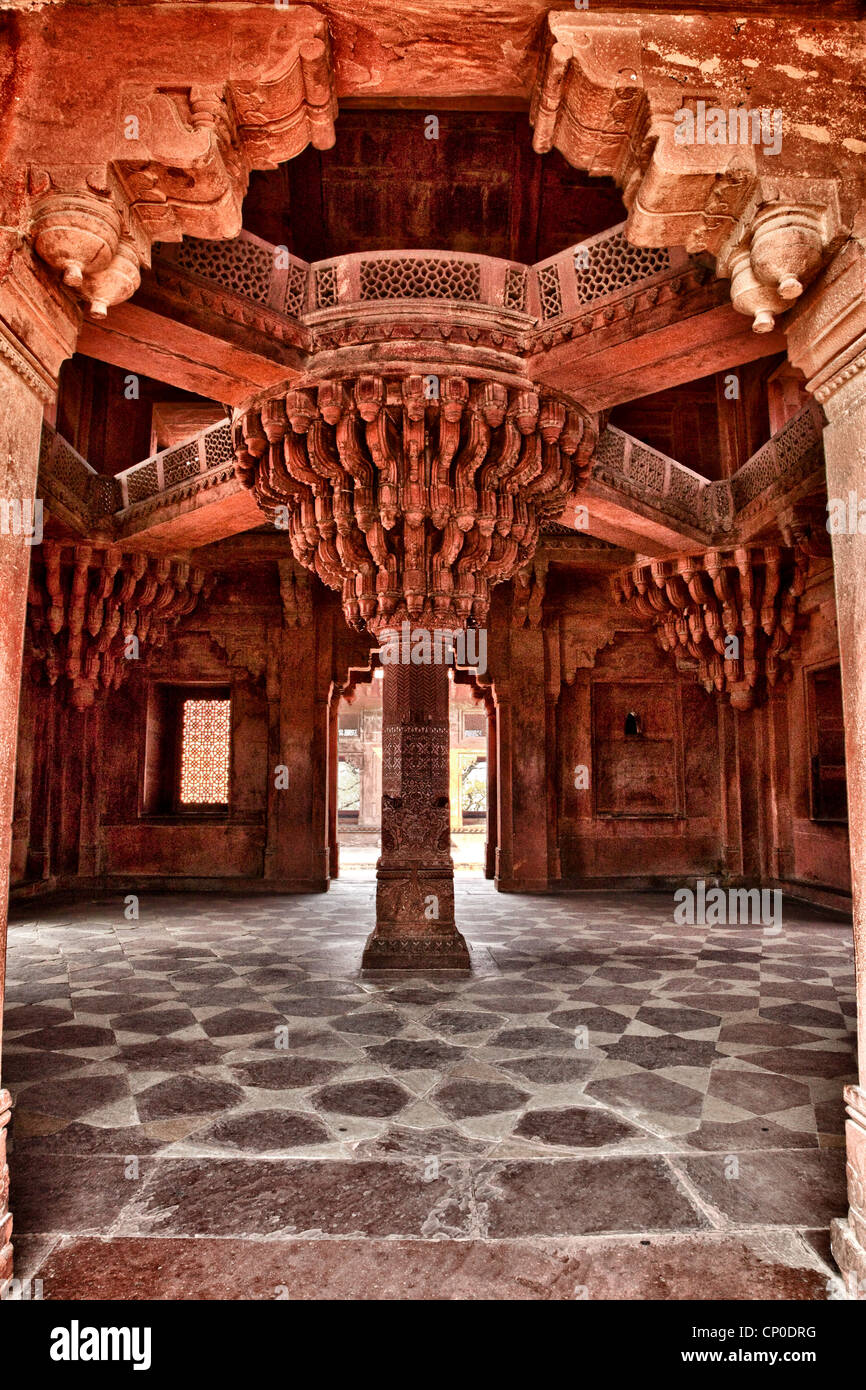
Akbar's city, Fatehpur Sikri, reflected his catholicism in the building where he held audience. A central pillar fuses Hindu, Christian and Buddhist styles in that hall. Akbar's Hindu wife had her own lavish palace complete with place for worship and even separate kitchen. The man was a complete gentleman. I did wonder, seeing that pillar, if Hindu kings have accommodated other faiths in their palaces? I don't know.


Ziegenbalg, Evangelism and Keezhavenmani


Tamil Nadu was a major port of entry for Christian evangelism in India. Bartholomaus Ziegenbalg, a German missionary, landed in Tranquebar (known in Tamil as 'Tharangambadi') as part of a Danish mission on 9th July 1706. Tranquebar was given as a territory to Danes vide a treaty between Tanjore Nayak prince and the Danish delegation on 19th November 1620. The treaty stipulated, amongst other things, that the Danes are free to practice their religion and they'd not be discriminated. It is here that protestant evangelism began in India. An interesting episode, per an exhibit at the Danish fort, was the massacre of Danes by an army sent by the 'Nabob of Tanjore' in June 1756 due to what appeared to be a misunderstanding that the Danes had broken the treaty. Another exhibit spoke of how the right-hand caste people objected to left-hand caste people using a palanquin. Also Brahmins organized a strike and then a revolt when an oil presser of lower caste used a parasol and wore slippers. The first converts were 5 natives in 1707.

A key contribution of Ziegenbalg was the importation of printing press and translating to Tamil the Bible. The Ziegenbalg museum honestly stated that the aim was religious conversion for the printing press and translation. However they incorrectly claim that this was the first printing press in India. Note, even today most Hindu scriptures are only in Sanskrit and if at all translated it is in English by a Westerner. Despite nearly 300 years of active evangelism and proselytization the state of Tamil Nadu and the surrounding areas remain Hindu majority and the town is ringed by venerable temples. That tells us something about the paranoia concerning religious conversions is just that, paranoia.

Bible Translated and Printed in 1713.
I also visited Keezhavenmani, a sleepy village near Thanjavur. It was the site of a horrific massacre of 44 Dalits on December 25th 1968 when women and children taking refuge at a hut were burned alive. A dilapidated memorial stands there. A man claiming to be the younger brother of the owner of that hut, called 'Ramiah's hut', showed me around and shared a few words. I'll return to this topic in the last part of my series on the travel when I discuss caste and religion.

Artless Cities and Intellectual Vacuity


Whether it is Sheesh Mahal in Amer fort or Fatehpur Sikri's palaces or the temples the artistic heritage is breathtaking and a depressing reminder of the current artlessness of the cities. One has to wonder how did such a civilization decay and become so artless? The cities are completely bereft of aesthetics. Whether one travels in the countryside of England, even a not so affluent quarter, or the many quaint downtowns of US or the many cities of Europe there's a sense of beauty and aesthetics whereas Jaipur, Chennai and Bengaluru are an assault on the senses with not just the ubiquitous squalor but how neighborhoods lack any character. There's no sense of a neighborhood. You've money you build to suit your whims. The colors are jarring. Chennai roads are literally overrun with chrome plated railings and road signs. It's an eyesore. Metal just criss-crosses the city like gashes on a body.

V.S. Naipaul had similarly wondered why a civilization with a tradition of art in contemporary times created buildings and monuments that were artless. He reasoned, "The British pillaged the country thoroughly; during their rule manufactures and crafts declined", "a biscuit factory is a poor exchange for gold embroidery. The country has been pillaged before. But the continuity had been maintained. With the British, continuity was broken. And perhaps the British are responsible for this Indian artistic failure". We should remember that Naipaul was a doubly the subject of a British colony, India and Trinidad. He further added, "It was a clash between positive principle and a negative; and nothing more negative can be imagined that the conjunction in 18th century of static Islam and a decadent Hinduism. In any clash between post-Renaissance Europe and India, India was bound to lose" ('An Area of Darkness' by Naipaul)

Sheesh Mahal - Amer Fort
In 2010 traveling on Trichy-Madurai highway I was appalled by how many vehicles travel on the wrong side with impunity and how blessed we were not to have been in a fatal accident. In 2019 even small towns in Tamil Nadu, like Thanjavur, and cities like Bengaluru and Chennai literally had walls as median dividers, in let alone highways, in local roads too. It was such a revolting sight to see brick walls erected as dividers. When the dividers were small enough to prevent vehicles cattle and people behaving like cattle would happily cross over and these higher walls became necessary to avoid that.

A decade who while visiting Madurai Meenakshi temple and Nayakkar Mahal I felt that the Hindu Religious and Charitable Endowments organization (HR &CE) and the Archeology Survey of India that maintain those respective places insult and deface history. I felt the same at Parthasarathy temple at Triplicane in Chennai this time. Indians often lament about treasures of India being smuggled to Western countries but I wonder if, the illegality notwithstanding, it is better than letting the treasures rot in India. Western museums showcase Indian art with respect and regard that Indians have never showed to their own treasures. Note, this is not to argue in support of nefarious illegal acts but to drive home a point.

The HR&CE department has practically created an office inside a smaller temple in the Big Temple premises and walled off a section with the divider rudely cutting into a pillar adorned with a sculpture. It's almost as if it is the mistake that the temple, built a 100 years ago (this part was recent addition) did not anticipate this need. See picture below.


Here's what I wrote, ten years ago:
I think back with lots of pain about the immense pleasure I got out of visiting historical landmarks in the west. When Indians react with smugness looking at 'stolen' treasures in British museums I say "at least the treasures are where they are respected".
My sentiments remain the same a decade later.

Two years ago I visited Italy and the many beautiful cathedrals of Christendom. In almost every church we could get finely produced brochures, for a price, that detail the history of the church and the biblical myths associated with a place. Whether it is Amer Fort in Jaipur or Taj Mahal or Fatehpur Sikri or Parthasarathy temple such brochures were completely absent. At Jantar-Mantar, an 18th century observatory, there's literally a crying need for better information about the instruments. At Taj Mahal the ASI had a depot that was dilapidated, dusty and a sleeping attendant with shoddily produced brochures of, not Taj, but Fatehpur Sikri.

The guides were mostly just hawkers who know where to get your tickets, the way inside and out. Beyond that they should be awarded a legal punishment for the butchering of history. At Amer fort the guide pointed to the toilets, with drainage system, and beamed that no one else in the world had something akin to it. I did not have the heart to tell him that probably the Roman baths that predated Amer fort had something similar. I've been to Bath, England too. At Halebid, Karnataka the guide bragged, pointing to a sculpture, that it was a binocular and it shows we invented binoculars before Galileo. Pointing to a sculpture of a warrior raining arrows he helpfully explained that it was the precursor of scud missiles. And when my lady friend stepped away he pointed to an erotic sculpture and whispered, conspiratorially in my ears, "you can take photographs". I did not.

"Together with the triviality of Indian thought on most subjects", wrote Naipaul in 'India: A Wounded Civilization", "the intellectual deficiencies of the archaic civilization finally revealed during this Emergency". Nowhere is this evident even today than in the book stores of a city like Bengaluru. Chennai is even worse when it comes to book stores.

Aside from visiting Belur-Halebid in Karnataka I spent a morning at one of the well known bookstores of Bengaluru, Gangaram Book Store and few others in Church Street. An elderly store assistant was thrilled to help me. He literally embarrassed me by running around and hauling books for me based on my preferences. I told him to stop but he persisted saying, "it's rare to see anyone ask for the books you did". As a fellow bibliophile he was just plainly excited. I had decided not to buy books that I'd get in US or through Amazon in general. I wanted local publications on local topics.

While I came across some gems like M.C. Chagla's autobiography, a book on India's churches etc the majority of the books were by hobbyists and not by academicians. Rajmohan Gandhi is now considered a historian and that's the high bar the rest are really scary. A starry eyed biographer of Sardar Patel had a chapter titled, "Lenin and Bardoli". I duly kept the book back in the shelf. Religion sells, by the bushels. Savarkar has become the subject of two recent biography. I bought one by Vikram Sampath and in 20 pages he has managed to make me puke with thinly veiled caste pride and hollow high praises. And that's a Penguin publication. Sigh. Sardar Patel clearly has become a good selling subject. India's academicians rarely publish for the common reader and maybe, given their quality, it is a blessing. The number of books on international topics are slim picking and its a usual reflection of the insular intellectual taste of Indians.

A visit to a book fair in Thanjavur was a windfall for me for all the books I bought from Kalachuvadu (Footprint) and few other publishers. However I am sure the publishers themselves had no windfall as most stalls were visited by window shoppers. High School children from pricey private schools came by the bus loads and most shopped for coloring text books or books less than Rs 15-20. Of course, no book was available at that price. Cinema tickets don't sell at that price level. Being a publisher in India is a Karmic punishment perhaps.

Whether it was at Bharati's memorials at Triplicane and Pondicherry or at Kalakshetra one is pained that Bharathi and Rukmini Devi Arundale still lack good definitive and academic biographies. Bharathi signified the birth of modern Tamil verse and prose and Rukmini Devi midwifed a classical art. Yet, we only know stories about both of them.

While India proved Naipaul wrong on the lack of ambition it, sadly, continues to vindicate his chiding of the intellectual backwardness of the country in 1976. "India's intellectual second-rateness, which is generally taken for granted but maybe the most startling and depressing fact about the world's second most populous country".

That intellectual second-rateness and the current political state of India are intricately braided with great consequence for the world at large and for India. That takes me to the question of how did Narendra Modi win such a thumping victory? As is my habit I indulged a bit in local news magazines and newspapers. Just one issue of India-Today, a news magazine published since the 1970s, with a cover story on the fiscal woes of the automobile sector provided enough material on the state of India today. About that, in the next blog.


Sunday, April 28, 2019

ஜெயகாந்தனின் பார்வையில் நேரு, பெரியார், மதச் சார்பின்மை, ஆர்.எஸ்.எஸ் மற்றும் பா.ஜ.க

பரவலான இந்தியர்களுக்கு அறிமுகமான ஆளுமைகளோ முதன்மைச் சிந்தனையாளர்களோ எதுவும் இல்லாத இந்துத்துவத் தரப்பு சமீப காலமாக முன்னெடுத்து வரும் தந்திரோபாயம் சர்தார் படேல், ராஜாஜி, காமராஜர் ஆகியோரையும் அம்பேத்கரையும் கூடத் தங்கள் தரப்பாகச் சுவீகரித்து முன்னிறுத்துவது. அதன் தொடர்ச்சியாகச் சில தமிழ் இந்துத்துவர்கள் இப்போது ஜெயகாந்தனையும் தங்கள் தரப்பாக முன் வைக்கிறார்கள். இவர்கள் எல்லோருமே இறந்து விட்டவர்கள் ஆதலால் அவர்களால் எதுவும் சொல்ல இயலாது என்பது மிகப் பெரிய சவுகரியம். ஆனால் வரலாறு அவ்வளவு எளிதாக வளைக்கக் கூடியதல்ல. அந்தப் பட்டியலில் பலரும் அவர்கள் சிந்தனைகளை, நம்பிக்கைகளைத் தெளிவாக எழுதியும் அவரவர் பதவிகளில் இருந்த போது செயலாற்றியும் வைத்தவை பதிவாகி இருக்கிறது. ஜெயகாந்தனைப் படித்தால் தெரியும் அவர் மோடிக்கு ஓட்டுப் போடுவாரா என்பது.


ஜெயகாந்தனின் பார்வை:


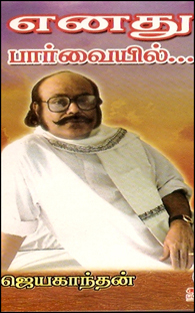
1977-2002 வரை ஜெயகாந்தன் பல பத்திரிக்கைகளில் அவர் எழுதிய அரசியல் கட்டுரைகளைத் தொகுத்து "எனது பார்வையில்" தலைப்பில் 2003 வெளியிடப்பட்டது. ஆர்.எஸ்.எஸ், பா.ஜ.க, மதச் சார்பின்மை மற்றும் தேசியம் குறித்த அவர் பார்வையை அத்தொகுப்பில் இருக்கும் கட்டுரைகளின் ஊடாகத் தெளிவாக நிறுவலாம். இந்தப் பதிவு ஜெயகாந்தனின் பார்வைகளின் விமர்சனமல்ல. அது இங்கு நோக்கமில்லை. சில இடங்களில் அவர் கருத்து எனக்கு ஏற்புடையதா இல்லையா என்பதை மட்டும் சுட்டிக் காட்டுகிறேன். இக்கட்டுரையின் முதன்மை நோக்கம் சோ ராமசுவாமி மாதிரியான இந்துத்துவர் ஒருவரோடு ஜெயகாந்தனையும் தொடர்பு படுத்தலாமா என்ற கேள்விக்கான பதில் தான்.

இந்தக் கட்டுரைத் தொகுப்பில் முதலில் எரிச்சலுறச் செய்வது ஒவ்வொரு கட்டுரையும் எந்த இதழில், எப்போது வெளியிடப்பட்டது என்பதைக் குறிப்பிடாதது தான். ஆனால் கட்டுரையில் குறிப்பிடப்படும் சில நிகழ்வுகளை வைத்துத் தோராயமாகச் சிலவற்றைத் தேதியிட முடிகிறது.

மத மாற்றம், மதச் சார்பின்மை மற்றும் இந்துஸ்தானம்: 


எது மதச் சார்பின்மை என்று ஜெயகாந்தன் தெளிவுறக் கூறுகிறார்,
'செக்குலர்' என்பதற்கு 'எந்த ஒரு தனி மதமும் சாராத' என்பது தான் மெய்ப்பொருள். நடைமுறையில் செக்குலர் என்பது மத எதிர்ப்பு என்று கருதப்படுகிறது. கம்யூனிஸ ஆட்சியில்லாத ஜனநாயக நாடுகளில் 'செக்குலர்' என்பது மத எதிர்ப்பு அல்ல. 
அமெரிக்காவின் மிக முக்கிய அரசியல் சாசனத்தின் முதல் திருத்தம் அதைத் தான் சொல்கிறது. அரசு எந்த மத அமைப்பையும் நிறுவாது என்பதோடு எந்த மதமும் சுதந்திரமாகச் செயல்படலாம் என்கிறது.

திராவிட இயக்கங்களின் மதச் சார்பின்மை, மூட நம்பிக்கை எதிப்பு என்பதெல்லாம், "இஸ்லாம் அல்லாத, கிறிஸ்துவம் பௌத்தம் அல்லாத 'மத எதிர்ப்பு' என்பதை அவர்களின் நடைமுறையில் இருந்து அறியலாம்" என்கிறார்.

இக்கட்டுரை ஜெயலலிதா தலைமையிலான தமிழக அரசு 2002-இல் கொண்டு வந்த 'கட்டாய மத மாற்றத் தடைச் சட்டம்' காலத்தில் எழுதப்பட்டது. ஜெயகாந்தன் அச்சட்டத்தை ஆதரிக்கிறார் ஏனென்றால் அச்சட்டம் மத மாற்றத்தைத் தடைச் செய்யவில்லை மாறாக ஆசைக் காட்டியோ, அன்பளிப்பு அளித்தோ செய்யப்படும் மத மாற்றங்களை மட்டுமே தடைச் செய்தது அது ஒரு நெறிப் படுத்துதலே என்கிறார்.

இன்குலாப் எழுதிய "சாரே ஜஹான் சே அச்சா" பாடலின் கடைசி வரிகளாக வரும் "ஹிந்தி ஹை ஹம்! ஹிந்தி ஹை ஹம்! ஹிந்தி ஹை ஹம்! வதன் ஹை ஹிந்துஸ்தான் ஹமாரா" என்பதைக் குறிப்பிட்டு உருது மொழியில் இஸ்லாமியரான இக்பால் எழுதிய அக்கவிதை இந்தியர்கள் அனைவரும் இந்துக்களே "எங்கள் நாடு ஹிந்துஸ்தானம்" என்ற முழக்கம் மீண்டும் இந்தியர்களின் செவிகளில் ஒலிக்க வேண்டும் என்கிறார்.

"ஹிந்து மதம் என்ற ஒன்று எவராலும் நிறுவப்பட்டதோ, அந்த மதத்துக்கு எவரும் மாற்றப் பட்டதோ, எவரும் அதிலிருந்து விலக்கப்பட்டதாகவோ கதைக் கூடக் கிடையாது" என்கிறார்.

மேற்சொன்னவையெல்லாம் இந்துத்துவர்களுக்கு உவப்பானவை. அதனால் ஜெயகாந்தனை இந்துத்துவராகச் சித்தரிக்கலாமா என்ற முடிவுக்கு வருவதற்கு முன் ஒரு சிறு விமர்சனம்.

ஜெயலலிதா அரசு கொண்டு வந்த மத மாற்றத் தடைச் சட்டம் வெறும் நெறிப்படுத்துதல் அல்ல. அது இந்துத்துவ அரசியலுக்காகச் செய்யப்பட்டது தான். மதத்தால் மக்கள் ஏமாறக் கூடாதென்றால் அன்றாடம் அநேக இந்துச் சாமியார்கள் ஏமாற்று வேலையையும் அதில் சேர்த்திருக்க வேண்டும்.

காந்தி முதல் ஜெயகாந்தன் வரை மத மாற்றங்களின் சமூக நிர்பந்தங்கள் சரி வரப் புரிந்து கொள்ளப் படவேயில்லை என்பது தான் உண்மை. மீனாட்சிபுரத்தில் பல நூறு குடும்பங்கள் இஸ்லாமுக்கு மாறிய போது அது தமிழகத்தில் கொந்தளிப்பை ஏற்படுத்தியது. மீனாட்சிபுரத்துக்கே சென்று மதம் மாறியவர்களைப் பேட்டி எடுத்து ஜெயகாந்தன் 'ஈஸ்வர், அல்லா தேரே நாம்' என்றொரு நாவலை எழுதினார். அது நாவலாகவோ சமூக ஆய்வாகவோ கைக் கூடாத ஆக்கம். சமீபத்தில் தன் முனைவர் ஆய்வுப் பொருளாகத் திருமாவளவன் மீனாட்சிபுரத்தின் மத மாற்ற காரணிகளை ஆராய்ந்திருக்கிறார். அது இன்னும் எனக்குப் படிக்கக் கிடைக்கவில்லை. ஆனால் வெளியான சில பகுதிகளும் அந்நிகழ்வுக் குறித்து நான் படித்தறிந்தவையும் சொன்னவை அங்கு நிலவிய உயர் சாதி அடக்கு முறைக்கு அம்மத மாற்றம் ஒரு முக்கிய எதிர் வினை என்று.

இந்தியாவில் பிறந்த எல்லோரும் இந்துக்கள் என்பது எல்லாம் வெத்து வேலை. ஒரு கம்யூனிஸ்ட் பேசும் பேச்சே அல்ல அது. ஜெயகாந்தன் உண்மையிலேயே கம்யூனிஸ்டா என்றே விவாதிக்கலாம். ஜெயகாந்தன் அந்த மூலக் கவிதையைச் சரியாகப் புரிந்துக் கொண்டாரா என்பதும் கேள்வியே. விக்கிப்பீடியாவில் இருக்கும் வரிகள் சொல்வதெல்லாம் "ஹிந்தி ஹை ஹம்! வதன் ஹை ஹிந்துஸ்தான்". அதன் அர்த்தம் நாம் 'ஹிந்து' எனும் நிலப் பரப்பை அல்லது 'civilization' சார்ந்தவர்கள் என்பது தான். 'நாம் ஹிந்து மதம் சார்ந்தவர்கள்" என்ற அர்த்தம் வரவில்லை.

'சாரே ஜஹான் சே அச்சா' எழுதிய இன்குலாப் பின்னர் தீவிர பாகிஸ்தான் ஆதரவாளர் ஆனார். அக்கவிதையையே கூடச் சற்றே மாற்றி "நாம் எல்லோரும் முஸ்லிம் இந்த உலகம் நம் வீடு" என்று எழுதினார்.


எவரும் இந்து மதத்தில் இருந்து விலக்கப்பட்டதாக கதைக் கூடக் கிடையாதென்கிறார். அப்படியென்றால் பஞ்சமர்களுக்கு நேர்ந்தது என்ன?

ஜெயகாந்தன் அடிப்படையில் ஓர் மனிதாபிமானி என்பதை வள்ளலார் பற்றி அவர் ஆற்றிய உரை நமக்குச் சொல்கிறது. தெய்வத்தின் பெயரால் "பகைத் தீயை வளர்க்கும் மதாபிமானிகளைவிட" மத நம்பிக்கையற்றவர்களாயினும் "அன்பும் சமத்துவமும் நிலப் பெறப் பாடுபடும் நாத்திகவாதமுமே" உவப்பாக இருந்தக் காலத்தில் வள்ளலார் பற்றி அறிய நேர்ந்து வள்ளலாரை உள்வாங்கியவர் ஜெ.கே.

பெரியார் போற்றுதலுக்குரியவர்:


"பிராமணீயத்தையும் இந்து மதத்தையும் கடுமையாய் இழித்தும் பழித்தும் பேசிய பெரியார் இஸ்லாம் மதத்தில் சேரும் படி தாழ்த்தப்பட்டோரைத் தூண்டினார். ஐரோப்பாவைக் காப்பியடிக்கும்படி உபதேசித்தார்" என்று சொல்லி அதன் பொருட்டே பெரியாரின் கருத்துகளையு நிராகரித்ததாகச் சொல்கிறார் ஜெயகாந்தன். "கடவுளை நம்பாதிருந்த நான் கூடக் 'கடவுளை நம்புகிறவனெல்லாம் முட்டாள்' என்ற பெரியாரின் பொன்மொழியை ஆராயப் போய், கடவுளை ஆதரிக்கிறவனாகவும், மக்களுக்கும் கடவுளுக்கும் இருக்கும் உறவின் மகத்துவத்தைப் போற்றுகிறவனாகவும் மாற நேர்ந்தது" என்கிறார்.

பெரியாரின் பிராமணத் துவேஷத்தை எதிர்கொள்ள "உடம்பு கூசியது" என்றும் அத்துவேஷம் "தனிப்பட்ட முறையிலும் சமுதாய அளவிலும் ஆராய்ச்சிக்கே இடமில்லாத அநாகரீகம்" என நிரூபனமானதென்கிறார்.

பெரியாரின் நூற்றாண்டு விழா நடந்த ஆண்டில் எழுதப்பட்ட இக்கட்டுரையில் அவரது "கொள்கைகள், அவரது கோட்பாடுகள் பல எதிர்மறை அம்சங்கள்" கொண்டிருந்தாலும் "மண்ணில் மதத்தின் பெயராலும், சாதியின் பெயராலும், கடவுளின் பெயராலும் ஏற்றத் தாழ்வுகளும் அடிமைத் தனமும் ஒடுக்கு முறையும் நிலவுகிற வரை பெரியாரின் கொள்கைகளுக்குத் தமிழர்கள் கூட்டங் கூடு திருவிழா எடுத்துக் கொண்டு தான் இருப்பார்கள்" என்ற நம்பிக்கையைத் தெரிவித்து "மக்களின் அந்த உணர்ச்சி 'வகுப்பு வாத பிற்போக்கு வெறியர்களுக்கு எதிராகப் பயன்படுமாறு ஜனநாயக இயக்கங்கள்" இங்கு அமைய வேண்டும் என்பதையும் அக்கறையோடு சுட்டிக் காட்டுகிறார் ஜெயகாந்தன்.

நேரு:


இந்துத்துவர்களின் அடி வயிற்றிலிருந்து அமிலத்தை உமிழ வைக்கும் சக்தி ஒரேயொரு பெயருக்குத் தான் இருக்கிறது அந்தப் பெயர் 'ஜவஹர்லால் நேரு'.

ஜெயகாந்தன் நேருவை தன் ஆசிரியர் நிலையில் வைத்துப் பேசுகிறார். "Glimpses of World History" மூலம் சரித்திரம் பயின்றதாகவும் அதன் மூலமே நம் பழங்காலச் சரித்திரத்தையும் நம் சரித்திரம் போன்றே மற்ற பண்டைய நாகரீகங்களின் சரித்திரம் இருந்ததையும் அறிந்ததாகச் சொல்கிறார். நேருவைப் பற்றி இந்துத்துவ அறிவிலிகள் சொல்லும் குற்றச்சாட்டு அவர் இந்திய பாரம்பர்ய பண்பாட்டை மதிக்கவில்லை என்பது. ஜெயகாந்தனின் பார்வையில் நேரு இந்திய வரலாற்றையும் பண்பாட்டு வேர்களையும் சம நோக்கோடு அங்கீகரித்தவர்.

"வேதங்களைப் பற்றியும் உபநிஷத்துகக்களைப் பற்றியும் மஹாபாரத இராமாயண இதிகாசங்களைப் பற்றியும் அவர் மிக உயர்வான மதிப்பீடுகளைப் பல நூல்களில் வழங்கியிருக்கிறார்".  
"மதங்களில் ஏற்பட்டிருக்கிற சீரழிவையும், மூட நம்பிக்கைகளையும் அவர் கடுமையாக வெறுத்தார். எனினும் அவற்றின் மூல மேன்மைகளை அவர் மறந்ததுமில்லை; மறுத்ததுமில்லை. கௌடில்யரின் அர்த்தசாஸ்திரத்தைப் பற்றி, அதில் மிளிர்ந்த ஜனநாயகப் பண்புகள் பற்றி, அர்த்த சாஸ்திரம் வல்யுறுத்துகிற வாழ்வியல் முறைகள் பற்றி அவர் மிகவும் உன்னதமான மதிப்பீடுகளைச் செய்திருக்கிறார்". 

மேற்சொன்ன இரு கருத்துகளுக்கும் ஜெயகாந்தன் அநேகமாக ஆதாரமாகக் கொண்டது 'இந்தியாவைக் கண்டடைதல்' நூலாக இருக்கும். ஏன் 'பல நூல்கள்' என்று ஜெயகாந்தன் குறிப்பிடுகிறார் என்று தெரியவில்லை.

நேருவின் "இதயம் மிகவும் விசாலமானது" என்று சொல்லி, "இவரது எண்ணங்களால், எழுத்துகளால் அசோகன் காலத்து இந்தியாவைப் போல் இந்தத் தேசம் இவர் (நேரு) காலத்தில் புத்தியிர் பெற்றது" என்று கட்டுரையைக் கொஞ்சம் அதீதமான விதந்தோதலுடன் முடிக்கிறார் ஜெயகாந்தன்.

கவனிக்க வேண்டியது ஜெயகாந்தன் நேருவிடம் வியந்த குணாதிசியங்கள். இவரா இன்று இந்துத்துவத்தை ஏற்பார். ஆர்.எஸ்.எஸ் பற்றிய கட்டுரை தான் இத்தொகுப்பிலேயே மிக இண்டது. 30 பக்கங்கள். கிழித்துத் தொங்க விட்டிருக்கிறார்.

ஆர்.எஸ்.எஸ்:


ஜெயகாந்தனின் பிள்ளைப் பருவத்தில் அவர் சுற்று வட்டாரத்தில் ஆர்.எஸ்.எஸ் "காளமேகம் போல் தமிழ் இளைஞர்களைக் கவர்ந்து கொள்ள முயன்றது". அவர் பார்த்த ஆர்.எஸ்.ஏஸ்-இல் "முஸ்லிம் சிறுவர்களோ, தாழ்த்தப்பட்ட குலத்தில் பிறந்த சிறூவர்களோ, கிறிஸ்தவர்களோ ஒருவர் கூட இருக்கவில்லை".

இரண்டாம் உலக யுத்தம் முடிந்திருந்த காலத்தில், அப்போது ஜெயகாந்தனுக்கு 10-11 வயது, டாங்கிகளும், போர் விமானங்களும் அறிமுகமாகியிருந்த சூழலில் ஆர்.எஸ்.எஸ்-இன் உடற்பயிற்சி முறைகளைப் பகடிச் செய்கிறார் ஜெயகாந்தன். "பாவம் இந்தப் பிராமணப் பிள்ளைகள் இந்தக் காலத்தில் வாளும் கேடயமும் தூக்கிக் கொண்டு, பண்டைக் காலக் காட்டுமிராண்டிகள் போல் ஆடுகிறார்களே" என்று நகைக்கிறார். அவர்களின் அரசியல் குறித்து அடுத்துக் காட்டமாகச் சொல்கிறார்.
" 'நான் ஒரு ஹிந்து' என்று ஒரு வகை, அருவறுக்கத்தக்க ஆவேசத்துடன் இவர்கள் கூறிக் கொண்டார்கள். அமைதியும் சாந்தமும் அகிம்சையும் வடிவமாகக் கொண்டு நம்மிடையே வாழ்ந்துக் கொண்டிருக்கிற மஹாத்மா காந்திஜியின் மூலம் இந்த 'ஹிந்து' என்ற வார்த்தைக்கு உயரிய பொருள் கொண்டு - நானும் ஒரு ஹிந்துவே என்று உணர்ந்தவன் நான். ஆயினும் இந்த ஆர்.எஸ்.எஸ்காரர்கள் 'நான் ஹிந்து...ஹிந்து' என்று நெஞ்சில் அடித்துக் கொண்டு நின்ற போது - 'நான் ஹிந்து இல்லை...ஹிந்து இல்லை' என்று கத்திக்கொண்டு ஓட வேண்டும் போல் எனக்குத் தோன்றியது"
ஹிட்லர் தோற்கடிக்கப்பட்ட பின் "அதே ஸ்வஸ்திகா சின்னத்துடன் ஒரு காவி முக்கோணக் கொடியை ஏற்றி நெஞ்சில் கை வைத்துச் சல்யூட்" அடித்த ஆர்.எஸ்.எஸ் நண்பர்களைப் பார்த்து "அறிவீனம்' என்று மட்டுமே எண்ணியதாகவும் "அது ஒரு புதிய ஆபத்தின் அறைகூவல்" என்று அப்போது பலருக்கும் புரியவில்லை என்கிறார்.

ஆர்.எஸ்.எஸ் பற்றி மேலும் அறிந்தப் போது அவர்கள் "முற்றமுழுக்கப் பாசிசத்தையே ஹிந்து வர்ணம் பூசித் தரித்துக் கொண்டவர்கள்" என்று கண்டு கொண்டார் ஜெயகாந்தன். காந்தி கனவுக் கண்ட சமத்துவத்துக்கும் சகோதரத்துவத்துக்கும் ஆர்.எஸ்.எஸ் இயக்கத்தினரின் கனவான "ஹிந்து ராஷ்டிரத்தில் இடம்" கிடையாது என்று தெளிவாக உணர்கிறார் ஜெயகாந்தன். அகண்ட ஹிந்துஸ்தானத்துக்குத் தாங்களே அதிபர்கள் என்று 'ஜெர்மன் நாஜிகள் போன்றே நம்பினார்கள்" என்கிறார். சவர்க்கரை ஹிட்லரோடு ஒப்பிட்டே பேசுகிறார் ஜெயகாந்தன்.

பாகிஸ்தானைப் போன்றே இந்தியாவிலும் ஹிந்து மதத்தின் பேரால், இங்கே வாளேந்தி மற்ற மதத்தினரைப் பூண்டோடு அழிக்கவும் சர்வாதிகார ஆட்சியை நிறுவவும் இவர்கள் அன்றே போர் சன்னத்தர்களாயினர்" என்று பின்னோக்கிப் பார்த்துச் சொல்கிறார்.

ஆர்.எஸ்.எஸ் தடை நீக்கம் பெற்று பல கட்சிகளையும் ஊடுறுவி நிற்கிறது என்றும் காந்தியின் கொலைப் பழியிலிருந்து தங்களை விடுவிக்கும் பொருட்டுக் கோட்ஸே ஆர்.எஸ்.எஸ் காரன் இல்லையென்றும் (கோட்ஸெ உண்மையில் ஆர்.எஸ்.எஸ்-ஐ விட்டு வெளியேறியப் பிறகு தான் கொலைச் செய்தான்) "ஆயிரம் பொய்களைப் பேசி அழகாக முடிச்சவிழ்க்கப் பார்க்கிறார்கள்" என்று குற்றம் சாட்டுகிறார்.

ஆர்.எஸ்.எஸ்-ஐ தமிழர்கள் எதிர்க்க வேண்டும் என்கிறார் ஜெயகாந்தன். "இவர்களை எதிர்த்தும், இவர்கள் மத நெடி வீசுகிற கருத்துக்களைக் காறித்துப்பியும், வெறும் இந்து வீரம் பேசி மதத்துவேஷம் வளர்க்கின்ற மாய் மாலத்தையும், ஆரியப் பெருமையையும் தமிழர்கள் ஆப்பாரைந்து தகர்திருக்கிறார்கள். இனியும் தகர்ப்பார்கள்".

ஆர்.எஸ்.எஸ்-இன் மத வெறிக்கு எதிராகத் திராவிட இயக்கத்தின் நாத்திகம் வேருன்றியதைச் சுட்டிக் காட்டி ஆர்.எஸ்.எஸ்-ஐ எதிர்க்க முக்கியமான உத்தியை ஜெயகாந்தன் சொல்லியிருக்கிறார்.

"நமது தொழிலாளி வீட்டுப் பிள்ளைகளும் விவேகாநந்தர், காந்திஜி, பாரதி, ராமலிங்க அடிகளார் போன்றோரின் சமரச சத்திய ஞானப் போதனைகளைப் பயிற்றுவிக்கிற இளைஞர் இயக்கங்களை ஊர்கள் தோறும் தோற்றுவிக்க வேண்டும்". இதைச் செய்யத் தமிழர்கள் தவறியதால் தான் இன்று நம்மிடையே பா.ஜ.க காலூன்றியதோடு இந்துத்துவர்களின் மாய்மாலப் பிரச்சாரங்களை எதிர் கொள்ள ஒரு அறிவியக்கம் தமிழர்களிடையே இல்லாமல் போனது.

"தமிழகமே உஷார்! இவர்களைச் சந்திக்கத் தயார் நிலையில் நில்!" என்கிறான் 'ஆல் அமர்ந்த ஆசிரியன்'

'நீங்கள் எந்தப் பக்கம்?'


அநேகமாக 1996-2001 காலக் கட்டத்துக்குள் பா.ஜ.க பங்குப் பெற்ற ஏதேனும் ஒரு தேர்தலின் போது எழுதப் பட்டதாக இருக்கும் 'நீங்கள் எந்தப் பக்கம்?' என்ற தலைப்பிட்டக் கட்டுரை.

மிகத் தெளிவாகச் சொல்கிறார் ஜெயகாந்தன், "ஆர்.எஸ்.எஸ். சித்தாந்தத்தின் அரசியல் இயக்கமே பாரதிய ஜனதாவும் அதன் அணியைச் சேர்ந்த கட்சிகளுமாகும்". இந்த அணி ஒரு பக்கம்.

இன்னொரு பக்கம் "பல விஷயங்களில் மாறுபாடு கொண்ட கட்சிக் கொள்கைகள் உடையனவாயினும் காந்தியின் சித்தாந்தமான மத ஒற்றுமையை ஏற்றுக் கொண்டு அதற்காகப் பாடுபடும் கட்சிகள்". "இதில் எதைப் பெரும்பான்மை இந்திய வாக்காளர்கள் ஏற்றுக் கொள்ளப் போகிறார்கள்?"

"பாஸிசத்தை எதிர்த்து, உலக அறிஞர்களையும் எழுத்தாளர்களையும், ஒவ்வொரு பிரஜையையும் ஒன்று திரட்ட ஒரு காலத்தில் 'நீங்கள் எந்தப் பக்கம்?' என்று ஒரு கேள்வியை" மாக்ஸிம் கார்க்கி முன் வைத்தார். அதே கேள்வியை இந்திய வாக்காளன் முன் வைக்கிறார் ஜெயகாந்தன். இவரா சோ இராமசாமியோடு வைக்கத் தகுந்தவர்? இவரா இந்துத்துவர்? இவரா மோடிக்கு ஆதரவளிப்பார்?

'விசாலப் பார்வைக் கொள், தமிழா!'


அநேகமாக 1996-2001 திமுக ஆட்சியில் எழுதப்பட்ட கட்டுரை, 'விசாலப் பார்வைக் கொள், தமிழா!'. அகிலனுக்குப் பிறகு தமிழ் எழுத்தாளர்கள் யாருக்கும் ஞானபீடம் கொடுக்கப்பட்டதில்லை என்று வருத்தம் நிலவுவதைச் சிறு எள்ளலோடு குறிப்பிட்டு அதைப் பற்றிக் கவலைப் படாமல் தமிழர்கள் இந்திய மொழிகளை, சமஸ்கிருதம், உட்படத் தமிழ் நாட்டில் கௌரவிக்க வேண்டும் என்று வேண்டுகோள் விடுத்து, "இந்தியாவைப் பற்றியும் இந்திய மொழிகள் குறித்தும் நமது பார்வை விசாலமுறுதல் வேண்டும்" என்கிறார். "விசாலப் பார்வையால் இந்தியாவையே நாம் விழுங்குதல் வேண்டும்" என்று பாரதிதாசனை எதிரொலிப்பவரா இந்துத்துவத்துக்குக் குடைப் பிடிப்பார்? அறிவிலிகளே உங்கள் மனச் சுருக்கத்தையும் மன விகாரத்தையும் கொண்டு ஒரு சமூகத்தின் ஆசிரியனை அளக்க முற்படுகிறீர்கள்.

ரவி சுப்ரமணியனின் நாலாந்தர ஆவணப் படத்தில் ஆங்காங்கே வரும் நல்ல தருணங்களில் இரண்டு முக்கியமானவை. என் பார்வையில்.

கர்நாடக மாநிலத்தில் திருவள்ளுவர் சிலை வைக்கக் கிளம்பிய எதிர்ப்பும் அது சார்ந்து தமிழகத்தில் கர்நாடக மாநிலம் மீதும் இங்கு வாழும் கண்ணடர்கல் மீதும் எழுந்த அதிருப்தி தமிழர்களுக்கு அழகு சேர்ப்பதல்ல என்று சொல்லி தமிழர்கள் கர்நாடகாவுக்குப் பெருந்தன்மைக் கற்பிக்கும் பொருட்டுத் தமிழ் நாட்டில் கர்நாடக கவி ஒருவருக்குச் சிலை எழுப்ப வேண்டும் என்று சொல்லும் இடம் முக்கியம். இவரா இந்து மதம் மற்ற மதங்கள் தன்னோடு நல்லிணக்கமாக இருந்தால் மட்டுமே சகோதரத்துவத்தோடு இருக்க வேண்டும் என்று சொல்வார்?

யாரோ ஒரு வடக்கத்திய சங்கராச்சார்யார் ராமன் பற்றிச் சொன்ன கருத்தைப் பற்றிக் கேட்கும் போது வெகுண்டெழுகிறார், "யாரோ சங்கராச்சாரி ஏதோ சொன்னானாம் அதற்கு நான் பதில் சொல்ல வேண்டுமா? வெறுப்பைத் தேடிக் கொண்டு அலைகிறீர்கள்". இவரா இந்துத்துவர்?

கருத்துகளும் பார்வைகளும்:


ஜெயகாந்தனின் நாவல்களில் பல சுவாரசியமானதும் விவாதப் பொருளாவதும் அவரது முன்னுரைகளே. இத்தொகுப்பிலும் அவ்வாறே. இரண்டு மேற்கோள்கள் கீழே:
"எனது கருத்துக்களை கேட்கிறவர்களும், படிக்கிறவர்களும் அப்படியே ஏற்றுக் கொள்ள வேண்டும் என்று நான் எதிர்ப்பார்ப்பதுமில்லை. அதற்கு எதிரான மாறுதலான கருத்துகள் ஏற்கனவே நிலவி வருவதை நன்கு தேர்ந்தப் பிறகே நான் அவற்றை வெளிப்படுத்துகிறேன். அதன் மீது விவாதமும் ஆதரவும் மறுப்பும் ஏற்படுவது அவற்றின் இயல்பேயாகும் என்பதால் எனது கருத்துகளை மறுப்பவர்கள் மீதும், மாறுபாடு கொள்பவர்கள் மீதும் எனக்கு மாச்சர்யங்கள் ஏற்படுவதில்லை"
"இது எனது பார்வை. இது ஒன்று தான் பார்வை; இதுவே சரியான பார்வை என்பதோ, வேறு பார்வைகளை நான் மறுக்கிறேன் என்றோ இதற்குப் பொருள் அல்ல. எனது பார்வைக்கு என்று நான் எடுத்துக் கொள்ளுகிற விஷயங்களும் மனிதர்களும் எனது பார்வைக்குள் மட்டும் அடங்கி விடுகிறவை அல்ல. அவை மேலும் மேலும் அறியத் தகுந்தன. அவற்றின் வரம்பும் எல்லைகளும் விரிக்க விரிக்கப் பெருகும் இயல்புடையன."
ஜெயகாந்தன் என்கிற மானுடத்தை நேசித்த கலைஞனை மூடர்கள் மட்டுமே ஒரு வெறுப்பியக்கத்தோடு சம்பந்தப் படுத்த முடியும். அதைச் செய்த ஒருவர் மென்மையான எதிர் வினகைகளைக் கூடப் பொறுத்துக் கொள்ளவோ மெலும் விவாதிக்கவோ இயலாதவர். அவருக்கு ஜெயகாந்தனைப் புரியாமல் போனது விந்தையல்ல. ஒருவரை புரிந்துக் கொள்ளவும் ஏற்கவும் அவர் வாழ்வும் கருத்தியலும் நம் உள்ளத்தோடு ஓரளவுக்காவது சேர்ந்திசைக்க வேண்டும் (Resonate).

இப்புத்தகத்தைப் படிக்கும் போதும் சமீபத்தில் ஜெயகாந்தன் பற்றி இன்னொருவருடன் வாதிடும் போதும் என் மனத்தில் தோன்றிய வாசகம் ஜெயமோகன் ஜெயகாந்தனை 'ஆல் ஆமர்ந்த ஆசிரியன்' என்று தன் அஞ்சலி உரையில் குறிப்பிட்டது. கிறிஸ்தவம், இஸ்லாமிய அடிப்படை வாதம், மத மாற்றம், இந்து மதத்தில் தான் கொள்ளும் பெருமிதம் ஆகியன பற்றி மிக மிகக் காத்திரமாக இன்றும் எழுதுகிறவர் ஜெயமோகன். அவற்றில் பல கருத்துகளோடு நான் முரண்படுகிறவன் ஆனால் ஜெயமோகனும் ஜெயகாந்தனும் இணையும் புள்ளி, ஆர்.எஸ்.எஸ் பற்றிய விமர்சனத்தில் அல்ல, இந்து மதம் இந்துத்துவம் அல்ல என்பதிலும் இந்து மதத்தை இழிவு செய்வது இந்துத்துவம் என்பதிலும் தான்.

ஜெயகாந்தன் 'ஆல் ஆமர்ந்த ஆசிரியன்' ஆனால் அவரின் விழுதுகள் அவரைப் புரிந்து கொண்ட வாசகர்களேயன்றி அங்கொன்றும் இங்கொன்றும் படித்துத் தங்கள் சவுகரியத்துக்கு அவரை வளைப்பவர்களோ பிதுரார்ஜித உரிமைக் கொண்டாடுபவர்களோ அல்ல.

பின் குறிப்பு: 


ஜெயகாந்தன் படங்களுக்காக இணையத்தைத் தேடிய போது கிடைத்தது தான் அந்தக் கறுப்பு-வெள்ளை 'RSS' என்று எழுதி மண்டை ஓட்டோடு இருக்கும் படம். அது வெளியானது 'கல்பனா'. அப்படத்தில் 'ஜெயகாந்தனின் கல்பனா' என்பது தெரிகிறது. ஜெயகாந்தனின் படத்தின் கீழே மங்கலாகத் தெரியும் பெயர் 'ரா. கிருஷ்ணையா'. கிருஷ்ணையா ஜெயகாந்தனின் உற்ற நண்பரும் கல்பணாவின் பதிப்பாசிரியரும் ஆவார். அவர் ஒரு வகையில் எனக்கு உறவினரும் கூட. அவர் மகன் மணந்தது எங்கள் வீட்டுப் பெண்ணை. ஜெயகாந்தனின் 'உன்னைப் போல் ஒருவன்' படமாக்கலில் உதவி புரிந்தார் கிருஷ்ணையா என்று கேள்வி. ஜெயகாந்தனின் 'ஓர் இலக்கியவாதியின் கலையுலக அனுபவங்கள்" புத்தகத்தில் தோழர் கிருஷ்ணையா என்றே ஒரு அத்தியாயமுண்டு. கிருஷ்ணையா சோவியத் ரஷ்யாவில் கலாசார நிறுவனம் ஒன்றில் ரஷ்யாவிலும் பணியாற்றி இருக்கிறார். அகிலனின் 'நான் கண்ட ரஷ்யா'வில் கிருஷ்ணையா பற்றிக் குறிப்புண்டு.

References:

1. 'எனது பார்வையில்' - ஜெயகாந்தன். கவிதா பதிப்பக வெளியீடு
2. https://en.wikipedia.org/wiki/Sare_Jahan_se_Accha
3. https://ta.wikipedia.org/wiki/இந்தியாவில்_சிறுபான்மையினர்_உரிமை
4. https://en.wikipedia.org/wiki/Jayakanthan#Awards_and_honours

Monday, April 15, 2019

India's Election: Selling BJP as Panacea and Parallel Universes

"This is the most important election of our lifetimes" is a constant refrain for any election and it has become laughable cliche except, sometimes, it is indeed true. Democracy is not a destination but a continuous journey and elections have consequences. India is certainly facing one of its most consequential elections in recent memory. Democracies are feeling the heat of populism and liberalism is in retreat. A crude form of tribalism is undermining notions of multiculturalism and majority communities are leading the charge fueled by a mythic notion of victimhood. The parallels, between the Trump phenomenon and an election in which Narendra Modi is the central figure, are troubling.


Modi's supporters and detractors, like that of Trump's, occupy parallel universes. Modi's supporters talk of free market, national pride, dispensing with the idea of secularism as useless hypocrisy, minority communities converting India to Islam or Christianity and fusing the Indian multitude into one single whole. Modi's detractors question what is being sold as economic growth, the muscular religious fundamentalism is frightening them, that men can be lynched on the basis of suspicions of selling beef shakes their belief in the society around them and they believe Modi is as corrupt as anyone. I, of course, belong in the latter camp.

Despite the antics of Trump and Modi facts do matter. Truth is neither relative not subjective. Here's why I consider the camps to be parallel universe. Monica Halan, writing for Livemint, says that the Congress party scheme of basic income will be a non-starter because India is "now not a predominantly poor country, but one with about 20% poor people. The rest of the 80% are left wondering what's in it for them".

One can scour the internet to find arguments about the poverty estimates of India and one could, as it happens, choose articles that confirm one's own view points. Economist Surjit Bhalla estimates that new economic data being compiled, published once in 5 years, will peg India's poverty at one third of its population. Ballah's estimation points to a downward trend that includes the growth that kicked in during the previous regime.  Even if we stick with Halan's estimate that 20% is 20% of more than a billion. Estimates say that "nearly 40% of India's children under 5 are short for their age". Between those two data points is a crucial human element that Halan nonchalantly glosses over. What is worse she says 80% of the remaining India would want to know who's paying for the 'dole'. Guess what, of the 80% a meager "0.23% pay 77% of India's taxes". "Only 81,344 individuals declared a gross total incomes of more than Rs 1 crore". India is a nation of tax cheats and for this class to smugly talk about the poor and undernourished is easy because this class lives in a parallel universe.
 g_110859_tax_280x210.jpg


(Image source Forbes article. See Reference)

Halan's oped was titled, "Leaving 'maai-baap' behind, this is an India rising elections". The oped opened with an anecdote about an individual who was stopped by a traffic cop and who, instead of paying a bribe, insisted on getting a reciept for the fine due and if the cop refused that he'd email the Prime Minister's Office. The cop, Halan says, meekly fell in line and this, to the columnist, is evidence of a new India. Yes, it is a new India in her parallel universe.

In another universe a Washington Post article, amongst several others, spoke of how WhatsApp rumors fueled lynch mobs that killed individuals suspected of kidnapping children or robbing patients of body parts. "Cow Vigilante Violence" and "WhatsApp Lynchings" are wikipedia pages now. What sort of India does Ms Halan live in and what sort of India do readers who love her article live in?

Gurcharan Das, former CEO of P&G and then author of some books, recently published an article in 'Foreign Affairs', titled, "The Modi Mirage". Calling himself a liberal he speaks of an agonized choice in 2014 when he chose to support Modi risking India's "precious commitment to secularism and pluralism for the sake of prosperity, jobs, and fighting corruption". Now, if Das was truly a liberal he'd have no agony in making the choice and the choice would be that forsaking secularism for a few points of GDP is not worthwhile. These are liberals on a fair weather day.

Das excoriates Modi, on botching the implementation of GST, centralizing authority like he operated as Chief minister forgetting that he's Prime Minister, on being a 'pragmatic modernizer' and not a 'liberal reformer' and on causing a liquidity crunch through demonetization and affecting the lives of millions.

So why is Das disillusioned now? When he made the agonized choice Das depended on "India's democratic institutions" that he says are "strong enough" to prevail over Modi's "sectarian and authoritarian" style. Now suddenly Das is waking up to the fact that India's institutions, led by the IAS cadre, is not as strong.

Americans too made the same mistake in electing Donald Trump. While American institutions are certainly far stronger than Indian institutions Americans are realizing that the President does have lot of power and that unlike his predecessors Trump will not shy from tearing away gentlemanly behavior that restrained them from acting willy nilly. That's why Trump has a public feud with the Federal Reserve chairman and has the chutzpah to pardon potential witnesses against him in an inquiry.  People in high offices can test the limits of institutions. If we choose a candidate thinking institutions will retrain him or her then we are fools. Anyone requiring such restraints are unqualified to hold office in the first place.

Das adds, "some of the most robust government institutions have weakened: official data on jobs, for example, can no longer be trusted". If this is state of one of the key measurements of a large economy and if this is the comment by a former supporter can Modi's supporters have any legitimate argument to ask for his re-election? In a rational universe they'd not have any argument.

In the universe of Modi's supporters this administration has brought down or eliminated corruption, at least at high levels. Yet, only yesterday leading French newspaper Le Monde reports that France waived 143 Million Euro tax for Anil Ambani, who's company got the Rafale deal. If we make the argument that Modi is not personally corrupt then so was Manmohan Singh, for 10 years. BJP has the highest number of MPs with criminal cases and highest number of MPs with cases for crimes against women. How can this party not be corrupt? In a parallel universe it may be so.

The Attorney General, K.K. Venugopal, informed India's Supreme Court that the Indian voter has no need to know about the source of funding for parties. The Modi led government is liberalizing rules to raise money from sources, including foreign sources. Every party played along and the bill passed the Lok Sabha without a debate. This would've caused a furor in any civilized democracy. The BJP is India's richest party today. Yet, we are told this is a government where corruption trends downward.

BJP richest political party with Rs 10.03 billion income in FY17: ADR


(Source https://www.business-standard.com/article/politics/bjp-richest-political-party-with-rs-10-03-billion-income-in-fy17-adr-118041001008_1.html )

If all the above are not reasons enough to boot Modi's government out Das, who expected the leopard to change its spots, bemoans that "India's prized social cohesion is under threat, and religious minorities feel insecure". That should qualify as a gross understatement.

Here's a cartoon that is doing the rounds on Hindtutva Facebook pages.


Modi certainly did not invent casteism or Islamophobia or hatred of Christians or other minorities. But what Modi certainly made it acceptable is the mainstreaming of such filth. People who share this do so publicly and even those who disagree with this filth feel its perfectly ok to be friends, whatever that may mean in the Facebook world, with such bigots. Dishing out unprintable names about castes and members of various communities used to be done in closed circles and now it is mainstream. This is why Modi gets the level of support that Vajpayee never got. Vajpayee, for all his bigotry, had his limits whereas Modi has none.

Modi's election campaigns have degenerated into open religion baiting and dispensed with dog whistles. Rahul Gandhi contesting from Wayanad, a constituency where the three religions and tribals form good proportion, becomes a reason to castigate him as contesting from a Muslim constituency. Wayanad is NOT a Muslim constituency. Rumors were first circulated that Pakistan flags accompanied Rahul Gandhi's visit. They were the flags of Muslim League, an alliance partner of Congress. Then another rumor started that Muslim League supporters were told not to wave their party flag for being mistaken for Pakistan flag. That was debunked too with visual evidence.

While minorities are hunted and lynched in one universe in another universe stories abound about conversions for money. India, a popular meme joked, has been under Islamic rule for 500+ years and under Christian rule for 300 years and yet has remained Hindu by a vast majority and therefore what's the big deal now? Nope there's no big deal now except that Modi has happened. Not all the money of Vatican or Middle East can fund converting India to Christianity or Islam. Yesterday BJP's chief in the state of Kerala has said that one has to only remove the dress of a man to know if he's a Muslim.

Much of what we see is really not new. Social media brings these to us faster and with visceral immediacy. Social media is also becoming a threat to Indian democracy (and yes I'll be sharing this blog on Facebook). India, analyst Tarun Pathak told Wall Street Journal, "is now the world's cheapest country to spread fake news". Another analyst estimates that "some 13.7 billion WhatsApp messages are sent every day in India". All parties indulge in this but BJP probably is the leader. Their echo chambers ricochet with not just fake news but hate speech. Not all universes are alike.

Modi's supporters spend their waking moments jeering at Rahul Gandhi as 'Pappu' and forwarding memes about Rahul's intelligence or lack thereof. In another universe Modi made a fool of himself, on recorded video, trying to spell the word 'Strength' and explaining the mathematical formula (a+b)2.

Which universe will triumph when the votes are counted?

Only W.B. Yeats can do justice to the moment.

Turning and turning in the widening gyre   
The falcon cannot hear the falconer;
Things fall apart; the centre cannot hold;
Mere anarchy is loosed upon the world,
The blood-dimmed tide is loosed, and everywhere   
The ceremony of innocence is drowned;
The best lack all conviction, while the worst   
Are full of passionate intensity.


References:

1. https://www.livemint.com/elections/opinion/opinion-leaving-maai-baap-behind-this-is-an-india-rising-elections/amp-1554900859061.html
2. http://www.forbesindia.com/article/india-rich-list-2018/indias-tryst-with-taxes/51833/1
3. Modi Mirage https://www.foreignaffairs.com/articles/india/2019-04-11/modi-mirage
4. https://www.cnn.com/2018/07/16/asia/india-whatsapp-lynching-intl/index.html 
5. https://www.washingtonpost.com/world/asia_pacific/as-mob-lynchings-fueled-by-whatsapp-sweep-india-authorities-struggle-to-combat-fake-news/2018/07/02/683a1578-7bba-11e8-ac4e-421ef7165923_story.html?utm_term=.a0e3878fa6ad
6. https://www.wsj.com/articles/fake-news-is-rampant-on-whatsapp-as-indian-elections-loom-11554055428
7. https://www.thenewsminute.com/article/voters-don-t-have-right-know-source-political-party-funds-ag-venugopal-sc-99867
8. https://www.indiatoday.in/crime/story/bjp-has-highest-number-of-mps-and-mlas-with-cases-of-crimes-against-women-says-study-1215840-2018-04-19
9. https://www.thehindu.com/news/national/lok-sabha-passes-bill-to-exempt-political-parties-from-scrutiny-on-foreign-funds-without-debate/article23285764.ece
10. https://www.washingtonpost.com/news/worldviews/wp/2018/07/10/india-is-no-longer-home-to-the-largest-number-of-poor-people-in-the-world-nigeria-is/?utm_term=.ce61edc8498e
11. https://indianexpress.com/article/opinion/columns/india-is-middle-income-now-raise-the-poverty-line-5239269/
12. https://en.wikipedia.org/wiki/Cow_vigilante_violence_in_India_since_2014