"How to think about God: An ancient guide for Believers and Nonbelievers" is a selection from Marcus Tullius Cicero's "On the nature of the Gods" and "Dream of Scipio". Published by Princeton University the book is part of a series of bringing out selected prose from ancient thinkers, mostly Greco-Roman, that have relevance to contemporary world. Musing on the existence of Gods and the place of godhead in human life has a long tradition in human history across cultures. These selections from Cicero are about that. Separated by nearly a millennium it is surprising to see how much Greco-Roman heritage continues to echo in Western traditions and even more surprising is the parallels one could find with Hindu philosophy.
Marcus Tullius Cicero - From Wikipedia
From the Greek etymological roots the word philosophy simply means, 'lover of wisdom'. Sarvepalli Radhakrishnan, with help from Shakespeare, gives us an understanding of what we mean by a philosophical spirit.
"When touchstone asks Corin in As You Like It, 'Has any philosophy in thee, shepherd?' Shakespeare means by philosophy not a system of abstract thought or a technical discipline of the schools but an attitude of mind which can best be described as 'idealistic'. Have you that spiritual dimension to your being, that mood of reflective inquiry and self-contemplation, that anxiety of mind to know the things spiritual in which is the true dwelling place of man?"
All ancient civilizations show a tradition of musing about God and religion and in some civilizations this reached into the higher echelons of philosophy and undoubtedly the Greco-Roman civilization was one of them. Of the Romans Marcus Tullius Cicero ( January 3rd BC - December 7th 43 BC) left behind an enviable body of work, both political and philosophical, and influenced many across the centuries "from St. Augustine and Dante to Voltaire and Alexander Hamilton". Having risen to become a consul in 63 BC Cicero was marginalized during the reign of Julius Caesar. It was then, in 45 BC Cicero wrote, "On the nature of Gods", an imaginary dialogue featuring an Epicurean, a Stoic and an academic debating the existence of God and his nature.
The selection in the book focuses on Quintus Lucilius Balbus (c100 BC) expounding on the nature of god or divinity. Translator Philip Freeman says the Latin word 'Deus' could be taken to mean 'divinity' or 'god' depending on context and thus render itself to very different meanings. Before Balbus could speak, in the fictitious debate that Cicero writes, Gaius Aurelius Cotta (124 - 73 BC), considered an academic, is invited to define his belief in gods. Cotta demurs saying that it is easier for him to "talk about what I disbelieve rather than what I believe". Hindu philosophy famously uses the principle of "not this, not this" (neti, neti). With that Balbus enters the dialogue.
Balbus says that the Stoic view of God has four parts. First, Gods exist; second, the nature of gods; third, how they govern the universe; and finally, their role in human affairs. On the question of existence of God Balbus uses an a priori approach and deduces that any contemplation of the heavens and nature around us should convince us, kind of axiomatically, that a higher intelligence "rules over this realm". Following such a line of logic he asks that the existence of the idea of God across the ages in the mind of man shows that time, the merciless sieve of useless ideas, has left behind this idea because it is valid and because god exists.
"Prophecies and premonitions of things to come", is to Balbus, "proof that the future is being revealed, shown, portended, and foretold to human beings". Then Balbus emphasizes the importance of propitiating to the gods and beseeching good omens before large undertakings like wars. "Generals", Balbus adds, brought about good to the country when they "followed religious practices". Comparing Rome to other nations Balbus says that there are things that Rome may excel at or be inferior to but when it comes to "religion, that is, the worship of the gods" they are "far superior". I wonder how would a Chinese or Hindu react to that?
The appearance of a comet, to Balbus and Roman society, foretold a calamity. Shakespeare makes Caesar's wife Calpurnia plead with him, on the ill fated ides of March, that bad omen foretells a calamity if Caesar where to go to the senate. Referring to the sighting of a comet Calpurnia tells Caesar, "the heavens themselves blaze forth the death of princes". Ancient Tamil literature speaks of sighting a comet before Mantharan Cheral Irumporai, a chieftain, dies. A historical fiction, Ponniyin Selvan, also refers to sighting a comet before the murder of a prince. Humanity, perhaps, has more in common than what divides us.
That comets exist and reoccur in intervals makes Cleanthes, a boxer turned philosopher and student of Zeno, argue for the existence of an intelligent power orchestrating it. Balbus, drawing up on Cleanthes, asserts, "the evidence of these celestial bodies should be enough to prove they are not the result of chance" but, "the result of an intelligent mind at work".
Cleanthes' and Balbus' idea of an "intelligent mind at work" governing the universe is central to the Judeo-Christian world that echoes even today in the evangelical war against Darwinian Theory of Evolution. God admonishes a grief stricken Job, in the Book of Job in Old Testament, "where were you when I laid the foundations of the earth? Tell me, if you have understanding. Who fixed its measurements? Surely you know!" God then scolds Job for even thinking he knows how the world works and for questioning why the world works the way it works. Modern day deniers of Theory of Evolution have cooked up this theory of 'Intelligent Design' that is nothing but a Trojan horse for 'Creationism' based exactly on the premise that the universe could not be an accident but a purposeful creation of an intelligent Omniscient divinity.
Hamlet mused in a soliloquy,
"what a piece of work is a man! how noble in reason, how infinite in faculty! in form and moving how express and admirable! in action how like an angel, in apprehension how like a god! The beauty of the world. The paragon of animals".
That human beings, endowed with reasoning and intelligence superior to all other living beings, should possibly be the culmination of all life sounds arrogant to Balbus. He feels, Chrysippus, a student of Cleanthes, "the heavenly bodies in their eternal order cannot have been created by man. Therefore, that which created them is superior to man". The very reasoning and intelligence that characterizes a human being ought to be the result of a creation of an even more superior mind. Socrates asks in Xenophon, "where did we acquire the minds we have". "Nothing without spirit and reason", Balbus quotes Zeno," can give birth to an animate and reasoning being". An evangelical Christian in America, today, echoes that same thought across the ages.
Radhakrishnan, like other anthropologists, reasons that "when man is delivered from imminent peril, or realizes his utter dependence on the mighty forces of nature, he feels the reality of the presence of god. He hears the voice of God in the tempest and sees his hand in the stilling of the wave". God asks Job, as Radhakrishnan would've known, "who enclosed the sea behind doors when it burst forth from the womb?" "Naturalism and anthropomorphism seem to be the first stages of the Vedic religion" says Radhakrishnan and quotes Chrysippus, "the Sun, Moon and Stars and Law and Men who have turned into Gods".
Chrysippus: Image Courtesy Wikipedia.
A striking parallel between the Greco-Roman worldview and the Hindu theology is the primacy assigned to fire. Heat has a tendency to destroy but heat within the human body and the sun is nourishing to life, a life preserver, a life giver. The Rg Veda, Radhakrishnan quotes, assigns to Agni, the Hindu god of fire, a primacy as creator.
Balbus goes further in reasoning that since the sun and stars are "born in ether" untainted by man or earthly objects, are purer. And to Balbus, it is axiomatic, sun and stars have a life and their movements are volitional. They "move of their own free will and due to intelligence and divinity". A Hindu astrologer would applaud that sentiment. When Balbus says, "intelligence depends on food we eat. Stars live in ether nourished by vapors of land and sea...pure food" we see stunning parallels to Hindu beliefs concerning purity of food and its effect on human intelligence.
On a side note, Radhakrishnan's acclaimed "Indian Philosophy" constantly draws parallels between Hindu and Indo-Iranian and Greek beliefs. Varuna is characterized in Rg Veda as omniscient, "knows the flights of the birds in the sky" and "not a sparrow can fall without his knowledge". The author of Book of Job would've been surprised at the oneness of vision. "Dyaus", to Radhakrishnan, "is not merely an Indo-Iranian deity but an Indo-European one. It survives in Greece as Zeus, in Italy as Jupiter".
Speaking on the purpose of man's existence Balbus says, "humans have emerged for contemplating and imitating the universe. We are certainly not perfect, but we are part of perfection". In his Hibbert lectures Radhakrishnan says, "In a metaphor common to the Upanishads and Plato every unit of nature is a microcosm reflecting in itself the entire all-inclusive macrocosm".
Balbus, having offered all the above arguments, concludes, "To sum up, the existence of the gods is so abundantly clear that I regard anyone who denies it as out of his mind". Tamil poet Bharathi, drawing upon a Vedic tenet, asks the reader to "believe" and "believing is indeed the path". ("நம்புவதே வழி என்ற மறை தனை நாம் இன்று நம்பிவிட்டோம்". "நம்பினார் கெடுவதில்லை நான்கு மறைத் தீர்ப்பு")
"Dream of Scipio" is the concluding part of a 6 part political work, "On the Republic", by Cicero written between 54-51 BC. Only the Dream of Scipio is now available. The Dream is a fictional encounter between Scipio Amelianus (185 BC - 129 BC), known for his destruction of Carthage in the Third Punic war, and Scipio Africanus (236/235 BC - 183BC), his grandfather and legendary general who had defeated Hannibal in the Battle of Zama.
The younger Scipio meets the elder Scipio in heaven in a dream and is taken upon a tour and lectured about the purpose of life and futility of glory. The elder Scipio advises that he who serves his country will be exalted and those who serve the country will find a place in heaven like the father and grandfather of younger Scipio. When the younger Scipio asks if heaven is the destination then why not he die and come sooner. He is admonished by the elder that the body that houses the soul of man is god's gift and only god can decide when the body dies. We see here the seed of Biblical injunction against suicide.
Mocking a life in pursuit of glory the elder Scipio cautions that glory will not "will not climb the Caucasus Mountains, which you see down there, or swim across the Ganges River over there? No one in the far eastern lands or the remote west or the northern or southern regions will ever so much as hear your name....Even among those who do know us, how long will your memory last?" "Place none of your hopes in human rewards. Let virtue herself by her own allurements draw you to true honor". "Keep striving and know this, that you're not mortal, only your body....The true self of each person is the mind. Know therefore that you are god". Here's an echo of 'That art thou'. The lines of H.W. Longfellow bears quotation here:
Life is real! Life is earnest!
And the grave is not its goal;
Dust thou art, to dust returnest,
Was not spoken of the soul.
Trust no Future, howe’er pleasant!
Let the dead Past bury its dead!
Act,— act in the living Present!
Heart within, and God o’erhead!
Lives of great men all remind us
We can make our lives sublime,
And, departing, leave behind us
Footprints on the sands of time
Amidst the tour the elder Scipio speaks of nine spheres and music emanating from melodious movements. One is reminded of Pythagoras's theory of the music of spheres.
What do we make of all this? While science has overturned all of the above what these reflections reveal is the aspiration of human spirit to understand life's purpose. While theology deems it impossible that our Earth could be an accident science teaches us that it is precisely that.
Will Durant, writing on the purpose of philosophy, quotes Cicero, "There is nothing absurd but that it may be found in the books of the philosophers". Hamlet admonishes his friend Horatio, "There are more things in heaven and Earth, Horation, than are dreamt of in your philosophy". But then, as Durant teaches us there are pleasures in philosophy for only philosophy keeps alive the eternal human impulse of wanting to understand. For all his mocking of philosophy Cicero best exemplifies the spirit of Robert Browning that Durant gives as a reason for philosophy, "Life has a meaning, To find its meaning is my meat and drink".
After the assassination of Julius Caesar the triumvirate including Mark Antony pursued not just Caesar's assassins but their political enemies too and Cicero had invited the wrath of Antony. On 7th December 43 BC Cicero was executed. "On Antony's instructions his hands, which had penned the Philippics against Antony, were cut off as well; these were nailed along with his head on the Rostra in the Forum Romanum". Thus ended the life of one of the greatest Romans.
References:
"How to Think About God: An Ancient Guide for Believer and Nonbelievers" -- Marcus Tullius Cicero; Selected, translated and introduced by Philip Freeman. Princeton University publication.
பாரதிக்கு இன்று வரை முறையான வாழ்க்கைச் சரித்திரம் கிடையாது. மாறாக நினைவுக் குறிப்புகள் என்று கூறத் தக்கவை தான் அதிகம். அவற்றுள் நூல் வடிவில் வெளிவந்தவைகளில் மிகுந்த கவனம் பெற்றவை, முறையே, வ.ரா வின் 'மகாகவி பாரதியார்', யதுகிரி அம்மாளின் ‘பாரதி நினைவுகள்’ மற்றும் செல்லம்மாள் பாரதியின் நூல். ரா.கனகலிங்கத்தின் ‘என் குருநாதர் பாரதியார்’ பிரசித்திப் பெற்ற அளவுக்குப் அங்கீகரிக்கப்படவில்லை என்றேத் தோன்றுகிறது.
கனகலிங்கம் பற்றிய பிம்பம்
பாரதி பற்றி அநேக ஆராய்ச்சிக் கட்டுரைகள் எழுதிய சென்னைப் பல்கலைக் கழகப் பேராசிரியர் ய. மணிகண்டன் கனகலிங்கம் பற்றிய ஒரு கட்டுரையில் இப்படித் தொடங்குகிறார், “பாரதியின் அன்புக்குரிய சீடர், ஒடுக்கப்பட்ட சமூகத்தவர், பாரதியால் பூணூல் அணிவிக்கப்பட்டவர், ‘என் குருநாதர் பாரதியார்’ எனும் நூலைப் படைத்தவர்". கட்டுரை கனகலிங்கம் பற்றிக் கிடைத்த புதியதோர் தகவல் பற்றியது. அதற்கான முதல் வரிகள் தான் அவை.
கனகலிங்கம் என்கிற நூலாசிரியரை அறிமுகப்படுத்தும் முகமாக, சீடர், ஒடுக்கப்பட்ட சமூகத்தைச் சேர்ந்தவர், பாரதியால் பூணூல் அணிவிக்கப்பட்டவர் என்றெல்லாம் சொல்லிவிட்டு தான் அவர் எழுதிய நூலே குறிப்பிடப்படுகிறது. வ.ரா எழுதிய “மகாகவி பாரதியார்” நூலுக்கும் இப்படி ஓர் அறிமுகம் கிடைக்குமா என்று தெரியவில்லை. “பாரதியின் அன்புக்குரிய சீடர், ஆதிக்கச் சமூகத்தவர், பாரதியால் பூணூல் கழற்றியவர், ‘மகாகவி பாரதியார்’ எனும் நூலை எழுதிய வ.ரா என்று யாரும் எழுதிப் பார்த்ததில்லை.
கனகலிங்கத்தின் கல்வியும் பாரதியின் அறிமுகமும்
கனகலிங்கத்தின் நூலுக்கு எஸ். வையாபுரிபிள்ளையும், பி.ஶ்ரீ. ஆசார்யாவும் எழுதிய முன்னுரைகளின் காலத்தை வைத்துப் பார்க்கும் போது இந்நூல் 1947-இல் வெளி வந்திருக்கலாம் என்று தெரிகிறது. இந்நூல் பாரதியைப் பற்றி மட்டுமல்ல அக்காலச் சாதியம் பற்றியும் தகவல்களை அளிக்கிறது. எழுத்து நடையும் அபாரம். கனகலிங்கத்துக்குப் பாரதி பூணூல் மாட்டி விட்டார் என்கிற கதையில் மறக்கப்பட்ட (அல்லது மறைக்கப்பட்ட உண்மை) கனகலிங்கத்தின் பின்புலம்.
கனகலிங்கம் 1907-இல் பாரதி புதுவை வந்ததாக நினைவிலிருந்து எழுதுகிறார். பாரதி புதுவைக்கு வந்தது 1908-இல். 1907-இல் கனகலிங்கம் புதுவையின் பாரம்பர்யமிக்கக் கல்வே பள்ளியில் படித்துக் கொண்டிருந்தார், வயது 17 என்கிறார். (ஆக அவர் பிறந்த வருடம் 1890 என்று தோராயமாகக் கணிக்கலாம். பாரதியை விட 7-8 வயது இளையவர். பாரதி பிறந்தது டிசம்பர் 11 1882). பள்ளிக் காலத்தில் தோழர் ஒருவர் மூலம் ‘இந்தியா’ பத்திரிக்கை கிடைக்கப் பெற்று அதன் மூலம் பாரதி பற்றிய அறிமுகம் கிடைக்கிறது. கனகலிங்கத்தின் கல்வி மற்றும் அறிவுத் தேடலுக்கு இது ஒரு சான்று.
1912-இல் Progressive Union Cricket Club என்கிற அமைப்பின் சார்பில் கனகலிங்கமும் வேறு மூன்று நண்பர்களும் பாரதியை உரையாற்ற அழைக்கிறார்கள். கவனிக்கவும், கனகலிங்கம் எம்மாதிரியான கிளப் ஒன்றில் உறுப்பினராயிருந்திருக்கிறார் என்று. பாரதி சாதியம் பற்றி உரையாற்றுகிறேன் என்கிறார். உரை நடக்கும் தினத்தன்று மாறுவேடத்தில் வந்த காவல் கண்காணிப்பாளரை கனகலிங்கம் அற்புதமாக வர்ணிக்கிறார், “நல்ல சிவப்பு நிறம், சுமார் ஆறடி உயரம், கிராப்புத் தலை, நெற்றியில் நாமம், மேலே கறுப்புச் செக்குக் கோட்டு, இடுப்பில் கரைப் போட்ட வேட்டி”. ஒரு நாவலாசிரியனுக்கே உரிய வர்ணனை.
குவளைக்கண்ணனும் கனகலிங்கமும்
கனகலிங்கத்தோடு கல்வே பள்ளியில படித்த இன்னொருவர் குவளைக்கண்ணன் என்று அறியப்படுகின்ற கிருஷ்ணமாச்சார்யார். ‘எனது நண்பர் குவளைக்கண்ணன்’ என்று கனலிங்கம் குறிப்பிடுகிறார். பள்ளிக் கால நட்பைக் குறிப்பிடுகிறாரா இல்லை பின்னால் பாரதியின் மூலம் நண்பரானதை குறிப்பிடுகிறாரா என்று தெரியவில்லை. இதில் இருந்து நமக்குத் தெரிவது கனகலிங்கம் படித்தவர் என்பதோடு பிராமணர்கள் பயின்ற பள்ளியிலேயே பயின்றார் என்பது. அப்பள்ளியில் பயின்ற இன்னொரு பாரதி நண்பர் டி. விஜயராகவாச்சார்யார்.
குவளைக்கண்ணன் பெருமாள் கோயில் பட்டாச்சார் வேலைப் பார்த்ததோடு இன்னொரு வேலையும் அவ்வப்போது செய்தார் என்கிறார் கனகலிங்கம். புதுவை நீதிமன்றங்களில் சாட்சி சொல்வோர் ஏற்க வேண்டிய சத்திய பிரமாணம் சாதி, மத ரீதியாக வேறுப்பட்டிருந்ததாம். இஸ்லாமியருக்கு முஸ்லிம் ஒருவர் குர்-ஆன் புத்தகம் கொண்டும், பிராமணரல்லாதோருக்கு ஐயங்கார் ஒருவர் துளசி தீர்த்தப் பாத்திரத்தோடும், “ஹரிஜன சமூகத்தாருக்கு வள்ளூவப் பண்டாரம் ஒருவர் துளசி தீர்த்தப் பாத்திரத்தோடும்” சத்திய பிரமானம் செய்விப்பார்களாம்.
புதுவையில் பாரதி இருந்த காலத்தில் தேர்தல்கள் அமளிப்பட்டன என்று கனகலிங்கமும், செல்லம்மாளும் பதிவுச் செய்கிறார்கள். பாரதி தேர்தல் காலத்தில் ஹரிஜனங்களைக் கோயில் அனுமதிக்க வேண்டும் என்று அறிக்கை எழுதி குவளைக்கண்ணனையும் கையொப்பமிட வைத்து விடுகிறார். அதன் பலனாகக் குவளைக்கண்ணன் சக ஐயங்கார்களால் ஜாதி பிரஷ்டம் செய்யப்பட்டாராம்.
கனகலிங்கத்துக்குப் பூணூல்: இரு பார்வைகள்
கனகலிங்கத்துக்குப் பூணூல் மாட்டிய நிகழ்வை பூணூலை கழற்றினாலும் பிராமணராகவே இருந்து பதிவுச் செய்கிறார் வ.ரா. வ.ராவின் பார்வையில் அது ஒரு கேலிக்குரிய நிகழ்வு. “உன் ஜாதி என்ன என்று யாராவது கேட்டால் பிராமணன் என்று சொல்” எனப் பாரதி முழங்கும் போது அந்த வைபவத்துக்காகப் பாறதி அழைத்திருந்த பிராமண நண்பர்கள் யாரேனும் நகைக்கிறார்களா என்று நோட்டம் விட்டதாக வ.ரா எழுதுகிறார். கனகலிங்கத்தைக் குறிக்கும் போது ‘அவன்’, ‘பையன்’ (கனகலிங்கம் 22 வயது ஆண். வ.ராவை விட ஒரு வயது இளையவராக இருந்திருப்பார்) என்று தான் வ.ரா குறிக்கிறார். மேலும் தன் பூணூலை கழற்றிவிட்ட பாரதி ஏன் பூணூல் அணிந்து இன்னொருவருக்குப் பூணூல் அணிவிக்கிறார் என்று கேள்வி எழுப்பினார் வ.ரா. அதற்குப் பாரதி பிராமணனான தான் அந்த அடையாளத்தைத் துறப்பதன் அவசியமும் அதே அடையாளத்தைக் கனகலிங்கத்துக்குக் கொடுப்பதன் வித்தியாசத்தையும் விளக்கினார்.
கனகலிங்கம் சில காலமாகப் பாரதி தனக்கு வேத மந்திரங்கள் கற்றுக் கொடுத்துப் பின்னர் ஒரு நாள் உபநயணம் செய்விப்பதாகச் சொல்லி வீட்டுக்கு அழைத்ததையும், அங்கிருந்த பாரதியின் நண்பர்களையும் நினைவுக் கூர்கிறார். பாரதியின் வீடு வைபவத்திற்குத் தயார் செய்யப்பட்டிருந்தது. “கூடத்தில் லட்சுமி, ஸரஸ்வதி, கிருஷ்ணன்” ஆகியவரின் அலங்கரிக்கப்பட்ட படங்கள் இருந்தன என்றும் கிருஷ்ணனின் படத்துக்கு அடியில் “பிச்சுவா” கத்தி இருந்தது என்றும் குறிப்பிடுகிறார். இக்குறிப்புகள் வ.ராவின் புத்தகத்தில் இல்லை.
கனகலிங்கத்துக்குப் பூணூல் மாட்டியது குறித்து யாரேனும் தன்னுடன் வாதம் ஆரம்பிக்க மாட்டார்களா என்றும் அப்படிச் செய்தால் “வேத முனிவர்களின் பரந்த மனப்பான்மையையும், உண்மையான இந்து மதத்தின் உயர்ந்த லட்சியங்களையும்” பற்றி எடுத்துரைக்கப் பாரதி ஆவலாக இருந்தாராம்.
உப்பளம் மாரியம்மனும் பாரதியும்
பாரதியின் “தேடி உனைச் சரணடைந்தேன் தேசமுத்து மாரி” பாடலின் பூர்வீகம் சுவாரசியம். புதுவையில் உப்பளம் தேச முத்து மாரி அம்மன் கோயில் ஹரிஜனங்களுக்கான கோயில் அங்கிருந்த பூசாரி நாகலிங்கம் என்னும் வள்ளுவப் பண்டாரம். அவருக்கும் பாரதி பூணூல் அணிவித்தார், அவர் கேட்டுக்கொண்டதற்கிணங்க. ஆரம்பக் காலத்தில் அப்பாடல் “உப்பளம் தேச முத்துமாரி” என்ற தலைப்பில் தான் வெளியானதென்றும் பிற்காலத்தில் ஏனோ வெறுமே ‘தேச முத்துமாரி’ என்றும் தலைப்பிடப்பட்டது என்று வருத்தத்தோடு குறிப்பிடுகிறார் கனகலிங்கம். இது உண்மை. பாரதியின் கவிதைகளைக் கால வரிசைப்படுத்தி வெளியிட்ட சீனி.விஸ்வநாதனும் இத்தகவலை பதிவு செய்திருக்கிறார். பாரதியின் பாடல்கள் நாட்டுடைமையாக்கப்பட்ட போது இது மாதிரி திருகு தாளங்கள் நடந்தன.
அந்தப் பாடல் பற்றி எழுதிய கனகலிங்கம் பாரதி ஜாதி வித்தியாசங்கள் தலைவிரித்தாடிய சிவன், விஷ்ணு, மற்ற தெய்வங்களின் கோயில்கள் பற்றிப் பாடல் எழுத்த மறுத்துத் தங்கள் அம்மனை பற்றிச் சிறப்பாகப் பாடினார் என்கிறார்.
பாரதியும் சமத்துவமும்
பாரதி தீவிர இந்து தான். “ஆரிய பூமி” என்றெல்லாம் பாட்டெழுதியவன் தான் ஆனால் அதுமட்டுமா பாரதி என்றால் இல்லவே இல்லை என்கிறார் கனகலிங்கம். புதுவை சர்ச்சில் ஈஸ்டர் பண்டிகைக்குக் குழந்தைகளை அழைத்துச் செல்வான் பாரதி, இஸ்லாமியர் போல் உடையணிந்து சுற்றத்தாரை துணுக்குற வைப்பான், இஸ்லாமியர் நடத்திய டீக்கடையில் எல்லோரும் பார்க்க டீ பருகுவான், இஸ்லாமிய உனவகத்தில் பண்டம் வாங்கிச் சாப்பிடுவான், தன் பெண்ணைக் கனகலிங்கம் கைப்பிடித்து அழத்துச் செல்ல அனுமதிப்பான், தன் வீட்டில் சாப்பிட்ட பிரஞ்சுக்காரரை காபி கோப்பையைத் தூக்கி அருந்தாமல் வாயில் வைத்து பருகச் சொல்வான், எல்லோரும் சாப்பிட்ட இலையைச் செல்லம்மாளை அப்புறப் படுத்த சொல்வான், ஒரு நாள் திடீரென்று கனகலிங்கம் வீட்டுக்கே போய் உட்கார்ந்து கொண்டு செல்லம்மாளை அழைத்து வர முயல்வான், இன்னும், இன்னும் இன்னும்.
ஒரு பிராமணரின் வீட்டில் அமர்ந்து கொண்டு கனகலிங்கத்தை அழைப்பான், கனகலிங்கம் உள்ளே வரத் தயங்கினால் அவரை வலுக்கட்டாயமாக உள்ளிழுத்து ஓங்காரத்தோடு “இன்று முதல் நான் எந்த இடத்தில் இருக்கிறேனோ, அந்த இடத்தில் தீண்டாமைப்பிணி இருக்கவே இருக்க முடியாது” என்று சூளுரைச் செய்கிறான். தேசிய கீதங்களை ஏன் கும்மி, காவடிச் சிந்து, நொண்டிச் சிந்து வகையில் மெட்டமைத்தார் என்ற கேள்விக்கு “என் பாட்டு தேசிய கீதமானதால், மூட்டை தூக்கும் ஆள் முதற்கொண்டு பாகவதர் வரையில் சுலபமாகப் பாடவேணும்” என்று பதில் சொல்கிறான்.
வ.ரா போன்றவர்களின் பாரதி பற்றிய பார்வைக்கும் கனகலிங்கத்தின் பார்வைக்குன் இங்குத் தான் வித்தியாசம் காண முடிகிறது. மீண்டும் மீண்டும் கனகலிங்கம் சேர்ந்துண்பது, சேர்ந்து இருப்பது, சாதிய வித்தியாசங்களின் நிலவரம் ஆகியவற்றைக் கவனப்படுத்துகிறார். இந்நூலின் இன்னொரு சிறப்பு ஆசிரியர் மிக அழகாக ஆங்காங்கே பாரதியின் கவிதைகளைப் பயன்படுத்தியிருப்பார். தன் வீட்டில் வந்து உட்கார்ந்து கொண்டு சாப்பாடு வரவழைத்துச் சாப்பிட்ட பாரதி பற்றிச் சொல்லிவிட்டுப் பின் வருமாறு எழுதுகிறார்:
“என் குருநாதர் பாரதியார் ஹரிஜங்களின் சுகதுக்கத்தைத் தமதாக்கிக் கொண்டார். இத்தகைய வாழ்க்கையில் பிறந்தது தான்,
முதலாம் உலகப்போரின் சமயம் கனகலிங்கமும் பாரதியும் பிரிந்து விடுகிறார்கள். கனகலிங்கம் குமாஸ்தா வேலைக்காக மெஸொப்பொட்டேமியா போய்விடுகிறார். அவர் திரும்பி வரும் போது பாரதி சென்னைக்குப் போய் விடுகிறான். பணிக்காலம் முடிந்து புதுவை திரும்பிய கனகலிங்கம் தானும் சென்னைக்குப் போய் விடுகிறார். சென்னையில் அக்காலத்தில் ஹரிஜனங்களிடையே ‘திராவிடர்’, ‘ஆதி திராவிடர்’ அரசியல் மும்முரமாக இருந்ததையும் அக்கூட்டங்களுக்குத் தான் போனதையும் அங்கு எங்குமே பாரதியை காணாததையும் கனகலிங்கம் பதிவுச் செய்கிறார். தலித் ஆய்வாளர் ஸ்டாலின் ராஜாங்கம் சமீபத்தில் பாரதியும் அயோத்திதாசரும் ஏன் பரஸ்பரம் ஒருவரைப் பற்றி இன்னொருவர் ஏதும் குறிப்பிடவில்லை என்று வியந்து எழுதியது குறிப்பிடத் தக்கது.
பாரதியை கனகலிங்கம் கண்டு பிடித்து விடுகிறார். சில சந்திப்புகளுக்குப் பிறகு கனகலிங்கம் தன் நண்பர் சார்பில் பாரதியிடம் “எங்கள் சமூகத்தாரை திராவிடர் என்று அழைப்பதா, ஆதிதிராவிடர் என்றழைப்பதா” என வினவுகிறார். பாரதி அதற்கு, “அடேய் எனக்கு ஜாதியும் கிடையாது, சுண்டைக்காயும் கிடையாது. என்னிடம் ஆதித்திராவிடர், அநாதித்திராவிடர் என்று விவகாரத்தை ஏன் கொண்டு வந்தாய்” என்றாராம், ‘வேடிக்கையாக’. இல்லை ஏதாவது சொல்லுங்கள் என்று அழுத்திக் கேட்டதற்குப் பாரதி தனக்கு “திராவிடர், ஆதி திராவிடர், ஆரியர், என்ற வேற்றுமையும் பிடிக்காது; எல்லா மக்களும்” சமம் என்று சொல்லச் சொல்கிறார்.
பாரதி பற்றிய சொற்சித்திரமும் கனகலிங்கமும்
பாரதி பற்றித் தகவல்கள் மூலம் ஒரு சித்திரத்தை கனகலிங்கம் அளிக்கிறார். பாரதி கொடுமையான வறுமையை அனுபவித்த காலங்கள் அவை. எழுதுவதற்குக் காகிதம் வாங்க தன்னிடம் உள்ள பழைய செய்தி தாள்களை விற்றுக் காகிதம் வாங்குவாராம் பாரதி. வீட்டு மாடியில் வெற்று மேல் உடம்போடு தலைமுடி காற்றில் அசைய சக்தி பூஜை செய்தோ அல்லது பிரமைப் படித்து உலவியோ அயலாரை பாரதி பயமுறுத்தியிருக்கிறார்.
பாரதி சிறுவனாக இருந்த போதே தன்னைச் சிறுமைப்படுத்த நினைத்த வயதில் மூத்த புலவரான காந்திமதிநாதனை தன் கவிதையில் மூக்குடைத்த கதை பிரபலம். ஆனால் அப்போதே பாரதி இன்னொரு கவிதையையும் சொல்லி தான் என்ன இருந்தாலும் சிறுவனே என்று காந்திமதிநாதனுக்கு வணக்கம் தெரிவித்ததை இன்று பலரும் மாறந்து விடுகிறார்கள். பாரதி சிறூ வயது முதலே பெருந்தன்மை மிக்கவன். அதனால் தான் ‘பகைவனுக்கு அருள்வாய் நன்னெஞ்சே’ என்று பட்டு எழுதியதோடு நம்மை வருத்துகிறவர்கள் பால் அன்புச் செய்வதே தெய்வாம்சமான கருணை என்று ஒரு உரையில் சொல்கிறான். கனகலிங்கம் அப்படி ஓற் நிகழ்வைப் பதிவுச் செய்கிறார்.
புதுவைத் தேர்தல் காலத்தில் தோட்டி இனத்தைச் சேர்ந்த தம்பலா என்றழைக்கப்பட்ட தலைவர் ஒருவர் அதிகம் அச்சமூட்டியவர். அவர் வீடு தேடிப் போய்ப் பாரதி இரண்டு வார்த்தைகள் பேசுகிறான். “யாரையும் ஒதுக்குதல் கூடாது. முரடராயிருந்தாலும். பேசினால் தான் அவர்களை நம் பக்கம் இழுக்க முடியும்” என்று கனகலிங்கத்துக்குப் பயிற்றுவிக்கிறான்.
பாரதியினால் உந்தப்பட்ட கனகலிங்கம் சுதேசமித்திரனுக்குச் சாதிய பிரச்சனைக் குறித்து எழுதிய கடிதம் ஒன்று சமீபத்தில் காணக்கிடைத்திருக்கிறது என்றும் அதன் மூலம் நமக்கு அறிய வரும் கனகலிங்கம் இன்னொரு பரிமாணத்தை அடைகிறார் என்று ஆரம்பத்தில் சுட்டிக் காட்டிய ய.மணிகண்டனின் கட்டுரைச் சொல்கிறது.
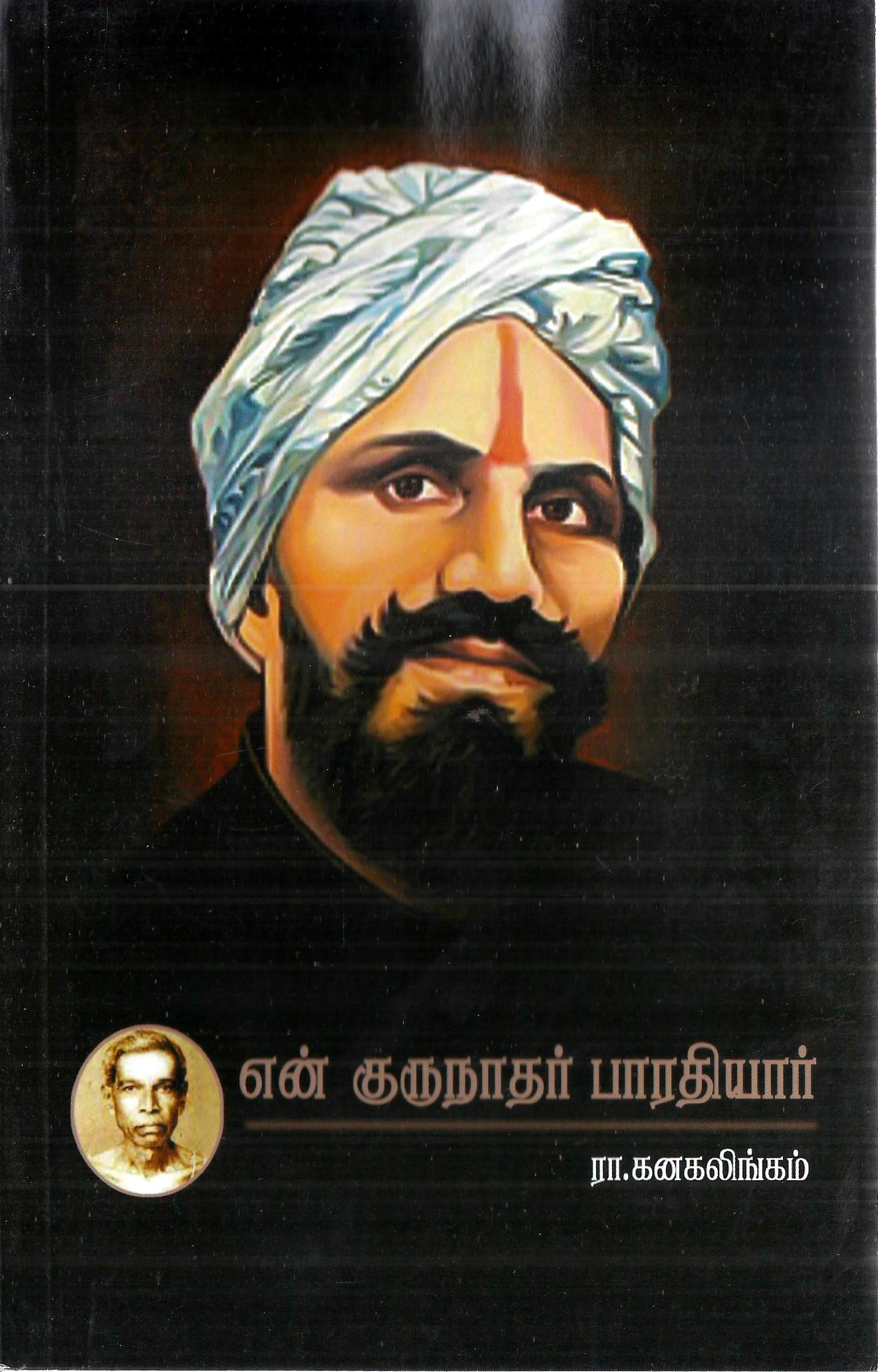
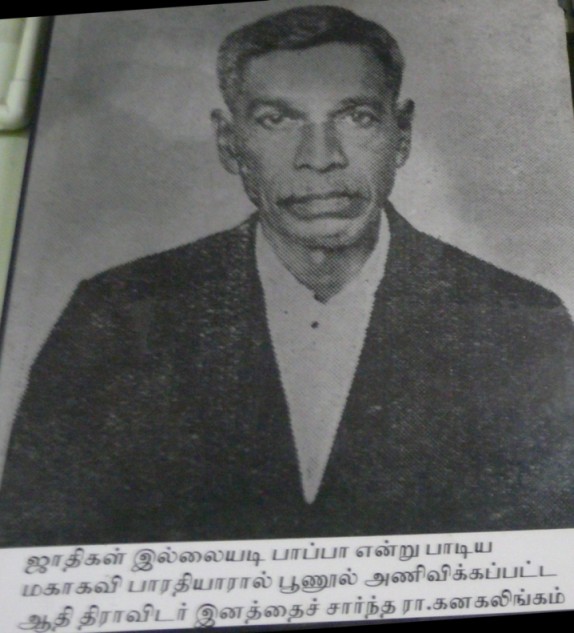
கனகலிங்கத்தின் நூல் முக்கியமான வாசக அனுபவம். எளிமையான அதே சமயம் செறிவான எழுத்து நடை. பாசாங்கில்லாத நடை. நிச்சயமாக யதுகிரியின் நூலோடு சேர்ந்துப் படிக்க வேண்டிய நூல். அதற்கு மேலாகப் பொதுப் புரிதலில் கனகலிங்கத்தின் ஜாதியை வைத்து அவரைப் பற்றி இருக்கும் பிம்பத்தையும் திருத்திக் கொள்ளுதல் அவசியம். இந்த நூல் வெளியீட்டாளர்களே ஏனோ வெற்றுடம்போடு இருக்கும் கனகலிங்கத்தின் புகைப்படத்தைத் தான் அட்டையில் பதிப்பித்திருக்கிறார்கள். விக்கிப்பீடியாவில் அவர் கோட் போட்ட புகைப்படம் கிடைக்கிறது.
T.M. Krishna who has a made a name for himself, including considerable ire, by relentlessly questioning the Brahminical hegemony in Carnatic music has penned a book that has initiated a vigorous debate on how instrument makers and players negotiate their relationships and how society perceives the makers.
The name Palghat Mani Iyer, legendary mridangam virtuoso, is reverentially recalled while his principal instrument maker Parlaandu is mostly unknown. The mridangam, made with cow hide, required the services of Dalits, who were also Christians, presents an interesting social drama. Krishna's book seeks to present the makers in the foreground and question societal attitudes towards makers versus artists.
A note on Krishna and this review
When the Carnatic music-Christian controversy erupted, in September 2018, almost everyone ran for cover. Many offered feeble protests that music doesn't belong to anyone and even they, so often, laced their rebuttals with a sanctimonious “I’ll nevertheless not be in aid of any attempts for religious conversion”. It was T.M. Krishna who, dragged into the controversy by O.S. Arun, flung down a gauntlet that he’d sing Muslim and Christian hymns. It’d be uncharitable to dismiss his acts of courage then and on other occasions as easy enough given his privileged position. Thank you Krishna, for your courage.
This is not a traditional book review. I’ve not merely critiqued the book or the writing. A traditional book review only critiques the book that is written and doesn't get into what could’ve been written.
Artist and Maker
A 2003 article in Outlook titled “Thyagarja’s Cow” highlighted the unique fact that mridangam makers were largely from one community, the Dalits who were also Christians. The article regained note during the 2018 controversy and with his book T.M. Krishna has again brought attention to those makers. To be sure there have been others who have written about Parlaandu and made documentaries about making a mridangam.
Mridangam, unlike a flute or ghatam, requires skins from cow and goat as principal components. Revering a cow as God and protecting the cow has been a reverential goal for sections of Hindus, chiefly Brahmins. Recently a ghastly term, ‘cow lynching’, has entered the political discourse to signify events were innocent citizens were lynched by mobs for allegedly killing cows. That Brahmin musicians used an instrument made of cow hide and which in turn, for that very reason, needed Dalits created dramatic relationships.
Krishna traces the early development of mridangam as an instrument by Vaidhyanatha Iyer and Sebastian (also known as Sevittiyan). The artist and maker enter into a symbiotic relationship that was complicated owing to caste boundaries and the taboo nature of the component of mridangam. While the Brahmin artists took great effort and even pride in shaping the making of the instrument they were equally coy in talking about it and extended their coyness in effacing the maker from popular discourse. Sebastian and his son Parlaandu (also known as Fernandes) hover over the life of Palghat Mani Iyer and the mridangam albeit in the shadows.
The names Steinway and Stradivari are legendary in Western music as makers of pianos and violins that artists would kill for. Whether Sebastian or Parlaandu were a Stradivari is a different question but why were their names in the shadows? Who should be respected more, artist or maker, is easily resolvable in the artist’s favor but Krishna relentlessly questions treating the makers as non-entities and intellectually unnecessary. Krishna attributes the dismissiveness to caste.
Palghat Mani Iyer and Parlaandu (From Carnatic Music Review)
Mridangam making involves knowledge of how it is used by an artist, choice of skin by the maker and tuning by maker in response to the demands of an artist. Whether it is judging a cow’s skin or gathering a stone or a specific wood from a certain area the makers, Krishna wants the reader to understand, is not a mindless laborer but a knowledge worker, who is working in tandem with the artist and as such requires to be respected in his or her own right. In the days of Mani Iyer and shortly thereafter mridangam makers and artists had a relationship that went beyond commercial transactions.
Artists chose to work with Parlaandu or Selvaraj or other makers of specific capabilities. The nature of the instrument necessitated a continued relationship between maker and artist and each became attuned, pun intended, to the needs and capabilities of the other. Yet, in public spaces this relationship remained rather veiled by caste.
Caste Realities
Brahmins were actually latecomers to music and dance as artists. Isai Vellalars, chiefly, and other communities were the communities largely sidelined as Brahmins gained ascendancy and it also changed the very nature of the arts. Krishna extends the criticism to alleging that a large Brahmin population in Thanjavur contributed to how the music they participated to be seen as ‘classical’.
Caste is the immutable iron framework within which socio-economic life of India was framed for more than a millennia. Carnatic music, advent of Brahmins into arts, braiding of music and nationalism, identities of music were all tainted by caste politics.
Violinist Rajamanickam Pillai (1898 - 1970) used to accompany noted singers like Semmangudi Srinivasa Iyer and after concerts he’d be served food after the Brahmins, including Semmangudi and even Pillai’s disciples who were Brahmins, had finished eating. To compensate, the local Brahmin dignitary’s wife, would serve the food herself.
Krishna hammers on how caste shaped the boundaries between Parlaandu and Mani Iyer. Whether it is Parlaandu maintaining the skin treatment at his home or working on mridangams outside Mani Iyer’s home or even in Chennai, where, like any urban setting, the spaces get constrained the boundaries exist. Krishna attributes caste as the only reason for such boundaries.
A piano salesman or maker would speak of a piano in language not too different from a pianist. A mridangam maker’s articulation of a Carnatic concert and an artist or audience’s articulation are world’s apart. This, of course, is because caste did determine the spaces each occupied.
Mani Iyer’s grandson Palghat Ramprasad took umbrage at the supposed portrayal of Mani Iyer even as he underscored that the anecdotes cited were factual. Is Mani Iyer a casteist? Actually the portrayal only leads to the opposite conclusion. So, what caused the ire? Possibly the incident concerning Mani Iyer selecting a cow, the sacred cow, for slaughter based on his judgment that that cow’s skin was suitable for mridangam.
Was Parlaandu an artist?
Was the maker just hands and feet for an unpalatable task for the upper caste artist? In Krishna’s view the maker and the artist are co-equal intellectual partners and it is here that the story gets complicated and even falters.
If making a Steinway piano has become industrialized and a near science even as much as it is not a predictable certainty that a certain piano would become an iconic concert piano then mridangam making, from Krishna’s own telling, is more trial and error. Whether it is Mani Iyer’s notions of what can make a good mridangam or Parlaandu’s ideas of suitable skins or Somu Asari’s ideas about the ideal wood reasonable traditional knowledge and sentimental nonsense are freely mixed.
Krishna exaggerates the knowledge a mridangam maker has about skins. Beyond a knowledge gained from practice like that a naturally dead animal’s skin would not be suitable unlike the skin of a slaughtered animal the maker too cannot say much about the suitability of a skin unless the skin is treated and hair is removed. Neither Mani Iyer nor Parlaandu could actually visually say a skin will be suitable.
The narrative falters on this fulcrum that Krishna fashions to drive home his agenda. Oh yes he certainly had an agenda in mind. Mani Iyer and most artists are integral to the making of mridangam in a way that artists were not integral to a Stradivari making a violin. Whether it is Mani Iyer or Umayalpuram Sivaraman the makers are responding to what the artist wants and specifies. This is not to mean that Parlaandu was just an automaton. He was not. We often don't attribute skill to an intellectual process especially when it involves physical labor. How often do we think of a popular road side mechanic as skilled labor? We don’t. But can the car mechanic ‘design’ an engine? Maybe some one can but not as a rule.
Parlaandu was no Stradivari. Why was an Amati or a Stradivari unique? They defined the instruments and influenced the nature of the instrument without an alliance with a Vivaldi. There was no Vivaldi telling them to choose a wood or apply a finish or tutoring on the sound.
"A romanticized print of Antonio Stradivari examining an instrument (Wikipedia)
The manufacturing process of a Steinway piano is grandiose on a scale by orders of magnitude compared to making a mridangam. The workers bending the layered wooden rim of a concert grand are not just muscle. From choice of maple wood to designing how to layer the strips to designing keys a Steinway involves formalized science and technology. C.F. Theodore, a name revered in piano making, held 40 patents and collaborated with physicist Hermann von Helmholtz. Scottish piano maker John Broadwood is credited with inventing the world’s first grand piano and his clientele included Beethoven and Liszt. Is Broadwood’s name as well known as that of Beethoven or Liszt? No.
Parlaandu and makers like him deserve respect and intellectual regard but should we place Parlaandu on the same plane as Mani Iyer. Mani Iyer, by Krishna’s own admission, obsessed with the perfect sound and his own virtuosity earned, for the mridangam, a place of pride.
What further undercuts Krishna’s case is the many traditions of mridangam making in several other regions where Parlaandu or his craft were literally unknown. Each regional variant had its own patrons and those makers had their pride too and refused to acknowledge any influences.
Even in the Western classical milieu it is the player who's ranked above even a Stradivari. A reviewer of a book on Stradivari wrote, "it is the player rather than the instrument that makes the difference. An artist's relationship with his or her own instrument is both passionate and idiosyncratic. While the violinists Joshua Bell and Gil Shaham are in love with their Strads, Yo-Yo Ma usually chooses his Montagnana over the Davidov Strad, and the violinist Pinchas Zukerman is faithful to a Guarneri del Gesù".
To pick a contemporary example we could look at Warren Shadd. Shadd made pianos now adorn churches and concert halls. Shadd, is African-American and that makes him "the first large scale commercial African-American instrument manufacturer period". Shadd, in an interview to NPR, speaks of starting off as a repairer and then piano maker. Unabashedly Shadd compares himself to Steinway, Yamaha etc and says, "They're engineers and businessmen; I am a musician and an engineer and businessman. I have somewhat of a musical advantage". Note how Shadd classifies himself as a musician and therefore superior to a Steinway !!!
That Mani Iyer was more integral to the mridangams Parlaandu made, than Parlaandu himself, is evident from how when Selvaraj starts making mridangam it is Mani Iyer who is the tutor, not Parlaandu. Selvaraj learned more from Mani Iyer than he ever did from Parlaandu.
Dalits and the Christian Hymnal Tradition
If there’s a case to be made, that Parlaandu and Selvaraj were familiar to music and brought their musical awareness to work with Mani Iyer, it could be made by exploring the linkages between Dalits, Christianity and the Tamil Christian hymnal traditions. Krishna leaves this area completely unexplored despite a wealth of material.
While Krishna ascribes to the preponderance of Brahmins in Thanjavur the reason for the perception that Carnatic music is ‘classical music’ and then coolly ignores or fails to learn anything about musical traditions in non-Brahminical settings. He could not rise above his Brahmin gaze. Thanjavur, home to intense missionary activity was also where Abraham Pandithar and Vedanayakam Sastri created musical traditions that are still part of every Tamil church.
Ethno-musicologist Zoe C. Sherinian’s “Tamil Folk Music as Dalit Liberation Theology” is a signal work in Dalit music traditions within the Catholic and Protestant churches. It also maps the tangled web of music and caste much better than Krishna’s book.
From use of Carnatic music based songs to local folk music based variations, music was central to Christian evangelism. This is a less known or less spoken of dimension about evangelism and religious conversion. Vedanayakam Sastriar (1774-1864) of Thanjavur, H. Alfred Krishnapillai (1827-1900 ) of Tirunelveli and N. Samuel (1850 - 1927) of Tharangambadi were the triumvirate of Christian hymn writers.
“From the 1940s to the 1970s Karnatak music remained the canonized symbol for indigenous Tamil Christian music”. It is at this time that Parlaandu and Selvaraj enter the employ of Mani Iyer. Christian evangelism at first targeted the Brahmins for conversion and this had a big impact on the linguistic and musical styles of early 19th century evangelism that persisted till early twentieth century.
Sherinian observes, “The wide dissemination of kīrttaṉai with its elite musical form, modal and rhythmic systems, to the rural lower-caste Christian population resulted in a kind of elite Hinduization for villagers who continue to use kīrttaṉai as their primary liturgical song genre. The induction into Christianity through cultural material rooted in Vellalar Śaiva bhakti philosophy gave outcastes access to upper-caste/class culture”.
Vedanayakam Sastriar’s letter about different musical traditions in Catholic and Protestant missions is notable for the caste differences. Sastriar wrote, “we like decent music which suits our Tamil songs such as Harp, Pipe, Guitar, Timbrel, Cymbal etc. and use them in such time thinking that it will be acceptable to God and agreeable to the tenor of the 150th Psalm etc. But we have never used those riotous music, which the Roman Catholics use in their festivals such as Arabe, Taboret, Negasarum , Tumtum, Horn, etc. and we wish never to use them. Thus, we sing to the Lord in our festivals only by small bell, Cymbal, rejecting even those musical instruments which we might use reasonably for fear of their loudness and this we do after the divine service is over. At the Church we sing only the songs without any music [instruments].”
Note how he differentiates the musical traditions with different instruments. Despite the raga based songs Christian hymns are sung to light music kind of filmy orchestrations in the recent decades since possibly the 1970s. There’s a caste schism that led to this. Sherinian identifies the domination of Nadar Christians in Protestant churches as the reason for the shift away from Kirrtanais and even the light music style orchestration for the songs. At the Nadar dominated Cuddalore church those who supported hymns were Nadars and those who supported Kirttanais were “parayars”.
A fine sample of a highly Sanskritized hymn that drunk deep from within the Vaishnavite bhakthi tradition is H. Alfred Krishna Pillai's 'Sathai Nishkalamai' (சத்தாய் நிஷ்களமாய்). Note the distinctive Vaishnavite use of "எம் பெருமானே". The orchestration is nevertheless light music style.
Dalits, particularly in the Church, had a very long association with Carnatic music style. The story of James Theophilus Appavoo, a family who’s association with Carnatic music stretches across several generations is instructive. Appavoo who later became a Dalit Liberation theologian questioned the association of Dalits with what is now seen as Brahminical music and proposed that Dalits should return to their own musical traditions. All these nuances are lost in Krishna’s obsession with trying to be a savior for Dalits. Music and any art space should be inclusive but it also raises the question of distinguishing openness with imposing an art. Krishna thinks that refusing to call carnatic music as classical music is all that’s required to make other arts its equal. His ideas on classical music, not covered in the book, are shamefully patronizing.
Coming to Parlaandu and Selvaraj we know very little of their church going habits and the fact that many others in many regions, including women, were involved in mridangam we cannot ascribe it all to the Church. It is interesting though that it was Dalit Christians who were predominant in Tamil Nadu given that some castes within Muslims too worked in tanneries.
Krishna’s Success and Failures
If there is one good outcome that happened because of the book it is that there is now a respectful notice towards instruments and their makers. Even if only a handful in the audience look at a mridangam or a nagaswaram with a bit of wonder about its craftsmanship then Krishna has succeeded. Beyond that the book abjectly fails on many counts.
That Krishna is no historian is evident from his celebration of E.V. Ramaswamy as the only reason for breaking caste barriers in Tamil Nadu. For someone writing a book entirely to give due recognition to a long ignored Dalit instrument maker it is rich with irony that he completely ignores Dalit leaders and their efforts in uplifting their people. Krishna himself has either no idea of Dalit emancipators like M.C. Rajah and Iyothee Thass or he's just, as usual, playing to the popular political gallery in Tamil Nadu.
The perpetual editorializing and the irksome unsubtle ways in how Krishna’s uses his informant as mere tools for his agenda is pathetic. Watching Selvaraj, who lost an arm in an accident, walking with a shawl draped to cover the missing arm, Krishna editorializes, “Perhaps the white shawl covered his physical and emotional scars”. Then he provides no material to substantiate that. This is ugly imposition of victimhood on an informant unbeknownst to the informant. A good historian or biographer or sociologist or just a plain good writer wouldn't do that.
The central theme of the book is to establish that Parlaandu, Selvaraj and others did not get their due, socially or economically, owing to their caste. But this flounders and the book actually provides enough material to argue that while the equation was not all that egalitarian it was not as lopsided as Krishna sells during interviews. What Krishna peddles to friendly journalists or the many interviewers who have not read the book is unsubstantiated by his own book. It is stunning that interviewers have not called out the contradictions which makes me think either they have not read it or they don't want to inconvenience Krishna.
Vaidyanatha Iyer, Krishna alleges, did not pay Sebastian and Parlaandu adequately. We’re left to surmise that this was entirely due to caste whereas class differences have an equal role to play. Then there’s Umayalpuram Sivaraman, who, Krishna himself writes, “took very good care of Rajamanickam, and paid him a monthly salary of Rs 1,000, not unsubstantial in those days, and allowed him to work for others for additional revenue”. Vaidyanatha Iyer, Krishna records, taught a "muslim lad and a female student". Even as he acknowledges the complexities of these behaviors Krishna asserts as assumption, with no evidence, that Iyer would've "set regulations for both himself and the student, and these allowed him to maintain his own notion of 'purity'". This is intellectual dishonesty in a work of history.
Where Krishna decides to present Parlaandu as a self respecting artist he writes of how Parlaandu used to pick fights with Mani Iyer. When the family decamps to Madras several artists, including the legendary Veena artist S. Balachander, give them a helping hand. These acts of grace are rarely spoken by Krishna in his interviews and the publicity roadshows that he has embarked on. Instead Krishna presents Parlaandu, in his interviews, as a victim.
Was Mani Iyer a revolutionary in breaking caste barriers? Of course not but it takes some chutzpah to portray him unfairly as nothing but a caste obsessed Brahmin. Where Mani Iyer is gracious Krishna unfairly diminishes the anecdote as a case where Mani Iyer’s transactional need of Parlaandu necessitated overriding of caste lines. Essentially any gracious act is driven by transactional motivation and anything less than egalitarian is exclusively due to caste differences. Nuances, subtleties and complexities are all thrown to the wind in becoming a ‘burn the house down’ activism and an unseemly desire to playing to the gallery.
If Mani Iyer was purely transactional he could’ve not bothered about Parlaandu once Selvaraj came on board. But Iyer ensures that Parlaandu, now ailing, gets the best medical treatment possible. While Krishna obsesses over Dalits and skins he coolly passes over a stunning incident. Mani Iyer deputes a Brahmin to carry Parlaandu’s urine sample for laboratory testing. By all accounts Mani Iyer comes off as a decent person. Krishna, in his interviews, buries all this. Essentially Krishna’s book tells a different story from what Krishna’s interviews and speeches tell us.
That Tanjore artisans went to the homes of the likes of Mani Iyer and worked on mridangams is attributed to the caste subservience. Yet the Madras artisans don't do that and that that undercuts the caste narrative is glided over. Again, to be sure, this is not to suggest there’s no caste angle but Krishna does disservice to history by obsessing over caste.
In his zeal to be reformist Krishna eagerly consumes everything that comes his way. A mridangam maker asked, rather cheekily, that how come the instrument he shapes with his legs is honored in a puja room. Little does Krishna or the reader realize that feet, certainly not as revered as the head, but not a taboo either. Worshipping at the feet of the Lord is common.
Then there are hasty generalizations. Krishna alleges that non-Brahmin mridangam artist C.S. Murugabhoopathy died an unknown. Murugabhoopathy, by the time he died, had been awarded Kalaimamani, Padma Shri, Sangeet Nataka Academy Award and Palghat Mani Iyer award. In his own lifetime he had played mridangam for the who's who of Carnatic music world. An obituary in Sruti magazine, on Murugabhoopathy, was titled “The last of the titans”. More recently, Parivadini organized a commemoration of Murugabhoopathy.
To appear contemporaneous and to burnish his credentials as an anti-caste warrior Krishna gives a back handed compliment to communist leader Vaidyanathan, a Brahmin, who married a Sri Lankan lady and gave his daughter, Seethalakshmi, in marriage to a Dalit. Krishna commends crossing the caste lines and says it was bravery when “honor killings” were “prevalent”. This is nonsense, doubly. One, honor-killings are a recent phenomenon and till date Brahmins have not had any such incident. Krishna is sickeningly playing to the gallery here.
Seethalakshmi’s daughter Sarada, married to Sowriar, of the Sebastian lineage, tells Krishna that Brahmin mridangam artists are now more comfortable with the makers and it is the non-Brahmin artists who make a fuss. She also points to the progress in caste relations. But Krishna, with his Brahmin gaze and his desire to be savior, actually disagrees with his own informant. Its almost like he’ll not brook any contra-evidence.
The I’m-at-war-with-all mentality makes Krishna spin contradictions. In one place he extols that the Tanjore tradition of “kappi muttu’ necessitates “a demanding poivaaru pidi” and at another places he literally accuses a player of being sadistic when he demands a tighter ‘poivaaru pidi’. He accuses the artist, in Sashi Tharoor like language, of showing a “vicarious chauvinistic bravado”. Tsk Tsk, TMK !!!!
Do the above criticisms suggest that carnatic music and its fraternity are free of casteism and bigotry?
Casteism and Bigotry in Carnatic Music
Krishna’s failure lies in picking a complex tale to drive home the point of privilege and caste in Carnatic music. Instead if we undertook a study of how non-Brahmin artistes have been treated and the social media posts of the Brahmin artists then a story of casteism emerges.
Whether it was the Christians and Carnatic music controversy or the BJP politics and especially T.M. Krishna himself the vitriol of bigotry in Carnatic music forums and posts by Brahmin artists is unbelievable. When a person wrote “they cannot equalize Tharai Thappattai to our classical music. And not necessary. Ships cannot sail on road, Cars cannot swim. Anyone wants to blame the caste for this let un enjoy it. Let everyone accept the fact that brahmins and Jews are the most intelligent community of the world”, Palghat Mani Iyer’s grandson responded, coolly, “Annaaa”. Ramprasad himself traffics in conspiracy theories. (Read my article in Tamizhini for a detailed critique, here).
Lalitaram Ramachandram, founder of Parivadini, has recorded how Nagaswaram artists are treated insultingly in Music Academy. Of course caste is a reason there.
It is a fair criticism that the readiness, with which a Ramprasad - who adds the prefix ‘Palghat’ to his name to get the listener to readily associate him with his illustrious ancestor - is received as a performer will not be given to a son or daughter of a mridangam maker. Also it is interesting to observe contemporary Brahmin artists who go about their daily lives without a naamam or vibhuthi, donning resplendent caste marks when they go on stage to perform. The intention is clear.
Casteism is real in carnatic music. It is almost exclusively Brahmins, particularly the Modi supporters, who’ll scornfully ridicule T.M. Krishna not because he’s a bad singer but because they couldn’t ignore him and because he makes them uncomfortable from within.
Need for T.M. Krishna. Parivadini and 'Parlaandu Award'
We need a T.M. Krishna and we also need look beyond him. Here’s why. Vocalist S. Sowmya did a research on mridangam and conveniently ignored the makers and completely ascribed the making only to the artists like Mani Iyer. In her world the makers are not even hands and feet but just brainless automatons to be brushed into oblivion. It is in this milieu that T.M. Krishna, with his self confessed privilege, and his megaphone become valuable. For all his omissions as author, his love for playing to the gallery, his sweeping generalizations it is an undeniable fact that with this book Krishna has kicked off a discussion like no one else could. For example, Sherinian has been interviewed by only a local rag sheet, Nakeeran and it barely registered a bllip. We need a scholar like Sherinian and for her to get attention we need an attention seeker like Krishna. Sad but true. Watch Sherinian's interview below.
A fair criticism of Krishna is that he does not walk the talk. From his repertoire to his choice of accompanists to his jumping from one cause to another and his questionable views of what is art and how to popularize art Krishna can be fairly criticized. An interesting omission in Krishna’s book is his failure to mention the admirable efforts of Lalitaram Ramachandran (disclousure, he’s personally know to me) in constituting an award commemorating Parlaandu.
Lalitaram had shared in Facebook a story of Mani Iyer tutoring the son of a janitor's son. See picture below. Do check out his article on the plight of those seeking to learn Nagaswaram (here)
Krishna's book does highlight real life issues for mridangam makers. They lack an organization and would like some government pension scheme. The nature of work imposes occupational hazards for them and they need protection.
I’m aware that this blog might be used to bludgeon Krishna and that is surely not my intention. However, as reader I hold authors to a standard. Dear T.M. Krishna, you’ve a place as a valuable insider who’s raising the banner but please, yield the stage, occasionally to someone. If Krishna enables others to be their own voices and for professional historians he’d be of greater service.