The gold standard for writing history, fictional and non-fictional, was set by two women writers. Marguerite Yourcenar's 'Memoirs of Hadrian' set the standard for history based fiction and Barbara Tuchman's 'Guns of August' set the standard for popular history telling. Neither work has been superseded in brilliance or narrative or sense of history. Interestingly neither Yourcenar or Tuchman are what we can call academic or professional historians. Where Tuchman was blessed with material and access Yourcenar was not and yet she brings to us, based on very fragmentary evidence, a vivid portrayal of a bygone era when an ambitious Roman emperor sought to remake Pax Romana only to see it all crash and burn in the twilight of an illustrious rein punctuated with a very poignant love story.

Yourcenar came across a passage in a correspondence from Gustave Flaubert in 1927 that provided her with a vision to pursue an idea that was already germinating in her mind. Flaubert wrote: "Just when the god's had ceased to be, and the Christ had not yet come, there was a unique moment in history, between Cicero and Marcus Aurelius, when man stood alone". Yourcenar adds "a great part of my life was going to be spent in trying to define, and then to portray, that man existing alone and yet closely bound with all being". Aelius Hardianus Augustus, Roman emperor 117 AD- 138AD, was that man.
'My dear Mark', so begins this fictional memoir of Hadrian, written in the first person in the form of a letter from a dying Hadrian to Marcus Aurelius. The chapters are titled in Latin and the first one borrows the first line of a poem composed by Hadrian shortly before his death, 'Animula, vagula, blandula', 'sweet little soul traveling'. Hadrian is melancholic after visiting his physician Hermogenes and starts off by noting his current frailty and recalling the days of his youth when he hunted with gusto. In one sweeping passage making use of the fact that a Roman youth traveled throughout the sprawling empire Yourcenar pummels the reader with names of places where Hadrian hunted, Etrurian mountains, a Spanish forest, hunts in Tuscany, Bithynia, Cappadocia, woods of Asia, lions killed in Mauretania and even in Tibur.
Yourcenar is master of the prose and glides from hunting to the joy of eating, to wine drinking, to a brief note on gymnosophists and lands on a rumination of whether it is fair to classify love as merely a physical joy. Each narrative is crammed with details that vividly brings out what a trading center the Roman empire was and how goods and ideas moved from end of the empire to another. At times it is indeed overwhelming and one does feel clobbered by information that one could lose sight of a fine metaphor or a subtle philosophical hint. This is a book to be read, re-read and re-read and digested.
Hadrian, born in Spain, is educated in philosophy and poetry. He learns grammar and rhetoric. Virgil, Ennius, Lucretius, Homer, Horace, Ovid form a part of his curriculum. Thanks to his Scaurus Hadrian studied Greek and confesses that while his epitaph maybe written in Latin it is in "greek" that he "shall have thought and lived". Overcoming the treachery of his brother-in-law Servianus Hadrian, in an astute move, becomes the bearer of the glad news that to Trajan that the emperor Nerva had died and that Trajan, therefore, will be the new emperor. A talented youth bringing good news no wonder finds himself endearing in the eyes of the recipient of the news.
Hadrian gets turned off by the brutality of Trajan's Dacian wars. He "regretted these dead whom Rome might have absorbed and employed one day as allies against hordes more savage still". The story of Hadrian and Yourcenar's narrative powers reach its apogee in the chapters describing the early reign when Hadrian brings stability, 'Tellus stabilita', and in the chapter describing his love for Antinous, aptly titled 'golden age', 'Seaculum aureum'.
Hadrian was a reformer at heart who is well that the Rome of his time will yield, in due course of time, to "other Romes", he may not live to see them but he would "have helped to mold". He resolves that she would "compose for herself from the words State, citizenry and republic a surer immortatlity". So saying Hadrian cuts superfluous laws, ensures more rights for slaves and women, even curtails slavery, reduces intermediaries in commerce and trade, expresses admiration for merchants, he sees in the army's diversity a blessing, he sanctions unions between Roman soldiers and 'barbarian women', their children get legal status too, curtails special privileges for officers, sympathizes with a plaintiff who scolds him that if he does not have time to hear her complaint then he'd equally have no time to rule but above all Hadrian wanted to be known as the Roman emperor who made peace and negotiations the corner stone of his reign.
The Parthians' chief concern, Hadrian understood, was only to reopen the trade routes between the Roman empire and India. It is interesting to see how many times the name 'India' or things connected with India are mentioned. He even has a 'Hindu servant' who prepares rice. Negotiating between Greeks and Jews he tries telling "the Greeks that they are not always the wisest of peoples, and to the jews that they were by no means the most pure". He ruefully wonders, "these races who had lived side by side for centuries had never had the curiosity to get to know each other, nor the decency to accept each other". Hadrian could be speaking very well for Gandhi or Nehru during India's partition riots. He realizes that "orders on the frontiers was nothing if I could not persuade a Jewish peddler and a Greek grocer to live peaceably side by side".
"To build is to collaborate with earth, to put a human mark on a landscape, modifying it forever thereby". Of the many landmarks created by Hadrian that survive even today the most famous is "Hadrian's Wall" that he constructed in today's England. Seeking to keep away invaders and thereby avoiding the necessity of going to war the wall, Yourcenar's Hadrian boastfully thinks, is a symbol of his "renunciation of the policy of conquest". Walls keep away enemies from without but what about enemies within? Hadrian will realize the limits of pacifism in Judea.
With a sense of achievement coursing in his veins Hadrian scoff at the stoic Epictetus for renouncing life and a Brahman who "was rejecting life itself". Hadrian perceives his relationship with a 'deity' as being 'different'. He sees himself "seconding the deity in his effort to give form and order to a world", he was a "unique force caught up in the multiplicity of things; I was eagle and bull, man and swan, phallus and brain, all together, a Protesus who is also a Jupiter".
In the 'age of gold', 'Seaculum Aureum', Hadrian's tragic homosexual love for teenaged Antinous is narrated lovingly. It should be noted that Yourcenar herself was openly lesbian and it was her partner Grace Frick that translated 'Memoirs of Hadrian' from French to English. Staying in Bithynia Hadrian meets Antinous, who slept "like some daylight endymion", Arrian of Nicomedia who wrote history and philosophy and was a good soldier too, Euphrates, who committed suicide with Hadrian's permission, Phlegm, poet Pancreatus who entertained with musical instruments that included 'delicate Indian flutes' and a Mithraic initiation ceremony that is bloody and terrifying to the greek boy Antinous. Antinous tragically commits suicide and Hadrian decided to commemorate him by deifying him and starting a cult around the catamite unlike Alexander who mourned the death of his lover Hephaistion by slaughtering many.
Finally it was the issue of whether to permit practice of circumcision that brings Hadrian's Pax Romana crashing to reality. A Roman emperor who swore to establish peace and renounce conquests presided over the bloodiest suppression of a revolt that had its beginnings in whether or not a man can slice of the foreskin from the male organ.
Judea was always restive and the peace that was so uneasy erupted into rebellion under the leadership of one Simon who called himself Bar Kochba, Son of the Star. It was brutal guerrilla war that was finally won, after 3 years, at great cost to both sides. Yourcenar who sensitively portrayed Hadrian's love for Antinous and its tragic end becomes a master for historical detail in portraying the Jewish rebellion. From the surreptitious way Jews gathered arms, to the guerrilla war style, to the brutal suppression she gives, in a few pages, a telling portrayal of the rebellion and what its end meant, not just to the Jewry of Rome but to Hadrian himself. The Jewish rebels were an "enemy could be exterminated, but not conquered". The Temple was destroyed and Jews were expelled from the city. The wailing wall was constructed. "Judea was struck from the map and took the name of Palestine by my order".
So, how much of all that is fiction and how much holds up to historical scrutiny? There is little fiction in the above and Yourcenar's Hadrian, much to the chagrin of academic historians, is considered very close to factual history over half a century since its first publication in 1951 in France.
Yourcenar traveled widely and studied volumes in the Yale university library to write the book. She practically reconstructed the library of Hadrian. The litmus test for a fiction based on history is to compare it with a non-fiction actual history book. So let's compare key points of Yourcenar's Hadrian with historian Anthony Everitt's 'Hadrian: Triumph of Rome'. While comparing we should take care to note not just parallels in incidents cited, that's unavoidable given that both Everett and Yourcenar were referring to common materials, chiefly ' Historia Augusta', but similar incidents being identified as key events for the same reason by a fiction writer and a historian attests to the historical acumen of the writer. Let's identify a few such incidents.
Yourcenar and Everitt identify Hadrian's dash to convey the news of Nerva's death to Trajan, the murder attempt by henchmen hired by Servianus notwithstanding, as a pivotal moment in Hadrian endearing himself to a man about to become emperor.
When Hadrian ascended the throne he wanted to be known as a negotiator but Attianus executed summarily four senators who were seen as a threat. That, to Hadrian was a blot and one which though he had no direct hand he knew that he'd be blamed for it. Where Everitt blandly narrates the significance and what it meant, exactly like Yourcenar, he misses the nice fictional narrative that Yourcenar could give using the guise of fiction. Yourcenar's Hadrian recounts in his letter how he decided to chide Attianus and how derisively Attianus looked at him: "He let me run on, smiling meanwhile like a grammarian who listens to his pupil making his way through a difficult recitation".
At two points Yourcenar's sense of history is stunning. The Jews plotted their revolt very methodically by bribing the suppliers of Roman army to manufacture faulty weapons that were no doubt discarded by the army. Such discarded weapons were then remedied for use by the Jewish plotters. That a french novelist and an academic historian would both identify this only attests, emphatically, the novelists eye for history.
The other more telling incident is what Hadrian does in the aftermath of Antinous's suicide. Everitt cites the incident of Hadrian striking a man with his stylus and inadvertently blinding him. Hadrian offers to pay compensation but the victim refuses it and merely asks for the blinded eye back. There ends Everett's narration but in Yourcenar's hand the device of fiction make the incident come alive. "I raised my hand to slap him; unhappily, I was holding a style, which blinded his right eye. I shall never forget the howl of pain, that arm awkwardly bent to ward off the blow, that convulsed visage from which blood spurted". After the man turns down the compensation Yourcenar's Hardian retains him in service to serve "as a warning and a punishment perhaps. I had not wished to injure the wretch. But I had not desired, either, that a boy who loved me should die in his twentieth year".
The device of fiction is to be used with extreme caution when re-creating history. If one only lists a litany of incidents with insufficient fictionalization then one could very well write non-fiction but if one fictionalizes too much where the fictional Hadrian has no relation to the historical Hadrian then one could dispense with calling it fiction based on history. The charm and danger in fictionalizing history is in identifying a judicious mixture of history and fiction. Where to let history speak and where to embellish is what would distinguish a Yourcenar from lesser lights of that genre. A good fiction writer will use the device of fiction to fill in the gaps of history, to create hinges and to lubricate the narrative. Yourcenar's finest moment is when she enters the mind of Hadrian in ruminating over the rebellious Jewish people. What Yourcenar's Hadrian think of the Jewish rebels is not only in sync with the character but could reflect, possibly, the thoughts of the real Hadrian himself because given who the real Hadrian was the fictional rumination is so much in line with that reality.
Yourcenar's Hadrian disapproves of the militant monotheism of the Jews: "harsh Mithra admits himself brother to Apollo. No people but Israel has the arrogance to confine truth wholly within the narrow limits of a single conception of the divine, thereby insulting the manifold nature of the Deity, who contains all; no other god has inspired his worshippers with disdain and hatred for those who pray at different altars".
Disillusioned by realizing how it is the Roman legions that keep pax Romana Hadrian muses "if sixteen years of rule by a prince so pacifically inclined were to culminate in the Palestine campaign, then the chances for peace in the world look dim ahead".
Yourcenar wrote the novel in the aftermath of World War II and possibly the Holocaust was weighing in her mind when she wrote these lines for Hadrian: "Like the initiate to Mithraism the human race has need, perhaps, of a periodical bloodbath and descent into the grave....the human species in growing older would doubtless add new refinements of horror".
In George Orwell's 'Animal Farm' the ultimate parody is when the pigs start walking like men. In lines that echo Orwell's prose Yourcenar's Hadrian comes to the end of his memoir saying "If ever the barbarians gain possession of the world they will be forced to adopt some of our methods: they will end by resembling us". Then in cascading prose Hadrian presages: "bishop of Christ may implant himself one day in Rome....in his turn one of the universal figures of authority. He will inherit our palaces and our archives, and will differ from rulers like us less than one might suppose". More prophetic words were rarely spoken.
Hadrian bids good bye with "let us try, if we can, to enter into death with open eyes".
Marguerite Yourcenar was the first woman to be elected to the French Academy. For a lesbian who considered it is impossible to have made a woman the axis of the narrative because "women's lives are much too limited, or else too secret" it was indeed high honor.
The extent of Yourcenar's research is evident in the well captioned set of photographs that are provided.
References:
1. Marguerite Yourcenar https://en.wikipedia.org/wiki/Marguerite_Yourcenar
2. Memoirs of Hadrian https://en.wikipedia.org/wiki/Memoirs_of_Hadrian
3. Emperor Hadrian https://en.wikipedia.org/wiki/Hadrian
4. New Yorker article of Yourcenar's research for the book http://www.newyorker.com/magazine/2005/02/14/becoming-the-emperor
5. Antinous https://en.wikipedia.org/wiki/Antinous
Yourcenar came across a passage in a correspondence from Gustave Flaubert in 1927 that provided her with a vision to pursue an idea that was already germinating in her mind. Flaubert wrote: "Just when the god's had ceased to be, and the Christ had not yet come, there was a unique moment in history, between Cicero and Marcus Aurelius, when man stood alone". Yourcenar adds "a great part of my life was going to be spent in trying to define, and then to portray, that man existing alone and yet closely bound with all being". Aelius Hardianus Augustus, Roman emperor 117 AD- 138AD, was that man.
'My dear Mark', so begins this fictional memoir of Hadrian, written in the first person in the form of a letter from a dying Hadrian to Marcus Aurelius. The chapters are titled in Latin and the first one borrows the first line of a poem composed by Hadrian shortly before his death, 'Animula, vagula, blandula', 'sweet little soul traveling'. Hadrian is melancholic after visiting his physician Hermogenes and starts off by noting his current frailty and recalling the days of his youth when he hunted with gusto. In one sweeping passage making use of the fact that a Roman youth traveled throughout the sprawling empire Yourcenar pummels the reader with names of places where Hadrian hunted, Etrurian mountains, a Spanish forest, hunts in Tuscany, Bithynia, Cappadocia, woods of Asia, lions killed in Mauretania and even in Tibur.
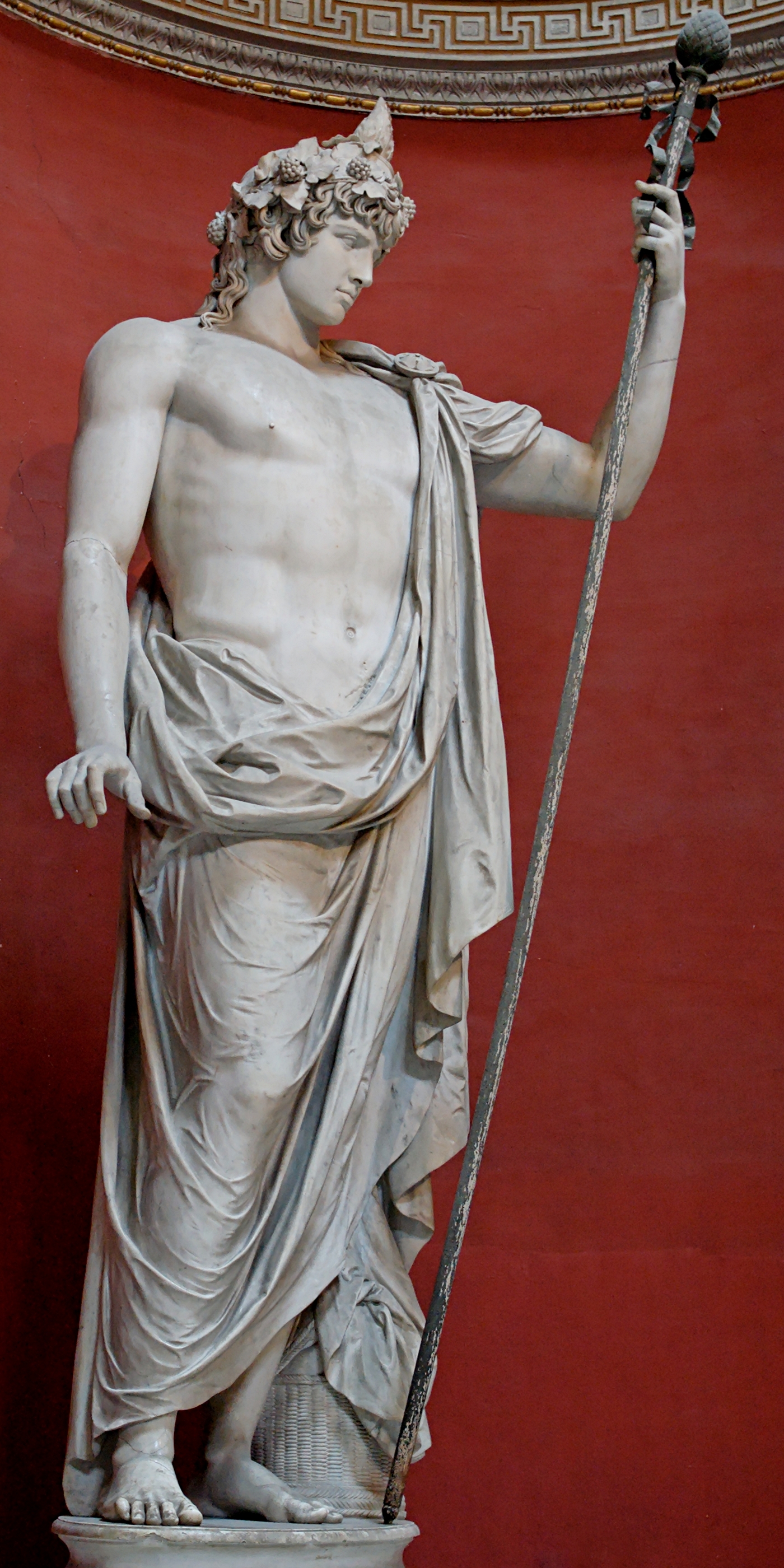 |
| Antinous. Image Courtesy Wikipedia |
Hadrian, born in Spain, is educated in philosophy and poetry. He learns grammar and rhetoric. Virgil, Ennius, Lucretius, Homer, Horace, Ovid form a part of his curriculum. Thanks to his Scaurus Hadrian studied Greek and confesses that while his epitaph maybe written in Latin it is in "greek" that he "shall have thought and lived". Overcoming the treachery of his brother-in-law Servianus Hadrian, in an astute move, becomes the bearer of the glad news that to Trajan that the emperor Nerva had died and that Trajan, therefore, will be the new emperor. A talented youth bringing good news no wonder finds himself endearing in the eyes of the recipient of the news.
Hadrian gets turned off by the brutality of Trajan's Dacian wars. He "regretted these dead whom Rome might have absorbed and employed one day as allies against hordes more savage still". The story of Hadrian and Yourcenar's narrative powers reach its apogee in the chapters describing the early reign when Hadrian brings stability, 'Tellus stabilita', and in the chapter describing his love for Antinous, aptly titled 'golden age', 'Seaculum aureum'.
Hadrian was a reformer at heart who is well that the Rome of his time will yield, in due course of time, to "other Romes", he may not live to see them but he would "have helped to mold". He resolves that she would "compose for herself from the words State, citizenry and republic a surer immortatlity". So saying Hadrian cuts superfluous laws, ensures more rights for slaves and women, even curtails slavery, reduces intermediaries in commerce and trade, expresses admiration for merchants, he sees in the army's diversity a blessing, he sanctions unions between Roman soldiers and 'barbarian women', their children get legal status too, curtails special privileges for officers, sympathizes with a plaintiff who scolds him that if he does not have time to hear her complaint then he'd equally have no time to rule but above all Hadrian wanted to be known as the Roman emperor who made peace and negotiations the corner stone of his reign.
The Parthians' chief concern, Hadrian understood, was only to reopen the trade routes between the Roman empire and India. It is interesting to see how many times the name 'India' or things connected with India are mentioned. He even has a 'Hindu servant' who prepares rice. Negotiating between Greeks and Jews he tries telling "the Greeks that they are not always the wisest of peoples, and to the jews that they were by no means the most pure". He ruefully wonders, "these races who had lived side by side for centuries had never had the curiosity to get to know each other, nor the decency to accept each other". Hadrian could be speaking very well for Gandhi or Nehru during India's partition riots. He realizes that "orders on the frontiers was nothing if I could not persuade a Jewish peddler and a Greek grocer to live peaceably side by side".
"To build is to collaborate with earth, to put a human mark on a landscape, modifying it forever thereby". Of the many landmarks created by Hadrian that survive even today the most famous is "Hadrian's Wall" that he constructed in today's England. Seeking to keep away invaders and thereby avoiding the necessity of going to war the wall, Yourcenar's Hadrian boastfully thinks, is a symbol of his "renunciation of the policy of conquest". Walls keep away enemies from without but what about enemies within? Hadrian will realize the limits of pacifism in Judea.
With a sense of achievement coursing in his veins Hadrian scoff at the stoic Epictetus for renouncing life and a Brahman who "was rejecting life itself". Hadrian perceives his relationship with a 'deity' as being 'different'. He sees himself "seconding the deity in his effort to give form and order to a world", he was a "unique force caught up in the multiplicity of things; I was eagle and bull, man and swan, phallus and brain, all together, a Protesus who is also a Jupiter".
In the 'age of gold', 'Seaculum Aureum', Hadrian's tragic homosexual love for teenaged Antinous is narrated lovingly. It should be noted that Yourcenar herself was openly lesbian and it was her partner Grace Frick that translated 'Memoirs of Hadrian' from French to English. Staying in Bithynia Hadrian meets Antinous, who slept "like some daylight endymion", Arrian of Nicomedia who wrote history and philosophy and was a good soldier too, Euphrates, who committed suicide with Hadrian's permission, Phlegm, poet Pancreatus who entertained with musical instruments that included 'delicate Indian flutes' and a Mithraic initiation ceremony that is bloody and terrifying to the greek boy Antinous. Antinous tragically commits suicide and Hadrian decided to commemorate him by deifying him and starting a cult around the catamite unlike Alexander who mourned the death of his lover Hephaistion by slaughtering many.
Finally it was the issue of whether to permit practice of circumcision that brings Hadrian's Pax Romana crashing to reality. A Roman emperor who swore to establish peace and renounce conquests presided over the bloodiest suppression of a revolt that had its beginnings in whether or not a man can slice of the foreskin from the male organ.
Judea was always restive and the peace that was so uneasy erupted into rebellion under the leadership of one Simon who called himself Bar Kochba, Son of the Star. It was brutal guerrilla war that was finally won, after 3 years, at great cost to both sides. Yourcenar who sensitively portrayed Hadrian's love for Antinous and its tragic end becomes a master for historical detail in portraying the Jewish rebellion. From the surreptitious way Jews gathered arms, to the guerrilla war style, to the brutal suppression she gives, in a few pages, a telling portrayal of the rebellion and what its end meant, not just to the Jewry of Rome but to Hadrian himself. The Jewish rebels were an "enemy could be exterminated, but not conquered". The Temple was destroyed and Jews were expelled from the city. The wailing wall was constructed. "Judea was struck from the map and took the name of Palestine by my order".
So, how much of all that is fiction and how much holds up to historical scrutiny? There is little fiction in the above and Yourcenar's Hadrian, much to the chagrin of academic historians, is considered very close to factual history over half a century since its first publication in 1951 in France.
Yourcenar traveled widely and studied volumes in the Yale university library to write the book. She practically reconstructed the library of Hadrian. The litmus test for a fiction based on history is to compare it with a non-fiction actual history book. So let's compare key points of Yourcenar's Hadrian with historian Anthony Everitt's 'Hadrian: Triumph of Rome'. While comparing we should take care to note not just parallels in incidents cited, that's unavoidable given that both Everett and Yourcenar were referring to common materials, chiefly ' Historia Augusta', but similar incidents being identified as key events for the same reason by a fiction writer and a historian attests to the historical acumen of the writer. Let's identify a few such incidents.
Yourcenar and Everitt identify Hadrian's dash to convey the news of Nerva's death to Trajan, the murder attempt by henchmen hired by Servianus notwithstanding, as a pivotal moment in Hadrian endearing himself to a man about to become emperor.
When Hadrian ascended the throne he wanted to be known as a negotiator but Attianus executed summarily four senators who were seen as a threat. That, to Hadrian was a blot and one which though he had no direct hand he knew that he'd be blamed for it. Where Everitt blandly narrates the significance and what it meant, exactly like Yourcenar, he misses the nice fictional narrative that Yourcenar could give using the guise of fiction. Yourcenar's Hadrian recounts in his letter how he decided to chide Attianus and how derisively Attianus looked at him: "He let me run on, smiling meanwhile like a grammarian who listens to his pupil making his way through a difficult recitation".
At two points Yourcenar's sense of history is stunning. The Jews plotted their revolt very methodically by bribing the suppliers of Roman army to manufacture faulty weapons that were no doubt discarded by the army. Such discarded weapons were then remedied for use by the Jewish plotters. That a french novelist and an academic historian would both identify this only attests, emphatically, the novelists eye for history.
The other more telling incident is what Hadrian does in the aftermath of Antinous's suicide. Everitt cites the incident of Hadrian striking a man with his stylus and inadvertently blinding him. Hadrian offers to pay compensation but the victim refuses it and merely asks for the blinded eye back. There ends Everett's narration but in Yourcenar's hand the device of fiction make the incident come alive. "I raised my hand to slap him; unhappily, I was holding a style, which blinded his right eye. I shall never forget the howl of pain, that arm awkwardly bent to ward off the blow, that convulsed visage from which blood spurted". After the man turns down the compensation Yourcenar's Hardian retains him in service to serve "as a warning and a punishment perhaps. I had not wished to injure the wretch. But I had not desired, either, that a boy who loved me should die in his twentieth year".
The device of fiction is to be used with extreme caution when re-creating history. If one only lists a litany of incidents with insufficient fictionalization then one could very well write non-fiction but if one fictionalizes too much where the fictional Hadrian has no relation to the historical Hadrian then one could dispense with calling it fiction based on history. The charm and danger in fictionalizing history is in identifying a judicious mixture of history and fiction. Where to let history speak and where to embellish is what would distinguish a Yourcenar from lesser lights of that genre. A good fiction writer will use the device of fiction to fill in the gaps of history, to create hinges and to lubricate the narrative. Yourcenar's finest moment is when she enters the mind of Hadrian in ruminating over the rebellious Jewish people. What Yourcenar's Hadrian think of the Jewish rebels is not only in sync with the character but could reflect, possibly, the thoughts of the real Hadrian himself because given who the real Hadrian was the fictional rumination is so much in line with that reality.
Yourcenar's Hadrian disapproves of the militant monotheism of the Jews: "harsh Mithra admits himself brother to Apollo. No people but Israel has the arrogance to confine truth wholly within the narrow limits of a single conception of the divine, thereby insulting the manifold nature of the Deity, who contains all; no other god has inspired his worshippers with disdain and hatred for those who pray at different altars".
Disillusioned by realizing how it is the Roman legions that keep pax Romana Hadrian muses "if sixteen years of rule by a prince so pacifically inclined were to culminate in the Palestine campaign, then the chances for peace in the world look dim ahead".
Yourcenar wrote the novel in the aftermath of World War II and possibly the Holocaust was weighing in her mind when she wrote these lines for Hadrian: "Like the initiate to Mithraism the human race has need, perhaps, of a periodical bloodbath and descent into the grave....the human species in growing older would doubtless add new refinements of horror".
In George Orwell's 'Animal Farm' the ultimate parody is when the pigs start walking like men. In lines that echo Orwell's prose Yourcenar's Hadrian comes to the end of his memoir saying "If ever the barbarians gain possession of the world they will be forced to adopt some of our methods: they will end by resembling us". Then in cascading prose Hadrian presages: "bishop of Christ may implant himself one day in Rome....in his turn one of the universal figures of authority. He will inherit our palaces and our archives, and will differ from rulers like us less than one might suppose". More prophetic words were rarely spoken.
Hadrian bids good bye with "let us try, if we can, to enter into death with open eyes".
Marguerite Yourcenar was the first woman to be elected to the French Academy. For a lesbian who considered it is impossible to have made a woman the axis of the narrative because "women's lives are much too limited, or else too secret" it was indeed high honor.
The extent of Yourcenar's research is evident in the well captioned set of photographs that are provided.
References:
1. Marguerite Yourcenar https://en.wikipedia.org/wiki/Marguerite_Yourcenar
2. Memoirs of Hadrian https://en.wikipedia.org/wiki/Memoirs_of_Hadrian
3. Emperor Hadrian https://en.wikipedia.org/wiki/Hadrian
4. New Yorker article of Yourcenar's research for the book http://www.newyorker.com/magazine/2005/02/14/becoming-the-emperor
5. Antinous https://en.wikipedia.org/wiki/Antinous