Showing posts with label Constitution. Show all posts

Sunday, January 28, 2018

சுதந்திர தினத்தையும் குடியரசு தினத்தையும் அவமதித்த மதிமாறன். குடியரசு தினம் என்பது என்ன? ஏன் கொண்டாட வேண்டும்?

பெரியாரிஸ்டுகளுக்கே உரிய அறிவிலித்தனத்தோடும் தடித்தனத்தோடும் மதிமாறன் மீண்டும் ஒரு முறை பொய்களையும் அரை வேக்காட்டுத்தனத்தையும் அவிழ்த்துவிட்டிருக்கிறார். வேறெந்த நாட்டிலும் சுதந்திர தினத்தை இவ்வளவு மூடத்தனமாகக் கிண்டலடித்துக் கைத் தட்டு வாங்க முடியாது. குடியரசு தினம் என்றால் என்னவென்றே தெரியாதவர் அத்தினத்தைக் கொண்டாடுவதை எள்ளி நகையாடுகிறார்.

முகநூலில் நண்பர் இதைப் பகிர்ந்து "முட்டாள்கள் சூழ் உலகு" என்றார். அதில் வெறுமனே கடுமையாகச் சாடிவிட்டு நகர்ந்துவிட்டேன். ஆனால் நாள் முழுவதும் அந்தப் பேச்சுத் துன்புறுத்தியது. பற்பல கோடி இந்தியர்களின் வியர்வையிலும் இரத்தத்திலும் தோய்ந்து கிடைத்த சுதந்திரத்தை இந்த மூடன் எள்ளி நகையாடியது தக்க எதிர் வினை இல்லையென்றால் நாளை மேற்கோள் கட்டப்படும் உண்மையாகி விடும். இதை முதலில் முகநூலில் எளிய பதிவாக எழுத நினைத்தேன் ஆனால் இது முகநூல் பதிவு என்பதைத் தாண்டி பதியப்பட வேண்டும் என்பதற்காகவே இங்கு வெளியிடப் படுகிறது.


மதிமாறன் பேசியது: 

1948 ஆகஸ்டு 15-இல் சுதந்திரம் கிடைத்தது என்று சொல்லி பிறகு 47-இல் கிடைத்தது இல்லையா என்று திருத்தி, தான் பெரியார் கட்சிக்காரன் என்றும் அதனால் நினைவில் இல்லையென்றார். கூட்டத்தில் ஒன்றிரண்டு கைத்தட்டல்கள். 1950 வரை சுதந்திர தினம் மட்டும் கொண்டாடப்பட்டது பிறகு தீடீரெனக் குடியரசு தினம் என்று ஒன்று சேர்க்கப்பட்டது, இரண்டு தினத்துக்கும் என்ன வித்தியாசம் என்று வினவி 1929-இல் முன் மொழியப்பட்ட 'பூரணச் சுதந்திரம்' கோஷத்தை சுட்டிக் காட்டுகிறார். அப்போது, பூரணச் சுதந்திரம் அடைய 'வரி கொடா' போராட்டம் நிகழ்த்துவது என்று முடிவெடுக்கப்பட்டதாகவும் அதை நடத்தும் அதிகாரம் காந்தியிடம் ஒப்படைக்கப்பட்டதென்றும் காந்தியோ போராட்டம் நடத்தினால் வன்முறையும் ஆங்கில அரசுக்கு சங்கடமும் நேருமே என்றும் அஞ்சி 1930-இல் சுதந்திரம் கிடைத்து விட்டது போல் பாவித்து மிட்டாய் விநியோகம் செய்து கொண்டாடச் சொல்லி ஆங்கிலேய அரசின் முன் கேலிப் பொருளானார் என்று முடிக்கிறார்.

இப்படியெல்லாம் பேசுவதற்கு ஈரோட்டில் தான் பட்டம் வாங்க வேண்டும். அப்பட்டமான பொய்கள். கொழுப்பெடுத்த தடித்தனம்.

1929-இல் காந்தி: 

1929 டிசம்பர் 31-ஆம் தேதி நள்ளிரவில் லாகூரில் 'பூரணச் சுதந்திரம்' என்பது குறிக்கோளாக அறிவிக்கப் பட்டு 'இன்குலாப் ஜிந்தாபாத்' முழக்கங்களோடு கொடியேற்றம் செய்யப்பட்டது. 1929-இல் காந்திக்கு 60 வயது பூர்த்தியானது. இந்த வருடத்தை அவர் எப்படிச் செலவிட்டார் என்று பார்த்தால் பிரமிப்பூட்டும்.

ஜனவரி 1-ஆம் தேதி கல்கத்தாவில் அந்நியத் துணி பகிஷ்காரம், பிறகு அகமதாபாத் திரும்பல்.பிப்ரவரியில் சிந்து மாகாணத்துக்குப் பயணம். கராச்சியில் பொதுக் கூட்டம், சிந்து மாகாணத்தில் சுற்றுப் பயணம். பிப்ரவரி 15- டில்லி வருகை காங்கிரஸ் காரியக் கமிட்டிக் கூட்டம். மார்ச் 4 கல்கத்தாவில் அந்நியத் துணி எரிப்பும் கைதும். உடனே விடுவிக்கப்படுகிறார். மார்ச் 5 பர்மாவுக்குப் பயணம். மார்ச் 24-இல் கல்கத்தாவில் பொதுக் கூட்டம். இதற்கிடையே பகத் சிங் குண்டு வெடிப்பு நிகழ்ச்சியும் பம்பாய் மற்றும் வேறு சில தொழில் மையங்களில் தொழிலாளர்கள் வேலை நிறுத்தமும் நடக்கின்றன. ஏப்ரல் 6 ஆந்திர சுற்றுப் பயணம். ஒரு கூட்டத்தில் தனக்குப் புகழ் உரைகள் அளிக்கப்படுவதை விடப் புள்ளி விவரங்கள் - ஒவ்வொரு கிராமத்திலும் இருக்கும் ஆண், பெண், தீண்டத்தகாதோர், பள்ளிகள்- அளிக்கப்பட்டால் உபயோகமாக இருக்கும் என்கிறார். 319 கிராமங்களுக்குக் காந்தி சென்றார். பல்லாயிர கணக்கானோர் காந்தியின் சந்திப்புகளுக்கு வந்தனர். 6 வார சுற்றுப் பயணம் மே மாதம் 21-ஆம் தேதி முடிந்தது.

ஜூன் மாதம் அல்மோரா பயணம். ஜூலை மாதம் மீண்டும் சபர்மதி. செப்டெம்பரில் உத்திரப் பிரதேசம் சுற்றுப் பயணம். நவம்பர் 24 சுற்றுப் பயணம் முடிவுற்றது. முக்கியமான நகரங்கள், கிராமங்கள், பல்கலைக் கழகங்கள் என்று காந்தி உரையாற்றாத இடம் குறைவு.

டிசம்பரில் லாகூருக்குப் பயணம். டிசம்பர் 31-ஆம் தேதி நள்ளிரவில் 'பூரணச் சுதந்திரம்' முழக்கமாக ஏற்கப்படுகிறது. பூரணச் சுதந்திரம் அடைவதற்கு ஒத்துழியாமை மற்றும் வரிக் கொடுக்காமை தேர்ந்தெடுத்த இடங்களில் தக்க பாதுகாப்புகளோடு முன்னெடுக்கப் படும் என்று முடிவு செய்யப்பட்டது. அது தான் காந்தியம். ஒவ்வொரு அடியெடுத்து வைக்கும் போது மக்களைச் சிந்தித்தவர். எடுத்தேன் கவிழ்த்தேன் என்று மக்களைத் தூண்டிவிட்டு வீட்டில் படுத்து உறங்கியவர் அல்லர். மதிமாறன் சொல்வது போல் அவர்கள் ஒன்றும் வரிக் கொடுக்காமல் இருப்பது ஒன்றை மட்டும் முன் வைக்கவில்லை. அது வரை தீர்க்கமாகப் பூரணச் சுதந்திரம் மட்டுமே குறிக்கோள் என்று சொல்லப்பட்டதில்லை. அது ஒரு புதிய ஆரம்பம். ஒரு நீண்ட நெடிய சரித்திர முக்கியத்துவப் பயணத்தில் மிக முக்கியத் தருணம். இப்படித் தான் உலகெங்கும் புரட்சிகள் உருப் பெற்றிருக்கின்றன.

26 ஜனவரி 1930 முதல் தண்டி யாத்திரை வரை: 

லாகூர் தீர்மானம் மக்களிடையே என்ன வகையான வரவேற்பைப் பெற்றிருக்கிறது என்பதை அறிய 26 ஜனவரி 1930 'சுதந்திர தினம்' என்று அனுஷ்டிக்கப் பட வேண்டும் என்றும் அத்தினத்தில் நாடு முழுக்கக் காங்கிரஸ் உறுதி மொழி ஏற்பு நிகழ்வுகளை நடத்த வேண்டும் என்றும் தீர்மானிக்கப் பட்டது. அக்கூட்டங்களில் உறுதி மொழித் தவிர வேறு அலங்கார உரைகள் கூடாதென்றும் முடிவெடுத்தார்கள். இது ஒன்றும் மதிமாறன் சொல்வதைப் போல் மிட்டாய்க் கொடுத்து பம்மாத்துக் காட்டிய நாள் அல்ல.

நேரு தன் சுய சரிதையில் அந்நாளை நினைவுக் கூர்கிறார். "சுதந்திர தினம் வந்தது, ஜனவரி 26, 1930, அது நாட்டில் நிலவிய உற்சாக மனநிலையை எங்களுக்கு மின்னல் பொழுதில் உணர்த்தியது. அலங்கார உரைகள் இல்லாது பல இடங்களில் நிகழ்த்தப்பட்ட உறுதி மொழி ஏற்பு நிகழ்வுகள் அமைதியாகவும் சீராகவும் நடந்தது மிகப் பெரிய தாக்கத்தை ஏற்படுத்தியது. இவையெல்லாம் காந்திக்குத் தேவையான விசையைக் கொடுத்தது. அடுத்தடுத்த நிகழ்வுகள் ஒரு முக்கியக் கட்டத்தை நோக்கி நகர்ந்தது ஒரு டிராமாவைப் போல்".

ஒத்துழையாமை இயக்கம் எப்படி வன்முறைக்குள் சறுக்கி விழாமல் முன்னெடுக்க முடியும் என்று காந்தியும் காங்கிரஸும் மீண்டும் மீண்டும் விவாதித்தன. முன்னெடுக்கப் போகும் போராட்டத்தில் தான் கைது செய்யப்படுவோம் என்பதைக் காந்தி எதிர்ப்பார்த்தார். அப்படித் தான் கைது செய்யப்பட்டால் அடுத்தக் கட்டப் போராட்டங்கள் எப்படி அமைதியாக நடக்க வேண்டும், வன்முறைக்கு இடம் கொடுக்காமல் எப்படி மேற்கொண்டு போராட்டம் தொடர வேண்டும் என்று சமூகத்தின் ஆசானாக விரிவாகத் திட்டங்களைத் தன் பத்திரிக்கையில் விவரித்தார்.

வரிக் கொடாமைப் போராட்டத்தைக் காந்தி கை விட்டதாக மதிமாறன் சரடு விடுகிறார். காந்தி அடுத்தக் கட்ட போராட்டத்தை அறிவித்தார். உலகளாவிய சாம்ராஜ்ஜியத்தின் தூண்களை அசைத்துப் பார்த்து உலகின் பார்வையை ஒரு அறுபது வயது முதியவரின் நடைப் பயணத்தை நோக்கித் திருப்பியது அவர் அறிவித்தப் போராட்டம். வரலாறுக் காணாத எழுச்சி தேசமெங்கும். ஆம் அது தான் உப்புச் சத்தியாகிரகம் என்றும் தண்டி யாத்திரை என்றும் அறியப்பட்டது. அது உப்பு மீதான வரியை ரத்துச் செய்யச் சொல்லித் தான் நடத்தப்பட்டது.

12 மார்ச் 1930 சபர்மதியில் காந்தி உட்பட 80 சத்தியாகிரகளோடு தொடங்கிய யாத்திரை 24 நாட்கள் முடிவில் 6 ஏப்ரல் 1930 அன்று ஒரு கைப்பிடி உப்பை அள்ளியதோடு தண்டியில் முடிந்தது. அந்த நிகழ்வைப் பற்றிய எழுதிய அத்தனை வரலாற்றாசிரியர்களும் இன்றும் பிரம்மிப்போடு தான் அது பற்றி எழுதுகிறார்கள். காங்கிரஸ் தலைவர்கள் பலரும் நில வரி கொடுக்க மறுப்பது போன்ற ஏதோ ஒன்றை தான் காந்தி அறிவிப்பார் என்று நினைத்தார்கள் ஆனால் காந்தியின் உப்பு வரி எதிர்ப்பு அக்கினி குஞ்சாக ஆரம்பித்துப் புரட்சி எரி தழல் ஆனது. இப்படிப்பட்ட சரித்திர நிகழ்வைப் பற்றியும் அது ஏன் அப்படி ஒரு எழுச்சியை ஏற்படுத்தியது என்றும் நம் பள்ளி சரித்திர நூல்கள் சொல்லித் தர தவறிவிட்டதாலேயே மதிமாறன்கள் எளிதாக அரைவேக்காட்டுப் பொய்களை வீசிவிட்டு கைத்தட்டல் வாங்குகிறார்கள்.

உப்புச் சத்தியாகிரகம் பற்றி வாயே திறக்காமல் மழுப்பியது அயோக்கியத்தனம். அது சரி பெரியாரிஸ்ட் ஆச்சே இதையாவது செய்து தானே ஆக வேண்டும்.

காந்தி-இர்வின் ஒப்பந்தமும் பகத் சிங்கின் தூக்குத் தண்டனையும்: 

5 மே 1930 தண்டியில் கைது செய்யப்பட்ட காந்தி 25 ஜனவரி 1931 விடுதலைச் செய்யப்பட்டார். மற்ற தலைவர்களும் பின்னர் விடுதலைச் செய்யப்பட்டனர். காந்தியும் இர்வினும் பிப்ரவரி 17 முதல் மார்ச் 7-ஆம் தேதி வரை பேச்சு வார்த்தை நடத்தினர்.

காந்தி-இர்வின் பேச்சு வார்த்தை நடந்த போது பகத் சிங்கும் அவர் கூட்டாளிகளும் தூக்குத் தண்டனை விதிக்கப்பட்டனர் சாண்டர்ஸ் கொலை வழக்குக்காகவும் குண்டு எறிந்த நிகழ்வுக்காகவும். பகத் சிங் தூக்கிலப்படுவது தான் அந்த ஒப்பந்தத்தின் முக்கியமான ஷரத்து என்று பச்சைப் பொய்யை மதிமாறன் சொல்கிறார். முன்பொரு முறை தமிழச்சி தங்கப்பாண்டியன் என்பவரும் இதே போல் ஒரு அவதூறைச் சொன்னார்.

இர்வினிடம் காந்தி தன் எல்லா நம்பிக்கைகளுக்கும் எதிரான செயல் ஒன்றைச் செய்த பகத் சிங்குக்காக இர்வினிடம் மிகத் தீவிரமாகவே வாதிட்டிருக்கிறார். இர்வின் சொல்கிறார், "அமைதியின் அப்போஸ்தலரான காந்தியைப் போன்ற ஒருவர் தன் நம்பிக்கைக்கு எதிரான செயல் செய்தவர்களுக்காக வாதிடுகிறார் என்றால் அது எவ்வளவு முக்கியத்துவம் வாய்ந்தது என்று எனக்குப் புரிந்தது. ஆனால் அரசியல் காரணங்கள் நீதி பரிபாலனம் பாதிக்கப்படக் கூடாது. இப்படிப்பட்ட தண்டனைக்கு இதை விடத் தகுதியான வழக்குக் கிடையாது." அமெரிக்கப் பத்திரிக்கையாளர் வில்லியம் ஷைரர் காந்தியோடு அப்போது செலவிட்ட நாட்களைப் பற்றிய நினைவோடையில் "காந்தி இர்வினிடம் அந்த மூன்று இளைஞர்களின் உயிருக்காக மன்றாடினார் ஆனால் பலனில்லை" என்கிறார்.

குடியரசு என்பது என்ன? 

தங்கள் போராட்ட்ம் ஒரு நாள் வெற்றிப் பெரும், ஒரு நாள் தங்கள் நாடும் தங்கள் மக்களும் சுதந்திரக் காற்றைச் சுவாசிப்பார்கள் அது வரலாற்றின் கட்டாயம் என்று காங்கிரஸ் பேரியக்கத்தின் தலைவர்கள் நம்பியதோடல்லாமல் அந்த நாள் வரும் போது நாட்டை நிர்வகிப்பது பற்றி மிகப் பெரிய திட்டங்களை வகுத்து வைத்திருந்தார்கள்.

சுதந்திர இந்தியாவில் ராணுவத்தின் பங்கு என்ன, மொழி வாரி மாநிலங்கள் என்று மிகத் தீர்க்கமாக ஆய்வறிக்கைகள் தயார் செய்யப்பட்டன. ஒரு தேசத்தின் வாழ்வில் சுதந்திரத்தை விட முக்கியமானது அத்தேசம் தனக்கென உருவாக்கிக் கொள்ளும் அரசியல் சாசனம் தான்.

அமெரிக்க வரலாறைக் கொஞ்சம் நோக்கினால் அரசியல் சாசனம் என்பது சுதந்திரத்தை விட ஒரு நாட்டுக்கு எவ்வளவு முக்கியம் என்பது விளங்கும். அரசியல் சாசனம் தான் சுதந்திர தேசத்தின் அடித்தளம். சுதந்திரத்திற்குப் பின் நாடு எந்தத் திசையில் பயனிக்கும் என்பதையும் வரக் கூடிய பல்லாண்டுகளுக்கும் ஒரு பெரிய ஜனத்திரளின் பலத்தரப்பட்ட முரன்களை நெகிழ்வோடும் அதே சமயத்தில் ஒற்றுமைக் குலையாமலும் ஜனநாயக மரபுகளோடும் சமாளிக்க ஒரு வரை படத்தை உருவாக்கித் தருகிறது. இந்தியாவோடு அல்லது அதற்குப் பின் சுதந்திரம் அடைந்த பல நாடுகள் சறுக்கி எதேச்சாதிகாரத்துக்குப் பலியானது அவை அரசியல் சாசனத்தின் வடிவமைப்பில் கவனம் கொள்ளாதது தான் காரணம் அல்லது அரசியல் சாசனத்தைக் குழித் தோண்டி புதைக்கும் சூழல்கள் உருவானது தான் காரணம்.

அமெரிக்கா தனக்கான அரசியல் சாசனத்தை உருவாக்கிக் கொண்டதையும், அதில் நடந்த விவாதங்களையும், அந்தச் சாசனம் மாநிலங்களால் அங்கீகரிக்கப்பட நடந்த முயற்சிகளும் தீவிர வரலாற்றாசிரியர்களும் அருங்காட்சியகங்களும் மக்களுக்குச் சொல்லிக் கொடுக்கின்றன. பள்ளி மாணவர்கள் பிலடெல்பியாவில் இருக்கும் அரசியல சாசனம் பற்றிய அருங்காட்சியகத்திற்குப் பல்லாயிர கணக்கில் வருகைத் தருகிறார்கள். அவர்களுக்குத் தெரியும் 'குடியரசு' என்பது என்னவென்று. இன்றும் இங்கிலாந்தி குடியரசு அல்ல. என்ன செய்வது இந்தியாவில் நம் அரசியல் சாசனம் பற்றி எழுதுவதற்குக் கூடக் கிரான்வில் ஆஸ்டின் என்கிற வெளிநாட்டினர் தான் தேவைப் படுகிறார்.

சுதந்திர இந்தியா இடைக்கால அமைச்சரவையைத் தான் அமைத்தது. இடைக் கால அமைச்சரவையின் முக்கியப் பணி அரசியல் சாசனம் உருவாக்குவது. மூன்றாண்டுக் காலப் பகீரதப் பிரயத்தனம் அது. இந்தியா மாதிரி ஒரு நாடு ஓற்றுமையான சுதந்திர நாடாகவே நீடிக்க முடியாது என்று எண்ணியவர்கள் தான் 1947-இல் அதிகம். வைக்கோல் போன்ற மனிதர்களிடம் அதிகாரம் கை மாறியிருக்கிறது என்றார் சர்ச்சில். வரலாறுக் காணாத பல கோடி மக்களின் இடப் பெயர்வு, உள் நாட்டு கலகத்துக்கு நிகரான மதக் கலவரங்கள் இவற்றுக்கிடையே அரசாங்கத்தையும் நடத்திக் கொண்டு அதன் அங்கத்தினரில் பலர் அரசியல் சாசனம் எழுதும் முக்கியக் கமிட்டிகளுக்குத் தலைவர்களாகவும் இரட்டைப் பொறுப்பு வகித்தனர். நேரு, பட்டேல், பிரசாத், அம்பேத்கர் செய்ததை அமெரிக்காவின் தேசப் பிதாக்கள் கூடச் செய்யவில்லை.

அரசியல் சட்ட வரைவின் தலைமை இந்தியாவில் ஒடுக்கப்பட்ட இனத்தைச் சேர்ந்தவர் அன்றைய ஆளும் கட்சியின் முக்கியஸதர்களோடு மிக உக்கிரமாகச் சண்டையிட்டவரும் ஆன அம்பேத்கர். நவம்பர் 4, 1948 அன்று அம்பேத்கர் இடைக்கால அரசு (Constituent Assembly) முன் அளித்த உரை இந்திய அரசியல் சட்டத்தின் அடிப்படைகளை விளக்கும் அற்புத உரை.

எந்த வகையான அரசியல் அமைப்பு, ஏன், அமெரிக்க அரசியல் அமைப்பிலிருந்து எங்கு மாறுபடுகிறோம், ஏன் இந்திய மரபிலிருந்து சட்டம் விலகுகிறது, சிறுப்பான்மையினரை அங்கீகரிப்பதும் அவர்களும் பெரும்பான்மையினரும் அடைய வேண்டிய மாற்றங்கள் குறித்தும் விரிவான உரை அது. கத்தி மேல் நடக்கும் லாவகத்தோடு எந்தப் பக்கமும் சாயாமல் ஒவ்வொரு பக்கத்தின் தரப்பையும் அங்கீகரித்து எது ஏற்கப்படுகிறது எது மறுக்கப்படுகிறது, ஏன் என்று தெளிவாகச் சொல்லும் உரை.

அந்த அரசியல் சட்டம் தான் இன்றும் இந்தியாவை உயிர்ப்பான ஜனநாயகமாக வைத்திருக்கும் ஒப்பந்தம். அரசியல் சட்டத்தில் ஒவ்வொரு வார்த்தையும் முக்கியம், அதிலுள்ள இடை வெளிகள் முக்கியம், அதன் வரையறைகள் முக்கியம்.

வார்த்தைகளும் அரசியல் சட்டமும்: 

"சட்டத்தின் முன் அனைவரும் சமம்". மிகச் சாதாரண ஒற்றை வாக்கியம் ஆனால் அமெரிக்காவில் அடிமை முறை ஒழிப்பிற்கு ஒரு விதமாக உதவிய வாக்கியம் இந்தியாவுக்கு 1947-50 நடந்த விவாதத்தில் வேறு முக்கியத்துவம் அடைந்தது.

அபிரஹாம் லிங்கன் பற்றிய திரைப்படத்தில் முக்கியமான காட்சி அடிமை முறை ஒழிப்பு சட்டத் திருத்த மசோதாவுக்கான வாதம். திருத்தத்தை ஆதரிப்பவர் எதிர்ப்பவர்களை நோக்கித் தூண்டில் போடும் விதமாகச் சொல்வார், "எல்லோரும் சட்டத்தின் முன் ஒன்று என்று தான் சொல்கிறோமே தவிர எல்லோரும் எல்லா விதத்திலும் ஒன்று என்று சொல்லவில்லை". 'சட்டத்தின் முன் எல்லோரும் சமம்" என்பது சமத்காரமாகச் சமரசம் உருவாக்கச் செய்த உத்தி.

ஒரு நூற்றாண்டு கழித்து இந்திய அரசியல் சட்ட விவாதத்தில் இது விவாதமாகிறது. 'சட்டத்தின் முன் எல்லோரும் சமம்' என்றால் நலிந்தோருக்காக அளிக்கப்படும் சலுகைகளை ரத்துச் செய்ய நீதி மன்றங்களுக்கு அதிகாரம் கிடைக்கும் என்று கருத்தில் கொண்டு அந்த வார்த்தைகள் சற்றே மாற்றியமைக்கப்பட்டன. இன்று வரை "எல்லோரும் சட்டத்தின் முன் சமம்" என்பதைச் சுட்டிக் காட்டி சமூக நீதிக்காக இயற்றப்பட்ட சட்டங்களுக்கு எதிரான வழக்குகள் இப்படித்தான் தோற்கடிக்கப்படுகின்றன.

தமிழ் நாட்டில் இருக்கும் 69% இட ஒதுக்கீட்டிற்கான பாதுகாப்பு ஜமீந்தாரி ஒழிப்புச் சட்டத்துக்கு இயற்றப்பட்டப் பாதுகாப்பு ஷரத்தில் இருந்து தான் கிடைக்கிறது. ஜமீந்தாரி ஒழிப்பு என்பது வேறு நாடுகளில் மிகுந்த ரத்தம் சிந்தி தான் நடந்திருக்கிறது. நீதிமன்றங்கள் தனியார் சொத்துரிமையை அரசாங்கம் பறிக்கிறதோ என்று தடைச் செய்யக் கூடும் என்பதற்காக நீதிமன்றப் பார்வைக்கு உட்படாதது என்று ஒரு ஷரத்தை உருவாக்கி அதில் ஜமீந்தாரி ஒழிப்புச் சட்டம் சேர்க்கப்பட்டது. இந்தக் குடையின் கீழ் தான் தமிழகத்தின் 69% இட ஒதுக்கீடு அடைக்கலம் பெற்றிருக்கிறது.

காலனி அரசின் கீழ் கிடைக்காத சுதந்திரம் கிறித்தவர்களுக்கு இந்திய அரசியல் சாசனம் கொடுத்தது. (இது வேறு விவாதம். ஆனால் உண்மை கிட்டத்தட்ட அது தான்).

இந்து மதச் சீரமைப்பு மசோதாக்கள் நேரு என்கிற பாராளுமன்றவாதியை நமக்கு அறிமுகம் செய்கிறது. லிண்டன் ஜான்சனின் எல்லோருக்குமான ஓட்டுரிமை மசோதா வெற்றியை விட மகத்தானது நேருவின் வெற்றி. அம்பேத்கர் கசப்புற்று வெளியேறியப் பின் நேரு மிகச் சாமர்த்தியமாகக் கையாண்டு வெற்றிக் கண்டார்.

ஜனநாயக மரபுகள்: 

1920-இல் தான் அமெரிக்காவில் பெண்களுக்கான ஓட்டுரிமை. அதிலிருந்து 45 வருடம் கழித்துத் தான் எல்லா இனத்தவருக்குமான ஓட்டுரிமை கிடைத்தது அமெரிக்காவில். இந்தியாவில் 1951 தேர்தலில் வயது வரம்பை பூர்த்திச் செய்த எல்லோரும் ஓட்டுப் போட்டனர். நேருவின் முதல் அமைச்சரவையில் தாழ்த்தப் பட்ட இனத்தவர், இந்துத்துவர், காங்கிரஸ் காரர், பெண்கள் இடம் பெற்றனர்.

ராஜேந்திர பிரசாத் ஜனாதிபதிக்கான அதிகாரத்தை விரிவாக்கம் செய்ய முற்பட்ட போது அதைச் சாதுர்யமாகச் சந்தித்ததோடு பின் வரும் பிரதமர்களும் அதிபர்களும் தெளிவாகத் தங்கள் எல்லைகளை அறிந்து கொள்ளும் வகையில் சட்ட வல்லுநர்களின் கருத்துகளை நேரு சேகரித்து அச்சவாகை முறியடித்தார். ஆனால் அதே நேரு அதிபருக்கான எந்த உரிமையிலும் தலையிட்டத்தில்லை என்பதோடு அவ்வுரிமைகளை மீண்டும் மீண்டும் மற்றவர்களுக்கும் நினைவூட்டினார். தான் தடுத்தும் ராஜினாமா முடிவில் உறுதியாக இருந்த ஷ்யாம பிரசாத் முகர்ஜிக்கு எழுதிய கடிதத்தில் நேரு ராஜினாமாவை ஏற்கும் அதிகாரம் அதிபருக்குத் தான் என்றும் அதற்கான பரிந்துரை மட்டுமே தான் கொடுக்க இயலும் என்றும் சொல்கிறார். நேருவும்-பிரசாத்தும் வாரமொரு முறை சந்திப்பதை வழக்கமாகக் கொண்டனர். குழந்தைப் பருவத்தில் இருந்த நாட்டில் இவை மிக முக்கிய முன்னெடுப்புகள்.

அரசியல் சட்டம் அங்கீகரிக்கப்பட்ட நாள் 26 ஜனவரி 1950. சரித்திர முக்கியத்துவம் வாய்ந்த அந்நாளில் இந்த அங்கீகாரம் நடந்து அதைக் கொண்டாடுவது ஒரு நாட்டின் மிக முக்கியமான கொண்டாட்டம். மற்ற எல்லாக் கொண்டாட்டங்களும் ஏதோ ஒரு தரப்பு அவர்கள் நம்பிக்கைச் சார்ந்து நடத்துவது. இந்தியர்கள் எல்லோரும் இந்தியர்களாக மட்டுமே இணையும் நாட்கள் ஆகஸ்டு 15 மற்றும் ஜனவரி 26. இந்த இரு நாட்களிலும் இந்தியர்கள் கொஞ்சமாவது தங்கள் வரலாறை அறிய முற்பட வேண்டும்.

பிலடெல்பியாவில் இருக்கும் அருங்காட்சியகம் போல் இந்தியாவில் நான்கு இடத்திலாவது அருங்காட்சியகங்கள் நிறுவப் பட வேண்டும். கிரான்வில் ஆஸ்டினின் நூல் எளிமையான மொழியாக்கம் செய்யப்பட வேண்டும். பள்ளிக் கல்வியில் இவை முறையாகச் சொல்லிக் கொடுக்கப் பட வேண்டும். இதையெல்லாம் மிக அவசரத்தோடு செய்ய வேண்டும்.

விமர்சனங்களும் தடித்தனங்களும்: 

இந்திய அரசியல் சட்டத்தை விமர்சிக்கலாமா என்றால், தாராளமாக விமர்சிக்கலாம் என்பதே பதில். அம்பேத்கரே விமர்சித்திருக்கிறார். ஆனால் எதையும் விமர்சிப்பதற்கு முன் அதைப் பற்றிக் கொஞ்சமாவது படித்தறிய வேண்டும். வெறும் தடித்தனத்தோடு நாலு கைத்தட்டல் வாங்குவதற்காக வாய்க்கு வந்ததைப் பேசுவது காலித் தனம்.

மதிமாறன் காந்தி, நேரு அம்பேத்கர் ஆகியோரை அவமதித்தார் என்பதை விட என்னைத் துன்புறுத்தியது அவர் பேச்சு வ.உ.சி, சுப்ரமணிய சிவா, திருப்பூர் குமரன், முத்துலட்சுமி ரெட்டி, அகியோரையும் சுதந்திரத்திற்காகத் தங்களையும் தங்கள் உடைமைகளையும் இழந்த என்னற்ற சாதாரண இந்தியர்களையும் தான் அவமதித்து இருக்கிறார். தில்லையாடி வள்ளியம்மை தென்னாப்பிரிக்காவில் போராடி இறந்த இளம் பெண், காந்தியால் ஆராதிக்கப்பட்டவர். சுதந்திர உணர்வும் அதை அடைய உலகெங்கும் நடந்த போராட்டங்களும் அதில் தியாகம் அத்தனை மேலோர்களும் வணங்கப் பட வேண்டியவர்கள் அவர்கள் நமக்களித்த கொடை சுதந்திரம்.

சுதந்திரம் அடைவதோ, அரசியல் சட்டம் எழுதிக் கொள்வதோ மட்டுமே போதுமானது அல்ல. நாடு என்பது உறைந்த பொருள் அல்ல. வரலாறும் எதிர் காலமும் ஒரு பயணமே. அந்தப் பயணத்தில் சுதந்திரம் அடைவதும், சட்டம் இயற்றுவதும் முக்கியத் தருணங்கள் அவ்வளவே. ஒவ்வொரு சந்ததியினரும் முயன்றால் தான் முன்னேற்றம் நிகழும் என்பதோடு அது வரை நடந்த முன்னேற்றங்களைப் பாதுகாக்கவும் முடியும்.

திராவிட இயக்கத்தின் இந்தக் கழிசடைத் தனங்களை தேசியத்தின் மீதும் பன்மைத்தன்மை மீதும் மாறா பற்றுக் கொண்டவர்கள் தான் ஒருங்கிணைந்து எதிர்க்க வேண்டும். எதிரிக்கு எதிரி நண்பன் என்ற ரீதியில் படைத் திரட்டக் கூடாது. இந்துத்துவத்தின் கேடயத்தின் பின் ஒளிந்து கொண்டு மதிமாறனை வீழ்த்தக் கூடாது என்பதும் முக்கியம்.


References:

1. Mahatma (Volume 2 & 3) - D.G. Tendulkar
2. Patel: A life - Rajmohan Gandhi
3. Autobiography - Jawaharlal Nehru
4. The Indian Constitution: Cornerstone of a Nation - Granville Austin
5. Working a Democratic Constitution - Granville Austin
6. Mathimaran speech https://www.facebook.com/karthik.ashok.100/videos/1673447949343243/


Sunday, November 1, 2015

Nayantara Sahgal And The Perils of Selective Outrage. India's Long Tussle With Free Speech.

A few inconvenient truths first. Narendra Modi's regime, so far, is not even as remotely fascist or pandering to sectarian interests as Rajiv Gandhi's regime, during which Nayantara Sahgal happily received the Sahitya Akademi, was.  India, compared to other developing countries, has a robust democracy thanks, not to the preening intellectuals but, to the common Indian voter and other commoners.

The rot in India's cultural and intellectual institutions has a long history that predates Modi. The Sahitya Akademi lost any pretense of institutional autonomy when it meekly accepted Jawaharlal Nehru, a sitting Prime Minister and one who can be called a writer only by a very loose definition of the term, as its first President. When Tamil writers prostrated at the feet of E.V. Ramasamy, metaphorically speaking, they lost all integrity to question Narendra Modi. What are the real issues at stake? Is one man or one party the cause of these ills?

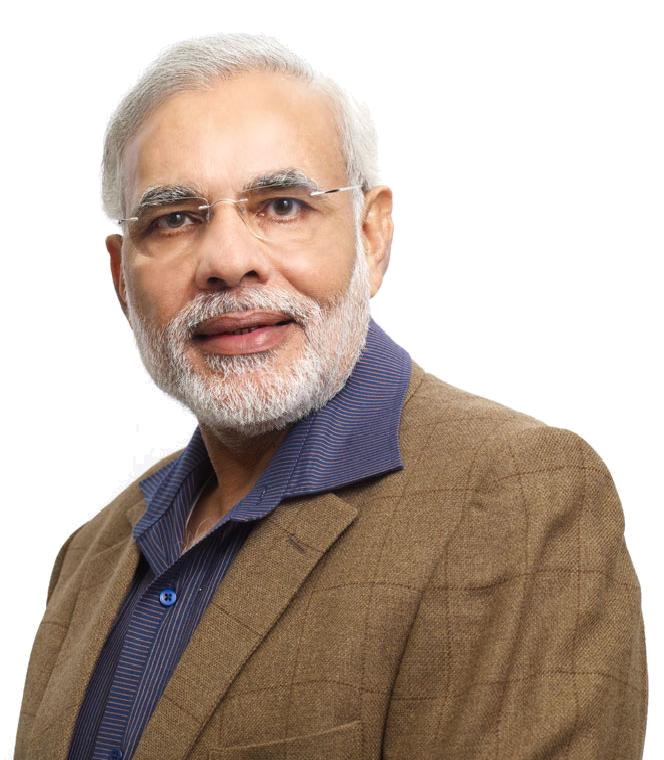
Narendra Modi (From Wikipedia)
I came of age, politically speaking, in the Rajiv Gandhi regime when I used to be an avid reader of 'Indian Express' and 'India Today'. The anti-Sikh pogrom has been rehashed in many comments that criticized Nayantara Sahgal, but that singular focus actually diminishes and whitewashes the grotesque regime of fascism that Rajiv presided. Readers need to be reminded of the Rajiv era.

The 'Indian Express' under Ramnath Goenka and Arun Shourie waged a crusade against the excesses of Rajiv Gandhi's administration for which they were rewarded with nearly 200 cases foisted by various arms of the government including an unprecedented massive nationwide Income Tax raid that was conducted with military precision. Separatism in Punjab was put down with state sponsored terrorism which left in its wake mass graves and a super cop. TADA which made Rowlatt Act look gentlemanly was passed and the state was armed with yet another lethal arsenal which trampled individual liberty with impunity and as the Jodhpur detainee case showed the hapless citizen suffered under state terrorism. Rajiv, made arrogant and titular with the super majority he enjoyed in the parliament, sought to stifle dissent with his 'anti-defamation bill' that P. Chidambaram promoted with the zeal of a capo regime. I remember reading articles by the likes of H.M. Seervai in 'Indian Express' against the bill which finally Rajiv abandoned. As his administration teetered Rajiv, facing the prospect of some MPs defecting to the opposition, brought out the anti-defection bill. Rajiv sought to appease religious fringe groups with impunity. Muslims were appeased by a ban on 'Satanic Verses' and by reversing the Supreme Court verdict in the Shah Bano case. Hindus were appeased by opening up Babri Masjid for Shilanyas and having T.V. actor Arun Govil, who had portrayed Lord Rama in the TV series Ramayan on state run television, appear as Rama to assure voters in Allahabad that the Lord's blessings are for those who vote for the Congress candidate.

Rajiv Gandhi
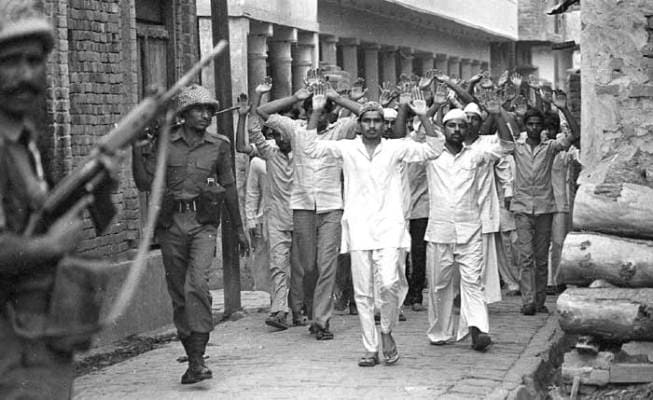
But that was not all. Modi's name is rarely ever mentioned by his critics without mentioning the Gujarat riots. Little do we hear of an event like the Hashimpura massacre that happened on 22nd May 1987 in Congress ruled UP. The police had killed in cold blood Muslim youth and dumped their bodies in a canal. While Rajiv and a host of others trooped to UP little action of consequence happened. Muslims were paraded by gun toting policemen as the photo below attests. Little did rest of India know about such happenings unlike today's social media age when a despicable remark by a cabinet minister ricochets across cyberspace in a post that went viral. Such was the political climate, in short, in which Nayantara Sahgal was too happy to receive the Sahitya Akademi award. During those dark days it was journalists like Arun Shourie and N. Ram that stood up to establishment.

Muslim Youth being paraded at gunpoint in Hashimpura ('Hashimpura: Here's what happened' - Pictures by India Express)
The current climate of intolerance against free speech has a long and institutional history in India and it is patently unfair to just pin it on Modi and the Hindutva movements. If anything the Hindutva brigade is only doing what Shylock threatened to do, 'the villainy that you teach me I shall execute but I shall better the instructions'.

Nayantara Sahgal (Wikipedia)
India's constitution lacks an American style First Amendment that serves as an iron clad protection against curtailing free speech. India has banned books or penalized authors who wrote books that were perceived as unfair to India's image. Writing for 'The Hindu' Hasan Suroor points out that "Indian customs (he's referring to the authorities) have sweeping powers not to allow any printed material they deem objectionable. When the state itself is so illiberal and quick to shut out dissenting views, it can hardly be expected to act differently when confronted with illiberalism of others". Nirad C Chaudhuri learned at great personal cost what it is to displease the Babus while working in their employ. Nirad Babu was hounded out of his post at All India Radio for writing 'Autobiography of an unknown Indian'. Ramachandra Guha in an oped points out how that deprived Nirad Babu of his livelihood. V.S. Naipaul's 'An area of darkness', a scathing and polemical book on India, remains banned along with Katherine Mayo's 'Mother India', which Mahatma Gandhi labeled 'a drain inspector's report'. P.N. Haksar had to personally plead with Nehru to allow Satyajit Ray's 'Pather Panchali' be screened abroad. An overzealous official had apparently refused permission for Ray's film to be exported because it showcased India's poverty. Nehru responded "What is wrong about showing India's poverty? Everyone knows that we are a poor country. The question is: are we Indians sensitive to our poverty or insensitive to it?". This question would plague India's response to 'Slumdog Millionaire' a half-century later.

The Indian constitution drafted amidst a very turbulent political climate agonized over balancing liberty with ability to provide a secure state. Granville Austin masterfully recalls the debate over fundamental rights in "Indian Constitution: Cornerstone of a Nation". The constitution, aiming to provide a secure state, did not secure fundamental rights solidly. British era policies like 'preventive detention' and latitude to law enforcement agencies were left intact even privacy of communications and requirements of warrant to arrest were deemed inimical to the security needs of the state. Security needs aside social agendas like ending Zamindari system prodded the complete abandonment of 'due process' when it comes to property rights. Reading Austin's account of the debate it is amazing to note how much the Indian framers of the constitution looked to the American example. The desire to invest the State with almost unlimited power flowed not only from the security imperatives but from the added philosophical doctrinaire thinking that dominated the minds of almost everyone in that era. Using the State as an instrument to further social agenda, religious reform and socio-economic egalitarianism was seen as a necessary function of an 'enlightened State'. Unfortunately, rights, were often seen as negotiable goods in reaching those objectives. Interestingly the spark for dropping 'due process' with regards to fundamental rights came out of a discussion between one of the Indian drafting committee member and a US judge.

The current spectacle of writers and scientists returning awards to protest against a climate of intolerance supposedly crystallized around the killing of three individuals in unconnected incidents. Indians owe more to Kesavananda Bharati, a Hindu monk from Kerala, and legendary jurist N.A. Palkhivala for securing fundamental rights than to any supposed intellectual. When Indira Gandhi proposed a raft of legislation that would've made a mockery of the constitution and fundamental rights Palkhivala prodded Bharati to file a petition that ended with the Supreme Court, comprising a historically large 13 member bench, to declare that the legislature shall not enact laws that'd tamper with the 'basic structure' of the constitution. See my footnotes for an account of how Palkhivala swayed the judges. A lesser known case involved a much less known editor of a vernacular magazine. Gopal, editor of Tamil weekly Nakkeeran, went all the way to the Supreme Court to secure the rights to publish a salacious diary of a convicted criminal and in the process defined what privacy was. Indians owe it to Tamil politician Vaiko for securing the right of free speech to support a proscribed organization and that speech is different from material support. While the result may be the ugliness of having to see posters celebrating the birthday of a murderous tyrant like Prabhakaran it is a landmark judgment. Often governments hide behind the excuse of 'law and order' to ban works deemed unpopular. A little known and unsung hero who put a stop to that was a small time film producer S. Rangarajan from Tamil Nadu. Rangarajan's movie 'Ore Oru Gramathile' centered on the inquiries of India's caste and quota based reservation system. When fringe organizations threatened to disrupt the screening of the movie the then Tamil Nadu government, headed by Karunanidhi, which was a blind champion of quota based reservation, under the guise of social justice, banned the movie citing potential law and order problem. The Supreme Court in a stinging observation opined that "the State cannot plead its inability to handle hostile audience problem. It is obligatory duty to prevent it and protect the freedom of expression".

It'd be a gross omission to not give credit to Anna Hazare's movement for the Lokpal bills. Also, gone was the India where information was the privilege of the powerful and the elite. RTI (Right to Information) is an important tool in the arsenal of democracy. One final obstacle to a complete free speech society is the insularity of Indian judiciary which protects itself from any criticism with the draconian contempt laws.

It is worth noting that many of the current protesters played little to no role in securing or fighting for the rights of the common man but run around like headless chicken when three of their fellow travelers are killed under contentious circumstances.

Jawaharlal Nehru justly deserves the title of being India's architect and for symbolizing an age when the socio-economic and political foundations of the country was being laid. As it befits that era when States were looked up to to provide the intellectual foundations as well cultural institutions under State patronage sprung up. The year 1954 captures the sprit of that age. In 1954 the Nehru administration for the 'Department of Atomic Energy' and the 'Sahitya Akademi'. While it is heartening to note that an administration thought it necessary to establish, amidst the cacophonous volatility of the times, a premier scientific department and a premier cultural institute, it also brings into focus the position of primacy that the state occupied in the minds of intellectuals, most of whom continue to be unreformed and unapologetic Marxists. It is worth noting that America did not establish a state funded literary organization until the Lyndon Johnson era, in 1965, when constructing the 'Great Society' was the dream of liberals.

The trajectories of Sahitya Akademi in India and the National Endowment for Humanities in US is instructive of the nature of Faustian bargain that the intellectuals signed on to in India. Despite the NEH sitting atop a pile of funds, $167 Million according to wikipedia, it is a surprising fact that the most prestigious literary awards in US, the Pulitzer and National Book Awards, are given by completely autonomous institutions which have no truck with the state unlike the Sahitya Akademi.

Government interference in Sahitya Akademi has a long and sordid history that predates the Modi or any BJP administration. I am a great admirer for Nehru's prose and Nehru as a thinker of immeasurable breadth but it is beyond me to accept Nehru as a writer or a historian. It is pathetic that the Sahitya Akademi accepted Nehru as it's first Chairman. The saving grace was that Nehru, being no Modi, wrote to Khrushchev, "in his capacity as Chairman of Sahitya Akademi", not as Prime Minister, to protest the Krushchev regime's policy of not allowing Boris Pasternak to receive his Nobel Prize. Nirmal Bhattacharjee told 'Frontline' that the Akademi functions independently and pointed to the award given to Sheikh Abdullah's book 'Flames of Chinar' despite the book's unflattering references to Nehru. The shoddy journalist who wrote the column did not find out that the award was given, posthumously, in 1988 for reasons beyond literary merit or tolerance of divergent views. In fact on the contrary the award was probably 'engineered' to smooth the political tangle between Rajiv's government and Farooq Abdullah, the son of the deceased Sheikh. The general council of the Sahitya Akademi comprises of 5 nominees from the government of India, including representation from Department of Culture and Ministry of Information and Broadcasting. The autonomy of the Akademi, is, truth be told, fig leaf.

Khushwant Singh wrote a stinging op-ed in 'India Today' about how the Sahitya Akademi has awarded authors of no-merit thanks to political pressure and shoddy recommendations. Amrita Pritam, Khushwant Singh wrote, recommended awarding Harinder Singh Mahboob's book 'Jhanan di Raat' but later, when she was told of the Mahboob's unflattering references to Indira Gandhi, Pritam expressed regret and said that if she had known of it she would've blacklisted the book because she admired Indira Gandhi. The whole incident is revelatory on many levels. The least offensive part in that incident is that Pritam had not actually the read the book she championed. The second most offensive part is she freely confesses that she'd have blacklisted the book for maligning a leader she admired. The most offensive part is Amrita Pritam expressing admiration for Indira Gandhi, the leader who practically destroyed India as a democracy. Jnanpith awardee from Tamil, visited Soviet Russia and came back convinced that Solzhenitsyn was a liar and that the Soviet system, despite being repressive, is superior to the freer Indian system. He even wondered if liberty was worth it. Khushwant Singh also upbraids Sarvepalli Radhakrishnan for blacklisting writers 'for canvassing' for awards, while, 'overlooking similar charges against those he favored'. Of course Khushwant Singh cheered the Emergency era. Sartre made a show of refusing the Nobel prize while giving full throated support of Stalinism. Such is the lot of these so called conscience keepers who are returning the awards today. An instructive book to read on the trustworthiness of intellectuals as conscience keepers is historian Paul Johnson's 'Intellectuals'.

The Hindutva brigade does have a point that many, if not all, of these intellectuals who are now rushing like lemmings to join a bandwagon to discredit Narendra Modi have all been hypocritically silent when books were banned to appease minorities and when atrocities were committed by minorities to terrorize free speech into submission. There has usually been silence from the intellectuals when works like 'Satanic Verses', 'Last Temptation of Christ (movie)' were banned or when Taslima Nasreen faces ostracism from her own community or when something as grotesque as T.J. Joseph having his hand severed by a fringe Muslim fundamentalist organization or when Sanal Edamaruku had to practically exile himself for having angered the local catholic church. This malaise of selective outrage against causes convenient to be outraged about robs the protesters of the moral halo they eagerly seek to cloak themselves with. There are no saints in this current battle of wits and propaganda.

When M.F. Husain paints Hindu goddesses in the nude and draws the ire of militant rowdy elements of the Hindutva brigade everyone desirous of the label 'conscientious objector' comes out of the woodwork to shout from rooftops about the virtues of free speech. Yet, during the Danish cartoon controversy we look around and find a deafening silence and even a lecture on how hurting religious sentiments should not be confused for free speech. A sample is A.G. Noorani's tortured column in 'Frontline' on the issue of the cartoons (see Reference below).

The group of scientists who have joined the bandwagon of protest is the most curious one. Many of them have been heads of institutions for decades which have enjoyed state patronage running into hundreds of crores. Many of these institutions have enjoyed unprecedented autonomy, by Indian standards, and yet Indian universities secure pathetic places in World Rankings. I'm sure many will point out this or that research, this or that scientific personality of international repute. But, as a country India's educational infrastructure in higher education is nothing to write home about. These scientists who are now seeking to portray themselves like they are some Giordano Bruno burning at the stake for the sake of science are largely institutional toadies. I was stunned to learn that University Vice Chancellors, among a host of others, are eligible for VIP lounges akin to business class lounges in airports. No wonder that appointments of VCs is ridden with corruption.

Where was the outrage when a Vice Chancellor in Tamil Nadu said openly that he had become a VC by bribing the then regime? Where is the shame for not having put India's institutions on the map of the world? Where is the shame for India's institutions of repute not being diverse enough? These scientists should be resigning en-masse merely out of humility for not having done enough in the institutions they run.

The most laughable irony in all this fracas is wonderful FB activists from Tamil Nadu who are eagerly sharing news of every award returned and every anti-Modi snub. If any state is hostile to free speech it is Tamil Nadu and if there's a prize for being a charlatan on science and scientific temper many Tamils would win it hands down. E.V. Ramasamy made a career out demonizing a community, a minority really, in sheer fascist terms. E.V.R and his protege C.N. Annathurai have caused irreparable damage to generations of Tamils with nonsensical theories spun to support their fascism and chauvinism. A Tamil Nadu student learns that ancient Tamil texts contain theories akin to Isaac Newton's Third law of equal-and-opposite reaction, Einstein's Theory of Relativity and atomic fission. Any question of E.V.R's qualities as leader or intellectual will be met with a torrent of abuse from all and sundry. If one looks at the tactics of Dravidar Kazhagam, the party founded by E.V.R, and the Sangh Parivar the similarities are striking with the only difference being that the intended target of hatred is different.

The Sangh Parivar has been a fixture in Indian politics for nearly a century now since the Hindu Mahasabha was formed, along side the Muslim League, in 1906. The burning question being asked about these protests is, "why now?" As one writer wrote, in response, things have reached a boiling point and India is at cross-roads and if voices of protests do not rise in unison today then India will slide into a fascist theocracy. Is that true? No. It is not true.

What is different in Modi's India in 2015 compared to the days when Golwalkar and Veer Savarkar spewed venom? In the early part of the twentieth century Gandhi strode the Indian scene like a colossus and against his philosophy of non-violence and inclusive politics the divisiveness of a Golwalkar, while vibrant in pockets of India, never gained primacy. Post-Independence Jawaharlal Nehru, more than anybody, stood athwart the gates of hatred with his unimpeachable credentials of being secular and progressive (when the word 'progressive' had some honor to it). The role of Marxist dominance in intellectual discourse and cultural institutions undeniably played a laudable role by keeping at bay the atavist and reactionary elements that was looking for every available loop hole to sneak in a theocracy. How did India come to a place where a minister, a professor of physics no less, could suggest that universities should study astrology as a discipline (this is now a hotly disputed account but that it is cited widely shows what people think of as possible in a regime like this)?

The post Nehru era is largely responsible for paving the way for the current ideological clash. Again, Marxists and the left wing played a vital role but this time, unfortunately, counter-productively. Indira Gandhi and Rajiv Gandhi largely turned secularism into vote bank politics. It became fashionable to lecture Hindus about secularism and then attend Iftar parties with skull caps. Anything to do with Hinduism was snickered about and ridiculed while minorities were given wide latitudes to indulge in their own hypocrisies. Nowhere was this more evident than in Tamil Nadu where E.V. Ramasamy and his ideological progeny went to great lengths to offend Hindus while enthusiastically cheering the superstitions of minorities. In Tamil Nadu it became OK for a government official to ridicule in print Hinduism's holiest festival Diwali and then send greetings to minorities for their festivals. Scientific temper became an ugly phrase used hypocritically to ridicule Hindus while fashioning cockamamie theories to support linguistic and regional chauvinisms.

Advani sensed an opportunity to drive a wedge into the heart of India in his quest to turn his party, BJP, which had two seats in the parliament in 1984, into a force to reckon with. Advani stoked the fear of Hindus, the majority, with fears of being marginalized thanks to minority appeasement. He coined the word 'pseudo-secular' to denote everything that reeked of double standards. Soon ideas that were in the margins of the nation's conscience became centerpiece. The dangerous game he played was to take the few justifiable grouses and graft it onto a largely dishonest propaganda. To be fair to minorities India has provided ample scope and freedom for Hindus and molly-coddled them too. Advani launched a Goebbelsian propaganda that Nehruvian Marxists have insidiously cultivated an unhealthy distaste for Indian heritage in the Indian mind. A charge that is patently false and is sadly repeated by even Tamil writer Jeyamohan. Advani created a fetish for discarding 'western' ideas. Macaulay became the favorite punching bag for having deprived Indians of an education in consonance with their rich heritage and instead making them clerks to a colonial babudom.

In an age where there is no Mohandas Gandhi or Jawaharlal Nehru the honest souls that were appalled by Advani's chicanery were left to fend for themselves by hoisting thugs of the likes of Laloo Prasad Yadav and Mulayam Singh Yadav. Advani's party laughed it's way to 85+ seats in 1989 elections. Armed with political power nonsensical ideas gained currency and were pushed to a place of intellectual discourse. Any attempt to shut down the Hindutva group's nonsense was met with "are you anti-Indian?"

I watch with alarm and concern the fact that my alma mater, SASTRA (it was Shanmugha College of Engineering in my student days), organized a tech summit with Mahabharata as theme. A computer science student helpfully wrote a blog that Gandhari giving birth to a 100 sons was thanks to I.V.F and Drona's 'brahmastra' was actually a ICBM and of course atomic fission was known to the Kuru princes. In the name of respecting India's rich heritage sheer duplicity is being paraded as evidence and any attempt to scrutinize the validity of the claims is met, again, a torrent of abuse that includes aspersions on one's love for the country. But, as I pointed out earlier, much attention is paid to the Hindutva variety of bigotry but regional variations like that used by Dravidar Kazhagam gets a free pass. It is this sickening double standards that the Hindutva camp deftly uses to discredit its opponents.

One wonders, nevertheless, if Modi did not sow the seeds for any of what supposedly agitates the protesters what is it about him that makes him the bete-noire of the protesters? Here's my hypothesis.

If any of these protesters had galvanized such protests when Vajpayee and Advani unleashed Hindutva we may not have reached the abysmal depths of today. Other than polite noises such an organized protest never happened when Babri Masjid fell or when Advani terrorized entire cities with his juggernaut of a rath yatra. The reasons for the protests crystallizing today, in my opinion, are manifold.

First, Modi, unlike Vajpayee and Advani is the first openly and stridently pro-business capitalist. Modi has kept at bay the likes of Gurumurthy who headed the Swadeshi Jagran Manch in the Vajpayee days. Intellectuals, as American philosopher Robert Nozick points out, are leftists if not card carrying Marxists. In a country where capitalism was an abusive word until recent times Modi's strident pro-business agenda is deeply unsettling to these protesters, many of whom are aging Marxists.

Second, and this is, I'd concede, an explosive conjecture. Unlike Vajpayee Modi is not only not a Brahmin but a lower caste. Vajpayee was held in awe, despite the divisive agenda he helped propagate, for being a silver tongued orator and poet. Also Vajpayee was seen as the velvet glove to the iron hand that Advani was. Vajpayee, to give some fair credit, was an admirer of Nehru and had famously called Indira Gandhi a 'Durga'. Modi is none of that.

So, is there no justification in the claims of the protesters about a climate of intolerance and bigotry? While I quibble about how much Modi can be held responsible for it is undeniable that there is a climate of intolerance and bigotry today. I want to widen the perspective of who or what is responsible for the current climate so we could go after the real root causes instead of complacently believing that but for one man or one party all would be well in India.

Take the case of the 'cow protection' which supposedly set the powder keg on fire with the incident of lynching at Dadri where a Muslim man, suspected of consuming beef, was butchered by a Hindu mob. The Hindutva crowd and Modi's supporters, many who do disavow the killing, are nevertheless angry that their demand of 'cow protection' is somehow seen as pandering to one religion and a bigotry too. They are right. 'Protecting the cow' is part of the 'Directive Principles' of India's constitution which was framed by mostly Congressmen expressly to satisfy the wishes of Mahatma Gandhi. Where were the intellectuals when such a directive was included? What is worse the laws against sale of beef during certain festive periods were created by Congress regimes in many states and it was done to respect local sentiment (or vote banks).

Exasperated at the divisiveness and hostility to compromises with those across the aisle many Americans today blame, with great justification, the advent of social media and 'echo chambers'. Modi has enjoyed the blessings of social media to bypass the native press, especially the English press, that was never going to accept him. Social media is a double edged sword. If social media had been invented in the age of Indira Gandhi or Rajiv Gandhi one would've found misogynists and racists in their cabinets too. C.N. Annathurai specialized in heaping sexist and racist scorn. Referring to a widower Nehru holding talks with a widowed Sirimavo Bandaranaike, alone, Annathurai disgustingly said "a widow and a widower alone in a room. I hope they only talked". Asked about Indira Gandhi shedding blood due to a black flag demonstration by his party DMK, Karunanidhi said "well, a woman can bleed for any number of reasons". Asked about Jethmalani's proposed 10 questions a day Rajiv Gandhi retorted "I don't have to reply to every dog that barks". Jethmalani retorted back, "dogs bark at thieves".

In today's world a minister's intemperate remark ricochets in cyberspace in no time. The honorable thing to do for Modi would've been to fire him. But then Modi himself used the canine analogy to say that he felt bad about those killed in the Gujarat riots like he would feel if a puppy was killed in a car accident.

The really unfortunate part of all this is the echo chambers that we surround ourselves with. Whether it is right wing or left wing, pro or anti-Modi or anything as for that matter today it is possible for a person to surround himself or herself only with what one wants to hear with a near total exclusion of anything outside and particularly those that may contradict one's beliefs. I've seen Hindutva people on FB talk nothing else but of how minorities are going to take over India, how minorities are appeased, double standards (perceived and real), insults (imagined and real). They read only cyber-magazines and articles that dish out what they want to hear. There are no gray areas. Everything is black and white. Likewise minorities and other groups indulge in their own fear mongering, ghettoization, perpetual victimhood, instinctive distrust and demonization of others. This echo chamber is what is tearing societies apart.

When it comes to echo cambers my greatest fear is about educational institutions run, primarily by minorities, and then by caste minorities. While Uniform Civil code might be too long a shot I'd urgently recommend scrapping of the carte balance rights given to religious minorities in running educational institutions. When a Hindu girl gets fined by a Christian school for wearing Mehendi we've reached new lows. It is time that minorities realize that they cannot be claiming perpetual victimhood and hanker after exclusive rights while demonizing the faith of the majority. It is time that minorities align themselves more with the mainstream with the faith that India sufficiently protects them already. It's time for ghettos to go. On the other hand I see sectarian educational institutions, for instance, Brahmin run schools and colleges in India, pretend like any talk of Indian heritage and culture has to be exclusively Hindu and what is worse they cannot pretend to talk of "Indian" heritage when what they clearly mean to talk of is only Hindu heritage. Notions of diversity and an ability to appreciate the complex ebb and flow of history in an ancient country like India urgently needs to be inculcated from the school level.

Talking of social media and echo chambers it is a fact that the current protests have caught the attention of the world. Today anybody living outside India maybe pardoned to think that minorities live in mortal fear in India. This is arrant nonsense and is a loss of reputation for India with deeper impact on India. When people eagerly shared On FB Anand Patwardhan's claim that Modi's India is worse than the Emergency era it does incalculable harm. First, it shows that Patwardhan does not remember or know what Emergency was like or what the Indira regime was like. Modi cannot do much of what Indira did without running into a tsunami of protest. Imagine Modi packing the Supreme Court with pusillanimous judges like Indira did let alone declaring Emergency, suspending habeas corpus, arresting the entire opposition, unleashing a police raj and muzzling the press. India in 2015 is a far more mature and robust democracy than it was in 1975.

If comparing Modi's India to the Emergency era is stupid then comparing it Hitler's Germany is nonsense that defies categorization. Modi is not Hitler and India is not where Weimar Republic was in the 30s. Stop insulting history and parading ignorance with over the top comparisons like that.

Incidentally I should draw attention to the fact that even up to the 90s when the Government held the monopoly on news it was almost impossible to question the nation's politicians on TV. However much we may ridicule Arnab Goswami, one has to accept that we've come a long way when Doordarshan anchors would think it's sacrilege to question, let alone hector, a politician on live TV. Thanks to privatization and liberal economics private TV has mushroomed and we find Mr Goswami launching a shouting match on an unwitting politician. This is democracy at its noisy best and should be cheered. In 2000s India Tehelkha could interview murderers of the Gujarat carnage and bring into our living rooms the horror that had unfolded unlike the faceless murderers of Nellie massacre. In today's India a single Muslim being killed in a small town becomes headline news unlike the thousands who were mowed down in Nellie. Thanks to technology and liberal economics India has become a better and stronger democracy and in turn politicians have become more accountable.

Having said all that am I a Modi supporter or do I approve of Modi. Far from it. In my opinion Modi is no visionary. He has no imagination. He's a small time state leader who has artfully propelled himself to the highest elected office of the land. This man does not understand that what India needs is not a Facebook office or a Google Campus. What India needs is a Harvard and before that good public schools. Like any half-informed Indian he thinks America's power lies in Apple and Google campuses. America may lose its number one position on GDP or even the military ranking but what America may never lose in the near future is its complete domination of higher education. Education is the backbone of the country. Instead of meeting with Mark Zuckerberg if Modi had met with Drew Gilpin Faust I'd have cheered him. But alas he's no Nehru and what can one expect from a man who made a dilettante like Smriti Irani the education minister.

While I may be disappointed that Nehru accepted being President of Sahitya Akademi I admire the vision of a man who created cultural institutions along side institutions of science while the country was in a mad spiral of communal violence and linguistic chauvinism.

Couple of the articles that criticized Modi for not addressing the nation after the Dadri lynching pointed to how Obama takes interest in even small affairs like a Muslim school boy being arrested. This shows how knowledge what happens in different parts of the world makes an Indian citizen demand more from his or her leaders and expand what one expects from the leaders in a democratic setup. Of course Modi could learn a lot from an American President but I'd suggest that he look closer at home. Modi needs to learn from Jawaharlal Nehru. Nehru adamantly opposed appointing a person like P.D. Tandon as Congress President given his communal leanings. In a volatile situation like what was then no office was too small to be given away to anyone who may be any less a secular person. That was an important fight. Let Modi pick just some collected writings of Nehru to learn why the man was India's Washington, Jefferson and Hamilton all rolled into one. But alas this is a man who's building a made in China statue for Sardar Patel.

India's middle class that is poised to corner the most gains from Modi's India is dangerously insular to the needs of their lesser fortunate brethren who form the vast majority of India. The dominant discourse in America, considered the citadel of capitalism, today is about the widening income inequality. I am saddened to note that the rapidly rising India largely lacks any concern for the downtrodden. Modi, coming from indigent circumstances, remains blissfully ignorant of what inclusive growth is. Addressing his fellow elected members for the first time, Modi, wept, saying "the poorest of the poor have sent us here". He'd do well to remember that everyday of his life at office.

One of my friends asked me tartly "even if Modi speaks out on Dadri given his history would it ring with sincerity?" He has a point. Modi has to earn the trust of the minorities. The Hindutva crowd need only remember how gently America treats them as minorities and accommodates their needs. A majority has to show magnanimity first and work assiduously, every day, to earn the trust of minorities. And minorities, should reciprocate.

Indians needs to understand that free speech is not just about some high minded literature or artsy cinema or work of art but even about the freedom of a woman to dance in Mumbai's bars who are being told by the Supreme Court that they can dance but subject to the caprices of the local police who can decide what is obscene.

So what role can intellectuals play? Simple. Educate people patiently. To the scientists I'd say "learn from Carl Sagan and Richard Feynman". You, of all people, can do more for India than Modi or Nayantara Sahgal. Create the next Harvard in small Indian town. But first try to learn how Harvard and MIT became what they are today. Publish scientific literature that'll take science to at least the educated public. Who'll be your John Gribbin? When Christian fundamentalists tried to sneak in creationism into American schools the nation's science institutes published a fine book marshaling evidence in favor of Darwin and against creationism's trojan horse 'Intelligent Design'. Don't sit in your ivory towers ridiculing the people and smug. And more importantly be equal opportunity offenders against fundamentalism by all, not just one religion.

The legal fraternity needs to size the moment and propose a raft of legislation that will amend the constitution and secure the rights of a citizen more concretely and most importantly in the widest possible sense of the word 'liberty'.

Historians and other intellectuals have a more urgent role in combating in as many forums as possible the nonsenses that the Sangh Parivar peddles. It is not enough to cry 'bigotry'. India needs intellectual ballast to combat bigotry. Rescue the educational institutions from rote learning, nepotism, corruption and give students a taste of what is academic excellence and scholarship.

The writers needs to dissociate from any government run institutions or ensure that they are run autonomously in the true sense of the word. Encourage dissent and divergent views in the organizations you run. I'd strongly suggest that artists need to create their own independent associations and reward excellence. You also need to speak out more consistently for the common man and not just come out of your ivory towers when your fellow ideological travelers are threatened.

To all those who are worried about India becoming a theocracy and diluting its secular outlook an important task is to define secularism in positive terms. Secularism does not mean disavowing religion, that too selectively targeting the faith of just the majority. Laloo and Mulayam cannot be the poster boys of secularism. A Tamil columnist was recently threatened on TV by a Hindutva person that he would have sunk smeared on his face for opposing Hindutva and Modi. That is condemnable and disgusting. But it is equally condemnable and disgusting when that Tamil commentator claimed in an earlier show (a year ago I think) that the terror attack in Godhra by Muslims was anything but. Secularism is not excusing one terrorism while crying hoarse about another. I don't remember any outcry by intellectuals when Laloo Prasasd Yada used the office of his ministry of railways to white wash the Godhra attack. This despicable double standards has to stop and stop immediately.

When Rabindranath Tagore renounced his knighthood I don't think any Indian would've ridiculed him. To become the conscience of a nation is no small thing and many of you are far from it.


To every citizen, a humble request, "never ask for whom the bell tolls. It always tolls for thee".

I'd close with the words of India's poet laureate Rabindranath Tagore.

Where the mind is without fear and the head is held high
Where knowledge is free
Where the world has not been broken up into fragments
By narrow domestic walls
Where words come out from the depth of truth
Where tireless striving stretches its arms towards perfection
Where the clear stream of reason has not lost its way
Into the dreary desert sand of dead habit
Where the mind is led forward by thee
Into ever-widening thought and action
Into that heaven of freedom, my Father, let my country awake.

References:

  1. Khushwant article http://indiatoday.intoday.in/story/controversy-over-the-1991-sahitya-akademis-choice-of-author-exposes-its-flawed-functioning/1/308420.html
  2.  Nehru's letter to Kruschev http://indianexpress.com/article/explained/in-fact-when-a-sahitya-akademi-chief-spoke-up-for-a-soviet-dissident/
  3.  Nehru as President of Sahitya Akademi http://indianexpress.com/article/explained/writers-protest-what-returning-sahitya-akademi-honour-means/
  4.  Frontline article "50 years of Sahitya Akademi" -- Masti Vekatesa Iyengar and Sheikh abdullah affair http://www.frontline.in/static/html/fl2124/stories/20041203004009900.htm
  5.  Nehru and Satyajit Ray http://www.frontline.in/static/html/fl1526/15261180.htm
  6.  Aravind Adiga about S.L. Byrappa http://www.outlookindia.com/article/a-storyteller-in-search-of-an-ending/284084
  7.  "Ore oru gramathile" case http://india.blogs.nytimes.com/2012/02/14/from-tollywood-a-landmark-case-on-free-speech/?_r=0
  8.  List of films banned in India https://en.wikipedia.org/wiki/List_of_films_banned_in_India
  9.  Hasan Suroor's column 'You can't read this book' in Hindu http://www.thehindu.com/books/you-cant-read-this-book/article2953626.ece
  10.  List of books banned in India https://en.wikipedia.org/wiki/List_of_books_banned_in_India
  11.  Nakkeeran Gopal "I've 211 cases against me" http://www.thenewsminute.com/article/i-have-211-cases-against-me-nakkeeran-gopal-his-battle-criminal-defamation
  12.  Nakkeeran Gopal case http://indiankanoon.org/doc/501107/
  13.  Nirad CHaudhuri's "Autobiography of an Uknown Indian" and his troubles - Column by Ramachandran Guha "Nirad Chaudhuri's Nehru" http://www.thehindu.com/thehindu/mag/2002/11/24/stories/2002112400580300.htm
  14.  Sahitya Akademi Constitution http://sahitya-akademi.gov.in/sahitya-akademi/aboutus/the_constitution2.jsp
  15.  History of Sahitya Akademi http://sahitya-akademi.gov.in/sahitya-akademi/aboutus/about.jsp
  16.  Assault on T.J. Joseph https://en.wikipedia.org/wiki/Assault_on_T._J._Joseph
  17.  Sanal Edamaruku https://en.wikipedia.org/wiki/Sanal_Edamaruku
  18.  Danish Cartoon controversy and A.G. Noorani http://www.frontline.in/static/html/fl2306/stories/20060407001107800.htm 
  19.  Dadri Lynchinhttps://en.wikipedia.org/wiki/2015_Dadri_mob_lynching
  20. Hashimpura: Here's what happened http://indianexpress.com/photos/picture-gallery-others/hashimpura-massacre-most-chilling-murder-in-free-india/


Wednesday, August 24, 2011

Anna Vs Arundhathi, Veeramani and Intelligentsia

Arundhati Roy, A JNU Prof, Veeramani and a host of others have unleashed a barrage of criticism, a virtual vitriolic out pour against a hapless septuagenarian who is tormenting his frail body and faces possible death. It is not very surprising to see intellectuals arrayed against this upsurge by the hoi-polloi. Anna has been accused of every imaginable political skulduggery and his motives are not only questioned but also maligned. The media frenzy is derided as corporate media that is cashing in on a craze. We suddenly find lovers of constitution rushing to the fore to protect a constitution that has been amended willy nilly for 100+ times in 64 years. We are lectured on how Jan Lokpal will undermine the constitutional liberties and create an unbridled agency.

Arundhati Roy who was fascinated by gun toting Maoists is horrified at a fasting Anna. That Maoists blew up schools, murdered policemen gruesomely, raped fellow comrades, smuggled arms and function as stooges of China does not bother her. Yet she is deeply worried about Anna's backers. Her article "I'd rather not be Anna" is a litany  of hypocrisies save for one paragraph were she worries about a street vendor. She freely indulges in guilt by association and much of the guilt she assigns is also due to her animosity towards her ideological opposites. That Arvind Kejriwal's organization received a grant from Ford Foundation is suspect in her eyes. By being associated with Kejriwal Anna too is tarnished on that account. The Ford Foundation, like numerous other US based foundations, does admirable philanthropy. That Kejriwal an IIT grad did not board a flight to US like his classmates and instead chose public service is a fact that does not even merit mention. A good rebuttal to Arundhati is at http://clearvisor.wordpress.com/2011/08/23/why-i’d-rather-be-anna-than-arundhati/  As that blogger points out Arundhati's complaints like Anna being a 'new saint' etc are churlish. That Anna has not voiced an opinion on every issue under the sun irks Arundhati.

A JNU professor wrote the most shameful article on this. Titled "Ambedkar's way and Anna Hazare's methods" the column slanders that Lokpal is anti-Dalit. Prof Thorat says Dalits worry that Lokpal provisions would make Dalit employees vulnerable to complaints out of caste prejudice. He cites how many cases filed by Dalits under the "Prevention of atrocities act" is languishing. Thorat ignores the fact that the snail like judiciary is a separate problem. That such complaints are not investigated expeditiously is a part of a larger judiciary problem.

Professor Thorat waxes eloquently about how Ambedkar wanted Indians to adopt strictly constitutional methods to bring about social changes. Nothing gets my goat quite like that argument.  Reservation quota was initially stipulated for only 10 years, with no end in sight its been extended for 64 years (note that reservation has been in vogue in some form or other in TN since 1920's thats 90 years of quota). The constitution stipulates that the total quota should not exceed 50%. TN has 69% set aside in quota. This is where Veeramani, a neo-Nazi steps in.

Veeramani and his DK underlings organized meetings to prove how A.Raja is honest. Then during the first Anna Hazare fast Veeramani and his race baiting DK organized meetings vilifying Hazare. Raja is innocent. Hazare is a crook. Crucify Jesus. Release Barabbas. Veeramani started floating theories of, well what else but, Brahminical conspiracy. If Veeramani does not have bowel movements he will blame it on Cho Ramasamy. Veeramani is worried about how Hazare is blackmailing the government by fasting. What always confounds me is Veeramani's absolute lack of a sense of irony. Having pilloried Hazare for blackmailing the government by mobilizing people, Veeramani, without batting an eyelid, today, calls for a war against Kapil Sibal for wanting to introduce entrance exams. He issues a clarion call for a war and he wants to wage 'war' to such an extent that no Forward Community member is ever again appointed as education minister:

ஒடுக்கப்பட்ட மக்களின் கழுத்தை அறுக்கும் இந்தத் திட்டத்தை கருவிலேயே முறியடிக்கும் முயற்சியில் நாடாளுமன்றத்தில் உள்ள தாழ்த்தப்பட்ட, பிற்படுத்தப்பட்ட மற்றும் சிறுபான்மை சமூகத்தைச் சேர்ந்த உறுப்பினர்கள், பூகம்பப் புயலாக எழுந்து நின்று முறியடிக்க வேண்டும். குறிப்பாக கல்வி அமைச்சர் பதவி என்பது உயர் ஜாதியினரிடமே  இருக்கவே கூடாது என்கிற அளவுக்கும் பிரச்சினையை முழு வீச்சில் முடுக்கி விட வேண்டும். 

Whether its Ramadoss or the Gujjar's when violent agitations were launched to get quotas nobody winced or wondered about governments being blackmailed. Ramadoss's stooges justified the whole sale felling of trees and mayhem that he unleashed to get quotas.

Prof Thorat says Ambedkar is wary of Indians succumbing to hero worship due to our cultural roots. Thorat wonders how else would a yoga teacher get so many followers. Here Thorat, like most intellectuals, tends to look down upon the religious minded. Thorat ignores the fact that Indians hero-worship not only out of religious reasons. Rajnikant is hero worshipped in TN. Veeramani , who also has been presenting Anna's crusade as anti-Dalit, is practically living off of a cult worship of E.V.R. EVR encouraged his followers to erect his statues while he was alive. EVR reveled in inaugurating his statues. Of course lets ignore the fact that they call themselves 'Rationalists". Jayakanthan once acidly remarked, "DK people are not atheists, their god is EVR". To complete the irony today Ambedkar himself is the most sacrosanct  idol.

Today the constitution gets so many well intentioned protectors. Where we these people when a destitute Muslim woman, Shah BanoRajiv Gandhi with his 450+ brute majority in Lok Sabha amended the constitution to override the Supreme Court ruling. Arundhati Roy and Gnani breathlessly ask "what about Irom Sharmila who is fasting for years together and is being force fed". Anna touched a problem to which every Indian could relate. Irom Sharmila took a problem that is purely localized. Naturally the outpouring of support is different.

The middle class hypocrisy is another accusation. People wonder why has the middle class suddenly woken up. A New York Times article, by an Indian origin author, berates the middle class that it is not entirely impeccable on questions of integrity. In a country like India it is almost impossible to be honest every dealing. Yes the middle class indulges in bribery of RTO's to get drivers licenses, bribes a policeman, bribes a government employee (who in turn is middle class himself) etc etc. The middle class that has chafed under this system and is now crying ENOUGH. Political corruption engenders bureaucratic corruption.

Doctors in government hospital in Sankaran kovil were directed to collect money for a function organized in honor of Stalin. Where would the doctor get the money. of course from patients. When I narrated this to a Veeramani worshipper, here in USA, the answer was a glib "they could have written a letter to CM's cell and it would have been stopped". I was left speechless at the fanatical ideological blinders of this guy. While the incident in Sankarankovil illustrates how political corruption is the fountain head the reaction by this party man also shows how dangerously corrupted India is. When A.Raja landed in Madras after his resignation Veeramani organized what he called a "rousing reception". A.Raja is innocent until proven guilty but to celebrate the arrival of a ex-minister who had to resign on prima-facie charges of corruption shows how venal the society's leaders are.

Without Lok Ayuktha would Yeddyurappa have resigned? As I wrote earlier the constitution actually protects the ruling class from the reach of the hands of law. As the Bard said in Hamlet, "plate sin with gold and the strong lance of justice hurtless breaks". Some ask would not existing laws suffice. Existing laws are not just insufficient they shielded Jaya , they shielded Raja for more than 2 years. That CBI could not even properly investigate him until the Prime Minister granted permission is ridiculous. We are told that Lok Pal is not a cure all panacea. Of course not. Independence of investigating agencies etc are talked about. Nobody can disagree with that. The day the CBI can investigate the Home Minister if needed is when they would have attained complete independence. Somewhere a beginning is to be made. Anna has lit the fire for that.

Nandan Nilekani's interview to CNN-IBN got wide notice for his quote that Anna's movement will not solve everything and very justifiably draws attention to the fact that systems need to be changed. Nilekani correctly identifies that many of the red tape systems we have provides a fertile ground for corruption. His remark on Anna received wide publicity but what most tended to gloss over was Nandan's even more astute observation that corruption of the astronomical scale is incorrectly attributed to privatization and the economic reforms. Nilekani put his finger on the problem saying that the recent scams were all in areas where thhe government had a role to play as buyer or seller. Economic liberalization in many areas has unleashed productivity and lifted hundreds of thousands out of poverty.

That brings me to the final question, will this Lokpal solve corruption completely. Not even the illiterate think it so. Badri Seshadri (founder of cricinfo) a prominent publisher and blogger narrated an exchange his friend had with two government employees from UP. One employees parents had died in an accident and he was able to get their bodies only after bribing officials. He stated beautifully:

“அண்ணா ஹஸாரே, ஜன் லோக்பால் என்கிறாரே, இதெல்லாம் உங்களுக்குப் புரிகிறதா?”
“இல்லை. அதெல்லாம் எங்களுக்கு அவ்வளவாகப் புரியாது.”
“அப்படியென்றால் எதற்காக உண்ணாவிரதத்தில் கலந்துகொள்ள வந்திருக்கிறீர்கள்?”
“உங்களுக்குத் தெரியாது... என் தாயும் தந்தையும் விபத்தில் இறந்து அந்த உடல்களை வாங்க நான் எவ்வளவு லஞ்சம் கொடுக்கவேண்டிவந்தது, எவ்வளவு கஷ்டப்படவேண்டியிருந்தது என்று. நீங்கள் எல்லாம் பையில் காசைப் போட்டு வேலைக்காரனிடம் கொடுத்தனுப்பி உங்கள் வேலைகளைச் செய்துகொள்பவர்கள். உங்களுக்குத் தெரியாது நாங்கள் தினம் தினம் படும் கஷ்டம். அண்ணா ஹஸாரே எங்களுக்காகப் போராடுகிறார். அதனால் லஞ்சம் தீர்ந்துவிடுமா என்றால் தெரியாது. ஆனால் ஒருவேளை தீர்ந்துவிட்டால்? அதனால்தான் வந்திருக்கிறோம். எத்தனை நாள் ஆனாலும் பரவாயில்லை. எனக்குச் சம்பளமே கிடைக்காவிட்டாலும் பரவாயில்லை. அவருடன் இருப்போம். மேலும் இன்னொரு விஷயம். அவர் நல்லவர்.”


That is all people expect from this. If there are issues with what Anna proposes lets talk about it. If Anna becomes delusional with all this publicity lets discard him then. All that he has accomplished is to rouse a nation. Even if one were to be overwhelmed by the frenzy so what. This is not frenzy over a multi-million dollar Super Star movie. This is not frenzy over a megalomaniac chief minister organizing a language conference for self glorification. This frenzy is towards something that all can agree upon. The country is vibrant enough to channelize this. What angers me most is that people are ridiculing a person who has put his life on the line for a laudable initiative. He sure has warts, who does not. But he rises above that and what is most important for once a leader has called upon Indians to stand up for something good. God bless that frail soul.

Wednesday, August 17, 2011

Anna Hazare and Ambedkar's constitution

As I was mulling over the Hazare drama that unfolded over a day I picked up Donald Kagan's "Pericles of Athens and the birth of democracy". Kagan, Yale history professor, is the foremost authority on the Peloponnessian war and Athenian history. Kagan states democracies "need to meet three conditions if they are to flourish. The first is to have a set of good institutions; the second is to have a body of citizens who possess a good understanding of the principles of democracy;the third is to have a high quality of leadership, at least at critical moments". India suffers from a serious deficiency of the first and the third conditions leading to an erosion of the second.

I remember vividly the attempts by Subramanian Swamy to prosecute Jayalalitha based on prima facie evidence. His stumbling block was the Indian constitution that made it necessary for a litigant to get the 'permission' of the Governor to prosecute a Chief Minister. India's constitution framers retained the feudal mindset of protecting the ruling elites despite overthrowing feudal colonialism. While the framers of US constitution agonized over separation of powers and checks and balances the framers of Indian constitution gladly concentrated power in the hands of very few with no checks. Paula Jones, a literal nobody, sued the US  President who is often referred to as the most powerful man on earth. Bill Clinton had to testify before a grand jury. He was reprimanded too for his perjury. Let's not nitpick his impeachment and find faults with the US system. What is to be gleaned here is that a common woman could sue and bring to court the President. There is no constitutional bar. If Americans, even in 1776, were told that a President is beyond the reach of the law until he demits office in order to maintain decorum, they would reject it outright as laughable.

The Karnataka spectacle was shameful. That a corrupt chief minister had to be cajoled into leaving office is despicable. What is even worse is that he could dictate the choice of his successor. Corruption and politics are inseparable in any corner of the world. US politicians have paid a high price for corruption. Governors and Congressmen have been charged and sent to jail.

The Lok Pal exemption of the Prime Minister is ridiculous. The excuses given for the protection are childish. It is said that the office of  PM is dignified and hence should not be subject to litigation. The dignity of an office is in the transparency not in how the office holder is shielded. As always, national interest, is another excuse trotted out. We are told that foreign powers would instigate law suits and destabilize the country. Silly. It shows a complete lack of faith in the judiciary and law enforcement agencies. The ever present excuse is that PM should be protected from frivolous law suits. Yet again it shows a complete lack of faith in the judiciary.

Every August 15th a handful of Tamil bloggers with DK/DMK allegiance would decry India's independence and the Union itself. A throwback to the Dravidanadu days of C.N.Annathurai. Their chief grouse is the many shortcomings of the Indian state. Kashmir, step motherly treatment of North East, Tamil Nadu's perennial riparian problems with neighboring states etc. Nobody has paused to reflect on the simple fact that their beloved idol Ambedkar is the architect of a shoddy constitution from which all these flaws emanate from. Ambedkar learned law in Columbia University under the aegis of none other than John Dewey.

That Indira Gandhi could dismiss governments at will, that corrupt ministers cannot be prosecuted by an independent authority, that government servants can never be fired for any misdeed, that authority is centralized with no respect for federalism etc etc are all features of the constitution is lost on many. It took just 3 days for Indian parliament to ratify the constitution. That Indira Gandhi could paralyze democracy by declaring Emergency signed off by a pusillanimous parliament and a weasel of a President is a shameful feature.The ratification of US constitution itself is worth volumes of Pulitzer prize winning books. The furious debate, the Federalist Papers, the anti-Federalist papers are all stories worth reading and learning from. Sadly, even a US educated lawyer failed to give his countrymen a good constitution. Every so called safe guard in the Indian constitution has caused more havoc than serving the intended good purpose. 

The founding fathers of US agonized endlessly over writing laws in such a manner as to avoid a monarchy. They deeply distrusted human nature to do good. The very Bill of Rights was written only because they felt that rights were not sufficiently guarded in the original constitution. 

How many of us have reflected on the fact that Indian Penal Code is very draconian and gives very wide powers to the police? Pre-emptive arrests alone exceeded 1000+ yesterday. That a government can arrest people preemptively before they start a peaceful protest is an anachronism in civilized world. When the Patriot Act was passed in USA, addressing serious loopholes in national security, it was debated hotly to protect individual rights. It is still not set in stone. The act needs to be renewed by the Congress. Rajiv Gandhi passed TADA without a murmur of protest. NSA, MISA, TADA, POTA all were done within the framework of the Indian constitution. Remember it was the Supreme Court that sanctioned suspending habeas corpus during Emergency. Habeas Corpus is considered the corner stone modern law. Even today a producer of a stage play has to submit his/her script to the local police station in order to secure permission to stage the play. A remnant from the British Raj days when dramas were considered seditious. 

Ambedkar. US framers were particular in designing a system of polity that was very unlike the British. Whereas Indian framers were content to mostly do a copy and paste of various constitutions finally rendering a mish-mash. Until a recent high court ruling the common man in India could not fly his national flag whereas every minister and government functionary could. In Ambedkar's constitution retains the spirit of the colonial midst that thee rulers are to be judged by a different law if at all they are to be judged.The Indian constitution fully qualifies for the cliche that what is good is not original and what is original is not good. 

In fact I wonder what if any is Ambedkar's original thinking other than the quota system. Even that was not designed well. It was originally envisaged only for 10 years. Its in vogue for 64 years. The constitution stipulated that quota should not exceed 50%. Tamil Nadu has a draconian 69% and is tucked sneakily into the 9th Schedule.

Ahhh the 9th schedule. ONLY the Indian constitution has got a section of the laws walled off from judicial review. 9th Schdule is non-justiciable. The 9th schedule was created to prevent judicial review of the Urban land ceiling act. Protecting ULCA from judicial review was necessary in order to prevent courts from overturning laws that were promulgated to redress the Zamindari system. Today that spirit of 9th schedule is violated and the 9th schedule is used as a catch all bucket for any legislation that Parliament does not want the courts to review. The inclusion of TN's oppressive quota regime is pending before a constitution bench for over a decade.

Most of the ills that plague Indian politics can thus be traced to an effete constitution written by unimaginative people who were only fit to be clerks. Everything highlighted above has contributed to corrupting every facet of the society. Indira's dismissal of Farooq Abdullah fomented Kashmir's problems. Quotas have generated the most shameful vote bank politics. Stifled freedom of opinion has often suffocated ideas and engendered mediocrity. 

A tamil blogger today tweeted "A taste of Indian democracy for the middle class, arrest of Anna Hazare". What eventually happened was UPA getting a taste of democracy. The upsurge in spontaneous protests brought the gargantuan Indian state to its knees to release Hazare. This is democracy at its best moment. It is extremely shameful that Harvard educated Chidambaram, Harvard law school alumnus Kapil Sibal and Oxford educated Manmohan Singh have perpetrated this despicable arrest. 

At the end of the day whether its Columbia educated Ambedkar or these Harvard and Oxford alumni they all remained just Indians at soul and never learned anything from their US education. I don't know if its a failure of education or of the pupils. That they had lived in societies far more free has done nothing to their spirits to give their fellow countrymen good governance or the framework for it. 

Monday, June 29, 2009

India's Babus, why officials rule India: Nilekani and Azhagiri

When Nandan Nilekani was appointed to oversee India's mammoth project of assigning ID's to a billion+ population, akin to US' Social Security numbers, there was all round applause. While I too applaud the larger idea and the appropriateness of Nilekani I find it distasteful that he is appointed with the rank of a Cabinet Minister, he is in charge if millions of dollars and is not "directly" answerable to the parliament. This is clear subversion of the spirit of the Constitution. In the least he should have been brought in via the Rajya Sabha which has legitimate rationale for a person like him. The Rajya Sabha was created exactly for people like him and Manmohan Singh. Those whose services and expertise is needed but could not survive in the rumble tumble world of populist politics are to be elected via Rajya Sabha. Why has no one objected to the nature of the appointment? Why is India, at least the white collar section, rejoicing at this appointments? A relevant question to ask is why do unelected officials wield the "real" power in India? Why do we still need IAS? Why is the officialdom, the Babu's, so powerful in India?

I was recently watching Chris Dodd, Connecticut Senator, ranking member of Senate Finance committee grill Timothy Geithner, the Secretary of treasury, live on TV. Let us put aside the finer aspects of Chris Dodd's role in the banking crisis, put aside quibbles on Geithner's mis-steps on the stimulus etc. Step away and consider the whole scenario a senator was grilling the Treasury Secretary in such detail showing deep knowledge of the subject matter. Geithner himself, very young 40-ish, has an accomplished resume. The intellectual standing of the questioner prods the secretary to be respectful. The secretary's stellar resume prods the senator to be mindful. How many ministers in the Indian cabinet, out of 74, can field such questions? How many MP's can question with knowledge of the subject matter? Can Azhagiri any day hold forth on the drug policy of India, does he have an iota of idea on what pressing International policy issues face India's drug policies, can he on his own develop any framework to address threats from world bodies on Intellectual property rights?

That a 24+ girl gets nominated to a cabinet post is a gross injustice to the taxpayer. It is easy to make fun of America today thanks to the financial crises but let us not lose sight that even today the dollar is seen as a refuge, even today America IS the engine of growth. This has not happened by accident, this did not happen outside of the portals of public policy. Barack Obama is the third consecutive Ivy League alumnus to rule US. Bill Clinton, his peccadilloes aside, can stun world leaders with his grasp of policy. Listening to Bill Clinton talk of health care crises is a treat by itself, no notes on hand he can cite figures, drill down to the real issues, frame the discussion intelligible to the lay audience. At the height of the Cuban missile crises JFK reaches to the lesson he gleaned from Barbara Tuchman's "Gun's of August". The intellectual gravitas of American policymakers is really a pretty high bar compared to Indian policymakers, save Nehru.

Nehru, while suffering from the ideological bent of his era, when it came to Science and Technology rose to the occasion. The IIT's and IIM's are a testimony to his vision. A vision that would be impossible to match in any successor because none had the intellectual ability to see the need for such institutions and none could even remotely appreciate the need for such graduates. Again I cannot see Homi Bhaba answering to Deve Gowda or presenting any idea. Karunanidhi famously wrote a poem decrying the value of education practically suggesting that the educated achieve nothing. Its an intellectual travesty of the worst order.

With policy makers who have no idea of subject matter and no intellectual abilities the IAS officer steps in. Enter the babu. There are 5 IAS officers in Tamil Nadu Health ministry, http://www.tnhealth.org/organisation%20structure.htm . Only three medical professionals at the director level. The bureaucrat outnumbers subject expert by 2:1, not including the minister. Going back to Azhagiri who lacks any quality education, reads nothing beyond the party newspaper, has almost zero intellectual ability one wonders what would be his input on any policy, one wonders how he would decide when two opposing ideas are presented.

That Shatrughan Sinha was India's minister of health is a crime. A country of billion people, highest number malnourished, high infant mortality, ranked at the bottom in Human development Index by UN, has health care challenges that can bewilder the keenest of minds, that such a department was given to an actor who treated politics as a sideshow and had no inkling on policy making is nothing short of a crime.

India has had as education ministers those who had not progressed beyond school education. Kamaraj, is often cited as an example of an illiterate but commendable achiever. Kamaraj's policies on education took Tamil Nadu way ahead but let us understand that Kamaraj lacked opportunities not the desire to study also the heady days of freedom struggle took him in. Aware of his own limitations when he was within striking distance of Prime Ministership Kamaraj stepped aside. When somebody like R.M.Veerappan becomes an education minister it is a sad day for education.

Not appointing ministers with intellectual gravitas is bad and appointing as ministers those who "devalue" intellectual substance, is the worst one can do.

Appointing vermins like S.S.Chandran and Sarath Kumar to Rajya Sabha was a practical sabotage of the spirit behind the creation of Rajya Sabha. When Phoolan Devi, as MP, decides how every Indian must pay taxes, educate his/her child, live his life, that is when the parliament becomes a puppet in the hands of the ever thriving official.