Showing posts with label Free Speech. Show all posts

Monday, March 14, 2016

Smriti Irani Vs Sugata Bose: Bombast Triumphs and Truth is Casualty

How did a mediocre institute like Jawaharlal Nehru University and a pedestrian student leader like Kanhaiya Kumar become the symbol of dissent and gain worldwide fame? Both JNU and Kumar owe Narendra Modi and his college dropout turned tinsel town talent turned education minister Smriti Irani a big thanks.

On a good day neither JNU nor Kanhaiya Kumar will earn my love or respect. Kumar is a product of a Marxist cesspool that is JNU. Institutions where Marxism rules the roost intolerance is a virtue and intellectualism is defined as parroting Marxist nonsense, condemning US imperialism will earn additional brownie points and clothing the rhetoric in a blather of social justice with Ambedkar's name thrown in will earn a halo. Thanks to Irani and Modi today I've the unpalatable task of defending JNU and Kumar.

Smriti Irani - Courtesy 'The Wire"
Of the many things that my father taught me one was to avoid and distrust bombast in speeches. Having weaned himself away from the Dravidian political leadership that peddled bombastic nonsense in sham rhetoric he taught me to identify when speeches are empty. That is why I remain completely inoculated to the supposed rhetorical talents of Barack Obama. Smriti Irani's fiery performance in the parliament is better than anything Obama could've managed and ranks along side the histrionics of Sivaji Ganesan.The only difference is that while Ganesan was the mouth piece of dialogue writer Karunanidhi Irani wrote her own verses.

Irani's shrewish speech has now been touted by the crazed worshippers of fanatic Hindutva as 'fitting reply' to those they tar as anti-nationals. The speech was certainly entertaining to watch and Irani rolled on like a juggernaut pulverizing a feeble opposition that was no match for her lung power or theatrics. Waving sheaf after sheaf of papers Irani seemingly pummeled the hapless opposition into submission with unrelenting verbal assault. Time and again the minister reminded all that she was asking in an 'august' body. She probably had learned the word a day earlier and had a childish enthusiasm to use it as often as she could without understanding what it meant. The parliament is an august body not because it is an ornate edifice or because it has the largest gathering of the high and mighty but it is august because it is the custodian of a nation's soul, the parliament is where the nation's poorest have sent their elected representative to forge a destiny. Yet, it is in that august body the minister delivered a blistering speech that had everything but truth. Smriti Irani has besmirched the highest legislative body of the world's largest democracy and for that she should be ashamed.

It takes a diabolical chutzpah to equate a letter by Hanumantha Rao, that sought the minister's attention to the plight of Dalit students, to another letter seeking the minister to intervene against students. Context and truth were inconvenient roadblocks that the battering ram of rhetoric trammeled into dust. The minister, a woman, sought to portray herself in maternal symbolism by referring to Rohit Vemula as 'child' and proceed to assert in the 'august' body a grotesque lie, that the 'child' could've possibly been saved if only urgent medical attention had been provided. This turned out to be a blatant falsehood as it is now proven that Rohit Vemula was found hanging and dead. The minister railed against those who used the death for political scores but it is the minister who has shamed herself and an august body by her falsehoods.

The minister made a virtue out of forwarding letters her ministry receives. Is Irani a minister or a post master general? A responsible minister is not expected to just 'forward' letters but action on them intelligently. She knows fully well what the implied meaning is to a university Vice-Chancellor when he/she receives a letter forwarded by the HRD ministry. This makes the moral equivalence game of equating a letter conveying concern with a letter calling for expulsion of a select group of students as base, repugnant and shameful.

The Irani juggernaut rolled with complete reckless disregard for facts. The minister summoned outrage to express how authorities not appointed by this government had conducted investigations and called for action in the universities of Hyderabad and JNU. Both cases had more to it than just that.

Smug with the arrogance of a prosecutor having nailed the defense Irani proceeded to make a larger case and picked on the celebration of Mahishasura in a festival organized in the premises of JNU. With prosecutorial glee alloyed with a manufactured outrage for her religious sensibilities the minister railed that the truant students had insulted in derogatory manner a beloved goddess of Hindus, the majority of India. An MP from her own ruling party, Udit Raj, had taken part in the 'Mahishasura Martyrdom Day' event. The Durga legend is a colorful mythology in the Hindu canon and Hinduism is not averse or new to re-telling of myths or re-interpretation of myths. The Hindutva brigade often makes inflated claims about the catholicism and tolerance of Hinduism for the many groups that jostle within that umbrella with their own gods and myths.

Fancying herself as the demon slaying Durga Irani then pivoted to the favorite bug bear of the Hindutva Khaki crowd, the textbooks that, in her opinion, helped create such counter currents which have, again, in her opinion, an offensive strain. What Irani referred to as a textbook material on Shivaji was in fact a teacher's manual and that too long since withdrawn. The Maratha warrior Shivaji, like Durga, is being held hostage by the Hindutva crowd and any nuance, let alone plain facts, of his era that is inconvenient to their own chauvinistic narration are silenced.

If her speech was a litany of falsehoods delivered in high decibel with theatrical gesticulations her failure, to address the grotesque incident of assault of Kanhaiya Kumar within court premises by lawyers , was not even mentioned. and that's the real shame. What kind of a nation allows an accused to be beaten black and blue inside the court premises and the thugs who beat him brag openly on TV of what they had done? This is the kind of nation that the minister and a mob, calling themselves the majority, expect Kanhaiya Kumar to be proud of and sing its praises. What kind of a government doctors videos and whips up a jingoistic frenzy?

The events surrounding the contentious charges of sedition are very murky. The students, including Kumar, are charged with inciting and participating seditious slogans in the university. India, the Hindutva crowd never tires of pointing out, is a country with an ancient history, a glorious one at that. Post independence India has seen many separatist movements across the length and breadth of the country and I come from Tamil Nadu where such a political strain was vibrant for nearly two decades since 1947. India has overcome many of those because of public apathy towards such claims or in equally many cases with the iron hand of the state. The rag tag rabble rousers of JNU lack the ideology or cause and most importantly the will and means to action on any of their supposed anti-national impulses. What should have either been laughed off as hot blooded adolescent activism or at best met with counter propaganda has morphed into lionizing an effete crowd by slapping the charge of sedition on hapless students. It is an insult to the draconian provision of sedition charges to apply it to these students, intellectually incapable of articulating any serious sedition or attracting mass support.

While India is a country with a history stretching back into several millennia India the nation-state is a very young one and is practically, in the perspective of historical timeline, in it's infancy and is still learning the alphabets of modern political ideas of nationhood, secular state and liberal democracy.

The objections to Kanhaiya's alleged conduct ranged from the ludicrous to the mildly absurd. The most ludicrous one was the outrage that JNU students, subsidized by the Indian tax payer, are anti-national. By that yard stick it is the IIT students who are the worst turn coats and that goes for many an Indian thumping his chest in pro-Indian fervor sitting in Silicon Valley. Opposing the government of the day is clumsily equated with opposing the nation. Opposing the state is not the same as opposing the nation. More harm has been done by holding aloft the slogan "my country, right or wrong".

In the 1960s Tamil Nadu colleges saw a rash of anti-national and even seditious protests clamoring for Dravidanadu. Today many of those who cried hoarse in those rallies are busy communicating with their children in Western countries and worrying about rain water clogging the streets of Chennai and other places. The JNU protests and Kumar were unnecessarily lionized and given publicity. The inept and effete state has given oxygen to an asinine group of adolescents.

An interesting question that popped up in several commentaries, especially by the motley jingoistic crowd, was "would this be allowed in American universities?". Some even cited the police firing that happened at Kent state on May 4th 1970 that killed 4 students and implied that no such thing happened at JNU.

The Kent state firings happened during the dark Nixonian era when the country was plunged into literally civil unrest over the Vietnam war and universities across US were battlegrounds at the forefront of the anti-war movement. Even a president as sinister and unsympathetic as Nixon was forced to form a commission. The commission, the president appointed commission, called the firings unjustified. A memorial at the site today commemorates the lives lost on that shameful day. Can JNU erect a memorial to commemorate the shameful state tyranny on hapless and mindless students guilty of nothing other than empty sloganeering? America certainly makes mistakes but the difference between America and India is that America learns from it's mistakes whereas India has an inflexible intrinsic hatred towards learning anything.

Pulitzer Prize winning photograph of Kent State Shootings. Courtesy Wikipedia
Today if any student were to cry anti-American slogans at the top pf his/her lungs inside a university campus the First Amendment will certainly protect the student. Forget students making such noises there have been professors who happily dish out anti-Semitism in the name of supporting Palestine and others who openly accuse that US deserved 9/11. Prof. Ward Churchill said those who died in the WTC attacks were not victims but 'little Eichmanns'. Noam Chomsky, from his perch at MIT, writes screed after screed scolding US imperialism. A stunning majority of US university professors voted against then sitting President Bush in the election of 2004.

A more recent example shows how even a professor cannot intimidate a student reporter. During the recent rash of protests by african-American students across university campuses when a student attempted to film a protest at the University of Missouri a faculty member threatened him and told him to leave. The student reporter calmly said "this is a public place and I've rights". The professor then called for 'some muscle' to have him removed and the video of that exchange went viral and resulted in the professor getting fired.

Aravindan Neelakandan, a known rabid Hindutva hate-monger, cited the suspension of Habeas Corpus by Lincoln during the civil war and suggested that the Indian government may have to do the same. First, Habeas Corpus is the corner stone of modern jurisprudence and a cherished right that established that not even the monarch (later the state) has the power to imprison a citizen without trial and this writ exists as a check against that whereby a court of law can compel the state to produce the arrested person in the court just to prove that the person had not been harmed. The sinister advice that Neelakandan is suggesting is to suspend this sacred right and the only outcome of such a suspension would be a police state where dissent is not just stifled but terminated.

Curiously Neelakandan is citing the American example and that too the hallowed name of Lincoln. Neelakandan's guile would make a viper look tame. The layered meanings are that even in the so called land of the free and that too by none other than the guy revered as the Great Emancipator this right was suspended and therefore its ok for a mere mortal like Modi to do so in India. It is not without reason Neelakandan conveniently forgot that Indira Gandhi had suspended Habeas Corpus during Emergency and unlike Lincoln's example this applied to all citizens and terror regime was unleashed that resulted, at least, in one famous death, a student in Kerala who was tortured and killed in police custody.
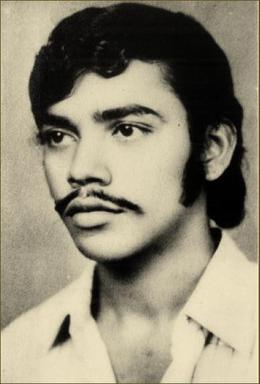
P. Rajan - Student Killed in Police Custody in Kerala during Emergency. Courtesy Wikipedia
America learned from it's mistake and successive attempts to suspend Habeas Corpus were either extremely restricted or plainly unsuccessful after courts overturned them. India learned nothing from it's dalliance with totalitarianism. The much hated MISA was replaced successively by TADA and then POTA each more draconian than the predecessor.

The only silver lining to the shameful performance of Smriti Irani was the prebuttal by Sugata Bose. Bose gave a passionate speech calling for tolerance. Unlike Irani Bose was not all bluster but just erudite and passionate. My only criticism of Bose's speech is that it was too much Bengal centric, he could've picked a few eclectic choices from across India to buttress his call for diversity and tolerance.

It was interesting to see an intellectual dichotomy on social media with one group, in large numbers, thumping their chests and sharing Smriti Irani's bombast while another group, in much smaller numbers, sharing Bose's speech and beseeching attention to sanity. It almost appeared that the crowd was more in favor of Barabbas while a prophet of peace is ignored.

The High Court judgment that released Kanhaiya Kumar on bail is a head scratcher. The judge reminded Kumar that India's army guarantees the freedoms of it's citizens. Yes, there are thousands of soldiers who are defending India from external enemies but they do so only to protect the rights of citizens and the rights include criticizing the country, it's army, the judiciary and most certainly the government. The rights, as Thomas Jefferson sagely said, were 'inalienable rights endowed by their creator' not from courts or mortals. The Declaration, called America's most sacred scripture, then rolls on in staccato verse laying out the vision of a people who dared to declare themselves free of foreign yoke, "that to secure these rights, governments are instituted by men, deriving their just powers from the consent of the governed, That whenever any form of government becomes destructive of these ends, it is the right of the people to alter it or abolish it". Rarely in human history has man's mind spoken more pregnant words and set the destiny of a nation for ages to come.

Another sick viral video is of a Indian army general weeping that the nation he defended is turning anti-national. Indians, by and large, admire and whole heartedly support the Indian army for it's sacrifices but how many Indians know about atrocities committed by the Indian army in the North East Frontier States, that too with impunity because they are shielded from prosecution? That too, is the face of the Indian army and speaking about it is not anti-national.

PS: Much of this blog was already completed when allegations came out that Kanhaiya Kumar had been charged with improper behavior towards a girl. Apparently, he was found urinating on the campus by a girl and he behave 'improperly'. The JNU administration fined him Rs 3000 and warned that future acts would invite more stringent actions. This is nonsense. Laws against sexual harassment are very lenient in India. Charges should have been filed against Kumar, not let off with a paltry fine and a warning.

I also condemn a newspaper headline referring to Smriti Irani as 'aunty-national'. Irani is certainly a disgrace to the office she occupies and is unworthy of being listed along side Abul Kalam Azad but ridiculing a minister in sexist terms is gutter we should keep away from.


References:

Note: Contrary to my habit I'll NOT give the youtube URL to Smriti Irani's shameless speech. Readers can easily google it. I don't want to give any more advertisement to that dishonest drivel.

1. Full text of Smriti Irani's speech http://indiatoday.intoday.in/story/here-is-the-full-text-of-smriti-iranis-lok-sabha-speech-on-rohith-vemula-and-jnu-row/1/604620.html

2. Factual errors in Smriti Irani's speech http://indiatoday.intoday.in/story/smriti-irani-factual-error-rohith-vemula-loksabha-speech/1/605323.html

3. Fact check on Irani's speech http://www.abplive.in/india-news/a-fact-check-on-what-smriti-irani-said-in-parliament-295872

4. On the Mahishasura legend http://thewire.in/2016/02/27/mahishasura-and-the-minister-22866/

5. Kent State Firings https://en.wikipedia.org/wiki/Kent_State_shootings

6. Habeas Corpus use in United States https://en.wikipedia.org/wiki/Habeas_corpus_in_the_United_States

7. Rajan murder case (during Emergency) https://en.wikipedia.org/wiki/Rajan_case

8. Sugata Bose's speech


Thursday, January 7, 2016

Asokamithran, Ilayaraja, Vijaykant and a Feudal Society: Thou Shalt Not Question

Three separate incidents involving three different persons, of varying intellectual gravitas, illustrated unwittingly what a feudal society India still is. Of the three, Ilayaraja and Vijaykant had public skirmishes with the press and are far better known than the third, Asokamithran, a novelist who joins this list thanks to a column he penned for a Tamil daily.

First, Asokamithran. After all, of the three, he, being a writer, I'd say "should know better". Asokamithran is a much hallowed name in Tamil literature for writing what is considered unpretentious but chiseled prose. I've read his legendary short story about a guy who masquerades as a tiger in shows and his novella 'Spy' based on his stay in Iowa, USA and a smattering of his non-fictional essays. Asokamithran richly deserves a Nobel prize not just for writing about unremarkable and ordinary people but for writing about them in equally unremarkable prose with sharp diligence in avoiding event a subtle hint of intellectualism in his narration. If his fiction is written in ordinary style his non-fiction does not disappoint by showing any inadvertent flashes of brilliance either. It is remarkable talent indeed to be consistently unremarkable. The aging octogenarian has been apparently commissioned by the Tamil edition of The Hindu and Asokamithran started the New Year with a bang by writing a column that recounts a curious incident regarding Indira Gandhi.

Asokamithran. Image courtesy http://www.thehindu.com/multimedia/dynamic/01722/17mpbookfair_GP_17_1722258g.jpg

Asokamithran's column in 'Tamil Hindu'                                                                       http://tamil.thehindu.com/general/literature/மவுனத்தின்-புன்னகை-1-இறக்காமலே-இறத்தல்/article8053374.ece
Asokamithran, having written a few books then, was member of some innocuous organization called 'Authors Guild of India'. The column which makes an attempt at humor recounts Asokamithran's travails with the Guild for getting reimbursements and royalty payments. The column recalls that the Guild which is normally ignored by the government had an unusual excitement when Indira Gandhi told them she'd visit and deliver a speech. It was during 'Emergency' period that Indira decided to pay the Guild a visit. Apparently the authors got dizzy with excitement and prepared for a formal grand affair replete with speeches recounting what the guild does etc. Prior to the arrival of Indira, Asokamithran recalls, the authors were heatedly discussing about the electoral prospects of Indira and Sanjay given the popular resentment against 'Emergency'. Indira, contrary to expectations, did not wait for customary speeches but just delivered her remarks that Asomakithran says was a remarkable speech that catered to authors, publishers and broadcasters. Though Indira lost in the subsequent elections she had, thanks to the crisp speech, earned the admiration of authors says Asokamithran.

In an attempt to attest to Indira's liberal attitudes towards free speech Asokamithran says that despite pleas from Communist party Indira refused to ban Dr. Zhivago, both the movie and the book. Indira also refused to intervene in a dispute about banning obscene works and had a familiarity with creative literature.

Now, where do I start? The column itself is shoddily written crap. It is appalling that a Prime Minister who unleashed the most repressive regime in independent India's history and almost destroyed Indian democracy earns the admiration of authors with a canned speech that probably her clerk wrote for her. Not even hindsight of what happened in the darkest chapter of free India elicits any word or caveat from a man who is frankly the most overrated writer in Tamil literature. Asokamithran is the quintessential bourgeoise middle class citizen who, even with the benefit of years behind him, could only think of the paltry royalty due to him and the pittance of reimbursements that were denied to him by a clerical organization. But then the so called intellectual class has often been enablers of authoritarianism. From intellectuals who were palanquin bearers to Stalin to Jeyakanthan and Khushwant Singh the story is sickeningly familiar. That the authors could be bought over by an Empress deigning to speak to them shows a dangerously feudal society. To be fair others like Ramnath Goenka and Jayaprakash Narayan paid a very heavy price for standing up for freedom. Asokamithran and his column are an insult to those heroes.

By the way Indira could not have contemplated banning Dr. Zhivago the book since it was published in 1957. Also, interestingly, Indira Gandhi, according to some reports watched the movie version the night before she announced the devaluation of the rupee.

Tamil Nadu was recently ravaged by floods that made many think that the heavens had opened and a primordial flood had been loosed upon a hapless population. The state government was paralyzed and civic administration was a mockery. Ilayaraja, Tamil Nadu's much adored and way overrated film music director, surprised many with a very rare gesture of generosity by distributing some aid to those in dire need. Of course being Ilayaraja who is known for an ego mania that dwarfs King Kong he had to do one more special act of royal benevolence. He decided to award certificates, signed by him, to a few who had done some service during the difficult period. A token of appreciation. Ilayaraja, let us remember, does not head any organization and his 'certificate' has value only in as much it can be considered an 'autographed paper'. Well if that makes somebody happy so be it. As he was leaving the venue he was mobbed by his fans and the press. In the days after the flood a blatantly expletive filled obscene song had rocked Tamil Nadu's social media. A reporter asked Raja "what do you think of the 'beep song'?" That was it, his royal highness the Lord of music laced into the reporter.


Without a doubt the question was intemperate because of the inappropriateness of the occasion. Raja was there to show appreciation to those who had done selfless service and it was certainly not the occasion to ask what he thought of an obscene song. Raja could easily have brushed him aside with a "No, comment" or even a brusque "this is not the occasion for that question". No, no, no that's what mortals do. Raja admonishes the reporter, "do you have brains". The reporter meekly replied "well that's why I asked you a question". Then Raja parries, "with the aid of which intelligence did you figure out you had intelligence". That's a head scratcher. Then, he who had scored music for very raunchy and obscene songs, delivers the blow "are you qualified to question me?" This from a guy who boasts freely that he has scored music for films that he disliked and thought were crap. Bharati Raja's 'Muthal Mariyathai' is a much appreciated movie for the distinctly underplayed acting by the usual over-acting Sivaji Ganesan. At a music release recently Raja boasted that though he did not like the film he delivered good tunes because he wanted to do justice to his calling as a musician. Apparently a good compensation is all it requires for Raja to meekly deliver the best despite his misgivings about the quality of a movie though he dresses it up as serving a higher cause.

Raja also offers his unsolicited theological opinion that certainly God had let loose this flood to bring about amity in the city. I honestly think that between Raja and the reporter  it is Raja who needs to wonder if he has brains. It is disgusting that some guy could dis out this nonsense and escape condemnation for it.

Given the fanatical fan following Raja enjoys in a society that largely has no deeper aesthetic or intellectual understanding of music the incident drew widespread applause for Raja and a smattering of support for the hapless and intemperate reporter. Only in a feudal society can a press reporter be harassed thus and still draw condemnations. More than anything the crowning indecency was the attitude of "how dare you question me".

Few days after the incident with Raja the press became the butt of another round of gleeful ridiculing. Vijaykant, the least intellectual of the trio being discussed today, is incidentally the leader of the opposition in Tamil Nadu's state legislature. A gaggle of reporters had surrounded him and peppered him with questions and one of them asked, repeatedly, "do you think ADMK would win the next election in 2016?' A visibly irritated Vijaykant shot back "would you dare to ask this same question to Jayalalitha" and then he spat on the ground. Raja's supporters and Jayalalitha haters joined hands for a unified chorus of "shame on you reporters".

Not many remembered that Vijaykant himself, like every other politician in Tamil Nadu, owns a TV channel and he, to the best of my knowledge, has not employed Walter Cronkite or Anderson Cooper and the reporters of his channel, I can bet, are no better. Jayalalitha, though a recluse these days, has in the past given pretty lengthy interviews unlike Karunanidhi who only holds press meets to read out prepared announcements or deliver canned replies. Jayalalitha faced off Karan Thapar's arrogant and condescending questions and returned volley for volley. She had a lengthy sit down with Simi Grewal. After badly losing in 1996 she did an interview with Rabi Bernard (on her own channel, though). I wonder if Karunanidhi has done any lengthy and substantive interviews. Note, Narendra Modi, unlike Jayalalitha, walked out of an interview with Karan Thapar.


Spitting at a person is considered a gross act of disrespect and that a politician can do it on camera and be appreciated for it shows the rank feudalism that runs the gamut of the society. Granted that the TV reporters are uncouth and intemperate but it is equally true that those who ridicule them are mostly no better. India has undergone a sea change from the days when only a government run and government controlled channel existed. The plethora of TV channels, their dubious funding and partisan attitudes not withstanding, have undoubtedly democratized the discourse. Arnab Goswami maybe the most ridiculed anchor in India for his shout-fests but it is undeniable that to see central government ministers and politicians of all stripe is gratifying.


While looking up interviews by Jayalalitha I came across a real gem. Here she is ripping into Ramadoss who relishes fanning the flames of communalism and Jayalalitha does this in the legislature. It is a point by point rebuttal of a very powerful caste leader.


To be sure, Jayalalitha is no paragon of free speech and is known for being titular and vindictive just like Karunanidhi.

Democracy is ill served by fertilizing feudal instincts and the worst feudalism is to arrogantly ask "how dare you question me". Today Barack Obama is addressing a town hall meeting where those like his policies and oppose him are given equal chance to question him on his latest proposal regarding gun reforms. This is democracy at its best.

PS: I'm sure many admirers of Asokamithran will rush at me with brickbats for saying the column was shoddily written. Here's a sample:

"அவ்வளவுதான். ஒரே பரபரப்பு. இதில் விசேஷம் என்னவென்றால் அக்கணம் வரை எல்லா எழுத்தாளர்களும் அரசைத் திட்டித் தீர்த்துக் கொண்டிருந்தார்கள். ஒரு தொகுதி கூடக் கிடைக்காது, தாயும் மகனும் படுதோல்வி அடையப்போகிறார் கள் என்றெல்லாம் பேசிகொண்டிருந்த மனநிலையில் பிரதமரை நேருக்கு நேர் எப்படிப் பார்க்க முடியும்? ஆனால் பிரதமர் வந்தால் யாராவது முக்கிய அங்கத்தினர்கள் அவரை வரவேற்க வேண்டும், வரவேற்புரை ஆற்ற வேண் டும், அந்த அமைப்பு என்ன பணிகளில் ஈடுபட்டிருக்கிறது என்று எடுத்துக் கூற வேண்டும். ஆனால் படைப்பிலக்கியம் வரை இந்திரகாந்தி அவர்களுக்கு நல்ல தெளிவு இருந்தது. அப்போது கம்யூனிஸ்ட் கட்சியின் ஒரு சாராரைக் ‘குட்டி’ காங்கிரஸ் என்று கூடச் சொல்வார்கள். ஆனால் அவர்கள் வற்புறுத்தல் இருந்தும் கூட ‘டாக்டர் ஜிவாகோ’ நூலோ, படமோ தடைசெய்யப்படவில்லை. அதன் பிறகு ஆபாச எழுத்தாளர்களை அரசு கண்டிக்க வேண்டும் என்று ஓர் எழுத்தாளர் அமைப்பு கோரிக்கை விட்டபோது, “இந்த மாதிரி விஷயங்களில் தீர்வு காண அரசாங்கத்துக்கு நுட்ப உணர்வு போதாது, ஆதலால் இதுபோன்ற விஷயங்களை உங்களுக்குள் பார்த்துக் கொள்ளுங்கள்” என்று சொல்லிவிட்டார்."

Sunday, November 1, 2015

Nayantara Sahgal And The Perils of Selective Outrage. India's Long Tussle With Free Speech.

A few inconvenient truths first. Narendra Modi's regime, so far, is not even as remotely fascist or pandering to sectarian interests as Rajiv Gandhi's regime, during which Nayantara Sahgal happily received the Sahitya Akademi, was.  India, compared to other developing countries, has a robust democracy thanks, not to the preening intellectuals but, to the common Indian voter and other commoners.

The rot in India's cultural and intellectual institutions has a long history that predates Modi. The Sahitya Akademi lost any pretense of institutional autonomy when it meekly accepted Jawaharlal Nehru, a sitting Prime Minister and one who can be called a writer only by a very loose definition of the term, as its first President. When Tamil writers prostrated at the feet of E.V. Ramasamy, metaphorically speaking, they lost all integrity to question Narendra Modi. What are the real issues at stake? Is one man or one party the cause of these ills?

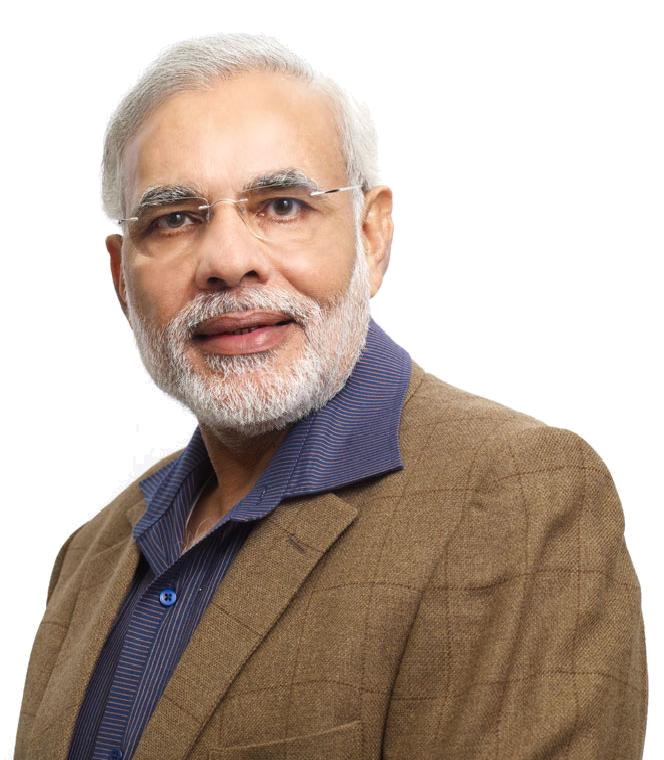
Narendra Modi (From Wikipedia)
I came of age, politically speaking, in the Rajiv Gandhi regime when I used to be an avid reader of 'Indian Express' and 'India Today'. The anti-Sikh pogrom has been rehashed in many comments that criticized Nayantara Sahgal, but that singular focus actually diminishes and whitewashes the grotesque regime of fascism that Rajiv presided. Readers need to be reminded of the Rajiv era.

The 'Indian Express' under Ramnath Goenka and Arun Shourie waged a crusade against the excesses of Rajiv Gandhi's administration for which they were rewarded with nearly 200 cases foisted by various arms of the government including an unprecedented massive nationwide Income Tax raid that was conducted with military precision. Separatism in Punjab was put down with state sponsored terrorism which left in its wake mass graves and a super cop. TADA which made Rowlatt Act look gentlemanly was passed and the state was armed with yet another lethal arsenal which trampled individual liberty with impunity and as the Jodhpur detainee case showed the hapless citizen suffered under state terrorism. Rajiv, made arrogant and titular with the super majority he enjoyed in the parliament, sought to stifle dissent with his 'anti-defamation bill' that P. Chidambaram promoted with the zeal of a capo regime. I remember reading articles by the likes of H.M. Seervai in 'Indian Express' against the bill which finally Rajiv abandoned. As his administration teetered Rajiv, facing the prospect of some MPs defecting to the opposition, brought out the anti-defection bill. Rajiv sought to appease religious fringe groups with impunity. Muslims were appeased by a ban on 'Satanic Verses' and by reversing the Supreme Court verdict in the Shah Bano case. Hindus were appeased by opening up Babri Masjid for Shilanyas and having T.V. actor Arun Govil, who had portrayed Lord Rama in the TV series Ramayan on state run television, appear as Rama to assure voters in Allahabad that the Lord's blessings are for those who vote for the Congress candidate.

Rajiv Gandhi
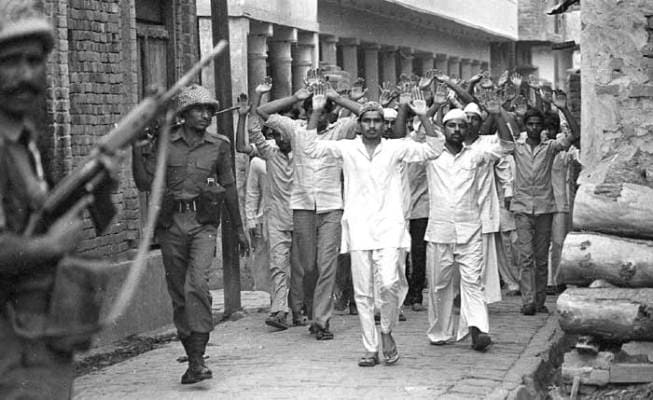
But that was not all. Modi's name is rarely ever mentioned by his critics without mentioning the Gujarat riots. Little do we hear of an event like the Hashimpura massacre that happened on 22nd May 1987 in Congress ruled UP. The police had killed in cold blood Muslim youth and dumped their bodies in a canal. While Rajiv and a host of others trooped to UP little action of consequence happened. Muslims were paraded by gun toting policemen as the photo below attests. Little did rest of India know about such happenings unlike today's social media age when a despicable remark by a cabinet minister ricochets across cyberspace in a post that went viral. Such was the political climate, in short, in which Nayantara Sahgal was too happy to receive the Sahitya Akademi award. During those dark days it was journalists like Arun Shourie and N. Ram that stood up to establishment.

Muslim Youth being paraded at gunpoint in Hashimpura ('Hashimpura: Here's what happened' - Pictures by India Express)
The current climate of intolerance against free speech has a long and institutional history in India and it is patently unfair to just pin it on Modi and the Hindutva movements. If anything the Hindutva brigade is only doing what Shylock threatened to do, 'the villainy that you teach me I shall execute but I shall better the instructions'.

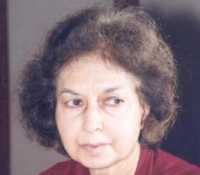
Nayantara Sahgal (Wikipedia)
India's constitution lacks an American style First Amendment that serves as an iron clad protection against curtailing free speech. India has banned books or penalized authors who wrote books that were perceived as unfair to India's image. Writing for 'The Hindu' Hasan Suroor points out that "Indian customs (he's referring to the authorities) have sweeping powers not to allow any printed material they deem objectionable. When the state itself is so illiberal and quick to shut out dissenting views, it can hardly be expected to act differently when confronted with illiberalism of others". Nirad C Chaudhuri learned at great personal cost what it is to displease the Babus while working in their employ. Nirad Babu was hounded out of his post at All India Radio for writing 'Autobiography of an unknown Indian'. Ramachandra Guha in an oped points out how that deprived Nirad Babu of his livelihood. V.S. Naipaul's 'An area of darkness', a scathing and polemical book on India, remains banned along with Katherine Mayo's 'Mother India', which Mahatma Gandhi labeled 'a drain inspector's report'. P.N. Haksar had to personally plead with Nehru to allow Satyajit Ray's 'Pather Panchali' be screened abroad. An overzealous official had apparently refused permission for Ray's film to be exported because it showcased India's poverty. Nehru responded "What is wrong about showing India's poverty? Everyone knows that we are a poor country. The question is: are we Indians sensitive to our poverty or insensitive to it?". This question would plague India's response to 'Slumdog Millionaire' a half-century later.

The Indian constitution drafted amidst a very turbulent political climate agonized over balancing liberty with ability to provide a secure state. Granville Austin masterfully recalls the debate over fundamental rights in "Indian Constitution: Cornerstone of a Nation". The constitution, aiming to provide a secure state, did not secure fundamental rights solidly. British era policies like 'preventive detention' and latitude to law enforcement agencies were left intact even privacy of communications and requirements of warrant to arrest were deemed inimical to the security needs of the state. Security needs aside social agendas like ending Zamindari system prodded the complete abandonment of 'due process' when it comes to property rights. Reading Austin's account of the debate it is amazing to note how much the Indian framers of the constitution looked to the American example. The desire to invest the State with almost unlimited power flowed not only from the security imperatives but from the added philosophical doctrinaire thinking that dominated the minds of almost everyone in that era. Using the State as an instrument to further social agenda, religious reform and socio-economic egalitarianism was seen as a necessary function of an 'enlightened State'. Unfortunately, rights, were often seen as negotiable goods in reaching those objectives. Interestingly the spark for dropping 'due process' with regards to fundamental rights came out of a discussion between one of the Indian drafting committee member and a US judge.

The current spectacle of writers and scientists returning awards to protest against a climate of intolerance supposedly crystallized around the killing of three individuals in unconnected incidents. Indians owe more to Kesavananda Bharati, a Hindu monk from Kerala, and legendary jurist N.A. Palkhivala for securing fundamental rights than to any supposed intellectual. When Indira Gandhi proposed a raft of legislation that would've made a mockery of the constitution and fundamental rights Palkhivala prodded Bharati to file a petition that ended with the Supreme Court, comprising a historically large 13 member bench, to declare that the legislature shall not enact laws that'd tamper with the 'basic structure' of the constitution. See my footnotes for an account of how Palkhivala swayed the judges. A lesser known case involved a much less known editor of a vernacular magazine. Gopal, editor of Tamil weekly Nakkeeran, went all the way to the Supreme Court to secure the rights to publish a salacious diary of a convicted criminal and in the process defined what privacy was. Indians owe it to Tamil politician Vaiko for securing the right of free speech to support a proscribed organization and that speech is different from material support. While the result may be the ugliness of having to see posters celebrating the birthday of a murderous tyrant like Prabhakaran it is a landmark judgment. Often governments hide behind the excuse of 'law and order' to ban works deemed unpopular. A little known and unsung hero who put a stop to that was a small time film producer S. Rangarajan from Tamil Nadu. Rangarajan's movie 'Ore Oru Gramathile' centered on the inquiries of India's caste and quota based reservation system. When fringe organizations threatened to disrupt the screening of the movie the then Tamil Nadu government, headed by Karunanidhi, which was a blind champion of quota based reservation, under the guise of social justice, banned the movie citing potential law and order problem. The Supreme Court in a stinging observation opined that "the State cannot plead its inability to handle hostile audience problem. It is obligatory duty to prevent it and protect the freedom of expression".

It'd be a gross omission to not give credit to Anna Hazare's movement for the Lokpal bills. Also, gone was the India where information was the privilege of the powerful and the elite. RTI (Right to Information) is an important tool in the arsenal of democracy. One final obstacle to a complete free speech society is the insularity of Indian judiciary which protects itself from any criticism with the draconian contempt laws.

It is worth noting that many of the current protesters played little to no role in securing or fighting for the rights of the common man but run around like headless chicken when three of their fellow travelers are killed under contentious circumstances.

Jawaharlal Nehru justly deserves the title of being India's architect and for symbolizing an age when the socio-economic and political foundations of the country was being laid. As it befits that era when States were looked up to to provide the intellectual foundations as well cultural institutions under State patronage sprung up. The year 1954 captures the sprit of that age. In 1954 the Nehru administration for the 'Department of Atomic Energy' and the 'Sahitya Akademi'. While it is heartening to note that an administration thought it necessary to establish, amidst the cacophonous volatility of the times, a premier scientific department and a premier cultural institute, it also brings into focus the position of primacy that the state occupied in the minds of intellectuals, most of whom continue to be unreformed and unapologetic Marxists. It is worth noting that America did not establish a state funded literary organization until the Lyndon Johnson era, in 1965, when constructing the 'Great Society' was the dream of liberals.

The trajectories of Sahitya Akademi in India and the National Endowment for Humanities in US is instructive of the nature of Faustian bargain that the intellectuals signed on to in India. Despite the NEH sitting atop a pile of funds, $167 Million according to wikipedia, it is a surprising fact that the most prestigious literary awards in US, the Pulitzer and National Book Awards, are given by completely autonomous institutions which have no truck with the state unlike the Sahitya Akademi.

Government interference in Sahitya Akademi has a long and sordid history that predates the Modi or any BJP administration. I am a great admirer for Nehru's prose and Nehru as a thinker of immeasurable breadth but it is beyond me to accept Nehru as a writer or a historian. It is pathetic that the Sahitya Akademi accepted Nehru as it's first Chairman. The saving grace was that Nehru, being no Modi, wrote to Khrushchev, "in his capacity as Chairman of Sahitya Akademi", not as Prime Minister, to protest the Krushchev regime's policy of not allowing Boris Pasternak to receive his Nobel Prize. Nirmal Bhattacharjee told 'Frontline' that the Akademi functions independently and pointed to the award given to Sheikh Abdullah's book 'Flames of Chinar' despite the book's unflattering references to Nehru. The shoddy journalist who wrote the column did not find out that the award was given, posthumously, in 1988 for reasons beyond literary merit or tolerance of divergent views. In fact on the contrary the award was probably 'engineered' to smooth the political tangle between Rajiv's government and Farooq Abdullah, the son of the deceased Sheikh. The general council of the Sahitya Akademi comprises of 5 nominees from the government of India, including representation from Department of Culture and Ministry of Information and Broadcasting. The autonomy of the Akademi, is, truth be told, fig leaf.

Khushwant Singh wrote a stinging op-ed in 'India Today' about how the Sahitya Akademi has awarded authors of no-merit thanks to political pressure and shoddy recommendations. Amrita Pritam, Khushwant Singh wrote, recommended awarding Harinder Singh Mahboob's book 'Jhanan di Raat' but later, when she was told of the Mahboob's unflattering references to Indira Gandhi, Pritam expressed regret and said that if she had known of it she would've blacklisted the book because she admired Indira Gandhi. The whole incident is revelatory on many levels. The least offensive part in that incident is that Pritam had not actually the read the book she championed. The second most offensive part is she freely confesses that she'd have blacklisted the book for maligning a leader she admired. The most offensive part is Amrita Pritam expressing admiration for Indira Gandhi, the leader who practically destroyed India as a democracy. Jnanpith awardee from Tamil, visited Soviet Russia and came back convinced that Solzhenitsyn was a liar and that the Soviet system, despite being repressive, is superior to the freer Indian system. He even wondered if liberty was worth it. Khushwant Singh also upbraids Sarvepalli Radhakrishnan for blacklisting writers 'for canvassing' for awards, while, 'overlooking similar charges against those he favored'. Of course Khushwant Singh cheered the Emergency era. Sartre made a show of refusing the Nobel prize while giving full throated support of Stalinism. Such is the lot of these so called conscience keepers who are returning the awards today. An instructive book to read on the trustworthiness of intellectuals as conscience keepers is historian Paul Johnson's 'Intellectuals'.

The Hindutva brigade does have a point that many, if not all, of these intellectuals who are now rushing like lemmings to join a bandwagon to discredit Narendra Modi have all been hypocritically silent when books were banned to appease minorities and when atrocities were committed by minorities to terrorize free speech into submission. There has usually been silence from the intellectuals when works like 'Satanic Verses', 'Last Temptation of Christ (movie)' were banned or when Taslima Nasreen faces ostracism from her own community or when something as grotesque as T.J. Joseph having his hand severed by a fringe Muslim fundamentalist organization or when Sanal Edamaruku had to practically exile himself for having angered the local catholic church. This malaise of selective outrage against causes convenient to be outraged about robs the protesters of the moral halo they eagerly seek to cloak themselves with. There are no saints in this current battle of wits and propaganda.

When M.F. Husain paints Hindu goddesses in the nude and draws the ire of militant rowdy elements of the Hindutva brigade everyone desirous of the label 'conscientious objector' comes out of the woodwork to shout from rooftops about the virtues of free speech. Yet, during the Danish cartoon controversy we look around and find a deafening silence and even a lecture on how hurting religious sentiments should not be confused for free speech. A sample is A.G. Noorani's tortured column in 'Frontline' on the issue of the cartoons (see Reference below).

The group of scientists who have joined the bandwagon of protest is the most curious one. Many of them have been heads of institutions for decades which have enjoyed state patronage running into hundreds of crores. Many of these institutions have enjoyed unprecedented autonomy, by Indian standards, and yet Indian universities secure pathetic places in World Rankings. I'm sure many will point out this or that research, this or that scientific personality of international repute. But, as a country India's educational infrastructure in higher education is nothing to write home about. These scientists who are now seeking to portray themselves like they are some Giordano Bruno burning at the stake for the sake of science are largely institutional toadies. I was stunned to learn that University Vice Chancellors, among a host of others, are eligible for VIP lounges akin to business class lounges in airports. No wonder that appointments of VCs is ridden with corruption.

Where was the outrage when a Vice Chancellor in Tamil Nadu said openly that he had become a VC by bribing the then regime? Where is the shame for not having put India's institutions on the map of the world? Where is the shame for India's institutions of repute not being diverse enough? These scientists should be resigning en-masse merely out of humility for not having done enough in the institutions they run.

The most laughable irony in all this fracas is wonderful FB activists from Tamil Nadu who are eagerly sharing news of every award returned and every anti-Modi snub. If any state is hostile to free speech it is Tamil Nadu and if there's a prize for being a charlatan on science and scientific temper many Tamils would win it hands down. E.V. Ramasamy made a career out demonizing a community, a minority really, in sheer fascist terms. E.V.R and his protege C.N. Annathurai have caused irreparable damage to generations of Tamils with nonsensical theories spun to support their fascism and chauvinism. A Tamil Nadu student learns that ancient Tamil texts contain theories akin to Isaac Newton's Third law of equal-and-opposite reaction, Einstein's Theory of Relativity and atomic fission. Any question of E.V.R's qualities as leader or intellectual will be met with a torrent of abuse from all and sundry. If one looks at the tactics of Dravidar Kazhagam, the party founded by E.V.R, and the Sangh Parivar the similarities are striking with the only difference being that the intended target of hatred is different.

The Sangh Parivar has been a fixture in Indian politics for nearly a century now since the Hindu Mahasabha was formed, along side the Muslim League, in 1906. The burning question being asked about these protests is, "why now?" As one writer wrote, in response, things have reached a boiling point and India is at cross-roads and if voices of protests do not rise in unison today then India will slide into a fascist theocracy. Is that true? No. It is not true.

What is different in Modi's India in 2015 compared to the days when Golwalkar and Veer Savarkar spewed venom? In the early part of the twentieth century Gandhi strode the Indian scene like a colossus and against his philosophy of non-violence and inclusive politics the divisiveness of a Golwalkar, while vibrant in pockets of India, never gained primacy. Post-Independence Jawaharlal Nehru, more than anybody, stood athwart the gates of hatred with his unimpeachable credentials of being secular and progressive (when the word 'progressive' had some honor to it). The role of Marxist dominance in intellectual discourse and cultural institutions undeniably played a laudable role by keeping at bay the atavist and reactionary elements that was looking for every available loop hole to sneak in a theocracy. How did India come to a place where a minister, a professor of physics no less, could suggest that universities should study astrology as a discipline (this is now a hotly disputed account but that it is cited widely shows what people think of as possible in a regime like this)?

The post Nehru era is largely responsible for paving the way for the current ideological clash. Again, Marxists and the left wing played a vital role but this time, unfortunately, counter-productively. Indira Gandhi and Rajiv Gandhi largely turned secularism into vote bank politics. It became fashionable to lecture Hindus about secularism and then attend Iftar parties with skull caps. Anything to do with Hinduism was snickered about and ridiculed while minorities were given wide latitudes to indulge in their own hypocrisies. Nowhere was this more evident than in Tamil Nadu where E.V. Ramasamy and his ideological progeny went to great lengths to offend Hindus while enthusiastically cheering the superstitions of minorities. In Tamil Nadu it became OK for a government official to ridicule in print Hinduism's holiest festival Diwali and then send greetings to minorities for their festivals. Scientific temper became an ugly phrase used hypocritically to ridicule Hindus while fashioning cockamamie theories to support linguistic and regional chauvinisms.

Advani sensed an opportunity to drive a wedge into the heart of India in his quest to turn his party, BJP, which had two seats in the parliament in 1984, into a force to reckon with. Advani stoked the fear of Hindus, the majority, with fears of being marginalized thanks to minority appeasement. He coined the word 'pseudo-secular' to denote everything that reeked of double standards. Soon ideas that were in the margins of the nation's conscience became centerpiece. The dangerous game he played was to take the few justifiable grouses and graft it onto a largely dishonest propaganda. To be fair to minorities India has provided ample scope and freedom for Hindus and molly-coddled them too. Advani launched a Goebbelsian propaganda that Nehruvian Marxists have insidiously cultivated an unhealthy distaste for Indian heritage in the Indian mind. A charge that is patently false and is sadly repeated by even Tamil writer Jeyamohan. Advani created a fetish for discarding 'western' ideas. Macaulay became the favorite punching bag for having deprived Indians of an education in consonance with their rich heritage and instead making them clerks to a colonial babudom.

In an age where there is no Mohandas Gandhi or Jawaharlal Nehru the honest souls that were appalled by Advani's chicanery were left to fend for themselves by hoisting thugs of the likes of Laloo Prasad Yadav and Mulayam Singh Yadav. Advani's party laughed it's way to 85+ seats in 1989 elections. Armed with political power nonsensical ideas gained currency and were pushed to a place of intellectual discourse. Any attempt to shut down the Hindutva group's nonsense was met with "are you anti-Indian?"

I watch with alarm and concern the fact that my alma mater, SASTRA (it was Shanmugha College of Engineering in my student days), organized a tech summit with Mahabharata as theme. A computer science student helpfully wrote a blog that Gandhari giving birth to a 100 sons was thanks to I.V.F and Drona's 'brahmastra' was actually a ICBM and of course atomic fission was known to the Kuru princes. In the name of respecting India's rich heritage sheer duplicity is being paraded as evidence and any attempt to scrutinize the validity of the claims is met, again, a torrent of abuse that includes aspersions on one's love for the country. But, as I pointed out earlier, much attention is paid to the Hindutva variety of bigotry but regional variations like that used by Dravidar Kazhagam gets a free pass. It is this sickening double standards that the Hindutva camp deftly uses to discredit its opponents.

One wonders, nevertheless, if Modi did not sow the seeds for any of what supposedly agitates the protesters what is it about him that makes him the bete-noire of the protesters? Here's my hypothesis.

If any of these protesters had galvanized such protests when Vajpayee and Advani unleashed Hindutva we may not have reached the abysmal depths of today. Other than polite noises such an organized protest never happened when Babri Masjid fell or when Advani terrorized entire cities with his juggernaut of a rath yatra. The reasons for the protests crystallizing today, in my opinion, are manifold.

First, Modi, unlike Vajpayee and Advani is the first openly and stridently pro-business capitalist. Modi has kept at bay the likes of Gurumurthy who headed the Swadeshi Jagran Manch in the Vajpayee days. Intellectuals, as American philosopher Robert Nozick points out, are leftists if not card carrying Marxists. In a country where capitalism was an abusive word until recent times Modi's strident pro-business agenda is deeply unsettling to these protesters, many of whom are aging Marxists.

Second, and this is, I'd concede, an explosive conjecture. Unlike Vajpayee Modi is not only not a Brahmin but a lower caste. Vajpayee was held in awe, despite the divisive agenda he helped propagate, for being a silver tongued orator and poet. Also Vajpayee was seen as the velvet glove to the iron hand that Advani was. Vajpayee, to give some fair credit, was an admirer of Nehru and had famously called Indira Gandhi a 'Durga'. Modi is none of that.

So, is there no justification in the claims of the protesters about a climate of intolerance and bigotry? While I quibble about how much Modi can be held responsible for it is undeniable that there is a climate of intolerance and bigotry today. I want to widen the perspective of who or what is responsible for the current climate so we could go after the real root causes instead of complacently believing that but for one man or one party all would be well in India.

Take the case of the 'cow protection' which supposedly set the powder keg on fire with the incident of lynching at Dadri where a Muslim man, suspected of consuming beef, was butchered by a Hindu mob. The Hindutva crowd and Modi's supporters, many who do disavow the killing, are nevertheless angry that their demand of 'cow protection' is somehow seen as pandering to one religion and a bigotry too. They are right. 'Protecting the cow' is part of the 'Directive Principles' of India's constitution which was framed by mostly Congressmen expressly to satisfy the wishes of Mahatma Gandhi. Where were the intellectuals when such a directive was included? What is worse the laws against sale of beef during certain festive periods were created by Congress regimes in many states and it was done to respect local sentiment (or vote banks).

Exasperated at the divisiveness and hostility to compromises with those across the aisle many Americans today blame, with great justification, the advent of social media and 'echo chambers'. Modi has enjoyed the blessings of social media to bypass the native press, especially the English press, that was never going to accept him. Social media is a double edged sword. If social media had been invented in the age of Indira Gandhi or Rajiv Gandhi one would've found misogynists and racists in their cabinets too. C.N. Annathurai specialized in heaping sexist and racist scorn. Referring to a widower Nehru holding talks with a widowed Sirimavo Bandaranaike, alone, Annathurai disgustingly said "a widow and a widower alone in a room. I hope they only talked". Asked about Indira Gandhi shedding blood due to a black flag demonstration by his party DMK, Karunanidhi said "well, a woman can bleed for any number of reasons". Asked about Jethmalani's proposed 10 questions a day Rajiv Gandhi retorted "I don't have to reply to every dog that barks". Jethmalani retorted back, "dogs bark at thieves".

In today's world a minister's intemperate remark ricochets in cyberspace in no time. The honorable thing to do for Modi would've been to fire him. But then Modi himself used the canine analogy to say that he felt bad about those killed in the Gujarat riots like he would feel if a puppy was killed in a car accident.

The really unfortunate part of all this is the echo chambers that we surround ourselves with. Whether it is right wing or left wing, pro or anti-Modi or anything as for that matter today it is possible for a person to surround himself or herself only with what one wants to hear with a near total exclusion of anything outside and particularly those that may contradict one's beliefs. I've seen Hindutva people on FB talk nothing else but of how minorities are going to take over India, how minorities are appeased, double standards (perceived and real), insults (imagined and real). They read only cyber-magazines and articles that dish out what they want to hear. There are no gray areas. Everything is black and white. Likewise minorities and other groups indulge in their own fear mongering, ghettoization, perpetual victimhood, instinctive distrust and demonization of others. This echo chamber is what is tearing societies apart.

When it comes to echo cambers my greatest fear is about educational institutions run, primarily by minorities, and then by caste minorities. While Uniform Civil code might be too long a shot I'd urgently recommend scrapping of the carte balance rights given to religious minorities in running educational institutions. When a Hindu girl gets fined by a Christian school for wearing Mehendi we've reached new lows. It is time that minorities realize that they cannot be claiming perpetual victimhood and hanker after exclusive rights while demonizing the faith of the majority. It is time that minorities align themselves more with the mainstream with the faith that India sufficiently protects them already. It's time for ghettos to go. On the other hand I see sectarian educational institutions, for instance, Brahmin run schools and colleges in India, pretend like any talk of Indian heritage and culture has to be exclusively Hindu and what is worse they cannot pretend to talk of "Indian" heritage when what they clearly mean to talk of is only Hindu heritage. Notions of diversity and an ability to appreciate the complex ebb and flow of history in an ancient country like India urgently needs to be inculcated from the school level.

Talking of social media and echo chambers it is a fact that the current protests have caught the attention of the world. Today anybody living outside India maybe pardoned to think that minorities live in mortal fear in India. This is arrant nonsense and is a loss of reputation for India with deeper impact on India. When people eagerly shared On FB Anand Patwardhan's claim that Modi's India is worse than the Emergency era it does incalculable harm. First, it shows that Patwardhan does not remember or know what Emergency was like or what the Indira regime was like. Modi cannot do much of what Indira did without running into a tsunami of protest. Imagine Modi packing the Supreme Court with pusillanimous judges like Indira did let alone declaring Emergency, suspending habeas corpus, arresting the entire opposition, unleashing a police raj and muzzling the press. India in 2015 is a far more mature and robust democracy than it was in 1975.

If comparing Modi's India to the Emergency era is stupid then comparing it Hitler's Germany is nonsense that defies categorization. Modi is not Hitler and India is not where Weimar Republic was in the 30s. Stop insulting history and parading ignorance with over the top comparisons like that.

Incidentally I should draw attention to the fact that even up to the 90s when the Government held the monopoly on news it was almost impossible to question the nation's politicians on TV. However much we may ridicule Arnab Goswami, one has to accept that we've come a long way when Doordarshan anchors would think it's sacrilege to question, let alone hector, a politician on live TV. Thanks to privatization and liberal economics private TV has mushroomed and we find Mr Goswami launching a shouting match on an unwitting politician. This is democracy at its noisy best and should be cheered. In 2000s India Tehelkha could interview murderers of the Gujarat carnage and bring into our living rooms the horror that had unfolded unlike the faceless murderers of Nellie massacre. In today's India a single Muslim being killed in a small town becomes headline news unlike the thousands who were mowed down in Nellie. Thanks to technology and liberal economics India has become a better and stronger democracy and in turn politicians have become more accountable.

Having said all that am I a Modi supporter or do I approve of Modi. Far from it. In my opinion Modi is no visionary. He has no imagination. He's a small time state leader who has artfully propelled himself to the highest elected office of the land. This man does not understand that what India needs is not a Facebook office or a Google Campus. What India needs is a Harvard and before that good public schools. Like any half-informed Indian he thinks America's power lies in Apple and Google campuses. America may lose its number one position on GDP or even the military ranking but what America may never lose in the near future is its complete domination of higher education. Education is the backbone of the country. Instead of meeting with Mark Zuckerberg if Modi had met with Drew Gilpin Faust I'd have cheered him. But alas he's no Nehru and what can one expect from a man who made a dilettante like Smriti Irani the education minister.

While I may be disappointed that Nehru accepted being President of Sahitya Akademi I admire the vision of a man who created cultural institutions along side institutions of science while the country was in a mad spiral of communal violence and linguistic chauvinism.

Couple of the articles that criticized Modi for not addressing the nation after the Dadri lynching pointed to how Obama takes interest in even small affairs like a Muslim school boy being arrested. This shows how knowledge what happens in different parts of the world makes an Indian citizen demand more from his or her leaders and expand what one expects from the leaders in a democratic setup. Of course Modi could learn a lot from an American President but I'd suggest that he look closer at home. Modi needs to learn from Jawaharlal Nehru. Nehru adamantly opposed appointing a person like P.D. Tandon as Congress President given his communal leanings. In a volatile situation like what was then no office was too small to be given away to anyone who may be any less a secular person. That was an important fight. Let Modi pick just some collected writings of Nehru to learn why the man was India's Washington, Jefferson and Hamilton all rolled into one. But alas this is a man who's building a made in China statue for Sardar Patel.

India's middle class that is poised to corner the most gains from Modi's India is dangerously insular to the needs of their lesser fortunate brethren who form the vast majority of India. The dominant discourse in America, considered the citadel of capitalism, today is about the widening income inequality. I am saddened to note that the rapidly rising India largely lacks any concern for the downtrodden. Modi, coming from indigent circumstances, remains blissfully ignorant of what inclusive growth is. Addressing his fellow elected members for the first time, Modi, wept, saying "the poorest of the poor have sent us here". He'd do well to remember that everyday of his life at office.

One of my friends asked me tartly "even if Modi speaks out on Dadri given his history would it ring with sincerity?" He has a point. Modi has to earn the trust of the minorities. The Hindutva crowd need only remember how gently America treats them as minorities and accommodates their needs. A majority has to show magnanimity first and work assiduously, every day, to earn the trust of minorities. And minorities, should reciprocate.

Indians needs to understand that free speech is not just about some high minded literature or artsy cinema or work of art but even about the freedom of a woman to dance in Mumbai's bars who are being told by the Supreme Court that they can dance but subject to the caprices of the local police who can decide what is obscene.

So what role can intellectuals play? Simple. Educate people patiently. To the scientists I'd say "learn from Carl Sagan and Richard Feynman". You, of all people, can do more for India than Modi or Nayantara Sahgal. Create the next Harvard in small Indian town. But first try to learn how Harvard and MIT became what they are today. Publish scientific literature that'll take science to at least the educated public. Who'll be your John Gribbin? When Christian fundamentalists tried to sneak in creationism into American schools the nation's science institutes published a fine book marshaling evidence in favor of Darwin and against creationism's trojan horse 'Intelligent Design'. Don't sit in your ivory towers ridiculing the people and smug. And more importantly be equal opportunity offenders against fundamentalism by all, not just one religion.

The legal fraternity needs to size the moment and propose a raft of legislation that will amend the constitution and secure the rights of a citizen more concretely and most importantly in the widest possible sense of the word 'liberty'.

Historians and other intellectuals have a more urgent role in combating in as many forums as possible the nonsenses that the Sangh Parivar peddles. It is not enough to cry 'bigotry'. India needs intellectual ballast to combat bigotry. Rescue the educational institutions from rote learning, nepotism, corruption and give students a taste of what is academic excellence and scholarship.

The writers needs to dissociate from any government run institutions or ensure that they are run autonomously in the true sense of the word. Encourage dissent and divergent views in the organizations you run. I'd strongly suggest that artists need to create their own independent associations and reward excellence. You also need to speak out more consistently for the common man and not just come out of your ivory towers when your fellow ideological travelers are threatened.

To all those who are worried about India becoming a theocracy and diluting its secular outlook an important task is to define secularism in positive terms. Secularism does not mean disavowing religion, that too selectively targeting the faith of just the majority. Laloo and Mulayam cannot be the poster boys of secularism. A Tamil columnist was recently threatened on TV by a Hindutva person that he would have sunk smeared on his face for opposing Hindutva and Modi. That is condemnable and disgusting. But it is equally condemnable and disgusting when that Tamil commentator claimed in an earlier show (a year ago I think) that the terror attack in Godhra by Muslims was anything but. Secularism is not excusing one terrorism while crying hoarse about another. I don't remember any outcry by intellectuals when Laloo Prasasd Yada used the office of his ministry of railways to white wash the Godhra attack. This despicable double standards has to stop and stop immediately.

When Rabindranath Tagore renounced his knighthood I don't think any Indian would've ridiculed him. To become the conscience of a nation is no small thing and many of you are far from it.


To every citizen, a humble request, "never ask for whom the bell tolls. It always tolls for thee".

I'd close with the words of India's poet laureate Rabindranath Tagore.

Where the mind is without fear and the head is held high
Where knowledge is free
Where the world has not been broken up into fragments
By narrow domestic walls
Where words come out from the depth of truth
Where tireless striving stretches its arms towards perfection
Where the clear stream of reason has not lost its way
Into the dreary desert sand of dead habit
Where the mind is led forward by thee
Into ever-widening thought and action
Into that heaven of freedom, my Father, let my country awake.

References:

  1. Khushwant article http://indiatoday.intoday.in/story/controversy-over-the-1991-sahitya-akademis-choice-of-author-exposes-its-flawed-functioning/1/308420.html
  2.  Nehru's letter to Kruschev http://indianexpress.com/article/explained/in-fact-when-a-sahitya-akademi-chief-spoke-up-for-a-soviet-dissident/
  3.  Nehru as President of Sahitya Akademi http://indianexpress.com/article/explained/writers-protest-what-returning-sahitya-akademi-honour-means/
  4.  Frontline article "50 years of Sahitya Akademi" -- Masti Vekatesa Iyengar and Sheikh abdullah affair http://www.frontline.in/static/html/fl2124/stories/20041203004009900.htm
  5.  Nehru and Satyajit Ray http://www.frontline.in/static/html/fl1526/15261180.htm
  6.  Aravind Adiga about S.L. Byrappa http://www.outlookindia.com/article/a-storyteller-in-search-of-an-ending/284084
  7.  "Ore oru gramathile" case http://india.blogs.nytimes.com/2012/02/14/from-tollywood-a-landmark-case-on-free-speech/?_r=0
  8.  List of films banned in India https://en.wikipedia.org/wiki/List_of_films_banned_in_India
  9.  Hasan Suroor's column 'You can't read this book' in Hindu http://www.thehindu.com/books/you-cant-read-this-book/article2953626.ece
  10.  List of books banned in India https://en.wikipedia.org/wiki/List_of_books_banned_in_India
  11.  Nakkeeran Gopal "I've 211 cases against me" http://www.thenewsminute.com/article/i-have-211-cases-against-me-nakkeeran-gopal-his-battle-criminal-defamation
  12.  Nakkeeran Gopal case http://indiankanoon.org/doc/501107/
  13.  Nirad CHaudhuri's "Autobiography of an Uknown Indian" and his troubles - Column by Ramachandran Guha "Nirad Chaudhuri's Nehru" http://www.thehindu.com/thehindu/mag/2002/11/24/stories/2002112400580300.htm
  14.  Sahitya Akademi Constitution http://sahitya-akademi.gov.in/sahitya-akademi/aboutus/the_constitution2.jsp
  15.  History of Sahitya Akademi http://sahitya-akademi.gov.in/sahitya-akademi/aboutus/about.jsp
  16.  Assault on T.J. Joseph https://en.wikipedia.org/wiki/Assault_on_T._J._Joseph
  17.  Sanal Edamaruku https://en.wikipedia.org/wiki/Sanal_Edamaruku
  18.  Danish Cartoon controversy and A.G. Noorani http://www.frontline.in/static/html/fl2306/stories/20060407001107800.htm 
  19.  Dadri Lynchinhttps://en.wikipedia.org/wiki/2015_Dadri_mob_lynching
  20. Hashimpura: Here's what happened http://indianexpress.com/photos/picture-gallery-others/hashimpura-massacre-most-chilling-murder-in-free-india/


Tuesday, February 18, 2014

Wendy Doniger, Jeyamohan and Arundhati Roy : A Primer on Free Speech

Jeyamohan, when he is not falling at the feet of his guru Ilayaraja and Arundhati Roy, when she is not cavorting with Maoists and raining vitriol over America, will do a segue way into defending, half heartedly, free speech.

Ideas on free speech, secularism, human rights and individual liberty are all very recent ideas. The US constitution, written toward the end of the 18th century, was probably the first to prohibit its own legislature from ever writing a law that will 'abridge' freedom of speech. The first amendment remains America's most cherished right in the bill of rights. Even today Britain has censors. Denying holocaust is a punishable crime in Germany.

Wendy Doniger (Source Wikipedia).
Indian constitution framers, unlike Americans at Philadelphia, retained a lot of archaic British laws especially those that gave untrammeled powers to the state because now the pigs were ruling (its a metaphor from 'Animal Farm'. Please.). Even today in India the local police station has to certify that a stage drama can be performed. A colonial era rule. The rules against free speech or loopholes to harass free speech practically mirrors colonial rule.

Free speech is not about allowing decent or agreeable or intelligent speech. Free speech is about allowing 'speech' without riders or caveats. If at all any caveat is to be used it is hate-speech and for that the threshold has to be a high bar. Britain had allowed Mullah's who preached with inflammatory rhetoric to continue preaching. Otherwise speech need not be intelligent or even decent.

A land mark case for free speech in India was the case of vernacular magazine Nakkeeran vs Tamil Nadu state. Nakkeeran had started publishing the auto-biography of a very sensational murder convict, Auto Shankar. Shankar had run brothels patronized by high officials. The officials sought to muzzle the magazine. Nakkeeran editor Rajagopal went to India Supreme Court. The Supreme Court in a landmark judgment upheld Rajagopal's right to publish the names. The judgment cites, surprisingly, landmark US cases on privacy. The series, lets remember, was just salacious, no public good came of it. Indians assume that high officials have salacious affairs. It was not news.

Larry Flynt, publisher of porn magazine 'Hustler', caused another landmark judgment in US. Flynt published a fictional story about evangelist Jerry Falwell portraying him as having sex with his mother in a barn. Falwell went to court. Larry Flynt went to US supreme court and won acquittal on free speech grounds. Free speech is not about defending what everyone will love. The reason that Flynt and Rajagopal need to be defended is because any abridgment of free speech in the name of morality or decency is a slippery slope and such excuses are more often than not abused to muzzle what somebody does not like.

Jeyamohan voiced a thinly veiled conspiracy theory that Christian West, that Wendy Doniger was born into, uses the tool of free speech to ridicule Hinduism and India. He forgot that American director Martin Scorsese made Nikos Kazantzakis's 'Last Temptation' into a movie with scenes of Christ having sex.

A New York City museum had an exhibit of a crucifix in a jar of urine. Art, said the artist. NYC Mayor Rudy Guiliani threatened to cut off city taxpayer dollars to the museum unless the exhibit was removed. Then he had to backdown in the face of a loud criticism. Oh there was also the case of a portrait of Madonna (Mary) with cow dung on her breast. A movie referred to crucifix as a sexual object. In 'Jesus Christ Superstar' Christ sings and lusts. British author Philip Pullman wrote a searing parody and a laugh riot in 'Good man Jesus and scoundrel Christ' to ridicule the 'established' church. The back cover succinctly said 'this is a novel'.

James Joyce's 'Ulysses' was banned in US but publisher Random House, in what could happen only in USA, arranged for a shipment and invited a lawsuit. Random House went to court and overturned the ban. Later D.H. Lawrence's 'Lady Chatterley's lover', 'Tropic of Cancer' and 'Fanny Hill' would have to face the court and be freed.

India has a long history of banning books or inconveniencing authors deemed bad. Nirad C. Chaudhuri invited ire over his 'Authobiography of an unknown Indian". Stanley Wolpert's 'Nine hours to Rama' remains banned in India along with Scorsese's 'Last temptations of Christ'.

In India free speech will find defenders depending on who is offended. Arun Shourie, who later joined BJP, was strident in his defense of Rushdie's freedom to write 'Satanic Verses'. Self styled secularists like N.Ram and A.G.Noorani defended, gladly, M.F.Husain's freedom to depict Hindu goddesses in the nude. Then the same duo stridently criticized Dutch newspaper Jyllands Posten for publishing cartoons of Prophet Muhamed which they said would hurt the sentiments of Muslims. Arundhati Roy was conspicuously absent during the cartoon controversy when half the world boiled.

Both Arundhati Roy and Jeyamohan offer half-hearted ham handed defense of Wendy Doniger. Neither defend free speech in totality. Roy, conveniently forgetting draconian Indian laws, scolds Penguin for buckling so quickly instead of going to Supreme court with their 'resources'. Poor Roy misses the irony of capitalism's comforts.

Jeyamohan's first blog on Doniger was a shameful exercise in logic. Saying the West has two approaches to India, one, respectful and two, supercilious ridicule of a civilization they don't understand. So saying he rips Western authors who, in his opinion, ridicule Hinduism  due to misunderstanding often with ulterior motive to destabilize India. He scolds them for 5 paragraphs conveniently forgetting the many, many Western authors and even colonial officials who respected India highly. In fact I'd say that Westerners have a healthy curiosity and great deal respect for India unlike what Indians have of, say, America. S.Ra, Nanjil and Jeyamohan displayed ignorance and prejudices about America during their visits here.

Finally on a grudging note Jeyamohan concedes that bans are ineffective and may actually serve to publicize the book. This by a man who was practically lynched in the internet for ridiculing two most loved cinema heroes of Tamils. Novelist Sujatha could read Jeyamohan's Vishnupuram because Sujatha felt that Jeyamohan was being uncharitably obscene about Hinduism. Though Jeyamohan had  the words against banning books in 'bold' it was buried too late into the article and did not sound sincere given the tone of the rest of the article.

Many have quoted Wendy Doniger's, less than flattering, passage about Bhagvad Gita. Little do many Indians outside Tamil Nadu know of K.Veeramani's "The other side of Gita". Veeramani and his mentor E.V.Ramasamy reveled in ridiculing Hinduism in the name of half baked ideas they called 'rationalism' but other than a few feeble attempts they always shied away from ridiculing Islam or Christianity. This hypocrisy does exist in India. But I am pained to see Hindu friends cite these and argue for an intolerant attitude. That does not behoove a great and open religion like Hinduism. I'd have to congratulate the people of Tamil Nadu for ignoring with maturity the antics of EVR.

'Economist' asked Germany to repeal its ban on holocaust denial which is a punishable crime there. 'Economist' reasoned that bigotry should be met with scholarship not censorship. Limping out of one of humanity's greatest racist massacre the ban had a meaning in the initial days of de-nazification and has no place today.

A more critical issue of free speech is the privileges of legislators and the judiciary. Indian constitution has strict limits on what can be reported about the happenings in legislatures. I remember a full page article by Arun Shourie, who often butted heads with MP's, titled 'Their privileges and our rights'. Famously Tamil Nadu Assembly speaker P.H.Pandian claimed he had sky-high powers and sent to jail a cartoonist for depicting MLA's as pickpockets and thieves.

Indian judiciary is very thin skinned when it comes to criticism. When US Supreme Court awarded the Presidency to Bush a newspaper column called the justices 'robed pirates'. It is common to see strident and harsh criticism of not just judgment but of justices too in US.

Dreaming of a free India Tagore wrote "Where the mind is without fear and the head is held high, into that heaven of freedom, let my country awake". I'd conclude with that oft attributed quoted which best defines defense of free speech: "I disagree with everything you say but I shall defend, to my death, your right to say so".

References:

1. Arundhati Roy's letter to Penguin India http://timesofindia.indiatimes.com/india/Wendy-Donigers-book-You-must-tell-us-what-terrified-you-Arundhati-Roy-writes-to-Penguin-India/articleshow/30306451.cms
2. Jeyamohan's first blog on Wendy Doniger http://www.jeyamohan.in/?p=46489
3. Hustler Magazine Vs Jerry Falwell http://en.wikipedia.org/wiki/Hustler_Magazine_v._Falwell
4. James Joyce's Ulysses http://en.wikipedia.org/wiki/United_States_v._One_Book_Called_Ulysses
5. Nakkeeran Rajagopal Vs State of Tamil Nadu  - This is a compelling read. The entire judgment is here - http://www.indiankanoon.org/doc/501107/