Sunday, May 4, 2014

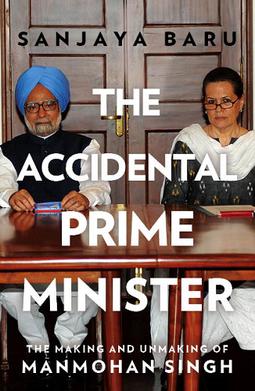
The Accidental PM and An Accidental Biographer

Manmohan Singh had greatness thrust upon him. The Indian voter had delivered a stunning verdict in 2004 that denied a mandate to the then ruling party, BJP, which, riding on a wave of economic resurgence, had blanketed the country with ads touting 'shining India'. More than their loss what drove the BJP crazy was the notion that Italy born Sonia Gandhi could lay a claim to the mandate and eventually unfurl the tricolor flag from the ramparts of the Red Fort. Even many voters who voted for Congress did not really imagine that that could be a result of their vote. An unfair groundswell of opposition rose to deny Sonia, who had led her party to victory almost singlehandedly, the office that she was constitutionally entitled to. In a stroke of surprise Sonia Gandhi, while refusing the office, ignored eager aspirants in her kitchen cabinet and called on Manmohan to lead the country despite the fact that he had not even contested the election. Manmohan became, as he himself confessed in many occasions to anyone who cared to listen, the accidental Prime Minister.

As a grieving widow of a gruesomely murdered man Sonia turned down the offer of Congress leadership. Seeing the party disintegrate she was later drafted to become the leader and save the party. It is chauvinism to keep referring to her as an 'Italian' as her opponents do. She has paid a very high price for marrying a man with the the surname 'Gandhi'. She is as much Indian as any Indian. The conflicts between the Prime Minister and the leadership of the party dates back to the Nehru-Tandon days. Not even Nehru, a charismatic leader with a reservoir of political capital, could avoid the antagonism with various factions of the party that had chosen him as their leader in legislature. Vajpayee -Advani rivalry and the internecine bickering that Vajpayee had with the hardliners of RSS and VHP is not a secret.


Sonia did occupy a certain grey area after the death of Rajiv during the days of the Narasimha Rao administration. Though she had no constitutional position visiting heads of state would pay her visit. During her hand picked Manmohan's administration she posed further ticklish problems because she was now an MP but came to be looked at as not just an MP. Something as simple as breaking protocol for her seating during a Republic Day parade became issues.

Sanjaya Baru was Manmohan's 'media adviser' and has released this book timed to cash in on the election season. He told a New York Times interviewer that he had 'promised a lot of people' that the book will be released only post-election but was compelled by the publisher to advance the publication for obvious reasons. The book does not contain any new revelations or bombshells since Baru takes cover behind the official secrets act. Written by a former aide the book suffers from a common malaise of any book by former officials in any regime across the world. Such books, unlike those written by a journalist, cannot rely on unnamed sources or even allude to them. Much of the book, therefore, is just a rehash of what is very commonly and plainly known to all those who have read newspapers.

Manmohan lacked political legitimacy because he was plucked out of anonymity by Sonia and it was compounded by the fact that he was not directly elected to the Lok Sabha and instead chose to be nominated for a Rajya Sabha seat ion order to fulfill constitutional requirements of being an MP. The lack of political capital crippled Manmohan from the word go. What is puzzling is Manmohan's refusal to contest even in 2009 when he was seen as a decisive leader coming off from surviving a vote of confidence forced by the truculent Communist party that had withdrawn support over the largely popular nuclear deal that India signed with US. Baru repeatedly points out that this lack of assertion was the prime cause of a listless administration that is headed towards electoral disaster. Sonia remaining in the background and influencing policy made her the de facto extra constitutional PM while Manmohan was the figure head. This was plain to the country and Baru's book has no whistle blower quality on that score.The book repeatedly circles around the Manmohan-Sonia tangle.

Baru says that ever since Manmohan lost the candidacy for an MP seat in 1999 he had a distaste of contesting elections. Baru attributes the defeat of Manmohan to his characterization of the genocidal anti-Sikh riots of 1984 as the handiwork of not just Congress but of RSS too. In Delhi, which bore the brunt of those riots, the remarks created a furore amongst the Sikh community which duly saw Manmohan for what he was, an eager power hungry politician. The riots were engineered by Congressmen and, ironically, it was RSS which even attempted to save lives. That a man in pursuit of electoral office would tell blatant lies about a riot in which his fellow community members were massacred tells volumes of his character.

Since 1989 coalition governments have been the order of the day in India. Many times the governments were a hodgepodge of power hungry parties coming together in a post-poll alliance jockeying for plum ministries. Political parties, as a rule, lack principles but they have a pressing need to satisfy their vote blocs and in a coalition government where alliances are stitched together there is little commonality in the prerogatives of the voting blocs thus resulting in a policy stalemate. Manmohan's government was no exception. Decision making became a process that made sausage making look more edifying. There was the GoM (group of ministers) and then there was the EGoM (Empowered Group of Ministers) above the various committees. All of that was done just to keep passing the buck and not take any responsibility for decision making. "At one point in 2007 there were over 50 GoM's".

Baru's book focuses only on his time in the administration which was just the first term of Manmohan. Manmohan's first term was marked by the landmark nuclear deal with US, building better rapport with US and as a result losing support from the Communist parties for whom hating US is a fetishistic obsession.

Distrust of US and Capitalism go hand in hand in Indian thinking and that permeates the body politic of India beyond the bureaucrats down to the common citizen. This despite the fact that the US consulates in India are the busiest in the world granting US visas to Indians. George Bush, in a post 9/11 world, looked to cultivate good relationship with India as part of what is now called in America as the 'Asian pivot'. Bush, unilaterally, sought to breakdown the decades old nuclear-apartheid by the nuclear-club that discriminated against new entrants to nuclear-weapons-club. The only good part of the book is where Baru details the efforts of Bush to bring India and US together on signing the nuclear deal. Of course, no revelations but just plain coherent telling of, possibly, the only achievement of Manmohan's first term.

Though a treaty was signed, Indian officials, in thralldom to their Soviet dream, dragged their feet endlessly into 2007. Senator John Kerry visited India and told the dithering Indian officials that the next President, most probably a Democrat, would not do what Bush was 'ready and willing to do' for India. A prophecy that came true with Barack Obama who let the treaty languish. Obama did not take Bush's pivot to India any further beyond a nominal state dinner for Manmohan. Manmohan, too, for his part, re-elected in 2009 did nothing in the foreign policy space. Baru laments that Manmohan did not capitalize on the one area where he had space, which is, foreign policy.

The reflexive hatred of US by the foreign policy establishment and the communist party is told at some length. Prakash Karat gets some, very justifiably, unflattering portrayal for his willingness to push the country to the brink of political certainty just to satisfy his crusty anti-imperialism credentials and to be a knight in shining armor for his comrades.

The dominance of left-wing thinking in policy circles, particularly amongst economists is underscored by Baru's confession that, as an economist, he used to pooh-pooh the growth of countries like South Korea. No economic model, save the Stalinist, was deemed relevant for India. Baru does his best to project Manmohan's feeble attempts at articulating a foreign policy vision as ground breaking. Manmohan's lack of follow through on any vision frustrated Baru.

A revealing moment in the book is when Baru registers that Manmohan felt that Natwar Singh, whose son was blamed by a UN investigation committee report as having used the UN food program for Iraq to make money, was being thrown under the bus by the Congress party. Here is a man indicted by an international investigation of bribery in a program meant for a people under a sanctions regime and Manmohan feels that the party must have backed that corrupt man. This willing tolerance of corruption will become Manmohan's undoing later. Incidentally, Baru does not flinch that the PM was trying to defend a corrupt minister.

The book unwittingly portrays the chaotic structure of especially the security agencies. India is a country hemmed in by hostile powers that are actively seeking to undermine the country by supporting insurgencies across the land and yet the security setup is pathetic at the organizational level. Internecine bickering between the newly constituted agencies, turf wars and a lack of clarity of which organization should report to whom all disconcertingly portray a country that is yet to learn how to build institutions.

Arun Shourie once wrote a column on the notorious obsession of Indian bureaucracy for who can use which color ink. When Baru makes a file note with red ink he is pulled up by J.N. 'Mani' Dixit because only 'service chiefs can use red ink'.

Like any book written by an official who was part of a regime this book suffers from numerous flaws. Officials write books to exaggerate their roles, to embellish their contributions and to make money. Sanjaya Baru does all three. Baru was only a 'media adviser' to Manmohan and as such he was not an intrinsic part of major policy decisions. His understanding of democracy and democratic institutions is appallingly elementary.

Like any bureaucrat he wants to shine up his boss's image while writing a book that he knows full well could become fodder for his boss's political opponents. Commending that Manmohan wakes up early and watches BBC Baru says the Prime Minister learned of the 2004 Tsunami from BBC before his officials could brief him. India's PM had to learn from a foreign broadcaster about a devastation which killed thousands and displaced tens of thousands. And that too, we are told, thats because the PM gets up early and watches BBC.

Baru does not blink when describing the Intelligence Bureau chief Narayanan as Edgar Hoover. Narayanan, Baru writes, 'earned his spurs' unseating the world's first elected Communist government in Kerala. Narayanan used to keep tabs on credit card spending of editors of major dailies and snooped on political leaders. None of this is recorded by Baru with any concern or alarm. In another attempt to shine up his boss Baru says Manmohan stopped asking for intelligence reports. In a puzzling comment Baru writes "he (Manmohan) not only resisted this temptation to spy on his colleagues, but gave up even the opportunity to be offered such information by declining to take a daily briefing from the intelligence chiefs". This makes it appear that intelligence briefings were almost entirely nothing beyond snooping on political opponents. Is India a modern day democratic republic or a Roman Republic of the days of the Caesars?

The 'Right to Information'(RTI) act was one of the genuinely progressive achievements of Manmohan's tenure. Baru opposed the act as he felt that "the glare of public scrutiny would not scare corrupt and inefficient officers, who would always, fine new means of playing old tricks, but it would certainly discourage honest officers from stating in writing views that might later be used to question their motives". Now, if an officer is honest, why would he/she worry about his/her views coming out in the open? If an honest officer had indeed reflected an honest opinion why would it be impossible to defend against questioning motives? These are old hat excuses of a crusty bureaucracy that was loathe to expose itself.

As 'media adviser' Baru's views of the role of free press in a democracy is shocking. Baru was also a journalist and that makes his views all the more deploringly shameful. Baru had asked for direct access to the PM if he is to function effectively and  to 'feed a hungry media something or the other all the time'. Managing the media is the chief task of any 'media adviser' but to look at it as feeding a 'hungry media something or the other' shows a complete disdain for a critical part of a democracy, the free press. Its almost Stalinist.

Baru does not think twice about asking TV interviewers to 're-record' if he thought the PM 'made a mistake'. The media adviser becomes a media-enforcer when he writes, patting himself, that 'once recording was done only the final approved version was available for telecast'. Tipping off the PM about possible questions to be asked in an interview is par for the course. The PM reading a written statement during an interview to a burning corruption scandal is nothing to be outraged about. All of the above practices would be considered sacrilegious in US or UK.

In US, given the cost of covering the President, news organization adopt a practice of 'pool reporting' whereby any news that the 'pool reporters' get while covering the President is shared equally. The 'pool' almost always accompanies the President when he travels to any place including a golf outing. When Obama team failed to include the 'pool' during a gold outing the press bristled. The point being that access to President is considered inviolate by US press. Indian press is far behind such defense of the role of press's role in a democracy.

US Presidential meeting appointments, especially those at the White House, are public knowledge and access to the list of meetings is a privilege that the press guards zealously. Baru cheerfully records how a Pakistani diplomat used to visit the Race Course Road secretly and how his visits were never recorded in the 'daily programme sheet'.

That the era of political correctness is yet to dawn in India is very evident from the brazenly communal stereotypical remarks that Baru drops nonchalantly. A personal assistant who simply does his job of taking care the boss has his lunch is commended as doing it in the 'best tradition of Malayalee personal assistants'. Baru exults that Narayanan paid him the 'highest compliment a Malayalee' could possibly offer by saying 'I always thought Tamil Brahmins were the cleverest chaps, but youTelugu Brahmins have proved to be cleverer'.

Sanjaya Baru, certified the 'clever Telugu Brahmin' by a 'Malayalee', disdainfully observes that several ministers and officers were appointed to ensure diversity of race or religion or gender instead of merit. It does not cross his mind for one minute that in a county of a billion its easy to find meritorious people across any caste or gender criteria and that diversity need not be implemented at the cost of efficiency. Its only paucity of imagination to think that when Brahmin males are overlooked that only bad choices are made in the attempt to diversify. Baru, again nonchalantly, by now with irritating regularity, observes how Vajpayee picked a 'fellow Brahmin' for an office.

That Sanjaya Baru is a man of very limited intellectual abilities is evident when he fawningly rates Manmohan's ascension to the top position as being above that of Barack Obama becoming America's first black president. Its plain sycophancy typical of a bureaucrat who has not outgrown a clerical mind. At another place Baru prides himself on making fine liquor available for journalist aboard the Prime Minister's plane though he rescinded other undue favors that were extended to journalists of favor in the previous Vajpayee regime.

In his prefatory remarks Baru expresses admiration for Sharada Prasad and especially for the latter's reticence in talking about his days as an administration official. In US it is common for both Presidents and officials to write self-serving accounts of their days in office. The redeeming part is most of them bequeath their papers to some institution and a journalist or historian like Robert Caro could write a detailed impartial biography. Sometimes, as George Kennan or even Steve Jobs did recently, biographers will be commissioned and given complete access to record albeit with the understanding that there will be no interference in how the book is written. Such writing is unheard of in India and thats sad.

The book is a success because it is an easy read and for once gives a simplistic albeit coherent narration of the workings of a government. The failure to delve any deeper on policies or philosophies of governing is a let down only for the serious reader. To be fair to Baru he does indeed portray Manmohan in a flattering light and the criticisms are only there to give it a semblance of balance and ensure that there is a selling point.The memoirist is as much accidental as the subject is and the writing shows it.

Thursday, April 24, 2014

Swaminarayan Temple Vs Dalits, Chandrayaan, Nehru, Hindutva Ideologues and Aravindan Neelakandan's Axe Grinding

Quite a few responses to my last blog had asked why I objected to Aravindan Neelakandan delivering a lecture at IIT-Chennai and why I thought he was not academic enough. As luck would have it Neelakandan himself provided fodder the next day with his email to Jeyamohan. In that mail he tried to establish that Hindutva ideology boasts of stellar thinkers and that there is an intellectual tradition fostered by those thinkers. It is essential to debunk that mail and while doing so I'll establish the differences between academic and partisan thinking.


Swaminarayan Temple Vs Dalits

Neelakandan cited the case of Swaminarayan temple in Mumbai where courts granted Dalits (then referred to as Harijans) the right to enter the temple on the basis that it was a Hindu temple. He traces the court's decision, classifying Swaminarayan sect as Hindus, to what he claims Hindutva inspired definition of who is a Hindu. Ambedkar famously gave the negative definition of who is a Hindu, in the constitution, as 'one who is not a Christian or Muslim or a Jew or a Parsi'. Neelakandan contends that Ambedkar was inspired by Savarkar's writing that "only those who consider Bharat as their ancestral land, blessed land and the birthplace of his religion, are hindus". Thus drawing a tenuous connection he takes credit for providing the legal basis which the court used to allow Dalits to enter the temple.

A close perusal of the judgment shows that the cause and effect are incorrectly tied. The temple authorities did contend that the Swaminarayan sect were not Hindus and therefore could not be controlled by the Bombay Hindu places of worship act. The Bombay High court did not just blindly use the Ambedkar definition but rather it went to great lengths to establish that the Swaminarayan sect were indeed Hindus by virtue of the philosophy and tradition. There is nothing here for Neelakandan to take credit for. The court further went into Article 25 to establish equality as principle within practitioners of the same faith.

My itinerant research on this topic showed that the Untouchability Offences Act (UOA 1955) is very restrictive in scope. The act very narrowly says that if a temple allows Hindus of other castes then it cannot differentiate against Dalits. Time and again Jain and other temples have gone to court to claim exemption from the act with respect to admitting Dalits by saying that their temples admit only Jains and that they are not Hindus and as such Dalits cannot claim parity.

Temple entry movement is a long and cherished part of India's glorious freedom struggle. The Tamil Nadu Temple entry act of 1939, pre-dating the Ambedkar citation of Savarkar in 1941, signed by Rajaji was the result of Vaidyanatha Iyer leading an agitation for Dalits to enter temples. Savarkar and his Hindutva acolytes, then and now, try to embrace every religion born in India as Hindus to counter what they see as the inimical presence of Semitic religions. This all embracing politically convenient love for Buddhists, Jains and Sikhs is not true and is driven by ulterior motives.

How to balance religious freedom with civic rights is a contentious topic till today including a country like US. The Bombay High court admirably walked that tight rope and delivered a stinging verdict that was later re-affirmed by the Supreme Court. The case was decided on more than just simply saying "you are Hindus".

Taking a complicated case and presenting it shorn of its multi-layered dynamics is what a person with an axe to grind will do and Neelakandan does it with unflagging vigor.

The charm of Neelakandan is his pummeling the reader or listener with arcane facts and dazzling the receiver with a raft of augments that sounds reasonable and seemingly appears built on an edifice of facts and logic while he would be skating on very thin ice.

Neelakandan invariably takes a moderately strong case and conflates it with other blocks of overarching theory giving everything a panache of legitimacy borrowed from that one case where he could be arguably correct. Having started off with the Swaminarayan case he then proceeds to fantasies. He claims credit for raising the marriageable age of girls and even combating apartheid in South Africa. The Hindu Reform movement, that includes a very gentle intellectual like Raja Ram Mohan Roy, which spear headed many reforms concerning Hindu girls and marriage, including abolishing of Sati, had nothing to do with the likes of Savarkar or Hindutva. India's stand against apartheid was driven more by left wing leaning Indira Gandhi etc than due to any Hindutva ideologue.

Suraj Bhan and Ashok Singhal

Neelakandan exults that VHP President Ashok Singhal supported Dalit leader Suraj Bhan in excising uncharitable references to Dalits in ancient Hindu texts. This is true but it's nothing to be proud of. This is the kind of idea that a partisan hack would relish but no academician would even contemplate.  And even there he says that Singhal was ready to discard Manu Smriti because, in his opinion, it was written after the era of Pushyamitra. That some people were considered to pollute others by their mere shadow and that it was sanctioned by religious texts is not something to be bowdlerized and whitewashed. A tyranny that stretches over a millennia and to even today is not to be wished away by erasing history. I'll not belabor this further.

Ambedkar and Arun Shourie

I've read parts of Arun Shourie's 'Worshipping False God's', a scathing vitriolic attack on Ambedkar. Shourie repeatedly contrasts Ambedkar with Gandhi and casts the former mostly as an eager collaborationist with the colonial regime while the latter fought it. There is more than element of truth in that. But Arun Shourie is just an English speaking suave Magsaysay award winning journalistic version of Neelakandan himself. The Gandhi versus Ambedkar struggle was of epic proportions and too complex. Ambedkar, like Jinnah, resented Gandhi's overweening piety and above all his attitude to re-interpret Varnashrama without attempting to discard it completely. Ambedkar, justifiably, felt that most of the Congresswallahs, many of who were upper caste, will at the first available opportunity revert back to the original Varnashrama. In fact when Nehru wanted to pass the Hindu Code it was his fellow congressmen that opposed him most.

I saw this on a FB post.
Ambedkar resigned as Law minister largely disgusted by the obstruction within Congress for passing Hindu Code bills. Rajendra Prasad and few others were instrumental in weaseling out of having to pass the bills. Prasad wrote to Nehru that the constituent assembly lacked the mandate to pass such a bill. Nehru then took it upon himself vowing to campaign on it in India's very first general election and campaign he did. Having won the mandate Nehru then worked like a master legislator to pass the reforms in four bills. It is a legislative accomplishment that can only be compared with what Lyndon Johnson would do nearly 14 years later for the Civil Rights Act in US Congress. Unsurprisingly Neelakandan forgets to credit Nehru for passing that but cheerfully takes credit for what it aided in accomplishing through the courts in the Swaminarayan temple case.

Today Neelakandan and others are eagerly embracing Ambedkar out of a shared animosity towards Gandhi and out a desire to fashion unified Hindu front as a rampart against the Semitic religions. Ambedkar, conveniently for the Hindutva brigade, espoused a lot of anti-Islam views and even subscribed to the two nation theory. A recent wall poster by a Hindutva group thanked Ambedkar for restricting reservation system to only Hindu Dalits.

Neuro-theology - Murali Manohar Joshi

Neelakandan nonchalantly claims that Hindutva thinkers were the ones who took Gandhian ideas to its next level. Gandhi, as a thinker, comes under withering criticism and is in fact blamed for the many ills of post-independence India especially with regard to partition, by Hindutva ideologues. Having criticized a man as responsible for India's problems Neelakandan takes credit for taking his ideas to the next level.

The likes of Deen Dayal Upadhyaya, K.R. Malkani and others are known for vacuous opinions that masqueraded as 'theories'. Not satisfied with presenting them as thinkers Neelakandan proudly presents one Ram Swarup as the precursor of what is now known in the west as neuro-theology. Neuro-theology is patented pseudo-science. It is Hindutva brigade that often takes umbrage at Indians citing Western sources as validation and he now writes in the vein of 'even the Westerners themselves...'. I guess that being a precursor of even a pseudo-science is worth taking pride only by a partisan ideologue not an academic.

Murali Manohar Joshi became the butt of widespread ridicule when he sought to make astrology a degree course. Neelakandan refutes that and repeats his favorite anecdote of Joshi asking Kasturirangan of ISRO if indeed, as he said in a speech just then, that India could send a probe to the moon at low cost and if so that he, as minister, will support it fully. The implication in repeating the episode is that Joshi, far from being a atavistic pseudo-scientist, was a man of science.

Chandrayaan mission was a great achievement of India's science establishment but there is no proof of Joshi having done anything concrete beyond a good natured banter. ISRO, like every other institute of science and research that India takes pride in, was due to the efforts of Jawaharlal Nehru. It was Nehru, inspired by the Soviet example, partnering with India's scientific geniuses like C.V. Raman, Homi Bhabha and Vikram Sarabhai who ushered in an era of government funded premier science institutes. ISRO's moon launch was an achievement that was many years in the making and most of which were under the auspices of Congress regimes. In the least one can say that BJP government just happened to be in power to provide the final round of funding and public support. Americans thank JFK for moon landing not Nixon in whose presidency it actually happened.

The old saw, of Indian science containing miracle cures that Western science only recently discovered, is brought out again by citing Dr Mashelkar's article 'Blending traditional wisdom and modern science'. Mashelkar, Director General of CSIR, recycled an old speech of his as an article in honor of Joshi's 75th birthday. This is just sycophancy. The article contains the usual worthless shibboleth of greatness of ancient Indian science. Every culture and every civilization had strains of science and discoveries. Mashelkar proudly declares that CSIR is the 'largest chain of publicly funded  industrial R&D centers in the world'. He is proud that Indian texts spoke of acetylcholine receptors for rabies before T.L. Lentz wrote of it in the premium scientific journal 'Nature'. Yet, there is not a single modern day cure for any major disease that we can credit the CSIR for. India is in the midst of a contentious battle in the WTO for its blatant plagiarism of western medicines using 'process patents' as opposed to 'product patents' thats widely used.

Nehru-Stalin

Nehru was enamored and inspired by the Soviet model and communism in general. Nehru saw India, a country of depressing poverty and a very large section of the population mired in feudal backwardness, as akin to Czarist Russia. In the 50's there were few who were not impressed by the strides being made by Soviet Russia, especially with respect to its industrialization and advances in science. For all his admiration of Communism and Russia Nehru, like his mentor, Gandhi,  roundly rejected their violent means. To tag Nehru with Stalin's name is sheer partisan propaganda that has no bearing in history.

Jeyamohan and Neelakandan

Jeyamohan had once called Neelakandan as one who spews Hindutva hatred. This email by Neelakandan was prompted by Jeyamohan castigating Hindutva ideologues as intellectually empty. Having said that Jeyamohan published Neelakandan's email without comment or argument leading it open for debate as to whether he takes back what he wrote or is just providing space for a protege to disagree. I've come to believe that Jeyamohan moderates his Hindutva stances conveniently depending on situation and Neelakandan is a useful foil for Jeyamohan to present himself as the saner version of blatant hatred.

A partisan dilettante

What can we say in conclusion? Each of the sections above can be written at length with even more depth and even more decisive debunking. This is only to substantiate where I am coming from when I chided IIT for inviting Neelakandan to speak. Almost every time I've found that he cherry picks facts and stitches his own fantasy cloth. He is a skillful propagandist who knows that cherry picked facts and half truths are more effective than blatant lies.

My grouse with Neelakandan is that he not only selects facts but that he intentionally whitewashes the contexts often. Failure to contextualize or look at the broad picture or blur the subtle multi-layered complexities are all what make him, in my eyes, as unfit for any academic discussion. A caveat here about the word 'academic'. By the word 'academic' I don't just mean having a degree or a PhD. Most notably, Paul Krugman, Nobel Laureate in Economics, is now considered, as a conservative host put it effectively, a polemicist rather than as an economist. I use the word 'academic' in a catch all manner for anybody capable of reasonable debate with an honest intention to strive for seeking truth.


References:

1. Neelakandan's email to Jeyamohan http://www.jeyamohan.in/?p=53956
2. Swaminarayan temple case - Bombay High Court - http://indiankanoon.org/doc/1336275/
3. Swaminarayan temple case - Supreme Court - http://indiankanoon.org/doc/1336275/
4. Temple entry and the untouchables offense act - Includes several cases, especially by Jains, pf temples filing law suit claiming exemption on the basis they were not Hindus http://marcgalanter.net/Documents/templeentryandtheuntouchabilityact.pdf
       a) Case of Bhaichand Tarachand - Jains vs Dalits - http://indiankanoon.org/doc/1842396/
5. Tamil Nadu Temple - 'Reliving the historic temple entry' - 'The Hindu' news article - http://www.thehindu.com/news/cities/Madurai/reliving-the-historic-temple-entry/article4897572.ece
6. Dr Mashelkar's article in honor of Murali Manohar Joshi's 75th birthday - http://drmmjoshi.in/blending-traditional-wisdom-modern-science/
       a) Original speech delivered in 2001                                                                                                               http://www.csir.res.in/external/heads/aboutcsir/leaders/dg/dgsp2.pdf
7. Neuro Theology - http://en.wikipedia.org/wiki/Neurotheology
8. ISRO http://en.wikipedia.org/wiki/Indian_Space_Research_Organisation


Tuesday, April 22, 2014

Hindutva in Academia and Brahmin Hegemony in Arts

As one who has consistently written against class hatred of Brahmins, as a community, largely by adherents and supporters of Dravidian political ideologies, I'd like to speak of another side as a critic and member of the human race. In the vitiated political atmosphere that Tamil Nadu became, thanks to nearly 70 years of hate propaganda that took the place of much needed reform ideas, it is easy to tarnish any non-Brahmin who speaks against class hatred as 'Brahmin stooge' or 'apologist of Brahminism' and it is easier to lump one such person as 'Dravidian political hate monger' when one criticizes trends in a community. I hate the term 'non-Brahmin' because it defines a  person by what he is not rather than what he is. I'd rather take the label of 'gadfly'.

The many details of this blog, as it always happens, have been swirling in my mind for some time the catalyst in making me write this today is the news that Aravindan Neelakandan, a purveyor of Hindutva brand of hatred, spoke at India's premier educational institute, IIT-Chennai delivering an 'Extra-Mural lecture' on 'Exploring the cultural roots of India: A neuro-cultural approach'. God knows what is a 'neuro-cultural approach' is. He is no academically trained sociologist or anthropologist or any 'ist', nor does he have any publication to his credit in a peer reviewed journal of note. Here, 'peer-reviewed' does not mean reviewed by his cohorts who spew venom in 'Tamilhindu.com'. Neelakandan is the kind of person that no institute with respect for academic rigor should allow to even be an announcer at a meeting let alone deliver a lecture. IIT-Chennai is now a den of a militant brand of Brahminical Hindutva.

Picture taken from VSC-IIT. The image file was named 'VSC_Sena.jpg'. Sigh!!
IITs were established by Nehru, the bete-noire of Neelakandan, with the sole purpose of creating an MIT in India. No other leader of Independent India had such a vision. IIT's have occupied the place of pride in Indian educational system. Cultivated as 'islands of excellence' IITs were exempt from the full component of reservation policies. Though I oppose reservation I fully agree that IITs cannot be islands. If we disregard merit or take a nuanced view of what constitutes merit in how doctors, who treat thousands, are selected and engineers, who build roads and bridges, are selected then how can we exclude one institute that is now more notorious for being a feeder to American universities than for anything else. I fully support reservation in IIT. Also these so called islands of excellence have not only not turned up a single Indian Nobel laureate, their share of alumni, on a global scale, creating groundbreaking theories is pathetic. Yet these IITs, dominated by a Brahmin student population, are coveted even amongst seekers of grooms in Brahmin families.

Thanks to social media and youtube I've watched lectures by IIT-Chennai professors, almost all Brahmins, and I can say that I no longer wonder why IITs rank abysmally on World rankings. 'Vivekananda Study Circle IIT-Madras' is a communal and blatantly Hindutva organization functioning within the auspices of IIT and patronized by their professors. All topics, in the name of Indian culture, are exceptionally Hindu topics and many are plain nonsense like 'spirituality in student life'. These colleges that Nehru and Homi Bhabha dreamed of becoming India's MITs are now nothing more than parochial Brahmin ghettoes (agraharam). Neelakandan was felicitated by Prof L.S. Ganesh who once spoke on 'purpose of education'. Ganesh's speech is aboriginal in intellectual comparison with Cardinal Newman's 'idea of university' or even 'The uses of University' by Clark Kerr.  Another professor's speech on 'spirituality in student life' is plain drivel. I'd say that I've not yet come across a single good speech, including one delivered by the the Director of IIT, organized under the auspices of the saffron brigade at VSC. Check out Dr N. Gopalakrishna's, not an IIT faculty, speech 'lecture on Indian science' at IIT-Chennai ( https://www.youtube.com/watch?v=EngwxT8xY10) . Any university worth its salt should disband this organization and put a stop to such nonsense within its premises.

The common thread in all the speeches is a frighteningly parochial view of India where 'Indian culture' always comes to mean 'Hindu culture'. To those who protest my labeling such topics as 'Hindu' the response is simple 'why do you stop there and as long you stop at the banks of Ganges alone I'll insist on calling it as religious in nature and not Indian'. One can see this in other Brahmin run institutions, whether it is a school like Padma Seshadri or a deemed university like SASTRA (my alma mater) I see an incursion of resurgent Brahmin ideology clothed in Hindutva duplicity and masquerading as 'Indian'.

SASTRA conducted a tech meet, yes it was supposed to be one such, on Mahabharatha. A computer science student blogged that Mahabharatha teaches us about 'weapons of mass destruction' and 'in-vitro fertilization'. I puked and then pitied her. Creation of the atom bomb was an intellectual feat that not even Einstein had believed was possible. Einstein had to be coaxed by other scientists to write that fateful letter to FDR to start an atom bomb project. To control a fission process, weaponize it and then to unleash it was a process that challenged the collective wisdom of many a Nobel laureate and here is a student nonchalantly comparing fantasy weapons in a mythology to what later became the scourge of humanity. Even today IVF (in-vitro fertilization) is more art than science. The results are neither predictable nor controllable. To compare a great leap of modern science, again, to a shred of mythology, is pathetic. These are not passing fads to be ignored. If this is how engineers at a highly ranked university (in Indian rankings) are exposed to the miracles of science it is no wonder Indian colleges turn out foot soldiers of technology.

SASTRA's annual tech fete is called 'Kuruk-sastra'. Really!! I mean really? IIT calls its tech meet as 'Shaastra'. SASTRA held a symposium on law and titled it "Tarka Saastra", written in Devanagri script.

Murali Manohar Joshi, during the last BJP regime, sought to introduce astrology as a course of study in Indian universities. Even today it is common to find, mostly Brahmins, arguing that astrology is science. Sujatha is often considered a writer of science and science fiction by those who know neither. Sujatha, a Brahmin, remained imprisoned in his Brahminical soul even when discussing Big Bang theory or Quantum physics. He can never speak of science without finally rounding it off with "as our own ancient Indian scripture says". To be fair, P.A.Krishnan, also, incidentally, a Brahmin, wrote a wonderful article on 'what science is'.

An article, in a website where Neelakandan and his cohorts often write, baselessly claimed that Muslim invaders, lacking any modicum of culture or civilization, destroyed Hindu kingdoms. The first known autobiography of an Indian ruler was by Babur and it is a much acclaimed one on par with Ceasar's commentaries. Jahangir's 'Tuzuk-i-Jahangairi' too is a delightful read. Can one speak of Hindusthani music or Indian architecture without thinking of Mughal influence. India, to the chagrin of those charlatans, is known through Taj Mahal to the wide world.

Even non-Brahmins tend to look up at Carnatic music and Bharathanatyam as classical art forms and this is a propaganda victory of unprecedented nature, without parallel, by Brahmins. Sowmya, a Brahmin and Carnatic singer, ran a website for carnatic music where she, an IIT graduate, claimed that music originated from a Hindu god. Yes there is mythology around that but is that what a graduate, from an engineering institute, should regurgitate? It is a complete myth that Carnatic music 'happened' with Thyagaraja. The complete obfuscation of native musical traditions, that Thyagaraja drew from, is propagandist victory that even Goebbels could not achieve.

Rukmini Devi Arundale took the native lusty 'sathir' and bowdlerized it to create Bharathanatyam. Shorn of its lustiness today every Brahmin girl dreams of beckoning Krishna at least once in her life on stage. The fetish for staging the maiden dance ('arangetram') is both amusing and disgusting.

Music and dance were the province of the lower caste with Brahmins disdaining to even practice them let alone become proponents of them. Even today there are parts of a Carnatic musical, like playing some instruments, that Brahmin students would shrink from even thinking of becoming a student of.

The smugness of Brahmins who profess love for Carnatic music is something to be experienced for its fathomless depth. Most have no idea of any music beyond what Thyagaraja gave and even if they do take a peek at Western classical they would shrug it off. I'd like to compel every student of Carnatic music to read the pages on comparing Western classical and carnatic music by Jeyakanthan in his 'Parisukku Po'.

Carnatic musicians and the legions of its lovers like to think of it as 'Indian' music and not strait jacketed as 'Hindu' music. When a group of Christians came up with the idea, actually its an old tradition, to compose Christian hymns with Carnatic raga the Times of India noted "purists too are not averse to the idea". Who are the purists not averse to the idea? Bombay Jayashree, TOI quoted, "music is a religion and singing Christian songs in Carnatic style is an interesting way to combine two religions". Poor Jayashree, she has not heard of Abraham Pandithar and Vedanayagam Sastriyar.

There was a time when Sabhas used to advertise Carnatic music performances saying "Not for Shudras". Sabhas assiduously practiced segregation to levels that make Jim Crow American South look more hospitable. In Jim Crow South blacks could at least enter a theater to watch a performance, whereas, in Mylapore Sabhas low caste Hindus could not even enter. Carnatic music teachers relish dropping innuendos to non-Brahmin students about how they may not suit learning the music. Of course there are always exceptions, including a very good gregarious friend of mine. A carnatic music lover once smugly told me "who is preventing others from learning". Poor man he did not know that low caste non-Brahmins were not even allowed into temples where most performances happened until Sabhas mushroomed in Chennai. A wife of a carnatic musician recently wrote about music in Chennai, where else but 'The Hindu' newspaper, and she could not think of anybody but Brahmins, the 'pattu maami', teaching and learning carnatic music.

T.M. Krishna, a wannabe rebel in the carnatic music scene, lectured an audience that one can even be an atheist and sing Thyagaraja Kritis about Rama. Actually I'd disagree on that score. Yes, an atheist could probably deliver but for a music system that emphasizes 'bhava' (emoting) it might help to be a believer in some God, if not Rama. Neither Krishna nor Ilayaraja, who pays obeisance to carnatic music more than he does to Mozart, took music to the slums. Only A.R.Rahman does that. Krishna is loosening the informal but dogmatic caste hold on the music to scour practitioners for an art that is still in the margins of the daily life of citizenry despite its assigned place of pride in the cultural pantheon.

The shrill anti-Brahminism of Dravidian politics, spear headed by the irascible EVR, was a reaction to the sweeping hegemony in arts, culture, education and jobs by Brahmins. Prof Neelakanta Sastry, considered the doyen of Indian historians, happily wrote the following in the opening paragraph of a chapter on South Indian literature: "Sanskrit was the language of higher culture throughout South India......All these literatures (referring to native, including Tamil) owed a great deal to Sanskrit, the magic wand whose touch alone raised each of the Dravidian languages from the level of a patois to that of a literary idiom". Mr Sastry wrote that as a Sastry than as a historian. Of course one kind of charlatanism begets another. Today we've a former Vice Chancellor claiming that the entire world civilization originated in Lemuria. We now have lessons for school students that claim Einstein's and Newton's theories are in ancient Tamil literature. Speak to most Tamil professors today you will hear how Kamban predicted atomic fission.

Between religious and linguistic chauvinism academic rigor and scientific values have all but vanished in Tamil Nadu today. Ramayana is a great epic produced by a great civilization but when speakers pretend that it is 'history' one can see the absence of academic rigor. The worst is when somebody claims Vyasa is the first known biographer of the world. Vyasa is just a person that is considered to be the author of the epic. In fact when we consider Ramayana to be some work of one individual in a given period, instead of streams of civilization across ages by several authors, we lose sight of why it is a rich document of a great country. A group called 'Tamil Heritage club' recently had a talk titled 'Historical Rama'. Other than Islam and Sikhism I cannot think of any ancient religion that can speak with certainty of the historical nature of its key figures. I am not averse to any 'historical' discussion based on facts and findings. But these discussions often degenerate into pathetic illogical theoretical constructs that would not stand the mildest of academic scrutiny.

My favorite author Jeyamohan  today weighed in on Hindutva ideologues and their intellectual vacuity. Jeyamohan cribs, justifiably, about the dominance of Marxist adherents in institutes that have arrogated to themselves to be the intellect of India. He then suggests that Hindutva drivel was a reaction to asserting native identity against Marxist intellectuals who, held in thrall by Western ideas, looked down on our own culture and history. Though he respects Nehru Jeyamohan has always complained that India's cultural institutions became dominated by Marxist intellectuals thanks to Nehru who was both a Marxist and an anglophile. It is true only in parts and the missing part is crucial. Nehru was not a blind anglophile, far from it. Rejecting Nehruvian idea of history Jeyamohan holds up Vivekananda, Narayana Guru and Nithya Chaitanya Yathi. The missing name, notably, is Dr S.Radhakrishnan.

Nehru, to be fair, was not a blind anglophile. He had a very healthy respect for India's hoary civilization. Anyone who reads 'Discovery of India' can see the depth of his love for the soul of India at its people. At the same time he was a modern man too. Nehru's scientific temper remains unmatched in all subsequent Prime Ministers of India including his progeny. The vision in establishing premier educational universities and research organizations were his own. And yes he had a disdain for the exceeding 'religiosity' of India.

Jeyamohan always holds up Vivekananda as a shining example of India's ancient intellectual tradition and proponent of Indian philosophy. Vivekandanda has the aura and romance of young radiant ascetic. Yet for all his brilliance he remains a Hindu mystic with no academic credentials or modes of exponentiation. The rejection of Nehru and Radhakrishnan, while embracing ascetics, by Jeyamohan is driven more by his innate Hindutva leanings that abhors the scientific temper and avowed secularism of both. It is strange that I never see Radhakrishnan mentioned by the likes of Jeyamohan. It was Radhakrishnan, in the tradition of Max Mueller, who gave an academic sheen to Indian philosophy which was looked down upon as theology.

It is a common complaint in America that liberals dominate the academia. Jeyamohan's complaint of Marxist domination is not entirely without merit. However, he glides by a key caveat of not judging rubbishing the likes of D.D. Kosambi and Romila Thapar based on their political allegiances and historical outlook. Both Thapar and Kosambi are great scholars of merit. If their historical work or interpretation, tinged or not with Marxism, is found faulty then call them out on it but to sweep them aside is chicanery.

Is Marxist interpretation of history all that wrong? Not always. Ambedkar who hated Muslims made political hay on the Moplah Rebellion when thousands of Hindus were forcibly converted to Islam or butchered or raped by Keralite Muslims. Gandhi struggled to hold together his cherished Hindu-Muslim unity in the face of that massacre. Citing the rebellion Ambedkar happily suggested that both communities are incompatible for any collective future. A Marxist interpretation would be that it was an agrarian rebellion which used religion to intimidate. All the landowners were upper caste Hindus and all the laborers, almost without exception, were poverty stricken Muslims.

A point here about inviting Marxists. I'd frown on Arundhati Roy too. People like Roy are activists. There is no 'grey' in their world. They like to see everything in black and white. As a fan of Ayn Rand I like the principle 'A is A'. I don't like when people seek to validate all contradictor views as equally valid. Thats patented nonsense. Open mindedness is often confusingly defined as being so open as to accept all arguments as valid. No. Human mind is not a sewer to accept everything indiscriminately. We should be open enough to consider competing arguments and then decide one way or the other depending on whether sufficient data are available. When left wing Princeton professor Cornel West courted arrest in a 'occupy wall street' protest I considered it bad academic activity. A professor becomes less of a professor when he becomes an activist. An activist has no skepticism or nuance, essential characters of a teacher. Do activists have no place at all in academic portals? No. What matters is the forum and what kind of intellectual challenge happens in that event.

The likes of Neelakandan do not believe in academic discussion or even intellectual jousting. That hate monger gleefully posted on Facebook on Easter Sunday that it is nothing but a pagan festival. On Christmas day he sought to inform Christians that Mithra was the original Christ. DK's Veeramani used to write columns denigrating Hindu gods on the occasion of Hindu festivals. Neelakandan is just his counterpart. Any Westerner with a modicum of knowledge in history would know that Dec 25th is a pagan festival. Nobody seriously believes that the good Lord came with a birth certificate and Dan Brown disabused anyone still thinking of Christmas as anything holy. Elaine Pagels, who wrote bestseller 'Gnostic Gospels' and 'Beyond Belief: The secret Gospel of Thomas', is a professor of religion at Princeton University. She is the clear example of how religion can be studied within the academic framework. All these IIT professors who blather on culture, ethos and other such vacuous terms cannot hold a candle to her. Incidentally, the Mithra cult was prevalent during the days of Emperor Hadrian as Marguerite Yourcenar tells in her prodigiously researched 'Memoirs of Hadrian'.

Wendy Doniger and many others run into one problem when they write on Hinduism. Hinduism lacks theologians, students who study theology as an academic discipline, and Indian universities do not study 'religion' as an academic course. Hence the rudimentary rules of academic discussion are unknown to the many who take umbrage at less than flattering narration of Hinduism especially when it is by westerners.

Jeyamohan argues that we call as 'academic' and 'scientific process' are constructs of Western education which are 'prejudiced' and cultivates a 'self-loathing' amongst Indians. That is untrue and skates on lot of thin ice. First, Indians look at university education and everything under that amorphous terms as 'western' and therefore alien. Much of what we call education today was recent even in the West. Historical interpretations today are radically different from even 50 years ago. Modern ideas of secularism and political correctness have tempered many past assumptions in Western academia. The concept of 'education' is an ever changing one and one in which India can be both a participant and shaper of the discussion if it chooses.

When we say that for a concept to be called 'scientific' it has to adhere to basic principles of what is scientific, including 'falsifiability' we don't see, for instance, Americans shun the principles saying 'it is European we need to invent American scientific idioms'. That would be idiotic.

Nothing has angered the Hindutva crowd more than the Western concept of 'nation-state' under which India is considered by western and Marxist academics as having been born on Aug 15th 1947. They are correct in rejecting a western template. India has a cultural unity, brought about by many reasons, across centuries. Yet, India was not always India too. I'd agree we need to fashion an 'Indian' definition of 'nation-state'. Ironically, as Sunil Khilnani points out in his densely written 'Idea of India', that these same Hindutva brigade then beseeches to fashion an India along the lines of Western nation-state of one religion, one people, one civil code etc.

Often times the call for 'Indian' definitions degenerates into disguised Hindutva as Jeyamohan amply demonstrates. He calls on thinkers to draw on 'Indian intellectual traditions' and then specifies which streams he considers as part of such a tradition: Hindu, Buddhism, Jainism, Sikhism, Sufi Islam.

Aravindan Neelakandan is a blunt instrument and too crude and therefore easily identifiable. Jeyamohan works more subtly and far more deviously. He omits, unsurprisingly, Christianity. What is worse he selects not all of Islam but a sect of Islam, Sufism, which is considered very eclectic and friendly towards Hinduism, as part of Indian tradition. Whereas Hinduism, Buddhism, Jainism and Sikhism he includes without caveats. Buddhist monks in Sri Lanka and Myanmar are the powers behind genocides while Sikh Separatism was the most serious threat to India in the 80's. Hindu fundamentalists destroyed a Mosque in twentieth century and then proceeded to inflame all of North India in a series of communal riots. Yet, Jeyamohan does not even think twice of excluding any parts of those religions. THIS is precisely why I'd still prefer Marxist dominance of education to any attempt, however justified, to balance the prejudices of Marxism. Every attempt, in the name of Indian culture, to redress intellectual corruption always degenerates into Hindu fundamentalism.

To their credit EML-IIT invites an eclectic cast of speakers of all mix like A.Patwardhan, Teesta Setalvad (to the ire of many), Jeffrey Archer and many others.

Modi becoming a Prime Minister scares me far less compared to the agony of seeing India's supposed citadels of higher education become vehicles of parochialism and a breeding ground for charlatans. Rescuing the IITs from such a clique is more urgent than preventing Modi from reaching 7 Race Course Road, New Delhi.

References:

1. Prof L.S. Ganesh lecture 'Purpose of education' https://www.youtube.com/watch?v=Bvz5VIMif58
2. Prof C. Lakshmana Rao lecture on 'Spirituality in Student Life' https://www.youtube.com/watch?v=_tglBUorpfY
3. Prof Bhaskar Ramamurthy on 'Indian culture' https://www.youtube.com/watch?v=AUDjkL5GK04
4. Vivekananda Study Circle - Archive of lectures - http://www.vsc.iitm.ac.in/Home/?page_id=56
5. Aravindan Neelakandan - 'Science and Spirituality' - https://www.youtube.com/watch?v=ouai7DXfmcI
6. Jeyamohan on Marxist intellectuals and Hindutva http://www.jeyamohan.in/?p=53857

ஆகவே இன்றையதேவை ஐரோப்பியநோக்கின் சாதனைகளை கருத்தில்கொண்டு அதிலிருந்து விலகி சுயமாகச் சிந்திக்கமுடியுமா என்று பார்ப்பது. இந்துத்துவம் என்றபேரில் இந்தியசிந்தனைமரபை எளிய அரசியல் வாய்ப்பாடுகளாக குறுக்குவதற்கு முற்றிலும் எதிரான நிலைபாட்டை எடுப்பது.இந்தியசிந்தனைமரபின் அனைத்துக்கூறுகளையும் [இந்து,பௌத்தம்,சமணம்,சீக்கியம்,சூஃபி இஸ்லாம்] உள்வாங்கிக்கொண்டு சிந்திப்பது. எந்நிலையிலும் ஆக்கபூர்வமாக மட்டுமே யோசிப்பது

7. 'Carnatic Music gets a Christian touch' - Times of India - http://timesofindia.indiatimes.com/city/chennai/Carnatic-music-gets-a-Christian-touch/articleshow/5286038.cms?referral=PM

"Purists too are not averse to the idea. Carnatic vocalist Bombay Jayashri says, "Music is a religion and singing Christian songs in Carnatic style is an interesting way to combine two religions. Christians all over the world adapt local customs and sing prayer songs in local languages." "


Monday, April 14, 2014

Joe D Cruz's Modi Support: Writers and Politics

Tamil writer and columnist P.A.Krishnan aptly titled a column on his impressions of Gujarat as "Gandhi's India or Modi's India". I've a distinct memory of elections in India since 1984 and I can say that the last time this much excitement was in the air was in 1989. Older people may recall 1977 elections as more analogous situation. This election is possibly the first since the advent of social media in India.

Any election brings a country like India to cross roads. This election could be the defining one of the current generation. Modi holds great promise in the eyes of many and he holds in the eyes of many others, greater peril. Many want a Modi win on account of hopeful economic resurrection. Never before in my memory has any political candidate campaigned so much on the basis of his record in office, especially economic progress. However, Modi's record itself is an issue of debate. A good number of those who want to Modi to win do so out of their desire to make India a Hindu version of Pakistan or Saudi Arabia. 

India is witnessing a battle of ideas unprecedented in its history about not just the direction of economic policy but most importantly of what kind of a plural society should India be. The central figure is Modi. Battle lines are drawn amidst the so called 'intellectuals' who seek to instruct the Indian voter on whether to vote for or against Modi. Economists Jagdish Bhagwati and Aravind Panagariya are for Modi while Amartya Sen and Jean Dreze are scared of a Modi administration. Between them are a motley crowd of opinion makers like Tavleen Singh, Madhu Kishwar, Charu Nivedita, Joe D Cruz and others offer full throated uncritical support of Narendra Modi. Joe D Cruz's support of Modi ruffled quite a few feathers in Tamil Nadu.


Cruz shot into prominence with novels about coastal fishermen and his recent win of Sahitya Akademi. I've not read Cruz's novels hence I shall not comment on them. Interestingly militant Hindutva hate mongers like Aravindan Neelakandan exulted in Cruz winning a prestigious, at least nominally, literary prize. Gnani Sankaran raised the ire of Neelakandan and his cohorts for applying the label 'Hindutva' to Joe D Cruz. Subsequently I read an interview by Cruz and I completely agree with Gnani that Cruz, though born a Christian, is a perfect Hindutva ideologue.

I've no problems with Cruz's politics and if I get a chance to read his book his politics will not matter to me as long as it is not an integral part of his writing. If Cruz's politics affects his writing then it becomes fair game for debate. I said 'fair game for debate' not 'tarnishing'. If I rejected Hemingway's 'Old man and the sea' because he was a communist I'd be the loser.

As much as I disagree judging Cruz's fiction based on his politics I'd also disagree with the condescension that some showed towards to such people. The hapless Tamil reader was jeered at for not distinguishing between a writer's work and his politics. This is not exclusive to Tamil Nadu or the Tamil reader. When Solzhentisyn's 'Gulag Archipelago' was published it exploded the myths that were assiduously peddled about communism and Soviet Russia by the left wing writers. In fact there is still no writer who is not left wing. Many writers, especially the French intelligentsia, hated Solzehnitsyn and derided the literary quality of his book placing themselves as arbiters of literary taste. Ayn Rand's books are consistently derided more for her politics than for anything else by the literary class. So lets not heap ridicule on the readers alone.

A writer's politics should not be the sole touchstone to judge his/her work but nor should we turn a complete blind eye to it. Gore Vidal's series of historical fiction on America as Empire is tinged with Vidal's sense of history and left wing views. Fortunately for us Vidal's fiction is only 'tinged' with his politics not suffused with it. To Ayn Rand fiction was a tool to propagate her politics. Bernard Shaw, Albert Camus, Jean Paul Sartre etc cannot be read without remembering their politics. John Carey's 'Intellectual and masses' is a sordid read of how writers, as intellectuals, were horrific individuals who nonchalantly talked about extermination of masses of peoples.

Knut Hamsen, T.S. Eliot, D.H. Lawrence, Ezra Pound, Thomas Hardy were all outright racist or disdained the common plebeian and many cheerfully contemplated wholesale massacre. Hamsen wrote a laudatory obituary of Hitler after his suicide. Shaw whitewashed Stalin's purges of the 30's. Sartre inspired intellectuals who in turn influenced the murderous regime of the Khmer Rouge. If anything I'd say be wary of writers who seek to be didactic and instruct the masses. Ironically P.A.Krishnan, an admirer of Nehru and Gandhi, also admires Lenin and even Stalin.

Jnanpith awardee Mahasweta Devi invited ridicule when she endorsed mercurial and rabid politician Mamata Banerjee. Closer home Jeyakanthan invited scorn for calling the rampantly corrupt Karunanidhi regime as a 'golden era'. He further exulted that the award handed by Karunanidhi ranks higher than Jnanpeeth.

When Indira Gandhi declared 'Emergency' and took Indian democracy to the brink of totalitarian dictatorship the move was supported by Khushwant Singh and Jeyakanthan. Jeyakanthan, as a communist, was readily sympathetic to a dictatorship despite adoring Gandhi and writing characters that stand up for individual identity. In one of his prefaces Jeyakanthan would tell his readers that understanding violence as only physical violence is an 'elementary knowledge'. Using the ruse of 'love' as a tool to compel another person to do things is violence too, he says and then supported 'Emergency'.

Cruz, as an individual, has all the liberty to vote for whoever he thinks is best suited for India. Like any individual, including me, he is at liberty to even canvas support for his candidate. But, unlike me, Cruz seeks to invest the prestige he has earned by virtue of being a much lauded writer to publicly advocate a choice.

Maulana Abul Kalam Azad was called, pejoratively, as the 'show boy of Congress'. Later Abdul Kalaam earned the same reputation when he accepted BJP government's nomination to be President. Cruz, a Catholic, is a prized mascot for the Hindutva brigade which lacked an intellectual firepower like him. Jeyamohan, in self interest of reaching a wider audience, has slightly distanced himself from any overt association with Aravindan Neelakandan leaving the Hindutva camp without a notable name. Also, Jeyamohan as a Hindu, an ex-member of Hindu organizations and perpetual proponent of 'Indian intellectual tradition' (as in 'vedic tradition'), lacks the mascot value of Cruz.

Any religion has its share of ills in both its distant past and present day. Cruz takes the Indian Catholic church to task for its emphasis on seeking to punish any church member who has even accidental or nominal ties to Hindu practices. In a lecture he narrates how a Catholic church member was ostracized for helping with a native Hindu festival. The line of demarcation where Indian tradition becomes a Hindu tradition is a very difficult one to draw and it is a difficulty that has often placed the Abrahamic religions in a tight spot that Hindutva ideologues gleefully exploit. Cruz happily delved into this mess on a Hindutva stage. One expects a writer to be more tuned to complexities of life and nuances but then Cruz happily plays to the gallery stoking embers of hatred. K.J. Yesudas, a Christian, goes on a pilgrimage to Sabarimala and has sung songs on Ayyappa that are played endlessly by the thousands of Tamil Hindu devotees trekking to Sabarimala. Yet, Yesudas is still not allowed into the Guruvayoor temple. In fact he was prohibited from singing at Madras Music Academy for a long time because he was not a Brahmin. Ustad Bismillah Khan was known to perform everyday at a Hindu temple in Varanasi. I cannot think of one Hindu carnatic musician who would sing at Cathedral Church or Nagore Dargah.

Cruz misses the point that in many Hindu temples even today a strict caste prohibition exists. The wrong caste member entering a temple can plunge a village into a murderous riot. An intercaste marriage inflamed two villages resulting in outright pillage recently in Dharmapuri. If Cruz had even as much as hinted at any of the above the very next day Hindutva brigade would find conspiracies to destabilize India with foreign influence.

In an interview to a Tamil weekly Cruz parrots template Hindutva propaganda that the Catholic church gave the unsuspecting natives Bible and a Church while looting native treasures. He blames the Roman empire as emasculating the intellect of his people with the imposition of the crucifix. I wonder what would his Hindutva supporters say if he just as much as mentioned the word 'Manu Smriti'.

Again, I've not read Cruz's novels but from his interviews one can say with certainty that this is a man who is not just interested in criticizing his religious establishment in order to reform but he is in his heart a hate monger. He is angry that the Catholic church did not enthusiastically take part in the anti-nuclear energy agitation in Kudankulam. Ironically Hindutva brigade considers that same agitation as funded by foreign governments through the Church to destabilize India. Damned if they do, damned if they don't. I pity the Church. Interestingly what unites Cruz and his critic Gnani is their opposition to nuclear energy.

Aravind Panagariya wrote, in his preface to his book "India: Emerging giant", that his father requested him to take as much time as he wants but to write a definitive book on India. Reviewing the book 'The Economist' gushed that he lived up to his father's wish. Panagariya recently co-authored a book "Why growth matters" with noted conservative economist Jagdish Bhagwati. While praising the book Economist pointedly noted that unlike their common bete noire Amartya Sen this duo "despite their broad, forceful thrust" lack "sound judgment" because "they shrug off worries over inequality and corruption a little too casually". Hence their endorsement of Modi should be taken with a liberal pinch of salt and with the caution that their endorsement is strictly for his 'economic policies'. Panagariya and Bhagwati are silent on the larger issues of what Modi represents.

Cruz in his ringing uncritical endorsement of Modi expressed hope that his policies might do good for the poor living in the coastal regions. Notably, The Economist, refused to endorse Modi because in a holistic sense of government, in their opinion, he falls short despite his supposed credentials on economic policies. It is an irony that a stridently capitalist magazine refuses to endorse Modi because they feel he is not sufficiently 'inclusive' and out of fear that he might tear apart the country.

Writers, as a class, have a very poor record of reflecting the will of any people across history and continents. Indian voters may very well elect Modi and it will have little to do with Cruz's endorsement. A reader may ask "If so why choose to write about it instead of ignoring it". Hatred, however small or insignificant, in whatever form it may creep in has to be astutely confronted every single time without fail else a society will have to pay a huge price.

Incidentally today I read that A.Marx is organizing a campaign to gather signatures of 'intellectuals' and 'writers' for a declaration against Modi. Marx expressed the hope and desire that an ailing Jeyakanthan would sign it. I'd treat such a declaration with the same disdain and contempt I've for Cruz's declaration of support. Both Marx and Jeyakanthan have very little understanding of politics or economics. Both are unrepentant and unreformed communists. As supporters of the worst socio-economic policy, that sent millions to their deaths, destroying vast swathes of civilizations and now consigned to the dustbin of history, they lack any credibility whatsoever to lecture anybody. I've more respect for the illiterate Indian voter in the villages than for any of these 'intellectuals'.


References:

1. Cruz's interview with Vikatan - http://www.vikatan.com/new/article.php?module=magazine&aid=90845

பொதுவாகவே கத்தோலிக்கத்தைக் கடுமையாக விமர்சிக்கிறீர்களே... அதன் மீது அப்படி என்ன கோபம்?''
''நான் இப்போதும் ஒரு கத்தோலிக்கக் கிறிஸ்தவனாகவே வாழ்கிறேன். அதற்காக எனக்கு ஒரு பக்குவம் வரக் கூடாதா என்ன? எனது மூதாதையர்களை வணங்க ஆசைப்படுகிறேன். குமரித்தாயை வணங்குகிறேன். அவள்தான் என் மூதாதை. அவள் ஒரு மீனவத் தெய்வம். இது சிலருக்குப் பிடிக்கவில்லை. அதனால், கத்தோலிக்கத்துக்கு நான் துரோகம் செய்வதாகச் சொல்கிறார்கள். எனக்கு கத்தோலிக்கத்தின் மீது எந்த வன்மமும் இல்லை!''
''யாரும் எந்தக் கடவுளையும் வழிபடலாம். ஆனால், நீங்கள் இந்துத்வ மேடைகளில் ஏறி கத்தோலிக்கத்தை விமர்சிக்கும்போது, அது மதவெறி என்றுதானே கொள்ளப்படும்?''
''மதவாதம், எனக்குத் தெரியாத ஒன்று. எல்லா மதங்களிலும் எனக்கு நண்பர்கள் இருக்கிறார்கள். ஒரு நூல் வெளியீட்டு விழாவுக்குச் சென்றேன். அந்த நூல் எனக்குப் பிடித்திருந்த காரணத்தால், அதைப் புகழ்ந்து பேசினேன். அதில் என்ன தவறு இருக்கிறது? ரோம சாம்ராஜ்ஜியம், எங்கள் முன்னோர்களைச் சிந்திக்கவிடாமல் சிலுவையைச் சாத்தி அமைதியாக்கியது போல, நானும் சிந்திக்காமல் அமைதியாகிவிட முடியாது.
பைபிளையும், ஜெப மாலையையும், பிரமாண்ட தேவாலயங்களையும் எங்கள் பொறுப்பில் விட்டுவிட்டு, எங்கள் சொத்துகளை அவர்கள் எடுத்துச் சென்றுவிட்டார்கள். தொழிலை, மீனவர்களின் தலைமையை அழித்தார்கள். ரோமர்கள், தங்களின் நாடு பிடிக்கும் ஆசையால் எங்களை ரோமன் கத்தோலிக்கர்களாக மாற்றினார்கள். இது எப்படி ஆன்மிகம் ஆகும்? கத்தோலிக்கம், தன்னை வளர்த்த வேருக்கு வெந்நீர் ஊற்றிவிட்டது. தென்தமிழக மீனவர்களின் கடல்சார் வாழ்வு முற்றிலுமாகச் சிதைக்கப்பட்டுள்ளது. நாகையில் பல்லாயிரம் மக்கள் போராடிக்கொண்டிருக்கிறார்கள். அணு உலைக்கு எதிராக பல ஆண்டுகளாக மக்கள் போராடுகிறார்கள். ஆனால், கத்தோலிக்கம் மிகப் பெரிய கள்ள மௌனம் சாதிக்கிறது. இந்தப் பிரச்னைகளில் மதம் ஏன் தலையிட வேண்டும் என நீங்கள் கேட்கலாம். கொல்லப்பட்ட மீனவர்களில் பெரும்பான்மையானவர்கள் கத்தோலிக்கர்கள் எனும்போது அவர்களைக் காப்பாற்றும் பொறுப்பு கத்தோலிக்கத்துக்கு இல்லையா?
இந்த நிலையில் கத்தோலிக்கத்துக்கு எதிரான விமர்சனம் மீனவர்களிடம் பரவலாக உருவாகி வருகிறது. அதை நான் பிரதிபலிக்கிறேன்!''

2. Joe D Cruz's speech 'History and identity' - http://www.youtube.com/watch?v=Ciu6N80jOWo

3. Economist magazine review of 'Why Growth Matters' by Aravind Panagariya and Jagdish Bhagwati http://www.economist.com/news/books-and-arts/21576372-how-get-india-moving-again-capitalist-manifesto

Sunday, March 30, 2014

Hindutva Bigotry in America

Two years back I attended an event that featured Subramanian Swamy, a rabid Hindutva demagogue, in New Jersey and blogged about the event as "Subramanian Swamy and his parallel universe". Swamy who had recently been fired by Harvard University for a racist column worries me least unlike the Indian-Americans who were cheering his call for 'viraat Hindu'.

Indian-Americans, who are mostly Hindu, enjoy the liberal secular atmosphere of America. Today the White House celebrates Diwali, the First lady joins a Bollywood jig, Empire State Building lights up in tricolor on August 15th and Indians take out 'India day parade' in many American cities on August 15th gleefully waving the tricolor. Hindu temples, many are extravagantly lavish, dot the landscape across America and are mobbed during Hindu festivals. Schools in Edison, NJ have declared Diwali a holiday. Indians have an association for every language and caste in US with each declaring and fervently believing that they are the most superior. Local libraries, however cash strapped they are, buy Hindi books (and Mandarin and Korean). It is common to see Indians celebrate Diwali at offices replete with women bedecked in garish sarees. Corporate cafeterias serve Indian food. Princeton University Hospital serves Indian food for patients. Indian-Americans have been appointed as CEO's of mega-corps. The Smithsonian museums has organized an exhibition to celebrate the cultural contributions of Indian-Americans, a very recent group of immigrants, to America. E Pluribus Unum, indeed.

The single most frustrating attitude of many Indians is their steadfast and smug refusal to learn anything from America and American culture. Step into any Indian association function and you'd not see it conducted in any way different from how it'd be conducted in Chennai or Ahmedabad. And I don't say that as a compliment. We Indian-Americans enjoy the fruits and liberties of a pluralist society and yet how many even look at our Indian attitudes in the mirror? Indian attitudes on race, religion, caste and language remain very firmly Indian. I've time and again written how unflatteringly and overtly racist references to Afro-Americans and Chinese are made by Indians in personal conversations. All that  pales into insignificance when one looks at the sheer vitriolic hate propaganda by Hindutva brigade in US.

A Hindutva hate monger from US, using a fake ID on Facebook, posted a shameful article titled 'The untold census story' with a picture of a Muslim man driving a two-wheeler with 6 family members as passengers. The article stokes a standard Hindutva propaganda about increase of Muslim population percentage that outstrips Hindu rate of population increase. Its a fact. But to pretend that 130 million Muslims will outnumber 800 million Hindus is sheer fantasy. This trope about changing demographics and its implications for Hindus is a perpetual scare tactic by Hindutva brigade. That Hindu American, part of a million plus and counting influx of Indians, forgot that the US might not be a caucasian majority in 30 years. And that is due to just immigration, most of which is illegal, unlike India where minorities are citizens for nearly a 1000 years. And by the way the word 'minority' is a completely misleading term when we refer to a people number 130 million which is one half of US population.

Muslims have larger families in India and the 'family planning' drives by Government healthcare policies do not reach enough into those communities. An American commentator would look at reasons beyond scaremongering. Poverty and lack of family planning go hand in hand. Most Indian Muslims are stuck in grinding poverty. Also Indian healthcare policies for family planning only target women, given the male chauvinism of Indian males, it runs counter to Islamic principles. Simple but powerful facts that elude a mind filled with hate. By the way I know that entire American neighborhoods have been taken over by Indians driving out Americans who could not afford the rising prices anymore.

'Uniform civil code' is another pet fetish for Hindutva hate propagandists. Oh so innocently they would point to Western countries and ask "don't they have a single code for marriage etc". Western countries, unlike India, did not have to, until recent times, deal with religious minorities to a great extent. Let us take a few simple very mundane examples to see how Hindu Indian-Americans feel when they run into 'uniform' laws.

Americans love religion and religious people. It is common for a church to become famous and outgrow its size when the congregation multiplies. When that happens quite often the church, either by itself or at the request of authorities, would move to location thats suitable to the growing size. America has strict codes for parking spaces, how a large community center can fit into a residential area, traffic impact etc.

A temple in Chantilly, VA grew in size way beyond what was originally projected as possible size of members. Good. Great. Enjoy. With increased numbers comes problems. Indians, as Indians do, parked cars haphazardly in front of driveways of homes. Noise levels increased. Any home owner will be displeased seeing strangers, by the hundreds, streaming in and out of his/her neighborhood. Don't tell me that its not so in India. Complaints started pouring in and county officials requested the temple authorities to move the temple as churches do. Washington Post ran a story on this. The Hindu community dug in their heels saying that as per Hindu custom once the deity is consecrated in a certain place the good lord takes root there and cannot be uprooted. Unlike what Hindutva brigade wants for minorities in India the American authorities did not throw the book but opened a dialogue with the community and tried to work amicably.

Time and again temples run into one problem in America. Expansion. The concentration of Indians in pockets makes temples in that vicinity to grow exponentially. The relative affluence of Indian-Americans makes fund raising a cinch for temples. Many temples roll in considerable wealth. Customarily Americans like to keep their residential areas pristine with least commercial activity and when community centers like churches and temples rise up they would like it to blend into the neighborhood and not tower over it. It reduces property values. When temples present ambitious expansion plans they run into local opposition. Of course, without fail, Indians will cry 'racism'. As if one could construct a church or mosque in a Hindu neighborhood like Mylapore in Chennai. Sure there will be some racist element but by and large both civic officials and judiciaries have been firmly on the side of law. More often than not civic officials engage in dialogues. Nobody dare say smugly "this is America and the law is this go fly a kite".

Jamaica Bay in Queens is a protected site for bio-diversity and it is also the favorite dumping ground for Hindu ritual offerings. Park rangers have been repeatedly frustrated with the pollution of the bay by Hindus who make sacrificial offerings there and sometimes even float dead bodies as they do in Ganges. The bay is indeed referred to 'Ganges'. A New York Times articles notes that that park officials opened, yet again, dialogues with the community to impress upon them the idea that protected water cannot be messed with. A park official told NYT that he appealed to the Hindu spirituality of respecting the environment. Poor guy he does not know that Indians, Hindu or not, have no respect for the environment.
Empire State Building in Indian Tri-Color.
A Hindutva fanatic, from India, claimed that Christian and Muslim heritage in India amounts to only 'interactions' with Hindu heritage and in that too it only amounts to collisions. An American Hindutva fanatic eagerly clicked 'like' for that. I'll save the demerits of that argument for another blog. The American fanatic had learned nothing from America. Indians came to US by the thousands only during the dot com boom and thereafter. A very recent arrival. Yet America celebrates the new kid on the block. American mayors grace Indian association meetings and pay tributes to Indian communities. Carnatic exponent Chitraveena Ravikiran organizes a unique blend of Carnatic and Western classical music called 'Melharmony' with active participation from Wisconsin based musicians. Wisonsin has now declared a 'Melharmony day'. I've, as usual, my own carping about that but the point is how America is eager to embrace new cultures and how somebody living in America has failed to imbibe that trait.

The Smithsonian recently organized an exhibition on the most popular cultural export of India, yoga. In that occasion historian William Dalrymple, author of best seller 'Last Mughal', reviewed four books connected with yoga in New York Review of Books. He points out that Muslim scholar Alberuni had translated the yoga sutras of Patanjali. It was under the aegis of Jahangir, then Salim, that Hindus wrote and painted the asanas. Chief among them was, Dalrymple says, Govardhan. The Smithsonian exhibition was based on those paintings. Dalrymple also reviews two other books which pokes a hole through this myth of yogis being docile and peace personified. 'Sinister yogis' by David Gordon White and 'Warrior ascetics' by William Pinch speak of very little known violent side of Hinduism beyond the well known violence of casteism that is. Whether it is the inability to appreciate Gandhi or the achievements and failures of Nehru or the complex histories of religion and conquests I'd blame, squarely, the pathetic Indian education that not only fails to prepare the student's mind for subtleties but instead teaches dumb truisms. I am livid with rage and feel like puking at the illiteracy of my fellow Indian-Americans about how cultures overlap, influence each other and contribute, even if unwittingly or unwillingly, to each.

Indian languages are a recent entry to US and yet, thanks to efforts of community enthusiasts, American schools now accept proficiency in parents mother tongue by children as 'proficiency' in a foreign language and give educational credits. I disagree with that as policy but its a common 'trick' by many ethnic communities. Again, the point is how America embraces diversity.

Many Brahmins in UK and USA eagerly shared on Facebook the news that a British school was teaching Sanskrit to its pupils. I saw nothing for Indians to be proud about. How many Brahmin run educational institutions would teach Urdu, a language of enviable richness for poetry, a language with hundreds of years of history in India itself? Indians love to beat their chests when somebody else adopts theirs ideas or culture but rarely do they feel they too need to not just return the favor but enlarge their own narrowness.

One American argued with a Tamil writer that Jesus Christ was a 'myth' and not 'history'. I just wish that he held his beloved BJP to the same standards and asked why bother about a temple for a mythical character. Hindutva brigade in California raised a ruckus over how India and Hinduism is portrayed in California textbooks. Of course, historical accuracy or the lack thereof is an inconvenient irritant when it comes to ones own cherished beliefs. Thankfully American educational system, which is adept in beating back Christian fundamentalists denying evolution, with support from Hindus with better sense beat back such an attempt. These are the same people who look at Muslims smugly for seeking to ban unflattering texts in India. These bigots tried to make an India out of America.

Oh, by the way these bigots might smirk at the attempts of some Christians to subvert the teaching of science but completely forget that a totally spurious subject called 'Vedic Mathematics' is peddled across Hindu neighborhoods in America.

Another pet peeve of Hindutva bigots is screaming about how Indian Muslims would cheer for Pakistan in a cricket match. It does happen and as much as I dislike it I'd not condemn it altogether because that is not as simple an issue as it is often presented. But how do Indian-Americans acquit themselves on the issue of loyalty to America? In other words shall we subject Indian-Americans to the same litmus test that the bigots want for minorities?

Whether it is 9/11 or the Devyani Khobragade issue I've heard and read Indian-Americans nonchalantly mouth anti-American idiocies. Most Indian-Americans still look at America through the prism of its foreign policy as they would judge a foreign country.

The India Day Parade held in observance of August 15th is the most faction ridden, we are Indians after all, and mostly Hindu flavored. Christians and Muslims have little or no presence in these parades which are dominated by Gujarathi Patels. In New Jersey two factions went to court seeking injunction against the other party from taking out a rally. The court informed the factions that it is un-American to prohibit anyone from taking out a rally. How little those Indians had understood America is evident in that lawsuit. This applies to the various Sangams too. I've not heard of Tamil sangams celebrating Christmas or Ramadan. In fact non-Hindu memberships in Tamil sangams is abysmally low. It does not even strike the organizers that this needs to be addressed. Diversity is still an alien idea to Indians as a concept to strive. Indians enjoy the fruits of the American idea of diversity without imbibing it as an idea in their own lives.

Macaulay had more appreciation of the richness of Indian heritage, Hindu and Islamic, than what any of the Hindutva bigots have, in 21st century, for other cultures, both foreign and domestic. Indians prattle endlessly about the racist tendencies of the colonizers but gladly indulge today what some, not all, dim witted Europeans showed towards others.

If one perused the headlines of New York Times and Washington Post over the last 5 years one would find articles that worry about growing income inequality, need for all kinds of diversity (gender, racial and ethnic) in books and movies, diversity at workplaces. An Indian-American heads Microsoft, women head IBM and GM and are now breaching combat operations in the army.

One of the articles in Washington Post dealt with whether women should be integrated into combat units of the army and addressed if women can do the same physical exercise benchmarks as men. An army commissioned report said that many of the physical exercises in the army tradition are practically designed with men in mind and bare little relevance to real military situations hence could easily be altered to accommodate women. This is how diversity is practiced in America. If glass ceilings should be broken then we need to question paradigms. Hate mongers live life in rearview mirror hashing out how to frame policies today remembering what Ghazni and Aurangazeb did 500 years ago. On that score a few myths need to be laid bare and some selective outrage need to be questioned. All that in coming blogs.

In deep red-neck Texas a University hosts a Muslim fraternity complete with prayer halls. America's universities were once headed by christian theologians and hosted chapels. Princeton University Chapel is a gothic grandeur. Today, Yale, Princeton, North Western and Georgetown universities have Muslim chaplains. JP Morgan Chase offers investments that adhere to Sharia guidelines. A New York Times article highlighted how Muslims are entering Wall Street now and 'shaking up' the old boys network.

Couple of years ago I spoke to the fake ID guy and broke up saying "I can say that if Muslims happen to work under you they will not be treated fair". I was reminded of that remark when I recently saw his Facebook posts and patted myself for my prescience. This guy who huffs and puffs hatred in every post about every imagined danger to Hinduism has not posted a single news article or comment about the inhuman treatments meted out to Dalit Hindus even today across India. That clearly show that selective outrage is targeted only at his imagined enemies.

Challenges remain and any country or any society can always do better and so should America. Amidst these changes these Hindutva bigots are a blot on a great religion and a great country (I mean America).

References:

1. "Hindus find a Ganges in Queens, to Park Rangers Dismay" - New York Times - http://www.nytimes.com/2011/04/22/nyregion/hindus-find-a-ganges-in-queens-to-park-rangers-dismay.html?pagewanted=2&_r=0

2. Subramanian Swamy at 'Hindu Unity Day' in NJ https://www.youtube.com/watch?v=4joynLxhFbI

3. My blog on Subramanian Swamy http://contrarianworld.blogspot.com/2012/07/subramanian-swamy-and-his-parallel.html

4. 'Fraternity life, Islamic style' - New York Times - http://www.nytimes.com/2014/02/09/education/edlife/greek-life-islamic-style.html

5. 'Muslims on Wall Street, Bridging Two Traditions' - New York Times - http://www.nytimes.com/2012/04/15/business/muslims-on-wall-street-bridging-two-traditions.html?pagewanted=all&_r=0

6. Book Reviews by William Dalrymple - 'Under the spell of yoga' - New York Review of Books - http://www.nybooks.com/articles/archives/2014/mar/06/under-spell-yoga/