Showing posts with label Christianity. Show all posts

Wednesday, March 31, 2021

A Historian Reflects on the Meaning of Good Friday

Quintus Lucilius Balbus (c 100 BCE), quoted by Marcus Tullius Cicero, said, "To sum up, the existence of the gods is so abundantly clear that I regard anyone who denies it as out of his mind". Voltaire famously went to war against the Church but insisted that "if God did not exist it'd be necessary to invent him". India's own Jawaharlal Nehru, an atheist, understood that "religion had supplied some deeply felt inner need of human nature, and that the vast majority of people all over the world could not do without some form of religious belief". Religion, irrespective of whether you practice it or not, is a subject to be engaged with. 

While religion or its practice has little value or interest for me I am always fascinated by how the philosophical upper reaches of religion captivates human minds, minds that I tend to respect for their intellectual breadth. Thanks to my father, a devout Christian who took pride in calling himself a 'humanist', I've a healthy appreciation of the religious instinct and a definite distaste for bigotry. A person's religion is his own private matter as long as it does not color his profession, whatever that may be. When I came across Pulitzer winner and historian Jon Meacham's "The hope of glory: Reflections on the last words of Jesus from the Cross" I was intrigued to read what a person like him could say on a matter of faith. 


Tamil writer Jeyamohan recently ruffled quite a few feathers with an article addressed to a skeptic of Hinduism. As is his wont Jeyamohan did not stop with making the case for Hinduism but happily extended to offer prejudiced criticisms of Christianity and Islam based on partisan cherrypicking of history. Meacham's book, a slim one, that had hitherto been gathering dust on my bookshelf, became an urgent need to be read and contrasted with Jeyamohan's style of writing on religion. 

Not an Evangelist

Meacham declares in his prologue. "I am, however, in no sense an evangelical, for I do not share the view that faith in Jesus is the only route to salvation, nor am I determined to convert others to my point of view". As a biographer of Thomas Jefferson, the president who most notably laid the foundations of secularism in America, Meacham quotes the sage from Monticello, "It does me no injury for my neighbor to say there are twenty gods, or no god". 

So, why did Meacham bother to write this book? "I am sharing these meditations in the hope that a sense of history and an appreciation of theology might help readers make more sense of the cross". Meacham walks a tightrope as a historian, his known avocation, and a man of faith, his private world that he is now opening to wider and open scrutiny.

What is history and what is theology? Meacham answers, "History is what happened in time and space. Theology can be understood as what people think history means in relation to a presumed order beyond time and space". "History is horizontal, theology vertical, and their intersection is a motive force behind our religious , national, and personal imagination." 

To Meacham the crucifixion and the existence of Jesus is factual but he is comfortable in referring to the last words of Jesus as "may or may not have been spoken". The crucifixion is to Meacham, "a reminder that at the center of the Christian story lies love, not hate; grace, not rage; mercy, not vengeance". India's Mahatma, a devout Hindu, saw the same message as the heart of Christianity and was moved when he visited the Sistine Chapel. 

The life of Jesus, if we were to accept the narrative of the Bible, is very unlike most other Gods. The life of Jesus is bookended by helplessness. He's born in a manger and the people who know of his birth are nomads. He dies, flagellated and nailed to the cross. He preached a religion which rewarded the poor, for being poor and the weak for being weak. No wonder Nietzche, preaching a gospel of strength, repudiated Christ. 

The "Last words of Jesus" are meditated upon by the faithful on Good Friday. It is a day of reflection of what Christ and Christianity mean to each of them and to society at large. Jon Meacham offers us his reflections.

Forgiveness

Probably the most famously known words of Jesus are "Father, forgive them; for they know not what they do" (Luke 23:32-38). The crucifixion is a foretold event and Jesus was fulfilling a prophecy and in essence His mission on Earth. If crucifixion was a prophecy then perforce there should be the executioners who were merely playing their parts in a drama orchestrated from beyond human realm. The immortal Bard of Avon had the blind and desperate Earl of Gloucester lament, "As flies to wanton boys are we to the gods". 

If the Roman executioners were playing out their parts did they need to be forgiven? The last words of Jesus, seven phrases, are spread across the various Gospels and this, the first, come from St. Luke. Meacham reasons that Luke included these lines not because Jesus perhaps said them or that the Roman executioners needed forgiveness. The gospels were written, supposedly, decades after Jesus's crucifixion and were addressing a different audience. Luke, by ascribing these words to Jesus as he hung on the cross, was meant to lift the sense of guilt that his Jewish and Gentile audience might have for what their forefathers did. 

Rejecting the notion that scriptural text is to be read literally Meacham exhorts us to "engage with the texts of the faith with reason, a critical intelligence and a capacity to distinguish history from legend, narrative from allegory, and fact from apologetics". 

"Woman, Behold thy son"

Two stories from Indian mythology always strike me for their similarity with these words of Jesus addressed to his mother. Philosopher extraordinaire Adi Shankara, a sanyasi, sensing that his mother is ailing rushes to her side to be with her as she draws her last breath. Tamil devotional poet Pattinathar also rushes to be with his mother at her death and famously, instead of cremating her with wood, lest it hurt her, sets the pyre alight with verses. 

As a Child Jesus admonishes his parents who come looking for him, thinking he's lost, that he's "about his Father's work".  Yet, as life ebbs from him and hanging from the cross he looks down and sees his distraught mother. Like a man taking care of his family that he leaves behind he speaks to his mother, referring to his disciple John, "woman, behold thy son" and to John he says, "Behold thy mother" (John 19:25-27). To Meacham this act of a dying man showing love to another person and not himself is an act that Jesus wants his follower to, well, follow. 
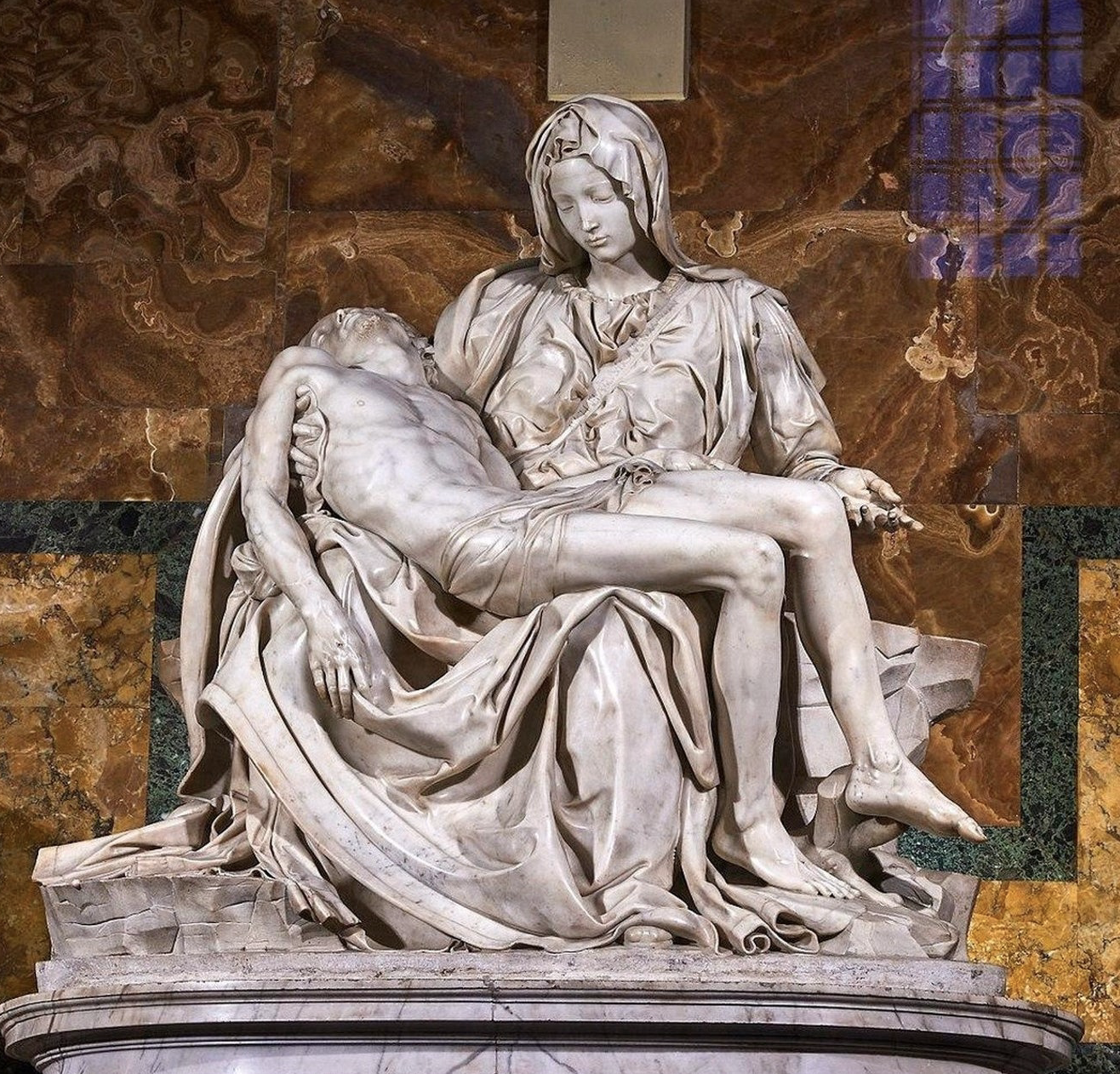


That a man whose skin had been shredded to His bones and nailed to the cross would spare a thought for others might strain the credulity of any listener and Meacham concedes, "you may well find that the whole story is not something you can accept". Then he assures us that we share company with none less than Benjamin Franklin himself.

Franklin, writing to Ezra Stiles, President of Yale, confesses his belief in "one God, creator of the Universe". "The most acceptable service", Franklin continues in the letter, "we can render him, is doing good to his other children. That the soul of man is immortal, and will be treated with justice in another life respecting its conduct in this." Franklin then tips a hat to other religions, "These I take to be fundamental principles of all sound religion, and I regard them, as you do, in whatever sect I meet with them".

America's founding Father aside from casting aspersions that Jesus's message, with the passage of time and other factors, would've been corrupted voices what could be blasphemous doubt about the very divine nature of Jesus. "I have....some doubts as to his divinity; though it is a question I do not dogmatism upon". To Franklin the divinity of Jesus is doubtful and not even a pre-requisite to value his teachings or following his teaching of brotherhood and doing good to others.

"Into Thy hands I commend My Spirit"

Having taken care of his mother Jesus cries out fin desperation, in a very human moment, "My God, My God, why hast thou forsaken me" (Matthew 27:45-46). Then he asks for water, "I thirst" (John 19:28-29). Having tasted water he then resignedly recognizes the moment is drawing close, "It is finished" (John 19:30). The last gasp is when he let's out his sprit saying, "Father, into thy hands I commend my spirit" (Luke 23:46). 

It is this moment of surrender that to Meacham is a call to all Christians to "committing ourselves to a habit of mind and of heart that tends toward love and order rather than selfishness and disorder". Willam James, Meacham says, "put it well, saying 'We and God have business with each other; and in opening ourselves to his influence our deepest destiny is fulfilled". 

Good Friday, marking death of the Son of Man, is a moment of darkness but beyond the darkness of the moment lies hope, the resurrection and salvation. Faith, to Meacham, is not magic but mystery. Mystery, for Meacham, holds the promise of hope. That faith embodies hope, not uncertainty or fear, is best shown in the words of T.S. Eliot, that Eliot had himself borrowed, "All shall be well, and all shall be well, and all manner of thing shall be well". 

Leap of Faith and Hope of Glory

As Jesus commended his spirit unto his Father's so should we, says Meacham quoting the famous words of Coleridge (1772 - 1834), have a "willing suspension of disbelief". The idea of "willing suspension of disbelief" dates back to Aristotle and in this context Coleridge and Meacham argue that such a suspension of disbelief opens our souls to an enriching experience. What would that help for? 

Meacham calls forth the reader to "seek the means of grace, and the hope of glory" irrespective of which God you choose to worship. Seeking grace is all there is to it. 

Meacham further presses his case for faith by calling forth the mathematician Blaise Pascal (1623 - 1662). Pascal argued, in Meacham's words, "It is smarter to bet that God exists, and to believe in him, because if it turnout that he is real, you win everything; if he is not, you lose nothing. So why not take the leap of faith. 

Criticism

Jon Meacham sets himself a tall task in a field populated by intellectual giants of the highest order and writers of great merit. Writing about Christianity and what faith means for an audience of common reader has a very long tradition that includes the likes of G.K. Chesterton, C.S. Lewis, William James, to name a few. Then in recent years we have highly regarded writings of Elaine Pagels and Jack Miles who approach the question of religion and God from academic perch. Meacham, for all his erudition and culling of quotes from a vast repertoire of theologians and poets pretty much loses steam after the second or third "word of Jesus". History, not theology, is Meacham's forte. 

Of course one could say that the book is meant for the faithful and it'd fail to strike a chord in a secular reader or an agnostic. Fair enough. But Meacham set himself out "not to convert" and hence the aim to impress upon the reader, the meditative truth that the author found, in language that appeals to the mind in such a way that the reader could at least say, "if I were faithful I'd enjoy this more". On that Meacham fails. 

Now, once we cross the Western academic nature of writing that Sarvepalli Radhakrishnan and S.N. Dasgupta did and we reach particularly the likes of Jeyamohan who have a cultivated animosity for the Western intellectual tradition we find that the writing is not just uneven but lacks a balance. The writing suffers from an eagerness to court a reader to join the fold and despite any good intention to keep the courting positive it inevitably lapses into enveloping irrelevant negativity. Meacham, who functions as secular historian, while being faithful member of the Church, is still trying to speak to a secular reader. Elaine Pagels, historian of the Gnostic Gospels, is sympathetic to the religious instinct but is careful not to sound like a televangelist. Jeyamohan's problem is he tries not to be a televangelist but his impulses get the better of him. Sad.



Wednesday, February 22, 2017

'Karunya', Dhinakaran and 'Jesus Calls': 'Begone Godmen'

The Dinakaran family is one of the biggest impostors and fraudulent corporate merchants of faith. Apparently amidst the current furor over the Esha foundation there have been questions about the muted criticisms against 'Karunya'. 
When I had to choose between 'Karunya' and 'Shanmugha' I first chose Karunya. Their brochure advertised that the college was set in the 'salubrious' environment where rivulets and Siruvani ran. The adolescent in me fantasized walking along a rivulet with a girl and shunned Shanmugha which was set along side muddy roads and had inferior looking buildings. So off I went to Karunya, against the advice of my father. Barely two days later I was grossly homesick. The hostel food was bad. Interactions with girls was a strict taboo. Above all, there was religion everywhere and every time. By sheer accident I was picked to read a Bible verse on the inaugural day. I read it wonderfully but ended it, like I always ended a speech, with a Thank You, instead of an 'Amen'. Thanks to how I read the verse the infraction was pardoned. The institute had a 'healing center' smack in the middle of the college. When I entered the college in 1990 they were limping back to normalcy from a strike that was supposedly instigated by the BJP elements in Coimbatore. Already the college was getting embroiled in controversies over conversions. I ran the hell out of it to Tanjore and joined Shanmugha. 
At Shanmugha a Brahmin Gandhian was the principal. In my days it was a very accepting and very un-Karunya like institution. The English professor and the principal took a great liking to me. And when I brought home laurels in speech competitions they were thrilled. On a symposium about Gandhi listening to defending Gandhi the chief guest thought I spoke like a 'young Vivekananda' (ahem, yes its that easy to create an impression). I had 4 wonderful years and I'm extremely pained to see that institution become a Hindu version of Karunya. 
Christian institutions, until the 90s (the time I left India), provided a yeoman service in education. Especially the Catholic institutions. I studied in Catholic run convents for 10 years and they were run perfectly secular, by Indian standards. I'd suggest that it is the protestant institutions that blurred the line between being educational institutions and religious institutions. I'm sure some Catholic institutions too tease the boundaries. 
My first impression of 'Jesus Calls' building in Chennai, which I visited prior to joining Karunya, was that it was a pretentious gargantuan building with a granite facade. My first thought was "it must be lucrative to be in the Godmen business". Bro. D.G.S. Dhinakaran, the patriarch, was well known in our family and pretty close to some family members too. Dhinakaran, it was said, came from a very humble background and worked in some bank until the Lord appeared, he said, face-to-face, and called him to be an evangelist. The rest is history.

My father was a devout Christian but a man of high principles and simple faith. While he retained a certain regard for Dhinakaran he recoiled with horror and disgust at much of what Dhinakaran dished out in the name of religion. Dhinakaran practically started the trend of mega-church globe-trotting televangelists in Tamil Nadu. The humbly begun 'Jesus Calls' ministry has become a family run multi-million dollar corporate conglomerate.
I puked hearing Paul Dhinakaran once saying the Lord commanded him to open a center in Israel and beseeched funds. It is these kind of people that Christ wanted to cleanse the churches of. Faith sells in India, like elsewhere, but probably more than anywhere.


The worst offense by the Dhinakaran clan is the 'healing' business that they indulge. Scandals abound about paid volunteers. It is pathetic to see tens of thousands wailing afflicted by a mass hypnotism and claiming to have been cured by these hucksters of faith. Sure, one could argue that that is exactly why faith, always, is the slippery road away from reason and into irrationality.

This is why Bertrand Russell ridiculed that religion is nothing more than an emotional crutch. However, simple folk like my father do exist by the millions for whom while religion is indeed an emotional crutch in moments of great despair and also a source of great succor giving hope when none need exist, like when cancer was spreading through his body. While the world appears spinning out of control a belief that some cosmic justice would eventually prevail is irrational but it does provide hope, however irrational its basis maybe. That is what the Dhinakarans of the world capitalize on.

Dhinakaran went around claiming an ability to prophesy. His powers apparently failed him on a fateful day when his family met with a very tragic accident that claimed the life of his teenage daughter. Apologies for citing a tragic incident to drive home a point but it best illustrates the fraud that is being peddled.

Another group that my father could stand very little of was the Pentecostal group. Absolute fanatics. Complete blind followers who make it their life's mission to not only destroy happiness in their lives but to do so to everyone in their orbit. Nothing has probably caused more misery in the world to others and been injurious to Christianity itself than the Biblical verse calling forth its adherents to 'go spread the word'. It is a shameful fact that many Christians look at others not as human beings but as prospective Christians.

I completely abhor the idea of minority run institutions being afforded special exemptions. Whether it is Catholic institutions in America that want exemptions from being required to provide family planning in their health care plans to educational and other institutions in India that use the minority label to carve out niche exemptions under the law. I've serious concerns about Uniform Civil Code and that's a debate for a different day.
Whether it is faith in divinity or a doctrine it can easily become infused with fanaticism that is blind to facts and reason. I'm not an atheist but closer to an agnostic. I've enjoyed and been intellectually nourished on two of India's great streams of religions. I can visit the Brihadeeshwara Temple and the Chapel at Princeton University with equanimity. Yes, I'm also a big time admirer of Western Civilization and the leaps it has made. I do think Indian civilization, hoary as it once was, it has not rejuvenated itself and is adrift. I plan to go to Italy in the summer. I'm sure that the Sistine Chapel will thrill me, not because it portrays a scene from the Book of Genesis but because that painting by Michelangelo shows the apogee that the human mind is capable. Despite an afternoon spent with Jeyamohan on how Indian sculptures have their own unique idioms I still remain in awe of the statue of David in Florence. Probably if I had traveled to few choice temples in North India I might have been persuaded otherwise and for that I am the poorer, perhaps.

In my opinion every religion and culture carries with it unique strengths and unique illnesses. Often times the parlor game of trying to compare and contrast is a minefield. I've often seen some indulge in taking potshots at Christianity using the books of a Richard Dawkins or of Christopher Hitchens. I chuckle that the West at least produced a Dawkins and a Hitchins, themselves inferior to a mind like Voltaire, but the best that Tamil Nadu could produce was the rabble rouser E.V. Ramasamy.

Atheism, like faith, has its intellectual variants. There's the patently crass and anti-intellectual E.V. Ramasamy or pretend Voltaire's like Dawkins and then there's a Voltaire. Let each man pick one according to his own intellectual abilities.

There is no faith or religion that is tailor made for science. Faith, by definition, is unscientific. The ways of faith, irrespective of religion, is antithetical to scientific principles. Societies and cultures have either found ways to have both competing impulses live in harmony or make one subservient to another, usually it is science that cedes the ground.

I've heard Ivy League educated Hindus argue for astrology and I've heard a Christian school boy disavow Big Bang Theory. Education is not always an insurance against irrationality. Sadly, oftentimes, education only makes the mind better in fashioning seemingly rational arguments that only a sustained intellectual effort can dismantle.

Once a pastor prophesied, speaking in 'tongues' of course, that I'd become a preacher. The joke in the family is that it is indeed true, albeit, in ways different than what the pastor probably prophesied. The jury, I'd say, is out on that.

As an atheist author once put it, 'Begone Godmen'.

PS: Social media sleuths have often tried to figure out my religious and caste antecedents. While I've written about them openly the full picture is far too complicated. My family, like many an Indian family, is a happy jumble of castes and religions. And, for the record I'm not a member or any Church or Temple or religious association and given where I live my caste, which has only caused irreparable harm to me, is no longer relevant.


Tuesday, January 19, 2016

Jeyamohan's Discourses on Gita and Shankara: Part Scholarship, Part Propaganda and Some Demagoguery

"There are Gita exponents who can expound on the text better than me but listening to them for 10 days will not prepare a listener to answer one simple question from a Communist". With those words Jeyamohan set the stage for his 4 day discourse on the Bhagavad Gita. His address, he said, was  not a mere expounding of an ancient text with blind worshipfulness but one which sets the text within with a socio-cultural and literary context to answer questions like "Gita encourages casteism" and "why should we learn a text that is an exhortation for killing". Jeyamohan faces down a strange triptych composed of those who venerate a text, those who vilify it for narrow partisan purposes and those who equally promote it for for narrow partisan purposes.

Locate and understand Gita within a historical context is the crux of the first lecture. In India history and folk lore jostle for attention and while both have their place in a cultural milieu one should separate the understandings derived from them. In another lecture he quotes that "there is no text, only context" (Barth / Derrida?) Krishna teaches that a person must do the duty of the varna that the person was born into. That line is the most cited one by critics to discredit Gita as the fountainhead of India's most notorious and most perpetuated iniquity. Yet, as Jeyamohan, points out that 'classification' of a populace was common place in civilizations around the world at that time. And, in the tradition of every Indian historian, Jeyamohan draws attention to a crucial distinction that varna and jati (caste) are not interchangeable terms. Drawing upon recent scholarship Jeyamohan dates the Gita circa 300 BCE.

Jeyamohan
Speaking on historicity Jeyamohan makes, in the passing, an important and rather very courageous exhortation. Not many realize that the famous 'commentaries' of Gita by Shankara, Ramanuja and Madhavacharya are not mere explanatory notes of an abstruse philosophical text. The 'commentaries' were written by each author drawing upon then existing explanations and then presenting their own philosophies in a systematic logical manner. That implies the famous and revered commentators have learned existing philosophies and created their own edifices within paradigms that were not flights of fancy but patient rational constructs. Jeyamohan underscores that the commentators wrote their commentaries based on their learning of the highest philosophies of the time especially Buddhism. Then he places, what I consider, a very courageous exhortation, by asking that a modern interpretation should likewise be based on today's philosophical peaks that including European and American philosophies. This would be sacrilege in the eyes of many and  partly explains why some of his usual friends pretended that a landmark discourse like this was a non-event.

Gita was indeed an interpolation into the Mahabharata. Given his deep understanding of India's philosophies and literary criticism acumen Jeyamohan beautifully explains that being an interpolation into an epic need not be a reason to look down on the text, then he situates the text based on linguistic styles and philosophic context. He points out importantly that Gita could be considered as written in the era after Buddhist nyaya-sastra was written. In another courageous moment he presents Krishna as not necessarily as an reincarnation but a chieftain the Platonic mould of a philosopher-king, much like Solomon of the Bible. Social historians have written about how Krishna cult was an evolution of later years. It does take a leap of imagination for most Indians to understand that Krishna could be a chieftain who was educated in the philosophical traditions and thus poised to play the teacher. It'd not be an exaggeration to say that this is not how Gita is spoken of commonly. Jeyamohan brings passionate knowledge and yet a modern understanding for an ancient text. 

The second lecture on Gita, in the lines of Richard Davis's 'Bhagavad Gita: A biography', focuses on the ebb and flow of how the text, now revered almost akin to an idol, was resurrected by Charles Wilkins's translation and achieves latter day popularity. Before Wilkins Gita has been commented upon, expounded over the centuries until it slowly faded from memory. Jeyamohan insists that Gita is not a canonical text for a religion like the Bible is and therefore open to interpretations mirroring the philosophical mores of the time and the personalities of the commentators. He explains how Gita draws upon the six systems of Indian philosophies and progresses as a philosophical text. This is an important focus. Again, this shows a society where philosophical discourses were common place and a learning society were a traffic of ideas existed. 

The third lecture delves into an outline of Samkhya Yoga, Karma Yoga and Jnana Yoga as the Gita lays them out. Of the 4 lectures this is the most dense lecture but here, from my understanding, he pretty much hews close to traditional explanations of the 3 paths. 

The fourth lectures starts meanderingly with a digression into India's ancient Gurukul system of education and then progresses on how to learn Gita with an emphasis on Guru-parampara after touching briefly on 'svadharma'. Jeyamohan places emphasis on how one 'progresses' from Karma Yogi to being a Jnana-Yogi. He opines that the converse does not happen. One can understand it simply that one progresses into wisdom and having progressed cannot regress. This does place Jnana Yoga at a higher plane compared to Karma Yoga. Listening to this I was reminded of Milton's sonnet 'On his blindness'. Milton, facing an onset of blindness, is torn apart that being blind he cannot serve the Lord with his intellect and then consoles himself in the end, with the most famous lines of any sonnet, 'they also serve who only stand and wait'. I remembered how my good English professor K.G. Seshadri, a bi-lingual scholar, would've happily discussed Milton and the author of Gita. While I was lost in those thoughts I got word that the octogenarian professor had passed away. 

The lecture on Shankara is a personal favorite of mine after the first two lectures on Gita. Those three lectures together show case Jeyamohan at his literary and philosophical best mixed with some contentious and acidic moments.

Jeyamohan brilliantly and succinctly situates Shankara in a historical context. Shankara fashions his monistic non-dualism (Advaita) even as Buddhism and Jainism were fast losing ground to Mimamsa. Buddhism had degenerated into corrupt Tantric practices. Purva Mimamsa with its emphasis on rituals and specific de-emphasis on godheads provides, in contrast to the monotheistic Buddhism and Jainism, an umbrella for various sects to unite without sacrificing their gods. This is a vital cultural development that provided a platform to unify various faiths. Mimamsa provides the scaffolding for Shankara to construct the progression into non-dualism. 

Not much is known of Shankara, circa 800CE, until Vidyaranya resurrects Advaita and along with it Shankara in the 14th century. There is, Jeyamohan underscores, a near total omission of Shankara's name for nearly 500 years in contemporary sources. In a rambling lecture Jeyamohan outlines how Hinduism responded to invasions and survived by creating diversified mutts as local entities to transmit knowledge and tradition and how Mimamsa, followed by Advaita, provided a fundamental framework for the Vijayanagara empire. Given that we know little of Shankara's life with authority the much revered mutts supposedly created by him were probably established later. Interestingly Jeyamohan omits mentioning Kanchi mutt as one established by Shankara. 

Vidyaranya, according to legend, converts two Muslim brothers back to Hinduism, Harihara and Bukka, and introduces them to Shankara's Advaita. Advaita, Jeyamohan explains, has come to us through Vidyaranya clothing it in rituals and through the mutts thus making it an easily relatable form. The price that we've paid is Advaita has degenerated into obsession over rituals. Advaita, in the hands of Vidyaranya, becomes a tool to unify disparate sects into a coherent religious entity that was translated into political entity that finally congealed into a fabled empire, the Vijayanagara empire. Like he did with Gita Jeyamohan again pleads to peel back the layers of myths and to confront Shankara as a philosopher.

When I read Davis's book on Gita and David Gordon Davis's "Patanjali's Yoga Sutra" I often checked out Jeyamohan's writings and sought clarification. While he has a well earned reputation in Tamil literature for an envious and unprecedented body of work spanning several genre what is less appreciated, especially by those who are turned off by his politics, is his knowledge of Indian philosophical traditions. A sharp literary mind and a tutelage under nationalist philosophers has uniquely prepared Jeyamohan to be an exponent of philosophy. After listening to his lecture on Shankara I bought "Shankara and Indian Philosophy" by Natalia Isayeva. The chapter on Shankara's biography is practically a transcript of Jeyamohan's lecture. It's admirable if one considers the fact that not many books are readily available on this topic and practically none threads the facts into a masterful narrative of socio-political context as Jeyamohan does. If one reads Radhakrishnan's magnum opus 2 volume 'Indian Philosophy' it is evident that Jeyamohan's lectures present a landscape that is rarely, if at all, portrayed and coherently so.

The lectures are not without some unedifying moments and questionable scholarship that are naked propaganda and some are clearly, sad to say, in the area of demagoguery. 

In an address with a specific mission to demythologize philosophy and to place it in a critical context some questionable or arguable cause and effect relationships are regrettable. Talking about how Mimamsa, with its emphasis on rituals and catholicity towards god-heads allowed various sects to come into an unifying fold all the while happily bringing along their own gods Jeyamohan contrasts it with the restrictive 'pantheon' of Buddhism and Jainism. Here Jeyamohan is straining to avoid the word 'monotheism' because in his circles that word is used to denote the parochial nature of Abrahamic religions. With a touch of jingoistic pride he opines that incoming sects were not asked to abandon their beliefs as a precondition to join the umbrella. This is questionable. The Purva Mimamsa placed an emphasis on rituals and almost atheism as a reaction to the philosophies of the time. Denial of gods and indifference to god-heads was their core philosophy which provided an unintended consequence of allowing disparate sects to unify. Unification of sects was not the aim. To present it as such is propaganda.

While Jeyamohan is welcome to explain as to why Gita has always attracted commentary writers from Shankara to Aurobindo he is wrong in presenting the Bible as a canonical text which is treated as authoritative. Also in his zeal to present Gita as a philosophical text that is open to interpretation he ties himself in knots over what is a canonical text and what is canon. Unnecessary hair splitting. He is wrong when he claims that Christianity excluded pagan beliefs. On the contrary a simple example like 'speaking in tongues', glossolalia, can be cited as continuation of pagan tradition that stretches all the way back to the Oracle of Delphi. Christianity and Islam have, more than is often recognized, taken on and assimilated local beliefs. Put simply a Tamil Christian and a Methodist in New Jersey have little in common. Anyone familiar with Biblical literature could've helped him understand the steady stream of commentaries on not just the Bible but interpretations of the commentaries themselves. Libraries can be filled with doctrinal battles over the Bible.

Amongst the critics of Indian education system are those, including my beloved author, who yearn for the idyllic era of Gurukul teaching. This is nostalgia for a utopia that is mistakenly thought of as more consonant with Indian heritage. Gurukul's were cess pools of casteism and rote learning. No gurukul could've produced Radhakrishnan or Dasgupta or Gandhi or Aurobindo. Both Dasgupta and Radhakrishnan wrote their magnum opuses under the aegis of western universities. No veda-pathsala has produced any philosopher or teacher of note. K.A.N. Sastry in his book 'Colas' says that then schools were centers of just rote learning.This is a topic for another day.

It is an article of faith amongst many, especially the stridently Hindutva crowd, that in ancient India everything was discussed and debated in a civic manner. The implied contrast is with the supposedly intolerant Abrahamic religions. "I am a jealous god" declares Yahweh. "No god but god" declares Allah. In a part that is both propaganda and demagoguery Jeyamohan blames supposed sacking of Nalanda university by Bhaktiyar Khilji as one of the water shed events that eventually caused the demise of Buddhism.

In his own earlier blog 'சங்கரப் புரட்சி' Jeyamohan ascribes the decline of Buddhism prior to the advent of Shankara to them losing their way into corrupt practices and notorious Tantric exercises thus losing their philosophical mooring.

Contrary to this sanguine imagery of gentleman debate and discussion various philosophies rose and fell by courting political patronage or losing it.The rise of Bhakti movement in the south had more to do with Jainism declining than any Islamic invasion. The conflict between Jains and the savants of Bhakti movements were anything but civil. Both sides composed verses disparaging and mocking the beliefs of the other. A Bhakti verse even called for beheading Jain worshippers. Jains, Paul Dundas narrates in detail in his book 'The Jains', had very colorful and very obscene tales of Hindu gods, particularly Siva.

A regrettable moment during the lectures is when Jeyamohan declares "but for Vijayanagara empire we would not be standing here as Hindus today". A raucous applause followed. I wondered if I was hearing one of those infamous caste rallies that are now notorious in Tamil Nadu. Dismissing what he calls the canard of Marxist historians he disputes the idea that Hinduism and Brahmin revivalism destroyed Buddhism. He contends that no religion can be so easily wiped out. But he gladly believes that Hinduism would've been wiped out but for the Vijayanagara empire. Even in North India where the Mughal empire held sway for over half a millennia Hinduism was not wiped out. In fact the Mughal empire flourished only when strategic co-option of Hindu regimes existed.

It is interesting how proudly Jeyamohan traces Vidyaranya resurrecting a philosophy to serve as a framework of political unity thus forming the ideological basis of an empire. He also adds how the Harihara-Bukka brothers and their descendants formed the empire with subsequent conquests and made it a firewall against Islamic invasions. Astute observation and magnificent summary but little does it strike him that he is essentially talking about a period of conquests that served to provide religious unity. If European kings undertook invasions at the behest of ensuring religious and political unity that is evidence of a violent era for him but not so when it is Vidyaranya and Bukka.

Much is made of how bloody the Islamic invasions were and often the implied sub-text is "our kings were not blood thirsty". Sure the Islamic and later Christian invasions were bloody and that is partly due to the fact that they were hardy desert or mountain tribes unlike the agrarian kings of India. To be sure we know too well of the blood soaked invasions because they were recent and documented far better. Writing about a Chola expedition K.A.N. Sastry says the army "set fire to considerable area" and "killing some of the Sinhalese chieftains of the locality". We know more about the Peloponnesian war and the 300 at Thermopylae than we do of the expeditions of the Chola kings or the conquests that gave rise to the Vijayanagara empire. This absence of history is often used as proof of absence of violence. Not many know that practically slavery existed in the Chola empire.

The most reprehensible moment of the lectures and one which is clearly demagoguery is when Jeyamohan confronts the canard of characterizing Gita as a text that encourages killing because the Lord tells Arjuna "therefore thou shalt kill" ('ஆகவே கொலை புரிக'). Yes, it is a canard because it takes out of context a phrase and besmirches a philosophical text. Gandhi would later assert that the Lord was merely telling Arjuna to do his duty, which in the battlefield, happened to be killing his enemies. Unfortunately Jeyamohan puts the canard as a question from a Christian and uses the opportunity to throw the kitchen sink at Christianity.

Indignantly Jeyamohan continues, he says he asked the Christian questioner, "show me how many genocides could be traced to the Gita, unlike the Bible. Cortes's expedition in Mexico unleashed a genocide and paved the way for colonization and he even let loose a plague. Hitler and Stalin killed millions". For nearly three to four centuries the European states raced across the globe in a zeal to colonize entire nations and peoples. Blood flowed freely in brutal conquests were the colonizer and the resistant populations freely indulged in blood lust. As reprehensible as Cortes or Columbus was let us not pretend they were killing pastoral communities. American historian Bernard Bailyn recently published a definitive history of America's blood origins. Both the settlers and natives had a penchant for barbarity. The conversions and the necessity of using religion as a tool to subjugate and assimilate a conquered population was not all together unlike how Raja Raja Cholan recognized the use of religion as binding forces in a far flung empire and exported Hinduism to vanquished Lanka. The worst part of the indignant reply was laying the blame for the millions killed by Hitler and Stalin at the doorstep of the Church. 'பின் தொடரும் நிழலின் குரல்' எழுதியவருக்குத் தெரியாதா ஸ்டாலினின் கொலைக்களன்களுக்கு காரணம் மார்க்சியமென்று? Hitler and Stalin espoused atheist philosophies and their factories of death had not only nothing to do with the Church but absolutely nothing to do with the Bible. It is a travesty to say otherwise.

While I completely agree that the Gita should be understood contextually and that it is interesting to note that both the teacher and the taught had freely married outside of their clans though the text calls for avoiding mixing of clans and of course for doing one's own varna defined duty half better than doing somebody else's duty better than that person. But it is undeniable that verses like that within Gita and Manu Smriti have brought about the deepest and most enduring societal divisions in all of human history.

The most famous story of Gandhi's life is how he clutched the Gita gained emotional strength after being thrown off the train and on to a cold platform in a South African train station. What is little known, until recent controversies opened it to scrutiny, is how Gandhi, that student of Gita, looked at native South Africans as infidels and believed they were inferior to Indians. Bal Gangadhar Tilak, as every school boy knows, asked for self governance as birth right. He too, like Gandhi after him, wrote a commentary on Gita but believed firmly that the low caste must not learn the vedas. European historians have cheerfully connected the Crusades to Biblical texts and rightfully so. While Jeyamohan enjoys that connection he steadfastly refuses to not only make a similar arc from Gita to what has become the most notorious fact of life in Hinduism, its persistent casteism. Gandhi's life, unlike Tilak's,  was a trajectory that eventually bent towards universal emancipation.

Ironically it is the militant Hindutva group that today shouts from the rooftops that the Gita helped steel Arjuna to kill. The implied subtext is for Hindus to do the same. Subramanian Swamy and Gurumurthy have written and spoken to that effect.

The warts not withstanding the lectures are an intellectual tour-de-force. If the addresses are published in text form, sans the demagoguery, the book would fill a very lamentable intellectual vacuum in Tamil philosophical and literary canon.

I'd like to emphasize that I've probably spent more words in debunking the questionable parts than in appreciating the scholarly parts only because it is rebuttals that are more scrutinized and only they require more elaborate reasoning. Criticisms have to be done more carefully than praises. I'd like to place on record that I've spent considerable time listening to the lectures, taking notes, referencing other books in order to write this. If all I was interested in was debunking I need not have bothered. The regrettable and deplorable state of intellectual discussions in Tamil Nadu is one has to accept blindly and praise uncritically or go to the other extreme of throwing the baby with the bathwater for the warts. It's an all or nothing approach. I don't think that that's what Jeyamohan desires.

Yet again let me reiterate that Jeyamohan's provocative line of writing has compelled me to re-evaluate Indian philosophical traditions with a more friendly approach. As I was listening to the lecture on Shankara I realized that I need to find books to read about a man who easily ranks along side Aristotle and Kant. I do have books by Radhakrishnan and Dasgupta but they did not, as I wrote earlier, provide a landscape as Jeyamohan did. The Shankara book referred earlier does provide such a backdrop.

As much as I appreciate Stephen Greenblatt's book with its contentious parts I've no problem in enjoying Jeyamohan's lectures. Now, a question to confront is, "if such mistakes exist how should we evaluate it and are we not better off to ignore it". No. And, No. Aristotle's writings on science have all now been shown to be nonsense but Will Durant teaches us that "to ask the right questions is already half knowledge". There is much that one can learn from these lectures and if curious progress to better texts. Jeyamohan, more than anybody, is well aware that the lectures are a success when listeners to go in search of deeper scholarship.

Before I conclude, I don't know why Jeyamohan underplays his oratorical skills. I've listened to Jeyakanthan in person twice and read a few of his speeches, especially the legendary speech on Annathurai. Jeyakanthan, unlike Jeyamohan, had a stage presence, a voice that often roared and a body language that was captivating. That said Jeyakanthan sometimes speaks like the typical Dravidian party speaker. I remember how Jeyakanthan spoke of Bharati. It was theatrical and replete with quotes of entire passages and a surfeit of pedestrian rhetorical flourishes. Our audiences are usually taken up by speakers who reel of lengthy quotes irrespective of whether there is an over-arching coherent theme or not. Today, having read and listened to Jeyamohan I think back to that speech on Bharati. Jeyamohan most certainly would not have roared quotes but he'd have been a cartographer of a bygone era setting Bharati within his era and sweeping back and forth to show the difference he made for the ages to come. I truly found the lectures captivating, specifically the first two Gita lectures and the one on Shankara. If only I had listened to my professors with such rapt attention I may indeed have become a true crorepathi instead of a plodding employee by day and blogger by night.


References:


  1. Gita lectures  http://jeyamohanav.blogspot.in/2015/12/geethajemo.html
  2. Shankara lecture https://archive.org/details/SankararJeyamohan
  3. சங்கரப் புரட்சி http://www.jeyamohan.in/54775#.Vp3EeTbijoo
  4. Vidyaranya https://en.wikipedia.org/wiki/Vidyaranya
  5. The Colas - K.A. Neelakanta Sastry
  6. The Jains - Paul Dundas. Refer to Pg 233-244 for Jain relationship with Hindus and Buddhists.
  7. Shankara and Indian Philosophy - Natalia Isayeva. Good read.
  8. Indian Philosophy - S.Radhakrishnan


Monday, December 16, 2013

Aravindan Neelakandan: A McCarthy For Hindus (and Jeyamohan's silence)

What Wahhabism is to Islam and what Ku Klan is to Christianity, Aravindan Neelakandan's Hindutva is to Hinduism. American historian Richard Hofstadter alarmed by the rise of Barry Goldwater wrote "The paranoid style in American politics". Barry Goldwater and Narendra Modi are not dangerous in and of themselves but what made them dangerous, less with Goldwater and more with Modi, is what their followers saw in them, what their voters see as possible to accomplish in their victory. Modi does not scare me. For all practical purposes he might be a disappointment more to his followers than to his detractors. Unlike even the advent of the Vajpayee regime, the first real rule by a party espousing Hindutva, Modi's hoped for victory has brought out militant hinduism more into the open. Social media plays a crucial role in this propagation of hate. In 1998 Aravindan Neelakandan could only speak to a few friends and incite them. Today he has a forum. He is widely read and re-transmitted and hence has to be treated with more caution and, dare I say, respect. Brushing aside Neelakandan as purveyor of nonsense will be a mistake and the price will be too high.

Passages from Hofstadter bear quoting. Who is the 'paranoid', "The paranoid spokesman, sees the fate of conspiracy in apocalyptic terms — he traffics in the birth and death of whole worlds, whole political orders, whole systems of human values. He is always manning the barricades of civilization... he does not see social conflict as something to be mediated and compromised, in the manner of the working politician. Since what is at stake is always a conflict between absolute good and absolute evil, what is necessary is not compromise but the will to fight things out to a finish". "The paranoid’s interpretation of history is distinctly personal: decisive events are not taken as part of the stream of history, but as the consequences of someone’s will."

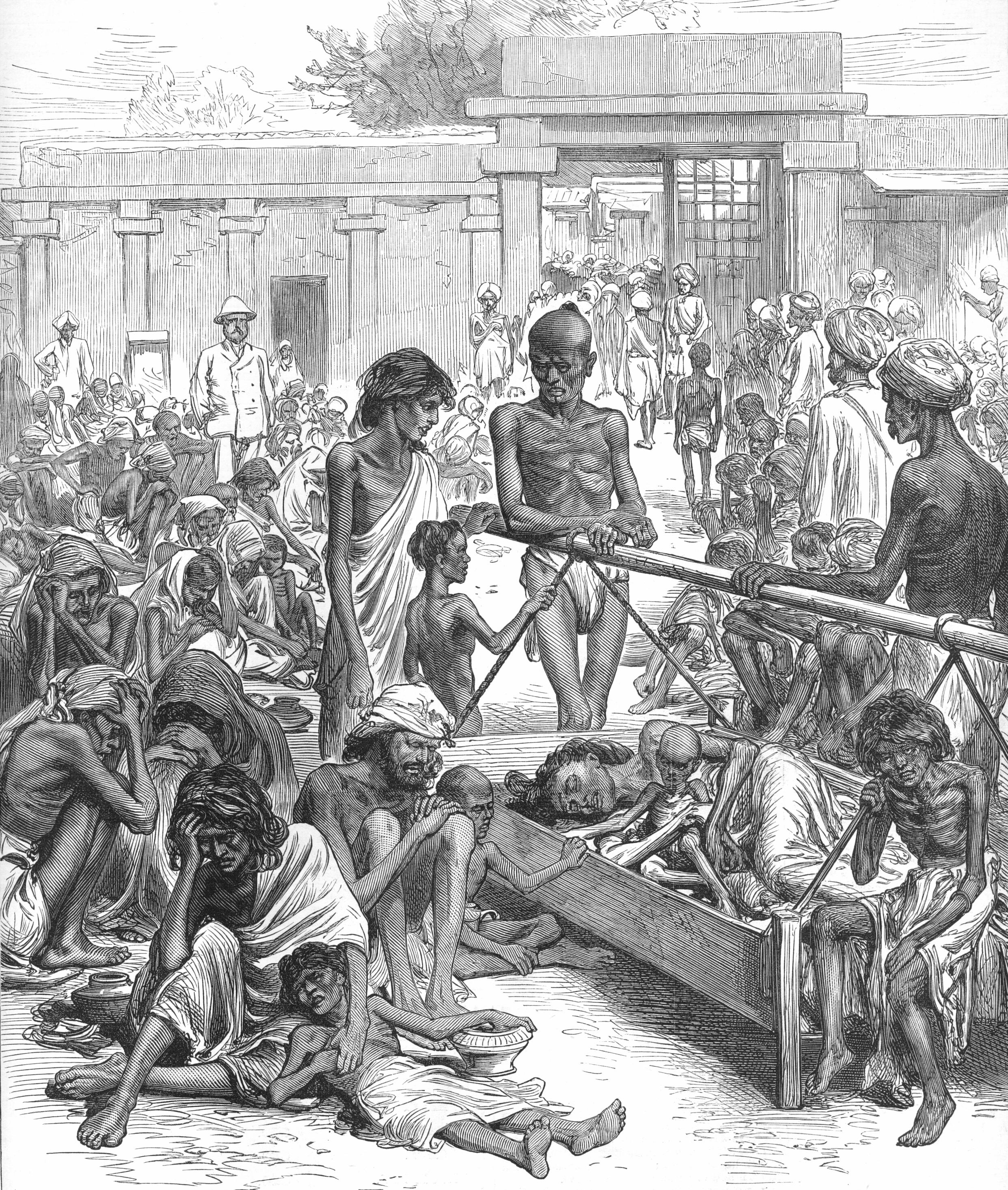
Tamil writer Jeyamohan has written a novel based on the Great Famine of Madras 1877. Jeyamohan has spun a tale based on history. Given the fact that he, self confessedly, is busy writing screenplays for many movies I do not expect him to do research in the class of Gore Vidal or Thomas Mann or Tolstoy. He has used a historical event as background to his philosophy of ethics (better put in Tamil as 'Aram'), its failure amongst people in a great cataclysmic event that killed close to 6 million. A holocaust. The novel, reviewers say, revolves around how Dalits were abandoned by upper caste Hindus. The colonial regime, a sympathetic Irishman and others populate the novel. The book was published by a Christian, a theology graduate, and a Hindu.

Aravindan Neelakandan, a staunch Hindutva writer, took umbrage at what he considered insufficient focus on the villainy of the church and a colonial regime that, in his opinion, was the handmaiden of Evangelical christianity which saw in the famine an opportunity to proselytize and 'harvest souls' for Christ. Neelakandan exemplifies the paranoid style with his constant harping of how Muslims and other minorities are molly coddled at the expense of Hindus. That minorities are molly coddled is open for debate but imagining that such coddling happens at the 'expense' of Hindus is beyond decent.

Neelakandan ripped the novel drawing, as usual, selectively, from many sources questioning effectively whether the novel can even be called a 'historical fiction'.

Both Islam and Christianity have committed their fair share of folly in the name of proselytization. That both religions are broadly recognized as 'organized religion' also distinguishes it from the 'seemingly' unorganized Hinduism. William Dalrymple in 'The Last Mughal' establishes that the proselytization zeal of some churches in British India was an important catalyst in breaking with earlier tradition of the British having largely peaceful, irreligious, relationship with Indians that was even marked by inter-marriages.

I am sure that churches saw in the famine an opportunity to make inroads into a deeply rigid society. What Neelakandan intentionally propagandizes is when he clubs the mistakes of the Viceroy Lytton and Richard Temple with the intemperate utterances of missionaries. Neelakandan is an astute student of Goebbels. While Neelakandan correctly and gleefully accuses Temple's policies of causing a holocaust he fails to mention the complex history of how Temple initiated those disastrous policies.


Richard Temple had performed admirably during the previous famine in 1874. He alleviated the suffering by importing millions of tons of rice from Burma. This information is from Mike Davis's 'Late Victorian holocausts'. Neelakandan cites the same book to establish that Lytton was a laissez-faire capitalist and a right wing Christian. Temple's 'extravagance' is frowned upon by his colonial masters. Eager to win another post Temple swung to an extreme espousing laissez faire capitalism at a time it was least needed.

Another blogger had pointed out earlier about the efforts of Buckingham in organizing relief efforts. The most authoritative narrative of the famine is by William Digby in 'The famine campaign in South India' (2 Volumes). Digby and physician W.R.Cornish battled Temple for better rations. Cornish drew upon his studies of prison dieting to argue for more rations. As much as there were missionaries waiting as vultures to harvest souls there were others who performed exemplary charity work. Digby actually commends Indians for a philanthropic spirit and even worries if Christianizing India would destroy that tradition. Interestingly Jeyamohan's novel is about how Indians abandoned fellow Indians.

Not satisfied with his vilification of Temple, Lytton and missionaries Neelakandan then very cynically tramples upon Christ himself. Only a twisted mind like that of Neelakandan can say that Christ supported imperialism. Taking the most beautiful parable in all of New Testament, the parable of Good Samaritan, Neelakandan twists it out shape alleging that Christ while seemingly appreciates the Samaritan he (Christ) argues that a Samaritan, lowly of birth, rises by only his deeds. The parable tells the exact opposite. Christ teaches that irrespective of how 'supposedly' high born a person is, if he does not have humanitarianism he is unworthy of being a neighbor. 'Love your neighbor as you would love yourself'.

Taking issue with Jeyamohan characterizing Jews as oppressed people in the time of Christ Neelakandan spews bile, "Christ, if one such existed, was certainly not from an oppressed community. Jews occupied high positions in the then regime". I've no issues with Neelakandan doubting the factual existence of Christ. But his absolute ignorance of Roman history and the state of Jews is appalling. Just like India the rest of the world had its own stratifications. Christianity, a Semitic religion, had its own iniquities and follies of intolerance. The Bible is a Semitic religious text compiled by human beings over centuries and it bears the imprints of human minds with all its brilliance and prejudices. But such nuances are inconveniences for purveyors of hate.

Christ's conversation with the Samaritan woman has tones of superciliousness seen through the prism of 21st century's political correctness. That the Jews considered themselves, like every other sect, a 'chosen people' is well known. To take part of the conversation and make Christ appear as a race bigot can be achieved only by Neelakandan. By his standards then Mahabharata and Ramayana, two epics I dearly love, are books filled with racist and sexist bigotry.

Seeing the Church become a bazaar Christ scolds the pharisees. He even calls the pharisees 'vipers'. Pharisees, historically, were a more egalitarian sect. Again, the Bible is not written by one person with an agenda. Hindutva brigade celebrates "Valmiki Jeyanthi" on a day they say Valmiki was born. When a mythical writer has a birthday assigned we can understand that they lack the intellectual nuance to appreciate Bible or as for that matter Mahabharatha too. Christ, even seen as a mythical character, is an iconoclast come to earth to resurrect his Father's church, to preach anew, to show a lost sheep the way to the shepherd. When somebody says, that by scolding Pharisees Christ shows support for the established interests that align with the Roman kingdom, then we can be sure that they lack even elementary powers to understand simple text.

William Digby was rewarded for his critical review of British policy. The colonial regime then put in place measures to combat famines. A policy that held good for the next half century plus until the Bengal famine of 1940's. Churchill was driven by pure race hatred, not hatred of religion, in not doing much to alleviate that famine. That the colonial regime saw people dying by the millions as a matter of shame to be corrected with better policy speaks volumes about the complexities of that era. It cannot and should not be straitjacketed into evangelical politics. That's a travesty of truth. Incidentally we know so much of not just this famine but others simply because it was the British themselves that maintained records. I'd love to see the Gujarat records concerning the riots.

The question that remains is "why?"Neelakandan knows only slander. Unfortunately his slanders are being propagated as 'criticisms'. I am appalled and really frightened how many, many Hindus imbibe these nonsenses and regurgitate them with no attempt to even disguise their hatred towards India's minorities. People openly talk of 'population exchange', 'threatened Hindu majority' etc. Subramanian Swamy told a throng of educated Indians in New Jersey that he does not need 'sathvik Hindu' but needs 'viraat Hindu'. To do what? Seeing Indians, now turned Americans, lustily cheer that speech I was left dumbfounded.

Talk to any Hindutva proponent for 5 minutes and the words 'pseudo-secularism', 'minority-appeasement' and 'vote-bank politics' will all tumble in sequence. There will be mention of 'Shah Bano case', 'uniform civil code' etc. Hindu women, especially of the lower castes, faces harassment every day yet the Hindutva brigade only worries about Muslim women getting alimony. Hindus unlike Muslims and Christians are the greatest beneficiaries of reservation system. In fact the reservation system discriminates against other religions. Though Muslims have large joint families it is Hindus who enjoy a tax deduction. Neelakandan and Jatayu talk of Quaid-e-Milleth but maintain studied silence on Khan Abdul Gaffar Khan. Ustad Bismillah Khan would play shehnai in front of a Hindu goddess. Show me one Carnatic musician who would sing at a Cathedral or a Dargah? The same Rajiv Gandhi who appeased reactionary Muslim clergy also appeased reactionary Hindus by opening Babri Masjid for shilanyas. Rajiv even roped in Arun Govil, he of the Lord Rama fame in Ramayana, to campaign, dressed as Rama, for Congress in order to defeat V.P.Singh. Taxpayer funded Doordarshan has only made TV serials out of Hindu, oh well Indian, epics. India's highest awards for a sports teacher is named after Dronacharya, the very example of how a teacher should not be.

Neelakandan's beef with Jeyamohan is that the novel, in his opinion, underplays the villainy of Christian missionaries and how much evangelical christians drove government policy. In a recent Tamil movie a Christian missionary would be shown as behaving callous and, of course, proselytizing indentured tea estate laborers. The movie was based on book where the real life character was the exact opposite. But since here the fictionalization made a villain out of the Christian doctor Neelakandan's friend Jatayu found it delicious use of a movie maker's creative independence.

Jeyamohan's attitude to Neelakandan is worthy of comment here. Jeyamohan who is on a spree, like Jhumpa Lahiri, to promote his novel. I've always observed with distaste how Jeyamohan publishes letters from fawning readers, including those who cheerfully say they have no experience of reading literature. In the absence of professional critics Jeyamohan will choose easy targets like Yuvakrishna, a blogger of no significance, and rubbish their criticism dismissively. With no disclaimer or rebuttal Jeyamohan gave a link to Neelakandan's column and that too with an excerpt discrediting the Christian publisher. Only those who read the column realized that the preface was actually an excerpt. Jeyamohan could simply have used quotes. When an avid reader of Jeyamohan asked about the discrediting of Alex he replied back saying "Aravindan Neelakandan is a purveyor of hate". Nothing beyond that.

Jeyamohan revels is disassembling criticisms aimed at him. He gave a free pass to Neelakandan. Jeyamohan often professes a love for the Bible though a distaste for Christianity as an organized religion. He also professes a love for Gandhi. But when Neelakandan dishes dirt Jeyamohan's pen falls silent. As one who literally crusades on behalf of all that he loves and propagates I've wondered at Jeyamohan's silence. I've come to the uncomfortable conclusion that Neelakandan is Jeyamohan's alter ego (or should I say 'evil twin'). Neelakandan says what Jeyamohan wishes he could say without justifying the label 'Hindutva writer'. Jeyamohan owes it to himself to unmask Neelakandan else posterity will assume that silence is, indeed, consent.

Senator Joseph McCarthy lent his name to the English dictionary, 'McCarthyism', to signify scaremongering and vilification. To Americans it was the threat of communism. To Indians it is the threat of minorities. After a shameful hearing a person asked McCarthy, and I echo his words to Neelakandan, 'at long last sir, have you no decency left'.


PS: A reader wrote to Jeyamohan citing William Digby's magisterial 2 volume report and its online resource. I am not sure of what historical sources Jeyamohan used, if any. I'll not be surprised if Jeyamohan had not come across Digby's report. Or maybe he did. If a writer used a major report as one of his principal sources then human instinct is to tell that reader "oh I did read that one". Maybe I could be wrong.

References:

1. Neelakandan's blogs on the novel:
         http://www.tamilhindu.com/2013/12/vellaiyanai2a/
         http://www.tamilhindu.com/2013/12/vellaiyanai2b/

2. Jatayu relishing Bala's perversion of fact http://www.tamilhindu.com/2013/03/paradesi-film-review/ 
"நாவலை அப்படியே படமாக்க வேண்டும் என்பது இயக்குனர் பாலாவின் நோக்கம் அல்ல. இந்தப் படத்தின் திரைக்கதை ஒரு கூட்டுக் கலவை என்பதை முன்பே பார்த்தோம். ஆனால் “inspired by” என்று போட்டதற்காகவாவது நாவலை முழுவதுமாக சிதைக்காமல் இருந்திருக்கலாம் என்ற வாதத்தில் கொஞ்சம் நியாயம் இருக்கிறது. ஆனால் கொஞ்சம் நியாயம் தான்......படத்தில் காண்பிக்கப் பட்டது போன்ற “டாக்டர்”களும் அதிகம் பேர் இருந்தனர் என்பதற்கு வரலாற்றுச் சான்றுகள் உள்ளன. இரண்டாவது வகை ஆசாமிகளை மட்டுமே இந்தப் படத்தில் சித்தரிக்க வேண்டி வந்தது துரதிர்ஷ்டம்.. ஆனால் இதை சமன் செய்ய, நல்ல டாக்டர், கெட்ட டாக்டர் என்று இரண்டு பாத்திரங்களை உருவாக்கியிருந்தால் படம் சிடுக்காகி இருந்திருக்கும்."

3. Physician W.R. Cornish http://en.wikipedia.org/wiki/W._R._Cornish

4. William Digby http://en.wikipedia.org/wiki/William_Digby_(writer)

5. Richard Temple http://en.wikipedia.org/wiki/Sir_Richard_Temple,_1st_Baronet

6. Reader's letter to Jeyamohan citing William Digby http://www.jeyamohan.in/?p=42467

7.Great Famine of 1876-78 http://en.wikipedia.org/wiki/Great_Famine_of_1876–78

8. Pharisees http://en.wikipedia.org/wiki/Pharisees

9. Parable of the good Samaritan http://en.wikipedia.org/wiki/Parable_of_the_Good_Samaritan

10. Samaritans http://en.wikipedia.org/wiki/Samaritans

11. Jesus and the Samaritan woman http://www.biblegateway.com/passage/?search=John+4%3A4-42&version=NIV

12. Richard Hofstadter's 'The Paranoid Style in American Politics" http://en.wikipedia.org/wiki/The_Paranoid_Style_in_American_Politics#cite_note-Paranoid-1

13. Letter from reader to Jeyamohan disturbed by the excerpt (இருபத்துநான்கு மணிநேரமும் கற்பை நிரூபித்துக்கொண்டிருப்பதுபற்றி…) http://www.jeyamohan.in/?p=43047 . "இந்துத்துவ வெறுப்பைக் கக்கும் அரவிந்தன் நீலகண்டன் எழுதிய கட்டுரையில் இருந்து நான் மேற்கோள் காட்டிய வரிகள்."

13.India's Nero -Lytton http://www.tamilpaper.net/?p=661 (This blog is interesting for the exchange between the author and Neelakandan in the comments section.
அரவிந்தன்,
ஏசுவுக்காக செய்தார்களா உண்மையான மனிதாபிமானத்தில் செய்தார்களா என்பதை விட ஏதாவது செய்தார்கள் என்பது தான் முக்கியம். மிஷனரிகள் பலர் எழுப்பிய குரல் தான் லண்டன் வரை கேட்டது. அவர்களது கடிதங்களும், புகைப்படங்களும் (மேலே உள்ள புகைப்படம் ஒரு சென்னை மிஷனரி எடுத்தது தான்). இந்த சொற்ப நிவாரணத்தை, இந்தியாவுக்கு கிடைக்கச் செய்ததில் மிஷனரி லாபியின் நச்சரிப்பு முக்கிய பங்கு வகித்தது.
அரசின் நிவாரணம் மட்டுமல்லாமல், தனியார் நன்கொடைகளை வசூலித்து வரவழைக்கவும் மிஷனரி கடிதங்கள் பயன்படுத்தப்பட்டன. Madras Famine Relief Committee ல் கூட மிஷனரி ஆதிக்கம் இருந்ததாகத் தெரியவில்லை. வில்லியம் டிக்பி, டபுள்யூ. ஆர். கார்நிஷ் போன்றவர்கள் மிஷனரிகள் அல்லர். வேலை முகாம்கள் சென்னை மாகாண நிர்வாகத்தினாலேயே நடத்தப்பட்டதாகத் தெரிகிறது. லிட்டன் மிஷனரிகளின் கையாளாக இருந்தால் மிஷனரி பத்திரிக்கைகள் ஏன் அவரை வசைபாட வேண்டும்? பஞ்ச நிவாரணக் குழு உறுப்பினர் டிக்பியின் புத்தகம் இங்கு இருக்கிறது.
இதில் மிஷனரிகள் நிவாரணப் பணிகளைக் கட்டுப்படுத்தியதாக குறிப்பிடவில்லையே.
பஞ்சத்தின் கடுமையை மதமாற்றம் செய்ய மிஷனரிகள் பயன்படுத்தியிருப்பார்கள் என்பதில் சந்தேகமில்லை. ஆனால் விக்கிரக ஆராதனையாளர்க்ள் அனைவரும் செத்து மடியட்டும் என்று அவர்கள் எழுதியதாக எங்கும் இல்லை. அப்படி சாகவிட்டால் இந்தியாவை எப்படி ஏசுவுக்கு மாற்றுவது?

Tuesday, February 14, 2012

Tamil Christians and Tamil Sangams.

A friend posted a comment on Facebook wondering why Tamil Christians in USA do not show interest in Tamil Sangams despite showing enthusiasm in establishing Tamil churches in USA and worshipping in Tamil. One time North Carolina Tamil Sangam did not have a single Christian member.

Language is a powerful coagulant. As immigrants we love to congregate together on linguistic basis if we could or under some denomination. In USA given the large number of Tamils it is possible gather under the "Tamil" umbrella. Christianity being an organized religion, congregants, especially those who take efforts to establish vernacular churches, make it a point to meet at least twice a month and hold services in Tamil. This gives an outlet for what Tamil Christians miss as being away from Tamil Nadu. As much as Tamil Sangam members or some enthusiasts might disagree this is pretty much the same desire that is fulfilled by Tamil Sangams. So what more can a Tamil Sangam that a Tamil Christian does not get in a Tamil Church? Sangam members might point to cultural festivals, Tamil literary events (though sparsely attended by non-Christians themselves) etc and wonder "can they not come for the sake of Tamil?". No they cannot.

I grew up in a very unique Christian home thanks to a very liberal, very open and accepting father who shaped us to be open minded. We lived amidst Hindus of all castes, friendships with those families spanned generations. When all the kids in the neighborhood enjoyed bursting crackers we were told it's ok to join and we even got new clothes. Respecting our mom's wishes we celebrated Pongal complete with tying a turmeric around the cooker for Pongal and a kolam too. As a lover of literature my father savored Bharathi mini-epic of Draupadi and his songs of Krishna. We had Rajaji's "Mahabharatham" and "Ramayanam", a Bhagvad Gita, Silappathikaram etc. I inherited a love for Sivaji Ganesan, especially the movie 'Karnan' from my dad. My mother and wife both wear a bindi.

In most Christian households most or almost all of the above are taboo. Tamil literature, Kamba Ramayanam, wearing a bindi, a kolam, pongal etc are considered blasphemous by Christians. Tamil culture or whatever that gets called 'Tamil culture' is seen as 'Hindu Culture'. Ironically the Tamil Bible and Tamil Christian Hymns (especially those by Vedanayaham Sastriyaar) are replete with Sanskrit words and Hindu philosophy. Tamil Christians have not created anything in Tamil, besides the Bible and Hymns, that could be called 'literature'. The only feeble attempt is by an immigrant Veeramamunivar (Thembavani). The same could be said of Islam too. Islam had its own language too for all its members, rich or poor, for worshipping. Tamil Christians had only Tamil and English. Going to an English Church is considered more prestigious than going to Tamil church. The socio-economic divide between Tamil and English is very evident in the churches too. English Churches, especially in Madras, are invariably rich.

Before Tamil Sangam members take issue with looking at Tamil literature as 'Hindu' literature they would do well to introspect a good number of their own members who proudly claim allegiance to Dravidian political ideology. Annathurai made a career out of lampooning Kamban as a pornographer. In any other language a poet like Kamban would be celebrated, it is Kamban's misfortune that he was born in Tamil Nadu and he wrote in Tamil. Silappathikaram, written by a Jain, replete with Brahminical influences was held up as 'literature of the Tamils' by the same Dravidian ideologues without batting an eyelid that whatever they decried of Kamban could be said of Ilango. E.V.Ramasamy Naicker (some refer to him as 'Periyar') was an equal opportunity offender who relished lampooning all and sundry. With no knowledge of literature, worldwide or provincial, he ridicules Kural, the darling of his ideological progeny, along with the rest. Poor Tamil literature, some detest it for not being secular, others lampoon it on ideological basis.

When Tamil Unicode was being decided many Tamils, especially non-brahmins, in Tamil Nadu and USA worked themselves into a fury over the inclusion of a few letters, called "Grantha letters". Propaganda poured forth to protect Tamil against 'sanskritisation'. Tamil Bible is filled with Sanskrit word, Tamil Christian hymns cannot be printed in so called 'chaste' Tamil. By the way, no Tamilian, can actually write or speak 'chaste' Tamil. Good luck building a bridge then.

On a fine Deepavali day I wished an uncle of mine, "Happy Deepavali". Being a staunch DMK person he said "oh I do not celebrate Deepavali its all Aryan propaganda, I only celebrate Pongal which is a pure Tamilian festival'. Another shibboleth of Dravidian ideology is Pongal. Pongal is just harvest festival and is common to many cultures, Telugus celebrate it as "Makara Sankranthi". Food is cooked in a ceremonial manner and is offered to the Sun god. Pongal is not complete without a visit to family deity. There is nothing secular about Pongal for Christians to celebrate.

Tamil New Year is also not observed by Christians. Thanks to Karunanidhi now amongst those who celebrate Tamil New Year there is confusion. Tamil Sangams celebrate Pongal, Deepavali, Tamil New Year. On the contrary Tamil Sangams, to my knowledge, do not celebrate Christmas or Ramzan the two major functions of non-Hindu religions.

Nothing is secular about India. The India Day Parade in NYC for Aug 15th is dominated by an overtly Hindutva flavor (not just Hindu but Hindutva) that presence of Indian Muslims is practically nil, observed rediff.com. Is there a Tamil Culture apart from Hindu culture?

Unfortunately there are parts of Hindu culture that Tamil Christians have retained while refusing the finer aspects. That's the caste structure. A Tamil Christian asserted on Facebook "not a single Brahmin converts to Christianity, only non-brahmins convert and that is in order to escape caste oppression in Hinduism". The latter is false partly. A long serving Catholic Bishop in Tanjore was a Brahmin convert, so was the Bishop who presided over my marriage and a colleague I met in US. Both Christianity and Islam promised a casteless society that attracted especially the Dalits who were oppressed by every other community. However Dalit Christians continue to be discriminated by other Christians, who for the sake of quota are classified as Backward. Amongst Tamil Christian societies dowry remains a pernicious evil in proportions that are shameful.