My favorite writer has stirred the proverbial hornet's nest, yet again. Apparently he, along with many patriotic Hindus, was troubled by the fact that thousands of Muslims gathered for the funeral of Yakub Memon, convicted for the deadly Mubai blasts in which hundreds were killed and maimed. The diatribe by the writer laments, of course, with good benign intentions, how Muslims are being misled. The blog brought to my mind memories of how Bal Thackeray was laid to rest, replete with state honors, with even larger crowds bringing all of Mumbai to a stand still. And few other memories came to my mind.
My beloved writer, unknowingly echoing Bush, writes that the Mumbai blasts were a declaration of war against India and mourns the hundreds that were killed or maimed in that attack. As one who lived through 9/11 and as one who steadfastly rejects resolutely the left wing nonsense of "America asked for it" I normally do not subscribe to the idea of excusing terrorism under any pretext or justification. However, it'd be a travesty of truth if one were to see the Mumbai blasts in isolation because they were not. The blasts were a reprisal, absolutely unjustified of course, for the scandalous manner with which the then governments refused to prosecute the perpetrators of the Mumbai riots that had happened, in turn, in the wake of the Babri Masjid demolition. And, Babri Masjid demolition did not happen in a vacuum either. The road to the destruction of Babri Masjid, in full glare of international media in broad daylight and under the very noses of police protection, starts from the blood soaked path of Advani's Rath Yatra. Of course, why bother with context and nuances when shrill jingoism would suffice.
Anyone who was an adult in the 1990s India would remember what a boiling cauldron the country was. Buffeted between economic and political uncertainties the country was like an ill equipped catamaran tossed about on the rough seas. On one side Advani was tearing apart the country with his quest to build a temple and on the other side V.P. Singh, trying to cling to power, was unleashing casteism in the pretext of social justice. Entire villages quaked with fear as Advani's chariot progressed inexorably. In the midst of all this the state run TV was helpfully beaming to every household a pathetically crafted series based on the Indian epics which served to further notch up the fever. Nehru's grandson brought a TV actor dressed up as Hindu god to canvas for votes in Allahabad, Nehru's hometown. To say that in such a climate Muslims felt besieged as a community would be a grotesque understatement.
While the world watched Advani and Vajpayee presided over the demolition of Babri Masjid. It was India's moment of shame. The country was plunged into a communal tension possibly not seen since the horrifying days of the Partition. Mumbai erupted into flames. There was Bal Thackeray, who, as Sri Krishna committee report would note later, orchestrating the riots like an army general. Now, Thackeray had shot to fame riding a wave of xenophobia, not against foreigners but fellow Indians from other states, especially Tamils. He had once, like the many other leaders of the Hindutva pantheon, expressed admiration for Adolf Hitler. No government dared touch him, because he was not a Muslim. The failure to prosecute Thackeray stoked the flames of resentment amongst the Muslim community and a terrorist like Dawood Ebrahim, aided by Pakistan's sinister ISI, capitalized the situation.
Interestingly the writer nonchalantly states that Indian judiciary is hampered by the fact that finding witnesses against terrorist acts, by Islamic terrorist outfits, is impossible and therefore many a terrorist goes scot free. Before we deconstruct that poisonous statement a nuance that's glided here is that terrorist organizations, especially Islamic ones, are proscribed by the government and there are very draconian laws against supporting or aiding such organizations. In terror attacks the individual foot soldiers are nobodies and the kingpins do not indulge in the acts directly and therefore finding witnesses against them is impossible. Also, terrorist attacks are not police cases to be prosecuted in a court of law. Ask the Jodhpur detainees.
While expressing umbrage at the fact that lack of witnesses aid the terrorists the writer completely forgets that no witness would dare to say in open court the role played by Thackeray during the riots. In fact so sanitized is Thackeray's record that to even label him with a harsher word than fundamentalist will invite charges of extremism against me.
Let's consider another infamous case. In the aftermath of the assassination of Indira Gandhi Hindu congressmen unleashed a genocide in Delhi against Sikhs and killed nearly 5000 sikhs over several days while Nehru's grandson nonchalantly informed the country that when a huge tree falls the earth is bound to shake. It took 20 years for the Nanavati commission to submit its 185 page report accusing H.K.L Bhagat, Jagadish Tytler, Sajjan Kumar and others of having taken part in the riots. Bhagat and Tytler held high positions in the Congress Government. The writer is indignant that in any other country Yakub Memon, a member of the underworld mafia, would not be tolerated and no state that's resolutely against the underworld would hesitate to just 'shoot him'. I'd love to know if he think Bhagat and Tytler too should've been shot. Oh, wait, they are not of the underworld and they are not Muslims so a protracted due process in a court of law is required. Incidentally, it rankles the writer that Hasina Parker, who allegedly ran the underworld on behalf of Dawood, died a natural death. H.K.L. Bhagat too died a natural death.
Thirty two years ago a massacre unfolded in Nellie, Assam. Indira Gandhi announced elections much against advice that it would inflame an already volcanic situation. Nearly 1800 Muslims were butchered from morning till evening on 18th February 1983. Rest of India heard about it only a few days later. The Tiwari Commission report, that investigated the massacre, was not even tabled. The peace accord signed with separatist organizations gave almost a complete amnesty to the perpetrators of the horrors. And here we are invited to be outraged that terrorist acts by Islamic outfits goes unpunished for lack of witnesses.
The case of Hashimpura massacre is even more shameful. On 22nd May 1987 42 Muslim youths were arrested by the police (Provincial Armed Constabulary), executed in cold blood and bodies dumped in a river. After 28 years a court acquitted all 16 accused for lack of evidence. Now, its easier to find a witness against Afzal Guru or Yakub Memon but absolutely impossible to find a witness against the PAC in such a case.
I share the writer's loathing for the sickening double standards of the Marxists. Marxists would froth at their mouth against US going to war against Iraq but would shut all their orifices about Soviet invasion of Afghanistan or the terror regime in Chechnya. Marxists had a field day after 9/11 lecturing US about how 9/11 was just retribution against US hegemony etc. But, the point at which I part company with the writer on his diatribe is when he obfuscates wider context of what went on with the Yakub Memon affair.
Not just Muslims but most Indians have little faith in the judiciary. When the highest court of the land acquitted a corrupt politician it was anybody's guess as to why it happened. The same act was repeated most recently too. The many acts of omission by Indian judiciary has engendered a climate of absolute distrust in the law. How does a country trust the judiciary when 365 Sikh youths were arrested, detained and tortured for 4 years and finally released just like that? Tamil Nadu recently saw a spate of protests against the pending execution of 3 convicts in the Rajiv Gandhi assassination case. Again, distrust of the judiciary and due process was the bedrock of the protests.
A section of the population celebrating a killer or assassin is not all that uncommon in India. Sikhs celebrate the killers of Indira, Tamils celebrate the killers of Rajiv, Hindutva group celebrates the killer of Gandhi. Even forest brigand, thug and murderer Veerappan is celebrated. Yet, nothing rankles the hearts of many like seeing Muslims mourning Yakub Memon. And THAT is because Muslims, as always, are held to a different standards.
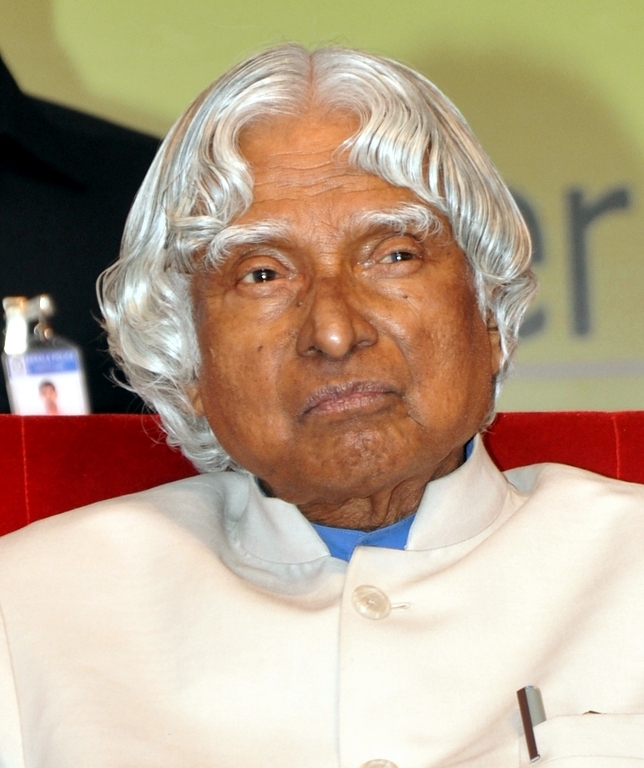
Poor Abdul Kalam has become a political football even in death. The Sikh community had fractured relationship with Giani Zail Singh under whose presidency the anti-sikh riots happened and with Manmohan Singh who accepted the prime-mistership from the party that conducted the riots. This is natural. Kalam accepted the presidency from a party that was an implacable foe of Muslims and it could very well have led to an alienation from the community. Such an alienation, in their eyes, is fully justified. One also has to bear in mind the nefarious motives and tortured reasonings of the Hindutva crowd in singing the praises of Kalam. Just as there are Hindus today who want to worship Godse there happen to be Muslims who are mourning for Memon. When Gandhi was assassinated Chitpavan Brahmins in Pune, the community of Godse, distributed sweets.
To my mind those who thronged Yakub Memon's funeral are not different from those who milled around Bal Thackeray's funeral. At least Memon died a criminal convicted in a court of law and executed in accordance with the law of the land. That Thackeray was buried with State honors is a shame. That Advani and Vajpayee were elected leaders is a shame. That the thousands of Sikhs are still awaiting justice is an shame. That Dalit residences were burned, on no lesser day than August 15th, for wanting to take their own temple chariot in a procession, is a shame.
References:
1. http://www.jeyamohan.in/77891#.VdZ9gLTigso
2. https://en.wikipedia.org/wiki/Hashimpura_massacre
3. https://en.wikipedia.org/wiki/Nellie_massacre
4. https://en.wikipedia.org/wiki/Bombay_Riots
5. http://www.caravanmagazine.in/vantage/thirty-two-years-later-nellie-massacre-remains-all-forgotten
My beloved writer, unknowingly echoing Bush, writes that the Mumbai blasts were a declaration of war against India and mourns the hundreds that were killed or maimed in that attack. As one who lived through 9/11 and as one who steadfastly rejects resolutely the left wing nonsense of "America asked for it" I normally do not subscribe to the idea of excusing terrorism under any pretext or justification. However, it'd be a travesty of truth if one were to see the Mumbai blasts in isolation because they were not. The blasts were a reprisal, absolutely unjustified of course, for the scandalous manner with which the then governments refused to prosecute the perpetrators of the Mumbai riots that had happened, in turn, in the wake of the Babri Masjid demolition. And, Babri Masjid demolition did not happen in a vacuum either. The road to the destruction of Babri Masjid, in full glare of international media in broad daylight and under the very noses of police protection, starts from the blood soaked path of Advani's Rath Yatra. Of course, why bother with context and nuances when shrill jingoism would suffice.
Anyone who was an adult in the 1990s India would remember what a boiling cauldron the country was. Buffeted between economic and political uncertainties the country was like an ill equipped catamaran tossed about on the rough seas. On one side Advani was tearing apart the country with his quest to build a temple and on the other side V.P. Singh, trying to cling to power, was unleashing casteism in the pretext of social justice. Entire villages quaked with fear as Advani's chariot progressed inexorably. In the midst of all this the state run TV was helpfully beaming to every household a pathetically crafted series based on the Indian epics which served to further notch up the fever. Nehru's grandson brought a TV actor dressed up as Hindu god to canvas for votes in Allahabad, Nehru's hometown. To say that in such a climate Muslims felt besieged as a community would be a grotesque understatement.
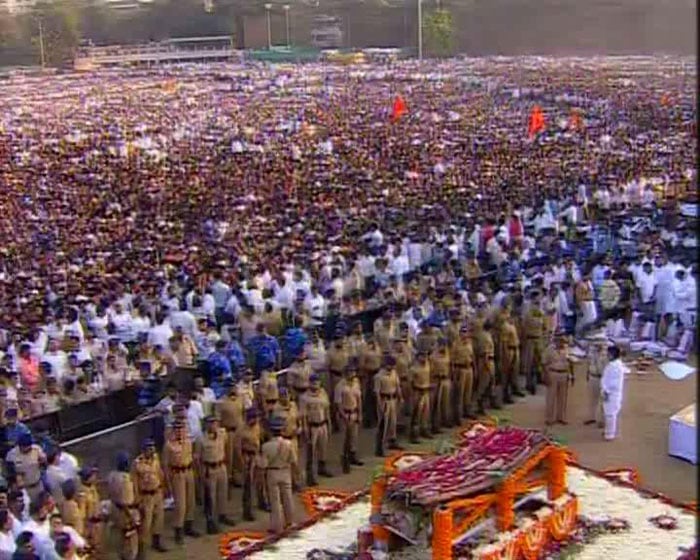 |
| Bal Thackeray Funeral -- Courtesy NDTV.com http://www.ndtv.com/photos/news/bal-thackeray-cremated-14198#photo-184596 |
While the world watched Advani and Vajpayee presided over the demolition of Babri Masjid. It was India's moment of shame. The country was plunged into a communal tension possibly not seen since the horrifying days of the Partition. Mumbai erupted into flames. There was Bal Thackeray, who, as Sri Krishna committee report would note later, orchestrating the riots like an army general. Now, Thackeray had shot to fame riding a wave of xenophobia, not against foreigners but fellow Indians from other states, especially Tamils. He had once, like the many other leaders of the Hindutva pantheon, expressed admiration for Adolf Hitler. No government dared touch him, because he was not a Muslim. The failure to prosecute Thackeray stoked the flames of resentment amongst the Muslim community and a terrorist like Dawood Ebrahim, aided by Pakistan's sinister ISI, capitalized the situation.
Interestingly the writer nonchalantly states that Indian judiciary is hampered by the fact that finding witnesses against terrorist acts, by Islamic terrorist outfits, is impossible and therefore many a terrorist goes scot free. Before we deconstruct that poisonous statement a nuance that's glided here is that terrorist organizations, especially Islamic ones, are proscribed by the government and there are very draconian laws against supporting or aiding such organizations. In terror attacks the individual foot soldiers are nobodies and the kingpins do not indulge in the acts directly and therefore finding witnesses against them is impossible. Also, terrorist attacks are not police cases to be prosecuted in a court of law. Ask the Jodhpur detainees.
While expressing umbrage at the fact that lack of witnesses aid the terrorists the writer completely forgets that no witness would dare to say in open court the role played by Thackeray during the riots. In fact so sanitized is Thackeray's record that to even label him with a harsher word than fundamentalist will invite charges of extremism against me.
Let's consider another infamous case. In the aftermath of the assassination of Indira Gandhi Hindu congressmen unleashed a genocide in Delhi against Sikhs and killed nearly 5000 sikhs over several days while Nehru's grandson nonchalantly informed the country that when a huge tree falls the earth is bound to shake. It took 20 years for the Nanavati commission to submit its 185 page report accusing H.K.L Bhagat, Jagadish Tytler, Sajjan Kumar and others of having taken part in the riots. Bhagat and Tytler held high positions in the Congress Government. The writer is indignant that in any other country Yakub Memon, a member of the underworld mafia, would not be tolerated and no state that's resolutely against the underworld would hesitate to just 'shoot him'. I'd love to know if he think Bhagat and Tytler too should've been shot. Oh, wait, they are not of the underworld and they are not Muslims so a protracted due process in a court of law is required. Incidentally, it rankles the writer that Hasina Parker, who allegedly ran the underworld on behalf of Dawood, died a natural death. H.K.L. Bhagat too died a natural death.
Thirty two years ago a massacre unfolded in Nellie, Assam. Indira Gandhi announced elections much against advice that it would inflame an already volcanic situation. Nearly 1800 Muslims were butchered from morning till evening on 18th February 1983. Rest of India heard about it only a few days later. The Tiwari Commission report, that investigated the massacre, was not even tabled. The peace accord signed with separatist organizations gave almost a complete amnesty to the perpetrators of the horrors. And here we are invited to be outraged that terrorist acts by Islamic outfits goes unpunished for lack of witnesses.
The case of Hashimpura massacre is even more shameful. On 22nd May 1987 42 Muslim youths were arrested by the police (Provincial Armed Constabulary), executed in cold blood and bodies dumped in a river. After 28 years a court acquitted all 16 accused for lack of evidence. Now, its easier to find a witness against Afzal Guru or Yakub Memon but absolutely impossible to find a witness against the PAC in such a case.
I share the writer's loathing for the sickening double standards of the Marxists. Marxists would froth at their mouth against US going to war against Iraq but would shut all their orifices about Soviet invasion of Afghanistan or the terror regime in Chechnya. Marxists had a field day after 9/11 lecturing US about how 9/11 was just retribution against US hegemony etc. But, the point at which I part company with the writer on his diatribe is when he obfuscates wider context of what went on with the Yakub Memon affair.
Not just Muslims but most Indians have little faith in the judiciary. When the highest court of the land acquitted a corrupt politician it was anybody's guess as to why it happened. The same act was repeated most recently too. The many acts of omission by Indian judiciary has engendered a climate of absolute distrust in the law. How does a country trust the judiciary when 365 Sikh youths were arrested, detained and tortured for 4 years and finally released just like that? Tamil Nadu recently saw a spate of protests against the pending execution of 3 convicts in the Rajiv Gandhi assassination case. Again, distrust of the judiciary and due process was the bedrock of the protests.
A section of the population celebrating a killer or assassin is not all that uncommon in India. Sikhs celebrate the killers of Indira, Tamils celebrate the killers of Rajiv, Hindutva group celebrates the killer of Gandhi. Even forest brigand, thug and murderer Veerappan is celebrated. Yet, nothing rankles the hearts of many like seeing Muslims mourning Yakub Memon. And THAT is because Muslims, as always, are held to a different standards.
Poor Abdul Kalam has become a political football even in death. The Sikh community had fractured relationship with Giani Zail Singh under whose presidency the anti-sikh riots happened and with Manmohan Singh who accepted the prime-mistership from the party that conducted the riots. This is natural. Kalam accepted the presidency from a party that was an implacable foe of Muslims and it could very well have led to an alienation from the community. Such an alienation, in their eyes, is fully justified. One also has to bear in mind the nefarious motives and tortured reasonings of the Hindutva crowd in singing the praises of Kalam. Just as there are Hindus today who want to worship Godse there happen to be Muslims who are mourning for Memon. When Gandhi was assassinated Chitpavan Brahmins in Pune, the community of Godse, distributed sweets.
To my mind those who thronged Yakub Memon's funeral are not different from those who milled around Bal Thackeray's funeral. At least Memon died a criminal convicted in a court of law and executed in accordance with the law of the land. That Thackeray was buried with State honors is a shame. That Advani and Vajpayee were elected leaders is a shame. That the thousands of Sikhs are still awaiting justice is an shame. That Dalit residences were burned, on no lesser day than August 15th, for wanting to take their own temple chariot in a procession, is a shame.
References:
1. http://www.jeyamohan.in/77891#.VdZ9gLTigso
2. https://en.wikipedia.org/wiki/Hashimpura_massacre
3. https://en.wikipedia.org/wiki/Nellie_massacre
4. https://en.wikipedia.org/wiki/Bombay_Riots
5. http://www.caravanmagazine.in/vantage/thirty-two-years-later-nellie-massacre-remains-all-forgotten