Showing posts with label History. Show all posts

Thursday, May 12, 2022

Ambedkar and the Metaphor of Moses

"I confess", Ambedkar wrote in 1941, "that if anything sustains me in my efforts to emancipate the Depressed Classes, it is the story of Moses undertaking the thankless but noble task of leading Jews out of their captivity". Writing for a Bombay publication in 1941 Dr. Ambedkar drew upon the metaphor of Moses to contextualize his own mission in life and the plight of his people, the Depressed Classes, as the Dalits were then referred to. That essay shows a very human side of Ambedkar that we could benefit from exploring to understand his persona. In this blog I've attempted to flesh out a human perspective of Ambedkar. 

Gandhi and the Bible

Gandhi and Ambedkar rarely saw eye to eye and that extended even to how they approached the Bible and what they took from it for their respective movements. When Gandhi read the Bible the Old Testament "repelled" him. "The Sermon on the Mount", Gandhi wrote, "went straight to my heart". He went on to say "Supposing I was deprived of the Gita and forgot all its contents but had a copy of the Sermon on the Mount, I should derive the same joy from it". Asked to justify his economic philosophy of trusteeship Gandhi reached to a quote from St. Mark, "it is easier for a camel to go through the eye of a needle than for a rich man to enter heaven". 

From Romain Rolland to Will Durant to Rev. Martin Luther King Jr. many westerners, theologians and historians, saw a Christ like spirit in Gandhi. Romain Rolland called Gandhi, "another Christ". When Martin Luther King Jr named a society he started after Gandhi he met with opposition for naming a Christian association after a Hindu. King Jr. responded, "what if the world's greatest Christian is not a Christian". Will Durant wrote, "Not since St. Francis of Assisi has any life known to history been so marked by gentleness, disinterestedness, simplicity and forgiveness of enemies". 

Two hymns that Gandhi loved gives us an understanding of what he loved best in Christ. "The Wondrous Cross" and "Rock of Ages" both speak of Christ's suffering and salvation. I've often felt that Gandhi's martyrdom that served to largely bring to a halt the murderous communal riots that rocked India was a moment akin to Christ suffering and carrying a cross for all humanity. 

For all the admiration for Christ and spiritual succor he drew from Christ's teachings Gandhi remained, till the last, a devout Hindu and a very harsh critic of Christianity itself. In 1927 Harvard's student newspaper The Crimson quoted Dr. J.H. Holmes to who Gandhi said, "I like your Christ, but not your Christianity". 

Ambedkar and a Jewish Interviewer

Ambedkar, in Oct 1941, wrote for the Bombay Sentinel, an article titled "Moses and His Significance". The article caught the eye of Maurice David Japheth, the editor of a Jewish monthly publication in Bombay, "The Jewish Advocate". Japheth interviewed Ambedkar in November 1941. While the details of the interview are not accessible the article on Moses' significance is now widely available. The Maharashtra government's archives of Ambedkar's writings (Vol 17, part 1) wrongly identifies the interviewer as one Glora Becher "Consul of Israel in Bombay". Israel was not a nation until 1948 and Google searches of Glora Becher lead nowhere. However, "The Jewish Communities of India: Identity in a Colonial Era" by Joan G. Roland identifies the interviewer as Japheth. 

Maurice David Japheth, a Baghdadi Jew, married to a Bene Israel Jew, a controversy by itself, had met Gandhi in Nagpur in 1935 and was drawn to Gandhian teaching of a simple life. Interestingly the Madiga Dalits in Andhra, towards the end of the twentieth century, "declared their affiliation to the Lost Tribe of Israel" and called themselves Bene Ephraim. That story is told is "The Jews of Andhra Pradesh: Contesting Caste and Religion in South India" by Yulia Egorova and Shahid Perwez. 

Moses as Metaphor

"What did Moses not do for the Jews?", wrote Ambedkar, "He led them out of bondage, he laid the foundation for their religion by bringing the Ten Commandments from Mount Sinai. He gave them laws for social, civil and religious purpose and instructions for building the tabernacle". Here we see a premonition of Ambedkar leading his people to Buddhism, in 1956, complete with vows to be taken. 

Writing further Ambedkar recounts the querulous and fractious relationship the Jews had with Moses who had led them out of bondage during the years of wandering in the desert. "Even his (Moses) leadership" was challenged, notes Ambedkar. 

Writing in 1941 Ambedkar must have had in his mind the bitter squabbles he had with another Dalit leader, M.C. Rajah, notably during the talks with Gandhi leading to the Poona Pact. On 13th October, at Yeola, Ambedkar had declared that he'd not die a Hindu and advocated conversion for Dalits. Rajah, on 12th November 1935, issued a stinging rebuttal on the need to convert. The rebuttal was noticeable for omitting to refer Ambedkar by name. Rajah went on to list "other leading members of the community" who disagreed with Ambedkar's call. To further rub in his point Rajah compared the efforts of hitherto unnamed Ambedkar with Ambedkar's bete-noire Gandhi. In a declaration on September 18th 1936 an organization named "Harijan Conversion Movement in South India" released a note saying at a meeting that Rajah spoke in resolved that Ambedkar was not a representative for Dalits and further resolved that Rajah was the sole representative of Dalits. 

"Moses was not merely a great leader of the Jews. He is a ;eager whose birth, any downtrodden community may pray for". "The leadership of Moses", Ambedkar said, was "a source of perennial inspiration and hope". 

I've used the word "metaphor" to refer to what Moses meant to Ambedkar to underscore the fact that the historicity of Moses and the events matter less than what the story of Exodus meant to an Indian leader who was waging war against an ancient and very stubborn evil. 

The Unspoken "F" and Moses's Ethiopian Wife:

In June 1945 Ambedkar published a stinging book, "What Congress and Gandhi have done to the Untouchables". The book was a harsh critique of Gandhi and Congress. The book opened with a warm and endearing dedication to a person cryptically noted, "To F". The dedication quoted from the Book of Ruth the famous verses Ruth, a Moabite woman, tells her Israelite Mother-in-Law, "Where you go I will go,, and where you stay I will stay. Your people will be my people and your God my God". 

Ambedkar reminisces that he used to read the Bible with "F" and that F would be moved by this passage that  expressed the sentiments of a good wife. He added that he used to disagree with her and would quote Prof. Smith's interpretation that that passage distinguishes modern society and ancient society. Ancient society was always "man plus god" whereas modern society, unlike the one in the passage, was just man. Ambedkar is quick to add, "pray remember that in men I include women also". He had promised 'F' that one day he'd write a book on that topic and dedicate it to 'F'. Given how he was drawn into the "vortex" of politics he couldn't write a literary book but he assures this book "not an unworthy substitute" and asks "Will you accept it?"

Who was this "F"? That was an English lady named Frances Fitzgerald also known as Fanny Fitzgerald. She's identified in a footnote to a letter from her to Ambedkar, in the book "Ambedkar's Letters" by Surendra Ajnath (translated in Tamil by S.J. Sivasankar), as an Irish widow and Ambedkar's friend. The letter from Frances, however, has a hint of a  tone of intimacy beyond just friendship. Frances worked in the House of Commons and it was through her that Ambedkar followed the proceedings at the House closely. 

When the letters of Ambedkar, including letters from Frances, were sought to be published by Arun Kamble, with the permission of Ambedkar's second wife Savita, his grandson Prakash Ambedkar wanted to quash them says a letter to a magazine (see references). This is not surprising. While Gandhi's Brahmacharya experiments were openly discussed by himself and Nirmal Bose had published a book detailing them it is a topic that Gandhians rarely address. Edwina Mountbatten's letters to Jawaharlal Nehru are still in the custody of Sonia Gandhi. Subhas Bose's marriage to a German lady is rarely mentioned. Frances, in all truthfulness, may have been nothing more than a friend to Ambedkar but she was surely quite a friend he considered intimate.

Why is this discussion of "F" pertinent? Here's Ambedkar about Moses, "Even his leadership was challenged. The Old Testament records that Miriam and Aaron spoke against Moses because of the Ethiopian woman he had married". It is possible that Ambedkar had in his mind the many challenges to his leadership from Dalit leaders and possibly, just possibly, something to do with Frances too.

Ambedkar, MLK Jr and Moses

Concluding his short tribute to Moses Ambedkar writes, "I believe that just as there was a land of promise for the Jews, so the Depressed Classes must be destined to have their land of promise. I trust that just as the Jews reached their land of promise, so will the Depressed Classes in the end reach their land of promise".

Leaders like Ambedkar, Gandhi, Martin Luther King Jr et al do think of themselves as saviors in some fashion and that they happen to have the best solutions possible. No leader escapes that hubris and no leader remains a leader if they give it a free run and don't rein it in. Jawaharlal Nehru openly addressed such a fear in an article he wrote. Ambedkarites, with good justification, accuse Gandhi of arrogating to himself the role of sole savior of all Indians. By the same token opponents of Ambedkar said the same of him. This fascination for Moses betrays precisely such a savior complex. I don't hold it against him I am merely acknowledging its presence. 

In a way like Moses Ambedkar glimpsed the promised land when he presided over the Constitution committee that outlawed untouchability. However, one doesn't know what went through his mind when he saw the assemble cheer the passage with cries of "Mahatma Gandhi ki Jai". That law punishing untouchability did not uproot the evil all together. That is why I'd say that Ambedkar, like Moses, glimpsed the promised land. Incidentally, New York Times reported on its front page dated April 30th 1947 that on April 29th India's Constituent Assembly outlawed untouchability. The article also noted that "Ambedkar did not see eye to eye with Mr. Gandhi".

In a tellingly analogous manner Martin Luther Kinj Jr., too, wrapped himself in the metaphor of Moses. Speaking to a Church congregation on April 3rd 1968 in Memphis, Tennessee he concluded a poignant and eloquent speech with the words, "I've been to the mountaintop. And I don't mind. Like anybody, I would like to live a long life. Longevity has its place. But I am not concerned about that now. I just want to do God's will. And He's allowed me to go up to the mountain. And I've looked over. And I've seen the promised land. I may not get there with you. But I want you to. know tonight, that we, as a people will get to the promised land". King Jr had seen the passage of Civil Rights Act (1964) and Voting Right Act (1965). He was assassinated the next day. He was just 39 years old.


In a way not even the passage of a law against untouchability was the glimpse of promised land for Ambedkar. It could be argued that his embrace of Buddhism and leading thousands of Dalits into Buddhism on 14th October 1956. This marked the culmination of a long journey of a tumultuous and tortured life of Ambedkar much like that of Moses. He died on 6th December 1956 having glimpsed what he thought was the promised land and passed on the torch to generations that came after. 

References

  1. https://www.mkgandhi.org/articles/gandhi_christ.html 
  2. https://www.gandhiashramsevagram.org/what-jesus-means-to-me/appendix-2-two-favorite-christian-hymns-of-gandhiji.php 
  3. https://www.thecrimson.com/article/1927/1/11/mahatma-gandhi-says-he-believes-in/ 
  4. https://timesofindia.indiatimes.com/home/sunday-times/when-gandhi-taught-the-bible/articleshow/62675711.cms 
  5. What Congress and Gandhi have done for Untouchables? https://www.mea.gov.in/Images/attach/amb/Volume_09.pdf 
  6. Book of Ruth https://en.wikipedia.org/wiki/Book_of_Ruth
  7. https://www.outlookindia.com/magazine/story/bhim-row/229435 
  8. Nilanjana Roy on Ambedkar Letters https://www.business-standard.com/article/beyond-business/nilanjana-s-roy-the-ambedkar-letters-105112901088_1.html 
  9. https://velivada.com/2016/01/31/pdf-writings-sppeches-of-dr-babasaheb-ambedkar/ 
  10. https://research.vu.nl/ws/portalfiles/portal/42132885/abstract+english.pdf 
  11. https://archive.org/stream/Dr.AmbedkarAndTheJewishPeople/Binder1_djvu.txt 
  12. அம்பேத்கர் கடிதங்கள்: தொகுப்பாசிரியர் சுரேந்திர அஜ்நாத்; தமிழில் எஸ்.ஜே/ சிவசங்கர், பதிப்பாசிரியர் அ.ஜெகநாதன்.
  13. பெருந்தலைவர் எம்.சி.ராஜா சிந்தனைகள்: தொகுப்பு வெ. அலெக்ஸ்
  14. An unforgettable Dalit Voice: Life, Writings and Speeches of M.C. Rajah - Edited by Swaraj Basu.
  15. https://www.nytimes.com/1947/04/30/archives/indians-outlaw-untouchability-in-formal-action-by-assembly.html




Friday, March 11, 2022

நேரு, கே.ஆர்.நாராயணன், பூவண்ணன்: வரலாற்று திரிபுகளின் ஊர்வலம்

நண்பர் பூவண்ணனின் காணொளி ஒன்று காண நேர்ந்தது. குலுக்கை யூட்யூப் தளத்தின் கதாநாயகன் பூவண்ணன் தான். நிறைய நேர்காணல்கள் இருக்கின்றன. உக்ரைனில் இருந்து மாணவர்களை மீட்டதை பற்றிய காணொளியை ஆவலுடன் கேட்டேன்.


போர் என்றாலே நாசம் தான். அது உயிர்களை பாதிக்கக் கூடியது என்பதை நெகிழ்வான ஓர் உதாரணத்தோடு விளக்கி இருக்கிறார். போரை சமூகம் வியந்து நோக்கும் ஹீரோயிஸமாகக் காண்பதை நக்கலடிக்கிறார். நியாயம் தான். என்ன கூடவே இந்த புறநானூற்றுப் பெருமைப் பேசியதெல்லாம் திராவிட மேடைகள் தாம், அதை மறந்துவிட்டார்.


இந்திய வெளியுறவுத் துறையில் நிலவும் ஆதிக்க மனோபாவம் குறித்து சொல்லும் போது அத்துறை ஆதிக்க சாதியினரால் நிரப்பட்டதாலேயே தான் பூடான் போன்ற நட்புறவுக் கொண்ட ஆனால் சின்ன நாடுகளை அவமதிப்பதும் நம்மோடு நட்புறவில்லாத சீனா போன்ற நாடு பெரிய நாடாக இருப்பதாலுமே பணிந்துப் போகிறார்கள் என்கிறார். இதில் சாதிய மனோபாவம் தாண்டி யதார்த்த நிலையைப் பற்றி பூவண்ணன் கண்டு கொள்ளவே இல்லை. எண்ணிக்கையில் அதிகம் இருக்கும் இடை நிலை சாதியினரை திராவிட கட்சிகள் எப்படி கையாள்கின்றன என்றும் விரித்துப் பேசியிருக்கலாம்கலாம்கலாம்


அவ்வுரையில் என்னை இன்று எழுத வைத்திருப்பது நேரு பற்றிய ஒரு தகவலும் பூவண்ணனின் சாதியப் பார்வையும். லண்டனில் ஹரால்டு லஸ்கியிடம் பயின்ற நாராயணன் 1948-இல் இந்தியா திரும்பினார். அவர் நேருவை சந்தித்தார், நாராயணனை லாஸ்கி புகழ்ந்து எழுதியக் கடிதத்தை படித்த நேரு அவரை வெளியுறவுத் துறைக்கு பரிந்துரைக்க சில அதிகாரிகள் நாராயணின் சாதியைப் பார்த்து நிராகரித்ததாகவும் பின்னர் நேரு நாராயணனை ஜீனியர் போஸ்டில் நியமித்ததாகவும் பூவண்ணன் சொல்கிறார். அக்காலத்தில் நியமணமான மற்றவர்களைப் பாருங்கள் என்கிறார். அதோடு நிறுத்தவில்லை நேருவின் ஜாதியை சுட்டாமல் சுட்டிஅவர் அப்படித்தான், அவர் உணவு, சுற்றத்தார் எல்லாம் அந்த வகை தான்என்று நேருவை பிராமணர் என்பதாலேயே விமர்சிக்கிறார் பூவண்ணன்.


முதலில் பூவண்ணன் சொன்னதில் நிஜமும் உண்டு. நீலகண்டன் மாதிரி இது ஒரு உத்தி. சிறு உண்மையை மையமாக வைத்து பெரும் பொய்களை வலைப் பின்னுவது. நேருவின் காலத்தில் நியமிக்கப்பட்ட, அதுவும் நாராயணன் பணி கேட்டு வந்த காலத்தில், இரண்டு தூதுவர்கள் விமர்சனத்துக்குட்பட்டவர்களே. ஒன்று, விஜயலக்‌ஷ்மி பண்டிட், இன்னொன்று சர்வபள்ளி ராதாகிருஷ்ணன். இருவரும் பிராமணர்கள், இருவரும் நேருவும் நெருக்கமானவர்கள். விஜயலக்‌ஷ்மி அடித்த கூத்துகள் பற்றி குஷ்வந்த் சிங் பின்னாளில் எழுதினார். சரி, இவர்கள் மொத்தமாக தகுதியே அற்றவர்களா எனில் அதுவும் இல்லை. கவனிக்கவும் வெளியுறவுத் துறைக்கு துறை சார்ந்த வல்லுனர்களை உருவாக்கவே IFS- நேரு மாற்றி அமைத்தார். 1948 வரை பிரதமரின் நேரடி நியமன முறையும் அதற்கு பின் அதிகாரிகளின் பரிந்துரை முறையும் நடைமுறைக்கு வந்தது


விஜயலக்‌ஷ்மி, ராதாகிருஷ்ணன் ஆகிய இருவருக்கும் கொஞ்சமேனும் நிர்வாக அனுபவம் உண்டு, 1948-க்கு முன்பே. நாராயணன் அப்போது தான் படிப்பை முடித்த மாணவர். அத்தகையவர் எந்த முன் ஆறிமுகமுமில்லாமல் நாட்டின் பிரதமரை சந்திக்க முடிந்திருக்கிறது. பிரதமரும் அவர் திறமையானவர் என்று அடையாளம் கண்டு கொண்டார். நிச்சயம் அதிகாரிகளின் பார்வையில் நாராயணனின் சாதி உறுத்தி இருக்கும்

நாராயணன் ஒன்றும் சாதாரண போஸ்டுக்கு போகவில்லை. வெளியுறவுத் துறையில் “attache” என்பது ஜூனியர் போஸ்ட் அல்ல. 1948-இல் அப்பதவியில் ஆரம்பித்த நாராயணன் அடுத்தடுத்து பதவிகளில் அமர்கிறார். 1953-இல் First Secretary High Commission of India to United Kingdom. தொடர்ந்து பதவிகள் நாராயணனுக்குக் கிடைக்கிறது. இந்திரா காந்தியின் காலத்தில். ஜே.என்.யூ பல்கலைக் கழக துணை வேந்தர் பதவி, பிறகு அமெரிக்காவுக்கு தூதுவர் என்று நேருவைத் தொடர்ந்து இந்திராவின் காலத்திலும் நாராயணின் தகுதியை மதித்து பதவிகள் தரப்பட்டன.


நேருவைப் பற்றி நாராயணன் எப்போதும் உயர்வாகவே பேசியிருக்கிறார். 1987-இல் “Images and Insights” என்று நாராயணன் எழுதி வெளியிட்ட புத்தகத்தில் ஒரு கட்டுரையின் தலைப்பு, “Nehru: A wonderful human being”. Here is Narayanan about meeting Nehru for the first time, “It was an overwhelming experience of refined kindness and encouragement for a young man on the threshold of his career. He asked innumerable questions, some of them shrewdly calculated to elicit information about my own politics. …I said goodbye and was walking away in a state of mild excitement….Here was the Prime Minister of India sparing a thought for a young man’s career even though the latter had not taken advantage of a magnificent opportunity to raise the issue”. Narayanan has mild criticisms too of Nehru era focusing on legislative means for social reforms. 


 பர்மாவில் பணியாற்றும் போது அந்நாட்டுப் பெண்ணை விரும்பி மணம் செய்தார் நாராயணன். அது விதிகளுக்குப் புறம்பானது. நேரு தலையிட்டு விதி விலக்களித்தாராம். 1980-இல் நாராயணன் அமெரிக்க தூதுவராக நியமிக்கப்பட்ட போது இந்தியாவில் இருந்த அமெரிக்க தூதுவர் ஆர்ச்சர் பிளட் (Archer Blood, “The Blood Telegram” was by him during Bangladesh crisis) நாராயணன் பற்றி, “கடுமையான உழைப்பாளி, புத்திசாலிஎன்று அமெரிக்காவுக்கு குறிப்பு அனுப்பினார். ஆனால் நாராயணனும் இந்திரா காந்தி போன்றே அமெரிக்கா பற்றி எதிர்ப்புணர்வுக் கொண்டிருக்கக் கூடும் என்கிறார். நாராயணன் பொது வெளியில் நன்கறியப்பட்டவராக இருந்திருக்கிறார். பெருமளவு நேரு, இந்திராவுடனான உறவால். அவ்வுறவை பிளட்டும் குறிப்பிடுகிறார்.


உண்மைகள் இப்படி இருக்க பூவண்ணன் சாதியக் காழ்ப்புடன் நேருவை சாதியவாதியாக கட்டமைக்கிறார். மேலும் அந்த நேரு பூவண்ணன் சொல்வதுப் போல் சாதி சார்ந்த உணவுப் பழக்கம் உள்ளவரல்ல. புலாலும் மதுவும் நேருவுக்கு அந்நியமல்ல. நேருவின் அமைச்சரவையில் மிக இள வயது அமைச்சர் பாபு ஜகஜீவன் ராம். ஜகஜீவன் முக்கியமான தொழிலாளர் நலன் அமைச்சரவையை நிர்வகித்தார். அம்பேத்கரை பற்றி சொல்லவும் வேண்டுமோ? அம்பேத்கர் நேருவோடு கருத்து வேறுபாடு கொண்டு ராஜினாமா செய்தார். ஆனால் எக்காரணத்துக்காக அம்பேத்கர் ராஜினாமா செய்தாரோ அந்த இந்து மத சீரமைப்பு மசோதாவை நேரு ச்ட்டமாக்கி காட்டினார். இந்திய பாராளுமன்றத்தில் நேருவுக்கு முக்கியமான எதிர் தரப்பு அரசியல்வாதி விஞ்ஞானியான மேக்னாட் சாஹா. நேருவை சாஹா அணு ஆராய்ச்சித் தொடர்பாக பல முறை எதிர்த்துள்ளார். நேரு சாஹாவின் கேள்விகளால் எர்ச்சலடைந்தாலும் பதில் அளிக்கத் தவறியதேயில்லை (அக்காலத்தில் ஹோமி பாபா, விக்ரம் சாராபாய், பட்நாகர், சாஹா இடையே பெரும் போட்டி நிலவியது. அதெல்லாம் மிகப் பெரிய கதை. அதன் மையக் கதாபாத்திரம் நேரு). 


பூவண்ணன்அவங்க அப்படித்தான்என்று சொல்வதே சாதியச் சொல்லாடல் தான். பிராமணர் யாராவதுஅவங்க அப்படித்தான்என்று சொன்னால் பூவண்ணன் சும்மா விடுவாரா? சமீபத்தில் முதல்வரின் நூல் வெளியீட்டு விழாவில் கூட ஒருவர் முதல்வர் ஸ்டாலினின் பண்புகள்பிறப்பிலேயே வந்ததுஎன்று பேசினார் (அல்லது வேறு விழாவா, நினைவில்லை). “பிறப்பொக்கும் எல்லா உயிர்க்கும்என்றால் அதில் பிராமணர்களும் உண்டே? உடனேஅவங்க அப்படி நினைக்கிறார்களாஎன்று கேட்டால்அப்படி நினைப்பவர்கள் பிராமணர்களில் உண்டு. அப்படி நினைக்காத பிராமணரல்லாதாரும் உண்டுஎன்றே சொல்வேன்


சத்தியவாணி முத்து கருணாநிதி பற்றி சொன்ன விமர்சனம் பற்றி பூவண்ணன் பேசும் காணொளிக்காக காத்திருக்கிறேன்


References.


1. https://en.wikipedia.org/wiki/K._R._Narayanan

2. https://en.wikipedia.org/wiki/Indian_Foreign_Service

3. https://en.wikipedia.org/wiki/Jagjivan_Ram

4. https://m.rediff.com/news/jul/24pres.htm

5. https://www.theguardian.com/news/2005/nov/29/guardianobituaries.india

6. Blood on Narayanan https://history.state.gov/historicaldocuments/frus1977-80v19/d194

7. https://www.nationalheraldindia.com/india/a-generous-man-jawahalal-nehru-was-a-fine-human-being

8. https://theprint.in/theprint-profile/kr-narayanan-the-president-who-didnt-hesitate-to-call-a-spade-a-spade/317705/

9. https://www.google.com/books/edition/Images_and_Insights/6rvmNavV3rkC?hl=en&gbpv=1&printsec=frontcover


Thursday, March 10, 2022

Imperfect Heroes and Defeating Hitler: A Brief Survey of World War II and Lessons for Ukraine Conflict

Too often in life we don't get saints to defeat grotesque villains. We often get mere mortals and sometimes villains too who are mere shades better than a more dangerous kind and those compromises save lives, by the thousands and sometimes by the millions. A brief survey of World War II teaches us those very lessons. Those lessons are worth recalling in the context of the humanitarian tragedy unfolding in Ukraine. 

Let us consider the duplicitous claim of Vladimir Putin that he's denazifying Ukraine. In the run up to World War II the only man who was implacably opposed to Adolf Hitler was Winston Churchill. Other than Churchill no leader shared such a loathing of Hitler. Nations and leaders, including Soviet Union, were only too ready to make deals with Hitler, driven by self interest. 


Charles Lindberg, an American legend, was a cheerleader for the Nazi regime and happily scared the Americans about the prowess of the Luftwaffe. Americans viewed the brewing Nazi threat as a European conflict that Americans need not be bothered about. Anti-semitism and racism was quite rampant in American society and FDR's New Deal, pacified Southern legislators, by encoding racial policies. 

Neville Chamberlain of England is now remembered for his inglorious capitulation to Hitler at Munich. The Western powers happily bartered away Czechoslovakia to appease Hitler thinking that that'd satisfy his bloodlust. Both American and British appeasement of Hitler was largely driven a pathological hatred and fear of Communism. Of course, Lenin and his successor Stalin threatened the world with global communism. Soviet Russia's puppets in Germany did more than their share in enabling the rise of Hitler by antagonizing other players. Non-Communist parties in Germany, like other nation states too, refused any accommodation to Communists. In all this each party had defined its own interest and pursued it blind to any other factor. 

Alarmed by the West appeasing Hitler Soviet Russia's leader Joseph Stalin deputed his foreign minister Molotov to negotiate with Reich's foreign minister Ribbentrop. Called the "Non-Aggression Pact", also called Molotov-Ribbentrop Pact, the treaty secured peace between Germany and Russia. Having secured his Eastern front with a peace pact Hitler attacked Poland on September 1st 1939 and formally launched World War II. Along side the German aggression of Poland another front to the war was opened by Soviet Russia. Stalin and Hitler, it was revealed later had not merely assured each other of peace but also had reached an understanding to plunder Poland together. Also covered by the secret pact was division of Latvia, Estonia, Finland etc between the two nations that were prepared to unleash armies on the unsuspecting nations. While Hitler pulverized Poland from the West, Stalin pummeled it from the East. Is it any wonder that Poland today fears Putin? Per the pact Soviet Russia literally supplied the Nazi army with materiel. Yes, Stalin supplied Hitler's army. So much for Putin's claims of denazifying Ukraine.

Ah yes then there's Winston Churchill, the bull dog warrior. Battling his personal demons, he called them black dogs, Churchill railed against his country's complacency and called upon his nation to defend freedom from Hitler. He mocked tyrants for being afraid of free speech. All this while he cheered his country holding down India and prosecuted 'sedition'. 

Much as Zelensky and Ukraine stand today so did Winston Churchill and his island nation stand alone against Hitler's blitzkrieg. Just as Zelensky is pleading with the West today for arms so did Churchill. FDR, hamstrung by Congress, provided feeble support. Taking office in May 1940 Churchill promised his country that he had nothing to give except "blood, toil, tears and sweat" and cautioned them that they are set to wage war against a "monstrous tyranny never surpassed in the dark and lamentable catalogue of human crimes". Until June 22nd 1941 Churchill and Britain braved Hitler all alone. On June 22nd 1941 Hitler who in his 'Mein Kampf' had laid out clear plans to occupy and exterminate populations in Russia put his desire into action by launching Operation Barbarossa. Then came Pearl Harbor on December 7th 1941. Calling the attack on Pearl Harbor a "day that will live in infamy" Roosevelt declared war against Japan and soon after on Germany too. The world was at war against Hitler and Nazism.

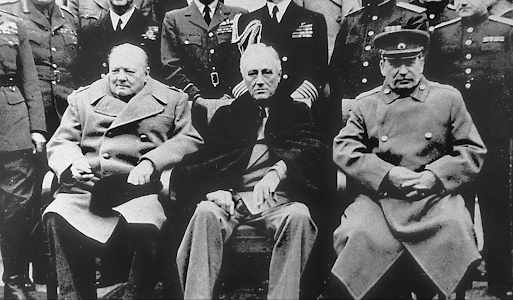
Churchill, together with FDR and Stalin, now formed a triumvirate. An imperial colonialist, a President of a country riven by racism, a totalitarian who had murdered all his colleagues now joined hands against Adolf Hitler. Oh, let's not forget that FDR had also imprisoned Japanese-Americans in concentration camps. 

We are today armed with hindsight and knowledge of the unprecedented killing machine that the Nazi state was and can we even contemplate a Nazified world? Hitler's enemies were not saints but they saved the world. While the allies saved the world from Nazism the post war world carved up by the victorious powers created new contradictions.

Britain had declared war on Germany because Hitler attacked Poland. Yet, in the new world order the Allies negotiated Poland was bartered away to Soviet Russia. Polish Nobel laureate Czeslaw Milosz later bemoaned how easily Poland was given away to Stalin. While the world was rid of Nazism Poland had to wait for another half century to be free. 

The hypocrisies and competing self interests did not stop with merely the division of Europe. Holding war criminals to account had its share of hypocrisies. Nazi generals hauled up before the Nuremberg trials would've wondered if their accusers were saints. They were not but can we even contemplate a world in which the likes of Himmler walked free? Can we contemplate a world where Adolf Eichmann slipped into death aged and shuffling his mortal coil like any other? In a fair world better nations and better human beings would've judged Himmler but can we begrudge the justice that flawed countries delivered. The Nuremberg trials raised and then answered the question of whether illegal orders, orders that were human crimes, could be followed unquestioningly. 

Justice Radhabinod Pal who was part of the Tokyo trials that mirrored the Nuremberg trials that sought to bring Japanese army leadership to justice for war crimes used the argument of whether Allies were saints to prosecute the Japanese to frustrate any attempt to hold the criminals to account. For want of saints to accuse criminals Justice Pal played a key role in letting criminals walk scot free and for that he is fondly remembered in Japan today. General MacArthur, the highest authority of the occupying American force, saw to it, for political expediency and perhaps sagaciously, that the Emperor was shielded from charges of war crimes. Prosecuting the Emperor as a criminal would've devastated the Japanese. So even within the history of Japan I am livid about letting the Generals go but I can understand the shielding of the Emperor. 

Nazism did not die with Hitler it continues to mutate today and societies combat it. Sure a section of Ukrainians may be Neo-Nazis but America too has them, Germany and Hungary have them. The West, led by America, are trying negotiate compromises and doing everything they can to not go to direct conflict with Putin and set in motion World War III. Those compromises include ensuring that Poland's rashness to arm Ukraine does not involve USA lest Putin, justifiably, interpret it as America at war with Russia. 

A geopolitical struggle of this nature is labyrinthine and needs patient reflection and more than a little knowledge of history. Fueled by clips floating on Youtube and WhatsApp and googling for factoids many rush to ask gotcha questions. Of course what is a momentary glee of stroking one's ego on social media is no match for the real humanitarian tragedy that is unfolding in Ukraine. The moral case against Putin's aggression is plain and simple. Holding the forces trying to defend Ukraine to a moral standard that is not applied to Putin only speaks of the illiteracy, wanton or intentional, of such detractors.