Amidst all the Trump related shenanigans and the perennial scandal plagued 'Breaking News' about the American presidency a silver lining is the excited talk about the coming total eclipse. Today NPR (National Public Radio) featured a nice segment on obsessive eclipse watchers. As luck would've it I came across a blog about an ancient Indian astronomer that ended with a plea that Indian school boys should learn about such simple to learn science that India once had. I commented that only God can save science in India and naturally the brickbats came along. But here's why I said so.
The NPR segment on 'Eclipse chasers', also called, the anchor highlighted, 'umbraphiles' or 'shadow lovers' was interesting precisely because it brought to attention people obsessed with eclipse watching. Donald Liebenberg, 'a professor of astronomy at Clemson University in South Carolina', has seen more eclipses and spent more time in 'totality' than any one alive. He, NPR said, pioneered using aircraft to follow the shadow of the eclipse including one time the use of the famed Concord. Read the link in the reference for more interesting details.
NASA, of course, leads the efforts on public education regarding the eclipse with lots of material on its site. NASA also has sections devoted to study of eclipses across human history. An Irish astronomer has discovered an evidence in Ireland that shows precise knowledge of eclipse that might correspond to the one that occurred in November 3340 BCE!!! Babylonian and Assyrian astronomers, the page informs, were able to predict eclipses with fair accuracy in the 8th or 10th century BCE.
Can the Greeks be far behind. NASA page quotes Archilochus' poetry, referring to the eclipse of 6th April 647 BCE, "Zeus, father of the olympians, made night from mid-day, hiding the light of the shining Sun". "Around 460 BCE, the Greek historian Herodotus wrote that Thales was able to predict the year when a total solar eclipse would occur. Details of how this prediction was made did not survive."
John Milton, who peered at the heavens using the telescope Galileo made, wrote in Paradise Lost "As when the Sun, new risen, Looks through the horizontal misty air, Shorn of his beams, or from behind the Moon, in dim eclipse, disastrous twilight sheds On half the nation and with fear of change perplexes monarchs".
The blog I came across was by, Rangarathnam Gopu, an admirer of Varamihira. Gopu has written a couple of other blogs I liked, about Lavoiseur and his touring of US for sites related to science. Varahamihira is more popularly known as the father of the pseudo-science astrology and Gopu is irked by that. He draws attention to few Sanskrit verses that Gopu underlines for Varahamihira's scientific temperament.
While most Indians explained eclipses, like the Chinese did, with myths about a snake swallowing up the moon Varahamihira 'reasoned' that it was merely a shadow passing. Let's pause here for a moment.
Astronomy is the most ancient science simply because man, across cultures, looked up at the heavens and worshipped the powers unknown and yet tried to understand what lay yonder. Will Durant differentiates between science and philosophy in "Story of philosophy". "Soon as a field of inquiry yields knowledge susceptible of exact formulation it is called science. Every science begins as philosophy and ends as art; it arises in hypothesis and flows into achievement".
The study of history of science tells us a story of the trajectory of ideas from speculation, then maturing into logical reasoning and finally becoming science when it fulfills the conditions of scientific framework.
Priyamvada Natarajan, professor of physics and astronomy at Yale, in her very readable book "Mapping the heavens: The radical scientific ideas that reveal the cosmos", traces the development of ideas and how they gained acceptance and what that arc tells of us in turn. "My goal", Privamvada states, "is to recount how scientific ideas have been developed, tested, debated, and eventually accepted." "How scientists grow to accept new ideas and rewrite their knowledge maps not only reveals how science works but also provides insights into what catalyzes these shifts in belief".
In the history of science as an intellectual endeavor the most consequential tectonic shift happened with the establishment of the Royal Society in London in 1660. The founders of the society were inspired by the English philosopher Francis Bacon's ideas of experimentation and principles of science.
The Royal Society adopted as its motto, 'Nullius in verba', 'on the word of no one' or 'take nobody's word for it'. If nobody's word is to be taken then how are words, theories, to be judged? Here steps in the patron saint of Royal Society, Francis Bacon who had supplied the Society's founders with the principles to evaluate science. Experimentation and provability.
James Gleick in his biography "Isaac Newton" wrote about the formation of Royal Society, "dedicated to information flow. It exalted communication and condemned secrecy". "The society's founders explicitly worried about the use of any language. Philosophy had mired itself in its own florid eloquence. They sought 'not the artifice of Words, but a bare knowledge of things'. Now it was time for plain speaking, the most naked expression, and when possible this meant the language of mathematics."
Andrea Wulf in her critically acclaimed biography "The invention of nature: Alexander Von Humboldt's new world" writes about the Royal Society in Humboldt's day, "They conducted experiments, 'electrified' people, learned about new telescopes, comets, botany and fossils. They debated, exchanged results and read letters that has been received from scientifically minded friends and foreigners alike." Humboldt, a member, was thrilled and remarked after a meeting that "all scholars are brothers". Humboldt incidentally was obsessed with traveling to India but was scuttled by the East India Company for over 20 years. Wulf thinks the Company was probably wary of Humboldt visiting a colony.
Modern science or what can be called science today requires observation, recording of data, reasoned conclusions that are supported either by proven theories or mathematics or reproducible in a lab. If Gopu had stopped with talking about Varahamihira's verses as evidence of scientific 'temperament' in a different era I'd have had no problem with it but he advises school students to learn it as 'science'. No it is not. Science has long since moved much farther than what can be called 'speculation' or mere 'hypotheses'. If Varahamihra had tabulated observations or provided better reasoning, even if not absolutely mathematical by today's standards, it could be considered as the beginning of science. If Gopu had narrated Varahamihira's verses as part of a broad history of man's expanding understanding I'd have applauded but he lapses into a puzzling broadside that India's school children are taught as 'though only Europeans explained them'. He even invites college science teachers to use the blog material. Sigh. Sigh. Sigh.
Tamil chauvinists have used verses from Tamil literature to claim knowledge of atomic fission and Newton's Third Law etc. While I understand the common angst by many Indians that the common school boy grows up without knowing what a vibrant intellectual and scientific community India once was and thinks that everything 'scientific' originated only in Greece and later in Europe and recently in America. George Gheverghese Joseph's book "The Crest of the Peacock: Non-European roots of mathematics" could be recommended, a tad hesitatingly, for giving a sweeping narrative of contributions to mathematics by non-European civilizations. Interestingly he omits any mention of Varahamihira. I said 'hesitatingly' because the book, published by Princeton University Press, is authored by a person whose academic qualifications are not detailed beyond 'degrees in UK'. Reading his chapter on Indian math, far better than any most Indian enthusiasts write, I found it to be a little over-eager and less becoming of a book published by a university press, that too Princeton university.
While I'm all for laying out historical antecedents and for anyone to learn history in its totality and not exclusionary the urgent need in India is to understand science as a modern discipline. A recent ugly spectacle is the collective ululation about the scientific genius of Abdul Kalam, a man who cannot be called a scientist by any relaxed definition of that word. I'll give a list of wonderful books on science in the references. They're all a treat to read and sadly, most Indian students are not only blissfully unaware of such books many cannot even grasp why they're beautiful. The day an Indian student knows that John Gribbin's 'In search of Schrodinger's cat' is science while Fritjof Capra's 'Tao of physics' is not science he or she would become a beacon of hope in India.
1. Rangaratnam Gopu's blog http://varahamihiragopu.blogspot.in/2014/10/varahamihiras-eclipse-proof.html
2. Kerala Mathematicians and Isaac Newton. Interview by George Joseph http://www.thehindu.com/features/friday-review/history-and-culture/dr-george-gheverghese-joseph-tsays-the-work-of-kerala-mathematicians-influenced-their-european-counterparts/article7818063.ece
3. Eclipses in history https://eclipse2017.nasa.gov/eclipse-history
4. Eclipses through traditions and cultures (NASA site, that includes a link to a Hindu site) https://science.ksc.nasa.gov/mirrors/gsfc/omni/eclipse99/pages/traditions_Calendars.html#India
5. Scientific method https://en.wikipedia.org/wiki/Scientific_method
6. Royal society https://en.wikipedia.org/wiki/Royal_Society
7. NPR segment on Eclipse chasers http://www.npr.org/sections/thetwo-way/2017/08/08/539553696/go-see-it-eclipse-chasers-urge-your-first-time-is-always-special
Disclaimer, I've not read all of the books below. Most are recommendations based on why I bought them for reading, hopefully some time.
The NPR segment on 'Eclipse chasers', also called, the anchor highlighted, 'umbraphiles' or 'shadow lovers' was interesting precisely because it brought to attention people obsessed with eclipse watching. Donald Liebenberg, 'a professor of astronomy at Clemson University in South Carolina', has seen more eclipses and spent more time in 'totality' than any one alive. He, NPR said, pioneered using aircraft to follow the shadow of the eclipse including one time the use of the famed Concord. Read the link in the reference for more interesting details.
 |
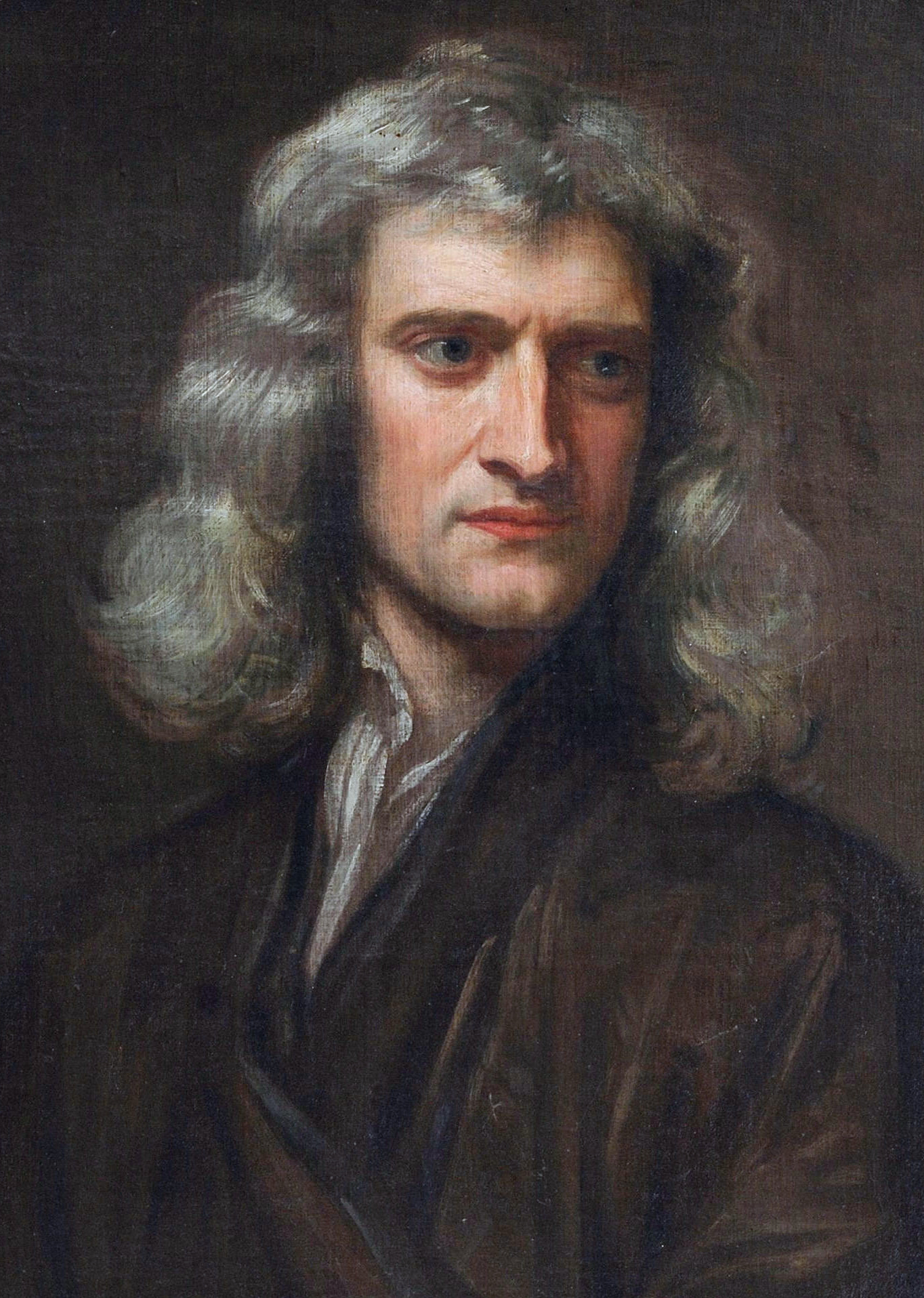
| Francis Bacon |
 |
| The Royal Society emblem with its motto 'Nullius in verba' (Take nobody's word for it) |
Can the Greeks be far behind. NASA page quotes Archilochus' poetry, referring to the eclipse of 6th April 647 BCE, "Zeus, father of the olympians, made night from mid-day, hiding the light of the shining Sun". "Around 460 BCE, the Greek historian Herodotus wrote that Thales was able to predict the year when a total solar eclipse would occur. Details of how this prediction was made did not survive."
John Milton, who peered at the heavens using the telescope Galileo made, wrote in Paradise Lost "As when the Sun, new risen, Looks through the horizontal misty air, Shorn of his beams, or from behind the Moon, in dim eclipse, disastrous twilight sheds On half the nation and with fear of change perplexes monarchs".
The blog I came across was by, Rangarathnam Gopu, an admirer of Varamihira. Gopu has written a couple of other blogs I liked, about Lavoiseur and his touring of US for sites related to science. Varahamihira is more popularly known as the father of the pseudo-science astrology and Gopu is irked by that. He draws attention to few Sanskrit verses that Gopu underlines for Varahamihira's scientific temperament.
While most Indians explained eclipses, like the Chinese did, with myths about a snake swallowing up the moon Varahamihira 'reasoned' that it was merely a shadow passing. Let's pause here for a moment.
Astronomy is the most ancient science simply because man, across cultures, looked up at the heavens and worshipped the powers unknown and yet tried to understand what lay yonder. Will Durant differentiates between science and philosophy in "Story of philosophy". "Soon as a field of inquiry yields knowledge susceptible of exact formulation it is called science. Every science begins as philosophy and ends as art; it arises in hypothesis and flows into achievement".
The study of history of science tells us a story of the trajectory of ideas from speculation, then maturing into logical reasoning and finally becoming science when it fulfills the conditions of scientific framework.
Priyamvada Natarajan, professor of physics and astronomy at Yale, in her very readable book "Mapping the heavens: The radical scientific ideas that reveal the cosmos", traces the development of ideas and how they gained acceptance and what that arc tells of us in turn. "My goal", Privamvada states, "is to recount how scientific ideas have been developed, tested, debated, and eventually accepted." "How scientists grow to accept new ideas and rewrite their knowledge maps not only reveals how science works but also provides insights into what catalyzes these shifts in belief".
In the history of science as an intellectual endeavor the most consequential tectonic shift happened with the establishment of the Royal Society in London in 1660. The founders of the society were inspired by the English philosopher Francis Bacon's ideas of experimentation and principles of science.
The Royal Society adopted as its motto, 'Nullius in verba', 'on the word of no one' or 'take nobody's word for it'. If nobody's word is to be taken then how are words, theories, to be judged? Here steps in the patron saint of Royal Society, Francis Bacon who had supplied the Society's founders with the principles to evaluate science. Experimentation and provability.
James Gleick in his biography "Isaac Newton" wrote about the formation of Royal Society, "dedicated to information flow. It exalted communication and condemned secrecy". "The society's founders explicitly worried about the use of any language. Philosophy had mired itself in its own florid eloquence. They sought 'not the artifice of Words, but a bare knowledge of things'. Now it was time for plain speaking, the most naked expression, and when possible this meant the language of mathematics."
Andrea Wulf in her critically acclaimed biography "The invention of nature: Alexander Von Humboldt's new world" writes about the Royal Society in Humboldt's day, "They conducted experiments, 'electrified' people, learned about new telescopes, comets, botany and fossils. They debated, exchanged results and read letters that has been received from scientifically minded friends and foreigners alike." Humboldt, a member, was thrilled and remarked after a meeting that "all scholars are brothers". Humboldt incidentally was obsessed with traveling to India but was scuttled by the East India Company for over 20 years. Wulf thinks the Company was probably wary of Humboldt visiting a colony.
Modern science or what can be called science today requires observation, recording of data, reasoned conclusions that are supported either by proven theories or mathematics or reproducible in a lab. If Gopu had stopped with talking about Varahamihira's verses as evidence of scientific 'temperament' in a different era I'd have had no problem with it but he advises school students to learn it as 'science'. No it is not. Science has long since moved much farther than what can be called 'speculation' or mere 'hypotheses'. If Varahamihra had tabulated observations or provided better reasoning, even if not absolutely mathematical by today's standards, it could be considered as the beginning of science. If Gopu had narrated Varahamihira's verses as part of a broad history of man's expanding understanding I'd have applauded but he lapses into a puzzling broadside that India's school children are taught as 'though only Europeans explained them'. He even invites college science teachers to use the blog material. Sigh. Sigh. Sigh.
Tamil chauvinists have used verses from Tamil literature to claim knowledge of atomic fission and Newton's Third Law etc. While I understand the common angst by many Indians that the common school boy grows up without knowing what a vibrant intellectual and scientific community India once was and thinks that everything 'scientific' originated only in Greece and later in Europe and recently in America. George Gheverghese Joseph's book "The Crest of the Peacock: Non-European roots of mathematics" could be recommended, a tad hesitatingly, for giving a sweeping narrative of contributions to mathematics by non-European civilizations. Interestingly he omits any mention of Varahamihira. I said 'hesitatingly' because the book, published by Princeton University Press, is authored by a person whose academic qualifications are not detailed beyond 'degrees in UK'. Reading his chapter on Indian math, far better than any most Indian enthusiasts write, I found it to be a little over-eager and less becoming of a book published by a university press, that too Princeton university.
While I'm all for laying out historical antecedents and for anyone to learn history in its totality and not exclusionary the urgent need in India is to understand science as a modern discipline. A recent ugly spectacle is the collective ululation about the scientific genius of Abdul Kalam, a man who cannot be called a scientist by any relaxed definition of that word. I'll give a list of wonderful books on science in the references. They're all a treat to read and sadly, most Indian students are not only blissfully unaware of such books many cannot even grasp why they're beautiful. The day an Indian student knows that John Gribbin's 'In search of Schrodinger's cat' is science while Fritjof Capra's 'Tao of physics' is not science he or she would become a beacon of hope in India.
References:
1. Rangaratnam Gopu's blog http://varahamihiragopu.blogspot.in/2014/10/varahamihiras-eclipse-proof.html
2. Kerala Mathematicians and Isaac Newton. Interview by George Joseph http://www.thehindu.com/features/friday-review/history-and-culture/dr-george-gheverghese-joseph-tsays-the-work-of-kerala-mathematicians-influenced-their-european-counterparts/article7818063.ece
3. Eclipses in history https://eclipse2017.nasa.gov/eclipse-history
4. Eclipses through traditions and cultures (NASA site, that includes a link to a Hindu site) https://science.ksc.nasa.gov/mirrors/gsfc/omni/eclipse99/pages/traditions_Calendars.html#India
5. Scientific method https://en.wikipedia.org/wiki/Scientific_method
6. Royal society https://en.wikipedia.org/wiki/Royal_Society
7. NPR segment on Eclipse chasers http://www.npr.org/sections/thetwo-way/2017/08/08/539553696/go-see-it-eclipse-chasers-urge-your-first-time-is-always-special
Recommended books on Science:
Disclaimer, I've not read all of the books below. Most are recommendations based on why I bought them for reading, hopefully some time.
- Structure of Scientific Revolution - Thomas Kuhn
- The Logic of scientific discovery - Karl Popper. Also certainly check out his 'Open society and its enemies'
- In search of Schrodinger's cat - John Gribbin. AMAZING MUST READ SIMPLE BOOK on quantum physics and its history.
- A brief history of time - Stephen Hawking. Obviously.
- Feynman Lectures - Richard Feynman. And his "Surely your'e joking Mr Feynman". Also check out other titles by him.
- The immortal life of Henrietta Lacks - Rebecca Skloot. Understand how medical science advanced and institutional racism in the then American medical fraternity.
- Ascent of man - Jacob Bronowski. A TV series turned into a thrillingly readable book.
- Emperor of maladies - Siddhartha Mukherjee. Debut book that garnered the Pulitzer and a riotous read of scientific advancement in the taming of cancer.
- Selfish gene - Richard Dawkins
- What is mathematics - Richard Courant and Herbert Robbins
- Joy of X - Strogatz
- The Fellowship - John Gribbin. About the Royal Society
- The Sixth extinction - Elizabeth Kolbert. Critically acclaimed Pulitzer winner.
- The strangest man: The hidden life of Paul Dirac, Quantum genius -- Graham Farmelo
- Einstein - Walter Isaacson. (For the more scholarly, check out 'Subtle is the Lord' by Abraham Pais)
- The vital question: Energy, evolution and the origin of complex life - Nick Lane.
- Power, sex, suicide:Mitochondria and the meaning of life - Nick Lane
- Perfect Theory: A century of geniuses and the battle over general relativity - Pedro G. Ferreira. Lucid and gripping.
- The beak of the finch - Jonathan Wiener. Pulitzer winner.
- Why evolution is true - Jerry Coyne
- Faith vs Fact: Why Science and Religion are Incompatible -- Jerry Coyne
- Polio - David Oshinsky. Pulitzer winner for a grippingly told drama about the invention of vaccines that defeated a scourge of humanity.
- The Age of Wonder: How the Romantic generation discovered the beauty and terror of science - Richard Holmes. A literary and scientific tour-de-force.
- The idea factory: Bell Labs and the great age of American innovation - Jon Gertner. How individual giants like Shockley, Bardeen and an American corporation and American government colluded and competed to unleash an era of creativity.
- The man who knew infinity: A life of the genius Ramanujan -- Robert Kanigel. As always the best books on India and Indians are by westerners. Incidentally on even the competing movie versions it was Danny Boyle who made the better movie compared to a pathetic Indian attempt
- Cells to civilization: The principles of change that shape life - Enrico Coen. A chapter begins by discussing Cezanne's refusal to correct an imperfection in a painting and glides into an analogy of the complexity of life. It might take aeons for a book like this to come from an Indian university by an Indian professor. One can hope though.