Showing posts with label Race relations. Show all posts

Thursday, July 30, 2020

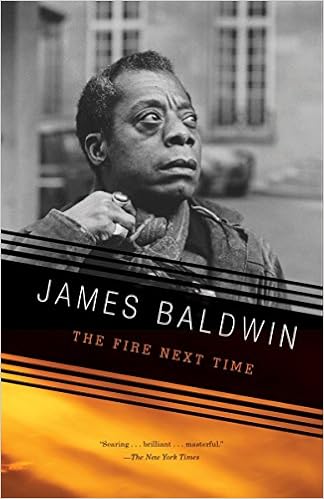
'The Fire Next Time': James Baldwin and American Racism

On May 25th 2020 George Floyd, African-American, was killed under the knee of police brutality and America, once again, erupted in protests confronting its original sin. This time the protests swelled with unremitting fury despite a pandemic. Awakened to the systemic racism that continues to be a blot Americans, protesting aside, turned to seek an intellectual understanding of racism and books about race relations became bestsellers. My own journey has begun with James Baldwins's (1924-87) searing essays collectively published under the title, "The fire next time".

'The fire next time' consists of two essays written in 1962 & 1963. One was a letter to his nephew. The second essay narrates Baldwin's disenchantment with the Church and his prescription of how Black America can respond to white America.


1963 was the year when Martin Luther King Jr. wrote his "letter from Birmingham jail", NAACP secretary Medgar Evers was assinated in Mississippi, Martin Luther King Jr delivered his 'I have a dream speech' and a church in Birmingham was bombed that killed four young girls.

America was, as it is now, a cauldron of racial troubles and racial violence, particularly in the South, was rampant. In this backdrop Baldwin wrote a letter to his nephew explaining the nature of the country that he was born in.

"This innocent country set you down in a ghetto in which, in fact, it intended that you perish.....You were born where you were born and faced the future that you faced because you were black and for no other reason....You were not expected to aspire to excellence: you were expected make peace with mediocrity. Where you have turned, James, in your short time on this earth, you have been told where you could go and what you could do (and how you could dit) and where you could live."
Having told his nephew of the grotesque oppression he'd have to experience Baldwin then advises him to 'accept' white Americans with love. Beyond 'acceptance' Baldwin adds that Black America should 'integrate' with white America "with love" forcing "our brothers to see themselves as they are, to cease fleeing from reality and begin to change it".

The essay, "Down at the cross: Letter from a region in my mind" is part autobiographical explaining Baldwin's disenchantment with the Church, meeting racially radioactive preacher Elijah Muhammad and, yet again, teaching Black America not to succumb to hate.

Baldwin quotes Rudyard Kipling's racist poem, "The white man's burden" in the preface. Racial humiliation was, as it is now, a constant presence in the life of Black Americans. Baldwin recounts how, as a boy of 10, looking no older. he adds rather sarcastically, he was frisked by policemen while crossing a street and making crude jokes about his sexuality. When Baldwin told his father that he'd do everything a white man does he saw fear in his father's eyes, fear that was different from that his father had ever shown before.

Seeing how his fellow Black Americans were taken by a life of crime and drugs, driven by poverty, Baldwin sought a 'gimmick' to keep himself out of trouble and found that the Church was to be his gimmick. He says he learned "how to work on a congregation until the last dime was surrendered". He was quickly disenchanted with the Church to the extent that, seeing his congregants, he needed strength "not to curse, not to tell them to throw away their Bibles and get off their knees and go home and organize, for example a rent strike".

Disenchantment grew when he saw that while the Church taught to lover everybody it "applied only to those who believed as we did and it did not apply to white people at all". A minister told Baldwin that he should never yield a seat on a bus to a white woman because white men her rose for a Black woman. That kind of tit for tat theologically troubles Baldwin who feels that how he acts his own responsibility and not predicated by how others behave towards him. "There was no love in the church. It was a mask for hatred and self-hatred and despair".

"White people", Baldwin continues to say," were, and are astounded by the holocaust in Germany. They did not know they could act that way. But I very much doubt whether black people were astounded- at least, in the same way"."Christianity", Baldwin hammers, "has operated with an unmitigated arrogance and cruelty". Eventually he did leave the church.

In that backdrop Baldwin meets with Elijah Muhammad, known for being racially incendiary, head of the Nation of Islam, an organization for Black Muslims. While Black churches were the bedrock of Civil Rights movement there were Blacks who were disenchanted with the church as a white establishment turned to Islam. The Nation of Islam, Baldwin rather grudgingly accepts, did provide Blacks a life away from crime and drugs.

Elijah Muhammad cooked up mythology to fashion a history. "God is black. All black men belong Islam; they have been chosen. And Islam shall rule the world". "We were offered, as Nation of Islam doctrine, historical and divine proof that all white people are cursed, and are devils". Baldwin dismisses this doctrine of hate, "there is nothing new in this merciless formulation except the explicitness of its symbols and the candor of its hatred".

John Lewis, Civil Rights icon, injured grievously during the historic march from Selma to Montgomery to secure voting rights, published a posthumous oped today that, devoid of any hatred, advised a younger generation, "let the spirit of peace and the power of everlasting love be your guide".

Lewis tells us that "people on every continent have stood in your shoes". History, across continents and societies, has common features and America's racial history has a lot in common with the caste history of India. If America produced a Elijah Muhammad my hometown produced E.V. Ramaswami.  To Muhammad white Americans were devils, to Ramswami it was the Brahmins. Rejection of dominant religion was common between Blacks and the oppressed castes of India. The voice of Lewis is paralleled in the voice of Gandhi and other reformers.

Why does Baldwin, despite every justification to wallow in hatred, reject such hate? "If one is permitted treat any group of people with special disfavor because of their race or the color of their skin, there is no limit to what one will force them to ensure, and the entire race has been mysteriously indicted, no reason not to attempt to destroy it root and branch. This is precisely what the Nazis attempted". He finds it morally unacceptable to not "oppose any attempt that Negroes may make to do others what has been done to them". "Whoever debases others is debasing himself".

Having eschewed violence or vendetta Baldwin defines 'love' as not the usual "infantile American sense of being made happy but in the tough and universal sense of quest and daring and growth". "It demands great spiritual resilience not to hate the hater whose foot is on your neck, and event greater miracle of perception and charity not to teach your child to hate."

Calling forth "conscious whites" and "conscious blacks" to not falter but to end the racial nightmare for without that, Baldwin reminds, quoting a Black spiritual song, "God gave Noah the rainbow sign, No more water, the fire next time!"


References:

1. Baldwin's essay "Letter from a region in my mind" (This is the bulk of the book)


Sunday, October 1, 2017

Martin Luther King Jr. and the Shadow of Gandhi. Rhetoric of MLK Jr. and EVR, Poles Apart.

P.A. Krishnan’s article on E.V. Ramasamy, the patron saint of Tamil Nadu and a merchant of hate, has invited eager defenders who, typically, range from being silly to downright intellectually dishonest. A so-called rebuttal sweepingly, without basis, seeks to justify the inflammatory and venomous rhetoric of E.V.R by asserting that his rhetoric about Brahmins was akin to the rhetoric of Martin Luther King Jr. That’s unadulterated nonsense.


The charlatans who wrote the rebuttal to Krishna’s article justified E.V.R’s habitual tarring of an entire community and conveniently using the words ‘Brahminism’ and ‘Brahmins’ interchangeably by arguing:

“This is not a racialist tainting of a persecuted community, but questions posed to power structures. It is a discursive strategy of oppressed groups to identify the nature of oppression with those who are beneficiaries of the system of oppression. In the civil rights movement in the US, not just radicals like Malcolm X, but even pacifists like James Baldwin and Martin Luther King Jr often used “white people” in lieu of “white racism”.”

Biographer David J. Garrow quotes a speech of King during the Montgomery bus boycott:

“There are those who would try to make of this a hate campaign. This is not a war between the white and the Negro but a conflict between justice and injustice.  This is bigger than the Negro race revolting against the white”

At this point King was only familiar with the name of Gandhi. Glenn Smiley, a white Texan and a ‘devout believer in Gandhian non-violence, wrote to his friends that “King can be a Negro Gandhi”. Smiley wrote to King a quote of Gandhi, “If one man could achieve the perfect love it is enough to neutralize the hatred of millions” and concluded “who knows? Maybe in Montgomery someone may achieve this perfect love”.

King’s adoption of non-violence was gradual and a journey. Bayard Rustin, King’s trusted confidante, said King “is developing a decidedly Gandhi-like view…He is eagerly learning all that he can about non-violence”. 

Addressing a 2500 strong congregation at Brooklyn’s Concord Baptist Church King spoke of ‘passive resistance’ and said Gandhi had used it “to break loose from the political and economic domination by the British and brought the British Empire to its knees…Let’s now use this method in the United States”. To a newspaper interviewer King traced his path to Gandhi, “I have been a keen student of Gandhi for many years. However, this business of passive resistance and non-violence is the gospel of Jesus. I went to Gandhi through Jesus”. 

After recovering from an assassination attempt MLK Jr., visited India in February-March 1959. Earlier Nehru during his visit to US had tried to meet King but could not and nevertheless reached out to King to arrange a visit to India.

Martin Luther King Jr., Jawaharlal Nehru, Coretta Scott King

Writing for the magazine Ebony King gave an enthusiastic account of his trip to India.

“Virtually every door was open to us…We were looked upon as brother with the color of our skins as something of an asset”. “Thanks to the Indian papers, the Montgomery bus boycott was already well known in that country. Indian publications perhaps gave a better continuity of our 381-day bus strike than did most of our newspapers in the United States.”

“I left India more convinced than ever before that non-violent resistance is the most potent weapon available to oppressed people…The way of acquiescence leads to moral and spiritual suicide. The way of violence leads to bitterness in the survivors and brutality in the destroyers. But the way of non-violence leads to redemption and the creation of the beloved community”.

King commends India for “greater progress in the fight against caste ‘untouchabliity’ than we have made here in our own country against race segregation”. He also notes how “the leaders of India have placed their moral power behind their law. From the Prime Minister down to the village councilmen, everybody declares publicly that untouchability is wrong”. He then contrasts with how public officials in US “decline to render a moral judgment on segregation and some from the South publicly boast of their determination to maintain segregation. This would be unthinkable in India”.

Recalling how Gandhi ‘took untouchables by the hand and led them into temples’ King observed ’to equal that President Eisenhower would take a Negro child by the hand and lead her into Central High school in Little Rock”.

Returning from India King, Garrow writes, addressed a congregation at Dexter identifying three qualities of Gandhi that he admired most. “First was his great capacity for self criticism. Second was his all but total avoidance of material possessions. Third was the ‘absolute self-discipline’ that Gandhi had exhibited in his private as well as in his public life, so that ‘there was no gulf between the private the public’”. Gandhi, inspired by John Ruskin’s ‘Unto the Last’, gave up his possessions. King, inspired by Gandhi, ‘speaking of unsolicited funds’, said “I’m not going to take this money for myself”.

A popular quote of E.V. Ramasamy, that his followers parrot, is one where he asks that no one should take his word merely because he said but test it against their own reason and only then accept. This, we are told, is evidence that E.V.R. accords each man’s intellect the unfettered freedom. Unlike Gandhi E.V.R. rarely believed in practicing what he preached. Yet another quote, little referred to, tells clearly “you can question or debate my principles with me prior to joining my party but once you join the party you need to blindly follow the directives and set aside and independent reasoning or conscience of your own”. 

The charlatans who wrote the rebuttal will demur that I’m misinterpreting or misquoting E.V.R. No. E.V.R spoke in unadorned prose because he was intellectually incapable of wooly formulations. His speeches were typically written in layman terms because he was incapable of being anything else and as such there is no room for misinterpretation. E.V.R was not only not an abstruse Kant but he was not Gandhi either who had a tendency to tie himself up in knots at times trying to thread an issue through the complex philosophies he held dear. 

Throughout E.V.R’s long life there is no recorded instance of him allowing dissent in his party or his publications unlike Gandhi who published contrarian opinions of himself in his newspaper and tried to answer them. Gandhi never lacked naysayers in his own disciples. Jawaharlal Nehru wrote to Gandhi that his economic ideas were atavist.

When four ministers of the Souther Christian Leadership Conference faced a libel lawsuit for an advertisement they had placed in New York Times to solicit funds to defend King against a perjury case King, advised by a New York attorney, decided to form a trust for fundraising. Launched on 17th May 1962 the trust was called ‘Gandhi Society for human rights’. 

King faced criticism that the name of the society was “un-Christian”. King defended Gandhi, “I believe that in some marvelous way, God worked through Gandhi, and the spirit of Jesus Christ saturated his life. It is ironic, yet inescapably true that the greatest Christian of the modern world was a man who never embraced Christianity”. 

Only charlatans who are unfamiliar with the preachings of Rev. Dr. Martin Luther King Jr., would utter nonsense that he spoke of Whites as E.V.R. spoke of Brahmins. Let us for a moment consider how E.V.R. spoke of Brahmins.

E.V.R. in a very notorious quote said that if a Brahmin and a snake were to be seen together one should kill the Brahmin first. Asked if he can clarify whether he hates Brahminism or Brahmins the every blunt E.V.R says, “Who do you hate? The Brahmin or Brahminism? What is Brahminism?’ – for questions such as these, my reply is Brahminism came from Brahmins and hence it is the Brahmins who should be annihilated. It is like asking whether you hate thievery or the thief. It is because one is a thief, one indulges in thievery. When someone says he hates thievery, it means he hates the thief, too, doesn’t it? Thus, [my stand is] Brahminism grew out of the Brahmin and I am striving to annihilate the root.” The charlatan duo malign P.A. Krishnan as one who ‘misinterprets’ but what is there to misinterpret in such plain neo-nazi language? Nor do the charlatans demonstrate what was misinterpreted. Calumny is not rebuttal but alas it qualifies for one amongst the Periyar herd.

The charlatan duo sheepishly add, about King and others, “The point was not that they incriminated all white people as racists, but rather that they identified who benefitted most from white racism and who ought to own greater social and political responsibility.” King did not stop with merely identifying who benefited from Jim Crow laws but his rhetoric, not out of careful design but more because of his philosophical and theological credo, spoke of justice in broad strokes eschewing any stereotyping and grounding it, always, in the spirit of reconciliation and forgiveness. 

The authors fail to supply a single quote of Martin Luther King Jr., in the same vein as the blood curdling threat issued by E.V.Ramasamy. Love and forgiveness are topics that MLK Jr., returns to again and again and again as much as E.V.R. returns again and again to the topic of hatred and extermination. The differences cannot be more stark. One can scour the voluminous output of E.V.Ramasamy and yet one will return empty handed to come up with a quote comparable to the one by MLK on forgiveness, “Forgiveness does not mean ignoring what has been done or putting a false label on an evil act. It means, rather, that the evil act no longer remains as a barrier to the relationship. Forgiveness is a catalyst creating the atmosphere necessary for a fresh start and a new beginning. It is the lifting of a burden or the cancelling of a debt. Forgiveness means reconciliation, a coming together again. Without this, no man can love his enemies. The degree to which we are able to forgive determines the degree to which we are able to love our enemies”. 

In another sermon he’s at his eloquent best, “the oceans of history are made turbulent by the ever-rising tides of revenge. Look down through history and see the fire of retaliation burning through the centuries….But Jesus decided to live by a higher law. He decided that He would meet physical force with soul force”. 

The Christian preacher reaches further, “The men who cried ‘Crucify him!’ were not bad men; they were blind men. The men who nailed Him to the cross were misguided men. They knew not what they did”. It takes chutzpah and idiocy of an exponential nature to take this man and bracket him with the addled brain of E.V.Ramasamy that knew neither such eloquence or loftiness of spirit.


Martin Luther King Jr., was more than a civil rights activist. He was an inquisitor of whether America was a force for good. Living in the dawn of Cold War and as the Vietnam War raged King flung ‘luminous words’ from pulpits that shamed the conscience of a country. His sermon ‘The drum major instinct’ decried the craving of nations to be super powers. In another sermon “Knock at midnight hour” he is unsparing of the Church too:

“In the terrible midnight of war men have knocked on the door of the church to ask for the bread of peace, but the church has often disappointed them. What more pathetically reveals the irrelevancy of the church in present-day world affairs than its witness regarding war? In a world gone mad with arms buildups, chauvinistic passions, and imperialistic exploitation, the church has either endorsed these activities or remained appallingly silent. During the last two world wars, national churches even functioned as the ready lackeys of the state, sprinkling holy water upon the battleships and joining the mighty armies in singing, "Praise the Lord and pass the ammunition." A weary world, pleading desperately for peace, has often found the church morally sanctioning war.”

Then he identifies the duty of the Church, nay, of any faith in God.

“Midnight is a confusing hour when it is difficult to be faithful. The most inspiring word that the church must speak is that no midnight long remains. The weary traveller by midnight who asks for bread is really seeking the dawn. Our eternal message of hope is that dawn will come….


Faith in the dawn arises from the faith that God is good and just. When one believes this, he knows that the contradictions of life are neither final nor ultimate. He can walk through the dark night with the radiant conviction that all things work together for good for those that love God. Even the most starless midnight may herald the dawn of some great fulfillment.”

I think of Gandhi lying too weak to speak amidst a fast unto death seeking to bring the warring members of Islam and Hinduism in Calcutta. Was Gandhi a superman who singlehandedly stopped the murder of thousands? No. But he was close enough. Gandhi’s faith in his God and that midnight will yield to a dawn of brotherhood underpinned his unshakeable tenet that to a Satyagrahi there’s no such thing as defeat.

King, like Gandhi, did not think of emancipation in unidimensional manner. To King emancipation of blacks including fighting economic injustices and injustices that he felt were structural in America’s economic system. King went to Memphis, Tennessee on March 29th 1968 to lend support to sanitation workers who were on a strike for higher wages. On April 4th 1968 while King stood on a balcony outside his room at a hotel he was assassinated by a sniper.

The night before his assassination King addressed a congregation and spoke in prophetic words and with a clear allusion to Moses in Old Testament who as liberator of Jews does not get to enter the Promised Land. King said, 

“Well, I don't know what will happen now. We've got some difficult days ahead. But it doesn't matter with me now. Because I've been to the mountaintop. And I don't mind. Like anybody, I would like to live a long life. Longevity has its place. But I'm not concerned about that now. I just want to do God's will. And He's allowed me to go up to the mountain. And I've looked over. And I've seen the promised land. I may not get there with you. But I want you to know tonight, that we, as a people, will get to the promised land. So I'm happy, tonight. I'm not worried about anything. I'm not fearing any man. Mine eyes have seen the glory of the coming of the Lord” 

E.V. Ramasamy, unlike King, was completely unsympathetic to the plight of those seeking higher wages. He counseled laborers to live within their means and that Communists were instigating them to rebel against landowners. He added that even if laborers were given a wage raise they’d spend the meager gains on religious festivals.

Gandhi had told his great-grand-niece that if he were to die a natural death she should climb a rooftop and shout out to the world that he was a false Mahatma. Men like Gandhi and King are in a orbit that is light years away from the one inhabited by ever unrepentantly crude and unintellectual E.V. Ramasamy. 

The rhetoric of Malcolm X was certainly inflammatory and radioactive but his biographer Manning Marable in a critically acclaimed biography gives an adroit comparison of Malcolm X and Martin Luther King Jr., to dispel some myths.

MLK Jr., Marable says, was “first and foremost as an American” whereas Malcolm X was “first and foremost as a black man”. Malcolm X lived a very tumultuous life on a different scale, thanks to his membership in the Nation of Islam and later expulsion from that organization. “At the end of his life he realized that blacks indeed could achieve representation and even power under America’s constitutional system”. “As Malcolm’s international experiences became more varied and extensive, his social vision expanded. He became less intolerant and more open to multiethnic and interfaith coalitions”. 

Malcolm X and Martin Luther King Jr., were both barely 40 when they were assassinated. In that short period of life when men barely mature these complex individuals signified an epochal social movement which was shaped by them and they were shaped by it in turn. E.V. Ramasamy lived to be 94 showing a singular incapability of any lofty reconciliation between sections of the society and what he showed was unrepentant and repugnant vulgarity. 

On December 19th 1973, 5 days before his death, E.V. Ramasamy said “It is written in Hinduism that barring the 3% Brahmins the remaining 97% are bastards and children of concubines for Brahmins. How was this possible? Why were they not condemned? When you see a Brahmin address him as a bastard and if he gets angry tell him that you’re calling him a bastard because according to his law you’re one and there’s nothing wrong with that”.

Martin Luther King Jr., concluded his sermon on ‘Love and forgiveness’ exhorting the congregation to “realize we have a moral responsibility to be good and conscientious but also to be intelligent. An grant that we will always reach out for that which is high, realizing that we are made for the stars, created for the everlasting, born for eternity”.

Let's recall the sublime prose and lofty spirit that King summoned to challenge America to live up to its promise and in a way challenged all humanity for all the years to come to live up a higher promise:

I have a dream today.
I have a dream that one day every valley shall be exalted, every hill and mountain shall be made low, the rough places will be made plain, and the crooked places will be made straight, and the glory of the Lord shall be revealed, and all flesh shall see it together.
This is our hope. This is the faith that I go back to the South with. With this faith we will be able to hew out of the mountain of despair a stone of hope. With this faith we will be able to transform the jangling discords of our nation into a beautiful symphony of brotherhood. With this faith we will be able to work together, to pray together, to struggle together, to go to jail together, to stand up for freedom together, knowing that we will be free one day.
This will be the day when all of God's children will be able to sing with a new meaning, "My country, 'tis of thee, sweet land of liberty, of thee I sing. Land where my fathers died, land of the pilgrim's pride, from every mountainside, let freedom ring."

PS: Amongst the many intellectual dishonesties committed by the duo S. Anandhi and Karthick Ram Manoharan is one where they claim that E.V.R sided with Dalits, notably during the Muthukulathur riots of 1957. Nothing like that happened. IN an earlier blog (in Tamil) I had debunked that. A nutshell recall here.

E.V. Ramasamy ridiculed the idea of either himself or his party men going as peacemakers to the riot torn region. (Unlike Gandhi who was eager to thrust himself into Naokhali, Calcutta and Delhi).

In the aftermath of the Keezvenmani massacre in 1968 E.V.R had happily blamed the Brahmins, as a community, despite the fact that it was Naidu landlords who had torched to death 48 Dalits, all women and children. During Muthukulathur E.V.R did not exactly welcome or advocate the arrest of the chief instigator Muthuramalinga Thevar. On the contrary he had only said “we’re not opposed”. While he did chide Muthuramalinga THevar for fomenting trouble he was careful to chide him as an individual and spared his community or members of his community. But if MUthuramalingam had been a Brahmin E.V.R would’ve most certainly acted differently. It is sheer fairy tale to claim that E.V.R was unsparing to non-brahmin dominant castes. This narrative is built on a small booket published by one Thinakaran. Contrary to what that author intended a careful perusal of the quotes only reveals that E.V.R was not only sheepish but that he was craftily navigating a minefield that required greater moral courage which he never possessed. 


References:

  1. Bearing the Cross: Martin Luther King, Jr., and the Southern Christian Leadership Conference — David J. Garrow.
  2. Malcolm X : A life of reinvention - Manning Marable
  3. MLK’s Trip to India -  http://kingencyclopedia.stanford.edu/encyclopedia/encyclopedia/enc_kings_trip_to_india/
  4. King’s article in Ebony about his trip to India http://kingencyclopedia.stanford.edu/primarydocuments/Vol5/July1959_MyTriptotheLandofGandhi.pdf
  5. Setting up of Gandhi Society (http://kingencyclopedia.stanford.edu/encyclopedia/encyclopedia/enc_gandhi_society_for_human_rights.1.html 
  6. King’s Sermon ‘Love and forgiveness’ http://www.thekingcenter.org/archive/document/love-and-forgiveness)
  7. King’s Sermon ‘Knock at Midnight’ http://kingencyclopedia.stanford.edu/encyclopedia/documentsentry/doc_a_knock_at_midnight.1.html 
  8. https://nearemmaus.wordpress.com/2013/01/15/forgiveness-and-reconciliation-a-challenge-from-martin-luther-king-jr/#_ftnref1
  9. E.V. Ramasamy on wages for laborers https://ta.wikisource.org/wiki/பக்கம்:தந்தை_பெà®°ியாà®°்.pdf/253 ; https://groups.google.com/forum/#!msg/vallamai/1YT4db31kNQ/QNNVS-NcBQAJ 
  10. Last speech of E.V.Ramasamy https://www.youtube.com/watch?v=STPe6EJ51Ec 
  11. Last speech of E.V.R (transcript) https://viduthalaidaily.blogspot.com/2012/02/blog-post_7822.html?m=0 
  12. P.A. Krishnan’s article https://thewire.in/179688/periyar-ev-ramasamy-dravida-nadu-brahmins-dmk/ 
  13. Rebuttal to P.A. Krishnan https://thewire.in/181972/periyar-right-liberal-critiques/ 
  14. My last blog (Tamil) refuting some earlier rebuttals http://contrarianworld.blogspot.com/2017/09/blog-post.html


Sunday, September 18, 2016

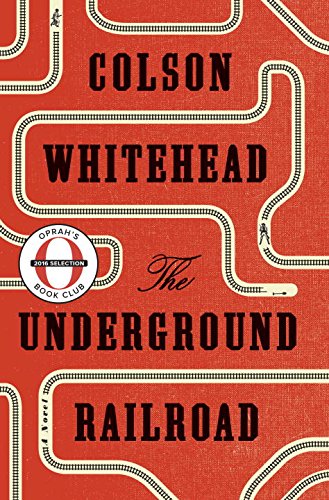
Underground Railroad: Slavery in America and Colson Whitehead's Searing Fiction

Steven Spielberg's chose to depict the Allied Army landing on D-Day for a gut wrenching and blood soaked 30 minutes only so viewers cannot but escape the gore by looking away for a minute or two. Colson Whitehead's much acclaimed 'The Underground Railroad', a fictional narrative of a slave trying to escape to freedom, is riveting and from the get go assaults the reader in unremitting prose the horrors of slavery until the last page. Whitehead pulls no punches in his depictions of the physical and moral cruelty of Slavery as an institution.

From Amazon.com
The book opens with the story of Ajarry, grandmother of the protagonist Cora. The price Ajarry was sold for in an African town to slave buyers could not be determined because she was part of a 'bulk purchase, eighty-eight human souls for sixty crates of rum and gun powder'. 'Able bodied men and children bearing women fetched more than juveniles, making an individual accounting difficult'. Whitehead is relentless in depicting the horrific fact that slaves were looked at as commodities and sometimes less respectful than furniture and sometimes valued more, especially when they disobey or worse, runaway, only so that they can learn that had they behaved no wiser than a stool they may not have suffered the unspeakable tortures or grisly death. Seen as property the slaves were subject to the vicissitudes of commodities trading. When the ship carrying Ajarry reaches America she is sold for $226 because of the "season's glut in young girls". Being sold repetitively Ajarry is taught the lesson's life by life. "She learned to quickly adjust to the new plantations, sorting the nigger breakers from the merely cruel, the layabouts from the hardworking, the informers from secret keepers". 

Ajarrys granddaughter Cora was born in a Georgia plantation and abandoned by her mother Mabel, who went in search of freedom, when Cora was just 10. We raise our children today in a cloistered environment and cannot even begin to fathom how a mother could abandon a child and go in search of her own freedom and how a child would even survive in horrendous conditions, all alone. From holocaust to civil war torn areas of today we see this time and again. Whether it is a teenage Anne Frank in Bergen-Belsen or a blood soaked and shell shocked toddler in Syria the life of Cora echoes across the ages and different horrors. In bringing that horror home Whitehead succeeds. Whitehead's book is not just about the darkest chapter of American history but a retelling of how wicked human soul can be and how the story can be taken as metaphor for current events. Elie Wiesel, survivor of Auschwitz, recalled how young sons abandoned their parents to survive. Once torn asunder each member of the Frank family then focuses on just his or her survival alone with probably wistful thinking, like Ajarry thinks of her cousins, that their other family members would've somehow survived the tragedy better.

During a party a boy spills "a single drop of wine staining the cuff of" the brother of a slave owner at the Georgia plantation. Terrence, whose cuff was stained, rains blows at the boy's head with his cane. "One drop" think Cora and rushes to defend the boy. Cora is no stranger to slaves being brutalized. "She had seen men hung from trees and left for buzzards and crows. Women carved open to the bones with cat-o'-nine tails. Bodies alive and dead roasted on pyres". The boy and Cora are flogged by Terrence. Terrence's bother James is annoyed only that his brother infringed upon his own property rights by overstepping and punishing his slaves. The slave overseer is incensed at the carelessness of the boy and the impudence of Cora. Both are stripped and flogged to their bones and washed with pepper water. 


Colson Whitehead - From www.colsonwhitehead.com


Big Anthony, a runaway slave who gets caught, is barbarically brutalized and Whitehead spares no details. Big Anthony's punishment is arranged as a spectacle and guests, other slave owners, were invited to watch. "Big Anthony was whipped for the duration of their meal and they ate slow". "Visitors sipped spiced rum as Big Anthony was doused with oil and roasted. The witnesses were spared his screams, as his manhood had been cut off on the first day, stuffed in his mouth, and sewn in". The brutal murder and disfigurement of Emmett Till, a 14 year old boy, comes to mind. Till's murder in 1955 and the open casket funeral held by his mother set off the Civil Rights struggle just a few decades ago.


Emmett Till's brutalized face. Courtesy Wikipedia
Whitehead's novel is not just a gory retelling of a past but it connects, a tad subtly but explicitly, with current events. Black Americans are too frequently stopped while driving and checked by police in today's America. Slave catching patrolmen in Whitehead's novel "stopped any niggers they saw and demanded their passes. They stopped niggers they knew to be free, for their amusement but also to remind the Africans of the forces arrayed against them, whether they were owned by a white man or not".

The Underground Railroad that existed in the ante-bellum era was a metaphorical references to a loose network of abolitionists and slaves who had escaped who took it upon themselves to help others escape. Harriet Tubman, herself an escapee, was a 'conductor' on one such railroad. Whitehead takes the metaphor and makes it a Gabriel Garcia Marquess-like realism with a fictional but physical underground railroad that snakes from Georgia to the North Eastern states. Slaves are approached by station masters who then conduct them to a train that runs underground and accessed by a trap door. The trapdoor is a multi-layered symbolism. 

Slavery was not a monolithic uniform institution but varied across the states. While Georgia and the south were drenched in blood states like the Carolinas had their own hypocrisies and brutality, albeit more refined, like sterilization of blacks by stealth. The Tuskegee syphilis experiment, the most notorious experiment in American medical history where blacks afflicted by syphilis were given placebos and studied for the effects of progression of disease, finds a mention. Till today the experiment affects how blacks perceive medical professionals in America and a chastised medical fraternity is aware of the deep distrust of African-Americans towards them. 

Cora escapes from the Georgia plantation and reaches South Carolina where a doctor gently suggests to her that she should get sterilized. One night Cora hears a woman scream that her child was stolen. She at first thinks the woman is having nightmares remembering of perhaps a child stolen from her and sold off and only later learns that having been sterilized by stealth the woman had gone mad realizing what was stolen from her. 

Slavery was justified by one too many that it was Biblically sanctioned. While Cora convalesces at a safe house in South Carolina the white lady taking care of her recites Bible verses to her and gently tells her that if God had not intended for slavery to exist they'd be free. Cora bitterly remembers the overseer at the Georgia plantation reciting those verses punctuating them by lashing the slaves with a cat-o'-nine tails. 

Cora had even heard the 'Declaration of Independence'. A slave boy, Michael, used to recite the Declaration and it was an amusement to the Whites who marveled at a slave boy narrating it. "Michael's ability never amounted to more than a parlor trick, delighting visitors before the discussion turned as it always did to the diminished faculties of niggers".

Hearing Michael's recitation of the Declaration Cora "didn't understand the words, most of them at any rate, but created equal was not lost on her. The white men who wrote it didn't understand it either, if all men did not truly mean all men. Not if they snatched away what belonged to other people, whether it was something you could hold in your hand, like dirt, or something you could not, like freedom". The jab at slave owning Thomas Jefferson is all too explicit. George Washington freed his slaves in his will but while he lived he hunted anyone who escaped from his clutches. The US constitution included what is now shamefully called one-fifths compromise whereby slaves were counted as property.

Benjamin Franklin had famously cautioned that "people who give up essential liberty to purchase a little temporary safety  deserve neither liberty nor safety". South Carolina, not wanting to be a safe haven for slaves fleeing southern states, instituted slave patrols that would barge into homes of whites and inspect for slaves who might be harbored by abolitionists. "Cora thought that the whites would be loath to give up their freedoms even in the name of security" but was shocked to learn that those desirous of being seen as patriots "boasted of how often they'd been searched and given a clean bill". It was common for neighbors, servants and even children  to inform on those who harbored slaves. The perils of nationalism could not be more tellingly illustrated. From the slave holding south to Stalinist Russia to today's 'see something, say something' America one can hear the echoes of that. In Stalin's Russia it was common of husbands to denounce wives and children informed on their parents.  

Cora is hidden in an attic by a family in South Carolina until the maid, tempted by reward, informs on the family. Cora is dragged away by a slave catcher engaged by the Randall family in Georgia while the family that sheltered her are hung from a tree. The story of Anne Frank comes to mind. Again and again the story that Whitehead tells is not just about slavery but of how people behave in circumstances not too different. This is a story of humanity at large told with slavery as central theme but one could see the stories of Holocaust, the horrors of Stalinism, the grotesqueness of India's caste system and more.

Nothing is black and white in the story. The pun is unintended. While there are whites who inflict such brutalities there are the white abolitionists who put their lives in harms way to liberate slaves and there were slaves who cooperate with the white man. Whether it is the Judenraat, the Jewish councils, in the concentration camps or the vast hundreds of thousands of Indians who served the British Raj or the groveling communists in the Stalin era or the members of the Vichy France the stain of collaborating with the oppressor is a human history not all too unique.

Having captured Cora the slave catcher Ridgeway lectures her on the 'American imperative': I prefer the American spirit, the one that called us from the Old world to the New, to conquer and build and civilize. And destroy that what needs to be destroyed. To lift up lesser races. If not lift up, subjugate. And if not subjugate, exterminate. Our destiny by divine prescription - the American imperative.

Having indicted the 'American imperative' through the slave catcher Whitehead then gives voice through Elijah Lander, a mulatto abolitionist, about what Freedom is: Work needn't be suffering, it could unite folks...Freedom was a community laboring for something lovely and rare.

Controlling access to education from those seen as unworthy of wisdom by those who think they've a god given right to wisdom is seen across cultures with sickening regularity. From an ancient Indian treatise that forbade knowledge to those called Shudras to white plantation owners who thought "the only thing more dangerous than a nigger with a gun was a nigger with a book" it is a common thread. A slave being seen reading a pamphlet, not even a book, could suffer an agonizing death.

Colson Whitehead's book is an urgent read in a year where a racist and xenophobic demagogue is within striking distance of the American presidency. After I visited the 'Topology of terror" museum in Berlin I wrote that America too needs such a museum to teach Americans of the nation's darkest chapter. It so happens that the Smithsonian museums just opened up a museum about African-Americans in Washington DC, thanks to the ceaseless efforts of Civil Rights icon and Congressman John Lewis. It is worth noting that Lewis had to prevail over a racist congressman, Jesse Helms of North Carolina, who time and again was resolutely against such a museum. The museum fulfills an urgent need. 

Whitehead wrote a column titled "Rules for Writing" in New York Times. Reading his book one could say that Whitehead has diligently followed the rules he had set forth. His very first rule was 'Show and Tell'. He disagrees with the "Show, don't tell" school of writing and calls for 'show and tell' because "when writers put their work out into the world they're like kids bringing their broken unicorns and chewed up teddy bears into class in the sad hope that someone else will love them as much as they do". Whitehead strikes the delicate balance in 'show and tell' where the telling could degenerate into total lack of nuances or subtleties. Referring to a dead dog of a slave owner he writes "the mutt was loved by man and nigger". The subtleties are packed into the sentences.

Rule 2 is "don't go searching for a subject, let the subject find you". 16 years in the making the subject had indeed found the author.

Saul Bellow, Whitehead quotes in Rule 3, said "fiction is higher autobiography". Whitehead lays down as dictum and adheres to "write what you know". 

Rule 4 is "never use three words when one will do" and rule 11 is "revise, revise, revise". Again, Whitehead practices what he preaches. The prose is sparse and completely shorn of unnecessary ornate phrases or metaphors. 

Having told writers to 'show and tell' he cautions in rule 6 that "what isn't said is as important as what is said. In many classic short stories the real action occurs in the silences". While he gives graphic details of the physical nature of the violence inflicted upon the slaves he  only implies the lurking moral corruption. No one, neither the slave owner or the slave, escapes the moral corruption of a society plagued by such violence. When Cora becomes a woman her fellow slaves gang rape her. Nudity is no sacred secret offered as token of intimacy because Cora is whipped naked in full view of her fellow slaves and others. Musing about sex with Ceasar, who had hatched the plan  to escape, Cora thinks to the day she was whipped naked and how Ceasar had looked at her unflinchingly even when other slaves, shuddering at the prospect that one day they certainly would be in her place, avert their eyes. After Cora's mother escapes scheming slaves make the 10 year old abandoned child's life miserable. The moral corruption of a violent system is hinted at. Again, the moral corruption of Stalinism and socialism in India came to my mind. 

'Underground Railroad' deserves to be read, re-read, re-read and reflected upon. The book is about the past but it shows how the past is never truly past and the present not only is an echo but is a progeny. This is not a story of one country's dark past but the story of humankind that even today murders and pillages in the name of race.

Whitehead's 'Underground Railroad' should become required reading in schools. I wish the book gets a Pulitzer next April.

References:

1. 6 Questions for Colson Whitehead - Time Magazine interview http://time.com/4447972/colson-whitehead-the-underground-railroad/
2. The Real Underground Railroad https://en.wikipedia.org/wiki/Underground_Railroad
3. Michiko Kakutani's review of the book in NYT http://www.nytimes.com/2016/08/03/books/review-the-underground-railroad-colson-whitehead.html?action=click&contentCollection=Book%20Review&module=RelatedCoverage&region=Marginalia&pgtype=article
4. Colson Whitehead interview with NYT on writing the book http://www.nytimes.com/2016/08/04/books/colson-whitehead-on-slavery-success-and-writing-the-novel-that-really-scared-him.html
5. Colson Whitehead's rules for writing in NYT http://www.nytimes.com/2012/07/29/books/review/colson-whiteheads-rules-for-writing.html?_r=0
6. Emmett Till https://en.wikipedia.org/wiki/Emmett_Till
7. Civil Rights icon and Congressman John Lewis on the opening of Smithsonian museum about African Americans https://www.washingtonpost.com/lifestyle/magazine/john-lewis-spent-15-years-fighting-for-the-museum--now-the-dream-is-realized/2016/09/14/eeb0ca10-64bb-11e6-96c0-37533479f3f5_story.html

Monday, May 18, 2015

Baltimore Aflame: America's Racial Wounds, Perpetual Victimhood and the Failure of Liberalism

Yet another American city has been gripped by race riots. Yet again we see a flood of reactions ranging from the truly concerned to the ritually indignant to self-delusion and more. Does America have a race problem? Has America made any progress since the Civil War? What are the causes that led to the latest conflagration?

America has a problem with its justice system and cops. Author, columnist and commentator Jeffrey Toobin in a brilliant article, 'The Milwaukee Expreriment', in 'The New Yorker' outlines how America's judicial system aids, abets and creates racial disparity amongst those penalized by the judicial system. Anyone watching the T.V. series 'Good Wife', centered around characters in a Chicago Law firm, will realize how American judicial system cries out for transparency. Toobin underscores the fact that most defendants are at the mercy of prosecutors, who enjoy wide latitudes in deciding whom to charge and whose charges get dropped. In Milwaukee, Toobin cites a report, prosecutors dropped charges against 41% of white defendants while doing so for only 27% of black defendants. "In cases involving prostitution, black female defendants were likelier to be charged than white defendants".


In post 9-11 America cops and firemen are routinely referred to as 'heroes' and lionized for being, well, cops and firemen. Frida Ghitis, writing for CNN.com, points out that in 2011 FBI reported "404 justifiable law-enforcement homicides" while "police killed six people in Australia, two in England, six in Germany". America has to stop romanticizing the idea that a cop is justified in shooting, often fatally, at not just a hint but a whiff of a hint of threat to life. A case in point is the 'Fruitvale station shooting' where an unarmed black man was shot point blank after a cop had pinned him to the ground. America's fetish for guns, thanks to the Second Amendment, plays a vital role in this mess.

Americans have more guns per-capita than any other developed country. The much vaunted Second Amendment has become a political lightning rod and the NRA (National Rifle Association) wields unbelievable clout in American politics that even Democratic Presidential nominees like John Kerry try to mute their championing of stricter gun controls to win elections. Remember the ridiculous duck hunt photos that Kerry's campaign orchestrated in 2004? What kind of civilized society thinks that an automatic rifle belongs in the hands of a civilian with little background check. Both liberals and conservatives play their games on background checks. Liberals, for their part, oppose a national registry of the mentally sick and conservatives oppose extensive back ground checks leading to a situation where more than once mentally ill people have perpetrated horrific gun crimes including a blood soaked tragedy at a school in Newtown, Connecticut. To be fair, more cops are killed in America in the line of duty than elsewhere.

The militarization of American police forces are another flash point. During the riots in Ferguson the police rolled out battle tanks onto the streets and America was dismayed. America's police departments buy military equipment from US Army. While many were dismayed at parading tanks in the streets during a race riots I am sure nobody would object when the same tanks are rolled out in search of a fugitive terrorist in an American city as it happened during the hunt for the Tsarnaev brothers in Boston.

The burgeoning prison population poses a serious economic problem too. Ever since Eisenhower coined the phrase "military-industrial complex" to identify the nexus between Pentagon and arms manufacturers it has become a motif and so we now have a "prison-industrial complex". It is here that American politics and the causes of the now much talked about 'mass incarceration' of blacks starts getting murkier.

During the 1970s drug war Nelson Rockefeller, a Republican albeit a very progressive liberal, proposed and passed stiff laws for drug sentencing. US incarceration rates exponentially jumped after that. Even more insidious were the racial stereotypes between 'crack cocaine', largely used by blacks, and 'powder cocaine', largely used by whites. 'Crack cocaine' carries much harsher sentences than 'powder cocaine'. Until very recently the differences in sentencing went largely unchallenged despite mounting evidence that forms of cocaine has no impact on behavior patterns.

The 70s and then the 80s saw a rapid rise of crime rates in US across all kinds of crimes leading to politicians enacting stringent laws to punish crimes, provide more money for prisons and other efforts in an attempt to stem the rising tide of crime. In 1982 social scientists James Q. Wilson and George Kelling proposed the 'Broken Windows Theory'. The theory contended that prosecuting low level crimes such as vandalism, toll jumping etc prevents bigger crimes.

Prosecuting crime became the rallying cry of New Age Democrats like Bill Clinton and center-Right Republicans like Rudy Guiliani in the beginning of the 90s. Bill Clinton signed the "Violent Crime Control and Law Enforcement Act" in 1994 seeking to strike a posture of a Democrat being tough on crime unlike the popular image of liberal democrats being soft on crime. Guiliani, heading a crime infested New York City, encouraged implementation of 'Broken Windows Theory'. The 90s did see a sharp drop in crime and a rise of in incarceration rates. The cause and effect connection is very debatable. Bill Clinton, today, accepts that the law he signed was a big reason in the 'mass incarceration' that his wife and Presidential candidate Hillary Clinton alleges.

While all the above tell a certain story the story does not, of course, end there. While many focus on the racial disparity in incarceration what is often missed is that the entire range of indignation about racial disparity pre-supposes a key premise. The premise is often that racial component of offenders should be proportional to the demographical composition too. The premise is that offenders reflect the proportion they constitute in a society and therefore minorities in a society should be minorities amongst offenders too and thereby the incarcerated too. This is hogwash. A fact often ignored is that the victims of the crimes too are lopsidedly black. Meaning, blacks are more often the victims of crimes committed by black offenders. A black teenager is more likely to die from a murder attempt by a black than by a trigger happy cop. The unsavory omission in this righteous indignation about racial disparity of those penalized is the fact that the victims too are mostly blacks and the offenders are, indeed, mostly black too. Civil Rights icon Jesse Jackson spoke of walking in Chicago, "there is nothing more painful to me at this stage of my life than to walk down the street and hear footsteps and start thinking of robbery, then look around and see somebody white and feel relieved". That, from Jesse Jackson.

Crime Rate in NYC & Rudy Guiliani's Years.

It is also fashionable to blame tough laws as spawning their own problems. During the recent conflagration of riot in Baltimore many blamed the get-tough laws enacted by now Democratic presidential candidate and mayor of Baltimore 1999-2007 Martin O' Malley. Whether it is New York City or Baltimore both Guiliani and O'Malley inherited cities, famous and populous cities, that were considered very unsafe and crime rates were spiking. Baltimore used to have open-air drug markets. As a result of their policies the crime rates did die down.

The 'Broken Windows Theory' of prosecuting low level crimes became the focus of criticism when Eric Garner of New York died after a chokehold by a cop during his arrest for selling loose cigarettes.   While the Toobin article speaks of how whites are prosecuted less than blacks it does not, most importantly, allege that blacks are charged unfairly. This distinction is often lost on many who cite statistics. While it is politically expedient to speak of mass incarceration it is a blatant lie to make it appear as if every black who is walking down the street is hauled off to a jail. More often than not blacks who are charged or shot are caught in murky situations to say the least. Does the rare occurrence, as it did in South Carolina, never happen where a completely innocent black man or woman is killed? Of course it happens. But, to be sure and to be fair, those are indeed exceptions. Did Eric Garner deserve to die? Certainly not. Absolutely not. But he was no innocent bystander either.

Black America, a staunch voting bloc for Democrats, has often considered the GOP to be a party of White men and inimical to their interests. Yet, more often than not, it is either wanna-be tough democrats like Bill Clinton and David O' Malley (who instituted tough laws in Baltimore) that create the laws which, in the name of fighting crime, creates a racial problem. Baltimore has had a democratic mayor for 40 years. Maryland is a liberal bastion.

Blacks, by an overwhelming majority, support Big Government. From W.E.B. Du Bois to MLK Jr to the current crop of black leaders distrust of capitalism and faith in not just socialism but a deep seated hatred towards capitalism runs in the community despite all evidence to the contrary. FDR's New Deal passed with support from racist southern democrats institutionalized segregation. Later the FHA (Federal Housing Administration) which fueled the 1960s housing boom literally codified that to preserve market value of homes built with FHA assistance they should not be sold to blacks. Government engineered housing projects cater to political priorities trumping economic logic and creates ghettos. A Washington Post article bemoaned how spending $130 Million in Baltimore still could not save the city. Misguided housing projects and a work force untrained for new kind of jobs made parts of the city ripe for becoming drug infested dens.

Unions are loved by black communities for the job security they provide. What they forget is that a policeman cannot be fired for the same reasons that a teacher can never be fired. The police union is as good in protecting bad policemen from being fired as the teacher's union is militant in ensuring that short of being a murderer no teacher can ever be fired.

Black politicians love to speak of disparities between schools in black neighborhoods and white neighborhoods. A troubling fact is that Baltimore's per pupil spending on education is the second highest in the country and yet the schools are largely failing. When Michelle Rhee, Asian-American, tried to reform the notoriously failing schools in D.C. by expanding Charter schools and demanding better performances from public schools the D.C. electorate, 50% black, backed the teacher's union's campaign to unseat the mayor who appointed her. And they succeeded. When Rahm Emmanuel, democratic mayor of Chicago, wanted to extend the school day in Chicago, one of the lowest in the country, the teacher's union, largely black, went on a militant strike demanded a forbidding increase in funding. Chicago teachers earned well above the median wages in Chicago already. Incidentally the black leader of Chicago's teachers union made fun of Federal Secretary of Education, Arne Duncan's, a white, lisp. Imagine the furore if their ethnicities had been reversed.

When latte sipping limousine-liberals prevent a Wal-Mart store from opening in D.C. or New York City they not only kill jobs but they deprive the largely poor and very largely black populations in the neighborhood of shopping options that are vital to their economic well being. Not everyone can afford to shop to at Wholefoods or have a latte at Starbucks. When Coke positioned itself as the white man's drink Pepsi, trying to find a market, turned to black communities. It was path breaking to see black men in advertisements dressed up as salesmen. This is what capitalism does best, capitalizing on the desire to make money. Black musicians and athletes are paragons of capitalism. When LeBron, net worth $270 million, James auctions himself as a free agent he make it rain dollars. Thanks to capitalism B.B. King born to a sharecropper becomes a very rich musician. Together Beyonce Knowles and Jay-Z are worth, $400 million, much more than Mitt Romney who holds a dual degree from Harvard. Out of its desire to make money broadcasting giant ABC even went to great lengths to get Ray Charles out of legal troubles caused by his drug habits. The black community needs to understand that capitalism is their best friend.

More often than not the disparities between blacks and whites are driven by economics than ethnicity as a factor. It is often bemoaned that luxury goods and even movies do not cater to black America. This is more a function of economics than of race. Blacks are a minority and lack the purchasing power of whites or Asians. Not everything is about race.

When Baltimore erupted in riots a straight line was drawn from the deaths of Trayvon Martin in Florida to Michael Brown's death in Ferguson to Baltimore. Amongst the three incidents the really unfair one, from comparison perspective, was the Ferguson incident. When Michael Brown was shot dead by officer Darren Wilson a trial by media ensued followed by riots and fancy chants of "Don't shoot" (with hands up in the air, suggesting that a surrendering unarmed Brown was shot dead). Many spoke of how Brown, a very stocky built boy, was a 'gentle giant'. Only later it turned out that Brown had indeed terrorized and burglarized an Asian owned store just moments before being shot by officer Wilson.

Thanks to the furore and riots a federal investigation, no less, was launched along side a state investigation against officer Wilson. Imagine being investigated by the Federal Department of Justice.  And both investigations concluded that Brown had indeed charged at officer Wilson giving Wilson no choice but to shoot at him. Wilson, in an often forgotten fact, was exonerated of any racial motives in the shooting.

In the case of Trayvon Martin too public furore made the county file charges against vigilante George Zimmerman despite the fact that an earlier review concluded that Zimmerman had acted within the 'stand your ground' law and was in fact injured by Martin. Finally Zimmerman was acquitted by a jury that included blacks. Yet, the myth persists that Zimmerman was motivated by race.

The Baltimore case is even murkier because of the fact that of the 6 officers charged 3 are black including a woman, whose last name is White. Yet it is being made out in the media that its all about the dead black man. Cops, black or white, act like cops do, with an air of entitlement and righteousness. This is the classic case of 'power corrupts'. Baltimore police force is 46% black. In the infamous case of the arrest of Harvard professor Henry Louis Gates Jr while the arresting officer was white there was, at least, one other black cop on the scene. And there too, the officer was later exonerated of any racial bias though the arrest itself was termed 'avoidable'. Avoidable and stupid it certainly was.

When Ferguson and Baltimore burned people feel free to lecture America on the vestiges of racism that are alive and kicking. Yet, not many even know how Philadelphia, a very major city, was ransacked for several nights by black flash mobs, not in response to any injustice but merely as sport. Black mayor Michael Nutter addressed a church congregation and scolded black youngsters in very blunt words and even told them to "pull up your pants, buy a belt". Words, which a white mayor could never have uttered.

Whether it is mayor Nutter or presidential candidate Obama or popular T.V. personality Bill Cosby offering words of stern advice to fellow blacks the reaction from the black community is swift and mercilessly against them for 'acting white'. Black leaders, especially race hustlers like Jesse Jackson and Al Sharpton, specialize in playing the victim card. Obama who was raised by a single white mom after his black father deserted them spoke of how black men abandon families on Father's day. Jesse Jackson responded, on what he thought was a switched off microphone, by expressing a desire to 'cut his nuts off'. Cosby was called a race traitor for calling attention to how black families raise kids. A Washington Post op-ed identifies the desire by black commentators to ask those who advise blacks to couch their advices along side scolding of white America as the 'politics of patronizing'.

The black community's overweening desire to play the race card does the greatest disservice to blacks themselves besides issue of an iniquitous judicial system and trigger happy cops. Michelle Obama excels in playing the race card when it suits her. Mrs Obama recently listed all the ways in which black America is at the receiving end of a society that is still divided along racial lines. This from a woman with a Princeton degree, whose brother and husband went to Princeton and Harvard respectively and whose husband got elected as President with the thinnest resume in American history. What she failed to mention was the love-hate relationship that her own husband shares with the black political establishment.

When Barack Obama sought to get elected for Congress from Chicago charges of 'he's not black enough' was started as a whisper campaign, not by whites but by the black establishment itself because he did not want to hitch his wagon with them and nor was he deferential towards them. Obama's Harvard degree and inability to speak like the 'typical' black man were cited as his lack of black character. This is a depressing phenomenon that black students continue to battle. Black students who excel in studies are often shunned by fellow black students as 'acting white'. Mac Arthur genius award winner John Dabiri in an interview to NPR spoke of it. Now, Roland Fryer, winner of the Clark medal (an Economics prize for the most promising economist under age 40) actually did a statistical research and proved that when black students excel in studies they tend to lose friends amongst blacks.

Michelle Obama was happy to list the ways in which blacks could be discriminated against and their achievements belittled. What she failed to say was that there are many situations where it is advantageous to be black too. Chiefly, in education and jobs, affirmative action makes it far easier for a black student or applicant to get a place at Harvard or at a job. Black students typically need to score 300 points less than Asian students to get into Ivy League universities. A black employee cannot be fired that easily.

In Federal and State jobs promotion exams are carefully constructed to ensure that black applicants score and win else the very fact that blacks may not have scored would by itself used as a justification to throw out the results. 11 firemen, one Hispanic and the rest white, had to go all the way to the US Supreme Court to re-instate their promotions after the State rescinded their promotions because no black fireman had scored enough to be promoted in the test. Not having scored enough to merit a promotion black firemen filed a lawsuit that the test was 'biased'. The Hispanic firefighter, a dyslexic too, had sacrificed his second job and paid for a person to read his test materials to him since he was dyslexic. After the state proved that the test was not biased the black firemen still went to court and Sonia Sotomayor, a self-professed 'affirmative action baby', who sat on the appeals court dismissed the claims of the promoted firemen without an explanation. The aggrieved firemen then got their justice only in US Supreme Court. Now, Sotomayor sits as one of the justices in the US Supreme Court. 'The Economist' magazine notably, in a major cover story, called for an end to affirmative action.

Another fact that Mrs Obama forgot  to mention was how the Department of Justice, as reported by New York Times, headed by Eric Holder, a black, routinely supports police in cases where they used force. Mrs Obama conveniently ignores government programs targeted towards blacks like the 'Head-Start program' that have become grotesque gravy trains for political patronage. Running at a cost of 7 billion dollars for 1 million kids (per capita $700,000) is nothing but a jobs programs that is absolutely ineffective except as a political patronage for an important vote bank.

President Obama, given the community organizer that he once was, loves to speak of the responsibility of society more often than he does of personal responsibility. A key initiative of his is the 'My brother's keeper' initiative. What a load of nonsense. College Board's analysis of SAT scores show that blacks from families with more wealth than white families still score less on SAT. The differences, College Board, says start much earlier and at homes. What in essence it says is that the government and society can dream up any number of programs but ultimately the home is where the real task is. A relative of mine once joked that at a certain place the tuition center Kumon and a ballet teaching center were located along side each other with identical time slots for classes. It was funny, she said, to see that when the time for a class comes Asian kids stream into Kumon and white kids stream into ballet classes. As much as we all hate stereotyping the differences start there.

Yes, compared to whites blacks do perform badly on every social indicator. But what explains the fact that even Hispanics, subject to the same forces of poverty and racism still perform better on all indicators? In fact Hispanics lack access to social welfare schemes available to citizens because most them are illegal immigrants. Black community, statistics from Pew research center shows, was the hardest hit in the recent financial crisis and still lags behind Hispanics in bouncing back during the recovery. Interestingly another Pew Survey statistics also shows that Hispanics are more willing to relocate in search of a job.

On the subject of the black community's strident support of big government and near total absolute loyalty as a voting block for Barack Obama, it is perplexing because both are inimical to the interests of the community. The banking regulations put in place and championed by Obama is choking of access to credit by low income groups, most of whom are blacks. In the current regulatory regime it is almost impossible for anyone with less than impeccable credit and adequate financial resources to secure a loan. It should be noted here that the seeds of the financial crises contained within it desire by liberal groups to loosen credit for those with insufficient credit profiles, most of whom were blacks and Hispanics. Failure of lending agencies to lend widely to a vast strata of socio-economic groups was considered racial discrimination notwithstanding the fact that economic factors should drive such decisions more.

Unemployment within black community is still above the national average and yet Obama is championing the legalizing of nearly 14 million illegal immigrants most of whom are competing for the same low-wage jobs that blacks apply for. Legalizing the 14 million has its own economic rationale, let alone humanitarian, but somebody has to pay the price and it is the black community that will pay for it. If a white GOP president had fired Shirley Sherrod (see note below in References) the NAACP would've cried murder and yet since it was Obama that did it he not only escapes censure but it is Sherrod who was censured. This is what happens when politicians are guaranteed the votes of a demographic bloc.

The acquittal of the police officers who attacked Rodney King sent Los Angeles into a burning fury. A subsequent re-trial saw justice done. Yes, it was race that was the motivating force of those officers.  That said, black America often forgets the cases of O.J. Simpson and Michael Jackson. Simpson murdered a white woman and was arrested in the most publicized chase in recent US history. The trial was historic and sentiments about his innocence was divided along racial lines with blacks considering him innocent and whites otherwise. Thanks to a high priced lawyer and an effete prosecution Simpson was acquitted. Michael Jackson was accused of pedophilia and was acquitted thanks, again, to a a very high priced legal team.

Neither the acquittals O.J. Simpson or Michael Jackson or even the recent execution style killings of cops in NYC and elsewhere have occasioned riots by whites. To say that rioting is what gets attention is a travesty of truth and belies ground realities of political power wielded by blacks as a demographic group. Rosa Parks had more justification to burn a cop's car than the hooligans of Baltimore. During Civil Rights marches the crowd marched proudly with uncovered faces and dressed in suits unlike the hoodie clad, underwear baring, masked rioters of Ferguson and Baltimore. Both convey very different image and evoke very different reactions from viewers at large. As unfair as it may seem optics matters.

The black community is also ill served by leaders like Jesse Jackson and Al Sharpton. Both of them can be unhesitatingly called race hustlers and shakedown artists. Al Sharpton notoriously rose to fame when he falsely alleged that a black girl was raped by white cops. He also played a role in inflaming racial tension between blacks and Jews in the Crown Heights riots. Another case where whites were charged by a black girl leading to a highly publicized trial and later acquittal of the accused was the Duke Lacrosse case. A group of white students from Duke University were charged with raping a black stripper. An overzealous prosecutor charged the students and the case fell apart during trial. There were no riots either leading up to the trial or once the case fell apart with a thud that it was trumped up.

In today's America it is not easy for any injustice to go without it gaining attention and a chorus of support. Riots are the least effective ways to gain attention and they are, without exception, counter-productive.

Amidst the din of racial injustices towards blacks what is completely ignored is that blacks can be racist too. The black community's attitudes towards Asians and Hispanics is no less racist. Homophobia runs high in black churches. Black churches in California, of all places, were instrumental in helping pass Proposition 8 to ban gay marriages. This is sheer hypocrisy in a community that was wrecked by the AIDS epidemic. When Barack Obama discovered, expediently, that it was politically virtuous to support gay marriage he had to, according to a New York Times report, personally call and mollify black church pastors. When Jeremy Lin, an Asian, stormed the basket ball courts, he was taunted by black athletes. Former Washington D.C. mayor Marion Barry wanted "asians's dirty shops to go" and for black shops to take their place. In a city like Los Angeles where blacks hold political power Hispanics are given a raw treatment. In fact the schism between blacks and Hispanics was so bad that during 2008 election there was fear that it could impact Obama's chances in a state like California. Power corrupts all.

It is highly unfair to not give even a modicum of credit to the  progresses made by America in racial integration and ensuring that the society is more just. It is, of course, as it should be, a work in progress. From music to sports to politics to academia blacks have made great strides. Events like that of Baltimore should serve as continued reminders of work that remains to be done. The work that remains to be done is on several fronts. The society has to continue to evolve and hold itself to higher standards of equality. The community too needs to introspect its weaknesses and sociopolitical choices that are stumbling blocks to progress.

References:

1. Prison Industrial Complex http://en.wikipedia.org/wiki/Prison–industrial_complex
2. "Police Shootings in US out of hand" - Frida Ghitis's column http://www.cnn.com/2014/12/01/opinion/ghitis-police-shootings/
3. Rockefeller drug laws http://en.wikipedia.org/wiki/Rockefeller_Drug_Laws
4. Myths about Cocaine http://www.salon.com/2013/08/10/busting_the_crack_propaganda_myths_partner/
5. Crime Rate in US http://en.wikipedia.org/wiki/Crime_in_the_United_States
6. Bill Clinton's "Violent Crime Control and Law Enforcement Act" http://en.wikipedia.org/wiki/Violent_Crime_Control_and_Law_Enforcement_Act
7. Broken Windows Theory http://en.wikipedia.org/wiki/Broken_windows_theory
8. Crime in New York City http://en.wikipedia.org/wiki/Crime_in_New_York_City
9. "Why $130 Million Couldn't Transform Baltimore" - Oped from Washington Post - http://www.washingtonpost.com/local/why-couldnt-130-million-transform-one-of-baltimores-poorest-places/2015/05/02/0467ab06-f034-11e4-a55f-38924fca94f9_story.html
10. Jesse Jackson on walking in Chicago http://www.redstate.com/diary/gawken/2012/03/25/what-jesse-jackson-really-thinks-about-trayvon-martin-well-sort-of/
11. Arrest of Harvard Professor Henry Louis Gates Jr http://www.nytimes.com/2009/07/24/us/24cambridge.html?pagewanted=all
12. "Axe Head Start Programs" - Joe Klein in Time magazine http://content.time.com/time/nation/article/0,8599,2081778,00.html
13. Roland Fryer and research on 'acting white' http://www.washingtonpost.com/blogs/wonkblog/wp/2015/04/30/meet-the-economist-who-grew-up-among-crack-dealers-and-won-a-mini-nobel-for-his-research-on-race/
14. Shirley Sherrod case http://en.wikipedia.org/wiki/Shirley_Sherrod
15. "The Milwaukee Experiment" - Jeffrey Toobin in 'The New Yorker' http://www.newyorker.com/magazine/2015/05/11/the-milwaukee-experiment
16. Eric Garner chokehold death http://en.wikipedia.org/wiki/Death_of_Eric_Garner
17. Video of Michael Brown allegedly stealing from store and threatening store owner http://www.huffingtonpost.com/2014/08/15/michael-brown-robbery-video_n_5682659.html
18. "Time to scrap affirmative action" -- Cover Story by 'The Economist' http://www.economist.com/news/leaders/21576662-governments-should-be-colour-blind-time-scrap-affirmative-action
19. Former DC mayor says "Asians' dirty shops to go" http://abcnews.go.com/blogs/politics/2012/04/former-d-c-mayor-marion-barry-says-asians-dirty-shops-ought-to-go/
20. Obama's call to pastors for support for gay marriage http://www.nytimes.com/2012/05/14/us/politics/on-marriage-obama-tried-to-limit-risk.html
21. "Baltimore's Poor Not Helped by Liberal Policies" - Column by Rich Lowry http://www.realclearpolitics.com/articles/2015/05/02/baltimores_decline_is_all_democrats_work_126472.html