Steven Spielberg's chose to depict the Allied Army landing on D-Day for a gut wrenching and blood soaked 30 minutes only so viewers cannot but escape the gore by looking away for a minute or two. Colson Whitehead's much acclaimed 'The Underground Railroad', a fictional narrative of a slave trying to escape to freedom, is riveting and from the get go assaults the reader in unremitting prose the horrors of slavery until the last page. Whitehead pulls no punches in his depictions of the physical and moral cruelty of Slavery as an institution.
The book opens with the story of Ajarry, grandmother of the protagonist Cora. The price Ajarry was sold for in an African town to slave buyers could not be determined because she was part of a 'bulk purchase, eighty-eight human souls for sixty crates of rum and gun powder'. 'Able bodied men and children bearing women fetched more than juveniles, making an individual accounting difficult'. Whitehead is relentless in depicting the horrific fact that slaves were looked at as commodities and sometimes less respectful than furniture and sometimes valued more, especially when they disobey or worse, runaway, only so that they can learn that had they behaved no wiser than a stool they may not have suffered the unspeakable tortures or grisly death. Seen as property the slaves were subject to the vicissitudes of commodities trading. When the ship carrying Ajarry reaches America she is sold for $226 because of the "season's glut in young girls". Being sold repetitively Ajarry is taught the lesson's life by life. "She learned to quickly adjust to the new plantations, sorting the nigger breakers from the merely cruel, the layabouts from the hardworking, the informers from secret keepers".
Ajarrys granddaughter Cora was born in a Georgia plantation and abandoned by her mother Mabel, who went in search of freedom, when Cora was just 10. We raise our children today in a cloistered environment and cannot even begin to fathom how a mother could abandon a child and go in search of her own freedom and how a child would even survive in horrendous conditions, all alone. From holocaust to civil war torn areas of today we see this time and again. Whether it is a teenage Anne Frank in Bergen-Belsen or a blood soaked and shell shocked toddler in Syria the life of Cora echoes across the ages and different horrors. In bringing that horror home Whitehead succeeds. Whitehead's book is not just about the darkest chapter of American history but a retelling of how wicked human soul can be and how the story can be taken as metaphor for current events. Elie Wiesel, survivor of Auschwitz, recalled how young sons abandoned their parents to survive. Once torn asunder each member of the Frank family then focuses on just his or her survival alone with probably wistful thinking, like Ajarry thinks of her cousins, that their other family members would've somehow survived the tragedy better.
During a party a boy spills "a single drop of wine staining the cuff of" the brother of a slave owner at the Georgia plantation. Terrence, whose cuff was stained, rains blows at the boy's head with his cane. "One drop" think Cora and rushes to defend the boy. Cora is no stranger to slaves being brutalized. "She had seen men hung from trees and left for buzzards and crows. Women carved open to the bones with cat-o'-nine tails. Bodies alive and dead roasted on pyres". The boy and Cora are flogged by Terrence. Terrence's bother James is annoyed only that his brother infringed upon his own property rights by overstepping and punishing his slaves. The slave overseer is incensed at the carelessness of the boy and the impudence of Cora. Both are stripped and flogged to their bones and washed with pepper water.
Big Anthony, a runaway slave who gets caught, is barbarically brutalized and Whitehead spares no details. Big Anthony's punishment is arranged as a spectacle and guests, other slave owners, were invited to watch. "Big Anthony was whipped for the duration of their meal and they ate slow". "Visitors sipped spiced rum as Big Anthony was doused with oil and roasted. The witnesses were spared his screams, as his manhood had been cut off on the first day, stuffed in his mouth, and sewn in". The brutal murder and disfigurement of Emmett Till, a 14 year old boy, comes to mind. Till's murder in 1955 and the open casket funeral held by his mother set off the Civil Rights struggle just a few decades ago.
Whitehead's novel is not just a gory retelling of a past but it connects, a tad subtly but explicitly, with current events. Black Americans are too frequently stopped while driving and checked by police in today's America. Slave catching patrolmen in Whitehead's novel "stopped any niggers they saw and demanded their passes. They stopped niggers they knew to be free, for their amusement but also to remind the Africans of the forces arrayed against them, whether they were owned by a white man or not".
The Underground Railroad that existed in the ante-bellum era was a metaphorical references to a loose network of abolitionists and slaves who had escaped who took it upon themselves to help others escape. Harriet Tubman, herself an escapee, was a 'conductor' on one such railroad. Whitehead takes the metaphor and makes it a Gabriel Garcia Marquess-like realism with a fictional but physical underground railroad that snakes from Georgia to the North Eastern states. Slaves are approached by station masters who then conduct them to a train that runs underground and accessed by a trap door. The trapdoor is a multi-layered symbolism.
Slavery was not a monolithic uniform institution but varied across the states. While Georgia and the south were drenched in blood states like the Carolinas had their own hypocrisies and brutality, albeit more refined, like sterilization of blacks by stealth. The Tuskegee syphilis experiment, the most notorious experiment in American medical history where blacks afflicted by syphilis were given placebos and studied for the effects of progression of disease, finds a mention. Till today the experiment affects how blacks perceive medical professionals in America and a chastised medical fraternity is aware of the deep distrust of African-Americans towards them.
Cora escapes from the Georgia plantation and reaches South Carolina where a doctor gently suggests to her that she should get sterilized. One night Cora hears a woman scream that her child was stolen. She at first thinks the woman is having nightmares remembering of perhaps a child stolen from her and sold off and only later learns that having been sterilized by stealth the woman had gone mad realizing what was stolen from her.
Slavery was justified by one too many that it was Biblically sanctioned. While Cora convalesces at a safe house in South Carolina the white lady taking care of her recites Bible verses to her and gently tells her that if God had not intended for slavery to exist they'd be free. Cora bitterly remembers the overseer at the Georgia plantation reciting those verses punctuating them by lashing the slaves with a cat-o'-nine tails.
Cora had even heard the 'Declaration of Independence'. A slave boy, Michael, used to recite the Declaration and it was an amusement to the Whites who marveled at a slave boy narrating it. "Michael's ability never amounted to more than a parlor trick, delighting visitors before the discussion turned as it always did to the diminished faculties of niggers".
Hearing Michael's recitation of the Declaration Cora "didn't understand the words, most of them at any rate, but created equal was not lost on her. The white men who wrote it didn't understand it either, if all men did not truly mean all men. Not if they snatched away what belonged to other people, whether it was something you could hold in your hand, like dirt, or something you could not, like freedom". The jab at slave owning Thomas Jefferson is all too explicit. George Washington freed his slaves in his will but while he lived he hunted anyone who escaped from his clutches. The US constitution included what is now shamefully called one-fifths compromise whereby slaves were counted as property.
Benjamin Franklin had famously cautioned that "people who give up essential liberty to purchase a little temporary safety deserve neither liberty nor safety". South Carolina, not wanting to be a safe haven for slaves fleeing southern states, instituted slave patrols that would barge into homes of whites and inspect for slaves who might be harbored by abolitionists. "Cora thought that the whites would be loath to give up their freedoms even in the name of security" but was shocked to learn that those desirous of being seen as patriots "boasted of how often they'd been searched and given a clean bill". It was common for neighbors, servants and even children to inform on those who harbored slaves. The perils of nationalism could not be more tellingly illustrated. From the slave holding south to Stalinist Russia to today's 'see something, say something' America one can hear the echoes of that. In Stalin's Russia it was common of husbands to denounce wives and children informed on their parents.
Cora is hidden in an attic by a family in South Carolina until the maid, tempted by reward, informs on the family. Cora is dragged away by a slave catcher engaged by the Randall family in Georgia while the family that sheltered her are hung from a tree. The story of Anne Frank comes to mind. Again and again the story that Whitehead tells is not just about slavery but of how people behave in circumstances not too different. This is a story of humanity at large told with slavery as central theme but one could see the stories of Holocaust, the horrors of Stalinism, the grotesqueness of India's caste system and more.
Nothing is black and white in the story. The pun is unintended. While there are whites who inflict such brutalities there are the white abolitionists who put their lives in harms way to liberate slaves and there were slaves who cooperate with the white man. Whether it is the Judenraat, the Jewish councils, in the concentration camps or the vast hundreds of thousands of Indians who served the British Raj or the groveling communists in the Stalin era or the members of the Vichy France the stain of collaborating with the oppressor is a human history not all too unique.
Having captured Cora the slave catcher Ridgeway lectures her on the 'American imperative': I prefer the American spirit, the one that called us from the Old world to the New, to conquer and build and civilize. And destroy that what needs to be destroyed. To lift up lesser races. If not lift up, subjugate. And if not subjugate, exterminate. Our destiny by divine prescription - the American imperative.
Having indicted the 'American imperative' through the slave catcher Whitehead then gives voice through Elijah Lander, a mulatto abolitionist, about what Freedom is: Work needn't be suffering, it could unite folks...Freedom was a community laboring for something lovely and rare.
Controlling access to education from those seen as unworthy of wisdom by those who think they've a god given right to wisdom is seen across cultures with sickening regularity. From an ancient Indian treatise that forbade knowledge to those called Shudras to white plantation owners who thought "the only thing more dangerous than a nigger with a gun was a nigger with a book" it is a common thread. A slave being seen reading a pamphlet, not even a book, could suffer an agonizing death.
Colson Whitehead's book is an urgent read in a year where a racist and xenophobic demagogue is within striking distance of the American presidency. After I visited the 'Topology of terror" museum in Berlin I wrote that America too needs such a museum to teach Americans of the nation's darkest chapter. It so happens that the Smithsonian museums just opened up a museum about African-Americans in Washington DC, thanks to the ceaseless efforts of Civil Rights icon and Congressman John Lewis. It is worth noting that Lewis had to prevail over a racist congressman, Jesse Helms of North Carolina, who time and again was resolutely against such a museum. The museum fulfills an urgent need.
Whitehead wrote a column titled "Rules for Writing" in New York Times. Reading his book one could say that Whitehead has diligently followed the rules he had set forth. His very first rule was 'Show and Tell'. He disagrees with the "Show, don't tell" school of writing and calls for 'show and tell' because "when writers put their work out into the world they're like kids bringing their broken unicorns and chewed up teddy bears into class in the sad hope that someone else will love them as much as they do". Whitehead strikes the delicate balance in 'show and tell' where the telling could degenerate into total lack of nuances or subtleties. Referring to a dead dog of a slave owner he writes "the mutt was loved by man and nigger". The subtleties are packed into the sentences.
Rule 2 is "don't go searching for a subject, let the subject find you". 16 years in the making the subject had indeed found the author.
Saul Bellow, Whitehead quotes in Rule 3, said "fiction is higher autobiography". Whitehead lays down as dictum and adheres to "write what you know".
Rule 4 is "never use three words when one will do" and rule 11 is "revise, revise, revise". Again, Whitehead practices what he preaches. The prose is sparse and completely shorn of unnecessary ornate phrases or metaphors.
Having told writers to 'show and tell' he cautions in rule 6 that "what isn't said is as important as what is said. In many classic short stories the real action occurs in the silences". While he gives graphic details of the physical nature of the violence inflicted upon the slaves he only implies the lurking moral corruption. No one, neither the slave owner or the slave, escapes the moral corruption of a society plagued by such violence. When Cora becomes a woman her fellow slaves gang rape her. Nudity is no sacred secret offered as token of intimacy because Cora is whipped naked in full view of her fellow slaves and others. Musing about sex with Ceasar, who had hatched the plan to escape, Cora thinks to the day she was whipped naked and how Ceasar had looked at her unflinchingly even when other slaves, shuddering at the prospect that one day they certainly would be in her place, avert their eyes. After Cora's mother escapes scheming slaves make the 10 year old abandoned child's life miserable. The moral corruption of a violent system is hinted at. Again, the moral corruption of Stalinism and socialism in India came to my mind.
'Underground Railroad' deserves to be read, re-read, re-read and reflected upon. The book is about the past but it shows how the past is never truly past and the present not only is an echo but is a progeny. This is not a story of one country's dark past but the story of humankind that even today murders and pillages in the name of race.
Whitehead's 'Underground Railroad' should become required reading in schools. I wish the book gets a Pulitzer next April.
References:
1. 6 Questions for Colson Whitehead - Time Magazine interview http://time.com/4447972/colson-whitehead-the-underground-railroad/
2. The Real Underground Railroad https://en.wikipedia.org/wiki/Underground_Railroad
3. Michiko Kakutani's review of the book in NYT http://www.nytimes.com/2016/08/03/books/review-the-underground-railroad-colson-whitehead.html?action=click&contentCollection=Book%20Review&module=RelatedCoverage®ion=Marginalia&pgtype=article
4. Colson Whitehead interview with NYT on writing the book http://www.nytimes.com/2016/08/04/books/colson-whitehead-on-slavery-success-and-writing-the-novel-that-really-scared-him.html
5. Colson Whitehead's rules for writing in NYT http://www.nytimes.com/2012/07/29/books/review/colson-whiteheads-rules-for-writing.html?_r=0
6. Emmett Till https://en.wikipedia.org/wiki/Emmett_Till
7. Civil Rights icon and Congressman John Lewis on the opening of Smithsonian museum about African Americans https://www.washingtonpost.com/lifestyle/magazine/john-lewis-spent-15-years-fighting-for-the-museum--now-the-dream-is-realized/2016/09/14/eeb0ca10-64bb-11e6-96c0-37533479f3f5_story.html
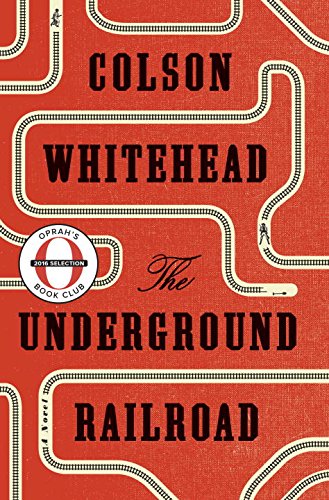 |
| From Amazon.com |
Ajarrys granddaughter Cora was born in a Georgia plantation and abandoned by her mother Mabel, who went in search of freedom, when Cora was just 10. We raise our children today in a cloistered environment and cannot even begin to fathom how a mother could abandon a child and go in search of her own freedom and how a child would even survive in horrendous conditions, all alone. From holocaust to civil war torn areas of today we see this time and again. Whether it is a teenage Anne Frank in Bergen-Belsen or a blood soaked and shell shocked toddler in Syria the life of Cora echoes across the ages and different horrors. In bringing that horror home Whitehead succeeds. Whitehead's book is not just about the darkest chapter of American history but a retelling of how wicked human soul can be and how the story can be taken as metaphor for current events. Elie Wiesel, survivor of Auschwitz, recalled how young sons abandoned their parents to survive. Once torn asunder each member of the Frank family then focuses on just his or her survival alone with probably wistful thinking, like Ajarry thinks of her cousins, that their other family members would've somehow survived the tragedy better.
During a party a boy spills "a single drop of wine staining the cuff of" the brother of a slave owner at the Georgia plantation. Terrence, whose cuff was stained, rains blows at the boy's head with his cane. "One drop" think Cora and rushes to defend the boy. Cora is no stranger to slaves being brutalized. "She had seen men hung from trees and left for buzzards and crows. Women carved open to the bones with cat-o'-nine tails. Bodies alive and dead roasted on pyres". The boy and Cora are flogged by Terrence. Terrence's bother James is annoyed only that his brother infringed upon his own property rights by overstepping and punishing his slaves. The slave overseer is incensed at the carelessness of the boy and the impudence of Cora. Both are stripped and flogged to their bones and washed with pepper water.
 |
| Colson Whitehead - From www.colsonwhitehead.com |
Big Anthony, a runaway slave who gets caught, is barbarically brutalized and Whitehead spares no details. Big Anthony's punishment is arranged as a spectacle and guests, other slave owners, were invited to watch. "Big Anthony was whipped for the duration of their meal and they ate slow". "Visitors sipped spiced rum as Big Anthony was doused with oil and roasted. The witnesses were spared his screams, as his manhood had been cut off on the first day, stuffed in his mouth, and sewn in". The brutal murder and disfigurement of Emmett Till, a 14 year old boy, comes to mind. Till's murder in 1955 and the open casket funeral held by his mother set off the Civil Rights struggle just a few decades ago.
 |
| Emmett Till's brutalized face. Courtesy Wikipedia |
The Underground Railroad that existed in the ante-bellum era was a metaphorical references to a loose network of abolitionists and slaves who had escaped who took it upon themselves to help others escape. Harriet Tubman, herself an escapee, was a 'conductor' on one such railroad. Whitehead takes the metaphor and makes it a Gabriel Garcia Marquess-like realism with a fictional but physical underground railroad that snakes from Georgia to the North Eastern states. Slaves are approached by station masters who then conduct them to a train that runs underground and accessed by a trap door. The trapdoor is a multi-layered symbolism.
Slavery was not a monolithic uniform institution but varied across the states. While Georgia and the south were drenched in blood states like the Carolinas had their own hypocrisies and brutality, albeit more refined, like sterilization of blacks by stealth. The Tuskegee syphilis experiment, the most notorious experiment in American medical history where blacks afflicted by syphilis were given placebos and studied for the effects of progression of disease, finds a mention. Till today the experiment affects how blacks perceive medical professionals in America and a chastised medical fraternity is aware of the deep distrust of African-Americans towards them.
Cora escapes from the Georgia plantation and reaches South Carolina where a doctor gently suggests to her that she should get sterilized. One night Cora hears a woman scream that her child was stolen. She at first thinks the woman is having nightmares remembering of perhaps a child stolen from her and sold off and only later learns that having been sterilized by stealth the woman had gone mad realizing what was stolen from her.
Slavery was justified by one too many that it was Biblically sanctioned. While Cora convalesces at a safe house in South Carolina the white lady taking care of her recites Bible verses to her and gently tells her that if God had not intended for slavery to exist they'd be free. Cora bitterly remembers the overseer at the Georgia plantation reciting those verses punctuating them by lashing the slaves with a cat-o'-nine tails.
Cora had even heard the 'Declaration of Independence'. A slave boy, Michael, used to recite the Declaration and it was an amusement to the Whites who marveled at a slave boy narrating it. "Michael's ability never amounted to more than a parlor trick, delighting visitors before the discussion turned as it always did to the diminished faculties of niggers".
Hearing Michael's recitation of the Declaration Cora "didn't understand the words, most of them at any rate, but created equal was not lost on her. The white men who wrote it didn't understand it either, if all men did not truly mean all men. Not if they snatched away what belonged to other people, whether it was something you could hold in your hand, like dirt, or something you could not, like freedom". The jab at slave owning Thomas Jefferson is all too explicit. George Washington freed his slaves in his will but while he lived he hunted anyone who escaped from his clutches. The US constitution included what is now shamefully called one-fifths compromise whereby slaves were counted as property.
Benjamin Franklin had famously cautioned that "people who give up essential liberty to purchase a little temporary safety deserve neither liberty nor safety". South Carolina, not wanting to be a safe haven for slaves fleeing southern states, instituted slave patrols that would barge into homes of whites and inspect for slaves who might be harbored by abolitionists. "Cora thought that the whites would be loath to give up their freedoms even in the name of security" but was shocked to learn that those desirous of being seen as patriots "boasted of how often they'd been searched and given a clean bill". It was common for neighbors, servants and even children to inform on those who harbored slaves. The perils of nationalism could not be more tellingly illustrated. From the slave holding south to Stalinist Russia to today's 'see something, say something' America one can hear the echoes of that. In Stalin's Russia it was common of husbands to denounce wives and children informed on their parents.
Cora is hidden in an attic by a family in South Carolina until the maid, tempted by reward, informs on the family. Cora is dragged away by a slave catcher engaged by the Randall family in Georgia while the family that sheltered her are hung from a tree. The story of Anne Frank comes to mind. Again and again the story that Whitehead tells is not just about slavery but of how people behave in circumstances not too different. This is a story of humanity at large told with slavery as central theme but one could see the stories of Holocaust, the horrors of Stalinism, the grotesqueness of India's caste system and more.
Nothing is black and white in the story. The pun is unintended. While there are whites who inflict such brutalities there are the white abolitionists who put their lives in harms way to liberate slaves and there were slaves who cooperate with the white man. Whether it is the Judenraat, the Jewish councils, in the concentration camps or the vast hundreds of thousands of Indians who served the British Raj or the groveling communists in the Stalin era or the members of the Vichy France the stain of collaborating with the oppressor is a human history not all too unique.
Having captured Cora the slave catcher Ridgeway lectures her on the 'American imperative': I prefer the American spirit, the one that called us from the Old world to the New, to conquer and build and civilize. And destroy that what needs to be destroyed. To lift up lesser races. If not lift up, subjugate. And if not subjugate, exterminate. Our destiny by divine prescription - the American imperative.
Having indicted the 'American imperative' through the slave catcher Whitehead then gives voice through Elijah Lander, a mulatto abolitionist, about what Freedom is: Work needn't be suffering, it could unite folks...Freedom was a community laboring for something lovely and rare.
Controlling access to education from those seen as unworthy of wisdom by those who think they've a god given right to wisdom is seen across cultures with sickening regularity. From an ancient Indian treatise that forbade knowledge to those called Shudras to white plantation owners who thought "the only thing more dangerous than a nigger with a gun was a nigger with a book" it is a common thread. A slave being seen reading a pamphlet, not even a book, could suffer an agonizing death.
Colson Whitehead's book is an urgent read in a year where a racist and xenophobic demagogue is within striking distance of the American presidency. After I visited the 'Topology of terror" museum in Berlin I wrote that America too needs such a museum to teach Americans of the nation's darkest chapter. It so happens that the Smithsonian museums just opened up a museum about African-Americans in Washington DC, thanks to the ceaseless efforts of Civil Rights icon and Congressman John Lewis. It is worth noting that Lewis had to prevail over a racist congressman, Jesse Helms of North Carolina, who time and again was resolutely against such a museum. The museum fulfills an urgent need.
Whitehead wrote a column titled "Rules for Writing" in New York Times. Reading his book one could say that Whitehead has diligently followed the rules he had set forth. His very first rule was 'Show and Tell'. He disagrees with the "Show, don't tell" school of writing and calls for 'show and tell' because "when writers put their work out into the world they're like kids bringing their broken unicorns and chewed up teddy bears into class in the sad hope that someone else will love them as much as they do". Whitehead strikes the delicate balance in 'show and tell' where the telling could degenerate into total lack of nuances or subtleties. Referring to a dead dog of a slave owner he writes "the mutt was loved by man and nigger". The subtleties are packed into the sentences.
Rule 2 is "don't go searching for a subject, let the subject find you". 16 years in the making the subject had indeed found the author.
Saul Bellow, Whitehead quotes in Rule 3, said "fiction is higher autobiography". Whitehead lays down as dictum and adheres to "write what you know".
Rule 4 is "never use three words when one will do" and rule 11 is "revise, revise, revise". Again, Whitehead practices what he preaches. The prose is sparse and completely shorn of unnecessary ornate phrases or metaphors.
Having told writers to 'show and tell' he cautions in rule 6 that "what isn't said is as important as what is said. In many classic short stories the real action occurs in the silences". While he gives graphic details of the physical nature of the violence inflicted upon the slaves he only implies the lurking moral corruption. No one, neither the slave owner or the slave, escapes the moral corruption of a society plagued by such violence. When Cora becomes a woman her fellow slaves gang rape her. Nudity is no sacred secret offered as token of intimacy because Cora is whipped naked in full view of her fellow slaves and others. Musing about sex with Ceasar, who had hatched the plan to escape, Cora thinks to the day she was whipped naked and how Ceasar had looked at her unflinchingly even when other slaves, shuddering at the prospect that one day they certainly would be in her place, avert their eyes. After Cora's mother escapes scheming slaves make the 10 year old abandoned child's life miserable. The moral corruption of a violent system is hinted at. Again, the moral corruption of Stalinism and socialism in India came to my mind.
'Underground Railroad' deserves to be read, re-read, re-read and reflected upon. The book is about the past but it shows how the past is never truly past and the present not only is an echo but is a progeny. This is not a story of one country's dark past but the story of humankind that even today murders and pillages in the name of race.
Whitehead's 'Underground Railroad' should become required reading in schools. I wish the book gets a Pulitzer next April.
References:
1. 6 Questions for Colson Whitehead - Time Magazine interview http://time.com/4447972/colson-whitehead-the-underground-railroad/
2. The Real Underground Railroad https://en.wikipedia.org/wiki/Underground_Railroad
3. Michiko Kakutani's review of the book in NYT http://www.nytimes.com/2016/08/03/books/review-the-underground-railroad-colson-whitehead.html?action=click&contentCollection=Book%20Review&module=RelatedCoverage®ion=Marginalia&pgtype=article
4. Colson Whitehead interview with NYT on writing the book http://www.nytimes.com/2016/08/04/books/colson-whitehead-on-slavery-success-and-writing-the-novel-that-really-scared-him.html
5. Colson Whitehead's rules for writing in NYT http://www.nytimes.com/2012/07/29/books/review/colson-whiteheads-rules-for-writing.html?_r=0
6. Emmett Till https://en.wikipedia.org/wiki/Emmett_Till
7. Civil Rights icon and Congressman John Lewis on the opening of Smithsonian museum about African Americans https://www.washingtonpost.com/lifestyle/magazine/john-lewis-spent-15-years-fighting-for-the-museum--now-the-dream-is-realized/2016/09/14/eeb0ca10-64bb-11e6-96c0-37533479f3f5_story.html


