Showing posts with label books. Show all posts

Wednesday, December 14, 2011

Pausch's 'Last Lecture'and Jobs's biography: Death and Memoirs

Before Steve Jobs there was Randy Pausch. Pausch and Jobs share eerie coincidences and yet both are very different persons. Carnegie Mellon had a lecture series titled "Last Lecture" and invited professors to give a lecture as if it was their last lecture. Pausch, professor of human interaction and computers in Carnegie, identified by Time as one of the 100 most influential (like Jobs), was called too to give a last lecture in 2007. Just a month prior to that lecture Pausch learned that he had terminal stage pancreatic cancer, a cancer similar to Jobs. Pausch persisted with giving his lecture except he made a small change. Pausch did not talk computers he talked about "Really achieving your childhood dreams".

The lecture was reported by a Wall Street Journal reporter as a compelling life story. In the youtube age the video went viral. As I type this the video has been viewed 14 MILLION TIMES. Randy Pausch uprooted his family to quiet suburbs in Virginia. Given his popularity now he was asked to write a book. The book 'Last Lecture' became a runaway bestseller. Pausch worked for Xerox from where Jobs got the idea for a 'mouse' and 'window'. Pausch, after a childhood of loving video games and Disney World, went to work for Disney. Jobs's turnaround of Pixar that he later sold to Disney is corporate folklore.

For all the similarities of how they lived and died Pausch and Jobs were completely different persona and in many ways opposites. Of course Pausch and Jobs functioned at completely different level with the latter being considered a sheer genius in the mold of Edison. Jobs practically commissioned his biography. Walter Isaacson, former editor of TIme and author of bestseller biographies of Einstein and Benjamin Franklin, was sought out by Steve Jobs to write his biography. A stunned Isaacson asked Jobs why he was chosen, he even poked Jobs about the fact that his previous biographies were about Einstein and Franklin, "do you see yourself in that order by having me write your biography". Pausch's biography is so heartwarming that it is now stocked in the 'self-help' region in book stores (groan!!!). Jobs, knowing full well that his biography will be published after his death, is irascible and completely ungracious about his famous rival Bill Gates. Even Isaacson is stumped by how ungracious Jobs was. Pausch recounts learning humility, learning how sending a thank you note is important, learns how Disney World workers say "park is open till 10 PM" when asked by a visitor "when does the park close". Both books are good counterpoints and well worth the read.

The tragedy that unites Pausch and Jobs is the very public dying they had to endure. As much as Jobs aged in front of millions so did Pausch on a far lesser scale but equally watched. Pausch died a year after his last lecture in 2008 and it was front page news. Jobs, after resigning as CEO, died slowly in front of his family. Its really tragic to think that both Pausch and Jobs had very young children practically watching their dad die. Pausch had a 2 year old. Pausch and Jobs were deeply motivated by leaving behind some memories for their children. Jobs told Isaacson that wants the biography to explain to his children why he was not there for them like other dads. Jobs desired his children to understand that their father was trying to create a new and better world ever since he knew his diagnosis instead of sulking home and living of his past accomplishments or wealth. Pausch ruefully thinks that his youngest child would have no memory of him as dad.

Pausch and Jobs were dads dying in public glare who felt they needed to leave behind some voice of their own for their kids. On the other end of the spectrum are dad's writing out of grief for dead children. Harold Khushner, a Jewish Rabbi lost his son to progeria at 6. Khushner out of his inconsolable grief wrote a runaway bestseller, "When bad things happen to good people". Khushner, as a Rabbi, is deeply troubled by how a loving omnipotent God could allow such illness to fell innocent children. Going into a pediatric cancer ward can melt the hearts of even the most stoic. John Gunther had an equally anguished book "Death be not proud" written after his son died. Joan Didion, American writer, mourning her husband wrote "The year of magical living" and in an unprecedented tragic sequence also wrote "Blue Nights" mourning her daughter who died soon after her own father died.

Death and the philosophical musings of what life means is endless. An obituary that remains etched in my memory is columnist Roger Rosenblatt's column in Time, "The Measure of A Life", about John F. Kennedy Jr's tragic death. JFK Jr died in a plane crash with his young wife. Rosenblatt mused if there ever is such a thing as timely death. Given JFK Jr's youth the first words in every obituary was "untimely death". "In some way, a life ended in youth may be superior to a prolonged existence subject to revisionism and conspicuous error. Death turns "potential" into realization; what one could have done becomes in effect what one did". Biologist and educationist Lewis Thomas, author of classic 'The lives of a cell,  told Rosenblatt that "the true measure of a life is that it be useful".  Rosenblatt concludes, "When a man dies, a civilization dies with him. Whatever constituted his being--his gait, manners, tone of voice, political opinions, appearance, his particular use of language, philosophy, sense of beauty, sense of style, his personal history, ambitions, his smile--all go".

Sunday, October 31, 2010

Fiction Writing : A Serious Business.

Wall Street Journal runs a series on how "creators" go about their work. A recent one on American author Philip Roth ( http://online.wsj.com/article/SB10001424052748704654004575517782933600268.html) caught my eye and made me reflect on our common understanding of how writers, fiction writers especially, do their craft. Its easy to think of them as exotic, eccentric, idiosyncratic, anything except methodical. We do not think of a fiction writer as doing something akin to a desk job. It never crosses most of our minds that classics would need subject matter research on the professions of their characters.

When Ayn Rand wrote "Fountainhead" with the protagonist as an architect she consulted extensively with Frank Lloyd Wright, yes Wright himself, no less, to get her basics right.  When Roth's character is portrayed as a javelin thrower Roth studied sports DVD'd to get it right. For avid readers of classical fiction Mario Vargas Llosa is well known. I developed an interest in him after the Nobel Prize, especially when I read that he was an uncommon intellectual whose politics, his economic ideas, was pretty much 'republican'. When I hungrily bought his acclaimed books I chanced upon a lesser known collection of essays "A writer's reality". Llosa details how he did research for his celebrated works. The amount of reading, historical research, local research etc gave a wonderful background flavor to his masterpieces.

Llosa's own favorite novel amongst what he wrote was "The war of the end of the world" based on the suppression of Canudos rebellion by Brazilian government (http://en.wikipedia.org/wiki/War_of_Canudos). He was especially interested in how intellectuals, the progressive types, kow-towed the government. He reads avidly and then finally visits Canudos area. In between he had practically re-written the novel, in an era without word-processors.

I had read Irving Wallace's "The Prize", centered around the Nobel Prize, long back. Then one day in a roadside book shop I discovered his "The writing of one novel". The blurb on the cover for "Prize" would state that Wallace took 14 years to write his book. Only when I read his other book did I understand why. Irving got the idea for the plot one evening during an interview with a Nobel committee member who freely shared the inside controversies are that considered sacrosanct. His "writing of one novel", very rich with anecdotes and literary trivia, is practically a biography of a how a book was written, how the characters were fleshed out etc. Wallace cites how Sinclair Lewis wrote "Arrowsmith". "Arrowsmith" portrays an idealistic doctor. Lewis is said to have influenced many an aspiring doctor with that idealistic version. Wallace says that Sinclair Lewis made detailed maps of the hospitals, labs and towns he portrayed (no google earth!!). Wallace quotes Somerset Maugham from "Great Novels and their Novelists", "Tolstoy and Balzac, wrote, rewrote and endlessly corrected".


Jhumpa Lahiri often impressed me with her detailed descriptions of the environs. Whether its Boston or Rome her detailed imagery of the land, the cuisines, the customs etc are a delight to read. V.S. Naipaul would bring to words details about the texture of soil in Pakistan, squalid conditions of tenements in India and Indonesia. Remember he wrote those books when digital cameras, voice recorders, Iphone cameras were not there. I cannot even fathom the painful notes taking.

Also seldom we consider these writers to follow a "routine" in writing. Philip Roth, John Updike, Martin Amis and many others maintain a strict regimen of regular working hours when they are working on a novel. In an interview Updike says that Bernard Shaw had a 5 page quota for each day (http://grammar.about.com/b/2009/01/28/writers-on-writing-john-updike.htm). Wallace gives a rich trivia on the writing habits of writers "I realized that most successful writers invest their work with professionalism. From Balzac, who worked six to twelve hours a day, and Flaubert, seven hours a day, and Conrad, eight hours a day, to Maugham, who worked four hours a day...Hemingway, six hours a day, these authors were uniformly industrious". Ah what a conclusion who would associate the word "industrious" with creative fiction writers of the caliber of Maugham and Balzac.

Ayn Rand took 14 years to complete and publish her magnum opus "Atlas Shrugged". Will Durant's masterpiece "The Story Of philosophy" sen out of his lectures took 14 years to reach completion and every page is testimony to a teacher par-excellence. "The story of Philosophy" remains my most loved book.

Thursday, August 5, 2010

E-books : A paradigm shift in reading and publishing.

Gutenberg's invention of the printing press was one of the pivotal moments of human history. The Renaissance and Reformation movements are considered the children of advent of printing press. Without those two the modern western civilization as we know it would be a hypothetical exercise.

For a very long time there have many false starts that were talked about as the death knell for the printing word. Today, with some element of certainty, we can say that we stand, may not be at a pivotal moment,  but surely at the cusp ofa tectonic shift concerning how we read and publish books.

I never warmed up to e-books until I sampled a few books on the IPad. Books, old and new, have their own intoxicating smell. Buying a used book sometimes has its charms, especially when a moderate but discerning reader had underlined some portions it gives a kick to see another persons ideas. The ability to write on the edges, the ability to flip to the 'notes' section to see the source of some study or further expansion of an idea, the charm of just letting the book fall on your lap and to ruminate etc were not well duplicated in e-book formats. E-books were mostly PDF rendering of the printing page, other than the convenience of carrying several of them on a CD/ thumb drive the reading experience was no where near a book.

Steve Jobs entered the e-book scene much behind Amazon's Jeff Bezos' highly successful e-book reader the "Kindle". The Kindle pretty much mimics a reading experience. When I took an IPad to India recently I decided to try out e-books to beat carrying books for the tortuous commute. I chose books that covered the 2008 presidential election and a political memoir. Those books were page turners. I completely got sucked into e-books as the difference was practically nil compared to a printed book (and bunch of air-hostesses chatted me up to see the very hot new toy, well with my 4 year old and my wife next to me that did not go much further). I could highlight passages, I could bookmark, I could write notes.

The IPad is not just a e-book reader its a "tablet PC". From strictly an e-book perspective though Amazon's Kindle beats IPad on feature and total cost of ownership. Kindle DX (9.7 inch diagonally) retailing at under $400 comes with no-fee 3G connectivity (IPad 3G needs a $30 subscription per month, the cheapest Ipad retails at $400). The only thing that KIndle lacks is the color GUI unlike IPad. Amazon offers way more titles than IPad for ebook (well Apple store will eventually catchup or even exceed). With the Kindle we buy a book at anytime and it gets downloaded presto. TO retain foothold for Apple fans Bezos in a wily move has made a Kindle app for IPad too. So you can use Kindle books bought for Kindle device on IPad too.

The one feature that blew me off with Kindle is finding what most readers had highlighted when they read a book. So you get an idea of what passages most readers think are key to be highlighted. However I wonder how the data is collected and how is privacy maintained???? Other features like downloading chapters for sampling, ability to 'lend' a book electronically to another kindle user, user ratings etc all make the e-book experience not just close enough to a book store experience but in some respect even exceed that.By the way for the past month for the first time Amazon Kindle books outsold hardcover editions.

To be sure the e-book industry has miles to go. The main stumbling block is the format war between e-book device manufacturers. Sony, Barnes and Noble, Amazon, Apple, Borders etc all manufacture e-book readers but there is no cross portability. This is where the  printed book still wins hands down.

Thanks, largely, to Itunes and Ipod today the two leading booksellers of USA have sharply cut down the floor space allocated for CD's. Would selling books, hence the book stores themselves, follow that route?  Just 2 days ago 'Barnes and Noble' announced that it is  up for sale. B&N is America's leading bookseller. I often used to point that a book store with a healthy stock price shows how much America loves books and music. That is still true except that there is a new kid in the block. Why would I go to a book store if I can read New York Times book review online and browse sample chapters sitting at home (or a park or a train) sipping the same Starbucks coffee. In fact I can do all that sitting at a coffee store with wi-fi.

All that I said until now only shows how e-books come close to reading a printing book, help give the experience of browsing at a book store and in some incremental way enhance those two experiences. Unlike the Kindle,today, the IPad is redefining publishing industry and how we read.

Publishers are now designing multi-media interlaced books for Ipad. e-books with embedded video and hyperlinks are being designed exploiting the potential of an internet connected tablet PC. Encyclopedia Britannica has cut down sharply its famed printed encyclopedia because doing a research tracing hyperlinks on the net is more fun and I need not stack 30 volumes of books that could contain outdated data.

Publishers were grumbling how Amazon compelled them to drive down prices of kindle editions for new hardcovers when Apple entered the arena they breathed a sigh of relief. However, Apple too, for competitiveness started driving down prices in tandem. Today there is an investigation if Apple and Amazon are indulging in price fixing. That aside, what has enthused publishers is that thanks to electronic formatting they can now sell various "VERSIONS" of the same book at different price levels.

It is a common practice in DVD retailing to sell a "director's cut" with some more extras than the usual DVD. The "Directors Cut" or "Special Edition" would usually be released later than the initial release prompting movie affficionados to buy the same movie twice. This is rarely done for books. Even with a mega-blockbuster like Harry Potter the maximum they could do when the last book came out was to re-issue all the earlier editions and come up with a "boxed set of 7" but that sales was practically nil. Who would waste tens of dollars buying a boxed set when almost everybody had religiously bought each issue and was holding on to it?

Rare exceptions do occur but still with less success than the DVD world. Stephen Hawking's cult classic "A brief History of Time" has been re-issued with pictures and glossy printing. I could see that book make a splash in a very special IPad edition. Imagine reading about curvature of space time alongside an animation of a ball in a trampoline. Any kid would fall in love with science. Reading is never a linear activity but with this kind of reading the mind would race in way more directions and the reading experience itself is elevated to a much higher plane.

Would all this mean the death knell for Gutenberg's invention? Not at all. Still the book remains cheaper and easy to acquire, more universal in format. Broadband connectivity, affordability etc still constrain the e-book industry. Of one thing we can be sure though. We are at the cusp of a new wave.

Saturday, February 6, 2010

Jaipur Literature festival - Changing face of India

The recently concluded literature festival in Jaipur (http://jaipurliteraturefestival.org/) has literally garnered the attention of the world press. Time magazine, New York Times, Washington Post, The Wall Street Journal and The Economist all had articles on the festival. I was really struck by that level of attention. A vibrant and accessible intellectual tradition is essential to the progress of a nation.

The Jaipur literature festival is a welcome change that has really impressed me by its content and not merely by the symbolism. Seeing the depth of world coverage I went to their website and was simply taken aback by the professionalism and sweep.

The topics and literary persona were truly eclectic presenting a wide array of ideology that I normally would not credit India with. Some names like Wole Soyinka, Mahasweta Devi, Girish Karnad, William Dalrymple are instantly recognizable. Names like Henry Louis Gates Jr, eminent Afro-American scholar from Harvard, Niall Ferguson, Harvard Historian, Claire Tomalin, author of well received book on Samuel Pepys (ah how many would even know of Samuel Pepys in the first place), Kai Bird, author of Pulitzer awarded biography of Oppenheimer, etc are all known only to a discerning reader.

Given that the setting was India and knowing something of Indian intelligentsia I feared the left wing slant and very impressively I was proved wrong.

Featuring authors like Steve Coll, author of 'Ghost wars' book on CIA & Afghanistan, Lawrence Wright, Pulitzer awarded author of 'The looming tower', Tunku Varadarajan, right wing economist and columnist from NYU Stern business school, Anne Applebaum, author of Pulitzer awarded "The Gulag" a book on the Gulags of Soviet Russia, etc is quite a variety of non-traditional opinion makers not seen in India usually.

The prize for surprise and guts goes to featuring Ayaan Hirsi Ali. Ayaan Hirsi Ali, a muslim herself, formerly resident of Netherlands and of Somali origin, caused a religious maelstrom in Netherlands with her writings on Islam. Ayaan HIrsi Ali wrote the screen play for Dutch director Theo Van Gogh, movie "Submission" , a movie very critical of Islam. Theo Van Gogh was murdered by a religious fanatic causing an uproar in Netherlands. Ayaan Hirsi Ali's later wrote a highly critical book on Islam, 'Infidel'. THe book was panned by critics but the author was praised for her courage. I am truly surprised that her appearance in India went without a blip. Note that even today "Satanic Verses" remains banned in India.

The article in Economist drew attention to the special section on Dalits and presenting works by Dalit writers. "Room was also made for a group of writers who are little known, even in India: Dalits, formerly known as “untouchables” at the bottom of Hinduism’s caste system. Omprakash Valmiki, whose Hindi autobiography, “Joothan: A Dalit’s Life”, has been translated into English, read poems about the routine wretchedness of the lives of poor Indians".

The best part of Economist's article was this "No special rooms are set aside for VIPs, so the famous mingle with the crowd. And unlike other big book festivals, Jaipur, which relies on a growing list of corporate sponsors to fund it, charges no entrance fee. The most enthusiastic participants are hordes of neatly dressed Indian schoolchildren who sit listening intently as writers finish their readings, before surrounding them to beg for autographs."

A word on the sponsors (http://jaipurliteraturefestival.org/sponsors/). When I wondered about authors like Niall Ferguson, Tunku Varadarajan, Lawrence Wright etc looking at the sponsors list gave an inkling. Merrill Lynch, Reuters, American Center, Shell, Goldman Sachs (that most hated American firm by left wingers). One wonders whether the business friendly, centrist, some even right wing, authors owe their presence to these organisations. Credit to the organisers AND sponsors is that intellectual integrity was not sacrificed to promote ideology. Every featured author had his/her merit.

Thursday, November 19, 2009

Ayn Rand: Enduring allure and enigma

This month could easily be called the Ayn Rand month. Two biographies, critically acclaimed, and a Harvard symposium all had Ayn Rand as theme. Ayn Rand is now the most cited author by those wary of Obama administrations policies. Her name now echoes across vital issues that are whipsawing the country. From bank bailouts to taxing millionaires to including a government run public option in health care it is Ayn Rand who is evoked consistently. Harvard university organised a seminar titled "From Ayn Rand to Ken Feinberg", the speaker was, very curiously, Elliot Spitzer who had quit his governorship for having frequented "escort girls". [Ken Feinberg is the 'pay czar' who now decides on the pay and more importantly bonus structure in banks like Citi and Bank of America, two of the biggest recipients of US aid to stay afloat].


Ayn Rand is principally known for "Fountainhead" (1943) and "Atlas Shrugged" (1957). "Fountainhead" is probably read more than "Atlas". "Atlas" is a tome at 1000+ pages, one speech alone runs for 50+ pages, of course it is a tedious novel and made more tedious with philosophical expositions on 'meaning of money', 'meaning of sex', a parody on 'from each according to his ability to each according to his need' and more. 'Atlas' was Rand's last fiction. Both novels were panned by critics, then and now, her ideologies were ridiculed, her writing style was mocked, she was mocked as a person, none of her books garnered ANY prize major or minor. Yet Ayn Rand remains a phenomenon.

Rand's biographer Anne Heller reports "in a poll in the early ’90s, sponsored by the Library of Congress and the Book of the Month Club, “Americans named ‘Atlas Shrugged’ the book that had most influenced their lives,” second only to the Bible." Both novels continue to sell by the thousands, almost 50 years after publication. No adoloscent who fashioned himself/herself as a discerning intellectual has passed through the academic portals without reading Rand, this despite the fact that Rand's book are rarely included in academic curriculum across the world.

Rand's books have been assailed by critics for a certain lack of 'greyness' in the way she portrays her characters. Everything is black and white. In fact the villains in her novels are mostly crucibles of everything that is undesirable in her eyes, she would not even bestow physical attractiveness to them. Her heroes and heroines are perfect, a Nietzche-an super human. Well what can one expect from a novelist who titles her chapters as "A is A: Non-Contradiction". If one looks for Dostoyevsky or Tolstoy in her then its not her fault, her chief pride is that she is NOT a Tolstoy.

Also curiously most readers fall in love with Ayn Rand in their 20's and mellow their ardour by the time they reach 40's. When you are 20 and when you are subjected to standard academic diet of preaching it is inevitable to find inspiration in Hank Rearden who finds a new metal. Who can deny the rush of adrenaline when Dagny Taggart's train crosses a vital bridge built with Rearden steel. Any 20 year old would be conjuring images of their own "revolutionary crossing", complete with a comely Dagny or Hank Reareden at their side, depending on the gender. It is expected of teenagers (and adoloscents) to be intoxicated with having unlocked the puzzle of the philosophy of sex reading Francisco's speech (who cares if the author's own personal life was a self destructive). Every teeming capitalist out to shape the world thinks they have understood Adam Smith reading the speech on "meaning of money". Also it is helpful that Alan Greenspan, the much adored Fed Reserve chairman, was part of the Ayn Rand circle. Above all Ayn Rand bestows on her readers a sense of 'elitism' overlooking the fact that the reader is part of a multi-million commune of Ayn Rand worshippers.

It is a pride for Ayn Rand lovers that she was not honored by the literary establishment. Its a badge of honor for her readers. That literary critics despise her books is a stamp of approval in a perverse manner.

What is it with so called lovers of "rationalism" that they act in the most craven manner of idol-worshippers. Here is what is common between lovers of Ayn Rand and EVR, both have legions of worshippers who sing praises of rationalism and reason as long as that mirror is not held up to question their own idols. When Ayn Rand and her paramour Nathaniel Branden fell out, the members of Ayn Rand's collective debated whether it would be a rational response to kill Nathaniel Branden who refused to be enthralled by an aging Ayn Rand and instead opted for a nubile woman. The Ayn Rand insitute today more jealously guards any portrayal of Ayn Rand in any light that is less than flattering.

I love her books. Anyday when I need to buck myself up I do continue to pick up Atlas Shrugged. However I'd never rate her anywhere close to Orwell in opposing totalitarianism. What Orwell achieved in less than 100 pages in Animal Farm Ayn Rand could only remotely achieve in 1000+ pages. Thats why 'Animal Farm' remains a classic and 'Atlas Shrugged' remains a bestseller. In English the word "Orwellian" connotes fear of totalitarianism but Ayn Rand has not entered the lexicon.


Saturday, September 19, 2009

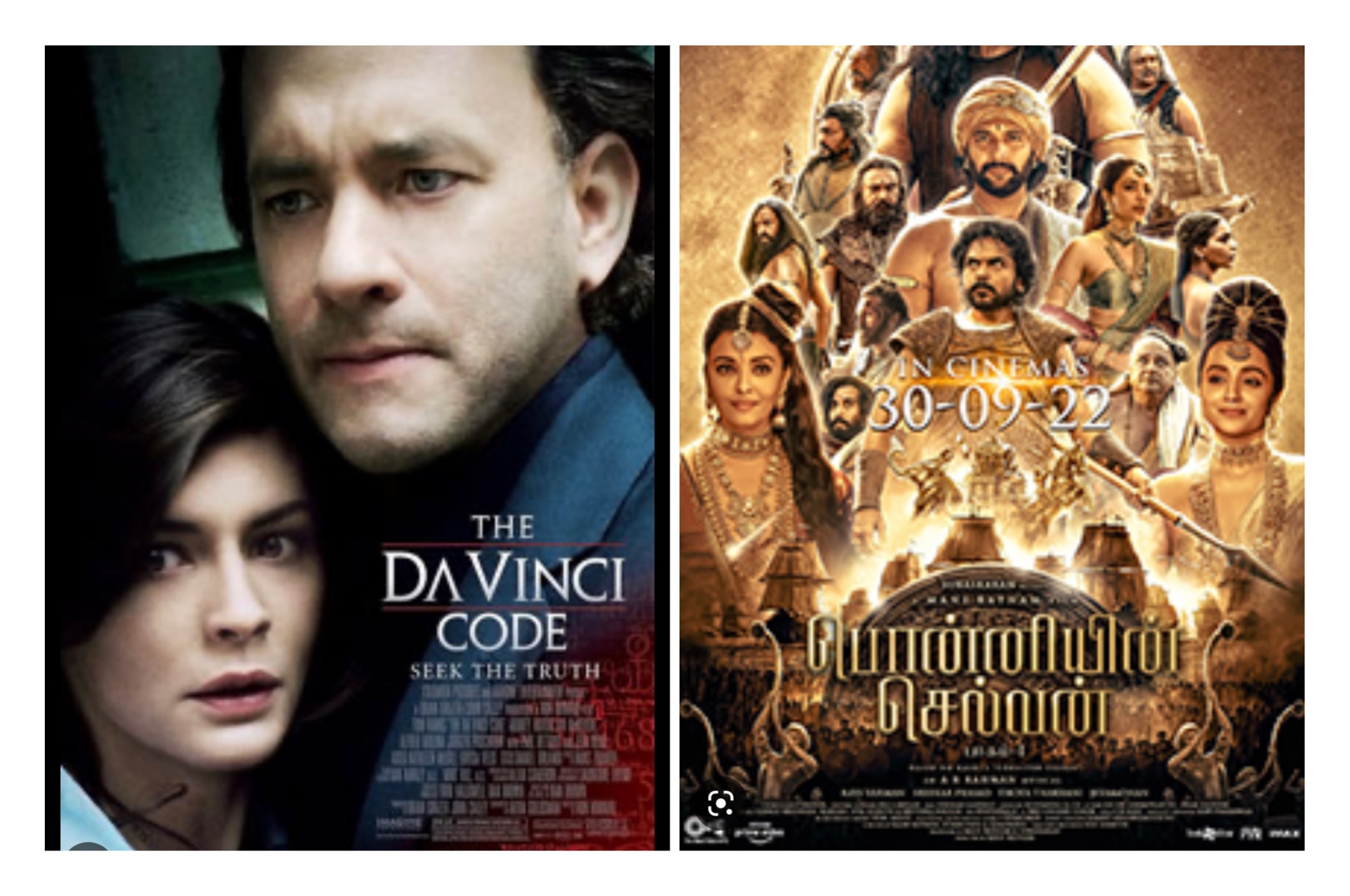
Dan Brown J.K.Rowling and Ponniyin Selvan

Dan Brown's latest book sold one million copies (hardcover+ ebook) in ONE DAY in US+UK+Canada. The publishers are rushing to print 600,000 more. After J.K.Rowling's last Harry Potter book this is the book that publishers and the world in large waited with bated breath for. Literary critics panned Brown's blockbuster "Da Vinci Code". Discerning readers considered it inferior to Umberto Eco's scholarly "Foucault's Pendulum". All that not withstanding Brown made history. Then Hollywood swept in.


J.K.Rowling has a more compelling story. A typical rags to riches story. Legend has it that with her personal life in shambles a penniless Rowling wrote her first installment of Potter sitting in Starbucks cafe. A publisher holidaying in England picks up her little noticed book and gets the rights for USA. The rest is history. But its not as simple as that. What she achieved is of gargantuan proportions. When the last Potter book released across continents and countries far removed from England, kids in Delhi, Chennai, China, Europe, Latin America thronged by the thousands to get their copy of a 800+ page book. If any author is said to have created a world and tapped into an universal conscience it was Rowling. Kids across cultures and worlds apart felt drawn to a wizarding boy battling an unimaginable evil. Eventually Rowling earned more than the Queen, importantly she 'earned' it and also paid taxes.

Hollywood came calling to Rowling too. The Potter films have so far garnered several billions. Here one has to pause and appreciate the vertically integrated model of Hollywood. A book gets published, a production company makes a movie, author's get millions in fees, screen play writers get royalty for DVD bought in addition to fees during the making of the movie, with Blu Ray many buy Potter movies all over again, so repeat consumers. Given the stature of Rowling and Brown they draw up contracts giving them portions of the movies revenues right up to DVD sales.

Before anybody trashes Hollywood for commercialisation and going for lightweight novels let it be noted that Hollywood also made a movie of Umberto Eco's symbolism laden "The name of the Rose", that too starring Sean Connery.

Brown and Rowling are phenomenons re-defining the idea of 'convergence'. There is news now of a Harry Potter theme park in Orlando. Tour operators are busy planning Dan Brown tours in Washington DC based on his latest book. Already Paris has a 'Da Vinci code' tour. If this is commercialisation lets have more of it. Brown's 'Da Vinci' may lack literary merit but he made millions look up "Da Vinci, Knights Templar, Medici, Bernini, etc" in search engines. Those topics became the widely searched ones in search engines. Theological debates on Christ and Church history abounded.

I am often accused of being unfair to Tamil heritage. Here is a thought to mull. Kalki's opus "Ponniyin Selvan" has literary merits far exceeding Dan Brown. For a minute lets close our eyes and see a Dan Brown like transformation for Ponniyin Selvan. A publisher comes out with a nice paperback, artfully illustrated. An offshooot publication for children as comics. A movie deal starring Kamal (its his passion) as Vandhiathevan. Ponniyin Selvan tours in and around Tanjore. Big Temple, Gangai konda chola puram all become hot spots. A corollary industry of books analysing the chola period. Documentaries (how many Da Vinci related documentaries sprouted recently), museums resurrected, cruises on Kaveri with stops along dramatic spots, tourists with multi-lingual head sets....Its a good dream.

Monday, October 6, 2008

Know my library -- Part 1

This week's issue of Economist carries a book review titled "Hitler's private library: Know a man by his books". As I pointed out in a recent blog these days my question is "what does he/she read". The review is about the book "Hitler's Private Library: The Books That Shaped his Life" by Timothy W. Ryback . Hitler was not only an avid reader but an avid underliner too. Painstakingly reconstructing all that information, Ryback, the reviewer says, gives a chilling portrait of who came to embody "evil"for centuries to come.

Though I'd hate to speak of myself in this same blog, I'd like to in the larger topical interest. I am a proud connoisseur of books, a veritable gatherer of many a small gem. I am, to borrow my professor's characterization of himself, "an incorrigible bibliophile".

The finest gem in my collection is Will Durant's "The story of philosophy". One of my father's friends told me about Durant's masterful 11 volume "Story of Civilization". He also, with a touch of disdain said I may not get to buy it all. Later in 1992 in a bus stand book shop selling cheap editions I saw this book on philosophy. It was priced at Rs30. I bought it. I shall write a whole blog on this book. Suffice it to say it meets Bacon's definition of that rare type of book that is to be "digested".

Much later when I came to USA, in 2002 a dear friend of mine went to great lengths to help me acquire all 11 volumes of Durant's "civilization". For that and for acquainting me with one of the best used book stores I am deeply thankful to her. Its a book store I obsessively visit during my every visit to NC. The store is www.bookshopinc.com. While those two are well know books a very little known gem is the 'Dual Autobiography' by Will and Ariel Durant. I do not know if there are any other husband wife autobiographies.

Many know of Larry Collins & Dominique Lapierres wonderfully detailed "Freedom at midnight" about the final years of India's struggle. Little known is an accompanied slim book of series of interviews the authors had with Mountbatten. The author's were justifiably criticized for writing their book in too sympathetic a manner to Mountbatten, especially in view of how the British bungled Partition, much like they bungled Palestine. A far leser known book is by Alan Campbell Johnson wo was ADC (Aide-De-Charge) of Mountbatten.

Many know that William Shirer is the author of "The Rise and fall of third Reich". A very little known book is "Gandhi: A memoir". This is about Gandhi during the pivotal Salt Satyagraha period, filled with great journalistic traits.

The name Gorky immediately reminds us of "Mother". Very little is known to the public about his "Untimely Thoughts" which details his tormented relationship with Lenin and Stalin and plain anti-communist articles.

The names Arthur Koestler, Andre Gide, Stephen Spender remind us of great literary works very little is known of a book with chapters by each one detailing how they became communists and how they finally turned their back on communism. The book is "The God that Failed". (Thanks to Prof KGS for that intro).

Tagore is best known for his Gitanjali but little is known of his various memoirs, several translated poorly into English but still a good read on somebody who can easily be called the only Renaissance man of India.

I shall stop for now, but let me take this moment thank all those, especially my dad, who sowed in me the seeds to seek for all that is best, introduced me to these authors, mostly unknowingly themselves and those, especially my wife who never grudges my indulgence, who help me uncomplainingly to acquire these treasures.

Someday I shall bequeath these to my daughter when she proves herself worthy of it.