Monday, July 11, 2016

BREXIT and US Elections: The Specter of Donald Trump.

"In cities, mutinies; in countries, discord; in palaces, treason; and the bond cracked 'twixt son and father". The immortal Bard's lines in King Lear capture best the Brexit shenanigans and the quote literally sums up the events leading to and after Brexit. While there is much that is yet to happen as a consequence of the vote to leave the EU, the vote and how it happened carries important lessons for the American voter in the upcoming US Presidential Election.

First, how did what was seen as unthinkable finally happen? Is the Brexit vote a reflection of a democratic upsurge where the commoners have said a resounding 'no' to the elite who, supposedly, operated like a cabal, unmindful of the interests and well being of common citizenry?


The Brexit vote, above all, as the German magazine Der Spiegel pointed out, illustrates the perils of direct democracy and the virtues of representative democracy. Democracy, with good reason, is still considered. The Economist magazine in a special set of articles on California argued that California's tradition of turning any policy proposal into a Ballot Initiative has made the state virtually ungovernable with nearly 80% of the state's revenues apportioned by commitments to outcomes of Ballot Initatives leaving little wiggle room for administrations to undertake discretionary expenditures. Thus one of the world's largest economies is stuck in a budgetary quagmire.

If votes on Civil Rights and desegregation were left to direct democracy we'd still be living in racist America. If Kennedy had taken a referendum on nuking Khrushchev's USSR he might have received an overwhelming yes and ended the world as we know it. If FDR had gone to the people to ask if the Hitler menace should be ended before subduing Japan he'd have been voted out of office. On the other hand it was representative democracy and the channels of pressure it exerted on elected officials that kept US out of what was seen as 'European war' for long and thus making the effort to destroy Hitler that much more difficult. Seeing a Churchill still lost in his dreams of maintaining an empire the British voter denied him a mandate for the reconstruction of war torn Britain. Representative Democracy, with all its shortcomings, provides the just balance between mobocracy and titular dictatorships.

'Don't trust the experts' was the mantra of the Brexit leaders. Expert after expert warned of the consequences of a Brexit and the repeated retort was always "do you know better than the collective will and what wisdom can rival the collective will of the people".

The so called experts have earned a justifiably bad rap especially in the aftermath of the 2008 financial that brought an economic super power to its knees. Ivy League economists provided the theoretical framework for what later came to destroy the American economy. When the GOP played with brinkmanship by refusing to raise America's debt ceiling and trigger a default by the world's richest economy and thus set in motion an economic apocalypse the ratings agencies warned Americans of impending doom. GOP legislators guffawed on TV on the incredulousness of the same ratings agencies that played a vital role in causing the greatest recession since the Great Depression putting themselves as arbiters of what is sensible. The disdain of the experts for the common voter is another recurrent theme that has much validity. Jonathan Gruber, a key expert and architect of Obama's signature legislation, 'The Affordable Care Act', told an audience that Americans were sold on the healthcare reform with promises of cost containment but in reality that was not at all goal and the goal was only to expand healthcare. Gruber, very damagingly confessed, that telling the truth and leveling with the voter would not have garnered the required public support.

Politicians who say one thing on the campaign trail only to govern differently in office is another popular complaint and the Brexit vote was seen as a resounding "no more" to such politicians. Obama campaigned so shrilly against NAFTA and trade pacts that the Canadians were alarmed that a president Obama would abrogate the treaty. Yes, before Trump and Sanders there was a Obama. Obama dispatched Austan Goolsbee, who later served as economist in Obama administration, in secrecy, to the Canadian embassy to assure them that he has no intention of ripping up the NAFTA. A revelation like that would've sunk Hillary Clinton's candidacy but America was in love with Obama. As President Obama, like Bill Clinton before him, has negotiated a trade pact that would go down in American history as the largest trade pact.

All of the above can be rebutted.

From intellectuals who whitewashed the horrors of Communism to Ivy League economists who created the Financial crises they were all unmasked or exposed by other experts, not by the uninformed voter. Distrust of experts has now degenerated into crass anti-intellectualism. On this side of the Atlantic the supporters of Bernie Sanders and Donald Trump hold it as a badge of honor to distrust experts and extend their distrust to open hostility to any expert who questions the rationale of the plans floated by their candidates. It is now par for the course to besmirch any non-compliant expert as 'part of the establishment', 'the system'. Left leaning economist and Nobel laureate Paul Krugman lamented how Sanders's supporters militantly threw mud at any economist disagreeing with Sanders's plans and most importantly the costs.

The Infamous lie
If voters don't want candidates to sugar coat it or tell lies then they should start getting educated and that means stepping out of echo chambers. The day after casting a Brexit vote the most searched term in google was "what is EU?" The average Britisher voted in a referendum without even knowing what the EU was. This is dangerous illiteracy. In a way Gruber is correct. Towns that depended on EU subsidies cheerfully voted to exit. A key promise by the Brexit leaders was that they'd divert millions of pounds, that they said is being sent to EU, to supporting Britain's NIH. Boris Johnson traveled and campaigned with a bus that had the promise painted on it in large, very large, letters. A day after the Brexit vote Nigel Farage openly accepted that there is no such diversion because the promise was, simply put, a lie. Experts had cried hoarse on that only to be ignored.Trump's promises of negotiating debt, threatening NATO allies to put up money, constructing a wall, barring Muslim immigrants, deporting a 11 million Hispanics are all cockamamie schemes that are mere fantasies and can cause immense harm to the economy.

If politicians changing once in office is a crime then the Brexit campaigners are equally guilty. Once they got what they wanted the Brexit leaders sheepishly walked back their key promises. "Stopping immigration", 'Not so fast'. "Dissociating from EU completely", 'Not so fast, we need access to the single market'. An incredulous TV anchor gave Nigel Farage a real 'What the F**k' look after he walked back each of those promises. And oh despite the eagerness to unhitch themselves from the EU the Brexit campaign really, to the consternation of the EC, wants to slow walk the divorce.The Guardian newspaper ran a column titled "A pyrrhic victory? Boris Johnson wakes up to the costs of Brexit".

Here's a message to the Bernie-or-bust voters who, taking their cue from a Hollywood actress and airhead, Susan Sarandon, think that a Trump presidency might usher in the revolution quicker, by virtue of destroying everything in his way, if Bernie does not get to the Oval office. This is lunacy. A Tory minister ridiculed the protest voters who voted for Brexit nonchalantly thinking that "it would be a vote for remain, he would be seen as having stood up for principle". Each vote counts and every voter should vote carefully. Thinking "I'll vote as protest and hope to God that somehow the sane verdict prevails and I'll be safe to brag about my principled protest vote". Remember Bernie supporters who shun Hillary, Gore lost Florida and the Presidency by a few hundred votes. Every vote counts. Vote your conscience, yes, but don't vote thinking somebody might hold his or her nose and vote for the less objectionable candidate and thus prevent Trump from entering the oval office while you get to cast a 'protest vote' that you can boast about over drinks at a pub.

Did doomsday arrive in England? Yes and no. Yes, the experts were correct. A market meltdown occurred and the pound crashed. Nearly 2 Trillion dollars in market capitalization was wiped out. The day after Brexit saw a very interesting and in some sense tragic role reversals. Post-Brexit the 'exit' cheer leaders were less than eager to take over the country and make good on their promises. On the other hand the 'remain' campaigners who had roped in the experts to predict doomsday were left fending off doomsday. Today Cameron and Obama are acting responsibly to contain the damage because unlike Boris Johnson or Nigel Farage they have a conscience and could not unconscionably sit back and chuckle "I told you so" because lives are affected. When Trump says he'll renegotiate US sovereign debt he betrays his idiocy that makes him think that US debt is like the debt of a realtor who has the luxury of telling his creditors "well I have no intention of paying in full but here's what I can pay". Even a suggestion by a US president that the US will not make good on it's debt will send seismic shock waves into the world market and destabilize the dollar as the global currency in which other countries hold their debt, all of which would make any candidate think twice before speaking but not for a bloviating idiot like Trump.

From LA Times article. The infamous poster showing Muslim immigrants.
Here is what the Brexit cheerleaders did achieve though. Britain was plagued by a rash of racist incidents fueled by xenophobia. When Trump and Farage talk in dog whistle terms about past glory they are voicing a 'white' rage against nations that are changing fast, demographically. Immigration was front and center in Brexit campaign. A notorious poster showed Syrians streaming into Britain by the thousands. Immigration from other EU countries, a freedom guaranteed by the single market, was another reason. It is no wonder that the Brexit vote pivoted on age with the youth voting to remain while the older voters going for the exit. The young college graduate needs access to opportunities across the borders and has less interest in protecting the British character. Also the Islamophobia that the Brexit campaigners unleashed was exactly like what Trump is doing. It'd do good to remember that the worst terrorist attacks on English soil were carried out by the Irish. Today the Muslim immigrant appears outlandish to the Brit and American but not too long ago the Irish, the Asian (especially Chinese) were seen likewise in America. Terrorism and immigration are indeed legitimate  concerns but demagoguery not only does disservice to the debate it perverts the debate. A curious irony in the Brexit vote and the Trump phenomenon is that both Johnson and Trump are the products of elite educational institutions.

British author Frederick Forsyth cheerfully told America's public radio station NPR that for all the doomsday predictions UK will be just fine and that the youngsters of today do not know of a time when Britain was doing just fine, alone. Forsyth is a hypocrite. He, more than any common Britisher, enjoys the fruits of a globalized world market. His books sell across borders and he signs movie deals. 'Day of the Jackal' was a Anglo-French production while 'Odessa File' was an Anglo-German production. What Forsyth enjoys he has now denied to the graduates of England. Shame on you Forsyth.

The treason that the Bard alluded to finally came to the fore when the "exit" cheer leaders suddenly found themselves facing victory and a PM who resigned. Michael Gove undermined Boris Johnson, who was widely seen to be a solo-in to 10 Downing street if the 'exit' campaign won, and was finally undermined himself. Meanwhile the labor party too erupted into full blown revolt over how ineffectually Jeremy Corbyn campaigned on behalf of the 'remain' camp and thus lost the war for unity.

The American electorate is divided along racial, educational, income and age more than ever before. And the lines are hardening pretty fast. It is fashionable for Americans to lament that their legislators don't compromise but when it comes to electing those who compromise it is the American voter who cheers purists like Sanders or a pretend purist like Trump.

What is the message for Hillary Clinton and Obama from Brexit? It is foolish to rubbish the Brexit vote as merely the revolt of the uninformed voter and xenophobia. The first principle of democracy is to respect the choice of a people. Globalization and technology have completely changed our lives but they also have upended lives by destroying vast swathes of jobs in the economy. There is real palpable anxiety amongst voters, especially those without a college degree. Obama is paying the price for his demagoguery on trade because now when he wants to pass a historic trade pact he's running into demons he had unleashed. A positive case to be made for globalization and trade. Governments need to find effective ways of ensuring that it's citizenry have a stake in the economy and not feel left behind. Obama is rising to the task of unmasking the danger Trump poses to the republic. Clinton is yet to find her voice. Clinton's trust deficit with voters is an impediment for her.

                                           Obama on Donald Trump: "Where does this stop"

Recent appearances by Obama show a marked trait in how he speaks. Obama takes long pauses, pregnant pauses, in between sentences and they seem to indicate that he thinks the danger of Trump's racism is real and grave and at the same time he's incredulous that many in the GOP are not standing up against it. On the other hand Trump doesn't know what a pause is when speaking. Clinton doesn't pause between sentences because she's delivering canned responses that she thinks she needs to say in order to appear presidential.

As voters head to the polls in November they need to do their homework, they need to question their candidates, question their own assumptions and then vote with sincerity. This election is a war for the heart and soul of America. Will America show the world that it takes more than a billionaire demagogue to destroy America?

A Guardian columnist, in a column titled 'There are liars and there's Boris Johnson and Michael Gove", quoted the lines of Rudyard Kipling:

I could not dig; I dared not rob: 
Therefore I lied to please the mob. 
Now all my lies are proved untrue 
And I must face the men I slew. 
What tale shall serve me here among 
Mine angry and defrauded young?

We could as well close with the foreboding lines of the Irish poet W.B. Yeats from his 'Second Coming'

Turning and turning in the widening gyre
The falcon cannot hear the falconer;
Things fall apart; the centre cannot hold;
Mere anarchy is loosed upon the world,
The blood-dimmed tide is loosed, and everywhere
The ceremony of innocence is drowned.
The best lack all conviction, while the worst
Are full of passionate intensity.
.............
And what rough beast, its hour come round at last,
Slouches towards Bethlehem to be born?

References:

1. A pyrrhic victory? Boris Johnson wakes up to the costs of Brexit http://www.theguardian.com/politics/2016/jun/24/a-pyrrhic-victory-boris-johnson-wakes-up-to-the-costs-of-brexit
2. 'Voters in one fading port town wonder whether they were misled on Brexit' https://www.washingtonpost.com/world/europe/voters-in-one-fading-port-town-wonder-if-they-were-misled-on-brexit/2016/06/26/fb0971de-3a42-11e6-af02-1df55f0c77ff_story.html
3. British steel town that got millions from the EU, but voted to leave anyway http://www.latimes.com/world/europe/la-fg-britain-eu-subsidies-20160701-snap-story.html
4. 'After Brexit vote, U.K. sees a wave of hate crimes and racist abuse' http://www.npr.org/sections/parallels/2016/06/29/484038396/after-brexit-vote-u-k-sees-a-wave-of-hate-crimes-and-racist-abuse

Thursday, June 30, 2016

Swathi's Murder (ஸ்வாதியின் கொலையும் பகுத்தறிவு அற்பப் பதர்களும்)

எழுத வேண்டாமென்றுதான் நினைத்தேன், விதி யாரை விட்டது. ஒரு பெண் பட்டப் பகலில் ஜன சந்தடியுள்ள ரயில் நிலையத்தில் கொலை செய்யப்பட்டு ரத்த வெள்ளத்தில் மிதக்க ஒருவரும் உதவுவாரில்லை. இந்தியாவில் கொலை செய்யப்படுவதென்றாலும் சரியான ஜாதி அல்லது சிறுபான்மையினராக இருந்தால் நியாயம் கிடைக்க வாய்ப்புண்டு. பாவம் ஸ்வாதி, தமிழ் நாட்டில் அரசியல் அநாதைகளான பிராமணக் குலத்தில் அதுவும் சராசரி நடுத்தரப் பிராமணக் குலத்தில் பிறந்து விட்ட அபலை. மற்ற ஜாதியினர் கொலை செய்யப்பட்ட போதெல்லாம் கொந்தளித்த இணையம் மற்றும் சமூகத்தின் மௌனம் சஞ்சலத்தை உண்டுப் பண்ண ஒய்.ஜி.மகேந்திரன் மடத்தனமாக யாரோ பார்வர்ட் செய்த செய்தியை பகிர்ந்துவிட்டார். அதில் இறந்தது பிராமணப் பெண் என்பதாலேயே மௌனம் என்றதோடு கொலை செய்தவன் பெயராக ஒரு இஸ்லாமியப் பெயரை அடையாளம் காண்பித்தது. ஈ.வெ.ரா எனும் விஷ வித்து வேரூன்றிய தமிழகத்தில் பல வெறுப்பு நாகங்கள் புற்றுகளில் இருந்து வெளிவந்தன. தமிழ் நாட்டில் எல்லோரும் சமூகத் தளங்களில் வரலாற்று உண்மைகளை மட்டுமா பகிர்கிறார்கள்? மகேந்திரன் செய்தது தவறு ஆனால் அது தான் சாக்கு என்று உடனே இவர்களின் பார்ப்பன எதிர்ப்பு எனும் வெறுப்பரசியலை கையில் எடுத்தார்கள். இதற்கிடையே கொலை செய்யப்பட்ட பெண்ணின் இனத்தை வைத்தே அவரின் ஒழுக்கத்தைக் கேள்விக் கேட்டப் பதிவையும் பார்த்தேன். தமிழ் நாட்டில் என்று ஈ.வெ.ரா பிறந்தாரோ அன்றே நாகரீகம் அழிந்தது எனலாம். கொலை செய்யப்பட்ட பெண்ணின் சகோதரி ஸ்வாதி கோயில் குளம் என்று போய் வரும் பெண் என்று எழுதியது தான் தாமதம் இந்தப் பகுத்தறிவு மூடர் கூடம் சினந்து கிளம்பி கேள்விக் கேட்க ஆரம்பித்தது "கோயிலுக்குப் போனால் நல்லவளா" என்று. அந்தச் சகோதரியின் பரிதாபமான மன வலி மிக்க அறிக்கைக் கூட இந்தக் கீழ்மையானவர்களுக்குத் தீனியானது. காரணம் ஸ்வாதி ஒரு பிராமணப் பெண். மகேந்திரன் ஒரு பேட்டியில் "உசந்த ஜாதிப் பெண் என்பதால் கண்டு கொள்ளவில்லையோ என்று பீல் பண்ணினேன்" என்றார். இரண்டாம் முறையாக வசை மழை "ஆ உசந்த ஜாதி என்பதா? அப்படி என்றால் நாங்கள் யார்". தவறான வார்த்தைப் பிரயோகமே. தவிர்த்திருக்கலாம். ஆனால் பேசுபவர் உணர்ச்சி வசப்பட்டுப் பேசுகிறார், அவர் ஒன்றும் பெரிய அறிவாளியும் கிடையாது. அவர் அப்படித் தன்னை விளித்துக் கொண்டதிலும் ஒன்றும் முழுமையாகத் தவறென்று சொல்ல முடியாது. அரசாங்கமே பிராமணர்களை "முன்னேறிய வகுப்பினர்" என்று தான் குறிப்பிடுகிறது. இட ஒதுக்கீடு சலுகை வேண்டும் போது தங்களை "பிற்படுத்தப்பட்ட", 'மிகவும் பிற்படுத்தப்பட்ட' என்று அடையாளப்படுத்திக்கொள்ளும் போது யாரோ ஒரு ஜாதி முன்னேறிய/உசந்த ஜாதியாகத் தானே இருக்க முடியும். இட ஒதுக்கீட்டிற்காகத் தங்களை எவ்வளவு "பிற்படுத்தப்பட்ட" என்று அடையாளப் படுத்திக் கொள்ள முடியுமோ அவ்வளவு "பிற்படுத்த பட்டவர்கள்" என்றும் மற்ற நேரங்களில் தங்களை "ஆண்ட ஜாதி" என்றே பெருமைப் பேசுவார்கள். இன்று மகேந்திரனின் பேச்சுக்காகக் குதிக்கும் ஈ.வெ.ராவின் பேரன்களில் எத்தனை பேருக்கு காடுவெட்டி குருவுக்கு முன்னால் போய்க் கண்டிக்கும் தைரியம் இருக்கிறது? எத்தனை ஜாதிகள் பகிரங்கமாக "ஆமாம் நாங்கள் ஆண்ட ஜாதி, அவர்கள் அடங்கித்தான் போக வேண்டும்" என்று கொஞ்சமும் லஜ்ஜையில்லாமல் நகைப்போடு வெறுப்பைச் சர்வ சாதாரணமாகப் பகிர்கின்றனர். சுப.வீரபாண்டியன் என்பவர் ஒழுக்கச் சீலர் போல் வேடமிட்டு "ஆ என்னிடம் யாராவது மகேந்திரனைப் பற்றித் தவறாகச் சொல்லி இருந்தால் அதை நான் பகிர்ந்திருப்பேனா. மாட்டேன். அவர் அப்படிச் செய்யலாமா" என்று மாய்கிறார். சுப.வீயின் தலைவர்கள் வீரமணியும், கருணாநிதியும் பேசாத புளுகு மூட்டையா? இல்லை சுப.வீ தான் யோக்கியமா? ராமதாஸுக்கு எதிராக அத்தனை அறிக்கைகளை அவர் வாசித்திருக்கிறார்? கீழ் வெண்மனி கொடுரத்தின் போது ஈ.வெ.ரா பட்டும் படாமலும் முத்துராமலிங்கத் தேவரை கண்டித்து விட்டு சம்பந்தமேயில்லாத பிராமணர்களை ஏசி விடுத்த அறிக்கை இணையத்தில் சொடுக்கினால் கிடைக்குமே. கீழ் வெண்மனியில் மட்டும் ஒரேயொரு பிராமணனாவது ஈடுப்பட்டிருந்தால் ஒவ்வொரு ஆண்டும் வீரமணியும் சுப.வீயும் ஒப்பாரி வைத்திருப்பார்கள். தமிழ் நாட்டில் எப்படிக் கொலை செய்யப்பட்டால் பிராமணனாக இருக்கக் கூடாதோ அதே போல் கொலை செய்பவன் பிராமணனாக இல்லையென்றால் அதுவும் கெட்டதே ஏனென்றால் அதை வைத்தும் அரசியல் செய்ய முடியாது ஈ.வெ.ராவின் விஷ விருட்சங்களால். நான் பார்க்க நேர்ந்த ஒரு பதிவில் ஒருவர் மகேந்திரனின் மீது வன்முறை பிரயோகிக்க வேண்டும் என்ற தொனியில் எழுதி இருந்தார். உடனே ஒரு திமுகப் பிரமுகர் முன் வந்து "பெரியார் இன்று இருந்தால் உங்களை அவரது தடியாலேயே அடித்திருப்பார்" என்றார். நான் சிரித்துக் கொண்டேன் பாவம் அந்த உடன்பிறப்புக்குத் தெரியாது ஈ.வெ.ராவின் வன்முறை தூண்டும் பேச்சுகளும் நடத்தையும். பிராமணர்களை அடிக்கலாம் என்று சொல்லிக் கொடுத்ததே ராமசாமி நாயக்கர் தானே? இன்னொரு பக்கம் சில பிராமணர்களின் பதிவுகளும் கண்டனத்துக்குரியன. நான் ஈ.வெ.ராவை விமர்சித்து (அர்ச்சித்து) எழுதும் போதெல்லாம் ஒன்றிரண்டு பிராமணர்களாவது ஓடி வந்து கடந்த கால வரலாற்றையெல்லாம் ஒட்டு மொத்தமாக 'whitewash' செய்து ஒன்றுமே நடக்காதது போல் பின்னூட்டமிடுவதும் நடப்பது தான். நான் பார்த்த இன்னொரு பதிவு பிராமணர்கள் சாதுவானவர்கள் என்று வன்முறையில் ஈடுப்பட்டது கிடையாது என்ற ரீதியில் சென்றது. "வன்முறை என்பது ஸ்தூல அளிவிலானதே என்பது ஒரு ஆரம்ப அறிவே ஆகும் (elementary knowledge)"என்று ஜெயகாந்தன் தன்னுடைய ஒரு கதையின் முன்னுரையில் கூறியிருப்பார்.சக மனிதனின் தொடுதல் கூட அல்ல அவன் நிழல் கூடத் தன் மேல் விழக் கூடாதென்று நினைக்கும் வன்முறை ஒரு உயிரைக் கொல்லும் வன்முறையை விட மேலானது. உடன்பிறப்புகள் "ஆஹா பார்த்தாயா அதை மாற்றியது ஈரோட்டு சம்மட்டி தானே" என்று வக்காலத்து வாங்க ஓடி வருவார்கள். ஈரோட்டு சம்மட்டி ஒரு ஆணியையும் புடுங்கவில்லை என்பதே உண்மை. ஜஸ்டிஸ் பார்ட்டி, அதன் பிறகு காந்தியின் தலைமையிலான காங்கிரஸே மாற்றங்களுக்குக் காரணம். ஈரோட்டுக்காரர் சாதித்ததெல்லாம் இன வெறுப்பை வைத்து அரசியல் நடத்தலாம் என்று கற்றுக் கொடுத்ததே. மேலும் பிராமணர்களை மட்டுமே ஜாதி வெறியர்களாக முன்னிறுத்தி மற்றவர்களின் ஜாதி வெறிக்கு ஒரு லைசென்ஸ் வாங்கிக் கொடுத்தது தான். நடப்பது ஜெயலலிதாவின், அதாவது பிராமணப் பெண்ணின், ஆட்சியாம் அது வேறு அடிக்கடி மேற்கோள் காட்டப் படுகிறது. இது என்ன மன நோய்? கொலை செய்த பாதகனுக்கு மாநில முதல்வரின் ஜாதியோ ஸ்வாதியின் ஜாதியோ முக்கியமேயில்லை. ஏன், தன்னை மூச்சுக்கு முன்னூறு தரம் "சூத்திரன்" என்று அடையாளப் படுத்திக் கொள்ளும் கருணாநிதி ஆட்சியில் பிராமணரல்லாதோர் கொலை செய்யப் படவில்லையா? தினகரன் அலுவலகத்தில் இறந்தவர்கள் யார்? அப்படிக் கொல்லப் பட்டவர்களின் உறவினர்களிடம் "எல்லாம் உங்கள் ஆட்சி தானே!" என்று எந்த மடையனாவது சொல்வானா? மீளாத் துயரில் ஆழ்ந்திருக்கும் ஸ்வாதியின் குடும்பத்திற்கு என் அனுதாபங்கள். கொலைக்காரன் கண்டு பிடிக்கப்பட்டுத் தூக்கில் இடப்படும் நாளே அக்குடும்பத்திற்கும் நியாயம் வேண்டுவோருக்கும் ஆறுதலான நாள். குறிப்பு: இந்த "பெரியார் பிறந்ததால் தான் தமிழன் செருப்புப் போட்டான்" என்றோ "ஆ மரணத் தண்டைனையே கூடாது, இறந்த உயிர் வரவாப் போகிறது" என்பன போன்ற அசட்டுப் பின்னூட்டங்கள் நிராகரிக்கப்படும்.


Thursday, June 16, 2016

India's Donald Trump, Aravindan Neelakandan, and Tragedy in Orlando

Even as the nation was barely coming to terms with an unfolding tragedy in Orlando, where a Muslim man shot dead 49 at a night club frequented by gays, Donald Trump tweeted self-congratulatory notes about being correct on terrorism. India's own Donald Trump, Aravindan Neelakandan, was not to be left behind. Neelakandan wrote a hate filled screed that is shameful, bigoted and plain nonsense, dangerous nonsense.

On June 12th Omar Mateen walked into 'Pulse', a gay nightclub, and mowed down 49 victims with a semi-automatic gun. Several are in grave condition in hospitals around Orlando. Mateen was shot and killed by a SWAT team. Donald Trump, a shameful bigoted nominee of the Republican party, trafficked innuendos that included alluding to Mateen being an immigrant, Mateen was born in US. America. To America's credit, Trump's innuendos are inviting a backlash.

It is complete idiocy to act as if Mateen, a Muslim, was singularly homophobic due to his religion. America has its fair share of homophobia that has nothing to do with Islam. Violence against homosexuals has a sordid history in America. From Matthew Shepard (1998) to Tyler Clementi (2010) gays have paid a very tragic price for their sexuality. Notably, Shepard was killed by Christians, Clementi was driven to suicide by Asians, a Chinese and a Tamil Hindu, at Rutgers University.

Aravindan Neelakandan (Photo Courtesy https://bharatabharati.files.wordpress.com/2012/08/aravindan-neelakandan.jpg)

Trump and many Americans, and Neelakandan, are screaming 'terrorism', 'radical islam' for what Mateen did. Yes, it is terrorism. But what do we call the massacre of blacks in a church by white supremacist Dylan Roof? Why is the latter only grudgingly called 'racism' or more politely 'gun violence' but not terrorism? Yes, the duo of San Bernardino who killed office goers are terrorists. But what do we call a guy who opens fire on movie goers in a theater? America has a gun problem. To pretend that a guy who attributes his killing to a religion is somehow more dangerous than others is dodging a key problem. Sure, let's not dodge radicalization but let's not dodge other sicknesses too that result in such loss of life.

If Mateen's homophobia is to be blamed on radical Islam, or just Islam, what do we call the Evangelicals of America who froth at their mouth against marriage equality? Incidentally, homosexuality remains criminalized in Aravindan Neelakandan's India.

Neelakandan's Islamophobia turns him into an apologist for even the LTTE, a murderous terrorist organization that was known for ruthless assassinations with complete disregard for human life. In order to satisfy the itch of his Islamophobia Neelakandan nonchalantly states that LTTE even while carrying out assassinations takes care to "minimize human losses"with "meticulously planned attacks". This viper which spews hatred argues that if only the attack against Rajeev Gandhi had gone according to plan only Rajiv and the suicide bomber would've died. This is nonsense. The assassin had a belt bomb that used ball bearings and projectiles designed to kill not just the intended victim but anybody in the radius so effectively that Rajiv could not have escaped death. The LTTE stood exposed as a murderous outfit when it used the very people that it was supposed to liberate as human shields and even started shooting at the same people when they sought to escape to the safety of the Sri Lankan troops. Why am I surprised at the mendacity of Neelakandan, after all, he swears by the organization that was an inspiration to the assassin of Gandhi.

Neelakandan details gruesome acts by terrorists, including a pregnant woman being shot dead. He happily forgets that Hindus in Gujarat unleashed equally murderous and similar grotesque deeds against Muslims. While he plays psychologist diagnosing that even if one escapes a terrorist attack the "trauma" of the killers eyes that singled you out for your faith will leave an indelible mark, he cooly forgets that it was a marauding band of Hindu politicians who embarked on an unprecedented genocide in nowhere but the very capital of the nation against hapless individuals whose only fault was that they were Sikhs. We would do well to remember that one of the worst airline related tragedies was courtesy the Sikhs in Canada. Hindu policemen murdered in cold blood youth, whose only mistake was that they were Muslim, in Hashimpura and not a single one was convicted. Thousands of Muslims were massacred in Nellie and the report is still classified secret. When Muslims perpetrate terror attacks the perpetrators, and many times several innocents too, face the iron hand of Indian law but more often than not when it is Muslims who have faced attacks the Indian state, both Congress and BJP governments, have done little to bring the guilty to book.

The murder of Kashmiri Pandits, by Muslim Kashmiri separatists, is indeed a blood soaked chapter in the history of Kashmir. While Neelakandan weeps for them he happily forgets how Muslims evacuated villages as the juggernaut of Advani's Rath Yatra rolled inexorably towards Ayodhya.

Hinduism is "inherently pluralist, democratic and inherently secular" claims Neelakandan. This is absolute myth. No religion is inherently pluralist or democratic or secular. Pluralism and secularism, the corner stones of a liberal nation-state, are modern ideas that were enshrined in Indian constitution by not just Nehru but including other men who were far greater than Neelakandan, or me.The women and children who were burned in Keezhvenmani will completely disagree with Neelakandan's Goebbelsian propaganda. Neelakandan claims that the RSS, a neo-nazi organization, supports decriminilazing homosexuality and extends his fantasy claim to assert that even those who disagree with that sexuality "concede that it is a personal matter" and then chides Islam as being uncomfortable with such pluralism. Narendra Modi, Neelakandan's political idol, rules with a brute majority in the Parliament, pray, why has he not then moved a legislation to decriminalize homosexuality in India? How many rallies or agitations has RSS undertaken to further the cause of LGBT community? Compare that to how many times RSS supporters and office holders speak about Hindu causes.

Supporting Israel is another bogey for the Hindutva brigade. While I support Israel I'd say that it is hideous to whitewash what happened to Palestinians over the decades. I wish Palestinians had had better leaders but that said the tears shed by Neelakandan for Israel are just crocodile tears. Reducing the hatred of Palestinians towards Israel as "more to do with the theological hatred Islamism bears towards Jews than land issues" is sheer mendacity.

An interesting news that caught my eye recently was Hindus in India praying for the election of Donald Trump as America's president because they believe that Trump will defend America from what they consider as the menace of Islam. The Hindutva far right, of whom quite a few live in US too, is cheering Trump without realizing that the bigotry and xenophobia that Trump is unleashing will affect Indians too. America, I hope, will defeat Trump.

The hypocrisies of the Hindutva group in US needs mention. Neelakandan's co-author of a recently published book is a US resident and complete supporter of everything he dishes out. Recently she had shared on her Facebook page an anti-Islamic rant by a white American asking why should America accommodate the beliefs of Muslim immigrants. I asked her does she, a Hindu and therefore a minority in US, realize that she expects US to accommodate her beliefs? Indians take immense pride when the White House celebrates Diwali and even schools in Hindu majority neighborhoods in US declare Diwali a holiday. Corporations now celebrate Diwali and one should see Hindu workers turn out in all their finery and lecture to wide eyed Americans about the greatness of Indian culture.

Despite all the Trump related noise there is hope in America. The Lt. Governor of Utah, a deeply conservative state, gave a moving speech in the wake of the Orlando shooting. He recounted how growing up in a small town he used to mock gays in his school days and apologized for not having known better. People like Spencer Cox and Barack Obama, yes I mean that, will leave America a better place. I know there are sensible people in India too and they fight the good fight against the Neelakandans who are trying to destroy India. May the will of good people prevail over the hate mongers.

References:


  1. Orlando Tragedy https://en.wikipedia.org/wiki/2016_Orlando_nightclub_shooting
  2. Neelakandan's article http://swarajyamag.com/world/at-the-heart-of-jihadi-terror-hatred-for-pluralism#.V16yH0z4HjE.facebook
  3. Matthew Shepard -- Gay student beaten, tortured and left to die for being gay -- https://en.wikipedia.org/wiki/Matthew_Shepard
  4. Tyler Clementi -- Gay student at Rutgers University, committed suicide after being outed by a Chinese and an Indian student -- https://en.wikipedia.org/wiki/Suicide_of_Tyler_Clementi
  5. Utah governor's apology for mistreating gays in school days http://www.npr.org/sections/thetwo-way/2016/06/15/482207689/watch-utah-lt-governor-apologizes-for-past-attitude-toward-gay-people


Monday, June 13, 2016

Bharat Mata Ki Jai: A Reaction to Colonialism or Ancient Tradition? Was Irfan Habib wrong?


When historian Irfan Habib told, in an interview, that the slogan 'Bharat Mata ki Jai' (Long live mother India) was a colonial era reaction by nationalists who were influenced by European traditions, the reactions amongst Indians ranged from running around like headless chicken to mild disapproval. Overnight most Indians became indignant literary sleuths and dredged up every verse they had come across where land or kingdoms of yore had been worshipped as goddess. A furor ensued and the historian remained silent. No one bothered to ask Habib why he said so and what were the evidences beyond pointing out to the example of Britannia, England depicted as lady. Was Habib wrong?

Sumathi Ramaswamy, professor of history at Duke University, has written an engaging book, "The goddess and the Nation:Mapping mother India", which goes to the heart of the claim that Habib made.

Ramaswamy opens with the following words, "In the closing decades of the nineteenth century in a land already thronging with all manner of gods and goddesses there surfaced a novel deity of nation...Invoked in English as "Mother India", and most usually in various Indian languages as "Bharat Mata"". The first depiction of  Bharat Mata, like Habib said, was in a painting by Abanindranath Tagore. The portrait, suffused with symbolisms, depicted a young lady clothed in saffron colored saree, tied austerely around her, with four hands, lotuses around the feet and a halo. The portrait was captioned "The spirit of motherland".

"The Spirit of Motherland" by Abanindranath Tagore 1904-05


The vivisection of Bengal by Lord Curzon saw all of Bengal rise up in revolt and "Bharat Mata was used as a mobilizing artifact". A police raid  in 1908 'on the premises of the Dacca based Anushilan Samiti" recovered a portrait of "Bharat Mata-the map of India represented by a woman in flowing garments".

Before the advent of Gandhi Bengali nationalism swept the country providing the ideological flavor to the new idea of nationalism and religious reforms. Tamil poet Bharathi, no doubt influenced by Bengali traditions, wrote a poem extolling Tamil, the Tamils, Bharata (India) and ended with what was fast becoming a clarion call of the freedom struggle, 'Vande Mataram' (I worship you mother). The poem published around the customary New Year celebrated according to Tamil calendar, April 20th 1907, was featured in the magazine 'Inthiya', run by Bharathi. The cover of that issue featured a lady seated on rock, her hand resting on a globe showing the map of India and Indians, a Hindu, a Muslim and others, paying obeisance to her. Bharathi used such imagery often. Another image published on April 10th 1909 showed a lady, super imposed within the cartographic representation of India with babies suckling at her breasts, as before Indians of various religions looking up to her, the words "Vande Mataram", in Devanagari script, on the right and even a 'Allahu Akbar', in urdu and in relatively diminutive script of the left.Even latter day iconoclast and virulent atheist E.V. Ramasamy Naicker used a depiction of Bharat Mata super imposed within a map of India in the mast head of his paper 'Kudiarasu' circa 1925.

From Bharati's 'Inthiya" April 20 1907

Habib is no idiot not to have known the propensity to worship land in the form of a goddess. The fecundity of land has, from time immemorial, been equated, in all civilizations, to the fertility of woman. Anthropologically possessing land has been similarly equated with possessing woman. "Bharat Mata is fundamentally a novel, even unorthodox, goddess". What differentiates Bharat Mata from other goddesses is "intervention of the map of India into her visual persona". The cartographic intervention shows that the depiction of the female form is "no longer adequate in and of itself in embodying territory once the the scientific map form arrives on the scene". "In traditional Hindu iconography goddesses are not generally shown carrying a banner, yet the flag is certainly one of the Mother India's signature possessions".

The depiction of Bharat Mata drawing upon ancient Hindu iconography is what gives Habib's naysayers ammunition to protest that the depiction is not an European import but a hallowed tradition. Ramasawamy cites Sudipto Kaviraj to label this, very aptly, "subterfuges of antiquity". Ignorance fueled by jingoism made the naysayers to ignore the fact that the depiction of Bharat Mata while seemingly antiquated is actually a unique and novel addition to the ever burgeoning Hindu pantheon of divinities.

We don't know if Habib had read Ramaswamy's book for Ramaswamy builds her case exactly on the lines of what Habib said. Ramaswamy points to anthropomorphizing countries in European tradition, a tradition unknown in Indian heritage. Anthropomorphizing, the art of representing nations or a people in corporeal images, a geo-body representation, is a distinctly European import to India. The East India Company commissioned in 1778, probably to commemorate their victory in Battle of Plassey in 1776, a painting for the East India office in London by the Italian painter Spiridone Roma. Roma painted Britannia, a representation of England, as a lady in a white robe while the East, depicted as a bare breasted dark skinned lady, offering her riches. The bare breasted East is symbolic of a naked female in all its 'vulnerability' and even a 'invitation to conquest'. A similar portrait, circa 1575, showed America, the newly discovered continent, as a "naked and erotically  inviting woman".

Spiridone Roma's "East offering its riches" portrait for East India Company. 1778. Image Courtesy Wikipedia


Ramaswamy says that "corporealizing countries" has been traced by scholars to European Renaissance. Abraham Ortelius's 'Theatrum Orbis Terararum', possibly the first atlas of the world, depicts Europe, Asia, Africa and America in various forms of women. The newly discovered science of cartography rapidly merged into this iconography in a parade of portraits that Ramswamy details one after another to show how nations, portrayed as women, were either super imposed on maps or their forms very artistically skewed to fit a map. 'Europa Regina', circa 1537; a portrait of Queen Elizabeth standing on a map, circa 1592, a picture of Britannia seated on a map of England all point to an emerging trend of marrying anthropomorphizing countries with cartography thus imparting a powerful message of suzerainty. Maps, "enable the nations citizens to take visual and conceptual possession of the land that they imagine they inhabit". "Bharat Mata is no generic earth, earlier or mother goddess (although she is also all of these); instead she is a very specific kind of territorial deity, one who embodies and presides over a delimited, nameable, identifiable geo-body".

Ramaswamy brilliantly captures that, "it is at the cusp of the 'same but different' and the 'old but also new' that we can identify the forces and pressures including the (re)conceptualization of India as a cartographer Mother India".

Discussing Bankim Chandra's iconic classic 'Ananda Math' Ramaswamy quotes Sudipto Kaviraj, "to see the country as the mother is highly non-standard in Hindu mythology. It (depicting country as goddess) is a transposition, using traditional figures certainly, but  to purposes that are highly innovative". In 'Ananda Math' hearing Bhavananda sing 'Vande Mataram' Mahindra inquires "who is this mother?" Bhavananda sings the second verse of that song in reply and Mahendra inquires "But this is my country; this is not my mother!" Bhavananda admonishes him "We say our motherland is the mother". Bipin Chandra Pal wrote in "The Soul of India", "The earth that we tread on is not a mere bit of geological structure. It is the physical embodiment of the mother. Behind this physical and geographical body there is a Being, a Personality".

Aurobindo Ghosh, firebrand revolutionary from Bengal, "I look upon my country as the Mother. I adore her. I worship Her as the Mother. What would a son do if a demon sat on his mother's breast and started sucking her blood?"

Disappointingly Ramaswamy does not connect Ghosh's imagery with his compatriot Bharati's verses about 'Motherland'. Bharathi wrote copiously about Motherland. He wrote of India as a mother, a distraught mother, a yearning mother and even a vengeful mother. Echoing Ghosh Bharathi asks "what is this life worth if the mlecchas who defile the holy mother land are not killed?' and in another verse he's more blistering, "who amongst us, like a dog, will tolerate a mother being violated?". That sons are the custodians of a mother's chastity speaks directly to a patriarchal society where possession of land and women are symbols of manhood. Though Tamil poems have spoken of land as woman Bharathi was charting new territory and essentially  offering new metaphors for patriotism that, while drawing upon a tradition, was "old but new". It is this newness that Habib drew attention to.

Rabindranath Tagore, amongst India's intellectuals, was the most conflicted on the idea of strident nationalism. Ramaswamy uses Tagore's 'The Home and the World' to highlight the poet's conflict. Sandip, a character, tells Bimala, the heroine "the geography of a country is not the whole truth. No one can give up his life for a map!". "True patriots, will never be roused in our countrymen unless they can visualize the motherland. We must make a goddess of her". A temple, inaugurated by none other than Gandhi himself, enshrined a map of India and offered it as an object of worship in a temple for Bharat Mata.

The iconography of Bharat Mata is very interesting if one observes the fact that almost without exception the Mother is portrayed as svelte woman, curvaceous, but never with children. Bharat Mata is asexual and offers a blank stare into the void even when there are others, often only men, looking at her worshipfully. The men, Ramaswamy says, "are generally pictured as figures of their times","whereas Mother India's face is invariably remote and otherworldly".

Ramswamy identifies the role of bazaar artists, 'barefoot cartographers', who helped proliferate the iconography of Bharat Mata. An important contribution is how the leaders of the freedom struggle were often portrayed in pictures of cartographed Bharat Mata. Gandhi was the most popular of such depiction including a Pieta style portrait showing a slain Gandhi lying prone on Bharat Mata's lap. Prior to the arrival of Gandhi and his philosophy of non-violence it was common to see Bharat Mata depicted as goddess of war, akin to Durga. Bhagat Singh and Subhash Bose brought back some of that flavor with portrayals of even blood soaked sacrifice where, for instance, Bhagat Singh would offer his decapitated head to Bharat Mata.

Bhagat Singh offering his decapitated head. This was a recruitment poster published in 1966.

While the iconography of Bharat Mata was a recent one it is telling that the image is, without exception, even when non-Hindu artists portray, that of a Hindu goddess. Even textbooks, supposed to be secular in a free India nonchalantly adopted this imagery without debate.

Khushwant Singh, India's gadfly like author, makes an interesting observation in his short and very readable "India: An Introduction, published in 1990.  "They (Indians) visualize it (India) as Mother India with her head in the snowy Himalayas, her arms stretched from the Punjab to the Assam, her ample bosom and middle (the Indian concept of feminine beauty requires a woman to be big breasted and heavy hipped) resting on the Indo-Gangetic plain and the Deccan, and her feet bathed by the waters of the Indian Ocean. Sri Lanka is like a lotus petalled foot stool". Ramaswamy also draws attention to the depiction of Sri Lanka, as lotus petalled stool, in many portraits of Bharat Mata. It is therefore evident that cartography and the barefoot cartographer, made possible by the printing press, is a pre-requisite for creating and popularizing the Bharat Mata iconography.

A picture similar to what Khushwant Singh describes.
About the book itself, a few words. The book is lushly illustrated and lays out the evidence with solid facts and solid research. The scholarship, as one would expect from a book published by a University like Duke, is impartial and ground breaking. The writing style leaves little to be desired though. The writing is dense and lacks lucidity. The author intruding into the text in first person singular is irritating as if the reader is unintelligent. It is grating to see the author, in first person singular, to repeatedly jump in and say that she is expanding on a certain point or persona in a specific later chapter. I'd expect an intelligent reader to make that connection. An unpardonable mistake is the translation of Bharathi's poem on Tamil in the 1907 issue of Inthiya. Where Bharathi refers to "Aryan land" Ramaswamy unpardonably translates omits that characterization of India.

Pieta style portrait of Gandhi and Bharat Mata published circa 1948
My favorite author, Jeyamohan and favorite adversary, fart obsessed blogger Othisaivu, took umbrage at Irfan Habib's opinion. Jeyamohan ( http://www.jeyamohan.in/86293#.V14o8VfijjU) was livid that Habib, for whom he professed some admiration, had the temerity to say such an opinion from a public stage. He was also indignant that Habib's remark will play into the politicized climate of India where support and opposition for the opinion will fall, predictably, along political lines and no one would take the pains to know the truth. Of course what Jeyamohan hints as truth here is that Habib was wrong and that the iconography, unlike what Habib said, was an ancient tradition. Unfortunately, predicting that reaction will be along political lines without an attempt to ferret truth Jeyamohan himself not only adopts a political stand but gives space to a Hindutva voice, a committed reader of his books, which heaps not just scorn on Habib but maligns him as a liar in the mould of a Nehrzvian-Marxist. I looked for proof, impartially, in favor or against what Habib said and found Ramaswamy's book. The facts presented by Ramswamy appears to validate Habib. If there is a counter proof, written in the academic style of Ramaswamy, I'll be happy to consider it and retract this blog.

Jeyamohan is also indignant that Habib, reportedly, wanted to use historical research to oppose Saffron politics. What is wrong with what Habib said? That is perfectly the role of an intellectual and an academic. When academics is divorced from contemporary events and is content with distant concerns we unerringly call it as inhabiting an 'ivory tower'. Battling the menace of fascism and totalitarianism is exactly the duty of an intellectual and an academic. Academicians need to provide the intellectual fire power to defenders of a plural and secular republic lest the republic falls to the forces of fascism. Let there be more Habibs who supply the ballast in the most important battle of any republic, defending against fascist thuggery.

PS: All images in this blog are featured in the book in the same context I've mentioned above. I found the images online by googling.


Wednesday, June 8, 2016

Manjul Bhargava, Sanskrit, Indian Mathematics and a Question of Relevance.

Several readers understood my last blog, regarding how science diverged from philosophy and progressed beyond the ancient philosophical paradigms, Indian or Western, appropriately. The readers also understood that I was not rejecting a study of any philosophy but only rejecting the notion that modern science and knowledge could still function within those paradigms. However, several readers took issue with the blog and misconstrued that I was rejecting the contributions of Indian, specifically Hindu, philosophy. A reader pointed out to Manjul Bhargava, Indian-American recipient of Fields medal, crediting his knowledge of Sanskrit for providing key insights, based on ancient Indian works, into mathematics. Yes, that's true but that's not the whole truth.

First, let me categorically state that I agree with the many studies that point out to the importance of a knowledge of liberal arts for any graduate. Study after study has pointed out that students must have an introduction to classical literature, philosophy and music. University education in America, unlike India, lays a heavy stress on liberal arts. Indian students of engineering and medicine would do well to learn Kalidasa, the upanishad and many other local variants of literature and philosophy in addition to at least an introduction of Plato, Socrates and Shakespeare. 

Second, I fully and completely support books of unimpeachable academic quality that explore ancient India's contributions to science and arts. If a beautifully academic book on how Baudhayana's math presages Pythagoras can be written I'd happily buy it. 

That said, what irritates and angers me are twofold. One, wallowing in wooly mysticism and connecting everything modern in science to ancient wisdom turning a blind eye to tenuous connections. Two, showing an interest only in the jingoism of establishing what the world learned from India and not even bothering to inquire into the possibilities of any influence from outside on Indian wisdom.

India has arrived on the world stage as an economic power, a strategic partner and a key exporter of talent but Indians still belabor under an inferiority complex showing an undue and ugly eagerness to grab credit for achievements of not just Indian expatriates but even those of Indian descent. This ugliness becomes more despicable when achievements by Indians could be tied to Indian heritage of yore. 

Manjul Bhargava, born in Canada to Indian parents, enjoyed a tsunami of publicity when he won the very prestigious Fields medal, one of two highest honor in mathematics, awarded to mathematicians under the age of 40 who've made a significant contribution. The very boyish looking mathematician has a stellar resume that boasts of winning honors like he was collecting candy and a tenured professorship at Princeton at 30 years of age. 

Manjul Bhargava - Image Courtesy Wikipedia
Indians went crazy over interviews of Bharghava that mentioned how he was thrilled to find mathematical ideas from Sanskrit texts of ancient Indian mathematicians.When Bharagava said he saw mathematics in everything including Sanskrit and the tabla music he played Indians, to  put it mildly, almost had a collective orgasm. When Bhargava came to India he was feted and everywhere he went he was asked to speak on how great Sanskrit was. Sanskrit institute located in, where else, Mylapore felicitated Bhargava and had him lecture on, what else but, "Sanskrit and Mathematics".

Amidst the din what was lost is there's much more to the Bhargava story than just Sanskrit and tabla. Bhargava's grandfather was a Sanskrit scholar who had jotted down excerpts from ancient texts but, let us painfully remind ourselves, was nowhere close to winning a Fields medal. Bhargava is a typical product of western education and a story that's almost impossible to be replicated in India, under both its current and past education system.

Bhargava's mother was a mathematician at the Hofstra university in Long Island, NY and played an instrumental role in turning the boy's interest in mathematics into a career. Bhargava is not the first and nor would he be the last genius from the western world who takes a multi-disciplinary approach to the chosen subject. American university system lays a stress on diversified thinking and drawing inspiration from as many sources as  possible. This western approach is why a Schrodinger could easily see in Vedanta a spark for his quantum theory while no Indian philosopher or Indian scientist could connect the dots similarly. Bhargava's theory that won him the Fields medal was inspired by the Rubik's cube and was the result of a journey from Bhramgupta to Gauss. 

That Bhargava won prize after prize in America shows a society where meritocracy rules (along side affirmative action). A 27 year old Bhargava was a visiting scholar in that most American of research institutes, The Institute for Advanced Study. The Institute for Advanced Study was established in Princeton by Abraham Flexner who had played a vital role in reforming medical education in America. Flexner's article, published in 1939 in Harper's Weekly, titled "The usefulness of useless knowledge" is an intellectual tour-de-force and sets the objectives of the Institute where Fellows could indulge in anything that might fancy them without the pressure of having to invent anything or create anything in particular responding to any external demand. A Harvard professor , Flexner recalls in the article, who was given a stipend wrote to Flexner asking "what are my duties" and Flexner replied "you have no duties. only opportunities". This is where Bharagava flowered.

Bhargava to his credit has been clear that while he'd like to see books about contributions of Indians he insisted that it should be accurate."It's not your agenda to show everything originated in India. It's your agenda to show what originated in India in an accurate and clear way". 

I wish Bhargava had been asked to speak about research topics in mathematics but Indians were interested in only thing, to get a Fields medal awardee to speak in glowing terms of an ancient heritage and nothing more.Once any Indian expatriate wins any award abroad the Indian government of the day will make a despicable show of awarding some Padma award. Bhargava was awarded the Padma Bhushan. V.S. Naipaul, most acerbic and acidic critic of India, wrote in his 'India: A wounded civilization' about how India treated Har Govind Khorana, "India invited him back and feted him; but what was most important about him was ignored. 'We could do everything for Khorana,' one of India's best journalists said,'except do him the honor of discussing his work.' "

A reader pointed to an interview by George Geverghese Joseph's interview in 'The Hindu' which spoke about how possibly work done mathematicians in Kerala could have traveled to Europe and influenced Isaac Newton's conceptualization of the infinite series. Incidentally I had bought Joseph's critically acclaimed book "The Crest of the Peacock: Non-European roots of mathematics", published by Princeton University.

Joseph's book speaks of ancient Indian mathematics and in addition has lengthy chapters on Egyptian and Chinese contributions but the interviewer from 'The Hindu' chose to ask him only about how great Kerala's mathematicians were. My reader complained, borrowing from Joseph, about a Euro-centric view on the history of sciences that ignores contributions, probably more significant, by non-Europeans.

Many Indians who are critical of India's education system and yearn for what they consider the fabled past of ancient Indian education system without fail gnash their teeth about Macaulay's imperialist comment that a shelf of European literature is worth more than a library of oriental literature. A recent controversy over Professor Sheldon Pollock, editor of the Murty library of Indian literature, cited a passage from a speech of his that appeared insulting to India. The protest letter was signed by professors from all and sundry universities of India including professors of Sanskrit who, unlike Pollock, had no publication. A simple google search revealed that Pollock's statement was deliberately torn out of context and twisted. The age of colonial imperialists like Macaulay is long gone but Indians, including Joseph, recycle statements of a bygone century to present a world at war. 

Indians do not realize that many books that document India's rich heritage are courtesy of Westerners. A sharp reviewer of Joseph's book points out that Joseph draws a connection between Euclid's legendary book 'Elements' and Panini's grammar but he fails to credit Frits Staal who first wrote about such a connection.  The reviewer also accurately picks issue with Joseph broad generalization every unsympathetic view as "western" and almost intentionally ignoring other westerners who worked to give a more honest history of ideas. It is also unfair to charge that but for an Indian author like Joseph the oriental contributions would not receive their due. The reviewer points to several examples by European authors in that regard.

To circle back, demanding an accurate history to be written is fair and necessary too. However, it appears that Indians are more interested in writing history, that too an exaggerated one, than in worrying about the pathetic state of Indian education and academics today. Several of the signors on the protest letter against Pollock teach in IITs and JNU, including Makarand Paranjape, and all of them are just plain guilty of witch hunt of a good professor of unimpeachable academic credentials. 

Bhargava is also the recipient of the "Ramanujan Prize" from SASTRA university (my alma mater). While 3 Indians figure on the list of Ramanujan Prize since it was instituted in 2005 not one of them did their work in any Indian university. Ironically, at SASTRA a tech festival was held for which a computer science student wrote a blog about how a weapon used in Mahabharata was the precursor of modern day Inter-continental-ballistic-missile. This is how Indian universities are being run.

While India went insane over Bhargava and his love of Sanskrit it was conveniently ignored that there were 3 other awardees for the Fields medal. Amongst the other awardees were an Iranian woman and a Latin American mathematician. I'm sure that those two have no idea of Sanskrit or Tabla and still won the Fields medal. 

When Indian's count Indian Nobel laureates they often include Amartya Sen, Venky Ramakrishnan, Har Govind Khurana and S. Chandrasekhar. Though Sen won the prize as an Indian, unlike the others, he too did his work in foreign universities and was, like the others, a product of western universities. 

For unsurprising reasons Venky Ramakrishnan's name is rarely mentioned unlike Bhargava's name. Ramakrishnan, as usual, was feted by India after he won the Nobel and he too was given the Har Govind Khorana treatment. Ramakrishnan was invited to attend the Indian Science Congress, a venerable institution that stretches back to the Colonial era actually. Aghast at seeing paper presentations about how ancient Indian epics had the precursor of modern flights Ramakrishnan said "the Indian science congress is a circus" and that he'd never ever attend it again. After his Nobel prize it was rumored that Ramakrishnan took up a job in a premier Indian lab, he vehemently refuted it saying "Nobody has approached me about an offer to work in India. However, I can categorically state that if they did so, I would refuse immediately".

It is laughable when an Indian author, known for his militant fundamentalist outlook in favor of Hinduism, called Hindutva, asserted that J.C. Bose could arrive at the conclusion that plants respond to stimuli because his Indian worldview is, unlike the western, is a holistic one. Andrea Wulf's critically acclaimed biography of Alexander Von Humboldt quotes Humboldt, "In this great chain of causes and effects no single fact can be considered in isolation". Wulf, continues, "with this insight he invented the web of life, the concept of nature as we know it today". Humboldt, Wulf points out, influenced a wide array of intellectuals. Thomas Jefferson, Charles Darwin, William Wordsworth, Coleridge and Henry David Thoreau were influenced by Humboldt. Wordsworth, incidentally, also was in awe of Isaac Newton. Goethe, who admired Humboldt, wrote 'The Faust', laid the foundations of morphology and a treatise on light, "Theory of colors". Vladimir Nabokov wrote 'Lolita' and researched butterflies. Nabokov's theory on the evolution of butterflies was recently proved correct. While it is difficult to list Indian thinkers who showed diverse interests or achieved in diverse fields it is common to see such personae in the western intellectual tradition.

Alexander Von Humboldt - Image Courtesy Wikipedia


Write history all you want but the more urgent need for India today, is not in proving that Bhaudhayana was better than Pythagoras but in creating an institutional framework that can produce a Manjul Bhargava. 

References:

  1. Manjul Bhargava https://en.wikipedia.org/wiki/Manjul_Bhargava
  2. SASTRA Ramanujan Prize https://en.wikipedia.org/wiki/SASTRA_Ramanujan_Prize
  3. Fields Medal https://en.wikipedia.org/wiki/Fields_Medal
  4. Institute for Advanced Study https://en.wikipedia.org/wiki/Institute_for_Advanced_Study
  5. Abraham Flexner https://en.wikipedia.org/wiki/Abraham_Flexner
  6. Flexure's article "The usefulness of useless knowledge" https://www.ias.edu/ideas/usefulness-useless-knowledge
  7. "The Crest of the Peacock" by George Gheverghese Joseph https://en.wikipedia.org/wiki/The_Crest_of_the_Peacock:_Non-European_Roots_of_Mathematics
  8. Review of "Crest of Peacock" by Clemency Montelle http://www.ams.org/notices/201311/rnoti-p1459.pdf
  9. Venky Ramakrishnan on Indian Science Congress http://www.firstpost.com/india/indian-science-congress-is-a-circus-wont-attend-it-nobel-laureate-v-ramakrishnan-2572268.html
  10. "I'll not accept any job in India" - Venky Ramakrishnan http://articles.economictimes.indiatimes.com/2009-10-13/news/27645273_1_nobel-laureate-venkatraman-ramakrishnan-venki-ramakrishnan-nobel-prize
  11. Goethe's Scientific work https://en.wikipedia.org/wiki/Johann_Wolfgang_von_Goethe#Scientific_work
  12. "Nabokov Theory on Butterfly Evolution is Vindicated" - New York Times http://www.nytimes.com/2011/02/01/science/01butterfly.html?_r=0
  13. "The Invention of Nature: Alexander Von Humboldt's New World" - Andrea Wulf
  14. Manjul Bhargava's Theory (an explanation) https://www.quantamagazine.org/20140812-the-musical-magical-number-theorist/
  15. About Bhargava's award http://www.business-standard.com/article/beyond-business/a-professor-who-sees-common-thread-in-sanskrit-music-and-mathematics-114081400051_1.html
  16. "India has to be its own cultural ambassador, but it has to be scientific about it" - Manjul Bhargava -- Lecture on "Connection between Sanskrit and Mathematics" http://thewire.in/2016/01/19/india-has-to-be-its-own-cultural-ambassador-but-it-has-to-be-scientific-about-it-manjul-bhargava-18524/
  17. Another blog on the same lecture http://varahamihiragopu.blogspot.com/2016/01/manjul-bhargava-on-sanskrit-and.html
  18. "Nobel, Nationality and Venky Ramakrishnan" - My blog in 2009 http://contrarianworld.blogspot.com/2009/10/nobel-nationality-and-venky.html
  19. Alexander Von Humboldt https://en.wikipedia.org/wiki/Alexander_von_Humboldt
  20. George Joseph's interview in 'The HIndu' http://www.thehindu.com/features/friday-review/history-and-culture/dr-george-gheverghese-joseph-tsays-the-work-of-kerala-mathematicians-influenced-their-european-counterparts/article7818063.ece


Monday, June 6, 2016

Isaac Newton and the Divorce of Philosophy and Science

A recent Tamil book makes the case that Erwin Schrodinger was inspired by Vedanta in formulating his theories on quantum physics. The authors then proceeded to speciously argue for the continued relevance of Hindu Philosophy, knowledge systems, to today's world. In this backdrop it is pertinent to trace the point at which science roared forward unmoored from philosophical speculations and in the process creating its own paradigms. Isaac Newton marks the clear point at which science divorced itself from what was hitherto called philosophy.

Concluding the chapter on Aristotle Will Durant wrote "all the world awaited the resurrection of philosophy". Starting with Roger Bacon in the 13th century Europe saw a fervid efflorescence of genius. Tyco Brahe, Kepler, Copernicus, Galileo, Vesalius and Harvey took human knowledge into new frontiers. "It was an age of achievement, hope, and  vigor; of new beginnings and enterprises in every field; an age that waited for a voice". The voice was embodied in Francis Bacon.

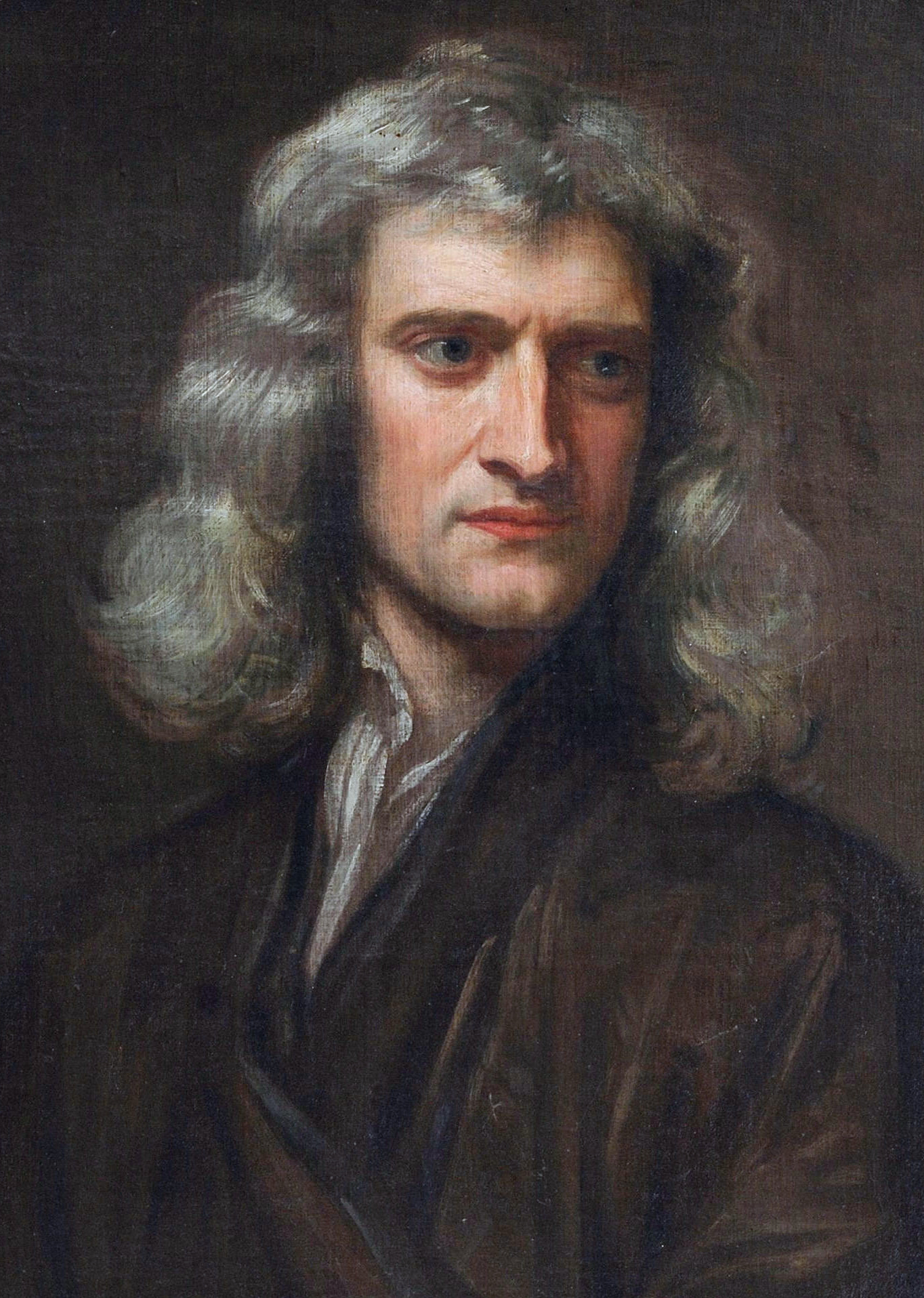
Isaac Newton(Image Courtesy Wikipedia)
The explosion of knowledge that accompanied what Durant called "Age of Reason" was unprecedented in human history. Sir Thomas Bodley who established the Bodleian Library (1598) in Oxford "obtained from the Stationers Company a grant whereby the Bodleian Library that he had established at Oxford (1598) was to receive a copy of every book published in England". France and Germany saw similar libraries. Germany made elementary education compulsory for both sexes in 1565, rapidly other European cities followed. The Church which receives a justifiable rap for its confrontation with science nevertheless played a vital role in furthering the goal of education. "In France every parish had to maintain an elementary school". "In 1685 the Christian Brothers opened what was probably the first modern institutions for the training of elementary school teachers". Nearly two hundred universities were opened between 1550s to late 17th century.

Isaac Newton, born on Dec 25th 1642 in Woolsthorpe, entered a world where slowly but surely science, thanks to Francis Bacon, was stepping out of the shadows of philosophy. Bacon, James Gleick's biography of Newton says, lamented "all the philosophy of nature which is now recieved, is either the philosophy of the Grecians, or that other of the alchemists...The one is gathered out of a few vulgar observations, and the other out of a few experiments of a furnace. The one never faileth to multiply words, and other ever faith to multiply gold". Bacon, Gleick points out, "argued for experiment".  When the Royal Society was established in 1660 with the motto 'Nullius in verba" Bacon was adopted as the patron saint. The age of telescope and microscope had arrived. "It (the Royal Society) exalted communication and condemned secrecy".

Robert Hooke who served as the Curator of Experiments in the Royal Society wrote in his "Microphagia", tat science should now "return to the plainness and soundness of Observations" and away from what it was hitherto, a "work of the Brain and Fancy".

A society for science dedicated to communicate faced the question of which language to use. Though Latin was the obvious choice the members felt "it was time for plain speaking, the most naked of expression, and when possible this meant the language of mathematics". The Royal Society was not alone, soon Europe saw a host of societies established where, most importantly, men of science congregated and debated without the constraints of social status. Gleick quotes an entry from Samuel Pepys's diary on how the Society organized science exhibitions for Londoners. This was a quantum leap. Let's return to Newton's story.

Thanks to Stokes, the schoolmaster at Grantham where Newton attended school, and his uncle, a rector, Isaac Newton was sent to Trinity college at the University of Cambridge for further studies. A civil war, plague, a rebellion and a regicide (if hanging Cromwell's corpse could be called so) formed the climate in which Newton attended college. Newton read avidly, particularly Aristotle. Aristotle idea of "motion" was elastic enough to consider a "piece of bronze becoming a statue" as motion. That meant, Gleick says, "philosophers were not ready to make fine distinctions between velocity and acceleration". Aristotle had famously said "Plato is my friend, but truth my greater friend". Newton added Aristotle to that and wrote in his notebook "Plato amicus Aristoteles magic amica veritas".

Descartes had earlier married algebra to geometry yielding a new discipline. "He treated one unknown as a spatial dimension, a line; two unknowns thus define a plane....Equations generated curves; curves embodied equations". To that Newton added the question of motion which embraced the infinite and the infinitesimal together. "To measure curvature was to find rate of change".

In 1665, soon afterNewton graduated, Cambridge was closed due to plague ravaging England. Back in Woolsthorpe Newton worked alone and laid the foundations of calculus, theories on gravitation and light. Newton returned to Cambridge in 1667 and was elected a fellow. He took the oath to "embrace the true religion of Christ with all my soul". "Chastity was expected. Marriage was forbidden". In 1669, at the age of 27, Isaac Newton became the Lucasian Professor of Mathematics. The mathematician's heart was in physics though.

Newton's paper on the nature of white light was read in the Royal Society in 1672. Newton, Gleick says, "declared triumphantly-"that light consists of Rays different refrangible". Hooke objected to Newton's theory that proposed light was "corpuscular" in nature, particles. Newton responded that "that followed from his theory and not the other way round". Dutch scientist Christiaan Huygens also joined the debate on the "wave theory" side. Newton felt insulted and wanted to withdraw from the Royal Society. "He had tried to show how science is grounded in concrete practice rather than grand theories". As these debates raged Newton, in 1675, reached another milestone. In the seventh year of his fellowship Newton was required to take the "holy orders and be ordained to the Anglican clergy". Gaelic notes "England's universities were above all else instruments of Christianity". Newton was spared the ordeal by the King who exempted the "Lucasian professorship, in perpetuity, from the obligation".

Hooke and Newton would clash again when the "Principia Mathematica" was published. Both Hooke and Newton had rejected the Cartesian idea of "vortices" to explain planetary motion. Both were circling around the ideas that "a body orbiting another in an inverse-square gravitational field" would trace an elliptical curve. Conversely, they also realized that a gravitational force law to describe a body tracing an elliptical curve around another body can only be a "inverse-square law". Hooke did not have mathematical proof but Newton did. Edmund Halley and Flamsteed who were calculating data about meteors supplied Newton with theories and data. Newton, Gleick shows in scintillating pages, went where no philosopher or philosophy went. Book III, The System of the World, "gathered together the phenomena of the cosmos. It did this flaunting an exactitude unlike anything in the history of philosophy". Gone are the flights of fancy of a philosopher or dreary sophistries of reasoning and in its place science arrived with exactitude. Hooke wanted credit for the inverse square law, which in reality was nothing more than a guess until Newton supplied the mathematical proof. Newton was irked and he called philosophy a "litigious lady that a man had as good be engaged in law suits". Halley published the Principia out of his funds.

Newton was charged with promoting atheism, a dangerous charge in that era.Will Durant writes "he appended to the second edition a general scholium on the role of God in his system". Though Newton kept up the appearances of a devout Christian in private he was anything but. Gleick says he preferred writing "AC (after Christ) instead of AD". Newton questioned the idea of trinity, a heretical and dangerous sacrilege then. To Newton Christ was less than God the Father. Though celibate Newton confessed to not only sexual thought but charged his friend Locke of having tried to entice him with women.

Hooke died in 1703 and Newton ascended to the power at the Royal Society. In 1704 Newton published his next major work "Opticks" which revolutionized the understanding light. Along with Opticks Newton published  a paper "On the Quadrature of Curves" that laid down the fundamentals of Calculus.  German mathematician Leibniz who had corresponded with Newton on what he called "fluxions" claimed that he too was the inventor of this new mathematics. As president of Royal Society Newton was judge, jury and prosecutor. Newton literally forged documents in his favor. History has now declared both Leibniz and Newton as co-inventors of Calculus.

What did Newton, specifically the Principia, achieve? James Gleick is categorical, "Newton had made claims that could be tested". In 1733 the French Academy of Scoences proved Newton was correct that the earth was "broader at the equator". Gleick is emphatic, "The Principia marked a fork in the road: thenceforth science and philosophy went separate ways". "By mathematizing science science, he made it possible for its facts and claims to be proved wrong". Conceding that Einstein's Relativity shook the world of Newtonian determinism Gleick cites Thomas Kuhn who suggested that "Einstein had turned science to problems and beliefs". However, Gleick cautions, "Einstein did shake space-time loose from pins to which Newton had bound it, but he lived in Newton's space-time nonetheless: absolute in its geometrical rigor", "he happily brandished the tools Newton had forged".

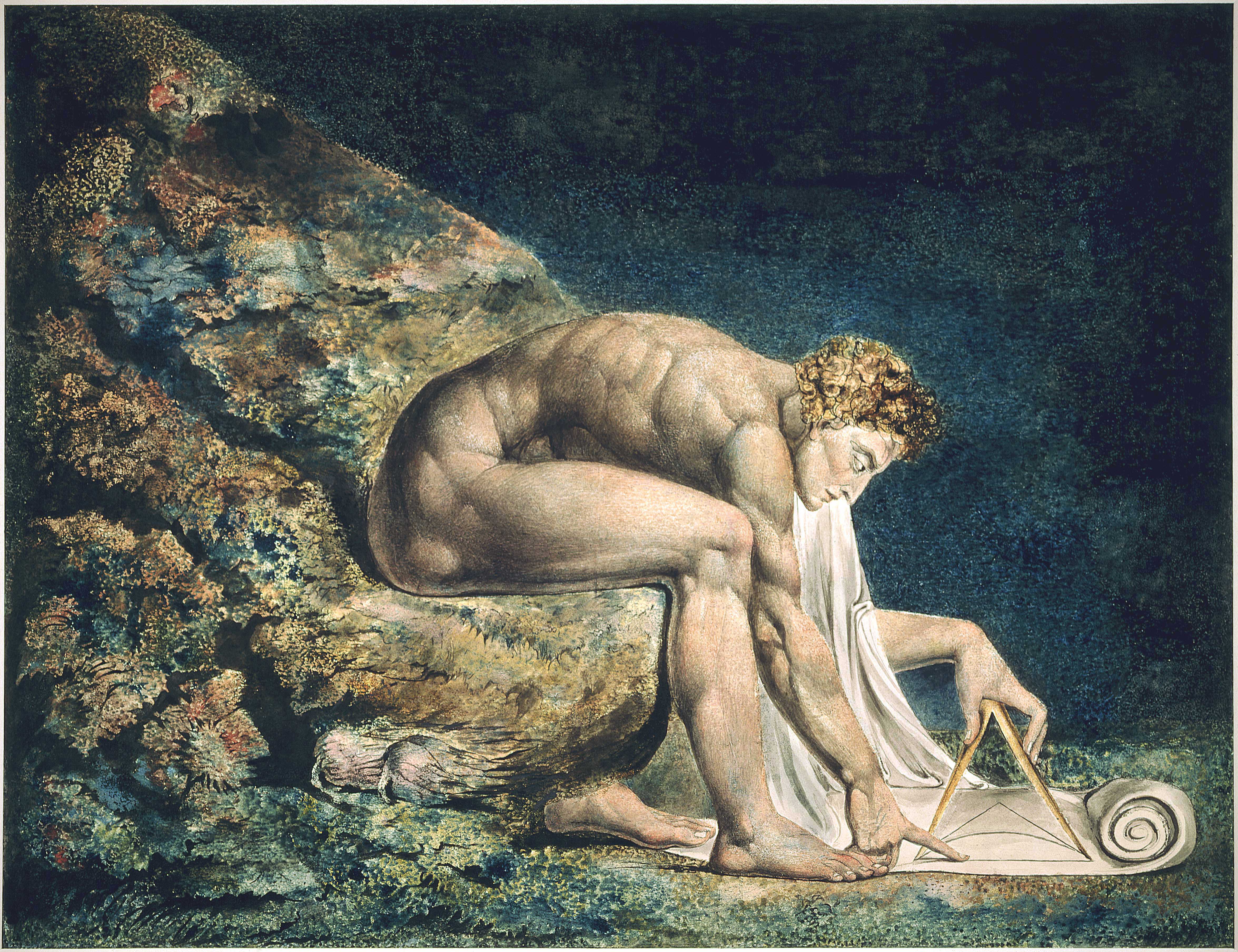
Isaac Newton was celebrated in prose by Alexander Pope and Wordsworth, William Blake drew a portrait of him, Voltaire studied him and literally proselytized for him in France, he was knighted and when he died nobles were his pall bearers and he was interred in the Westminster Abbey.

Portrait of Newton by William Blake (Image courtesy Wikipedia)


"Nature and Nature's laws lay hid in the night
God said, "Let Newton be!", and all was light" --- Alexander Pope

"Newton with his prism and silent face
The marble index of a mind for ever
Voyaging through strange seas of thought alone" --- William Wordsworth

Science has decisively outpaced philosophy and America, the land of pragmatism, which became the leader of science, had little use for European style sophistry. No one embodied the American spirit of science better than Richard Feynman. In Feynman was a spirit of irreverence and absence of philosophy unlike Einstein who read Kant as a child. Philosophy does not even provide the questions anymore let alone answers. Schrodinger owed to illicit sex as much as he owed to Vedanta for inspiring his theories.

The questions that the authors of the Tamil book failed to ask where: Why is it that it took an Austrian scientist to find the ideas in Vedanta that could inspire a scientist and not any Indian scientist? What in the Austrian scientist's Viennese education enabled him to see in Vedanta what no Indian scientist did? How many Indian exponents of Indian philosophy arrive at the same conclusions? Above all what paradigms of the Vedic era are relevant for science today? I'll write a detailed review and rebuttal of the book later.

The traffic of knowledge across the European continent is staggering in scope and requires a meditated appreciation for the scope at which it occurred. Ideas, amidst turmoils of wars, flowed in all directions. Ideas from Frances, Netherlands, Germany and England all collided and created a new world. That books written in France, Germany and England were translated, shipped to other countries and debated in scientific circles providing a magnificent intellectual stirring is a fact that should astound us, those who live in this modern social media age, on a grand scale. What is even more important is how they were eager to learn from others and not mired in petty nationalist chauvinisms. That too, given the kind of era it was, passes comprehension.

This was to be a book review of James Gleick's "Isaac Newton" but morphed into a different tone. Gleick's book is very mediocre. The narrative is uneven and his extensive quotes in the English of that era are irritating to read. What is really a letdown is Gleick's inability to explain science in a more lucid manner. This is shocking considering that Gleick's biography of Richard Feynman, "Genius", was critically acclaimed both for the sensitive portrayal of Feynman and for the lucidity of explaining esoteric concepts like Quantum Dynamics. I read portions of Will Durant's magisterial 11 volume "Story of civilization", specifically, volumes "The age of Reason" and "The age of Louis XIV" after I finished Gleick's book. Durant, who wrote nearly 40 years ago and was no scientist, covered all the material that Gleick, writing in 2003, covers. Durant's explanations of the theories and their significances are spot on. And, as only Durant can do, he provides a panoramic perspective of that era. Gleick's book should be read only because Durant's 11 volume series is out of print.

Science has marched forth from the shadows of philosophy and education has been liberated from the clutches of Church and State paving the way for what we call today 'secular education'. Both of those achievements are now under siege from the Hindutva camp.


References:


  1. Isaac Newton - James Gleick
  2. The Age of Reason -- Will and Ariel Durant
  3. The Age of Louis XIV -- Will and Ariel Durant
  4. Isaac Newton https://en.wikipedia.org/wiki/Isaac_Newton
  5. The Royal Society https://en.wikipedia.org/wiki/Royal_Society
  6. Francis Bacon https://en.wikipedia.org/wiki/Francis_Bacon
  7. New York Times Book Review of "Schrodinger: Life and Thought" by Walter Moore -- This addresses briefly the role of Vedanta in Schrodinger's life - http://www.nytimes.com/1990/01/07/books/the-lone-ranger-of-quantum-mechanics.html?pagewanted=all


Monday, May 30, 2016

'Army and Nation:The Military and Indian Democracy'. Nehru, Congress and Indian Army

Why did two countries, India and Pakistan, that inherited, from their colonial rulers, a professional army have such divergent destinies with one being a rambunctious and robust democracy and the other being mired in a cycle of military coups where democracy has effectively been snuffed out? Steven I. Wilkinson, Nilekani Professor of India and South Asian studies and Professor of Political Science and International affairs at Yale University, has written a succinct and compelling analysis of the above question in "Army and Nation:The military and Indian democracy since independence".

Wilkinson identifies three causes for the divergent fates of India and Pakistan. First, the socio-economic nature of the states inherited by the nations post-partition. Second, the differences between Congress party and Muslim League as vehicles of democracy and democratic institutions. Third, the coup-proofing policy prescriptions of Jawaharlal Nehru, Vallabhai Patel and the Congress party and the failure of Jinnah and the Muslim league in framing such policies.

"The Indian army had been designed by the British, like most imperial armies, to be loyal to the colonial regime and not to the people". To that end the British, particularly after the near death experience during the revolt of 1857, organized the regiments in such a manner so that, as Sir Charles Wood, Secretary of State for India, put it in 1862, "Sikh might fire into Hindoo, Gorkha into other, without any scruple in case of need".


The Colonial regime made an art out of creating an army built on 'Divide and Rule' and at the same time homogenized enough, by recruiting heavily from so called 'martial classes'. A retired Indian officer recalled that at the Indian army headquarters in 1946-47 a map s "had brown pins for Indian units, green for Gorkha units and red for British, and the strategy was, do not allow clusters of brown pins on their own with no reds or greens". "Gurkhas, Rajputs, Dogras, Garhwalis, Jats and Marathas", were collectively referred to as 'martial class' and the regions of Punjab and NWFP (North West Frontier Provinces) provided the most regiments from the regions. In 1931 Punjabi Muslims and Sikhs constituted nearly 50%, Other Punjabis constituted 18% and recruitments from Madras and Bombay constituted a mere 11% of the then armed forces.

World War I loosened this rigid recruitment formula and compelled more widespread recruiting to meet urgent needs. A 'Mahar regiment' was formed, recognizing that the community once used to be nearly 15% of all troops from Bombay prior to the 'martial class' based recruitments, in 1917 but was soon disbanded, due to caste prejudices, in 1922. Ambedkar, a member of the Defense committee on the Viceroy's council, demanded the re-creation of the Mahar regiment during World War II. A fact little known in India is that by the time the war ended in 1945 India had supplied "2.85 million" soldiers to the Colonial army. Wilkinson underscores the important point that contrary to popular impression this explosion in recruitment did not sweep away the prejudices about some classes being "martial" in nature and others unsuited for combat. The non-martial-classes were still not assigned to frontline duty. The Willcox Committee (1945), of which then Brigadier K.M. Cariappa was a member, looked into whether the class based recruitment should be changed and "recommended, not surprisingly, given the conservatism of the army, that it preserve the status quo".

In this backdrop the carnage of the partition unfolded. Wilkinson, based on his research with a colleague, establishes that one of the chief causes driving the bloodlust in the Punjab and NWFP is the overwhelming presence of ex-soldiers in those areas. He devastatingly observes "an additional average month of combat experience among veterans in a district was associated with a 1.1 percentage point reduction in the minority population". Post-partition the British officers left but the Indianization that had happened amongst the officer corps saw that India and Pakistan had officers who stepped into the vacated posts. However, that had a price as India learned. During World War II non-British officers were excluded, with the exception of General Thimayya, from commanding a combat unit and most importantly from military intelligence. This lack of wartime experience was "felt severely in 1962" during the India-China conflict.

Jawaharlal Nehru with US President Harry Truman in 1949 (Image courtesy Sulekha.com and WSJ)
The Congress, notably P.N. Sapru and Sivasamy Aiyer, had a jaded view of the structure of the army and how it was used the British. As early as September 12th 1946 Jawaharlal Nehru wrote to the Commander in Chief ad Defense Secretary pressing "for large scale reforms to the Indian army". However the partition and the security threats it brought basically stalled any reforms on the recruitment and compositional nature of the army. Though it was the stated policy of the government to open recruitment to all the class structure, supported by Cariappa and Thimmayya, remained intact.  However, the partition and the loss of Punjab and Bengal, ensured that the Indian army did not have the lopsided reliance on those regions for recruitment whereas Pakistani army was grossly imbalanced by a near total domination of Punjabi regiments and the near exclusion of all of then East Pakistan in the army. This imbalance, amongst other factors, proved fatal to Pakistan in 1971.

Nehru, prodded by Patel, conceded that no large scale reduction of armed forces could take place in view of the security threats and he further accepted the trade off to development programs that that expense entailed.

Wilkinson quotes Stephen Cohen, "Nehru, Patel and other Indian politicians, as well as their civilian advisers, had a clear idea of which elements of the British tradition they wanted to keep and which they wanted to discard". While Nehru harped on making the army reflect the diverse nature of the country Jinnah and Muslim league were eagerly defending the domination of Punjab's role and "Muslims' over-representation in the army".

When senior officers dragged their feet and were "obstructing Congress's plans for Independence Day celebration" Nehru wrote a stinger to the Commander-in-chief with copies to others including Cariappa laying down an iron clad rule that officers who are insubordinate to Government of India had "no place in the Indian army, or in the Indian structure of Government".

Nehru then in a series of steps began to institute far reaching changes that have protected India from falling to the fate that befell Pakistan. "The commander in chief no longer had a seat at the political decision making table", "all important decisions now had to go through the civilian officials and the politicians at the Ministry of Defense". Civilian leadership over the military has, throughout history and across nations, have produced mixed results when it comes to military victories during wars but wherever the military took the upper hand,almost without exception, nations have been destroyed. From Truman to Obama, firing popular and respected generals for indiscretions or independent policy making, has ensured better results in the long run than otherwise. The aura of military effectiveness often blinds people to assume that unbridled military leadership would be a good thing, at least, in areas of defense. Not at all. For the courage and foresightedness that Nehru and his colleagues showed generations of Indians owe them thanks.

"The pay and perks of the military were also reduced", substantially. This, Wilkinson points out, made "the army less attractive as a field of employment for members of the elite families". Nehru wrote to the Chief Ministers to "discourage the practice of senior officers giving public speeches". I'm reminded the pompous and arrogant speech given by General Douglas MacArthur to US Congress after being fired by Truman.

Of all the steps taken by Nehru in coup-proofing the country none would outrank the decision to abolish the post of Commander in Chief and replace it with a triumvirate of chiefs with equal powers. This, while coup-proofing the country, also promoted inter-agency rivalry that an irascible minister of Defense like Krishna Menon used very shamefully.

Nehru, Wilkinson says, "also recognized the potential danger of letting senior generals stay in their positions too long. "The normal tenure was reduced from four to three years". "Nehru also refused to bring generals into Indian politics at a high level as state governors". Instead, Nehru, sent former generals to far flung countries as ambassadors. Again, the vision and political will for these measure cannot be appreciated enough today, a half century away and from the comfort of peace that was the result of those measures. A cursory survey of India's neighbor and other ill fated nations would show us that to have undertaken these measures in such perilous times while setting the nation on a path of secularism, economic progress and constitutional framework is nothing short of being Olympian.

Other strategic "hedging" tactics to create a "balance outside the army" were taken with great forethought too. Patel, acting through Girija Shankar Bajpai, ensured that the Nepalese Gorkha units came to Indian army and not to the British. The creation of paramilitary forces to be used for quelling internal disturbances instead of the army played a key role in keeping the army out of areas of trouble that usually makes military leadership eager to override civilian control. This, like other measures, had its downsides too.

Too often Indian military is credited, too readily, for staying out of politics and internal affairs and Wilkinson says that it is not entirely true. He points out how Cariappa made statements regarding banning of political parties, restricting the vote to the educated and 'prohibiting students from political activities'. He was not, amongst the military brass, alone in holding such opinions. Wilkinson credits the Congress party for staving off military adventurism unlike the Muslim league in Pakistan.

On the issue of reservation for backward class and linguistic reorganization of states even a larger than life leader like Nehru had to "bend with the wind" reflecting the democratic impulses that were the undertow of a broad based populist party that the Congress was unlike the top-down authoritarian Muslim league of Jinnah which not failed to recognize fissures in the polity but even exacerbated them with their bull headedness. However, we should recognize the sterling quality of a person like General Tapishwar Narain "Tappy" Raina who refused to support Sanjay Gandhi's plan to usurp power from the victors of the 1977 elections by deploying 300 platoons. Raina very adroitly ignored the hot-headed lunatic and instead diplomatically appealed to Indira Gandhi, who was until then a mute witness to the hare brained plan of her son, to devolve power peacefully.

The one area where all reform attempts failed was in making the army reflect a diverse nation. The Indian army continues to be one of the critical arms of the government where all social justice measures, especially recruitment of Scheduled Castes and Scheduled Tribes, continues to be pathetically flouted.

The chapter "Army and Nation Today" is a brilliant analyses of the current state of Indian army as it relates to its caste composition and why it is so. The Indian army still has a regional imbalance when one considers the proportion of army recruits from each state relative to the 'recruitable male population'. However, it is not entirely due to prejudices. "The recruiting melas in Gujarat, which has a booming economy but no string military tradition, do not yield as many recruits as those in poverty stricken Chhattisgarh and Bihar".

The Indian army, Jagjivan Ram learned, was exempt from caste based reservations. What is worse the army even refuses to count its members on the basis of caste and religion and makes a virtue out of it. This has proved deleterious to the goals of social justice. When a lawsuit was filed in the Supreme Court about the President's Bodyguard being composed exclusively of "Jat Sikhs, Rajputs and Jats" the army responded that "the ceremonial duties demand common height, build appearance and dress for reason of pomp and projection which are important military attributes". The Supreme Court agreed with the army's stand and dismissed the lawsuit. Wilkinson, an American professor, is uniquely suited to present these facts and underscore the unfairness because he must be very familiar with the arguments against desegregating the US military and the current controversies regarding allowing women in combat positions in US army. I'd doubt if an Indian author would've presented these facts likewise.

Nevertheless Wilkinson is sympathetic and says that "no non conscript army in history ever looked exactly like its overall population". That said he also shows how states that are overrepresented in Indian army are overrepresented by "proportions that far exceed anything we see in the United States".

While Wilkinson highlights a US study that found "ethnically cohesive units were more likely to reenlist and less likely to mutiny and desert" he also mentions that recently the US army has shown that "with sufficient attention to training and incentives, it is possible to move from an ethnically more cohesive to an ethnically diverse military".

Partition dealt Pakistan a really bad set of cards. "80 percent of industries in West Punjab had been owned by non-Muslims","banking and insurance, and other financial sectors had also been run by Hindus". The flight of human and financial capital crippled Pakistan. But, Pakistan is what Jinnah and the Muslim league wanted. "The areas that made up the new state had supplied only around 17 percent of India's tax revenues before the war". To add to all that the ethnic composition of the army was lopsided, as pointed out earlier, between the overrepresented provinces of Punjab and NWFP and the vastly underrepresented East Pakistan.

Pakistan, Wilkinson shows in a succinct summary, did almost everything the opposite way and hurtled down a path of destruction. Where Nehru bent to the will of the people on language issue Jinnah was adamantly inflexible telling "let me make it very clear to you that the state language of Pakistan is going to be Urdu and no other language". Zulfikar Ali Bhutto used the occasion of a weakened army in the aftermath of the 1971 debacle to initiate reforms but his loss of "popular support because of his increasingly authoritarian rule", "use of FSF (Federal Security Force) like a Praetorian guard" to terrorize his opposition and finally reliance on the army itself to crush dissent all paved the way to his own downfall and the strangulation of democracy.

Wilkinson's book, lucidly written and well researched, is an important one to understand and appreciate India's founding fathers, particularly Jawaharlal Nehru, who showed admirable prescience in matters of nation building, the uncommon political courage to institutionalize reforms and, most importantly, a rare democratic spirit in yielding to popular will.

Indians would do well to appreciate the analysis that the author, as an outsider, brings to bear on the subject. The book showcases the importance of diversity in opinion. When I say that an American is uniquely equipped to write this book I do not mean it as an insult to Indians but rather I'm just stating a fact that an American who probably has witnessed similar debates in another country where the military plays a very vital role is better placed to be attentive to similar nuances. It is to Wilkinson's credit that he draws attention to an important but easy to ignore fact like parliamentary questions "on state and community recruitment in the army" spiked during an era when coalition governments where the norm. In a coalition government many regional and diverse voices find expressions and diversity, or the lack of it, in a major national institution draws scrutiny.

"Army and Nation" is a welcome addition to Stephen Cohen's outdated "The Indian army" which deals, mostly, with pre-independence era.


References:


  1. Army and Nation: The Military and Indian Democracy Since Independence --- Steven I Wilkinson (Published by Harvard University Press, 2015)
  2. Harry Truman firing of Douglas MacArthur https://en.wikipedia.org/wiki/President_Truman%27s_relief_of_General_Douglas_MacArthur
  3. The Indian Army: Its contribution to the Development of a Nation -- Stephen P. Cohen (Published by Oxford India Publications, 2001. Paperback edition)