Thursday, August 20, 2015

Bal Thackeray and Yakub Memon: Two Funerals and Partisan Outrages

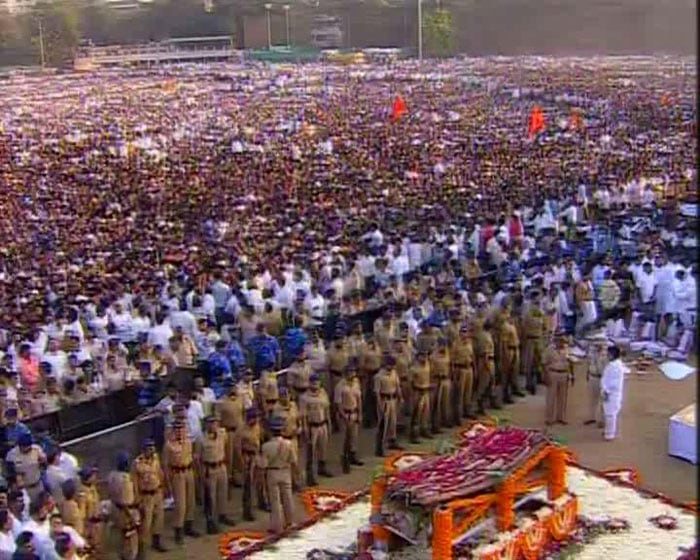
My favorite writer has stirred the proverbial hornet's nest, yet again. Apparently he, along with many patriotic Hindus, was troubled by the fact that thousands of Muslims gathered for the funeral of Yakub Memon, convicted for the deadly Mubai blasts in which hundreds were killed and maimed. The diatribe by the writer laments, of course, with good benign intentions, how Muslims are being misled. The blog brought to my mind memories of how Bal Thackeray was laid to rest, replete with state honors, with even larger crowds bringing all of Mumbai to a stand still. And few other memories came to my mind.

My beloved writer, unknowingly echoing Bush, writes that the Mumbai blasts were a declaration of war against India and mourns the hundreds that were killed or maimed  in that attack. As one who lived through 9/11 and as one who steadfastly rejects resolutely the left wing nonsense of "America asked for it" I normally do not subscribe to the idea of excusing terrorism under any pretext or justification. However, it'd be a travesty of truth if one were to see the Mumbai blasts in isolation because they were not. The blasts were a reprisal, absolutely unjustified of course, for the scandalous manner with which the then governments refused to prosecute the perpetrators of the Mumbai riots that had happened, in turn, in the wake of the Babri Masjid demolition. And, Babri Masjid demolition did not happen in a vacuum either. The road to the destruction of Babri Masjid, in full glare of international media in broad daylight and under the very noses of police protection, starts from the blood soaked path of Advani's Rath Yatra. Of course, why bother with context and nuances when shrill jingoism would suffice.

Anyone who was an adult in the 1990s India would remember what a boiling cauldron the country was. Buffeted between economic and political uncertainties the country was like an ill equipped catamaran tossed about on the rough seas. On one side Advani was tearing apart the country with his quest to build a temple and on the other side V.P. Singh, trying to cling to power, was unleashing casteism in the pretext of social justice. Entire villages quaked with fear as Advani's chariot progressed inexorably. In the midst of all this the state run TV was helpfully beaming to every household a pathetically crafted series based on the Indian epics which served to further notch up the fever. Nehru's grandson brought a TV actor dressed up as Hindu god to canvas for votes in Allahabad, Nehru's hometown. To say that in such a climate Muslims felt besieged as a community would be a grotesque understatement.

Bal Thackeray Funeral -- Courtesy NDTV.com http://www.ndtv.com/photos/news/bal-thackeray-cremated-14198#photo-184596


While the world watched Advani and Vajpayee presided over the demolition of Babri Masjid. It was India's moment of shame. The country was plunged into a communal tension possibly not seen since the horrifying days of the Partition. Mumbai erupted into flames. There was Bal Thackeray, who, as Sri Krishna committee report would note later, orchestrating the riots like an army general. Now, Thackeray had shot to fame riding a wave of xenophobia, not against foreigners but fellow Indians from other states, especially Tamils. He had once, like the many other leaders of the Hindutva pantheon, expressed admiration for Adolf Hitler. No government dared touch him, because he was not a Muslim. The failure to prosecute Thackeray stoked the flames of resentment amongst the Muslim community and a terrorist like Dawood Ebrahim, aided by Pakistan's sinister ISI, capitalized the situation.

Interestingly the writer nonchalantly states that Indian judiciary is hampered by the fact that finding witnesses against terrorist acts, by Islamic terrorist outfits, is impossible and therefore many a terrorist goes scot free. Before we deconstruct that poisonous statement a nuance that's glided here is that terrorist organizations, especially Islamic ones, are proscribed by the government and there are very draconian laws against supporting or aiding such organizations. In terror attacks the individual foot soldiers are nobodies and the kingpins do not indulge in the acts directly and therefore finding witnesses against them is impossible. Also, terrorist attacks are not police cases to be prosecuted in a court of law. Ask the Jodhpur detainees.

While expressing umbrage at the fact that lack of witnesses aid the terrorists the writer completely forgets that no witness would dare to say in open court the role played by Thackeray during the riots. In fact so sanitized is Thackeray's record that to even label him with a harsher word than fundamentalist will invite charges of extremism against me.

Let's consider another infamous case. In the aftermath of the assassination of Indira Gandhi Hindu congressmen unleashed a genocide in Delhi against Sikhs and killed nearly 5000 sikhs over several days while Nehru's grandson nonchalantly informed the country that when a huge tree falls the earth is bound to shake. It took 20 years for the Nanavati commission to submit its 185 page report accusing H.K.L Bhagat, Jagadish Tytler, Sajjan Kumar and others of having taken part in the riots. Bhagat and Tytler held high positions in the Congress Government. The writer is indignant that in any other country Yakub Memon, a member of the underworld mafia, would not be tolerated and no state that's resolutely against the underworld would hesitate to just 'shoot him'. I'd love to know if he think Bhagat and Tytler too should've been shot. Oh, wait, they are not of the underworld and they are not Muslims so a protracted due process in a court of law is required. Incidentally, it rankles the writer that Hasina Parker, who allegedly ran the underworld on behalf of Dawood, died a natural death. H.K.L. Bhagat too died a natural death.

Thirty two years ago a massacre unfolded in Nellie, Assam. Indira Gandhi announced elections much against advice that it would inflame an already volcanic situation. Nearly 1800 Muslims were butchered from morning till evening on 18th February 1983. Rest of India heard about it only a few days later. The Tiwari Commission report, that investigated the massacre, was not even tabled. The peace accord signed with separatist organizations gave almost a complete amnesty to the perpetrators of the horrors. And here we are invited to be outraged that terrorist acts by Islamic outfits goes unpunished for lack of witnesses.

The case of Hashimpura massacre is even more shameful. On 22nd May 1987 42 Muslim youths were arrested by the police (Provincial Armed Constabulary), executed in cold blood and bodies dumped in a river. After 28 years a court acquitted all 16 accused for lack of evidence. Now, its easier to find a witness against Afzal Guru or Yakub Memon but absolutely impossible to find a witness against the PAC in such a case.

I share the writer's loathing for the sickening double standards of the Marxists. Marxists would froth at their mouth against US going to war against Iraq but would shut all their orifices about Soviet invasion of Afghanistan or the terror regime in Chechnya. Marxists had a field day after 9/11 lecturing US about how 9/11 was just retribution against US hegemony etc. But, the point at which I part company with the writer on his diatribe is when he obfuscates wider context of what went on with the Yakub Memon affair.

Not just Muslims but most Indians have little faith in the judiciary. When the highest court of the land acquitted a corrupt politician it was anybody's guess as to why it happened. The same act was repeated most recently too. The many acts of omission by Indian judiciary has engendered a climate of absolute distrust in the law. How does a country trust the judiciary when 365 Sikh youths were arrested, detained and tortured for 4 years and finally released just like that? Tamil Nadu recently saw a spate of protests against the pending execution of 3 convicts in the Rajiv Gandhi assassination case. Again, distrust of the judiciary and due process was the bedrock of the protests.

A section of the population celebrating a killer or assassin is not all that uncommon in India. Sikhs celebrate the killers of Indira, Tamils celebrate the killers of Rajiv, Hindutva group celebrates the killer of Gandhi. Even forest brigand, thug and murderer Veerappan is celebrated. Yet, nothing rankles the hearts of many like seeing Muslims mourning Yakub Memon. And THAT is because Muslims, as always, are held to a different standards.

Poor Abdul Kalam has become a political football even in death. The Sikh community had fractured relationship with Giani Zail Singh under whose presidency the anti-sikh riots happened and with Manmohan Singh who accepted the prime-mistership from the party that conducted the riots. This is natural. Kalam accepted the presidency from a party that was an implacable foe of Muslims and it could very well have led to an alienation from the community. Such an alienation, in their eyes, is fully justified. One also has to bear in mind the nefarious motives and tortured reasonings of the Hindutva crowd in singing the praises of Kalam. Just as there are Hindus today who want to worship Godse there happen to be Muslims who are mourning for Memon. When Gandhi was assassinated Chitpavan Brahmins in Pune, the community of Godse, distributed sweets.

To my mind those who thronged Yakub Memon's funeral are not different from those who milled around Bal Thackeray's funeral. At least Memon died a criminal convicted in a court of law and executed in accordance with the law of the land. That Thackeray was buried with State honors is a shame. That Advani and Vajpayee were elected leaders is a shame. That the thousands of Sikhs are still awaiting justice is an shame. That Dalit residences were burned, on no lesser day than August 15th, for wanting to take their own temple chariot in a procession, is a shame.

References:

1. http://www.jeyamohan.in/77891#.VdZ9gLTigso
2. https://en.wikipedia.org/wiki/Hashimpura_massacre
3. https://en.wikipedia.org/wiki/Nellie_massacre
4. https://en.wikipedia.org/wiki/Bombay_Riots
5. http://www.caravanmagazine.in/vantage/thirty-two-years-later-nellie-massacre-remains-all-forgotten


Sunday, August 9, 2015

Donald Trump's Candidacy and America's Intellectual Decline

How did Donald Trump, a bloviating billionaire, become a viable candidate for the US presidency in a country that boasts of the American Philosophical Society and The Metaphysical Club? The candidacy of Donald Trump was born on the day Bill Clinton decided to court the youth vote by appearing on MTV and answering whether he preferred boxers or briefs. Democrats are chortling that Trump resembles the GOP and preening intellectuals are tittering that Trump will lead GOP to an electoral rout not seen since the days of FDR. Trump is not the product of GOP and nor is he a problem for the GOP. Trump is a creation of America's intellectual decline and resembles America, not just one or the other party. All that remains is for a 21st century Richard Hofstadter to reprise a retelling of 'Anti-Intellectualism in America'.

Benjamin Franklin established the American Philosophical Society in 1743 and the Metaphysical Club was first established by Oliver Wendell Holmes in 1872. Both were supposed to foster vigorous intellectual debate and provide the nascent country with intellectual inputs. Thomas Jefferson was instrumental in establishing the Library of Congress and felt that legislators should've access to a library to read and enlighten themselves before legislating. Donald Trump is incapable of any intellectual thought or vision and yet he is a serious candidate for a national party. How did this happen?

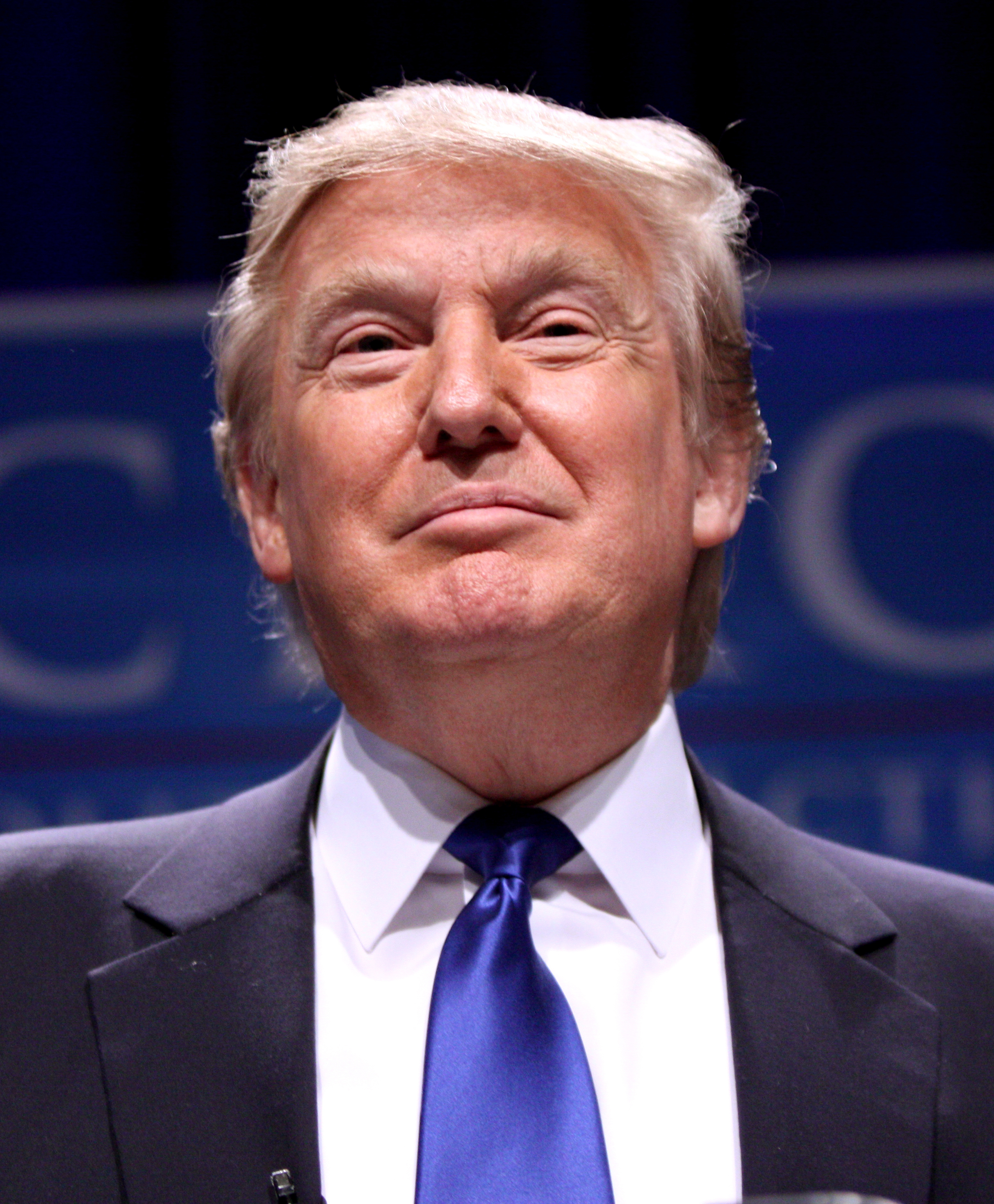
Donald Trump
The coarsening of debate and an all pervading shallowness in conversation are both the contributions of a social media fueled 24 hour news cycle. There was a time when Milton Friedman, no less, ran a series of shows dedicated to very serious discussion on economics with guests like Thomas Sowell. Friedman's show 'Free to choose' was legendary in dethroning liberal economics with feisty, lively and deeply intellectual debate on how 'progressive policies' where anything but progressive. And then there was William F. Buckley Jr's 'Firing Line' with wit, verve and intellectualism. Buckley's on-air vitriolic feud with Gore Vidal had all the fireworks that one would expect when ideological apostles of clashing world views joust intellectually. It is a sad decline that in today's America what makes for controversy is a woman moderator being berated vulgarly by an air-headed billionaire.

Newt Gingrich acidly told financial journalist Mario Bartiromo, during a debate where she moderated, in 2011 that nobody in the news media asked "one single intelligent question to the 'Occupy Wall Street' crowd". The 'Occupy' movement was a rag tag motley crowd with a collective IQ on economics that was almost zero. Yet, the media lionized them without any serious intellectual scrutiny of their addled ideas or idiotic policy prescriptions. Is the connection between media leaving 'Occupy' crowd unchallenged and the rise of Trump as a candidate, a tenuous or far fetched one? No. Not at all. When one kind of vacuous demagoguery is accepted in the name of challenging 'the establishment' it is impossible to prevent another demagogue doing the same.

When highly respected and very professional anchor John King, CNN, opens a presidential debate with a question on the private life of a candidate and get's singed on live-TV by the sharp tongued candidate we can understand why the media is the favorite punching bag for the extremes in both left and right. Newt Gingrich went on to win the South Carolina primary solely because of that on-air explosion. This is the same media that gave Barack Obama an unprecedented latitude because of his historic candidacy. At one debate Hillary Clinton mocked the media for its softball questions to Barack Obama. She asked "why don't you give him a pillow".

A sickening feature of the rise of the Trump candidacy is the role of the media. On the one hand anchors breathlessly comment on how the man adds nothing to the debate, how he is a problem for a party that's trying to reach out to minorities and then goes to the same man for interviews because, as he rightly brags, he's a 'ratings machine'. Trump has been invited by CNN's Wolf Blitzer to comment on serious issues so many times in the past as if he had anything to contribute. The media created Trump and is now acting like the GOP created him. Only Huffington Post had the guts to say it'll stop covering Trump as a candidate for the presidency but will feature him in the entertainment section.

The rise of Huffington Post as a news portal is the best summary of America's intellectual decline. The Huffington Post is nothing but a web aggregator and does no original journalism, lives off the journalistic efforts of other news organizations, and makes more money than them. How does one intelligently talk of the roots of the 2008 financial crisis in a country where Huffington Post exists?

The media circus during the 2008 heated primaries featuring Obama and Clinton showed the shallowness of the debate. Supporters and partisans from each camp were invited on primary nights and other times to pow-wow on-air by networks. Pray, since when did mud fights by partisan hacks become worthy of being labeled political debate? Yet, no anchor challenged Barack Obama on serious issues like campaign finance. As a long shot candidate Obama had signed a pledge that if elected as nominee he'd take public financing for the general election. Then, nominee Obama, rolling in cash, refused to do just that despite being reminded of the pledge by a far underfunded opponent. Nobody in the media sought to pin him on the hypocrisy. And Obama gleefully dished out policies that everyone loved to hear but nobody thought he'd seriously implement. Obama talked tough on appointing lobbyists until he appointed one. He pontificated loftily on how he'd bring about health care reform with discussions on live TV until he discovered the virtues of backroom deals. He railed and ranted against NAFTA and then slyly sent his economic adviser to the Canadian embassy to assuage fears that he might tear up NAFTA. Now, the same guy is trying to sign the largest trade deal.  Is it any wonder then that the people have little or no faith in the media? Faced with double speaking politicians it is no wonder that a guy who speaks his mind, however offensively, catches the imagination of the people and is rewarded for being gutsy.

If Mitt Romney had had half the guts of Donald Trump he'd be sitting in the Oval office today. Romney was repeatedly cornered in debates by his opponents and moderators for how his firm 'Bain Capital' conducted business. He was repeatedly asked to explain job losses at firms his company bought over and he was tarnished as 'vulture capitalist'. What many conceded in private and what was true was that the nature of his business was exactly that. Private Equity firms are called in as a last resort by a hemorrhaging firm to restructure and become viable. This naturally involves layoffs. Asked about lenders losing money when his companies declared bankruptcy Trump cheerfully told the moderator "look, these lenders are not small time investors". He essentially said "they know what game they are playing". That was ballsy. The audience  loved it. Romney, a far more honorable business man than Trump, never embraced a muscular argument in favor of capitalism and thus yielded the ground to Obama, a demagogue, who understood nothing of economics. On this one score I wish Romney had been like Trump.

It is sickening to a see a parade of self-righteousness by the Democratic party against Trump's misogyny. Apparently its not ok to be offensive about women and minorities only when its the GOP doing it. Washington DC mayor, African-American, railed against how Asian shops are dirty and there was no furore of disapproval. A South Carolina union had a pinata beating contest where the piƱata was the GOP governor Nikki Haley's face. Nikki Haley, a woman of Indian origin, is the governor of SC. Liberal comedian Bill Maher happily heaped patently offensive comments about vice-presidential candidate Sarah Palin without attracting even a finger wagging let alone a tsunami of condemnation. Then there was Barack Obama telling Hillary Clinton, without looking at her, "you are likable enough Hillary" and then called a lady reporter "sweetie". And then there is Bill Clinton, he of the "I did not have sex with that woman, Monica Lewinsky" fame.

When the Democratic party candidates pontificate on Trump's demagoguery its rich with hypocrisy. The basic rule of politics is anything goes. Throwing the kitchen sink at the opponent is par for the course. When GOP congressman Paul Ryan presented proposals to overhaul entitlement programs the Democrats released an ad showing him pushing an old woman off a mountain cliff.

Yes, Trump's comments about Mexican immigrants being rapists, is not just false but patently offends any decent person. But, again, Trump's demagoguery strikes a chord in a sympathetic audience, but, at its root is the Democratic demagoguery that nobody becomes rich except by defrauding somebody else. Democrats made it fashionable to tell a majority of America that a minority is responsible for all their troubles and lack of progress in life. To the democrats the culprits were the so called rich people. To the Trump voter it is the illegal immigrant. Across the world, in every country, immigration always raises concern about destabilizing local labor market. This is economic reality. There are sound economic arguments in favor of immigration but sound economic arguments are not only shunned by the Democrats but actively discredited so when they are indignant at Trump feeding into a frenzy they are being facetious and hypocritical. Also the cynicism of the GOP voter on immigration is not entirely without basis. Democrats always gleefully point out that it was Reagan who actually allowed an Amnesty program for illegal immigrants. True. Reagan signed on to an amnesty program when the number of illegal immigrants were 3 million. The other part of the bargain was to secure the border and that never happened and the result is today there are 14 million illegal immigrants. Also, let's face it, the Democratic party loves this problem only because they see a vote bank in that demographics.

For those offended by the vulgar remarks of Donald Trump here's another unpleasant fact of why such rhetoric could appeal to a voter. The illegal immigrant lobby has become a political force that is brazen in its demands and the brazenness is not just in 'demanding' citizenship but has reached such ludicrous levels where it is considered politically incorrect to even call them "illegal immigrant". The political correctness brigade informs us that we should refer to them as "undocumented immigrant". Is it any wonder that when Trump rails against political correctness there are people willing to applaud him. And by the way Bernie Sanders, a proud socialist and another Democratic candidate, practically echoes Trump's desire to seal the borders and put a stop to immigration. So much for the GOP being the party opposed to immigration. Actually GOP loves immigration, albeit, the legal kind, the kind that is not a hostage to the Democratic party.

There was a time when Leonard Bernstein conducted classes on classical music for children in New York City and that was broadcast. Then there was Jacob Bronowski lecturing the world on the intellectual "Ascent of man". Today we are left with following Kim Kardashian's nude posterior breaking the internet. And then we blame Trump for having audacity to consider himself a candidate for the highest office in the land.

Donald Trump is a product of the intellectual swamp that is America today. Trump is a reflection of the decline of intellectualism in all walks of life in America. Trump is not GOP's problem he is America's problem. Trump does not embody GOP, he embodies America and for that every American should be ashamed.

Monday, August 3, 2015

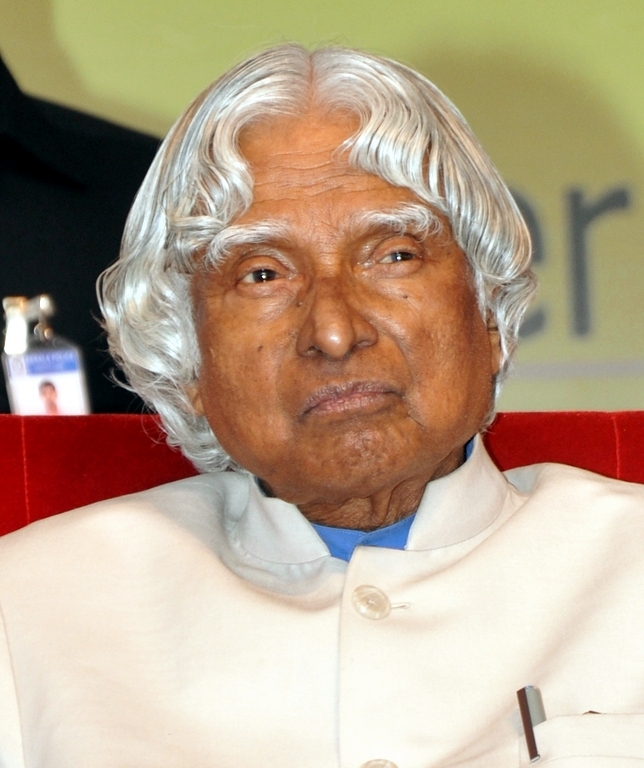
Abdul Kalam and a Nation Bereft of Idols

When Kalam passed away my friend, a nuclear physicist, called him an inspiration and my mom was distraught at the loss.That a very mediocre intellectual with less than modest intellectual accomplishments and no academic distinctions has become the most sincerely mourned man in recent memory is testimony to the intellectual bankruptcy and pathetic lack of moral leadership in a country of a billion people.

Let us first dispense with the biggest fallacy of calling him a scientist. He was not a scientist by even the most lenient definition of the term. A.P.J. Abdul Kalam, born into dire poverty went on to become the President of a country and more importantly a source of inspiration for an inspiration starved generation. Yet, no one can point to any significant doctrine by him and he did not propound any theories. His autobiography has no literary quality to it and is pathetically pedestrian and yet it is being hailed as a book to be read. This, in a country where Nehru's autobiography is still available to read. Khushwant Singh carped that Nehru's writings were mediocre. I wonder what would he say of Dr Kalam's books.


In 2001 a speech by Kalam went viral. The speech was vintage jingoism. He told Indians to stop referring to India as a 'developing country' and instead exhorted them to refer to India as 'developed country'. A very dear friend of mine sent it to me. I replied thus, "Now coming to the very major canard of calling India a "developed" nation:Does Mr Kalam sincerely beleive that re-labelling would satisfy our jingoistic impulse.I'd like to hear from him which developed country has the following distinctions : telecommunications disrupted for 20 days inflicting a huge 5000 crore loss,banking industry closes for a day causing 2000 crore loss, FERA accused fugitive gets elected to the parliament,a dacoit becomes an MP; murderer,rapists,looters,thugs get elected to assemblies; roadways are a joke,communication infrastructure is a parody,consumers pay 85% taxes on each car they buy,black market economy is valued modestly at Rs70,000 crores,medical care is pathetic,pollution on roads makes every citizen susceptible to lung disease,freedom of expression is threatened by lumpen elements which go scot free,the justice system is anything but just,mediocrity is sanctioned in the name of social-justice.....is there any end to this litany of problems." The reply holds good today too. 

Kalam peddled bromides in the name of inspiration. The saving grace was the man's down-to-earth humility and sincerity in what he was peddling. As Tamil writer Jeyamohan notes Kalam was probably one of the last of a generation that came of age in the Nehruvian era when dreams and hopes were even more grandiose and even more intellectual. A half century since the death of Nehru India could produce only a Kalam.

Alternately hailed as 'missile man' and 'father of Pokhran-II' Kalam had little do with either from the perspective of pure science contributions but he became, unwittingly, their face. Pokhran-II and the subsequent elevation of Kalam to the Presidency by the then BJP government thrust him into a national debate. Unlike Einstein who turned down a presidency Kalam went on to occupy, with no qualifications, the presidency. When an ill qualified, albeit very simple and honest, man occupied an office that scumbags and toady politicians had occupied earlier the country rejoiced and that set the trajectory of how Kalam would be perceived in the years to come.

That Kalam, a muslim, was elevated to the highest office of the land by a Hindu fundamentalist party drove polarizing opinions of who he was though he himself steered clear of any politicking and remained simple Simon. Hindu fundamentalist and purveyor of Hindutva Gurumurthy symbolizes one section of Hindus who thought that Kalam had "Gita in one hand, atom bomb in another". In his obituary of Kalam Gurumurthy, like Subramanian Swamy, extolled Krishna for dispelling Arjuna's hesitation to kill while revealing the Gita. Chiding Asoka, usually referred with a suffix 'the great', for being muddle headed and giving up killing in favor of pacifism. Gentle Hindus are usually offended when atheists like DK's Veeramani speak of Gita as inciting violence but here are two fanatics speaking on behalf of Hindus besmirching a wonderful scripture that the Apostle of Peace, Gandhi, swore by, as a text that encourages to kill without hesitation. No one can insult a great religion like Hinduism like the Hindutva vipers can do. Pakistan, not to be outdone by India, soon followed with its own nuclear blast. A 'Muslim bomb' against a 'Hindu bomb'. The strategic benefits, if any, of Pokhran II is beyond the scope of this blog.

The Hindutva crowd went into overdrive in its obituaries for Kalam by not so shyly highlighting his capacious mind to enjoy Hindu religious texts and practices as the desired qualities of a 'model Indian-muslim'. Of course nobody bothered to ask if Rajendra Prasad read the Koran and visited Sufis. It is only poor Muslims and other minorities who have to consistently prove their nationalist credo by satisfying the litmus test of paying respects to Hinduism. 

A rabid pro-LTTE Tamil blogger spewed venom that Kalam's cosmopolitan mind was nothing but a mask to curry favor with the Hindu nationalist BJP government. Kalam, born into utter penury, enjoyed the patronage of a Brahmin teacher as a student. In his auto-biography Kalam recorded how the teacher invited him for lunch at the latter's house. The teacher's wife was not thrilled at the prospect of serving a muslim boy and Kalam, sensing the discomfort, did not want to visit any more but his teacher who would have none of it said "she'll learn". Growing up in a community where two religions existed cheek by jowl Kalam enjoyed drinking water from the two great streams that watered India's conscience. 

The outpouring of love and affection for Kalam is situated in reasons beyond such dishonorable politics. Though India had lost its greatest son, Gandhi, to religious violence and an assassin's bullet only after the assassination of Indira Gandhi did Indians witness their leaders shutting themselves off behind layers of security. Kalam's informality was a breath of freshness for Indians. Vexed and frustrated at seeing venal politicians selling empty dreams the common Indian became a reservoir of deep cynicism and then Kalam happened. 

In a nation that had such intellectual giants as Homi Bhabha, Vikram Sarabhai, J.C. Bose, S.N. Bose, C.V. Raman, Viswesvarayya and many other lesser lights it was a tragedy that scientific achievements, especially of the kind that could arouse a nationalist pride, had decayed and ceased to exist. A long period of despondency reached its nadir in the early 90s when the nation was plunged into a 'balance of payments crisis' and had to pledge gold to earn foreign exchange. In that vacuum the quick successes of Indian science with Kalam as its face brought much needed pride to India and with it a sense of hope. Kalam spoke of hope and India fell in love with him. As the 90s economic liberalization brought prosperity, though unevenly, hope in a better tomorrow was an enticing prospect to a people which wistfully and often with indignation spoke of a glorious past. Kalam fueled it further with his talk of India becoming a super power by 2020. Much before Barack Obama made Americans swoon with words Kalam's words were hypnotic to gullible Indians.

To Indians who were accustomed to seeing the kinds of Laloo Prasad Yadav, Devi Lal, Deve Gowda, Mayawati, Karunanidhi, Jayalalitha, Mulayam Singh Yadav and the many others who populate India's hall of shame Abdul Kalam looked liked their prayers answered. Of course by now Indians had lost all notions of what true excellence meant, what scientific achievements really were and what intellectualism meant. How else does one explain the fact that the nation of Homi Bhabha and Vikram Sarabhai come to consider Kalam who was, in truth, a scientific nobody, as a scientist? 

When news of Kalam spread social media was flooded with anecdotes by all and sundry of some apocryphal story of his humility and his unassuming nature. So many, many posted some incident or the other of meeting him, even during the days of his presidency, and sharing a word or two. Here was a man who, unlike India's politicians and preening intellectuals, did not talk down to his audiences but talked to them on equal terms. 

Neil de Grasse Tyson, America's first African-American to head a planetarium, visited Cornell and met Sagan to evaluate if he should join Cornell. Sagan wanted to see Tyson enroll in Cornell and took him on a tour of the campus and later in the evening even dropped him off at a bus station. Later Tyson went to Harvard. Such things while common in USA are unheard of in India, a nation mired in an obsession over hierarchy and worshipping authority. Kalam broke those barriers and publicly so though in a far less intellectual sphere.

The overwhelming adulation that poured forth for Kalam only underscored how much Indians yearn for honest leadership even more than skillful leadership. For those who doubt if Indians would still value a Gandhi the flood of affection for a simple man like Kalam shows the void for such a persona in India's public life. We should thank Kalam for not just kindling hope in India's future but for keeping the embers of hope that Indians can still be touched by honesty and simplicity. And for keeping that flame alive may his soul rest in peace.

Wednesday, July 22, 2015

48 hours With Jeyamohan

Rabbi Ben Akiva told his favorite disciple Simeon Ben Yochai "Son, more than the calf wishes to suck does the cow wish to suckle". Those words were written by my father, as a sort of dedication, when he gifted his young boys a book of questions and answers that he had bought in order to wean them away from the smutty Tamil weeklies and puerile Amar Chitra Katha comics. Those words kept flashing in my mind the 2 days that Jeyamohan spent with me in New Jersey. Jeyamohan is often mockingly, and sometimes lovingly too, referred to as ą®†ą®šான். He has fully earned that moniker.

A few days before he embarked on his visit to US Jeyamohan (or his webmaster) had re-published his review of T.J.S. George's biography of M.S. Subbulakshmi. When first published it stirred a hornet's nest with the usual wailing questions of "do we need to know her antecedents", "why should a biography wash dirty linen" etc. Of course Jemo had answered all of them with gusto. The re-publication invited a torrent of the same questions from the same usual suspects and Jemo answered them, again, unflaggingly. I told a friend, the man is indefatigable in his quest to educate the Tamil society that is still intellectually feeble.

Despite the fact that I had written so much against Jeyamohan in blogs and Facebook somehow my email id had landed in the list of recipients in an email chain discussing travel arrangements for him. Boston Bala was co-ordinating the North East portion of Jemo's travel. It was decided that Jemo would spend nearly 5 days in New Jersey. A good hearted host agreed to take Jemo and his wife Arunmozhi to New York City for 2 days. Question was what to do for the remaining days? A curious thought struck me. After all I've spent a lot of time reading, discussing, debating and disagreeing with Jeyamohan I felt I owed him something for all the intellectual fodder that he provided. I always love to share my adoration of my adopted motherland and I thought why not take Jemo to Philadelphia, the cradle of America's constitution and to Lancaster, to visit the Amish, a very curious set of people.

Meantime Bala tried to get New Jersey Tamil Sangam (NJTS) organize a meeting. An NJTS functionary, a self declared regular reader and friend of Jeyamohan, was irked that NJTS is being asked to host an event during weekday and that NJTS was not properly looped in on the arrangements. To be fair, he had a point. It was at this juncture I decided to write to Jeyamohan directly offering my hospitality and home. I wrote to him that I'd like to host him and that he'd be treated very honorably, our disagreements notwithstanding. Jemo responded warmly that he holds me in regard and that our disagreements, while they may continue, are not personal in nature and that he'd be happy to stay with me.

One of the pleasant surprises of Jemo's trip to US this year was readers getting to see a doting and romantic man who luxuriates in the love of his adoring wife Arunmozhi. The photos that he published showed an intimate couple having the time of their life. Remo had written that Arunmozhi too loves to visit museums and historic places. I had come to know of a very unique exhibition in NYC organized by author William Dalrymple about Delhi Sultans. I immediately informed Jemo's host and he, with great effort, worked it into their schedule.

Meantime as it always happens with our wonderful Tamil brethren and even more wonderful Tamil Sangams a whole set of shenanigans unfolded. When I saw the happy couple picture of Jemo I so wished that the couple just have a fun time enjoying this country that I love dearly and not get dragged into the usual dog and pony show that usually happens around such visitors. However, I also decided that just because he is staying with me that I should in no way be an obstacle for what he may choose to do or who he wants to meet with. He gets to choose, not me.

Jeyamohan has written incessantly over the decades and especially over the past 5 years he has written copiously on the web about any number of topics. In fact one has to wonder if there is anything he has not written about. I wished we could spend some time in and around Philadelphia soaking in the American experience. Anyway I decided to be a spectator to the unfolding spectacle.

Our wonderful people have no respect for a person's time or privacy. Jeyamohan had announced nearly a month ahead about his travel and now at the very last minute a person hounded, literally hounded me, to get a time slot with him for an interview. This despite the fact the person had read, literally, nothing by Jeyamohan. Though a friend I found the request to be very unseemly. Anyway I just conveyed the request to Jeyamohan who politely turned it down. He was in US to show his wife around. He turned down another request too.

Finding a suitable venue for an evening meeting was a challenge. Pazhani Jothi, another devoted reader, found a venue and booked it with post-haste. Now that somebody else had taken the pains to arrange the venue NJTS happily stepped in to take credit and take over the meeting. தமிஓர்கள் அல்லவா.  One of my persistent criticisms of Jeyamohan is that he steps into areas that are not his forte (right now P.A. Krishnan has a thread going on in Facebook about Jemo's remarks on Raja Ravi Verma). A few days before Jemo's NJ arrival I had sparred with two others about Gandhi's place in history. I thought it'd be a good idea to suggest a topic to Jemo that he could do justice to. I suggested, in the email chain, that he speak on Gandhi. Unbeknownst to me now NJTS and some other fringe organizations had taken control of the meeting. By the way I had also suggested that I could introduce both Jemo and the topic thus giving the evening a structure that it then seemed to lack. An NJTS functionary bristled at the suggestion and in an impolitic email he brushed it all aside. I just chuckled and put my faith in Jemo's ability to deliver despite the innate abilities that the Tamil Sangams have to screw up. And, trust me, my faith was prophetic.

"Welcome to the city of Ayn Rand". With those words I welcomed Jemo on a breezy and warm summer evening in NYC. We were near the NYSE building. Thus began a very pleasant 48 hours.

Jeyamohan did share some tit-bits concerning movies that he was working and the movie industry in general over the 2 days. To be fair to him never once did he say, regarding anything, 'this is off the record'. However I'd much rather leave the particulars aside, except where absolutely necessary, because it'd be fodder for gossip and unnecessary controversy.

We hit it off straight away by talking about Gandhi and Nehru. When we visited the 9/11 memorial I told him how the names were arranged in a unique manner, not alphabetically, but clustering names of colleagues and friends who died together that day thus giving a sense of the life the victims lived.

Pazhani had very kindly consented to drive us around for the next two days in his very spacious mini-van. Jemo and I occupied the second row and chatted away to glory thanks to Pazhani.

Jemo narrated how he maintains his self-worth, intellectually and economically, in the movie industry. Details aside, suffice it to say, the man knows his worth and even more important he knows how protect his 'brand value'. I told him that he has an Ayn Rand in him. விதி சமைப்பவரல்லவா. Intellectuals in an attempt to establish their uniqueness often decry and deny those that they resemble most. Incidentally Ayn Rand too enjoyed being in the movie industry.

The discussion turned towards education and how pathetic Indian education is. I then narrated about why the supremacy and uniqueness of American Universities is a much less spoken of dominance compared to the dominance of US in finance and military strength. I was quoting from Jonathan Cole's 'The Great American University' and Fareed Zakaria's recent column on the importance of liberal arts in education. As I was speaking I could see that he started staring out of the window. Maybe he was bored. Maybe he thought I was didactic. I guess it takes one to recognize another. Over the 2 days I figured out one thing he's on this trip entirely to show his wife around. Jeyamohan's curiosity about what he saw was cursory and passing. The stress of writing Venmurasu totally occupied his mind. And then there were the weighing concerns of how the new movie was being received, his deliverable to other directors etc. Don't get me wrong, he was an animated conversationalist most of the time, just not too much in a listening mode.

I think he mentioned something about his visit to Paris and then topics shifted to western art versus Indian conception of art. He quoted extensively from A.K. Ramanujan to establish that Indian art must be appreciated within its own paradigms and not through Western prism. Modern ideas on diversity and political correctness completely resonate with his views that each culture and civilization must be studied on its own plane for appreciation and one cannot be held as superior or inferior to another in comparison. However, I could not help remembering Allan Bloom's book 'Closing of the American mind' wherein Bloom had argued that one should not indiscriminately accept all as equals.

As we neared the Constitution Center in Philadelphia I went into the framing of the constitution, the Bill of Rights, the Ratification, the Federalist Papers, the anti-federalists etc. At the Constitution Center it was a glorious July 2nd and in view of July 4th there was no visitors fee. The whole place swarmed with hundreds of school children who had come to learn how this great nation was formed. I was telling Jeyamohan that this is what we miss in India. Even today there are not many good books written about Indian constitution. We had lunch at Farmicia, off Market Street. Delicious food. Jemo wanted to know if after 250+ years are there any current problems that can be traced to the US constitution and if there is any part of the constitution that is still hotly debated. I readily cited the hot debate that rages over the 2nd Amendment (the right to bear arms). Then I cited few key Supreme Court decisions starting with Marbury v Madison.  When we later toured the center I pointed out the exhibits that illustrated all that I had just listed. The short presentation on US constitution, from what I inferred from his body language, did not impress him much. He, however, noted how the presentation, made by an African-American, did not flinch in discussing the less than glorious chapters of US history like slavery, Vietnam, segregation etc. Of course I emphasized that school children watch this less than idolatrous version of the country's history.

While we were in Philadelphia an anxious NJTS functionary kept nagging Pazhani about our whereabouts. Apparently he was worried that given how he stymied me from introducing Jemo in the meeting that I might play spoilsport by somehow detaining Jemo on some trumped up excuse from attending the evening meeting. I told Pazhani that such things are beneath me and I'd respect Jemo's independence and his choice of speaking at any venue or meeting anybody. In this context Jemo recounted how his books were once published by a group in New Jersey. The publisher, run like a mom and pop operation, eventually folded and Jemo had to hunt for a publisher. Curiously the NJ based publishers that included an acquaintance of mine were not too happy and sought to influence Jemo's decision including advising him to choose an indie publisher though it may not be financially rewarding. I chuckled and told him that the person who advised him thus was a high priced independent consultant who would not sacrifice a dollar in his rates.

The issue of what Jemo was to speak on came up. The nagging NJTS representative too had been wanting to know the title so he could prepare his remarks. Fair enough, I'd do the same. Jemo said that while I asked him to speak on Gandhi the others wanted him to choose some topic that was literature oriented. I told him it's entirely his liberty to choose and that he can gladly discard my suggestion. Frankly I had no interest simply because there are no topics that I could think of that he had not written about or expounded in detail, including Gandhi. Actually I'd have preferred if we could've spent the evening going around the city of Brotherly Love and soaking in the experience instead of yet another evening of a speech followed by very predictable inane questions. Anyway it was his choice. We headed back to New Jersey with all of us dozing off and Pazhani being Parthasarathy.

Arunmozhi instructed Jemo to freshen up and wear a new shirt for the evening. It is fun to watch them interact. En-route to the venue Jemo recounted the  places Gandhi visited in Tamil Nadu, with dates, and how many of those places, now memorials, are in a dilapidated condition. Jemo was very warmly received by NJTS organizers and the function started without much ado and an excellent rendition of the song of benediction to Tamil by a very fine singer who looked fine too. Her name slips my memory. I heard from another friend that she's quiet the rebel.

Thankfully I did not get to speak at the function else the person who read out an interminably long essay, he thought he was speaking, would've been eclipsed and I hate nothing more than shining by contrast that too compared to one like that. I'd have preferred water boarding. I dozed off until Jeyamohan started speaking. Jeyamohan, as he himself  often says, is no flashy speaker. He lacks a stage presence, does not speak in a commanding tone and his speech itself does not have rhetorical flourishes. Put simply, he is not Jeyakanthan. What he lacks Jeyamohan more than compensates with insights and substance. A listener has to be patient and wait to be subsumed by the torrent of ideas. Speaking on the title இலக்கியத்தின் நாą®±்றங்கால் Jeyamohan composed his speech like a symphony put together by a composer with the pieces falling in one after another to culminate on a high note. The speech was easily a shining example of everything a fine speech should be. Jeyamohan was in a league of his own and did not merely shine by contrast.

Starting with Begali writer's of note like Bhibuthi Bhushan Bannerjee he went on to Kannada, Tamil, Malayalam, Telugu and Marathi listing highly acclaimed authors and select works that are critically acclaimed and have stood the test of time. He relished being the quintessential teacher. ą®†ą®šான். Rabboni. He listed India's writers from each state and in my mind I could picture the names as they dotted the Indian peninsula like a garland. And the connecting dot amongst all of them was Gandhi. At this moment of realization he appeared like a master composer who draws in the listener and then reveals in all sublimity the unifying theme of a symphony. When a topic and the speaker do each other proud the finest moment of a wonderfully delivered speech occurs. Jeyamohan artfully and succinctly illustrated how Gandhi and the Gandhian movement inspired a nascent renaissance of Indian literature. What impressed me most in the speech, apart from how he wove the tale, was how he picked out the authors and works and offered very sharp summaries of key works. It is a great loss to Tamil Nadu's academia that people like Jeyamohan, Nanjil Nadan, P.A. Krishnan and Ambai are not engaged to teach literature courses like how American universities used to engage William Faulkner and Saul Bellow. I later told Jemo that speaking on Gandhi brings out the best in him and that's why I had suggested that as topic. I am in no way taking any credit here. Jemo had not explicitly prepared anything and he probably took my suggestion and the desire of NJTS and struck an inspired compromise to deliver what even he himself considered a new outlook on Gandhi. That said I'd not think it was totally extemporaneous. As a one time avid practitioner of the art of extempore I could realize that in an inspirational moment the thoughts fell into a place in Jemo's mind where they were  previously a jumble of facts, often repeated in other contexts and in different articulations.

The Q&A session was predictably drab with very predictable questions that he had answered umpteen times in his blogs. "Why do you write Venmurasu", "why do you answer every reader's email" and few other very forgettable questions. Yesterday in an altercation on Facebook an NJTS functionary in a not too subtle jab at me had listed a few names as avid readers of Jemo (by implication I was not) and one of them asked a question which was nakedly provocative. "நீą®™்கள் காந்தி இலக்கியவாதிகளுக்கு ą®’ą®°ு உந்துதலாக இருந்தாą®°் ą®Žą®©்ą®±ு சொன்னதெல்லாą®®் சரி, அவர் ą®ą®©் கேவலமானவர்களை தன் ą®…ą®°ą®šியல் வாą®°ிசுகளாக உருவாக்கினாą®°்?". இதைக் கேட்டுவிட்டு ą®’ą®°ு ą®Žą®•்காளமான ą®Žą®•ą®¤்தாள சிą®°ிப்பினை சிą®°ித்துவிட்டு (ą®’ą®°ு ஆபாசமான சிą®°ிப்பென்ą®±ே சொல்லலாą®®்) தன் பக்கத்திலிą®°ுந்தவர்களை நோக்கி இன்னுą®®் ą®Žą®•ą®¤்தாளமானப் பாą®°்வை ஒன்ą®±ை வீசிவிட்டு சந்தோą®·ą®®ாக அமர்ந்தாą®°் அந்த இந்துத்துவர். Jemo bristled at the implication of particularly Nehru he gave a stinging reply and concluded that such questions reflect a sick mind. I know the questioner by acquaintance and as we chanced to be together I told him "Pardon me but your tone was purely to irritate him and to put it bluntly you meant it in the vein of 'வக்காளி கேட்டேன் பாத்தியா'". he chuckled and persisted with "you know Nehru was a dictator". I replied "sorry I know there is no point in arguing with you so I'll desist".

Dinner was hosted at an NJTS functionary's residence. More q&a. Jemo was given a nice red color upholstered chair and like any Indian get-together the seating was gender segregated with men on one side and women on another side. More predictable questions. The questions from the women's section were embarrassingly pedestrian. I almost winced thinking "well no wonder Jemo thinks there are only 4 or 5 women in all of India to talk intellectually" (I disagree with that but the evening kind of proved him rather sadly). One lady even shocked by congratulating Arunmozhi for looking after the home and nourishing Jeyamohan thus giving Jemo to literature. Another lady wondered if Jemo watched TV with his kids. Luckily no one asked if Jemo knew how to change diapers. But to be fair to the ladies the men folk had their own variety of tiresome questions including some that were answered just a few minutes ago in the meeting. Jemo was patient with all questions and answered even the most trivial with all sincerity.

A brief moment of intellectual discussion was when Jemo spoke about Milan Kundera's 'Unbearable Lightness of Being' and 'பின் தொடருą®®் நிஓலின் குரல்'.  His distrust of intellectual reasoning in his novel led to a discussion on his views on the role of inspiration in creativity. It was the only moment when I openly disagreed with him in the trip. When I decided to host him I decided not to dredge up every topic that I disagreed with him because I invited him only as an avid reader, however much I disagree with him, and to show him a good time in places that I love. I said I disagreed with his blog 'கம்பன் நிகஓாத களம்' where he had opined that the poems of Kamban where Kamban's genius falters are those where Kamban, an instrument of an unnamed destiny (I am paraphrasing here), did not occur. I asked him "if a writer is nothing but an instrument of manifest destiny then why should we credit him or her? Sure, a writer reworks material from existing sources or is inspired by some idea but the 'act of creation' is entirely a volitional one and by making it look like it all 'just happened' we actually detract value from the creation". Jemo disagreed saying that he owes a debt to many predecessors for Venmurasu. I still don't buy the explanation but left it with the comment that as a person respecting guru  parampara this was his way of paying his respect to his predecessors.

On our way back Jemo circled to the topic of Nehru as dictator. He said, quoting an RSS member, "after Gandhi's murder there was an overwhelming hatred of RSS. It was the moment in all of RSS history when it was at its weakest. If Nehru had even executed all of RSS public opinion was on his side. RSS pleaded with him to let the law run its course and if proven innocent to be accepted. Nehru, a democrat, conceded and RSS still lives". The two days that he was with me Jemo kept returning to what a great leader Nehru was.

Given Jemo's interest in Gandhian life style I thought he might find it curious to see the Amish life in Lancaster PA. Lancaster is a good 2-3 hours drive from my home. Yet again Pazhani came to the rescue. This time his wife joined us too.

The chronology of discussions is a blurry now after a fortnight. Sometime in one of those long drives Arunmozhi raised the topic of intolerance amongst Tamil Pentecostal Christians and Christians in general. When we met in NYC I had recounted, over dinner, how my dad raised us in a very liberal outlook compared to many other Christian families including relatives. My brother is married to a Hindu in the  Hindu custom. The bride is the daughter of a person well known to Jeyamohan.

I replied to Arunmozhi that yes a culture of intolerance and a sense of siege mentality pervades Tamil Christians. Desirous of severing their Hindu heritage silly practices like frowning upon bindi, reading Mahabharata,even watching a Sivaji Ganesan starring movie about a Mahabharata character (Karnan), stepping foot in a temple etc are all commonly frowned upon by Christians. One of my relatives shocked and violated my sense of decency when she said Christians should no longer donate and support 'Udavum Karangal' Vidyagar, a Christian, because he is very Hindu friendly. Vidyagar provides yeoman service to orphan children and to say a Christian should not donate money is the most un-Christian act. Ever since Modi took up the yoga issue a message that went viral on a whatsapp group of Tamil Christians was about how evil yoga was and how its a pagan religion etc. I was appalled and disagreed with another relative on Facebook about that. My dad used to prescribe pranayama exercise to his patients who had breathing issues. While all that is deplorable one has to also see this intolerance contextually within how minority groups zealously try to protect their identity and even more zealously try to differentiate themselves from the majority. I told her that I equally know Christians who are liberal in outlook and then there are equally bigoted Hindutva proponents. We laughed about a famous group in California that is quite notorious on social media for their rabid Hindutva outlook. I know an Iyengar woman who would not eat at her daughter's home because she married, lo and behold, an Iyer boy. Intolerance is a disease that pervades Indian body politic cutting across religions.

Angered by the comments against yogas by Christians I decided to buy a book that was on my wish list for a while. Princeton University is publishing a series of books called "Lives of great religious books". I had reviewed "The Bhagwad Gita: A biography" by Richard Davis last year. Now I bought David Gordon White's acclaimed "The Yoga Sutra of Patanjali: A biography". Though I started reading it I felt like I should gift it to Jeyamohan. I asked him if he would be interested in reading it (not wanting to impose it on him and also mindful of the fact that many were gifting him books and he must be running out of space in his luggage). He said 'gladly, please sign and give'.

I almost forgot to mention how Jeyamohan is adept in mimicking accents and narrating hilariously comic incidents (many about the Church and clergy in Kerala) with panache. We had a rip roaring time enjoying those narrations.

We had booked a nice 3 hour Amish tour experience which took us to 3 Amish homes. As an Ayn Rand person the Amish life style and its inconsistencies, I'd even say hypocrisies, are contemptuous to me. What is the use of saying we will not use electricity but then we'll use propane gas to power equipments? The curious aspect of their life style aside it did not impress Jeyamohan either. He summed it up as "they are a religious group adhering  to a set of rules that's all". In Gandhi's negation of technology there's philosophy and a certain ideological edge unlike the Amish whose motivations are driven more by religion.

We went to 'Olive Garden' for dinner. Pazhani ran out and got some fruits for Jeyamohan who eats only fruits for dinner. Pazhani really pulled out all the stops in taking care of Jeyamohan and his wife. I am sure Jemo's stay with Pazhani's family must have been very enjoyable and something to remember. Dinner time chat turned to 'பின் தொடருą®®் நிஓலின் குரல்'. I read that book, Koestler's 'Darkness at noon' (2nd reading) and Kundera's 'Unbearable Lightness of Being' all almost back to back. In addition I read 'Stalin' by Isaac Deutscher and 'The Red Tsar' by Simon Sebag Montefiore. Two days earlier I was telling Jemo how I wrote a blog on the incongruity of Trotsky writing in his diary that killing the Tsar's family was justified unmindful of the fact that at that very moment he was himself fleeing for his life from Stalin. Jemo's novel, which I read later, features the same wonderment about Trotsky.

Writer P.A. Krishnan's fondness for Stalin featured prominently in our discussion. Neither of us had any rational explanation for a very erudite person like P.A.K adoring a monster like Stalin. I cited how Kundera's Tomas writes an article decrying the intellectuals for pulling the wool over people's eyes by concealing the grotesque nature of Communism. Having warmed up to the topic I posed a couple of questions to Jemo on his novel. First, why did he consider that if the Soviet Revolution had been led by women it'd have seen less bloodshed ('புரட்சிப் பெண்களால் நடத்தப் பட்டிą®°ுந்தால் இவ்வளவு ரத்த வாடை வீசியிą®°ுக்காது').  He demurred that that's only a view point expressed by a character. If I remember correctly Jemo has used that phrase as his own opinion in some blogs of his thats why I posed the question to him. A fiction writer can easily dissociate himself from what a character says in the pretext that it is the character speaking. I shall write a detailed review of the novel as to why I still consider it his own view. Though he veered away from communist circles he still retains a fondness for Marxism which, like P.A.K's love of Stalin, is inexplicable to me. I did tell Jemo that his research on Stalin was spot on and how he was correct about communists actively trying to cover  up Marx's affair with Helen Demuth. Written in pre-wikipedia times that too sitting in India it was difficult to research that topic. One curious thing I observed is that he often cites Malayalam or Tamil translations of many western authors including Deutscher (I think). Probably he feels more comfortable reading them and probably they were more readily available too. I pointed out that his characterization of Bukharin's wife as innocent and naive was not however true in real life. I had always wanted to tell Jeyamohan that he handles portrayal of sex scenes better than Charu Nivedita. தமிஓ் ą®Žą®“ுத்தாளர்களில் சிறந்த செக்ஸ் ą®Žą®“ுத்தாளரென்ą®±ு ஜெயமோகனை தாą®°ாளமாக சொல்லலாą®®். When I had a private moment with him I did tell him that (had to be safe because a lady I had not seen before was there with us. I am not referring to Arunmozhi). Jemo smiled and said "don't spoil my name".


We briefly discussed his writing of Venmurasu. I am not sure how the topic cropped up. He has answered a hundred times as to 'why' he writes it. I did not want to insult him by asking again "why are you putting so much effort into it? how many are reading?' etc. Earlier while discussing about Derrida he said Nitya used to say "when approaching a writer like Derrida who has written copiously we now have the luxury of just going directly to a summary of his corpus, a 'readers edition', because the sum total of his efforts is to reach that pinnacle. Every book is an incremental effort in that direction". I cited how many multi-volume books have gone out of print. He quickly pointed out that the books I cited are non-fiction and that Venmurasu, a re-creation of an epic that is close to the Indian psyche, will not lose relevance or reader interest. He expressed the hope that many 'reader editions', smaller novellas, would come out of each volume. May his hope be rewarded.

In the course of that discussion Will Durant again came up as a topic. He had once written that Durant was a typical colonial outlook writer who looked down upon Eastern philosophy. I had then written to him that that was not at all true and to the contrary Durant highly respected Eastern philosophy. I quoted Durant himself and then pointed out how he wrote his first volume on "Story of Civilization' dedicated to India and China. Durant had visited India to gather material for that and even met Gandhi. Now Jeyamohan brought it up and said "No, Aravindan I was about to reply you back but I forgot. I collected evidence about a protest letter signed by several Indian authors scolding Durant for his omission of India in the first edition of Story of Civilization". I told him that that simply could not be true and that probably some mistake happened either in the local translations or local editions. Only later I remembered that Durant wrote another book called 'The case for India" arguing for India's independence.

Finally as the evening was drawing to a close I asked him one question that had been nagging me for a long time. How could he, a person who considers Nithya Chaitanya Yathi and Sundara Ramasamy as his mentors, consider Ilayaraja a mentor. I omitted mentioning prostrating at Raja's feet. Jemo did not flinch or demur but he gave a lengthy answer cheerfully. I'll omit the answer here for the same reason that I said I'd rather not divulge any of the cinema related discussions. Suffice it to say it was an interesting and at least a part convincing answer. I left it at that.

So what are my impressions in summary? This was just a friendly hosting for a person with whom I had corresponded and one who I read avidly. I saw a very warm and funny side of Jeyamohan. I hope he has pleasant memories too. Other than that neither expected any revision of opinions of the other. He had charmingly written "I'll be happy to accept your hospitality and you can continue disagreeing with my opinions". I was indeed surprised that he had not read Sinclair Lewis. One thing I've observed about those who write in Tamil is that while they are very well read in the fiction area, especially of the Russian and Latin-American writers, their exposure to American writers beyond Faulkner, Bellow and a few others is not that much. Possibly a paucity of translations could be a reason. Jeyamohan, thanks primarily to his tutelage under Nitya and Su.Ra, has quite a breadth in World history, philosophy, art, sociology and anthropology. However, many of the authors he cites are pretty long gone. Sure, many of the books though dated are still gems but newer scholarship in recent years has added to the knowledge. Also once he arrives at a conclusion based on some author I don't think he relishes revising his opinion. For instance his recent talk on Ravi Varma was based on his readings of A.K. Ramanujan.

Tagore's chief bone of contention with Gandhi was the latter's nationalism. Tagore feared that strident nationalism would breed a certain parochialism. That's why Tagore probably saw a more kindred spirit in the more cosmopolitan Nehru. Jeyamohan loves India and Indian heritage very, very deeply and it completely colors his worldview. Anything Western raises suspicion in his eyes.

Another observation is about his fascination about the movie industry. I do not share his enthusiasm about the movie industry much less the Tamil movie industry. That said I'll gladly concede that it is his personal prerogative how he earns his money. Even if he stops writing literature today he has a body of work that'll speak his name for several decades. I don't expect him to serve Tamil society by writing literature and living in penury. Thats a silly and feudalistic expectation that does not behoove an Ayn Rand reader. But I'll be fair in probably saying that Jeyamohan the Atlas has decided to shrug literature and move on to movie industry. Let me be careful in saying categorically that I'll not characterize that kind of a move as sell out or Faustian bargain. A life can be lived at many levels in many phases. If he chooses to become a movie industry person that should in no way affect how his other works are judged. However, I doubt if another விą®·்ணுபுą®°ą®®் or பின் தொடருą®®் நிஓலின் குரல் or கொą®±்ą®±ாவை would happen anytime soon. Venmurasu has been a lifelong preparation for him so he could write that along side writing dialogues for Shankar and Kamal Hassan. The intellectual climate that he inhabited while writing those novels is different from what he inhabits today.

I am sure Jeyamohan will continue stir the hornet's nest every now and then. Just a day or two after we parted he re-published his blog "Am I a Hindu". It was a lengthy reply to a reader on what it means to be a Hindu. As usual it contained shockers in it like there being no place for 'doubt' in Christianity and how Buddhism was a very peaceful religion that never conflicted violently with other religions but engaged only in civil and high minded philosophical debate. I need to write a lengthy rebuttal to all that.

The natural question that arises at this point is what do I see in him? Whether I agree or disagree with him I owe him a debt because without those provocative blogs I'd not have gone in search of some answers and gained better wisdom.  While I disagree entirely with his view of the Christianization of South Korea I need to concede that if he had not raised it as an issue I may never have gone in search of details about that and that would've deprived me of a certain knowledge. Oh I almost forgot that he jokingly ribbed me that my blogs rebutting him have become staple diet for those who oppose him tooth and nail. And he also needled me on my blog against Abhilash's uncouth attack on Ambai. I later wrote to him that I don't write blogs instigated by somebody or to appease somebody. My blogs are in English and as such have limited readership. While I am happy to note that I now do have some decent readership I still plough my lonely furrow according to the dictates of my conscience. My choice of topic remains only what interests me that day and if I think I've a valid perspective to add. When a lady at the NJTS dinner asked if I'd write about Jeyamohan's speech that evening, which I told her I had liked, Jemo laughingly added "well, since he named his blog contrarian he tries not to write anything that is not contrarian or is complimentary of anything". Actually no. I've indeed written many that are about what I liked.

When all is said and done here are what I think will be Jeyamohan's contributions to the Tamil society outside of his novels. First, he incessantly and persistently teaches how to be a discerning reader. In a society where establishing standards and measuring against them is almost non-existent he is doing this at great personal cost because he mires himself in endless controversies. Sure other writers before him have done the same but thanks to the internet today Jeyamohan probably reaches more readers than others did before him and thanks to social media every time he kicks up a controversy there is discussion around it. Even if the discussions are mostly lumpen in nature it is still an incremental advance for the society. Second, in a state where political culture had completely decimated any healthy appraisal of India's heritage and its founding fathers Jeyamohan is almost the only sane voice stridently arguing for them. Third, in a feudal society that still asks "do we need to know M.S. Subbulakshmi's antecedents" he has patiently explained, time and again, why we need to tell inconvenient truths. Fourth, and this is most important, even when I disagree and say he is wrong on some issue I owe him the debt for at least having started a discussion.

Jeyamohan and controversies are inseparable. Even him being awarded the Iyal award became fodder for controversy. I had an exchange regarding that on Facebook. I've reproduced the transcript at the end of this blog (pardon the Tamil grammar mistakes).

ஜெயமோகனுą®®் இயல் விą®°ுதுą®®்: (http://arunmozhivarman.com/2015/07/08/இயல்-விą®°ுது-விஓா-2015/) . அந்தப் பதிவை மறுத்து நான் ą®Žą®“ுதியக் குą®±ிப்பு:

ஜெயமோகனை அதிகம் மறுத்து ą®Žą®“ுதிய ą®Žą®©்னால் சற்ą®±ுą®®் ą®ą®±்க ą®®ுடியாதப் பதிவு இது. தனி மனித காஓ்ப்பே இப்பதிவில் தெą®°ிகிறது. இயல் விą®°ுது மட்டுமல்ல ą®žானபீடத்திą®±்கு ą®®ுą®±்ą®±ிலுą®®் தகுதியானவர் ஜெயமோகன் ą®Žą®©்ą®±ுக் கூą®±ுவேன். அவருடைய சமீபத்திய 'நான் இந்துவா" ą®Žą®©்றப் பதிவிą®±்கு நீண்டதொą®°ு மறுப்பை ą®Žą®“ுத உத்தேசித்துள்ளேன். அப்பதிவில் உள்ள ą®Žą®©் பாą®°்வையில் தவறான ą®®ுடிவுகள் மற்ą®±ுą®®் கருத்துகளை தக்கத் தரவுகளோடு ą®Žą®“ுத உள்ளேன். ஆயினுą®®் அவர் ą®®ீது மதிப்புண்டு. தமிஓ் இலக்கியம் மற்ą®±ுą®®் கருத்தியல் சூஓளில் ஜெயமோகனுக்கென்ą®±ு ą®’ą®°ு பீடம் இருக்கிறது.

"ஜோą®°்ஜ்.ą®Žą®²் ஹாą®°்ட்டுą®®், லணமி ஹோą®®்ஸ்ą®°ோą®®ுą®®் தமிஓின் பெą®°ுą®®் பங்களிப்பாளர்களாக ą®Žą®Ŗ்படிப் படுகிą®±ாą®°்கள் இவ்விą®°ுதுக் குஓுவின் கண்களுக்கு?" ą®Žą®©்ą®±ு அவர் கேட்டதில் ą®Žą®©்ன தவறு? அப்படி இந்தப் பதிவர் அது தவறானக் கருத்தென்ą®±ால் அதைத் தரவுகளோடு மறுத்துவிட்டுப் போą®•ą®Ÿ்டுą®®ே. ஈஓத்திலிą®°ுந்து காத்திą®°ą®®ான இலக்கியம் வரவில்லை ą®Žą®©்ą®±ு ஜெயமோகன் பதிவிட்டதாக ą®žாபகம். நான் படித்த வரையில் வேą®±ெவருą®®் ஈஓ ą®Žą®“ுத்தாளர்கள் ą®Žą®©்ą®±ு யாą®°ையுą®®் கொண்டாடிப் பாą®°்த்ததில்லை. அப்படியிą®°ுக்க ஜெயமோகன் ஈஓ ą®Žą®“ுத்தாளரைக் குą®±ிப்பிடவில்லையென்ą®±ு அவரை மட்டுą®®் குą®±்றம் சாட்டுவது சரியல்ல. நாą®ž்சில் நாடனுą®®், ą®Žą®ø்.ą®°ாவுą®®் இயல் விą®°ுதுப் பெą®±்றப் போது அதைப் பாரட்டி சரியானத் தேą®°்வு ą®Žą®©்ą®±ு கொண்டாடியதுą®®் ஜெயமோகனே.

உலக இலக்கிய வரலாą®±்ą®±ில் இலக்கியவாதிகள் விą®°ுதுகள் பற்ą®±ி இகஓ்ந்துą®°ைப்பது, விமர்சிப்பது பின் அந்த விą®°ுதைப் பெą®±ுவது ą®Žą®©்பதெல்லாą®®் ą®’ą®°ு விஷயமேயில்லை. சரி அவர் விமர்சனமெல்லாą®®் தவறு ą®Žą®©்ą®±ே வைத்துக் கொண்டாலுą®®் அந்த விą®°ுதுக்கு அவர் ą®®ுą®±்ą®±ிலுą®®் தகுதியானவரே ą®Žą®©்பதில் யாą®°ுą®®் ஐயம் கொள்ள ą®®ுடியாது.
ஈஓப் போரட்டத்தை ą®Žą®¤ிą®°்த்தற்காக ஜெயகாந்தனின் ą®žானபீடத்தைப் பிடுą®™்கிக் கொள்வதா அஓகு? நாஜிக்களுக்குப் பிரசாą®°ą®®் செய்தாą®°் ą®Žą®©்பதற்காக பி.ஜி.வோடவுஸ் நூல்களைக் குப்பைą®Žą®©்ą®±ா சொல்ல ą®®ுடியுą®®்? வாக்னர் யூத வெą®±ுப்பாளன் ą®Žą®©்பதற்காக அவன் ą®‡ą®šையைப் புறந்தள்ள ą®®ுடியுą®®ா? ą®®ொஸாą®°்த் ą®’ą®°ுப் பொą®±ுக்கி ą®Žą®©்பதற்காக அவன் ą®®ேதமையை மறூக்க ą®®ுடியுą®®ா? 

ஜெயகாந்தன் பெண் படைப்பாளிகளையுą®®்,பெண்ணிய வாதத்தையுą®®் தூக்கிப் பிடித்தவர்ல்லர் அதற்காக அவர் ą®Žą®“ுதியது குப்பையா? இது ą®Žą®©்ன பத்தாą®®் பசலித்தனம்? நாய்பாலுą®®், பிலிப் ą®°ாத்துą®®் பெண் வெą®±ுப்பாளர்களென்ą®±ே ą®…ą®±ியப் பட்டவர்கள் அவர்களுக்கு கிடைக்காத பெயருą®®் புகஓுą®®ா?

கவனிக்கவுą®®், நான் ஜெயமோகனை மறுத்து அந்தப் பெண் ą®Žą®“ுத்தாளர்கள் விவகாரத்தில் ą®®ிகவுą®®் காட்டமான பதிவுகளை ą®Žą®“ுதியுள்ளேன். 

இது ą®ą®¤ோ அவர் ą®®ேல் நான் கொண்ட திடீą®°் அன்போ, மதிப்போ அல்ல. அவரை, ą®®ுன்பேக் கூą®±ியதுப் போல் நான் இன்ą®±ுą®®் விமர்சிப்பவனே, ஆனால் அவரின் மதிப்பை சாą®°ą®®ில்லாமல் காஓ்ப்புணர்ச்சியோடு வசைப் பாடுவது ą®ą®±்க ą®®ுடியாதது மட்டுமல்ல அதை மறுப்பதுą®®் ą®’ą®°ு அறமே.

ą®Žą®©்னைப் பலர் “அவரிடம் ரசிக்கவோ சிலாகிக்கவோ உணக்கு ą®Žą®¤ுவுą®®ில்லையா” ą®Žą®©ą®•் கேட்டிą®°ுக்கிą®±ாą®°்கள். “நான் ரசிக்குą®®் ஜெயமோகன்” ą®Žą®©்ą®±ுக் கூட ą®Žą®“ுத நினைத்தக் ą®•ą®Ÿ்ą®Ÿą®™்களுண்டு. அவர் நியூ ஜெą®°்சியில் ஆற்ą®±ிய உரையைப் போல் வேą®±ு யாą®°் பேசியிą®°ுக்க ą®®ுடியுą®®் ą®Žą®©்ą®±ு ą®Žą®©ą®•்குத் தெą®°ியவில்லை.

நான் அவரை ą®†ą®šான் ą®Žą®©்ą®±ு குą®±ிப்பிட்டது இணைய வஓமையைப் பின் பற்ą®±ி தான். I'd much rather use the English phrase 'public intellectual'. ą®Žą®©்னுடைய வஓக்கம் அவர் பெயரைக் குą®±ிப்பிடுவதுதான். ą®†ą®šான் ą®Žą®©்ą®±ு நான் குą®±ிப்பிடுவது பெą®°ுą®®்பாலுą®®் ą®’ą®°ு kidding (நக்கல் ą®Žą®©்ą®±ோ கிண்டல் ą®Žą®©்ą®±ோ ą®…ą®°்த்தம் கொள்ள வேண்டாą®®்) அவ்வளவே. ą®Žą®“ுத்தாளர் ą®®ீது யாą®°் வேண்டுą®®ானாலுą®®் காட்டம் கொள்ளலாą®®். அவர் ą®®ீது ą®®ிகக் காட்டமாக ą®Žą®“ுதியவன் ą®Žą®©்ą®± ą®®ுą®±ையில் அந்த சுதந்திரத்தை நான் ą®Žą®Ŗ்படி மற்றவருக்கு மறுக்க ą®®ுடியுą®®். ஆனால் காட்டமாக ą®Žą®“ுதப் பட்டது ą®Žą®©்பதை சுட்டிக் காட்டுவதையுą®®் யாą®°ுą®®் செய்யலாą®®். பொது வாஓ்க்கையில் இருக்குą®®் யாą®°ுą®®் ஒஓுக்க சீலர்களாக இருக்க வேண்டுą®®் ą®Žą®©்ą®±ு நான் ą®Žą®¤ிą®°்ப்பாą®°்ப்பதில்லை. அவர்களின் தனி வாஓ்க்கை மற்ą®±ுą®®் ą®®ுரன்களை ą®®ூடி மறைப்பதை நான் விą®°ுą®®்பாத போதிலுą®®் அதைக் கொண்டே அவர்களை ą®Žą®Ÿைப் போடுவதுą®®் ą®Žą®©ą®•்கு ஒப்புą®®ையில்லை. Unless the personal failing has a direct correlation with what they do or affects the public I've no issues. Radhakrishnan and Tolstoy were womanizers. You probably know more examples. I was only disagreeing with the article in as much as it seemed to imply Jemo was undeserving of the prize due to extraneous factors. If the article had established that his literature was no good and THEREFORE he was ineligible for a literary prize then I'd agree with the premise.

Since the topic of how to judge artists and writers is an interesting one I shall add a few remarks here. I don't mean to flog the topic however. 

ஜெயமோகன் யூத படுகொலைகள் வரலாą®±்ą®±ுப் பூą®°்வமாக ஆராயப்படவில்லையென்ą®±ு அதிą®°்ச்சித் தந்தவர் தான். 2009-இல் ą®…ą®®ெą®°
ிக்கா வந்துவிட்டு அப்படி ą®Žą®“ுதினாą®°். வேதனையான வேடிக்கையென்னவெனில் அவருடைய 'பின் தொடருą®®் நிஓலின் குரல்' நாவலில் யூதப் படுகொலைகளை வரலாą®±்ą®±ில் நிகஓ்ந்துவிட்டத் துயர் ą®®ிகுந்த சம்பவம் ą®Žą®©்ą®±ு ą®Žą®“ுதியிą®°ுப்பாą®°். 2009-இல் நான் அவருக்கு யூதக் கொலைகள் ஒன்ą®±ுą®®் செவி வஓி செய்தி அல்ல ą®®ாą®±ாக ą®®ிகக் கறாą®°ான வரலாą®±்ą®±ாய்வுகளுக்குட்படுத்தப் பட்டதெனெ ą®Žą®“ுதினேன். அவர் அதை ą®ą®±்கவில்லை. 2012-இல் அந்தக் கொலைக் களன்களுக்கு நான் நேą®°ில் சென்ą®±ு வந்தப் பிறகு ą®®ிக விą®°ிவான மறுப்புą®°ையை ą®Žą®“ுதினேன். அவர் ą®ą®±்பாą®°் ą®Žą®©்ą®± நம்பிக்கையில் ą®Žą®“ுதவில்லை. வாą®šą®•ą®°்களுக்கு வரலாą®±ு தெą®°ிய வேண்டுą®®ென்ą®±ு ą®Žą®“ுதினேன். வரலாą®±்ą®±ில் ஆஓ்ந்து ஆய்வு செய்யப்பட்ட ą®’ą®°ு துயரத்தையே மறுத்த அவர் அதிகம் ஆவணப்படுத்தப்படாத IPKF வண் புணர்வுகளை மறுத்தது ą®†ą®š்சர்யமல்ல. அது சரியுமல்ல. ஜெயமோகன் ą®Žą®©ுą®®் ą®Žą®“ுத்தாளரைப் பற்ą®±ிக் குą®±ிப்பெஓுதினால் இந்தக் குą®±்றச்சாட்டுகள் ą®•ą®Ÿ்டாயம் ą®‡ą®Ÿą®®் பெą®± வேண்டுą®®். அவருடைய 'அறம்' கதைகளைப் பற்ą®±ிய மதிப்பீட்டில் கூட 'அறம் ą®Žą®“ுதியவரின் தனி மனித அறம் வஓுவியது' ą®Žą®©்ą®± அளவில் தான் ą®Žą®“ுதலாą®®். ஆனால் அறம் கதைகளின் இலக்கிய மதிப்பீட்டில் அதற்கு ą®‡ą®Ÿą®®ில்லை. 'அண்ண கரணினா'வை டால்ஸ்டாயின் தனி மனித வாஓ்க்கையைக் கொண்டு மதிப்பிą®Ÿą®•் கூடாது. 


யூத வரலாą®±ுą®®், யூதப் படு கொலைப் பற்ą®±ிய வரலாą®±ுą®®் ą®Žą®©ą®•்கு ஆருயிą®°ானவை. ஜெயமோகன் அப்படி ą®Žą®“ுதியது ą®Žą®©் ரத்தத்தைக் கொதிப்படைய வைத்தது ą®Žą®©்ą®±ால் ą®®ிகையில்லை. நிą®±்க. இங்கே வேą®±ொą®°ு ஒப்புą®®ையுą®®் தேவை. 

பி.ą®.கிą®°ுą®·்ணன் ஸ்டாலினின் படுகொலைகளை மறுக்க ą®®ாட்டாą®°் ஆனால் அவை ą®ą®•ாத
ிபத்திய ą®šą®•்திகளால் அத்தீதமாக பூதாகரமாக்கப் பட்டன ą®Žą®©்ą®±ுą®®் புகாą®°ின் போன்ą®±ோą®°ின் கொலைகள் அக்காலத்திய நியமங்கள் படி அப்படி ஒன்ą®±ுą®®் அநியாயமானவையல்ல ą®Žą®© வாதிடுவாą®°். பெą®°்னாą®°்ட் ą®·ா கூட ஸ்டாலினை ஆதரித்துள்ளாą®°் ஆனால் அவர் காலக் ą®•ą®Ÿ்டத்தில் ஸ்டாலினின் கொடுą®™்கோல் ą®†ą®Ÿ்சிப் பற்ą®±ி அவ்வளவாக வெளியேத் தெą®°ியவில்லை. இன்ą®±ோ ஆதாą®°ą®™்கள் கொட்டிக் கிą®Ÿą®•்கின்றன. அவ்வளவு ą®ą®©் உங்கள் தந்தைக் கூட சமூகத்தை ą®®ாą®±்ą®±ி ą®…ą®®ைக்க தனக்கு ஸ்டாலின் போல் அதிகாą®°ą®®் கிடைத்தால் நன்ą®±ு ą®Žą®©்ą®±ுக் கூą®±ியதாக ஜெயமோகன் ą®Žą®“ுதியிą®°ுப்பாą®°் (அது உண்ą®®ையா ą®Žą®© ą®Žą®©ą®•்குத் தெą®°ியாது). ą®®ேą®±்கத்திய இலக்கியவாதிகள் பலருą®®் ஸ்டாலினை விதந்தோதி அவர் நிகஓ்த்திய ரத்த வெą®±ியாட்டத்தை நியாயப் படுத்தியோ மறுத்தோ ą®Žą®“ுதியிą®°ுக்கின்றனர். 

ஜெயகாந்தனுą®®், குą®·்வந்த் சிą®™்குą®®் இந்திą®°ாவின் ą®…ą®µą®šą®° நிலைப் பிą®°ą®•ą®Ÿą®©ą®¤்தை ஆதரித்தனர். 

IPKF-இன் வண்புனர்வுகளுக்கு வானளாவ குதிப்பவர்கள் விடுதலைப் புலிகளின் மனித உரிą®®ை ą®®ீறல்கள் பற்ą®±ிப் பேசத் தயாą®°ா (உங்களைச் சொல்லவில்லை அந்தப் பதிவர் போன்றவர்களைக் கேட்கின்ą®±ேன்). பதின்ą®® வயது பெண்கள் மற்ą®±ுą®®் பெண் குஓந்தைகளை ą®…ą®®ைதிப் படை சோதிக்கத் தயங்குą®®் ą®Žą®©்றறிந்து அப்பெண்களை போą®°ாளிகளாகவுą®®் ஆயுதம் ą®•ą®Ÿą®¤்துபவர்களாகவுą®®் பயன்படுத்தியதை மறுக்க ą®®ுடியுą®®ா?

ஜெயகாந்தன் ஸமஸ்கிą®°ுதத்தை ஆதரித்து சொன்னக் கருத்துக்காக ą®’ą®°ு சாą®°ாą®°் காą®±ி உமிஓ்ந்தது நாமறிந்ததே. அவருą®®் புலிகளின் பிą®°ிவினைவாதத்தை நிą®°ாகரித்து அவர்களை பாஸிஸ்டுகள் ą®Žą®©்ą®±ு சாடியதற்காக ą®Žą®µ்வளவு நிந்தனை செய்யப்பட்டாą®°் சமீபத்தில். ஆனால் அவைகளைக் கொண்டா நாą®®் அவர் இலக்கியப் பங்களிப்பினை அளப்பது?

தனி மனித சுதந்திą®°ą®®் பற்ą®±ி ą®®ாய்ந்து ą®®ாய்ந்து ą®Žą®“ுதிய ஜெயகாந்தன் ą®…ą®µą®šą®° நிலைப் பிą®°ą®•ą®Ÿą®©ą®¤்தை ஆதரித்தது ą®’ą®°ு சறுக்கலே. அதைக் ą®•ą®Ÿ்டாயம் நாą®®் பதிவு செய்ய வேண்டுą®®். ஜெயகாந்தன் ą®Žą®©ுą®®் இலக்கியவாதிக்கு தான் ą®žானபீடம் ஜெயகாந்தன் ą®Žą®©ுą®®் ą®…ą®°ą®šியல் விமர்ą®šą®•ą®°ுக்கோ தனி மனிதனுக்கோ அல்ல. ஜெயமோகனுக்கோ ஜெயகாந்தனுக்கோ ą®ą®¤ேனுą®®் 'ą®…ą®®ைதி விą®°ுą®®்பி' பரிசளித்தால் இந்த் ą®®ுகாந்திą®°ą®™்கள் கொண்டு அவர்கள் அப்பரிசுக்குத் தகுதியானவர்களில்லை ą®Žą®©ą®•் கூறலாą®®். 

ą®Žą®Ø்த ą®®ானுட அஓிவையுą®®், ą®…ą®®ைதிப் படைக் கொலைகளோ, புலிகளின் ą®®ீறல்களோ, ஸ்டாலினின் வெą®±ியாட்ą®Ÿą®™்களோ, யூதப் படுகொலைகளோ ą®Žą®¤ுவாயினுą®®் சித்தாந்தத்தின் பெயரிலோ வேą®±ெதுப் பெயரிலோ அவற்ą®±ை மறுப்பதோ, குą®±ைத்துப் பேசுவதோ அறமல்ல. இது ą®…ą®®ெą®°ிக்காவிą®±்குą®®், இஸ்ą®°ேலுக்குą®®் கூடப் பொą®°ுந்துą®®். 

I'd heartily recommend Paul Johnson's "Intellectuals" to know how Marx, Tolstoy, Ibsen, Russell, Shelley, Rousseau were all practically scumbags. smile emoticon
Tuesday, July 14, 2015

The Finest Week of Obama's Presidency

The gods are smiling on Barack Obama and he is basking in what can be called the finest week of his presidency. On June 24th, 25th and 26th Obama reaped victories that would cement his legacy and none was his own doing. Republicans in the Congress and Republican nominated Chief Justice John Roberts helped Obama have a legacy making week compared to a week earlier when his presidency looked not just lame duck but practically dead.

Obama rode to the White House in 2008 by presenting himself as the more populist candidate compared to Hillary Clinton. Obama shouted from rooftops about how Hillary had supported Bill Clintons massive trade bill, NAFTA. Hillary feebly protested that she had had reservations about the free trade bill that her husband continued to wave as legacy making bill and one that signifies the arrival of the new trade friendly Democratic leadership at the Oval office. Canada, one of the nations covered by NAFTA, was alarmed at Obama's shrill rhetoric and wondered if President Obama would shred NAFTA. Of course, candidate Obama was wiser and was fully aware that that was not his intentions and that his posture was just that, a posture, to win elections thanks to a gullible electorate that eagerly swallowed the bromides he freely dished while the press swooned at his feet. Nevertheless Obama dispatched, in secrecy, Austan Goolsbee, a key member of his economic policy team and one who would later serve his administration, to the Canadian embassy to assure America's neighbor that campaign rhetoric is not to be taken seriously. When news of such a visit leaked the press which should have thrown a fit at such brazen hypocrisy and chutzpah instead heaved a sigh of relief that their darling Prince was not Karl Marx after all and the electorate sleep walked into the voting booth to elect Obama as President. Unfortunately for him the dogs of war, that he unleashed against free trade bills and free trade as an economic policy, came to haunt him in 2015 as he prepared to sign a history making trade deal with a host of Asian countries.

Obama met his match in Elizabeth Warren in 2015. Warren, now hailed the new liberal lioness of the Democratic party, practically charged the hill and led a revolt by Democratic legislators against their own president in voting down the trade bill (TPP - Trans Pacific Pact). What was worse Warren made Obama look like he was a Republican out to sell the blue collar worker. Charges of secrecy and clandestine clauses flew thick and fast. Obama took to the airwaves with his signature haughtiness and addressing Warren by first name, Elizabeth, characterized her as 'just a politician'. Obama has this annoying habit of referring to everyone by their first names even during solemn occasions like their titles do not rank for him. Even when he nominated Kerry for Secretary of State he kept referring to him, not as 'Senator Kerry', but as 'John' like Kerry was a John of the street. The liberal press never minded all that until he did it one of their own idols like Warren. Obama's breaking point with his controversial pastor Rev. Jeremiah Wright was when Wright referred to Obama as 'politician'. Running as one who sought to portray himself as not a run-of-the-mill politician to Obama that was a damaging characterization and a personal affront. Now, Obama uses what he considers an insult to belittle Warren. 'Just a politician'. The defeat of the TPP in the Senate sent shock waves in the Capital.

A notorious quote from Mitch McConnell, Republican minority leader of the Senate in 2008, that still circulates is one where he called on his party to ensure that Obama, the newly elected president, would be a 'one term president'. Democrats quote that remark to showcase how the GOP was unwilling to work with a newly elected president from the word go. Until 2014 mid-terms, when the GOP retook the Senate majority, the GOP was often, sometimes fairly too, blamed for blocking the president's agenda in Congress. However, there was always grumbling both within the White House and amongst GOP that the real spoiler in the senate was the pugnacious and pugilistic Senate majority leader Harry Reid (Dem-Nevada). When the GOP took over the Senate the liberal press and their ideological poodles dreaded a complete deadlocked governance. On the contrary Mitch McConnell and Paul Ryan rode to Obama's rescue. They both told the White House to work on getting as many Democratic legislators on board while they use procedural tricks and plain bargaining to whip up the votes from the GOP. The White House, New York Times reported, was amazed to see the professionalism of McConnell and Ryan. Both McConnell and Ryan delivered Obama a GOP led victory on June 24th. As he touted the bill during a special press conference Obama conveniently forgot to thank the GOP.

Obama's signature legislative achievement, a pyrrhic victory when it was signed in 2009, was the healthcare overhaul that is now derisively referred to as 'Obamacare'. Hillary Clinton, who bears the scars of a bruising effort for a sweeping healthcare overhaul in Bill Clinton's presidency that almost derailed his presidency, presented a health care plan in 2008 that included mandating individuals to buy health insurance or pay a fine. Then candidate Obama blithely derided the mandate and railed against it despite every serious health care reformer saying that an 'individual mandate' is unavoidable if healthcare reform is to be undertaken. President Obama, as one would expect, gladly forgot candidate Obama's promises and overhauled America's gargantuan health care industry and the center piece of the legislation was an individual mandate. Hillary did not get a "I am sorry I was wrong" card.

Expanding healthcare to the many million uninsured was the key deliverable of the reform. America spends much on per capita health care than any industrialized rich economy with the results being just comparable to the rest. Bending the cost curve thus became a selling point. Obama went to town on both counts knowing fully well that, based on internal discussions, cost containment was not a feature of the plan and in fact it was not even certifiably possible. The healthcare roll out that happened, sadly after the 2012 election, was an unmitigated disaster. If the roll out had happened prior to the election Romney would've been elected in a landslide. Little wonder that Obama had legislated that the roll out happen after the election.

Just prior to the 2012 election a serious effort to shutdown Obamacare came in the form of a case challenging the individual mandate. When John Roberts was nominated by Bush to be Chief Justice of US Supreme Court then Senator Obama voted against him. But it was Roberts who rescued Obama that year by siding with the liberal majority on the bench to save the individual mandate, without which the entire Obamacare would collapse, by creatively and appropriately calling the fines a 'tax'. A second attempt to derail Obamacare then came up on a technicality of words used the legislation.

Obamacare, often presented as an innovative free-market reform with health exchanges where users can pick and choose insurers, also promised subsidies to those who cannot afford the premiums but, thanks to the individual mandate, are now compelled to buy insurance. Where State governments which were supposed to setup their own exchanges the federal government, the legislation stipulated, would do it for them. However, the legislation said that subsidies would be paid for those who bought insurance via 'state run exchanges'. GOP run states, naturally, did not setup their own exchanges and some Democrat run states like Maryland closed their state exchanges because they floundered and the federal exchanges served the customers in both cases. Customers now got subsidy irrespective of which exchange they bought insurance from. The law suit argued that customers are eligible for subsidies only when they bought it through state run exchanges and not when they buy from federal exchanges.

Obamacare enthusiasts like to boast about how many millions, previously uninsured, got healthcare now. 80% of Obamacare insurance customers receive some amount of subsidy from the federal government making it the largest wealth transfer in US history because the cost of those subsidies are paid by variety of people who are just a sliver of the tax payers.

While the case was grinding its way to the US Supreme Court a shocking revelation came to light. It is now commonly conceded that one of the big factors behind Romney's loss in 2012 was the video of him saying that 47% Americans do not pay taxes (a truth). Now a video surfaced of health care advocate and consultant to the White House, Jonathan Gruber, telling an audience that bending the cost curve as a reason to pass health care reform was fantasy and a cooked up one because if the truth, that only expanding access was the goal, nobody would've voted for it. In a further insulting comment Gruber praised the gullibility of the American voter, which, he said, helped in obfuscating the real goal and still being able to sell it. I'd call this Obama's "WMDs in Iraq" moment except in Bush's time nobody had indeed known there were no WMDs whereas here is a senior consultant who openly confessed that the bill was passed by blind siding the American voter by 'just politician' Obama. The revelations were a storm in a tea cup and Obama, abetted by a still fawning press, moved on.

On June 25th the US Supreme Court, again led by Chief Justice John Roberts, the man Obama voted against, saved the day for Barack Obama and the millions of Obamacare customers who are dependent on the subsidy. Roberts, aided by the liberal majority, finagled their way through with legalese and let the subsidies stand irrespective of which exchange a customer bought the insurance from. With this case Obamacare's place is secured. Many of the taxes in Obamacare actually go into effect after the 2016 presidential elections thus yet another time gullible American voters can vote for a democrat while they are blissfully unaware of the price tag of this gargantuan legislation. And even if they are aware of the price tag why should they care because, after all, its the minority hard working rich who'll pony up the price.

It is funny to watch Hillary Clinton and Barack Obama and the democrats latch on the gay marriage issue in an attempt to portray the GOP as bigots. It was Bill Clinton, eager to appear as the new Democrat, who signed the now much maligned 'Defense of Marriage Act' which defined marriage as a heterosexual union. In 2008 candidate Obama affirmed his faith in marriage being the union of a heterosexual couple. It was politically inconvenient in 2008 for Obama to say otherwise and hence the politician said what was needed to win the election. 'Just a politician'. In 2012 Joe Biden, as Vice President, blurted out, as he often does, that Obama actually might support same-sex marriage. Now Obama was outed and had to come out. In a breezy interview Obama came out in support of same-sex marriage. While discussing the repeal of the even more notorious Clintonian compromise that was called 'don't ask don't tell' practice in the US army, being his own narcissistic self, Obama referred to the US army as "they fight for me". More than the backlash from GOP Obama was worried about the backlash from within the Black Churches, many of which were staunchly opposed to same-sex marriages. Obama called black pastors and asked for their support before he came out in support of same-sex marriage.

On June 26th the US Supreme Court ruled that states cannot bar same-sex marriages by passing laws against them. Now Roberts joined the minority conservative judges and demurred that the US Supreme Court had no business deciding which kind of marriage is legal because there is simply no constitutional question involved. The ruling nevertheless pretty much has ensured that same-sex marriage is here to stay in USA. And that's good.

Thus came to a close a historic week that in 3 days pretty much ensured far reaching decisions were made. This may very well be Obama's finest week before he rides into the sunset. As I write this a historic deal with Iran is closed. Whether it'll pass the Congress remains to be seen and whether the deal will deliver its promise of a nuclear free Iran, for at least decade, remains to be seen. Asked about the deep and valid concerns by many about Iran's intentions to honor the deal and the unthinkable consequences if Iran welches on the deal Obama, the narcissus incarnate, replied "the deal has my name on it" so if it goes south in 20 years "me legacy" will be tarnished. The man's hubris is breathtaking. Little does he realize that it is no consolation to the millions of Soviet dead that it was Molotov's tarnished named on the Molotov-Ribbentrop pact. Little does Mr. Narcissus realize that the Brits who died in World War II did so thinking of Nevill Chamberlain's 'peace in our time'. For the sake of the peace of the world lets hope the Iran deal stands.